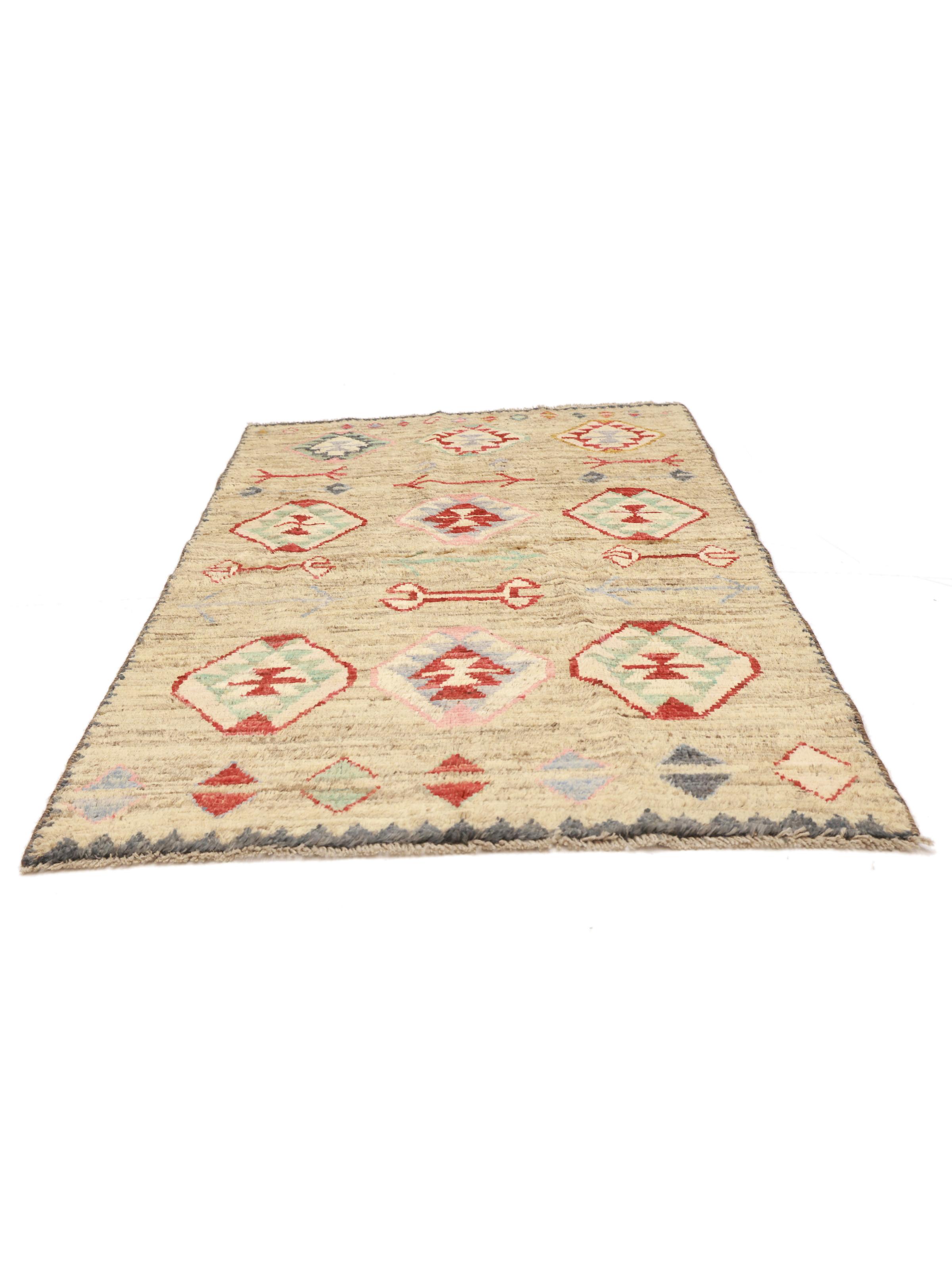
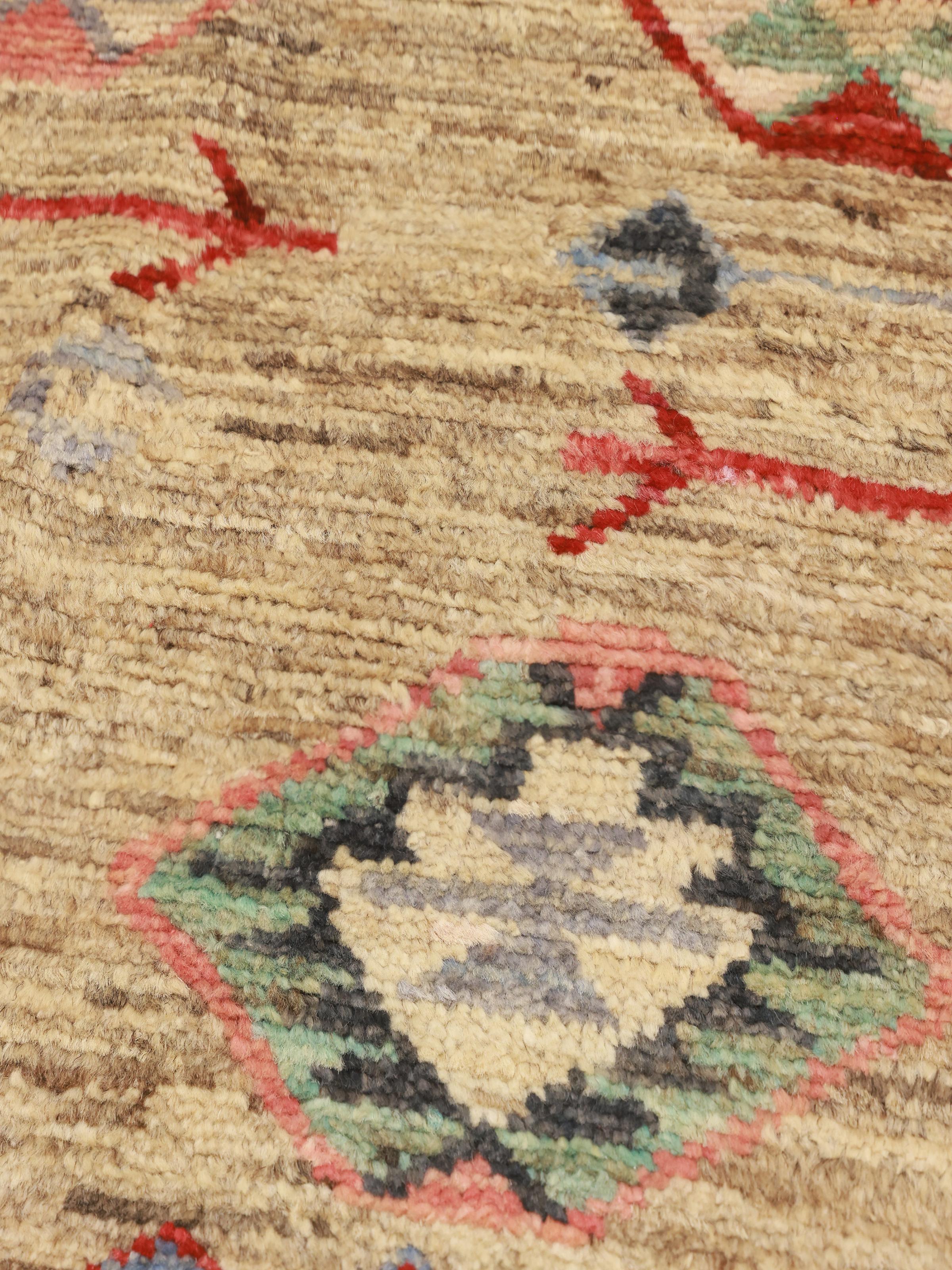
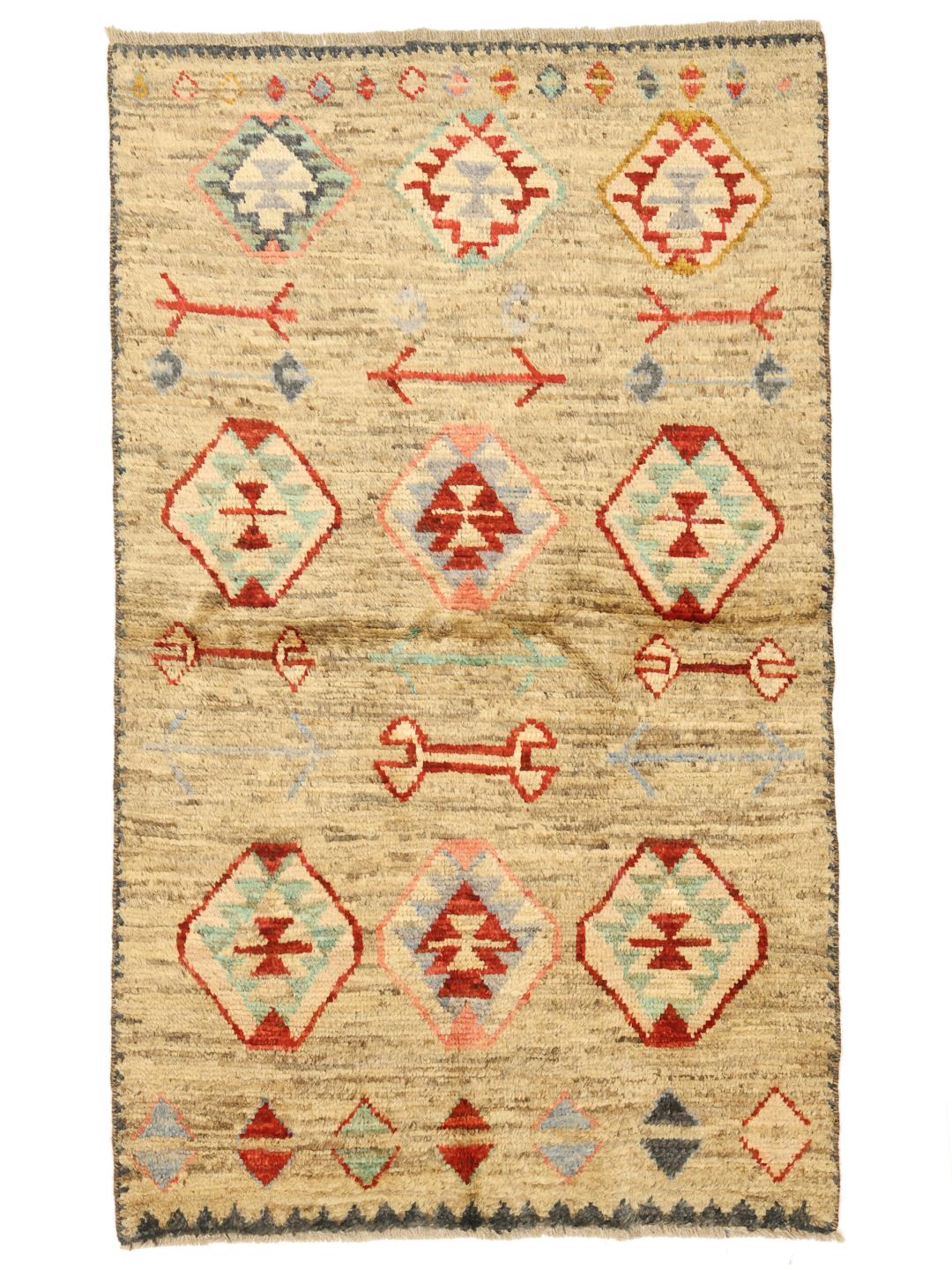
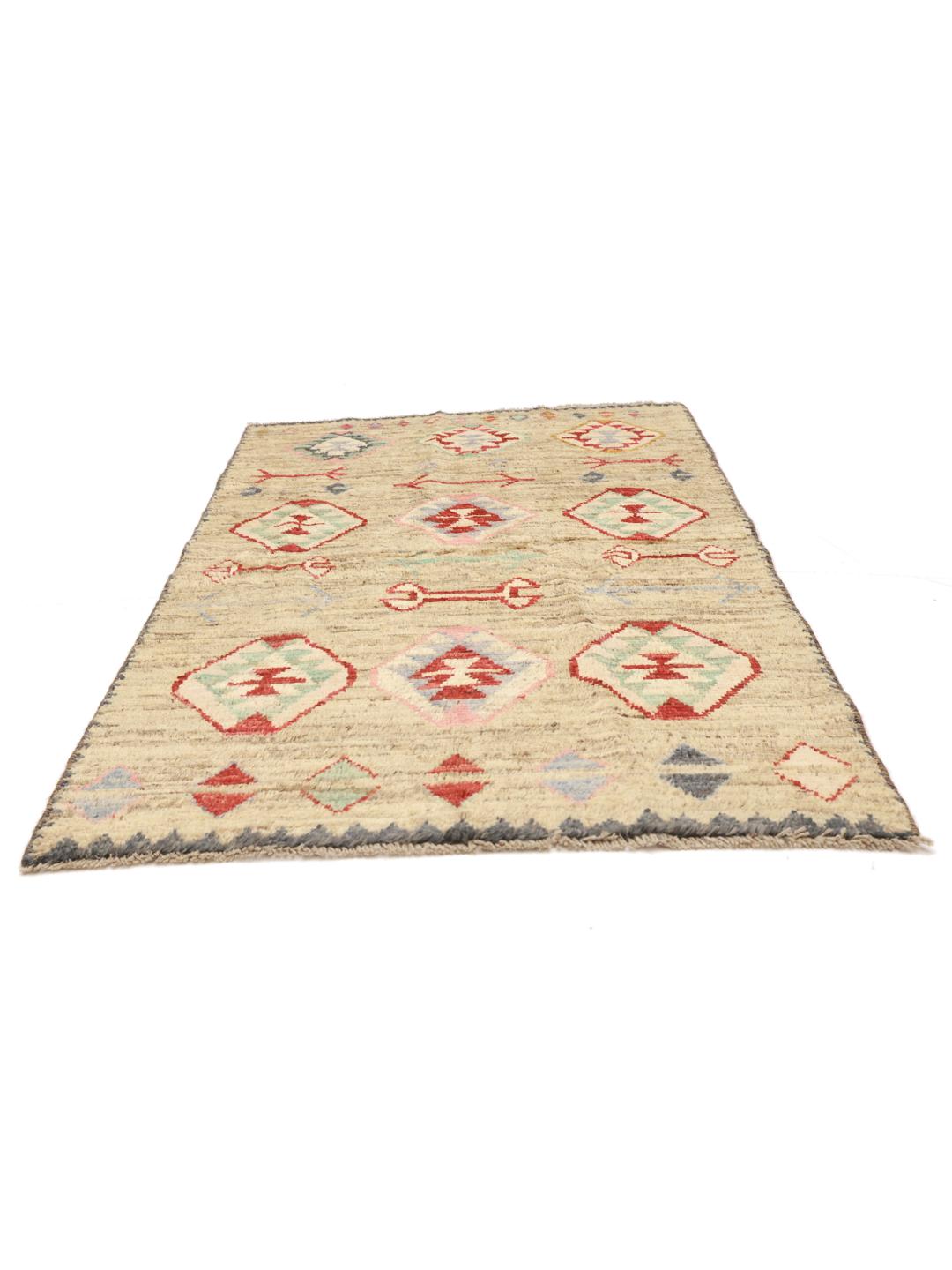
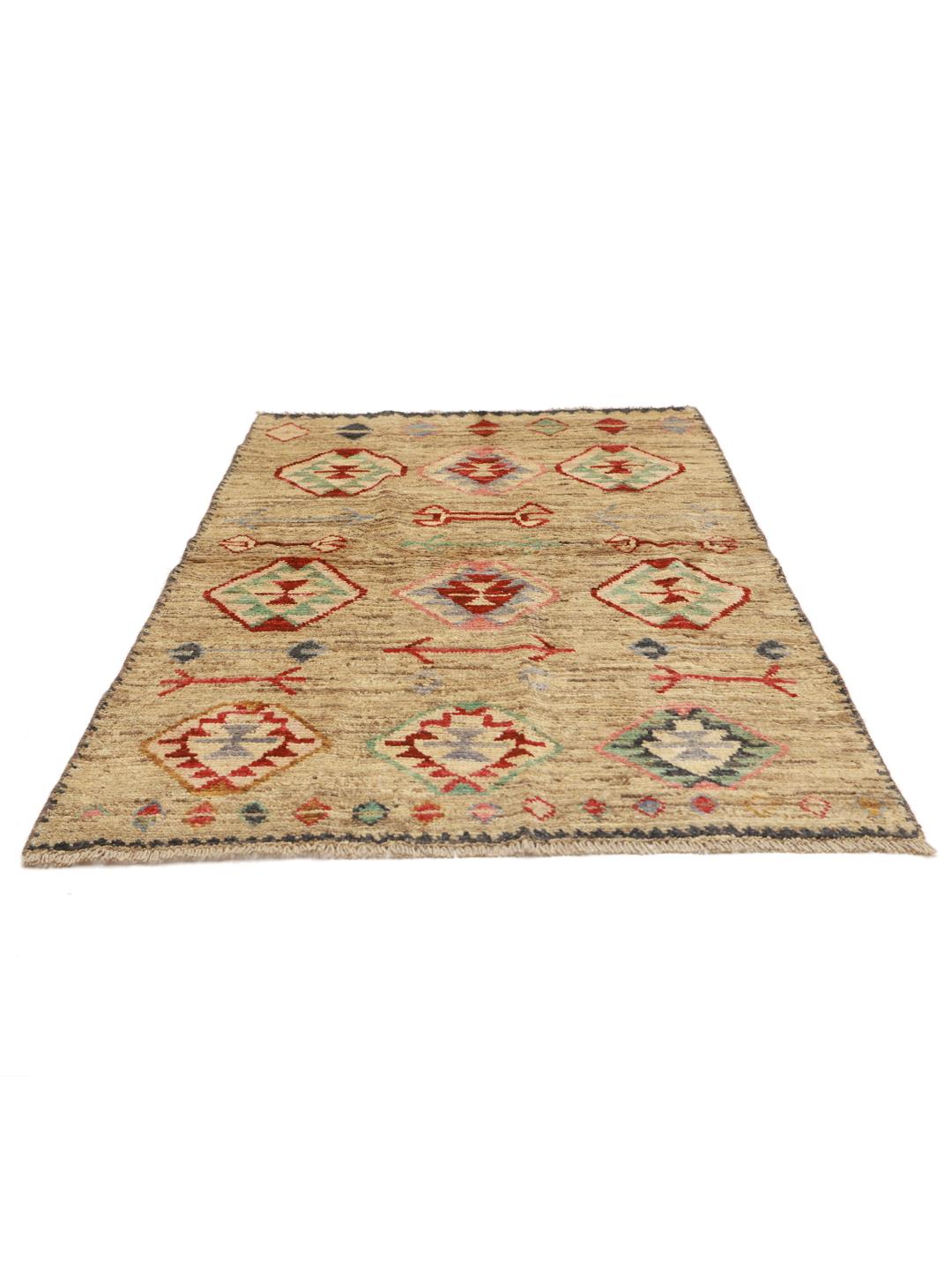
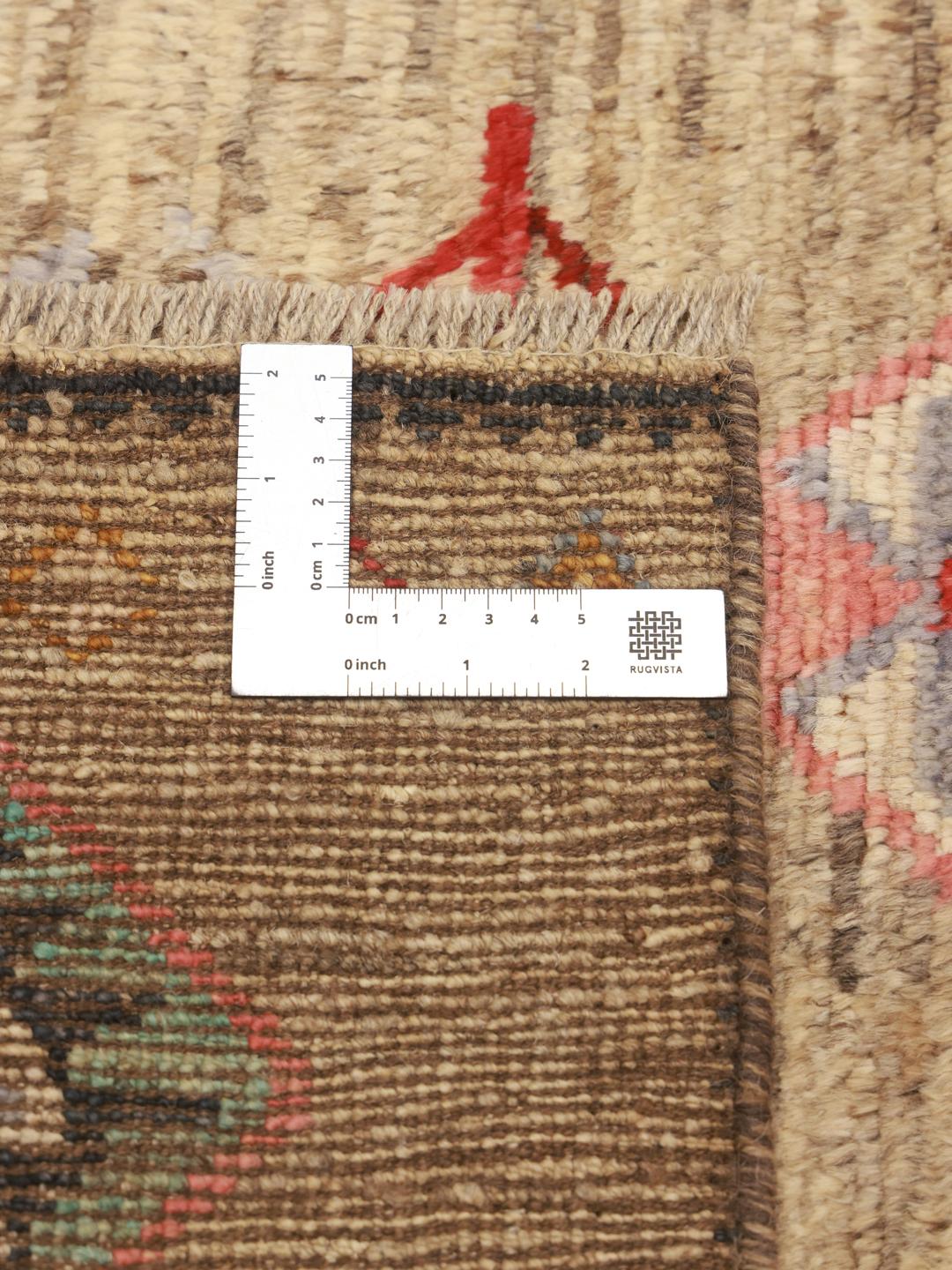
Berber rugs carry a legacy that spans across vast landscapes, traditionally rooted in the weaving traditions of North African tribes. While the style originated in the Atlas Mountains, the migration of weaving techniques has allowed these vibrant, tribal aesthetics to flourish in regions like Afghanistan, where local artisans have adopted these geometric languages to create their own distinct interpretations.
The term Berber historically refers to the indigenous peoples of North Africa, whose weaving craft was defined by functional simplicity and symbolic storytelling. Today, when we speak of Berber-style rugs from Afghanistan, we are looking at a synthesis of ancient knotting techniques and cultural exchange, resulting in pieces that prioritise both comfort and a bold, artistic narrative.
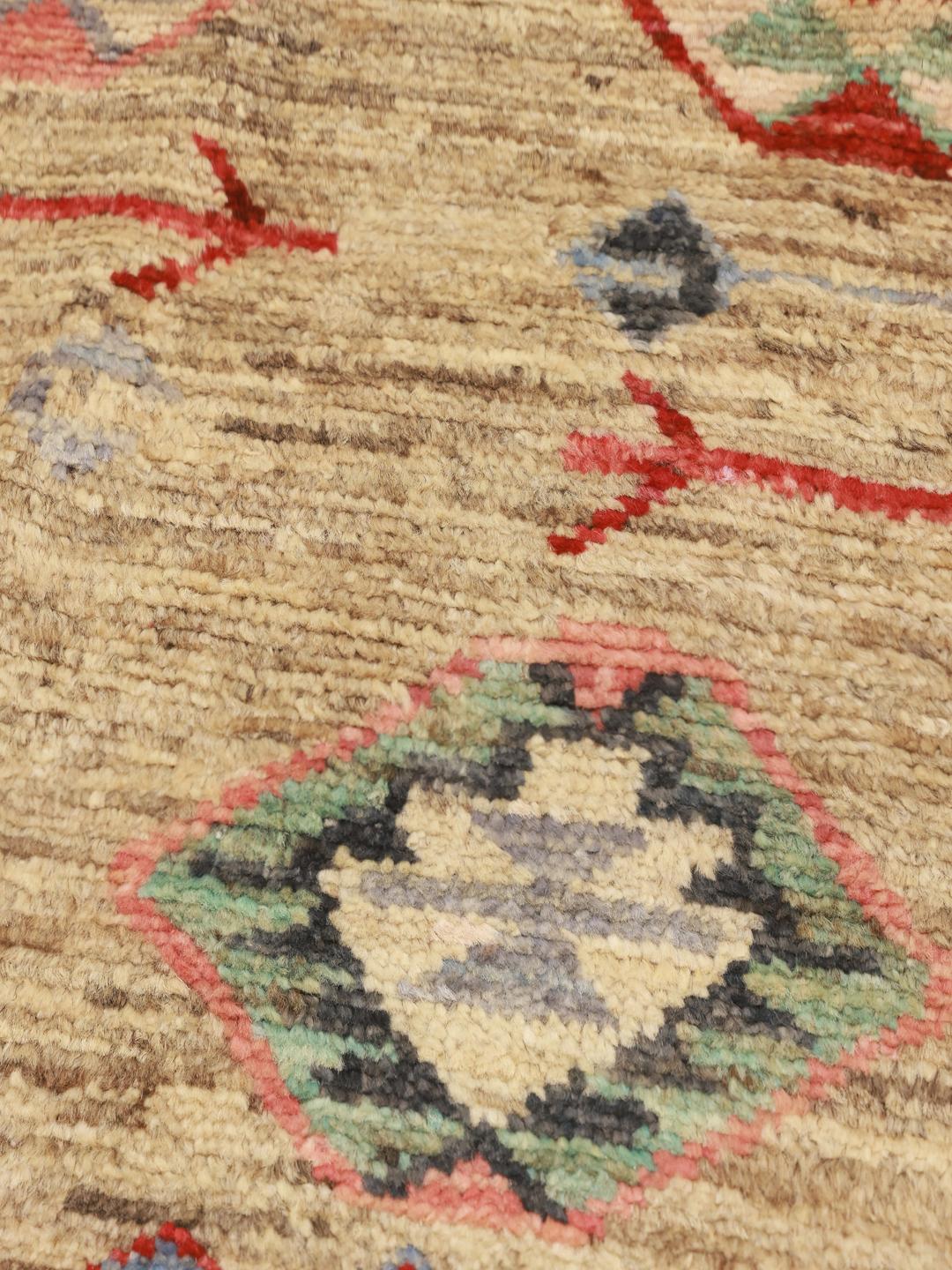
Signature motifs often include diamonds, triangles, and stylized symbols that serve as a visual language for the weaver. These patterns are rarely planned out in advance; instead, they are created from memory and passed down through generations, allowing the weaver to express personal history and regional identity through the placement of shapes and the choice of colour.
Owning a piece from this tradition is an invitation to connect with a long-standing history of human creativity. These rugs are valued not just for their aesthetic impact, but for the skill involved in their production and the cultural weight they carry, offering a sense of depth and authenticity that brings a room to life.