The Berber tradition is deeply intertwined with the nomadic cultures of the Middle East and North Africa, known for their expressive, geometric aesthetics. While traditionally associated with the Atlas Mountains, the influence of these designs has travelled along ancient trade routes, finding a new and vibrant home in the weaving communities of Afghanistan. This migration has allowed Afghan artisans to interpret these heritage patterns through their own lens, blending cultural histories into a unique visual language.
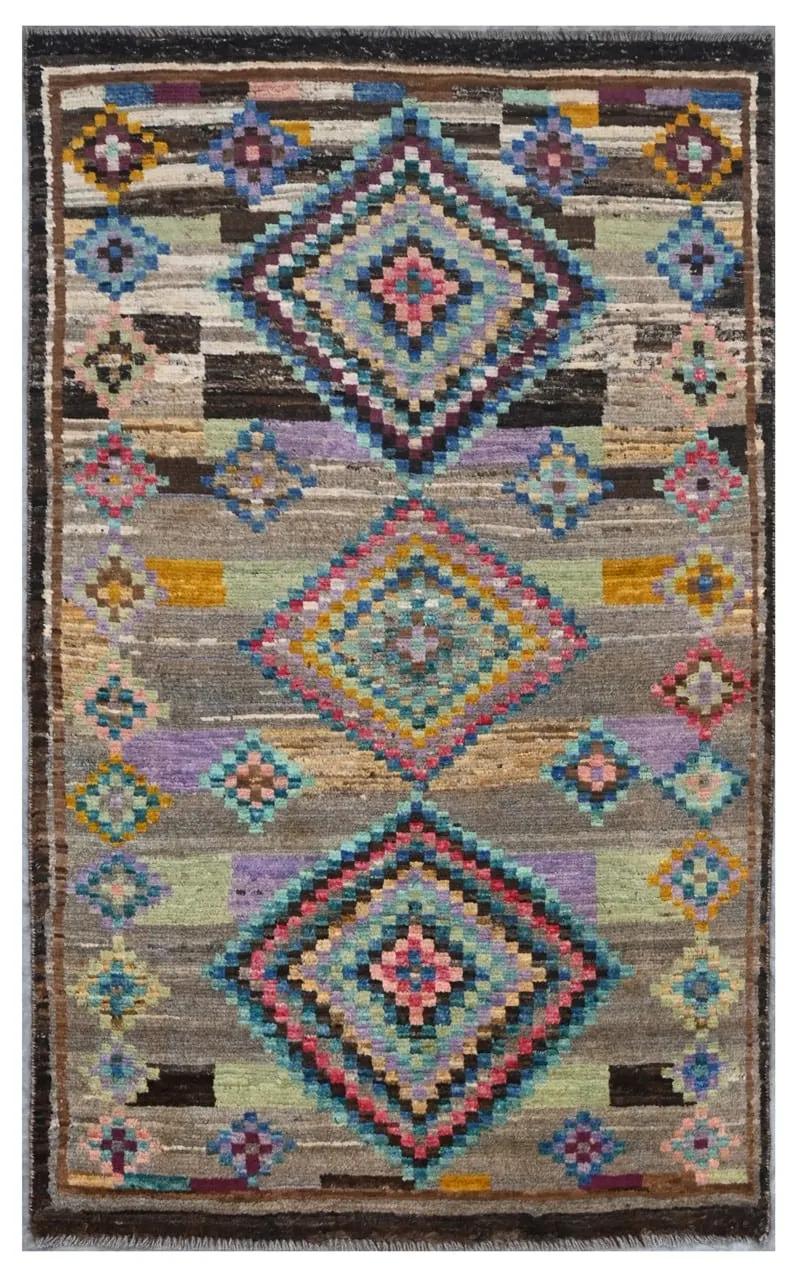
The term 'Berber' refers to the tribal origins of these designs, which are characterised by their focus on symbolism and storytelling. Weavers often incorporate geometric motifs, such as diamonds and zig-zags, which serve as a visual shorthand for protection, prosperity, and the natural world. This style is not about rigid adherence to a template, but rather a fluid expression of the weaver's own creativity, making every piece an individual narrative.
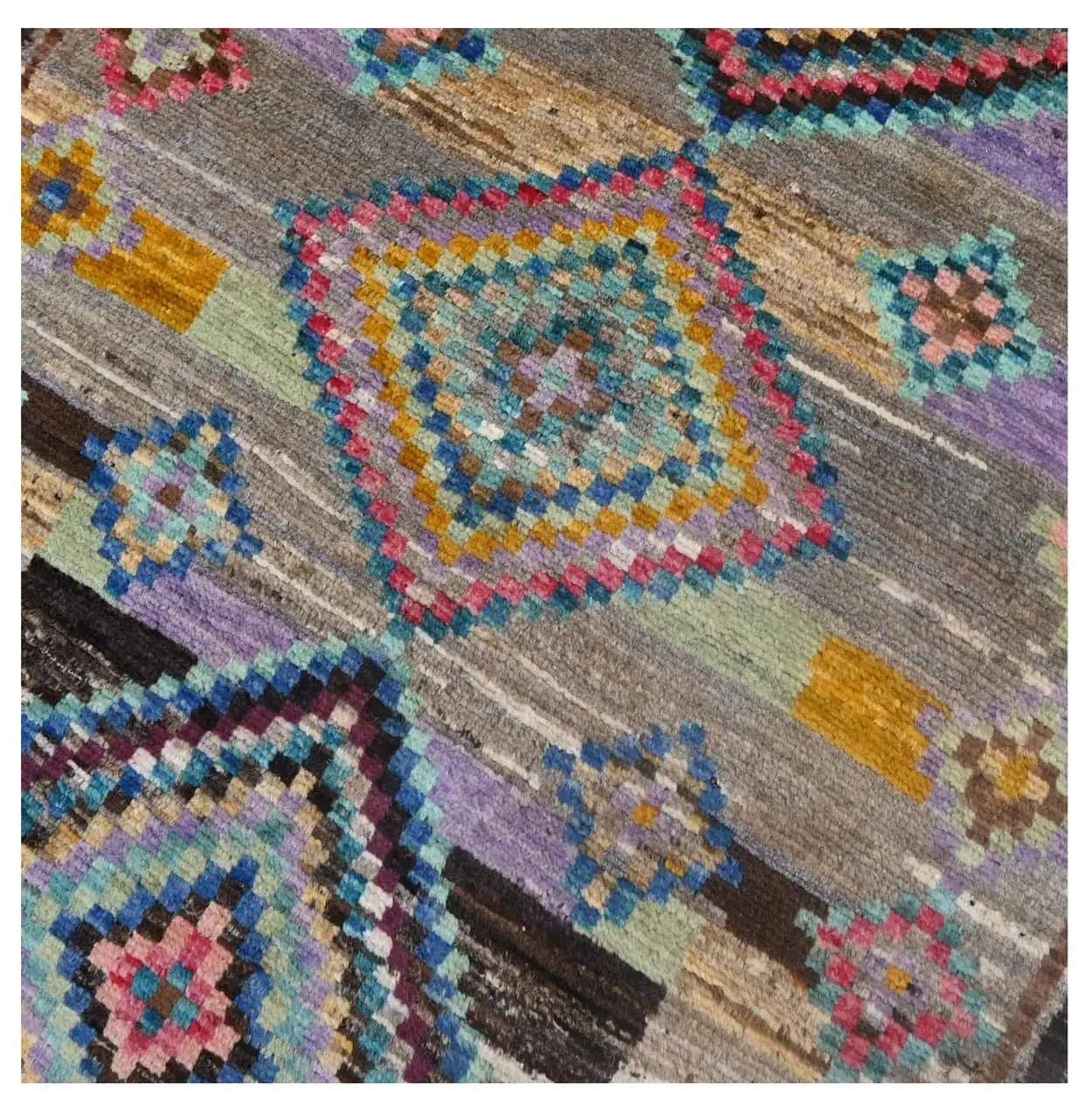
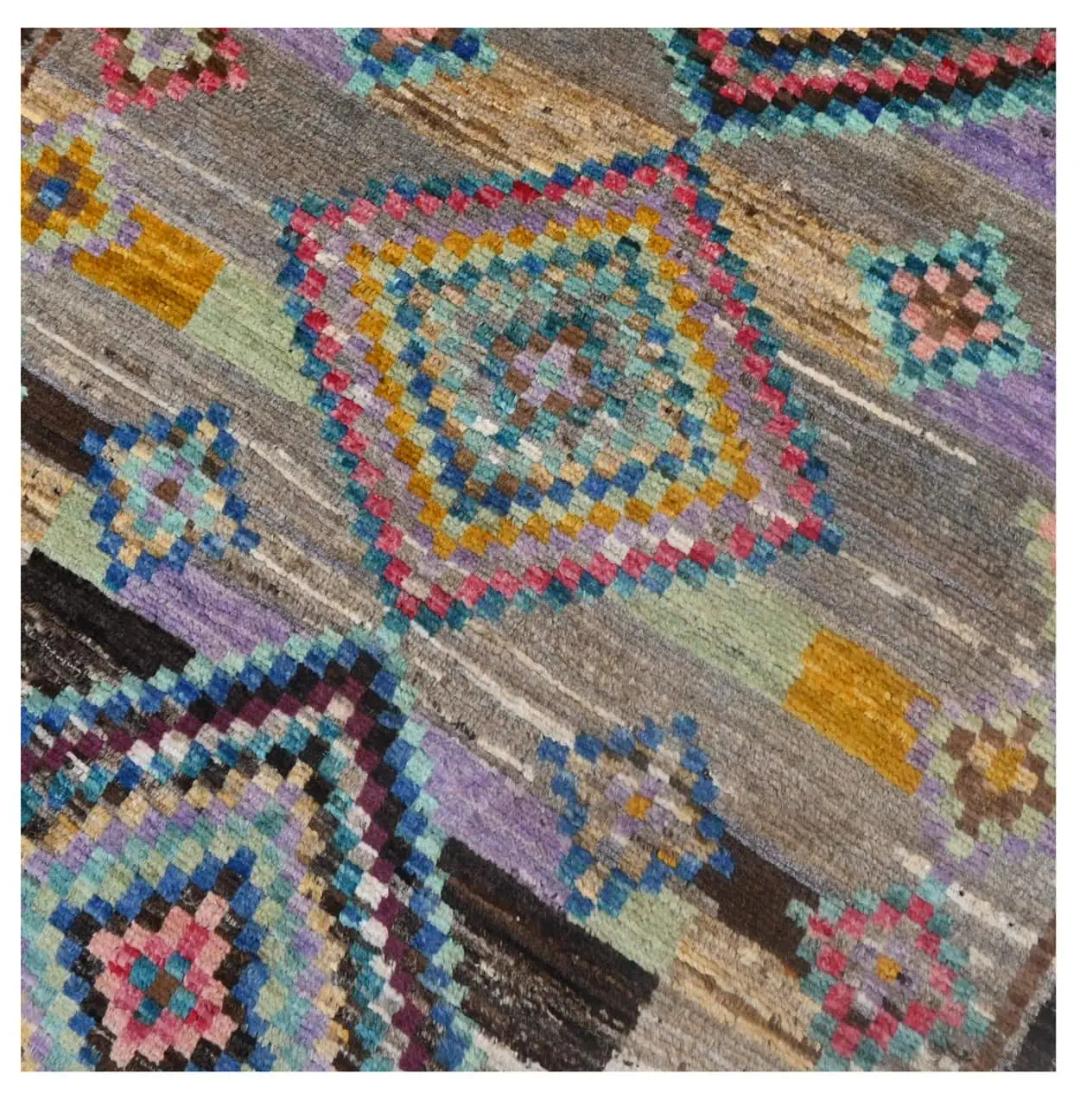
Visually, these rugs are defined by their bold use of colour and repetitive, rhythmic patterns. The diamond motifs found in this piece are a classic example of the Berber aesthetic, often used to create a sense of harmony and balance. The contrast between the saturated, lively tones and the structured layout demonstrates the sophistication of this regional style, which manages to feel both ancient and remarkably contemporary.
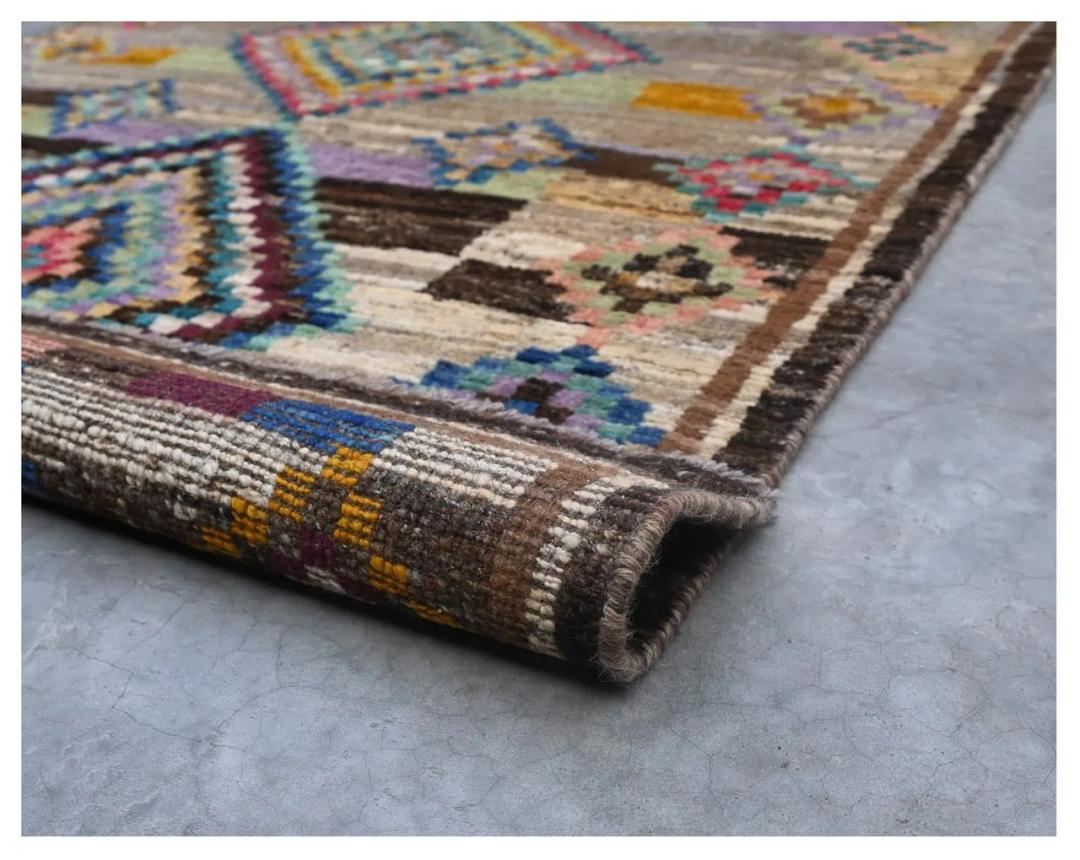
Collecting a Berber rug is an invitation to own a piece of cultural history that values the human touch above all else. These rugs are highly prized for their ability to bring soul and warmth into a home, reflecting a commitment to traditional methods that reject mass production. By acquiring such a piece, you are preserving a legacy of craftsmanship and supporting a tradition that treats every rug as a unique expression of the weaver's skill.