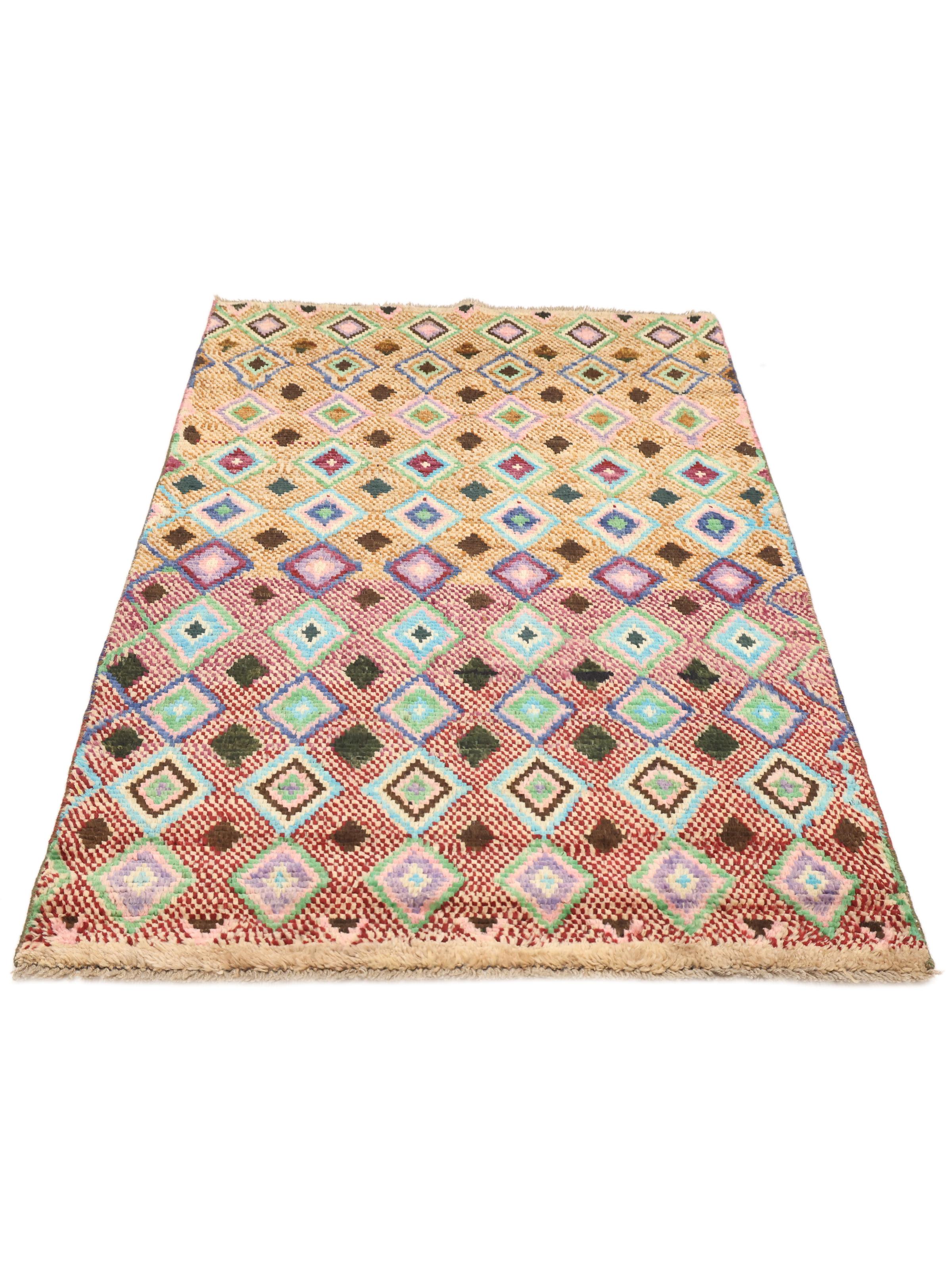
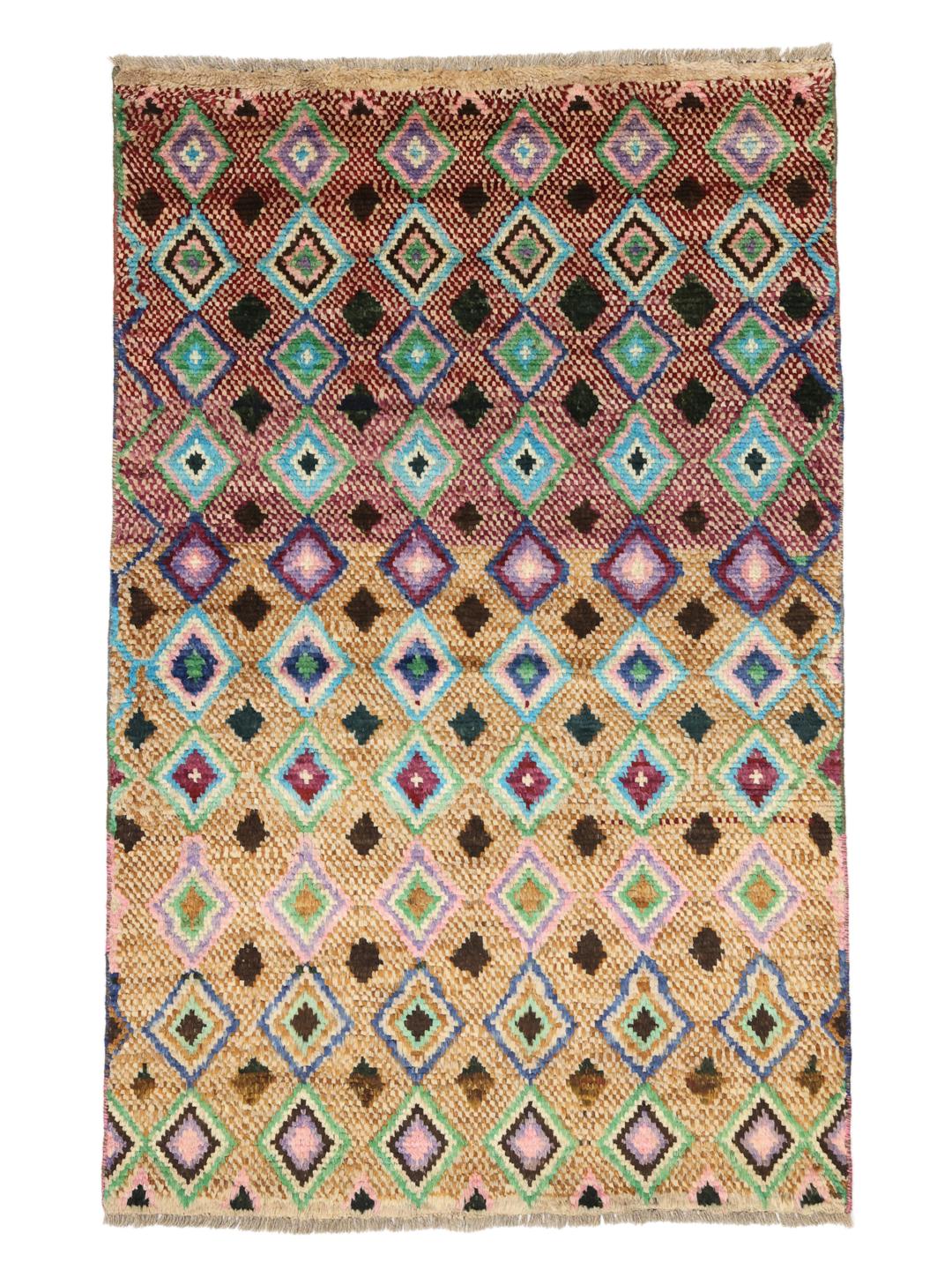
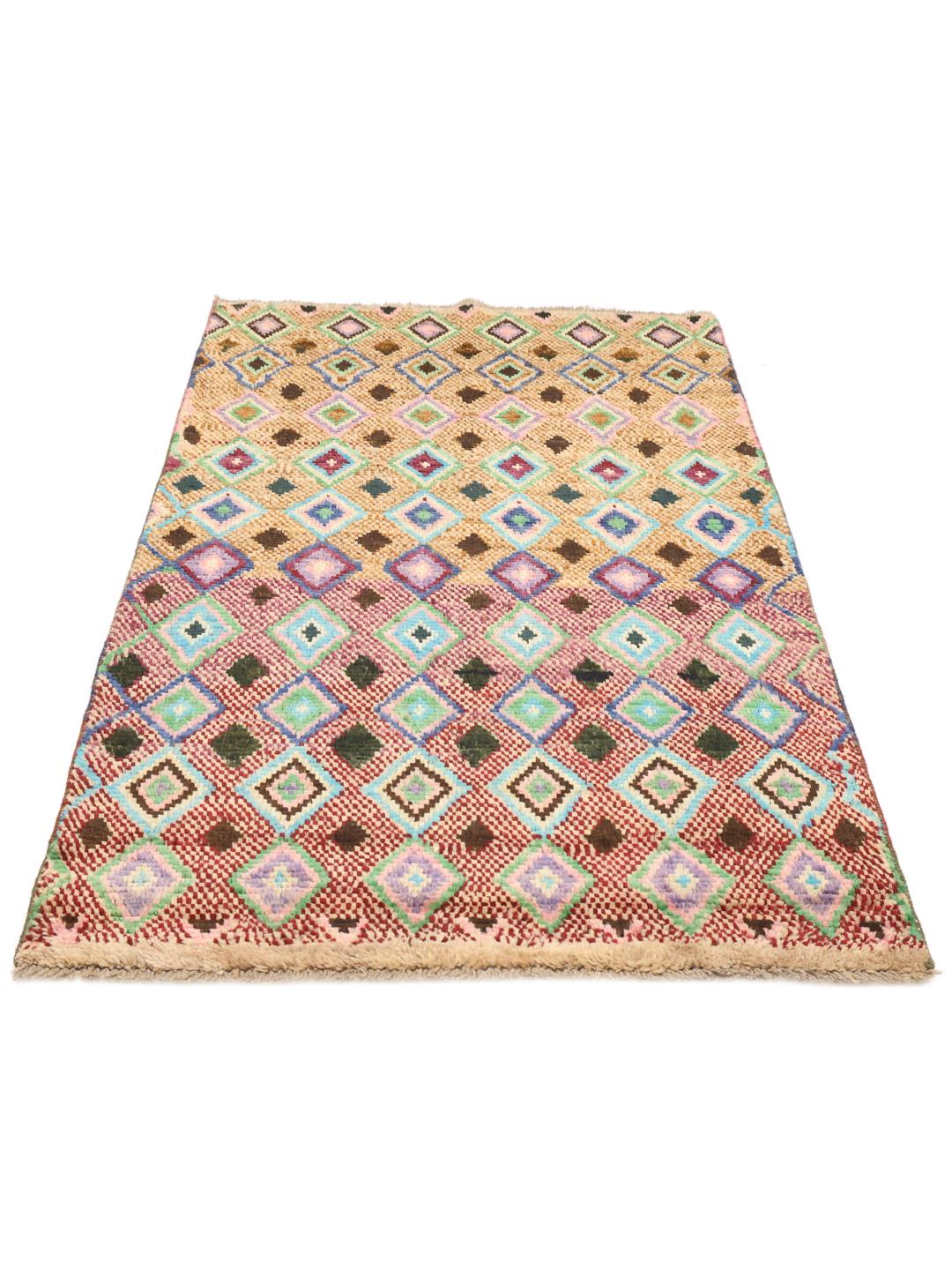
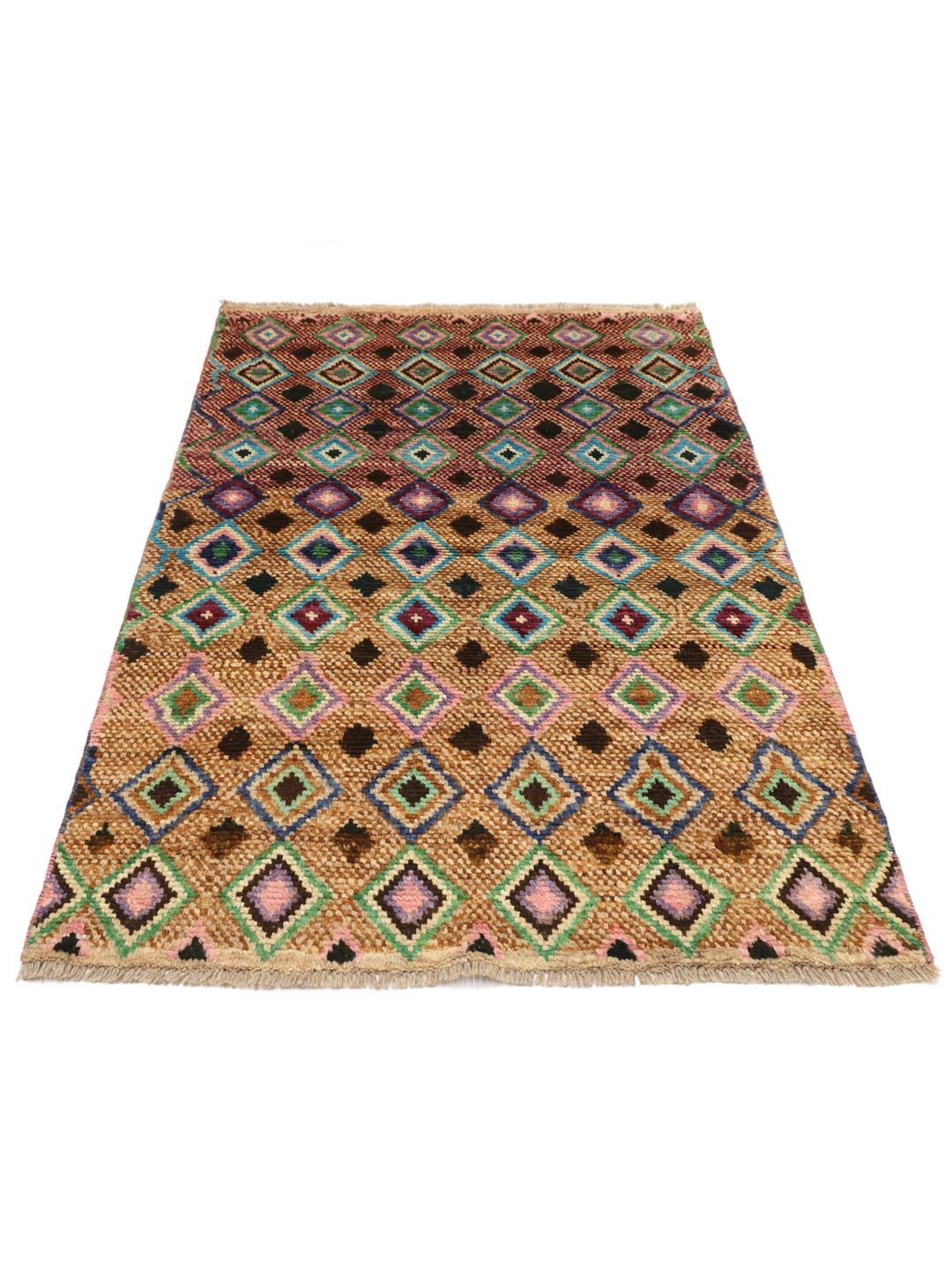
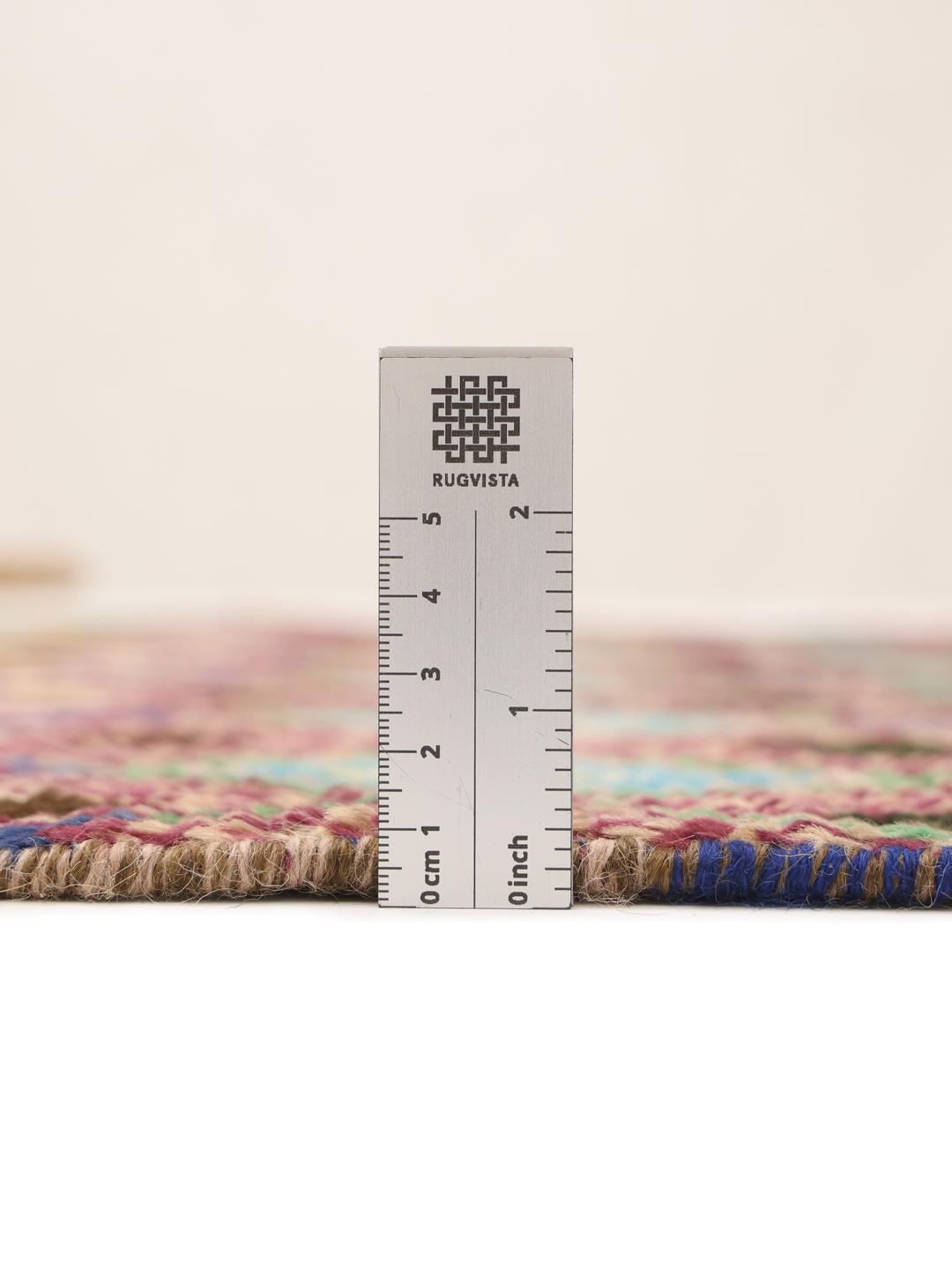
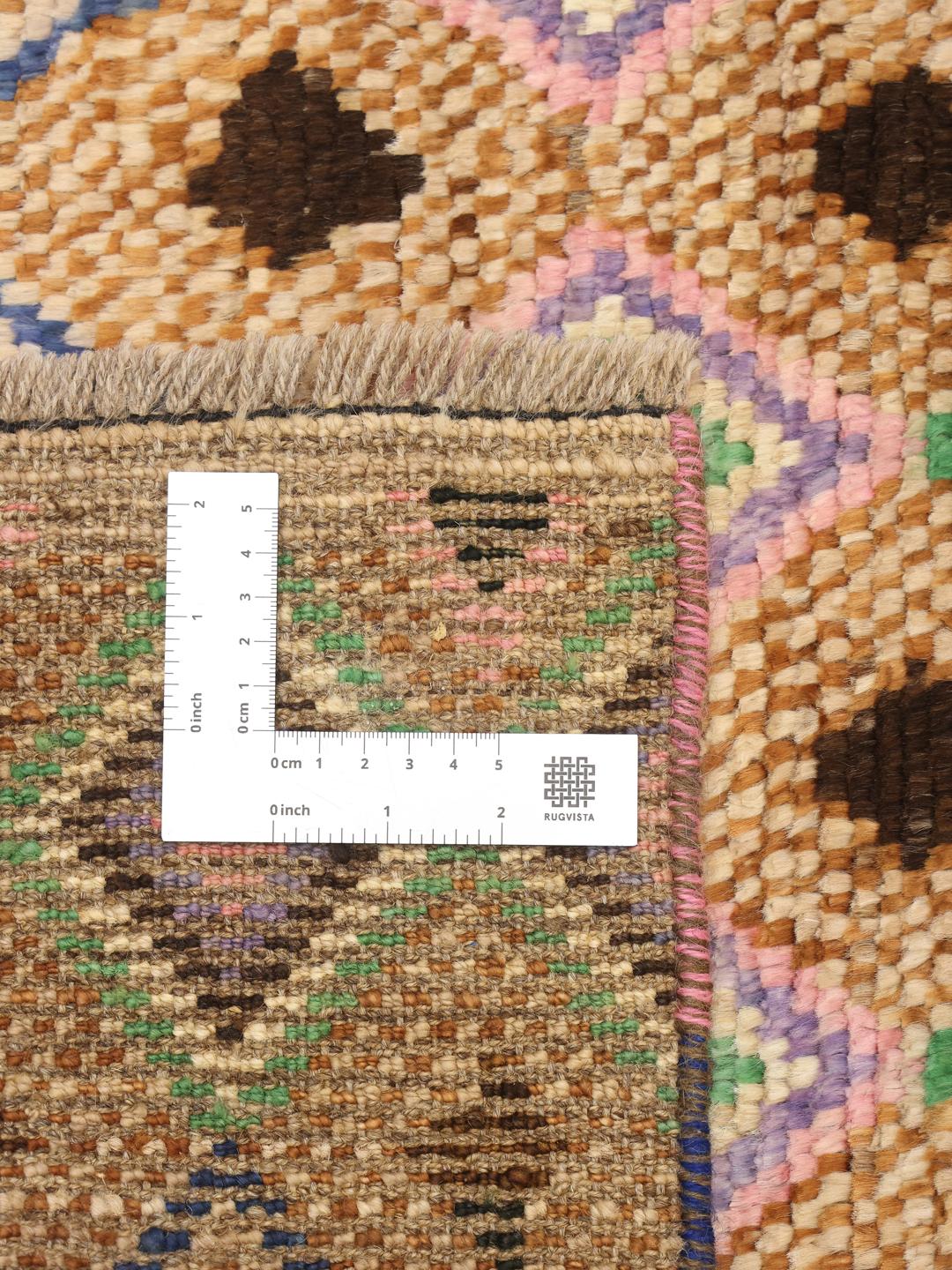
Berber rugs are rooted in the ancient traditions of North Africa, yet their influence has spread across the globe, inspiring weavers in regions like the Middle East to adapt these iconic styles. While traditional Berber rugs are often known for their shaggy, minimalist aesthetic, this colourful iteration showcases how local artisans have embraced a more vivid and geometric design language.
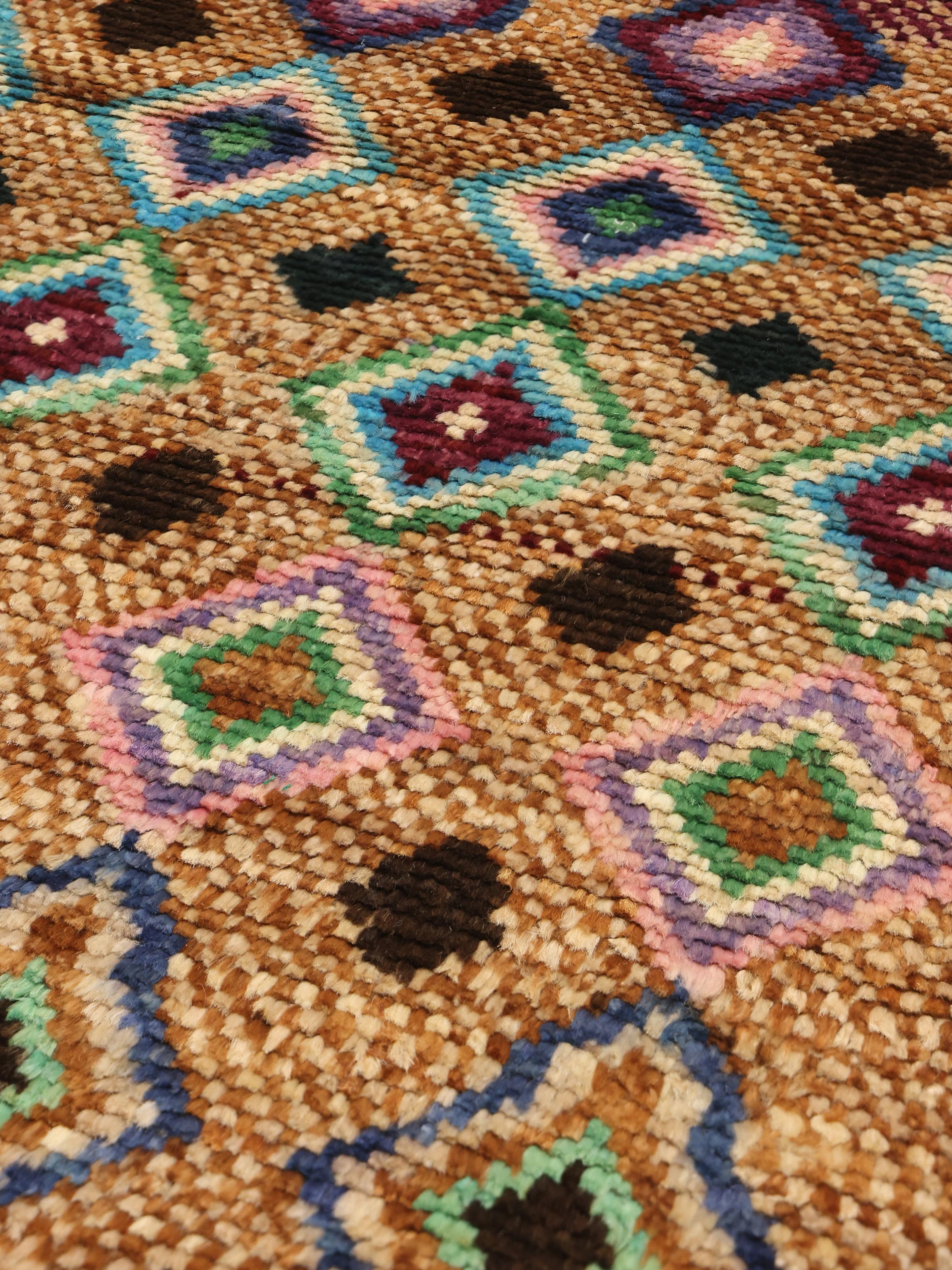
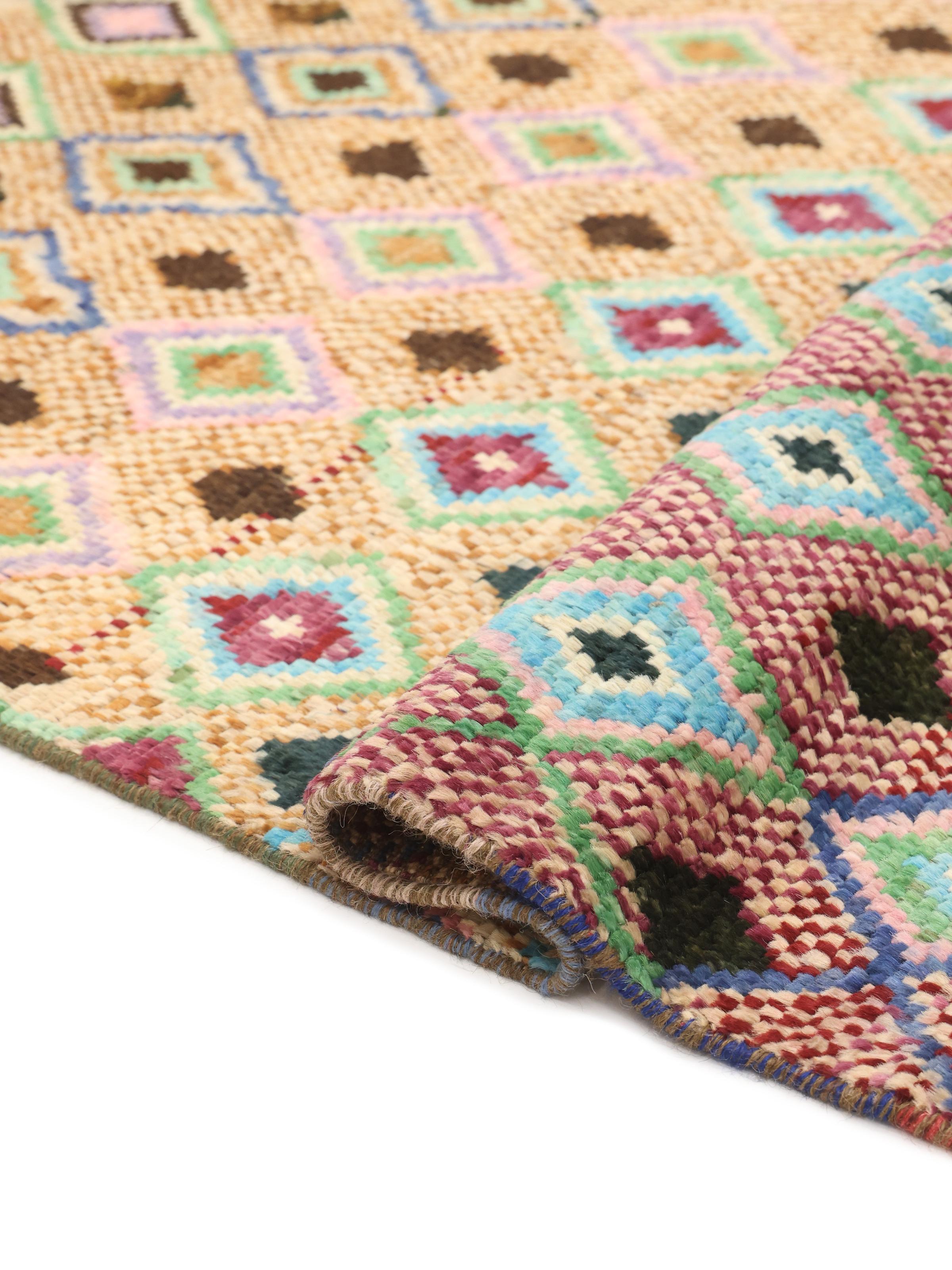
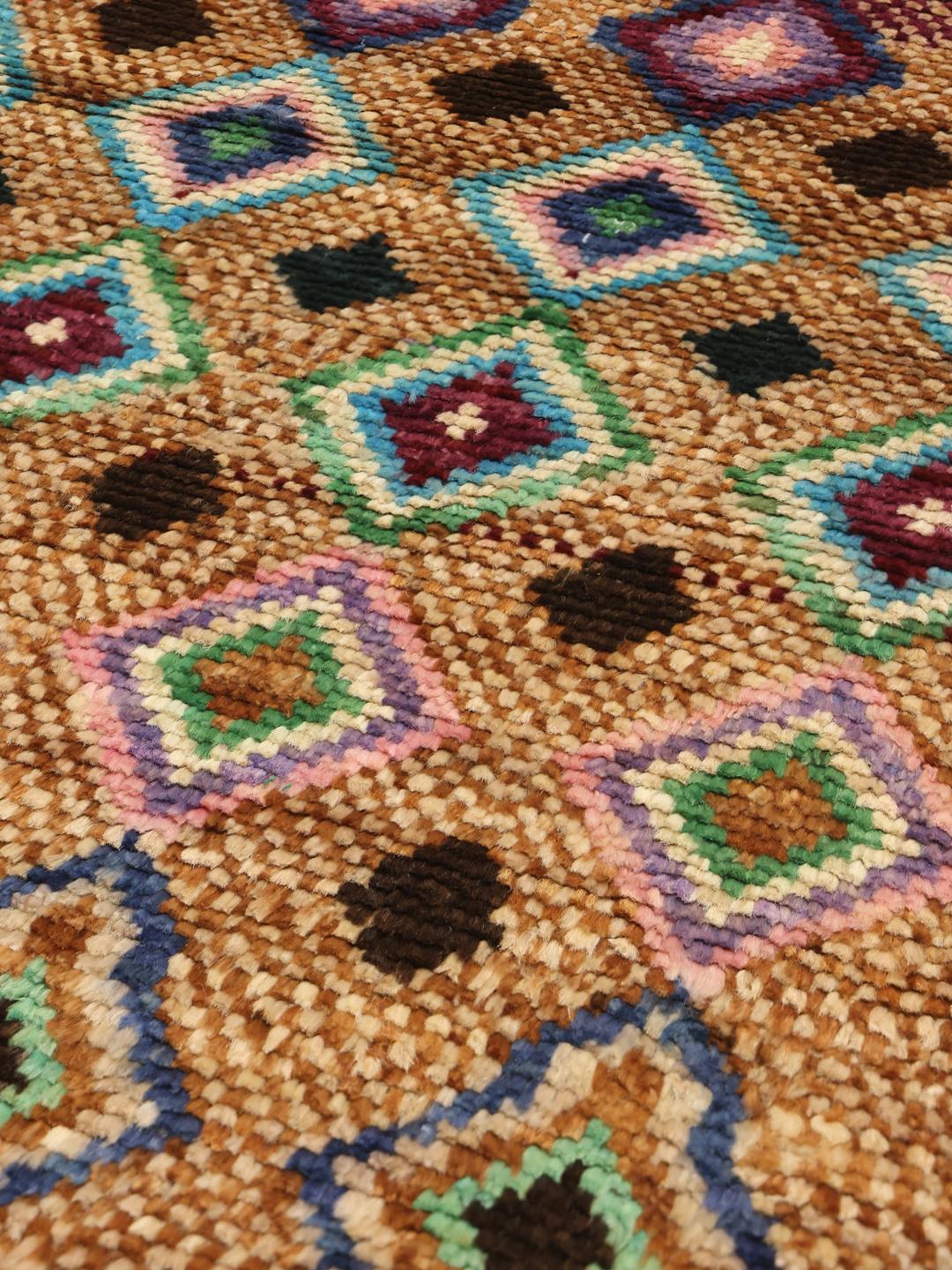
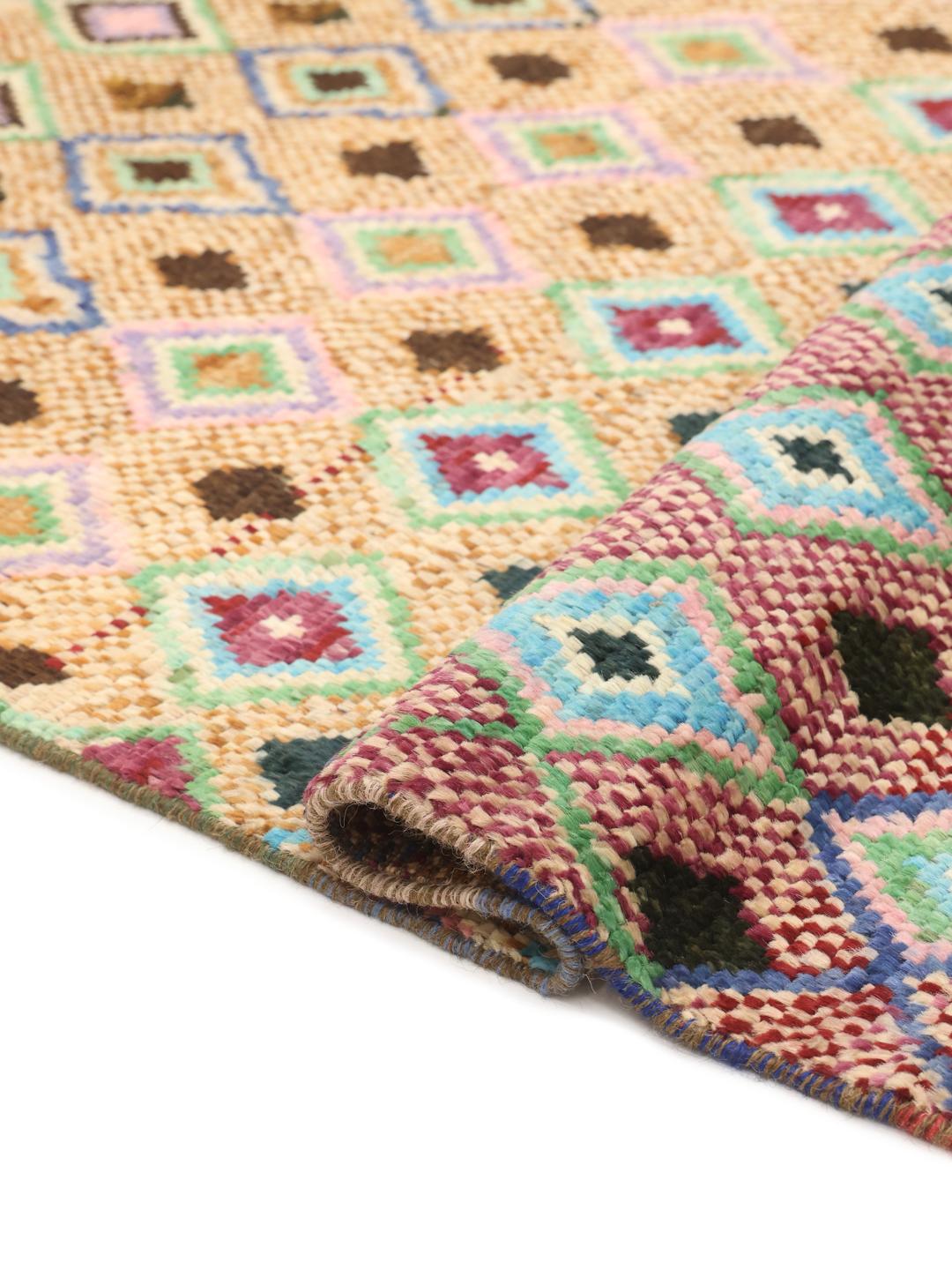
The craft of hand-knotting is a cornerstone of this tradition. This technique involves wrapping individual strands of Wool around the warp and weft threads to create a durable, dense pile. This method is highly valued not only for its longevity but for the way it allows for intricate, sharp-edged patterns that hold their form even in high-traffic areas.
Visually, this rug is defined by its repeating diamond motifs, a classic element in tribal textile design. These shapes often symbolise protection and prosperity within the cultures that created them. The use of a bold, multi-coloured palette against a varied background is a modern evolution, turning a traditional structural layout into a piece of contemporary artistic expression.
Collecting a hand-knotted rug like this is an investment in cultural heritage. It represents a bridge between the past and present, where the weaver's personal interpretation of traditional symbols creates a legacy piece. Owning such a rug is an acknowledgment of the skill, time, and cultural narrative woven into every square centimetre.