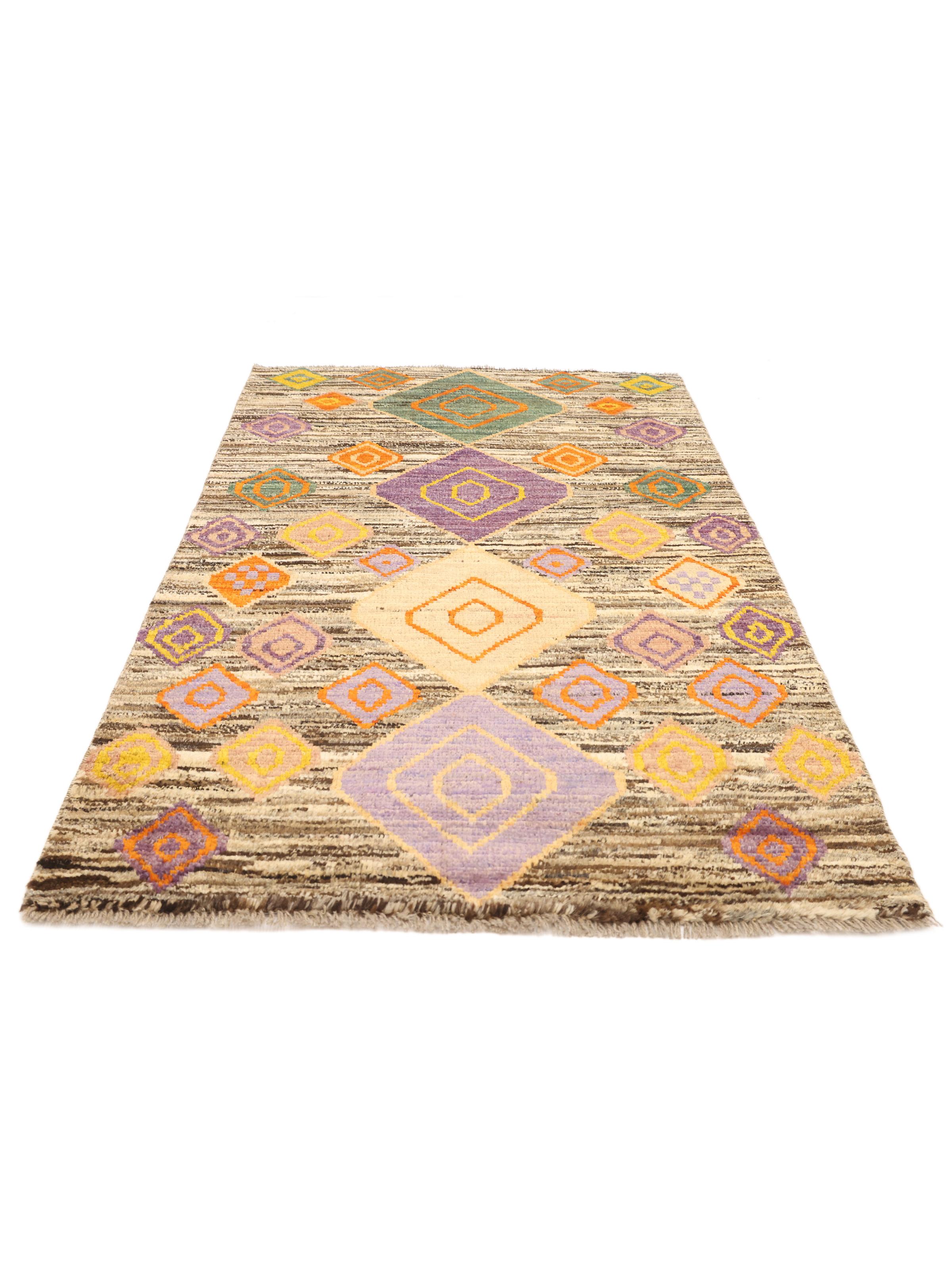
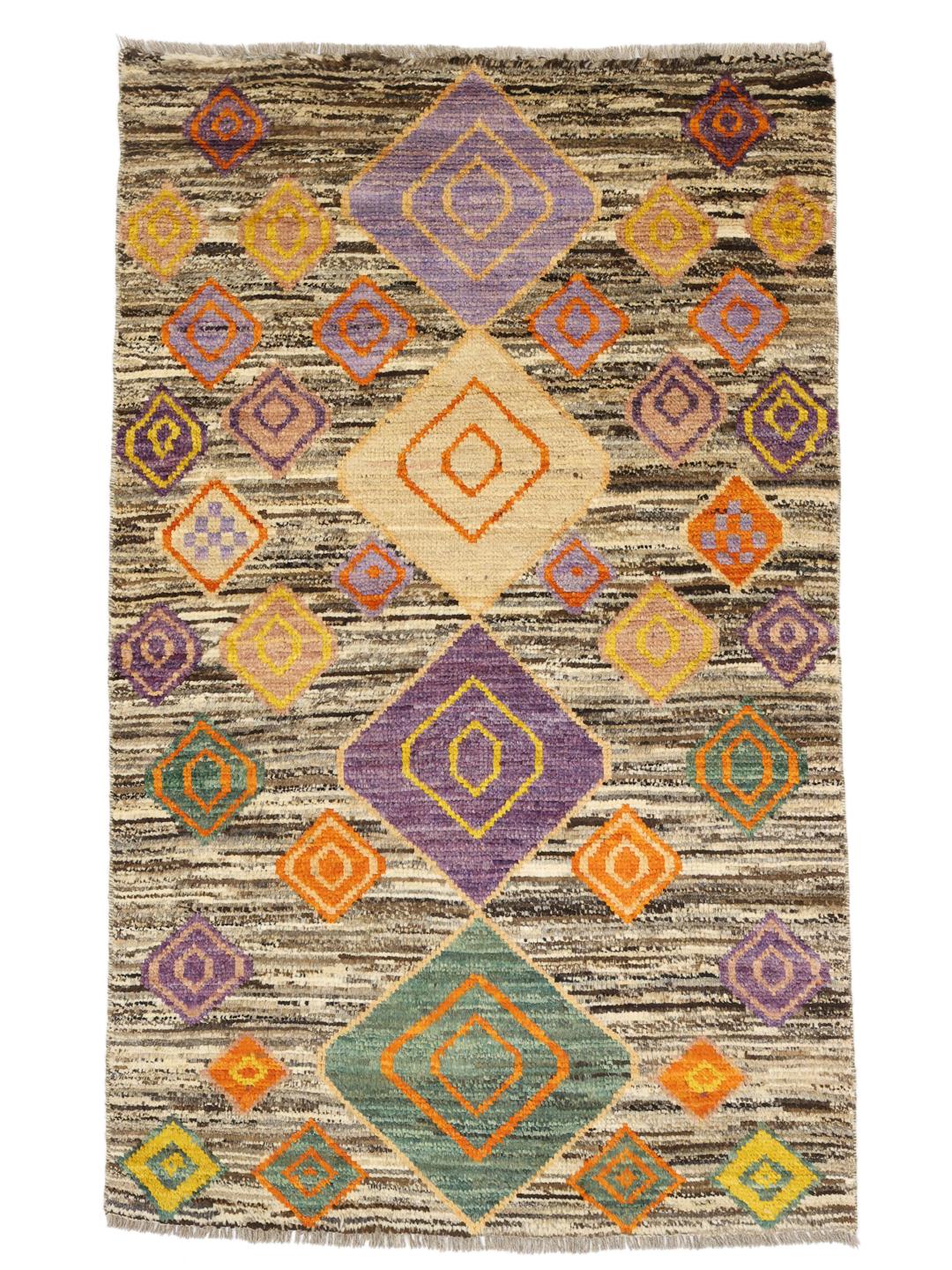
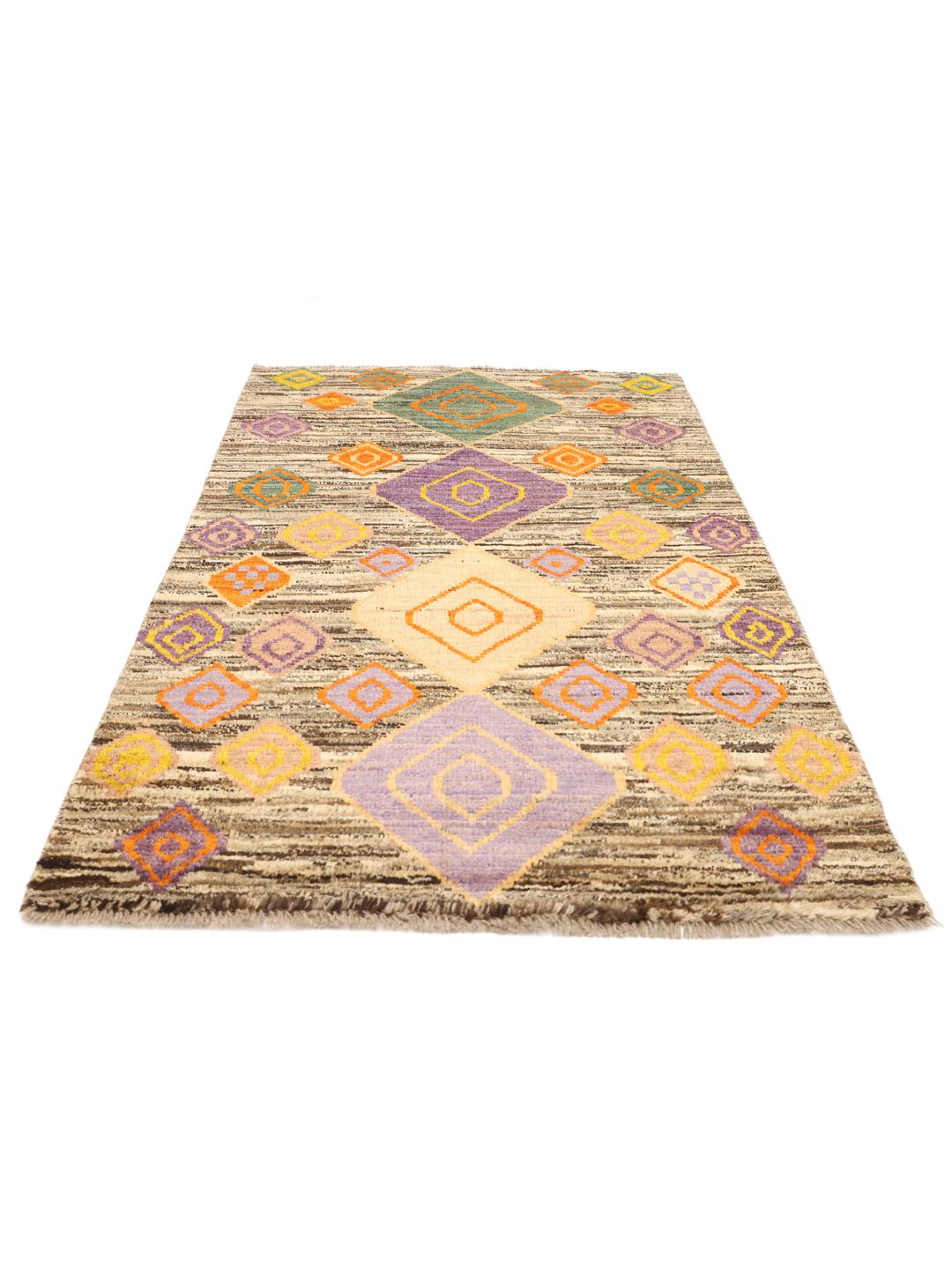
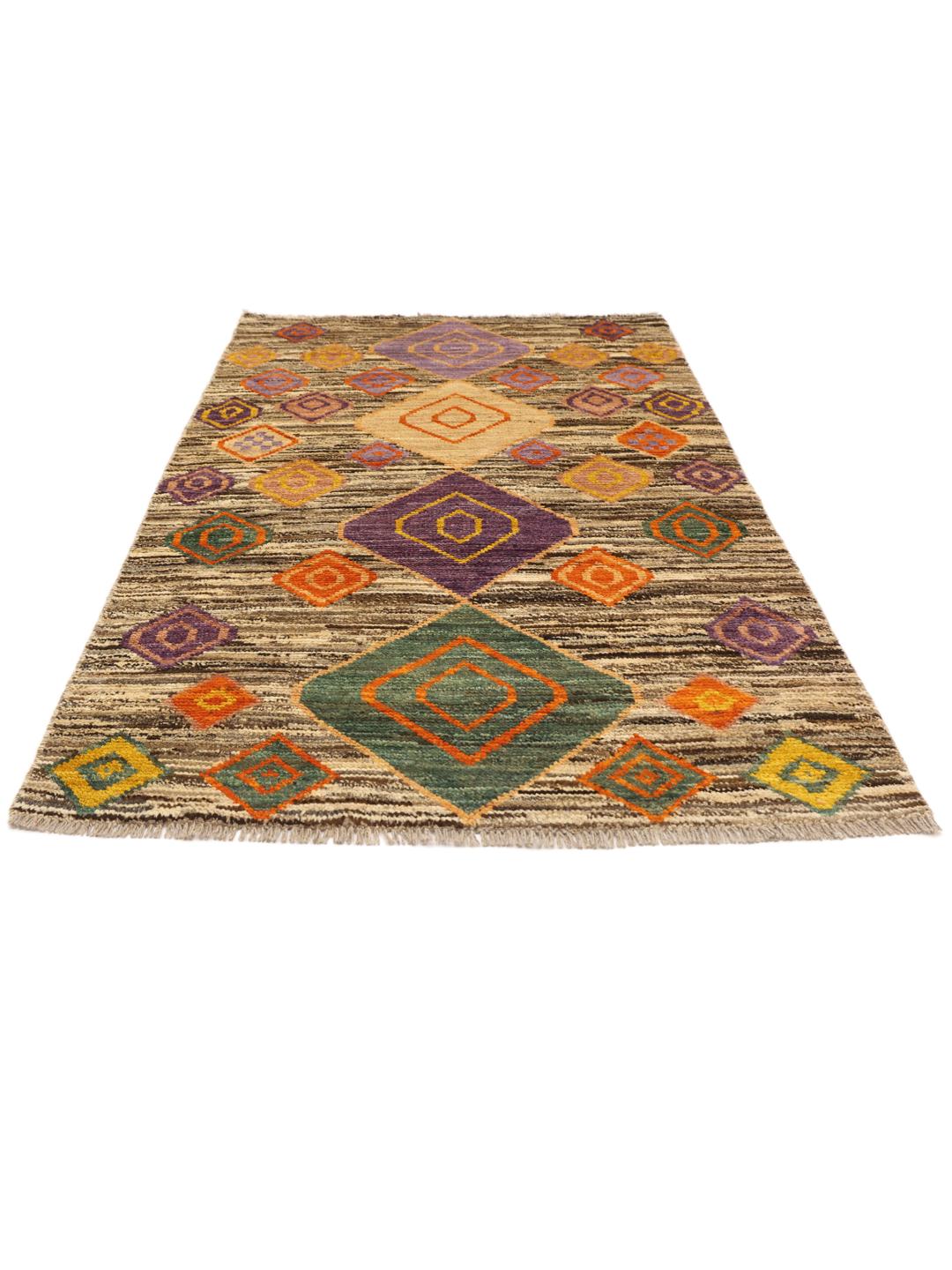
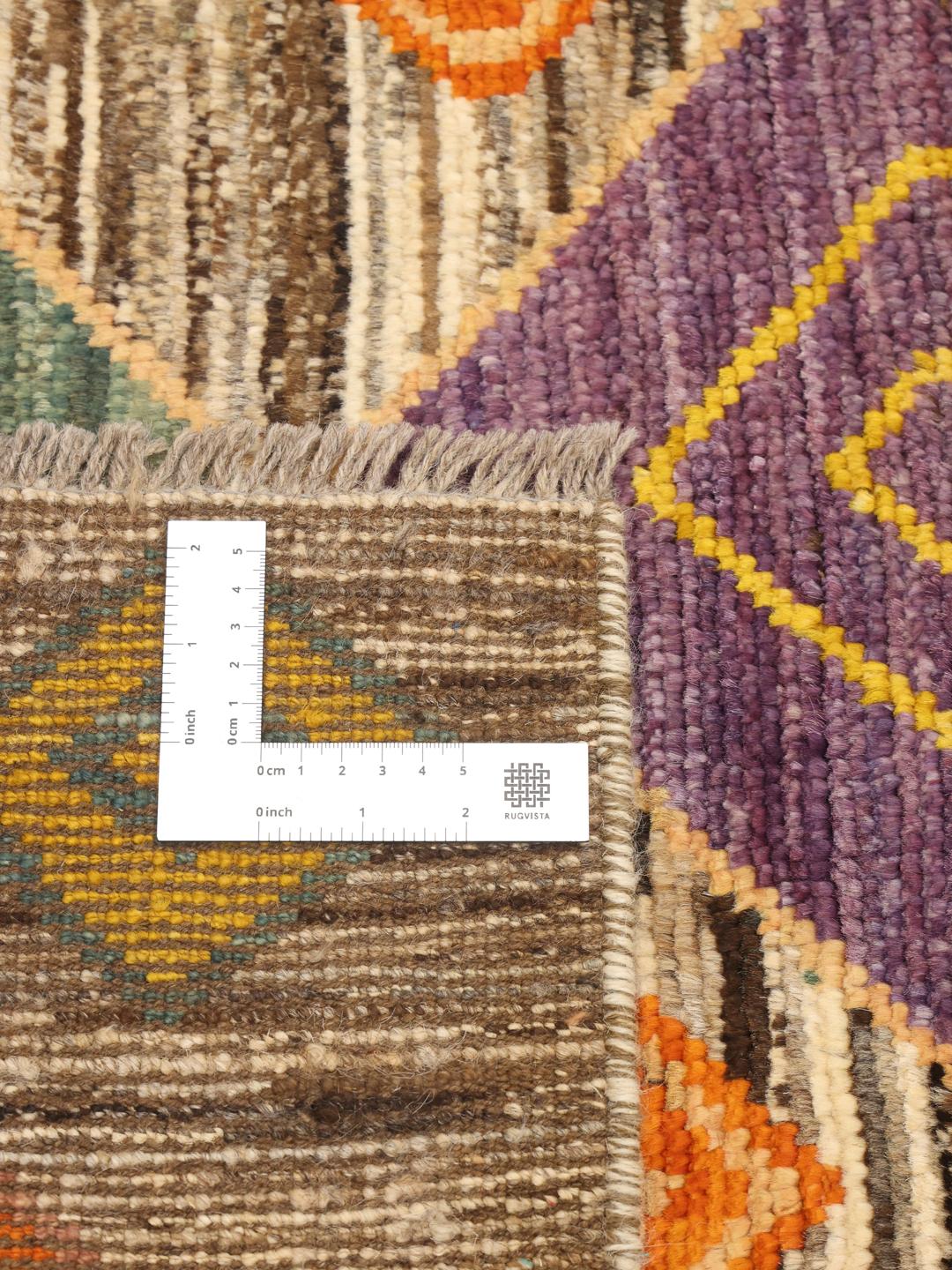
Berber rugs originate from the indigenous communities of North Africa, but the style has evolved significantly through global travel and cultural exchange. Today, Afghan weavers have embraced these traditional design principles, blending their own regional expertise with the iconic, expressive aesthetics of the Berber tradition to create rugs that are both historical and contemporary.
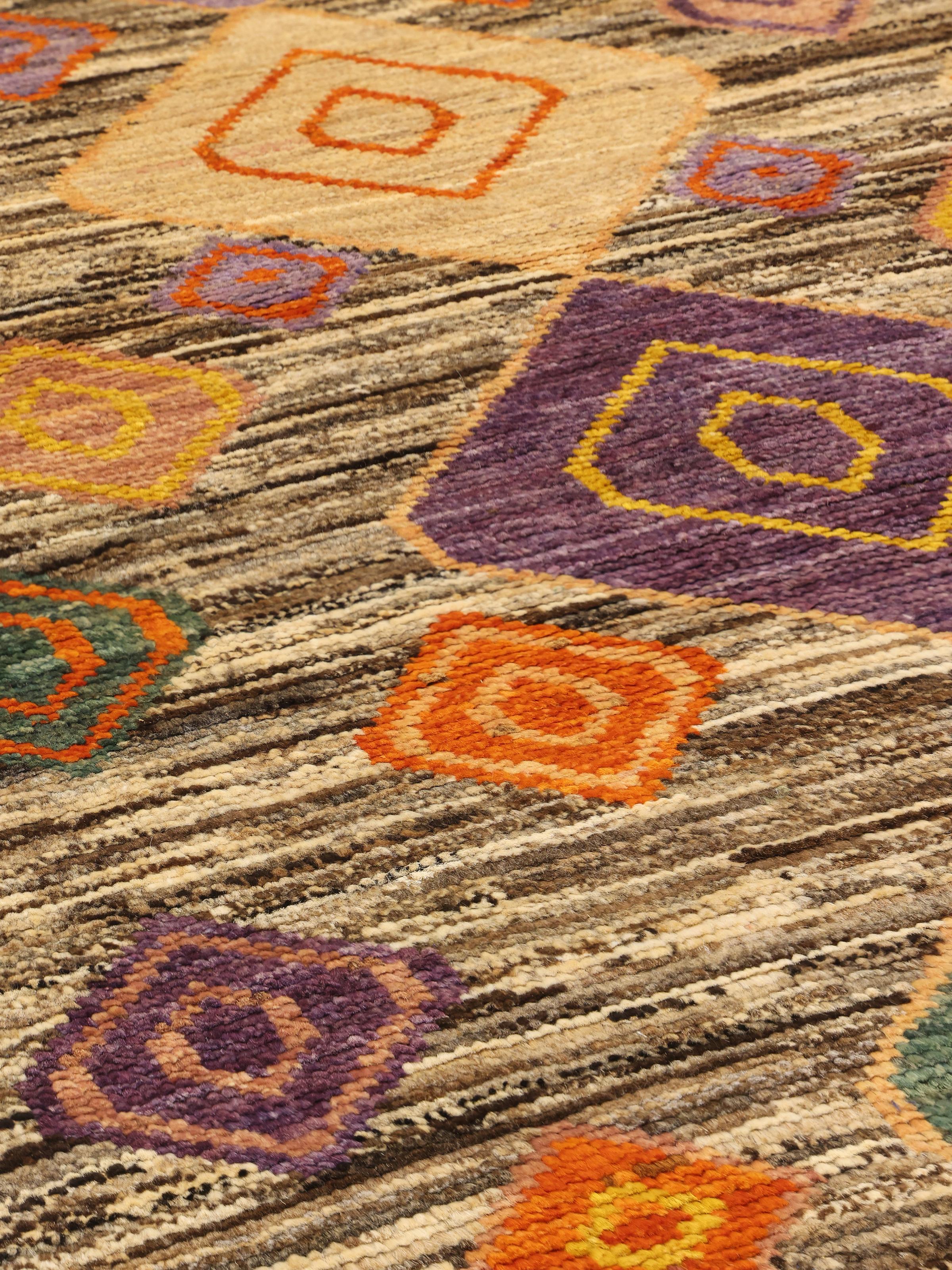
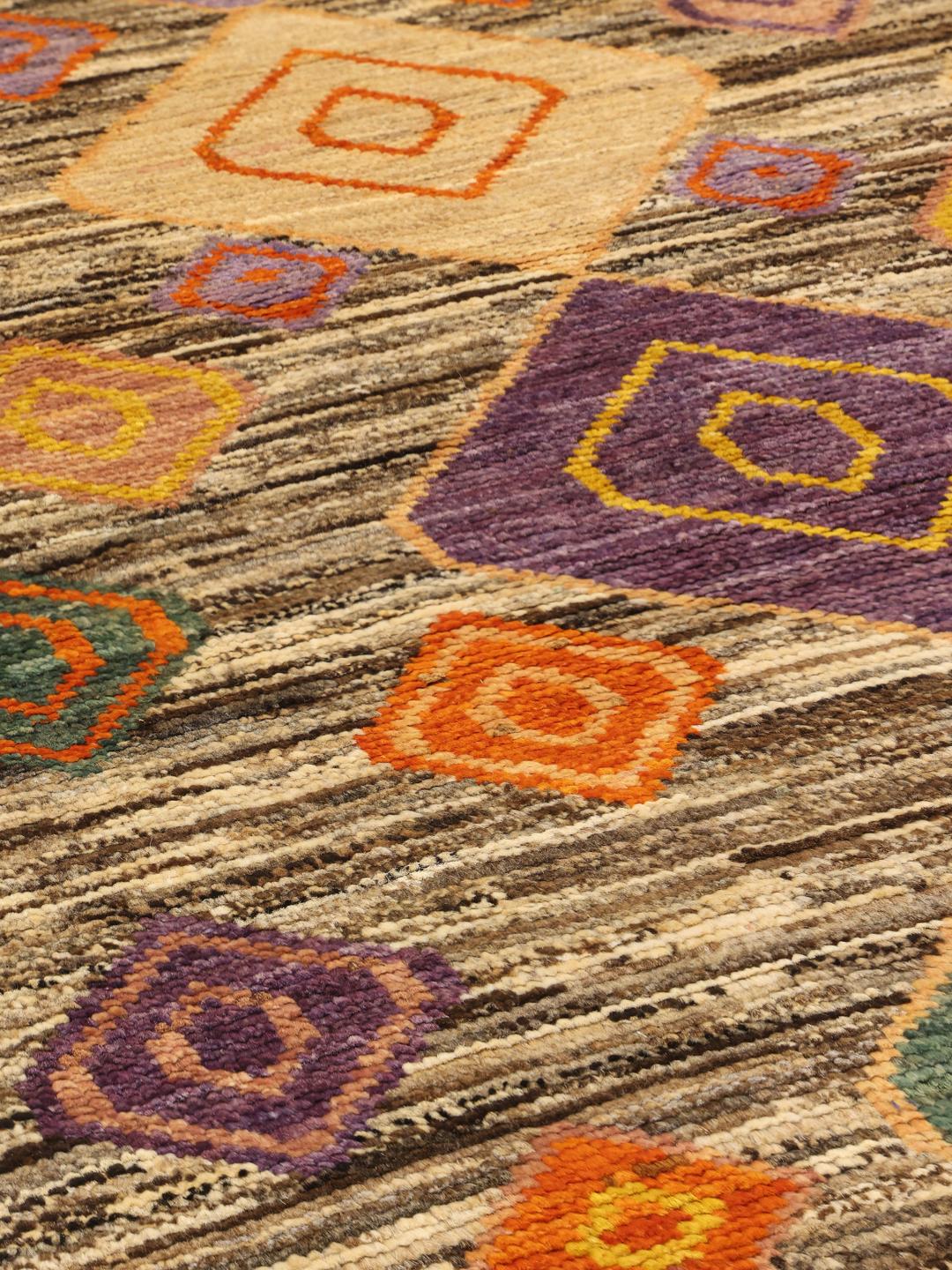
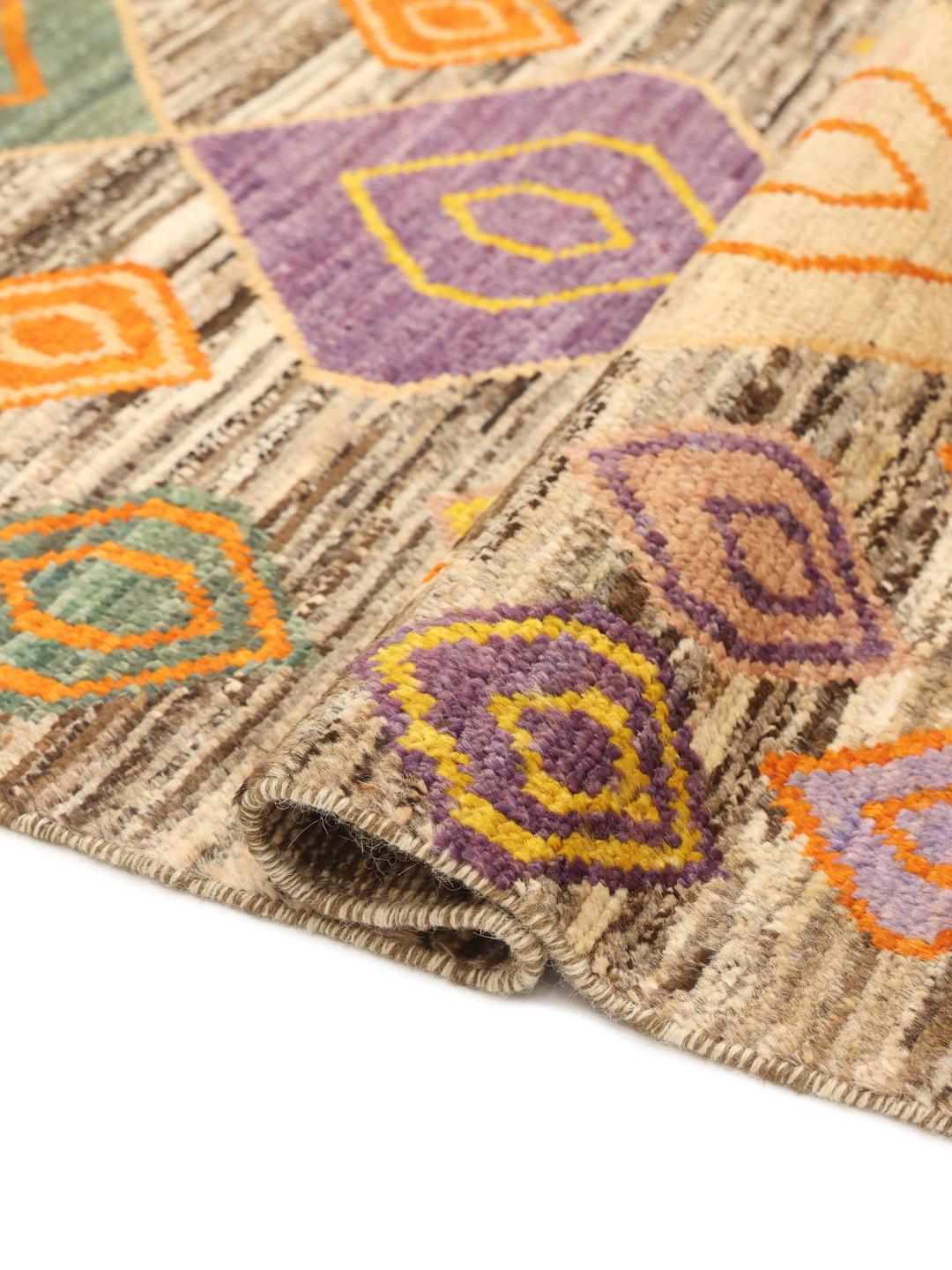
The term hand-knotted refers to the oldest and most respected method of rug making, where the pile is secured by tying individual knots around the foundation threads. This method is the foundation of quality in this tradition, as it allows for the intricate, long-lasting structure that gives these rugs their characteristic depth and resilience.
The signature design elements of these rugs are their bold, geometric motifs. Diamonds, often representing protection or fertility in traditional folklore, are a common feature. The use of vibrant, contrasting colours against a more muted, natural-toned background is a hallmark of this style, allowing the artistic, abstract patterns to take centre stage.
Owning a hand-knotted rug from this tradition is an investment in cultural heritage. It represents the skill of the artisan and the preservation of techniques passed down through generations. These pieces are highly valued by collectors not just for their aesthetic impact, but as authentic, tangible records of human craft and creativity.