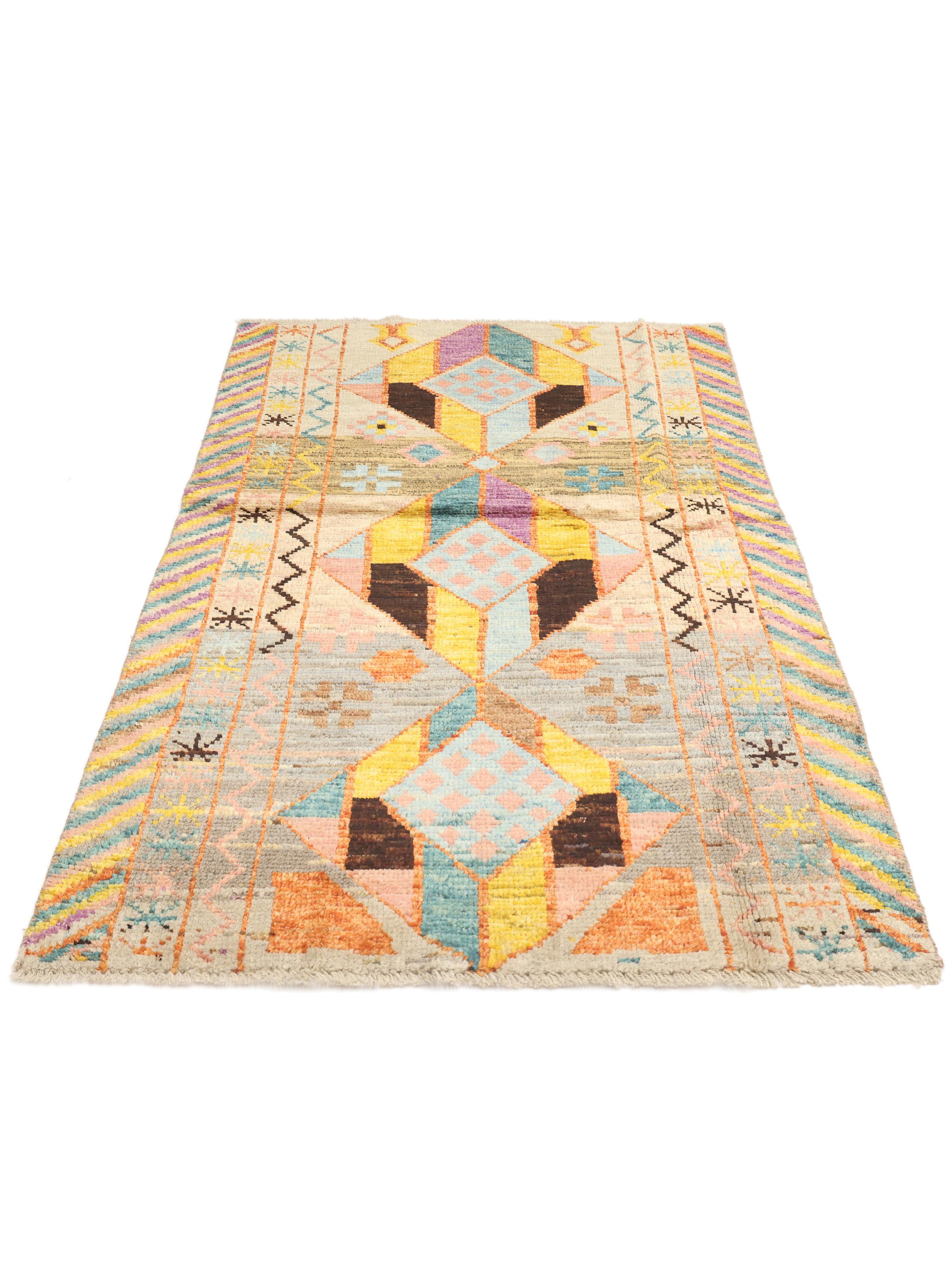
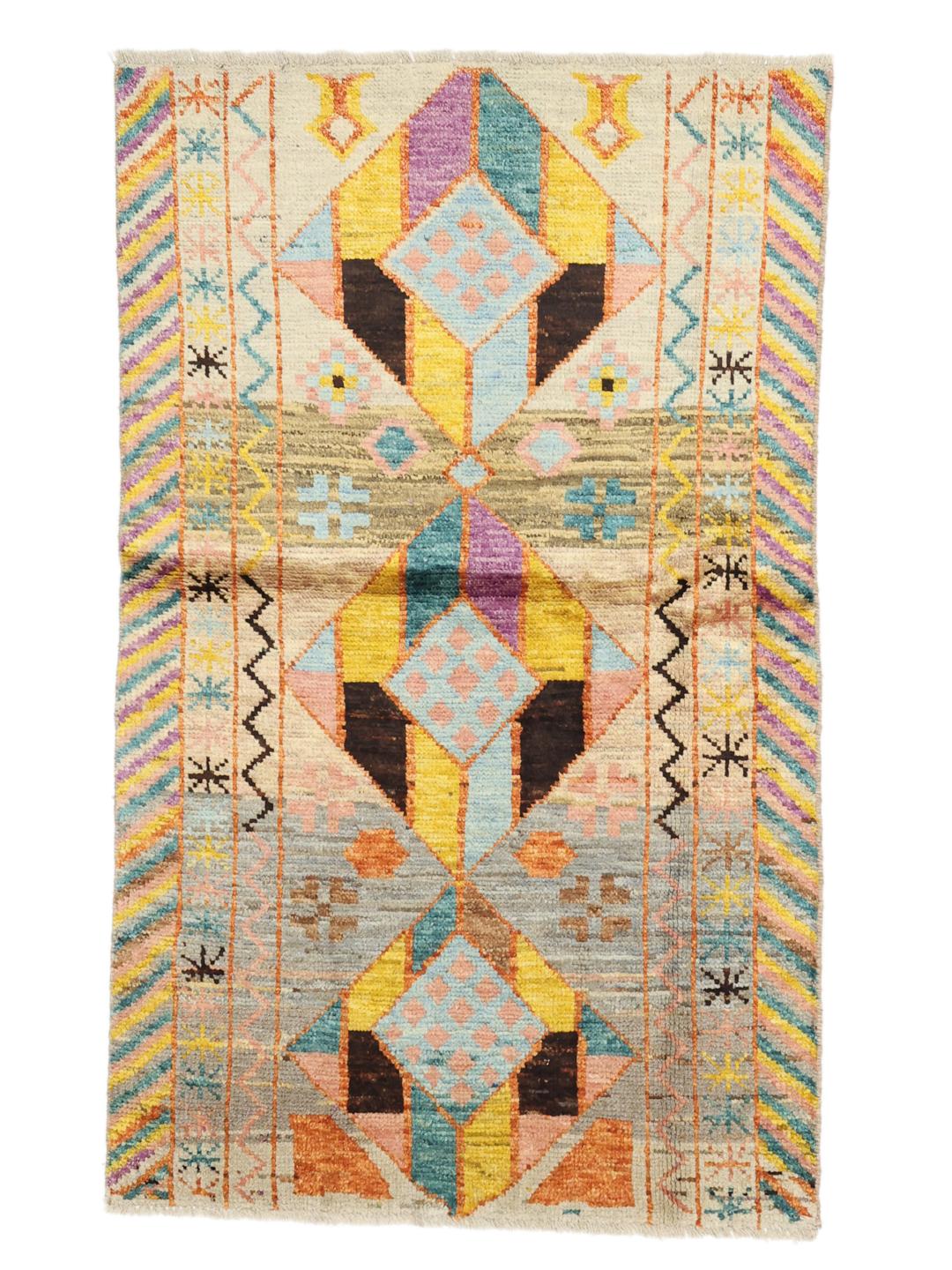
The Berber tradition is deeply embedded in the cultural history of North Africa and Central Asia, representing a legacy of nomadic weaving that has been passed down through generations. While the style is often associated with the Atlas Mountains, the migration of weaving techniques has allowed Afghan artisans to adopt and evolve these patterns, infusing them with their own unique regional flair and craftsmanship.
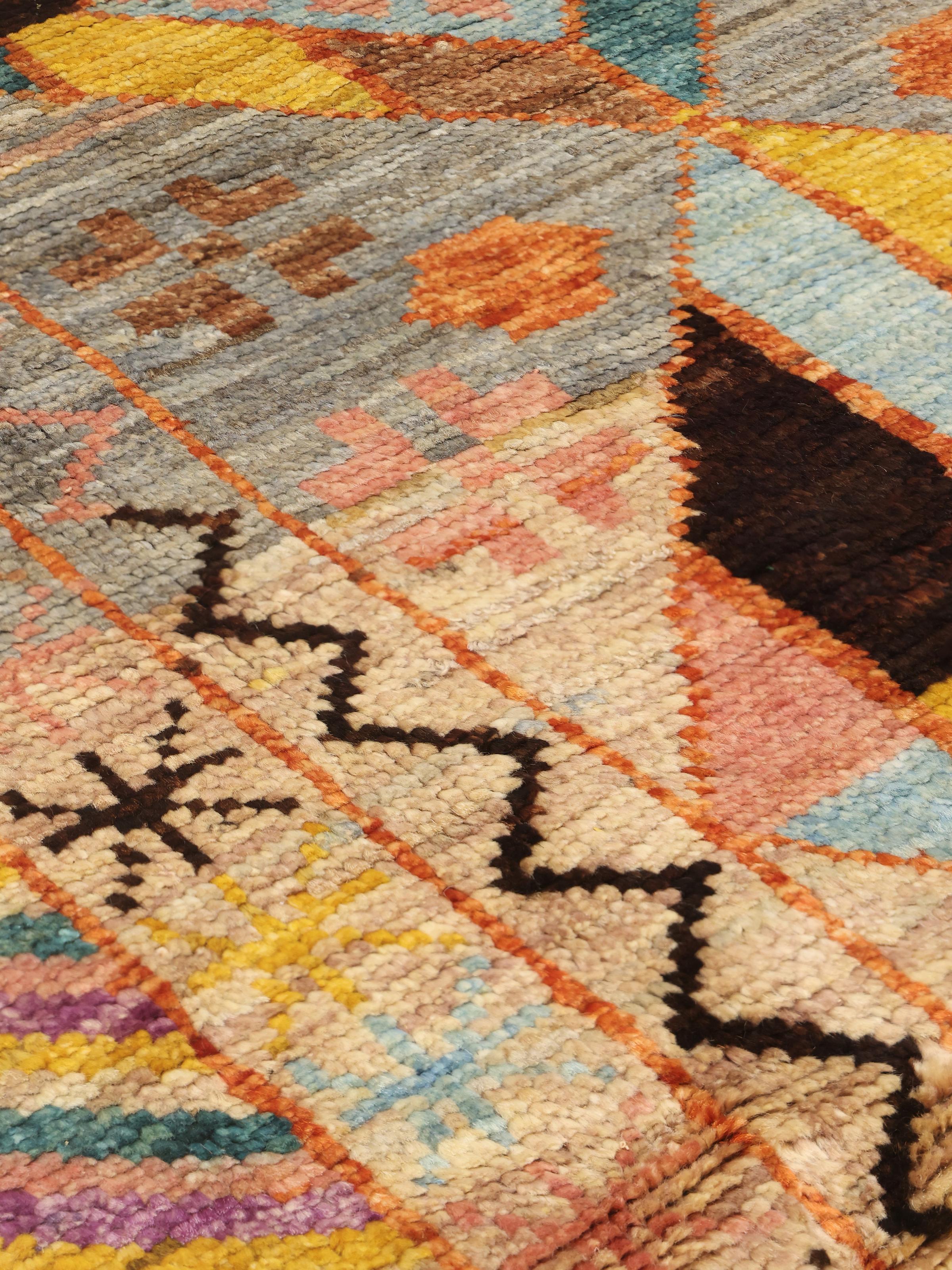
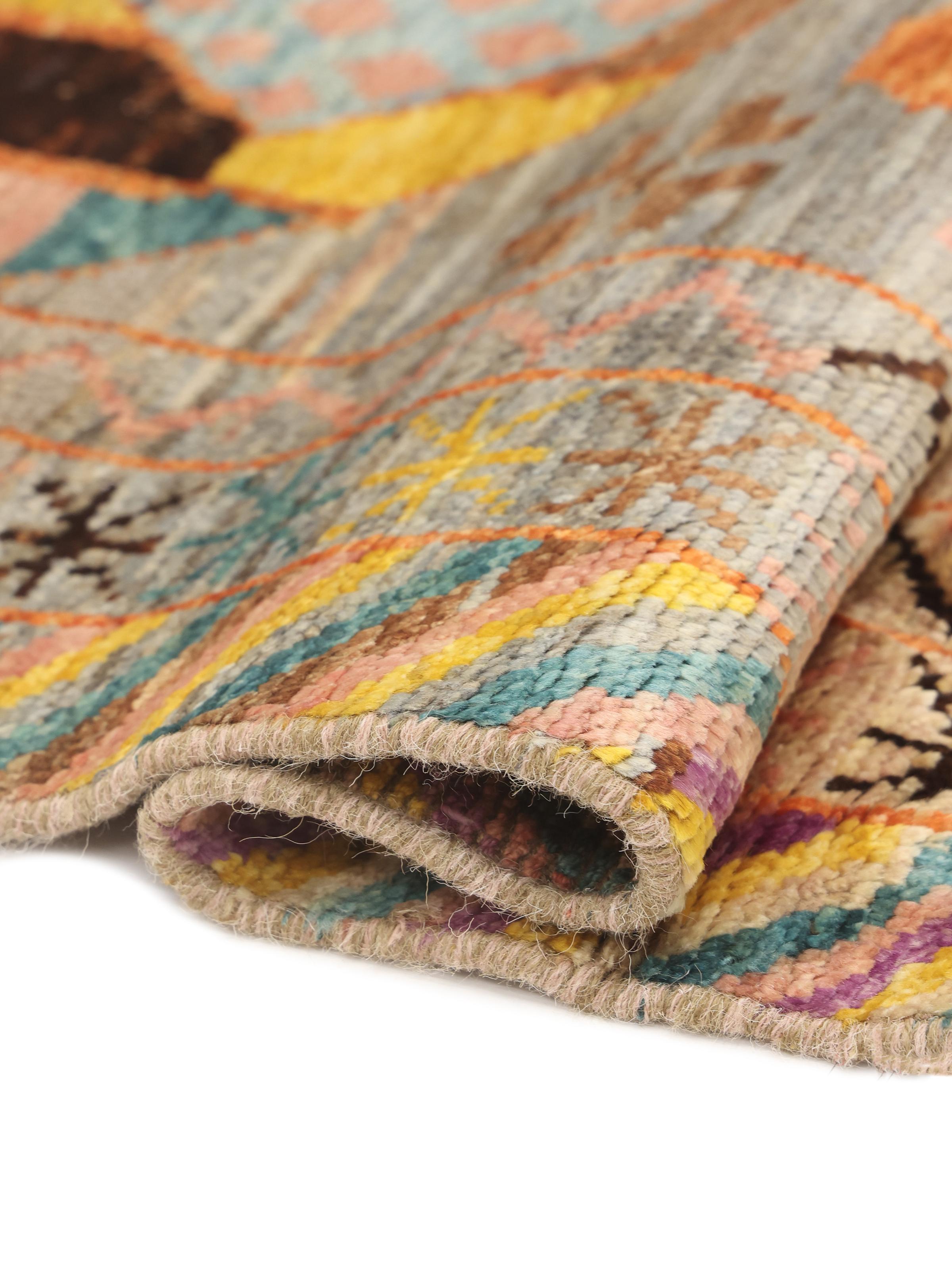
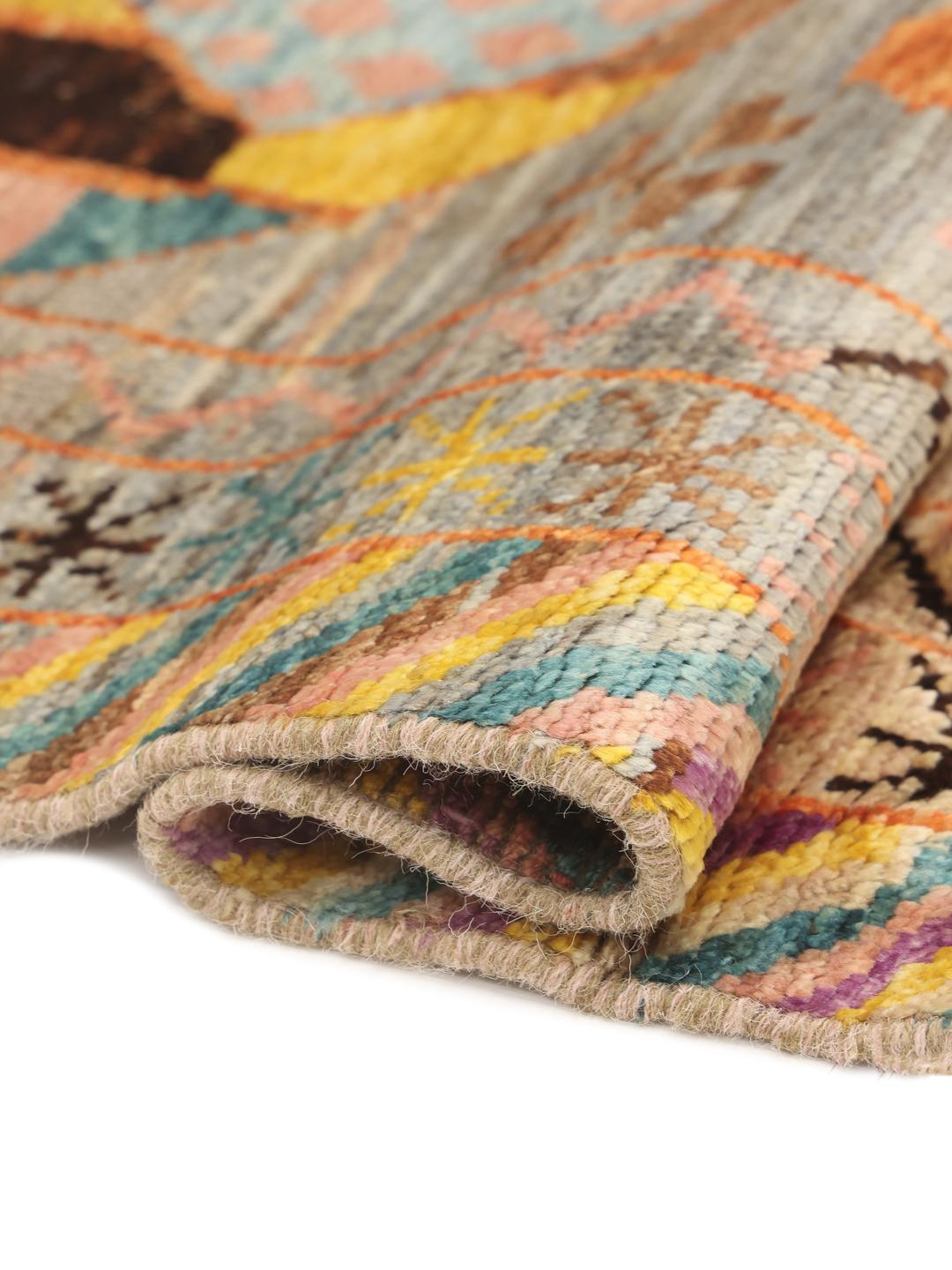
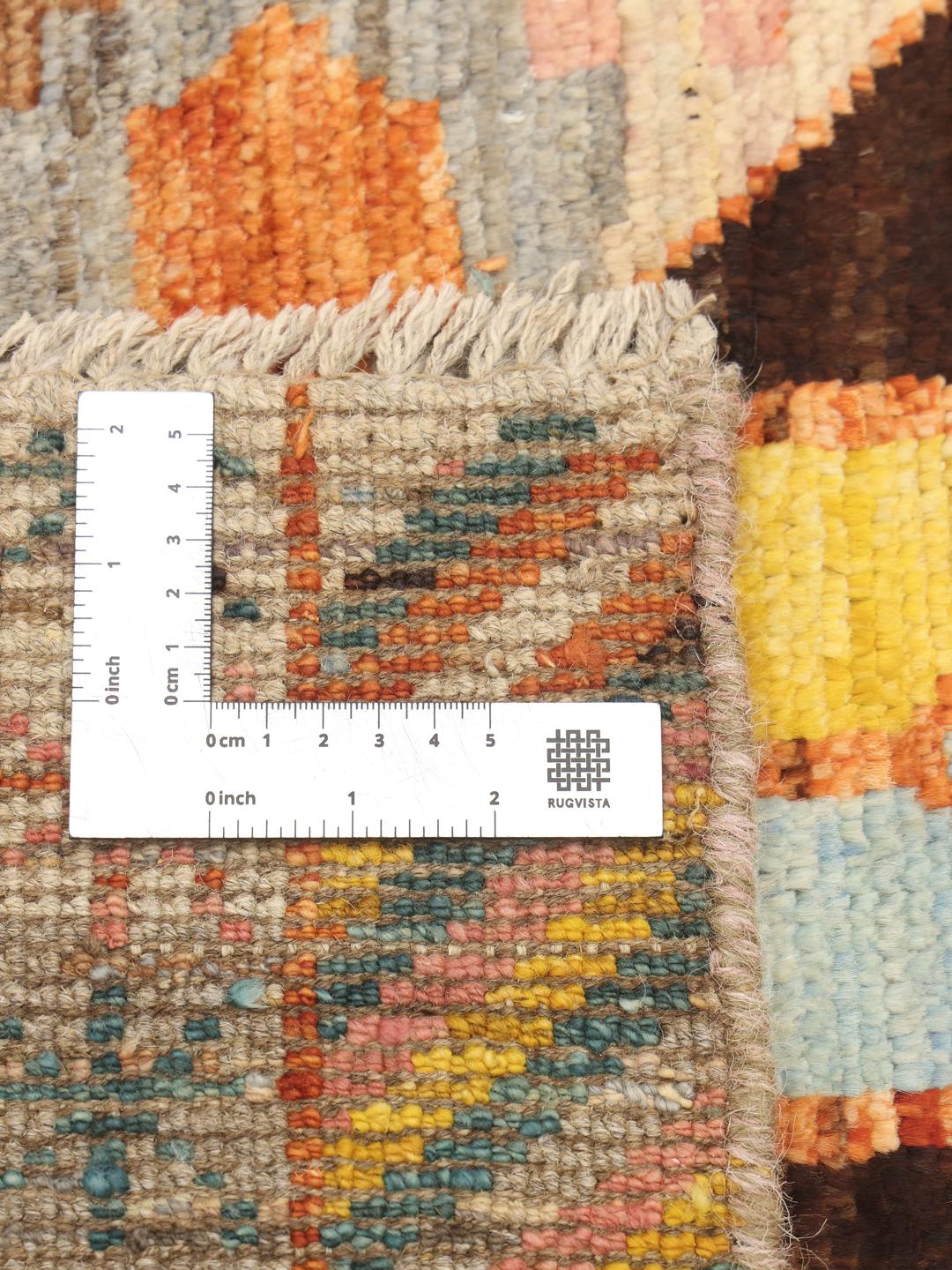
The term 'hand-knotted' refers to the labour-intensive process of tying individual strands of wool onto the foundation of the rug. This technique is the gold standard for quality, as it allows for the creation of intricate, durable designs that simply cannot be replicated by machines. The result is a pile that is incredibly resilient, maintaining its soft texture and vibrant colours even with regular use.
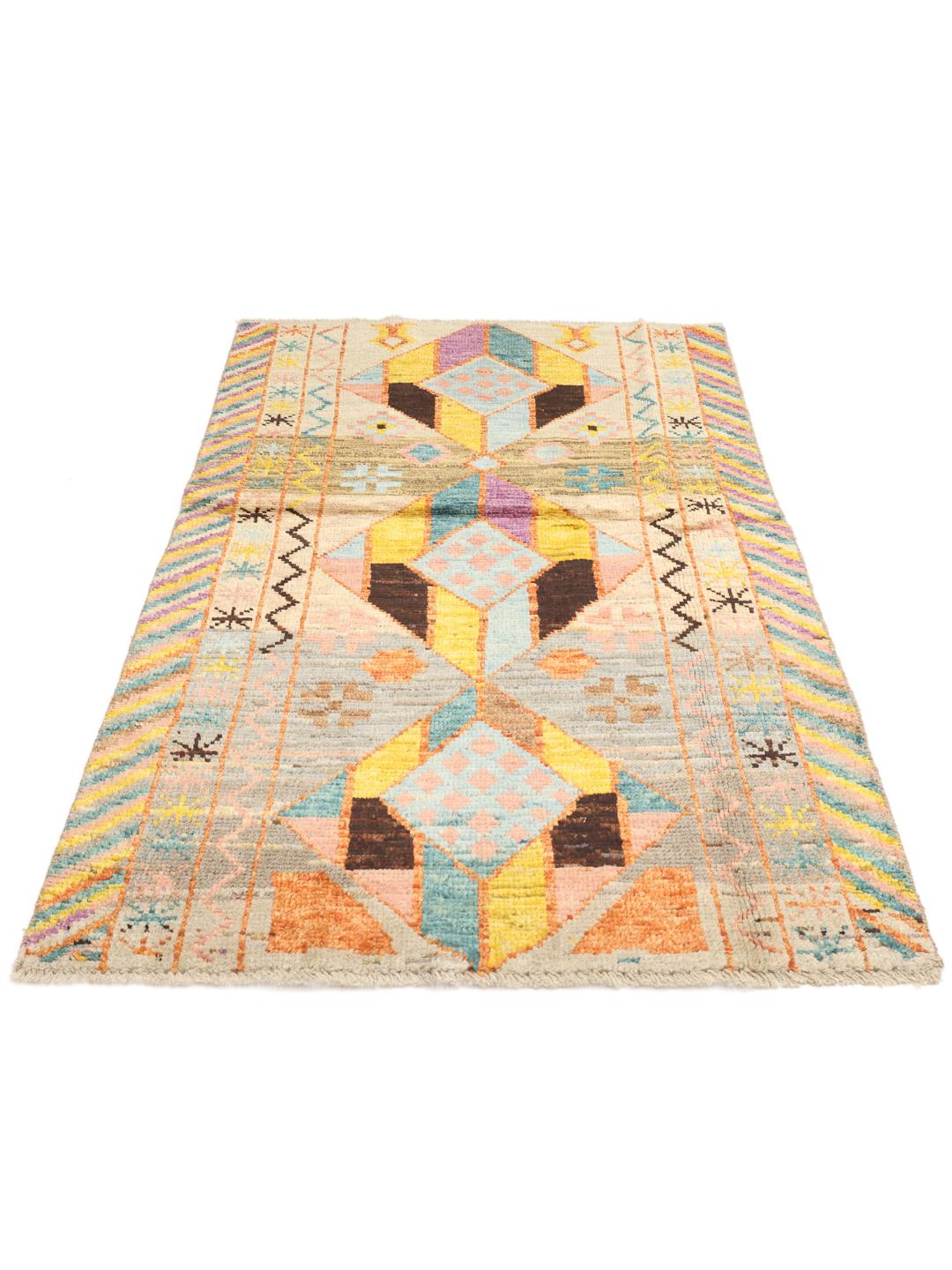
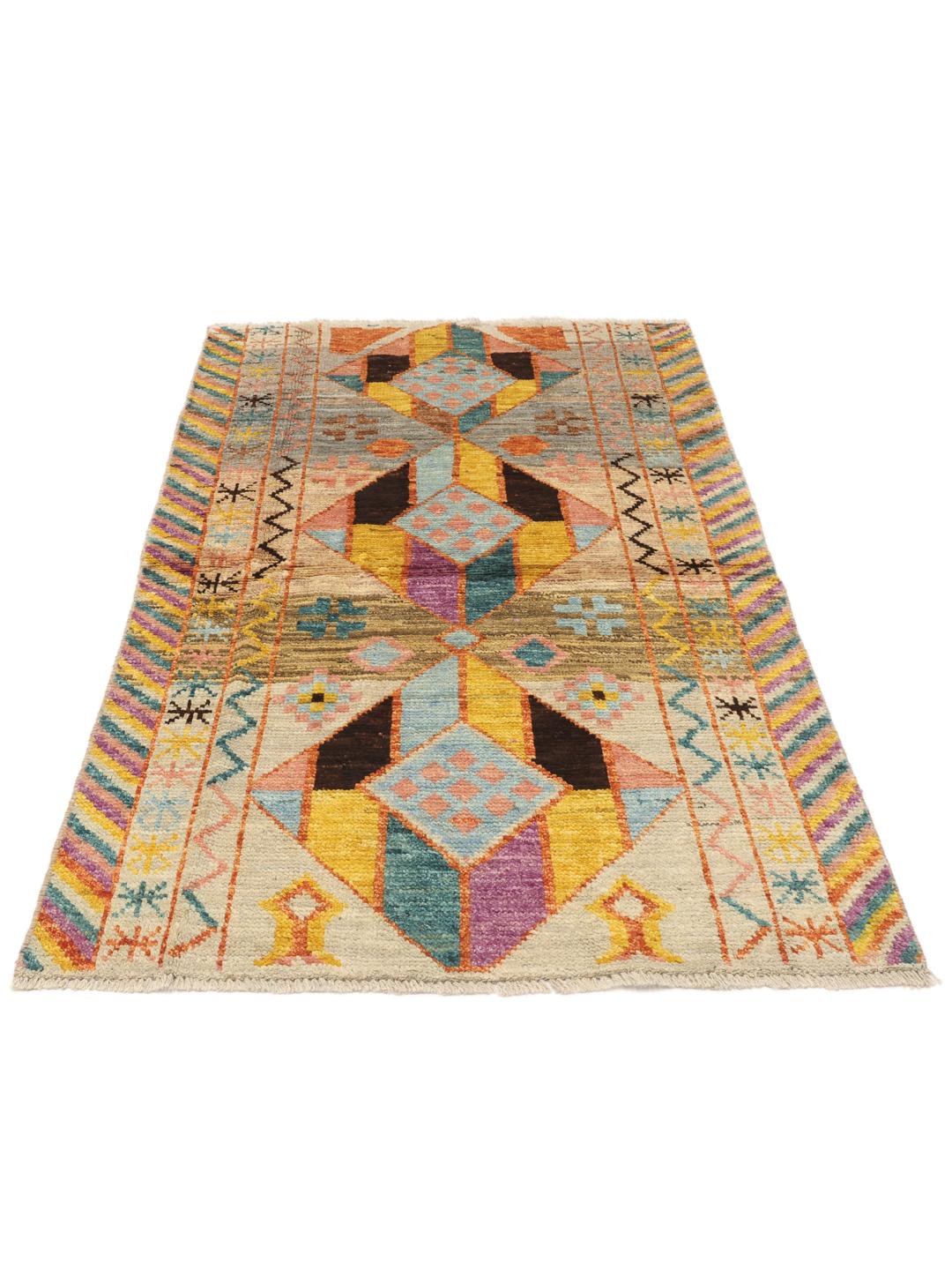
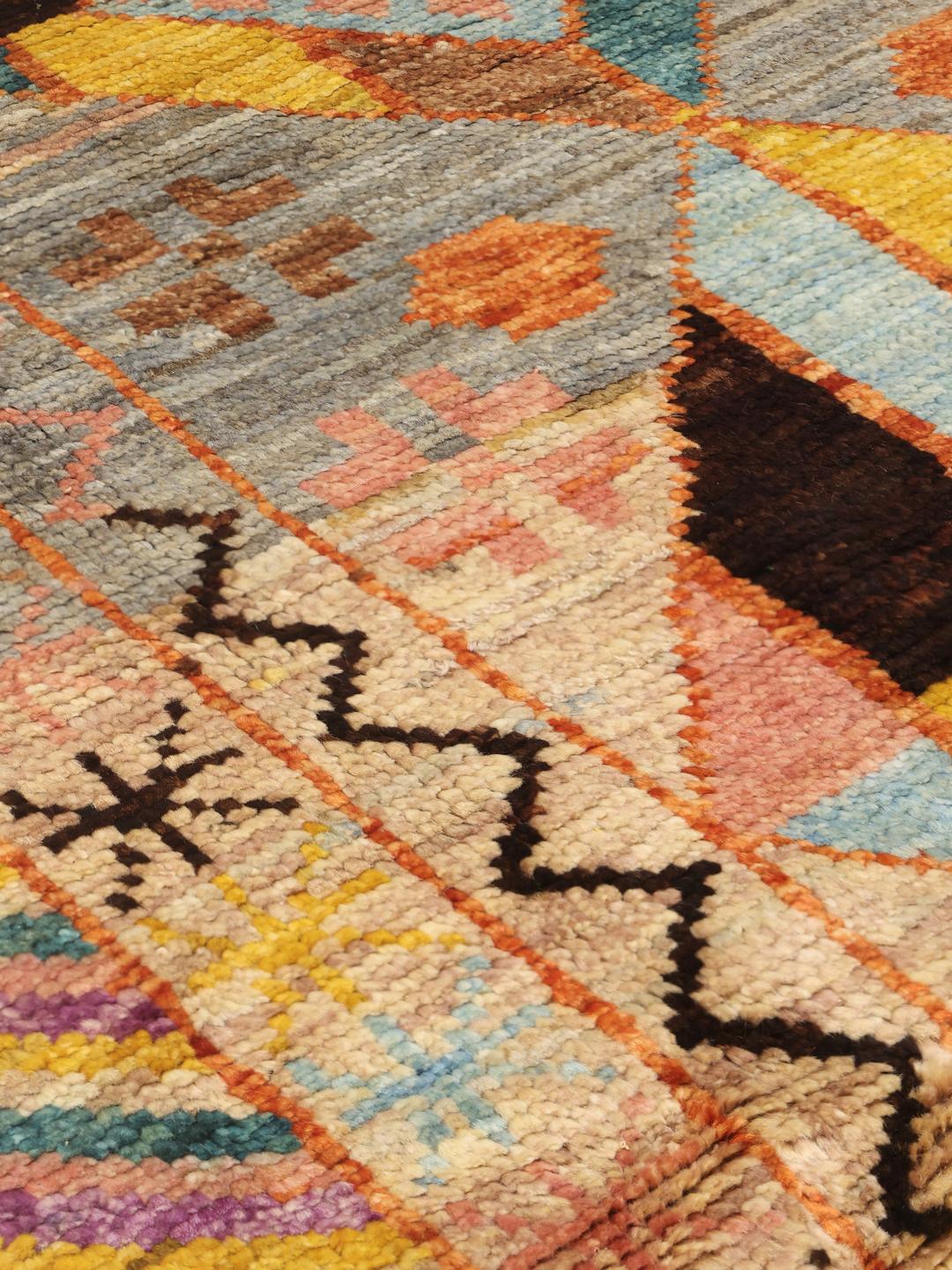
Design-wise, these rugs are defined by their bold use of geometric shapes and symbols. The repeating diamonds and tribal motifs seen here are characteristic of this tradition, often serving as a visual language that tells stories of the weaver's community and environment. The use of such a wide, bright colour palette is a modern interpretation that breathes new life into these ancient, time-honoured patterns.
Owning a hand-knotted rug from this tradition is about more than just decor; it is about preserving a craft that values human touch over mass production. Collectors and homeowners alike value these pieces for their authenticity, their connection to a rich cultural lineage, and the undeniable sense of character they bring to a living space. By choosing such a piece, you are supporting a tradition of excellence that has endured for centuries.