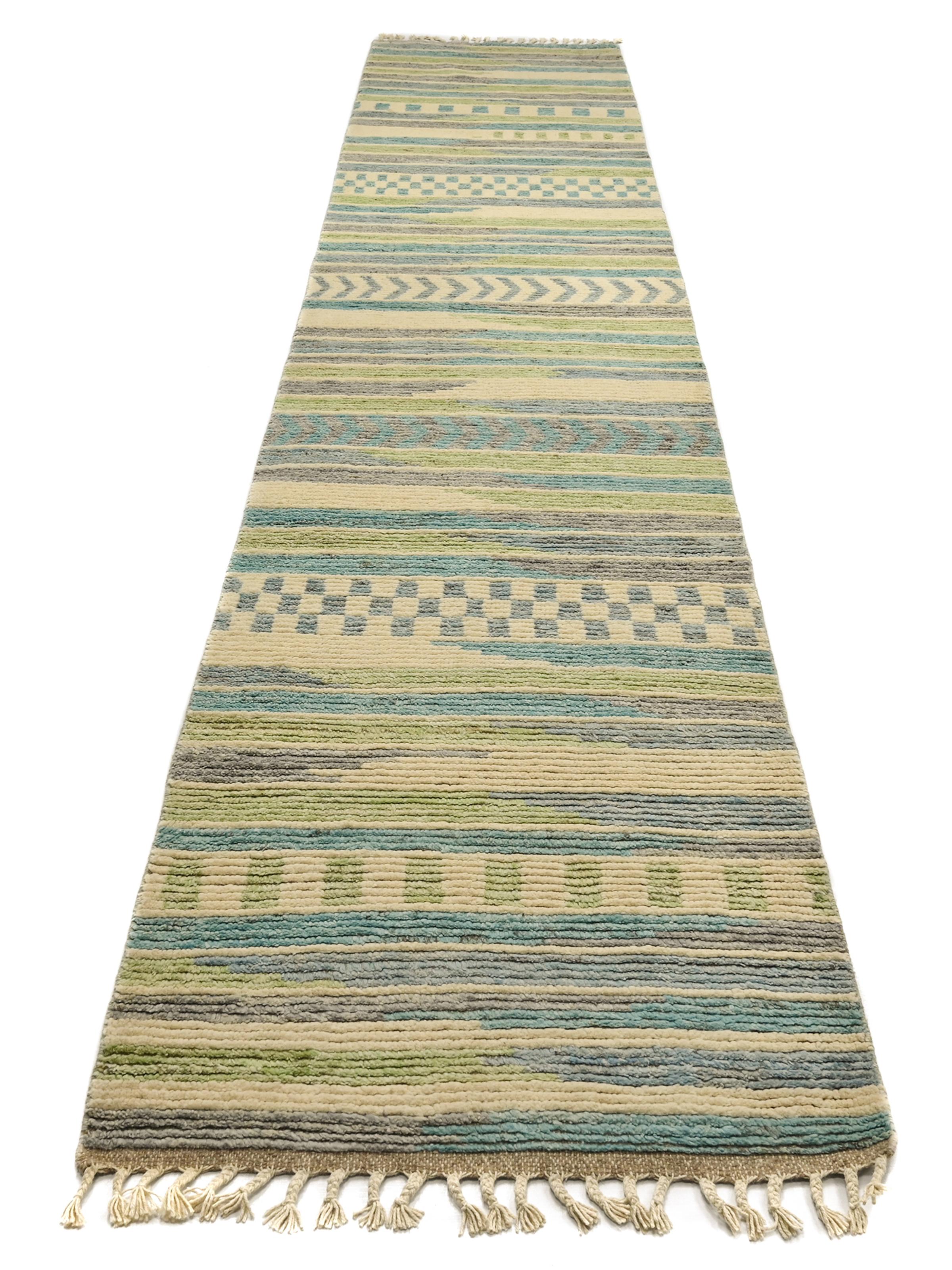
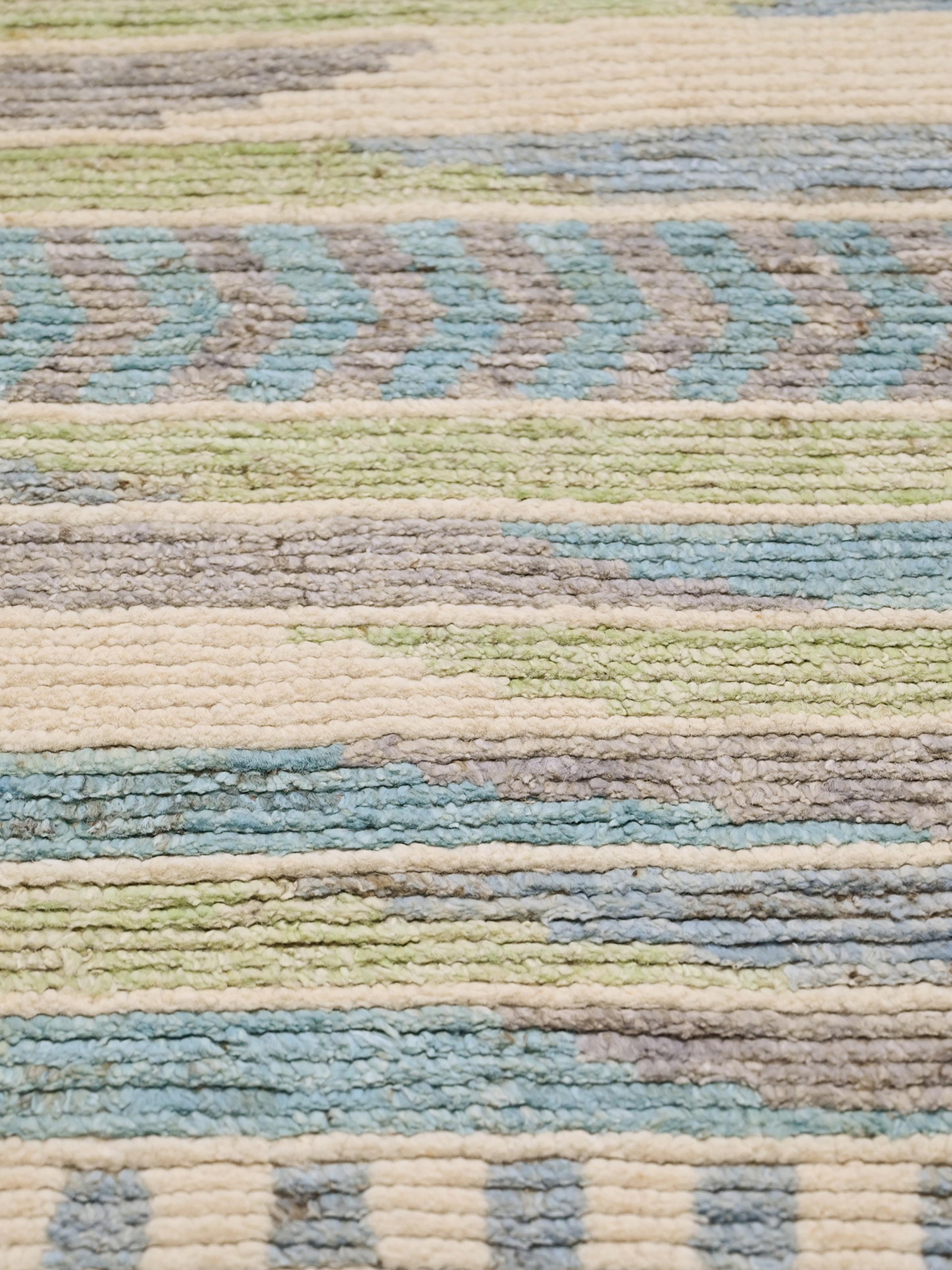
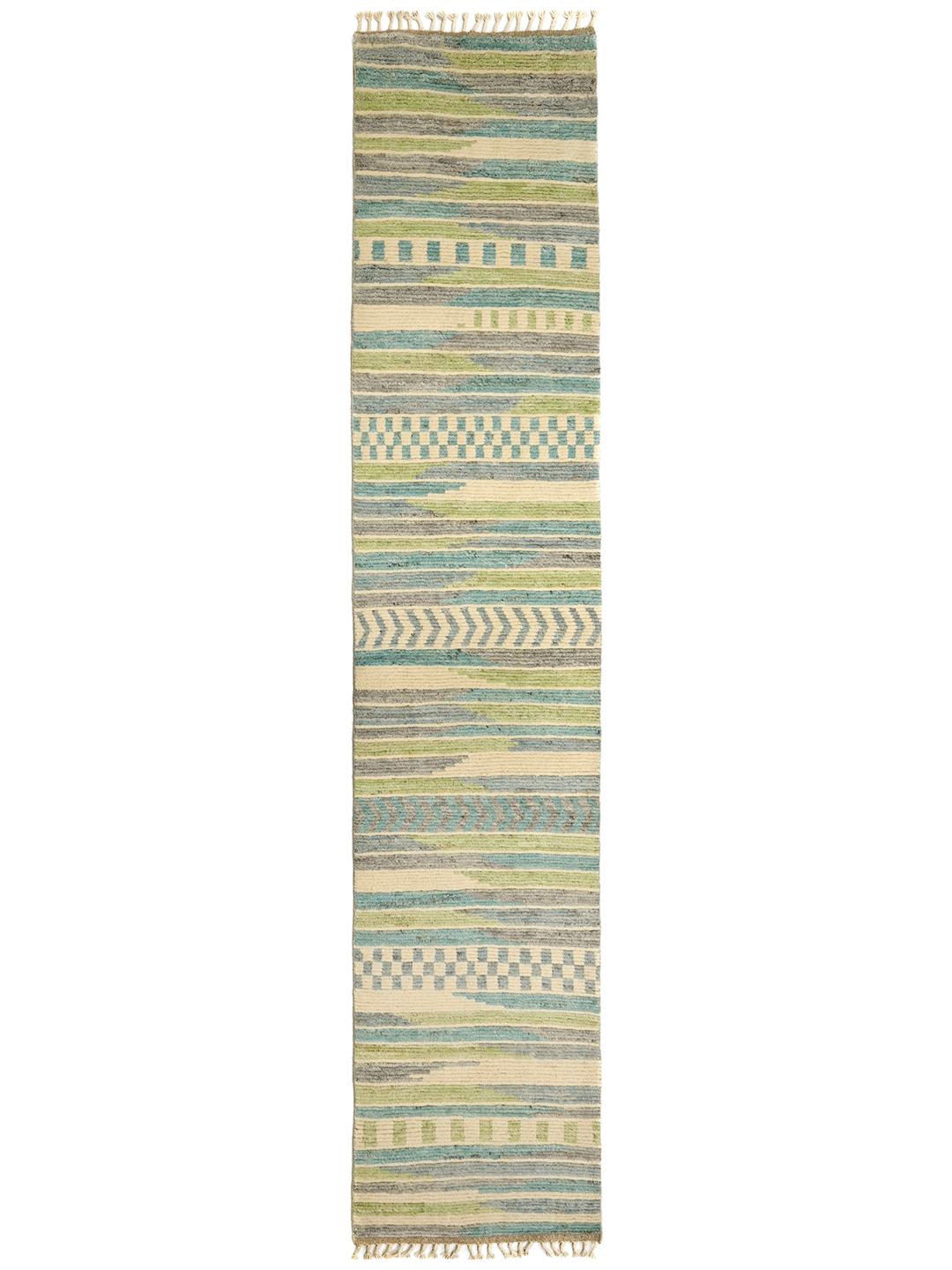
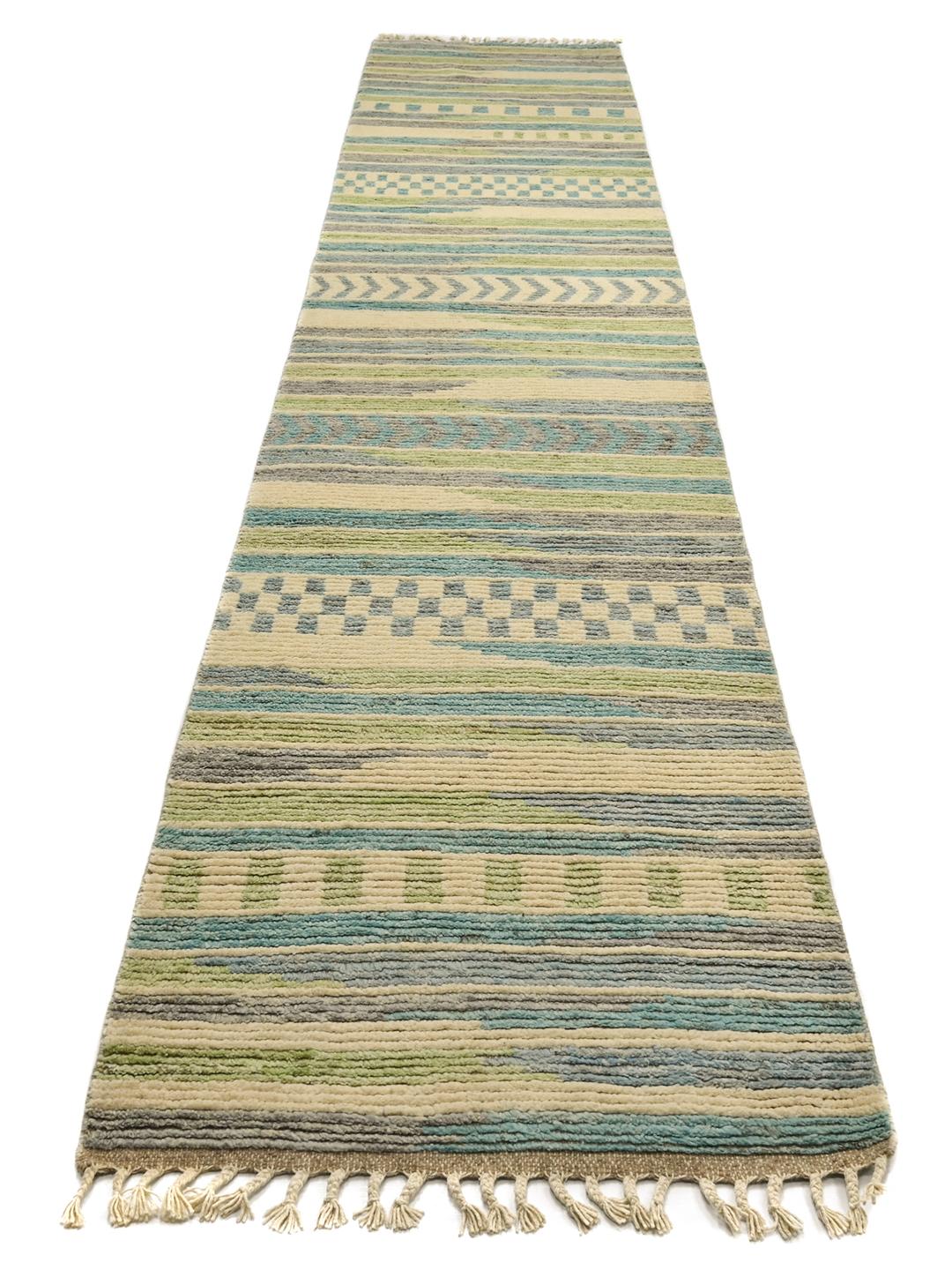
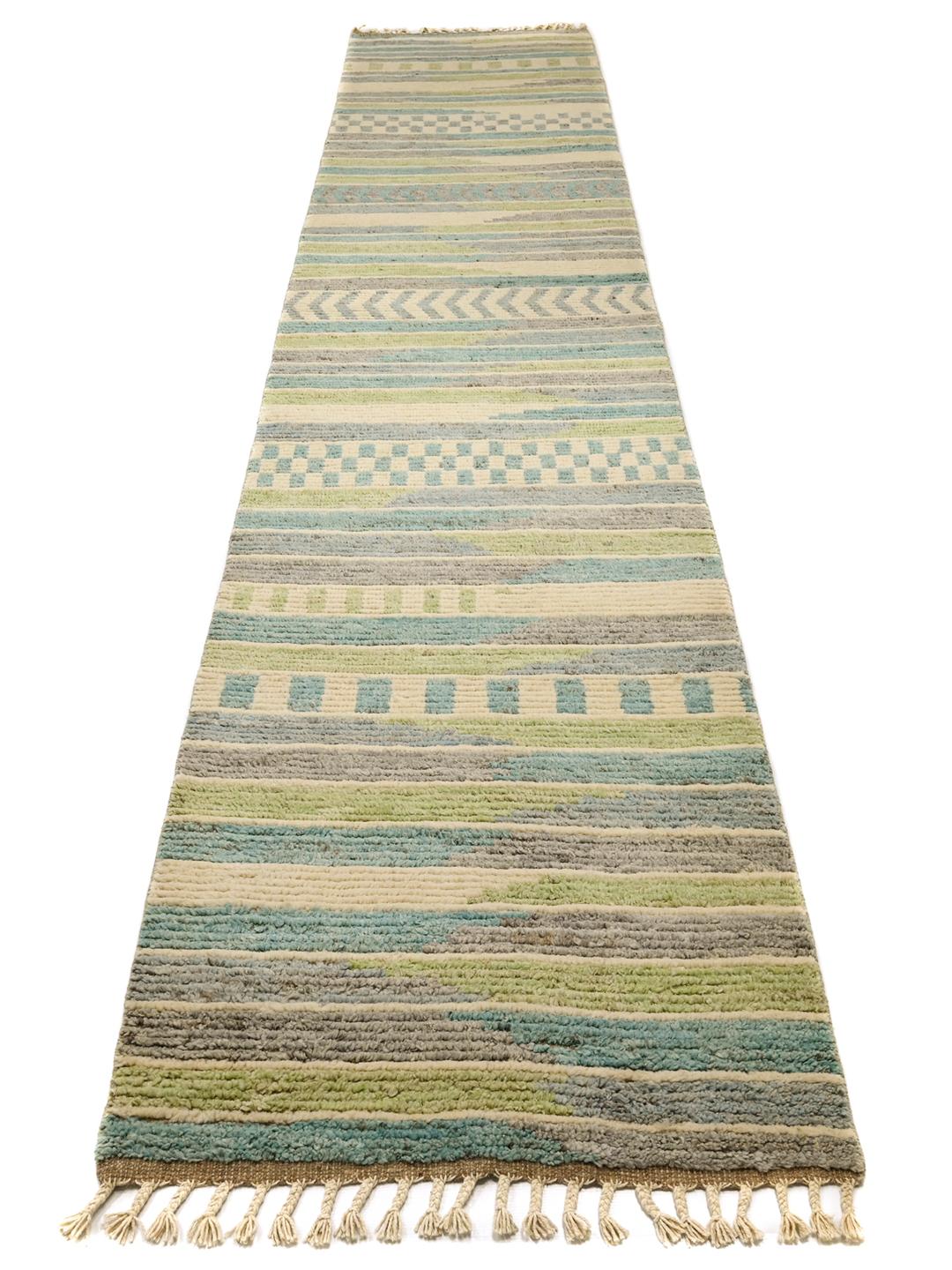
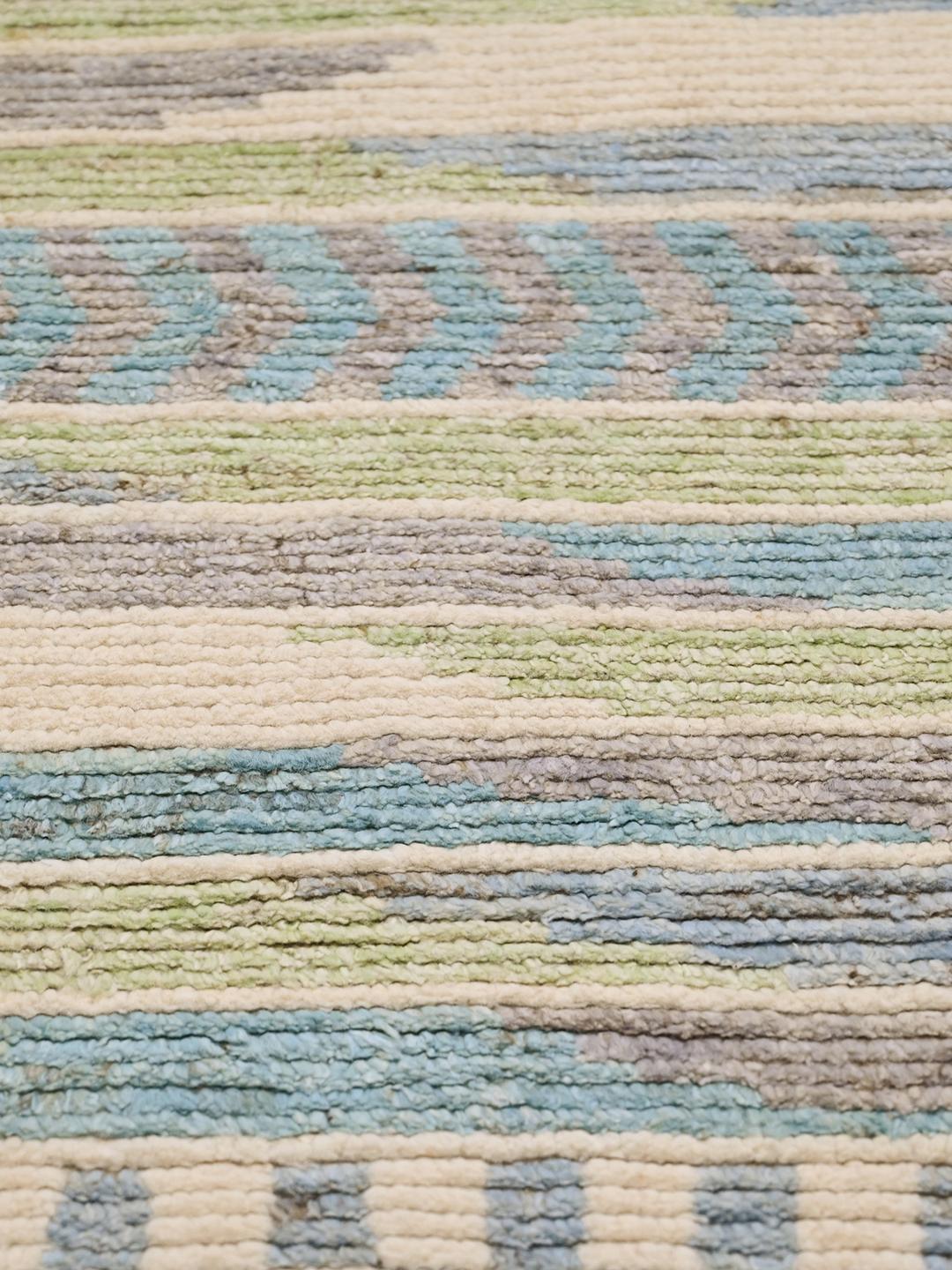
Berber weaving traditions originated with the indigenous nomadic tribes of North Africa, where rugs were crafted primarily for practical protection against extreme climates. Over generations, these weaving methods spread across neighboring regions and inspired carpet-making communities throughout Central Asia and Afghanistan, where artisans adapted the expressive style using local wools and traditional dye methods.
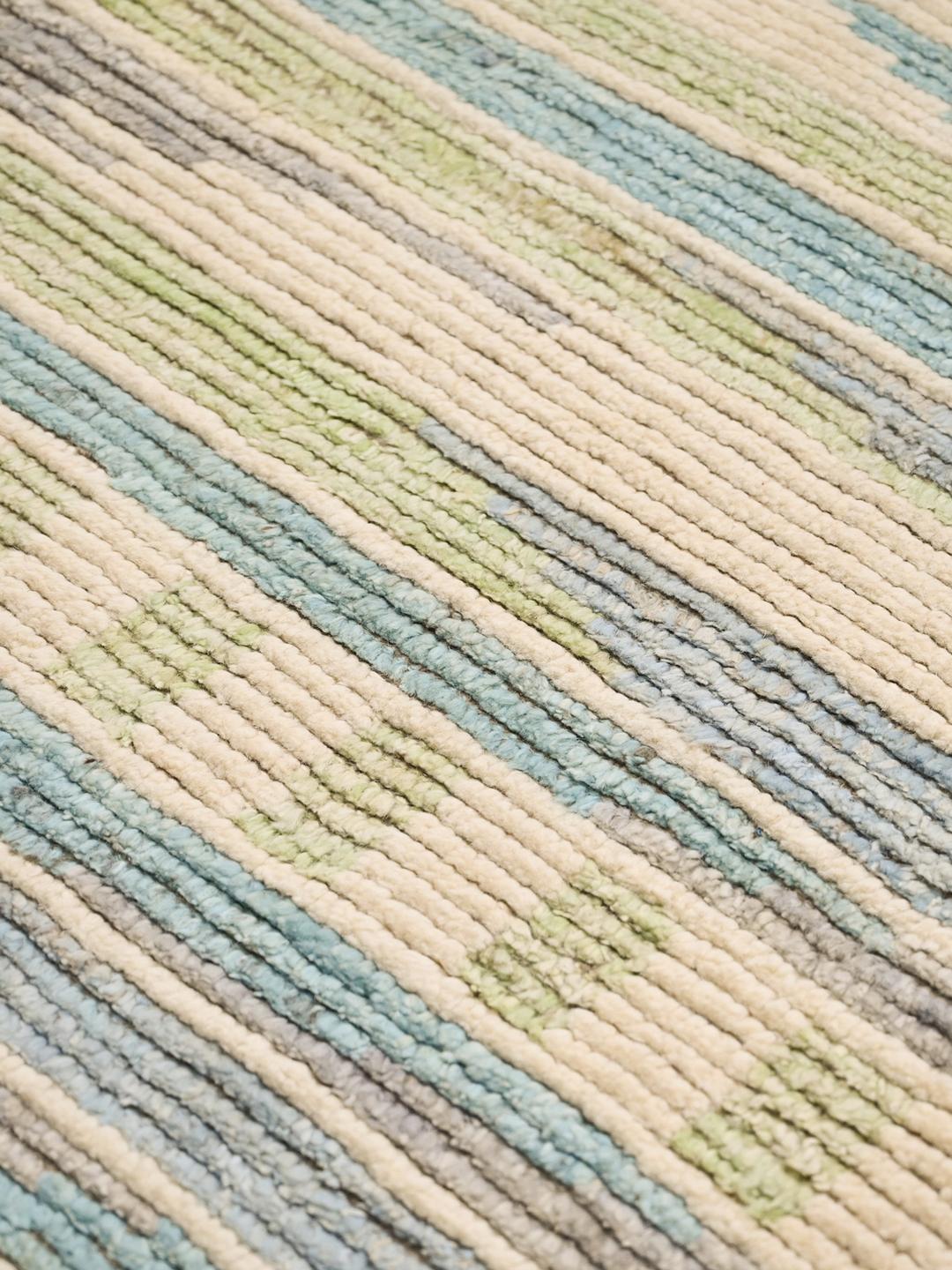
The term Berber in modern weaving refers to a style characterized by thick pile constructions, expressive geometric shapes, and intuitive compositions. Unlike formal city rugs that follow rigid technical blueprints on paper, these runners are often woven from memory, allowing the craftsperson to weave personal storytelling directly into the loom.
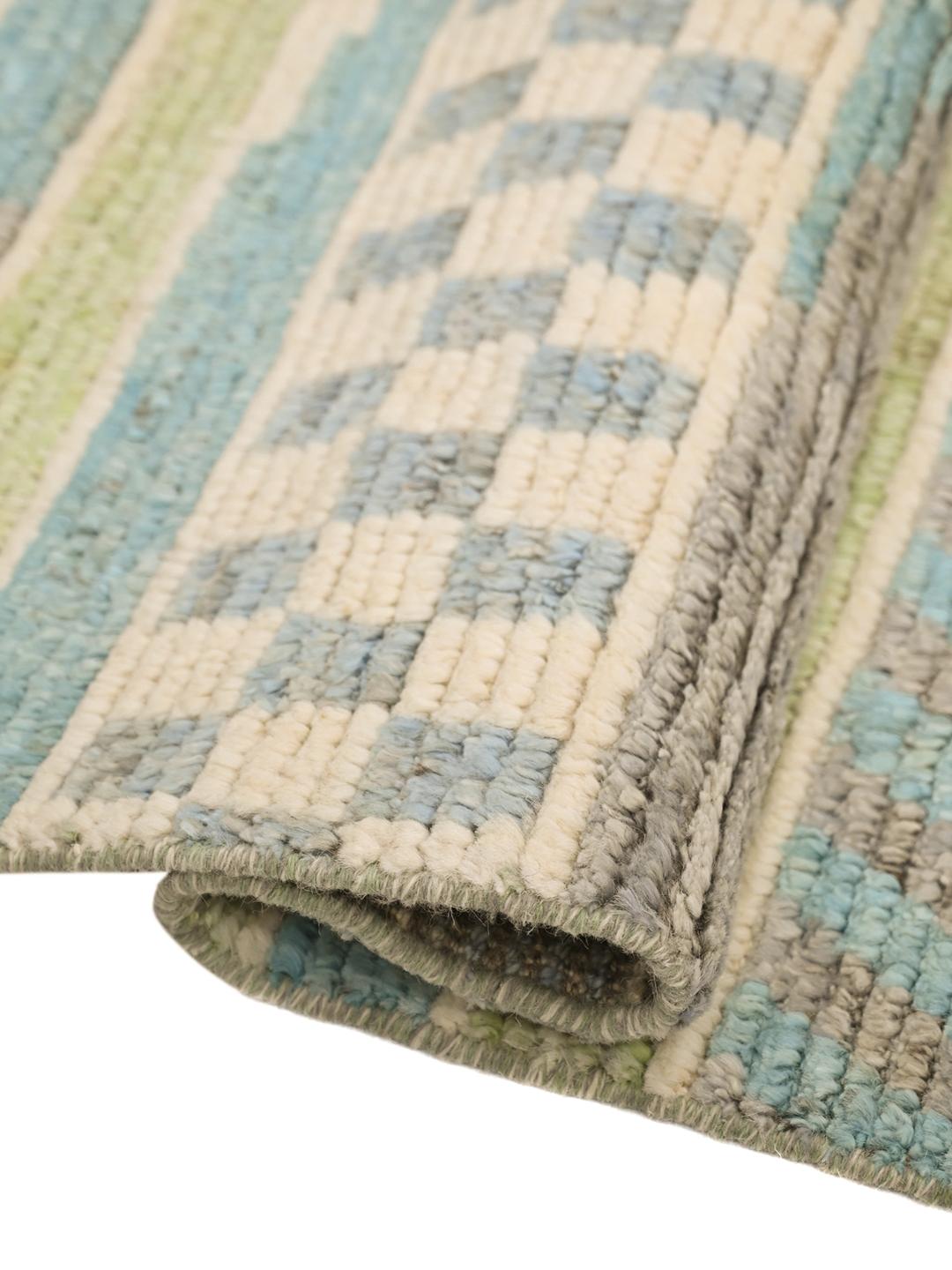
Visual signature elements include repeating geometric diamonds, chevrons, and playful horizontal stripes. While traditional Moroccan pieces often favor neutral cream and charcoal tones, Afghan interpretations frequently embrace richer color palettes, incorporating soft greens, teals, and earthy warm shades alongside timeless tribal symbols.
Collectors and design enthusiasts value Berber rugs for their bridge between authentic rustic craft and modern relaxed interiors. Acquiring a hand-knotted Berber runner means bringing a piece of living textile history into your home, celebrated for its individual spirit and enduring aesthetic appeal.