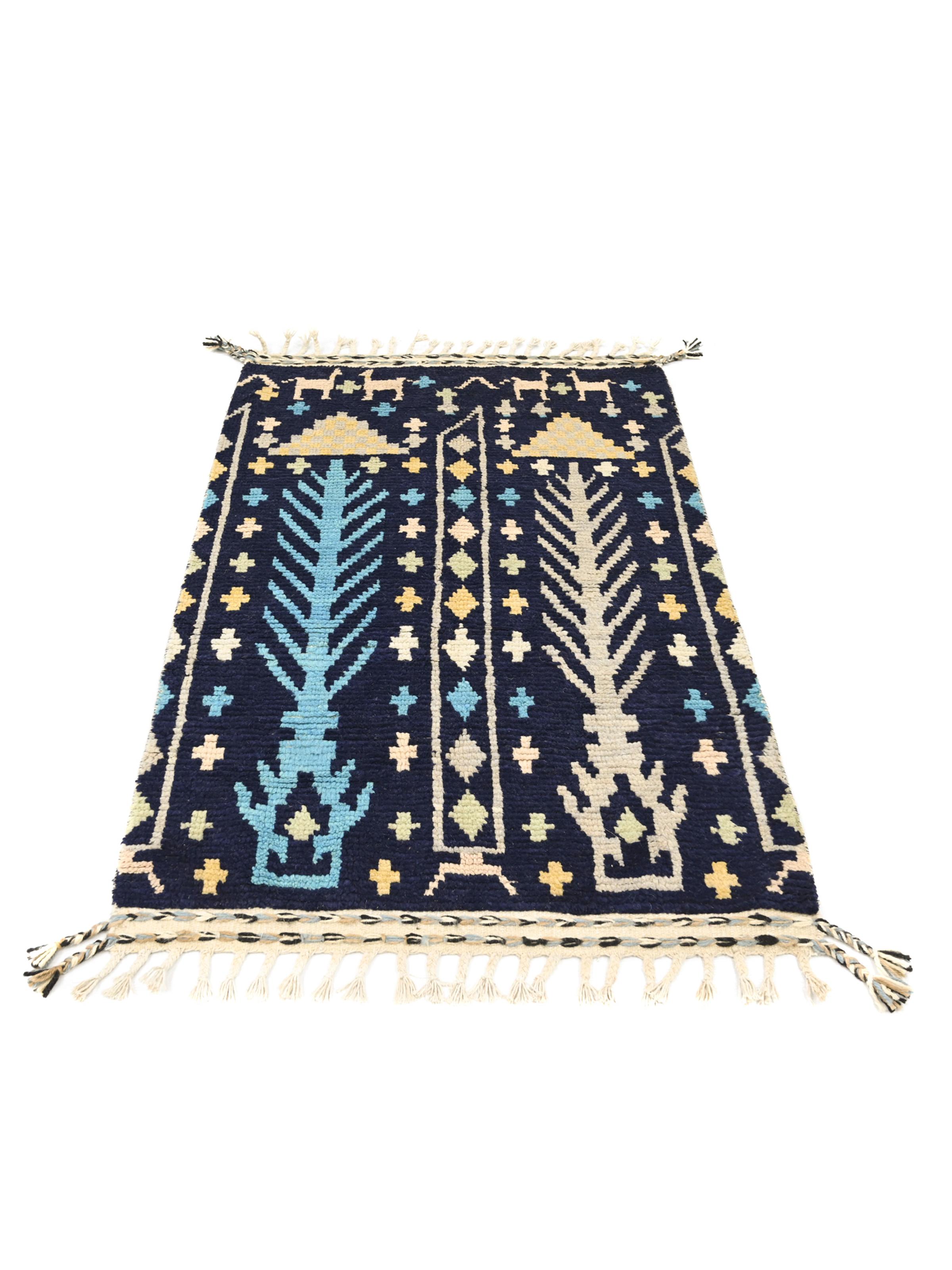
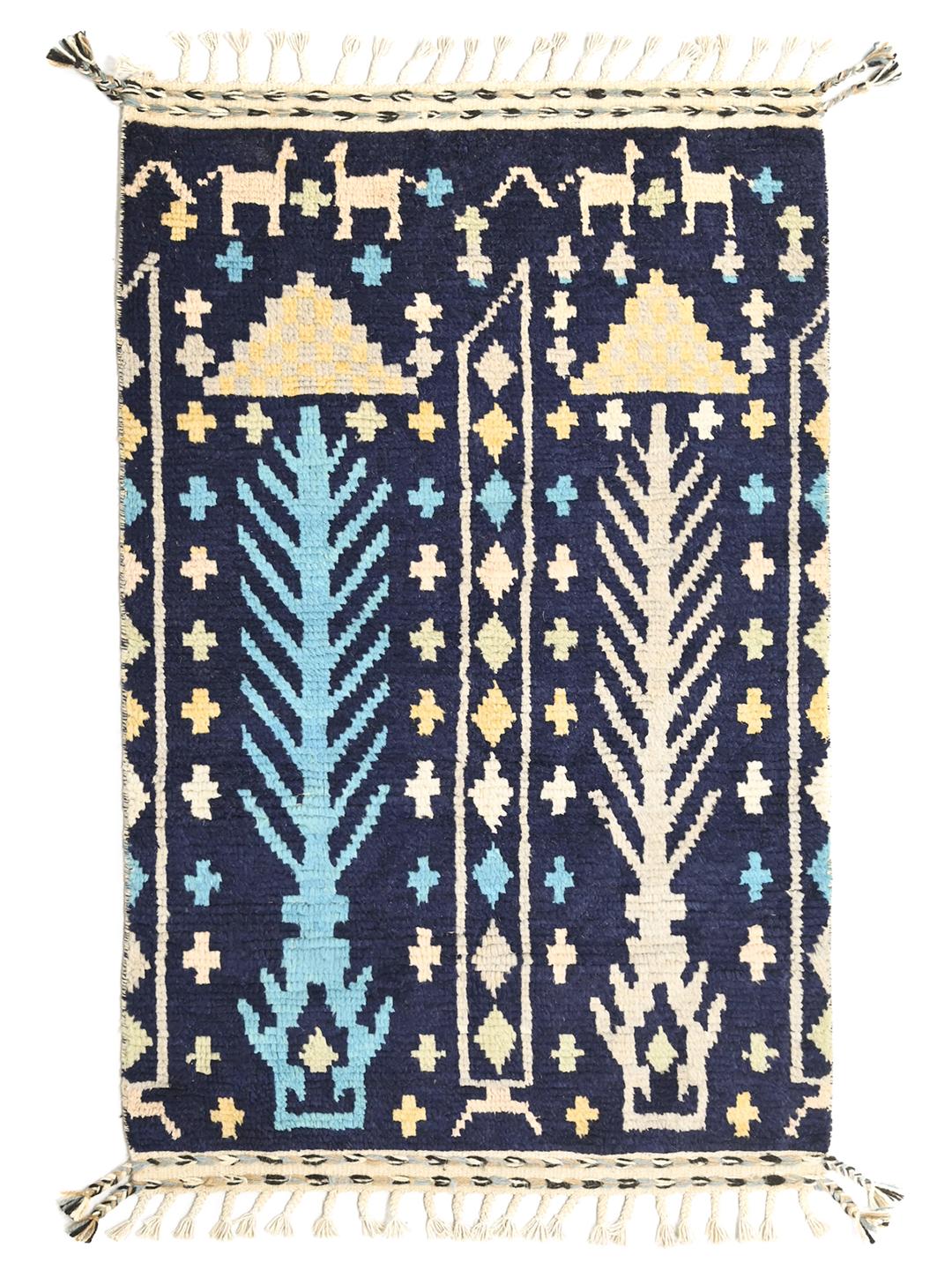
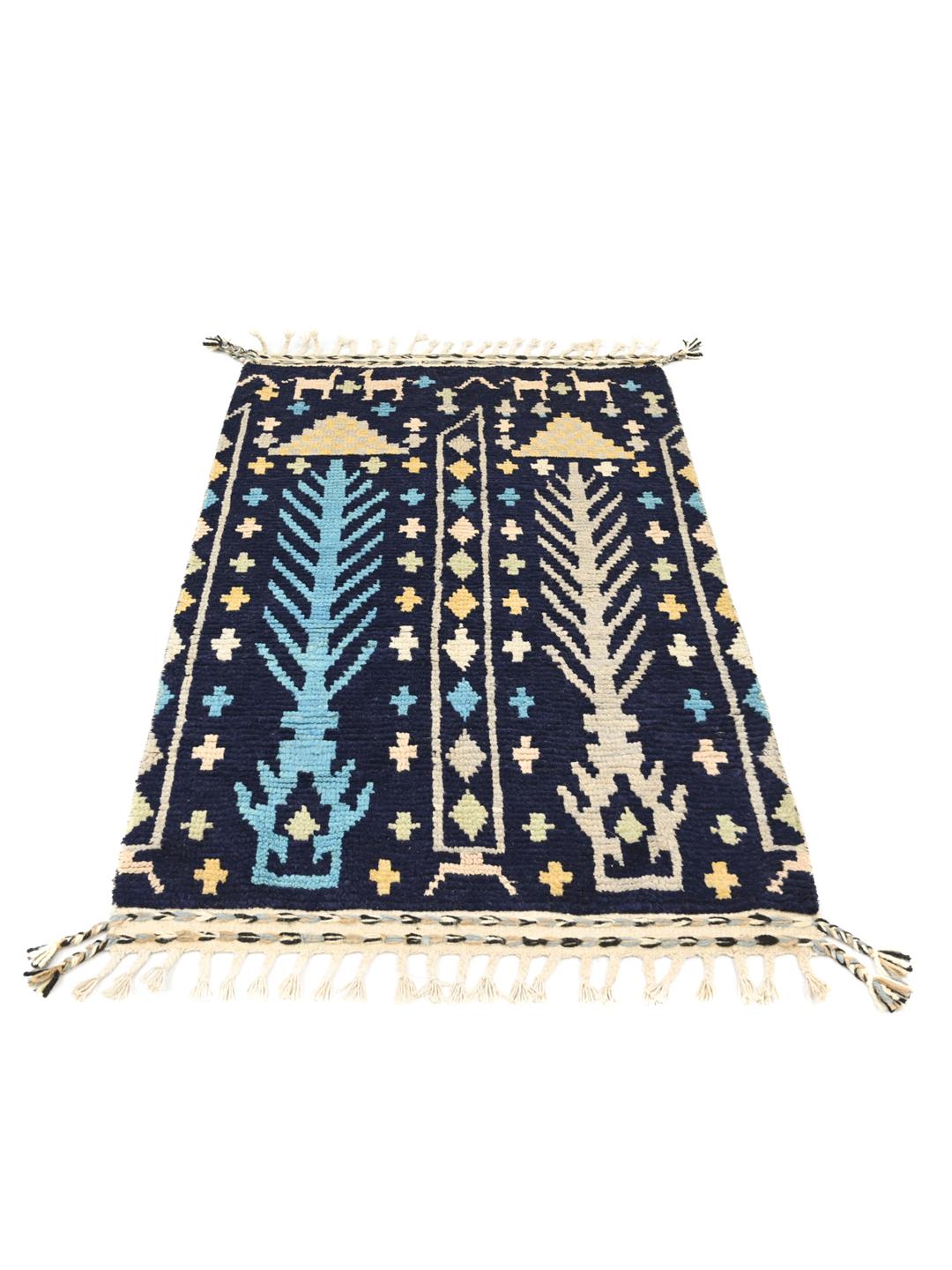
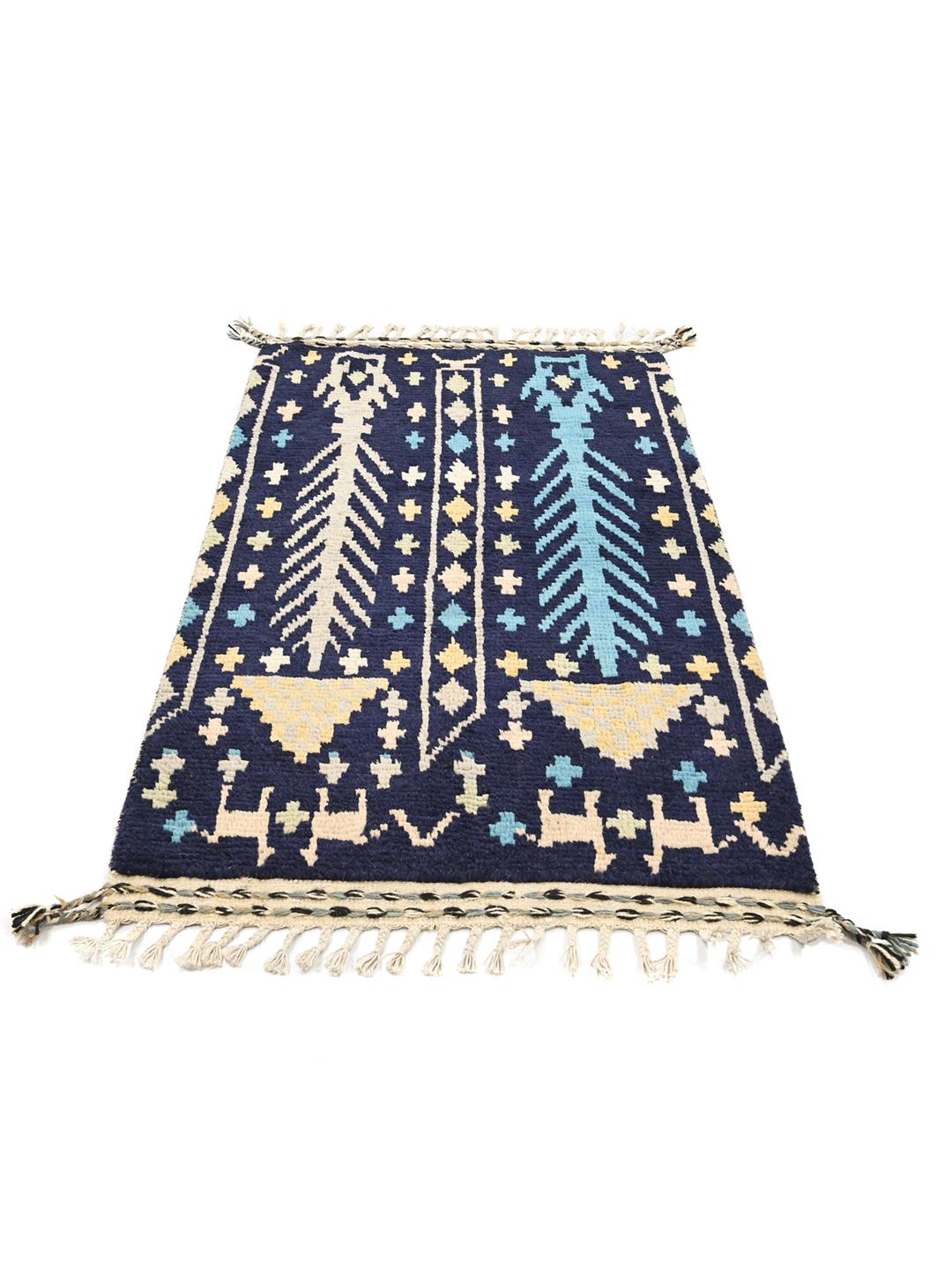
Berber rug weaving traditions originated among the indigenous tribes of North Africa, but the distinctive aesthetic has inspired weaving communities across traditional rug-making regions, including Afghanistan. Afghan weavers have embraced these expressive, tribal design languages, blending local weaving techniques with traditional symbolic patterns.
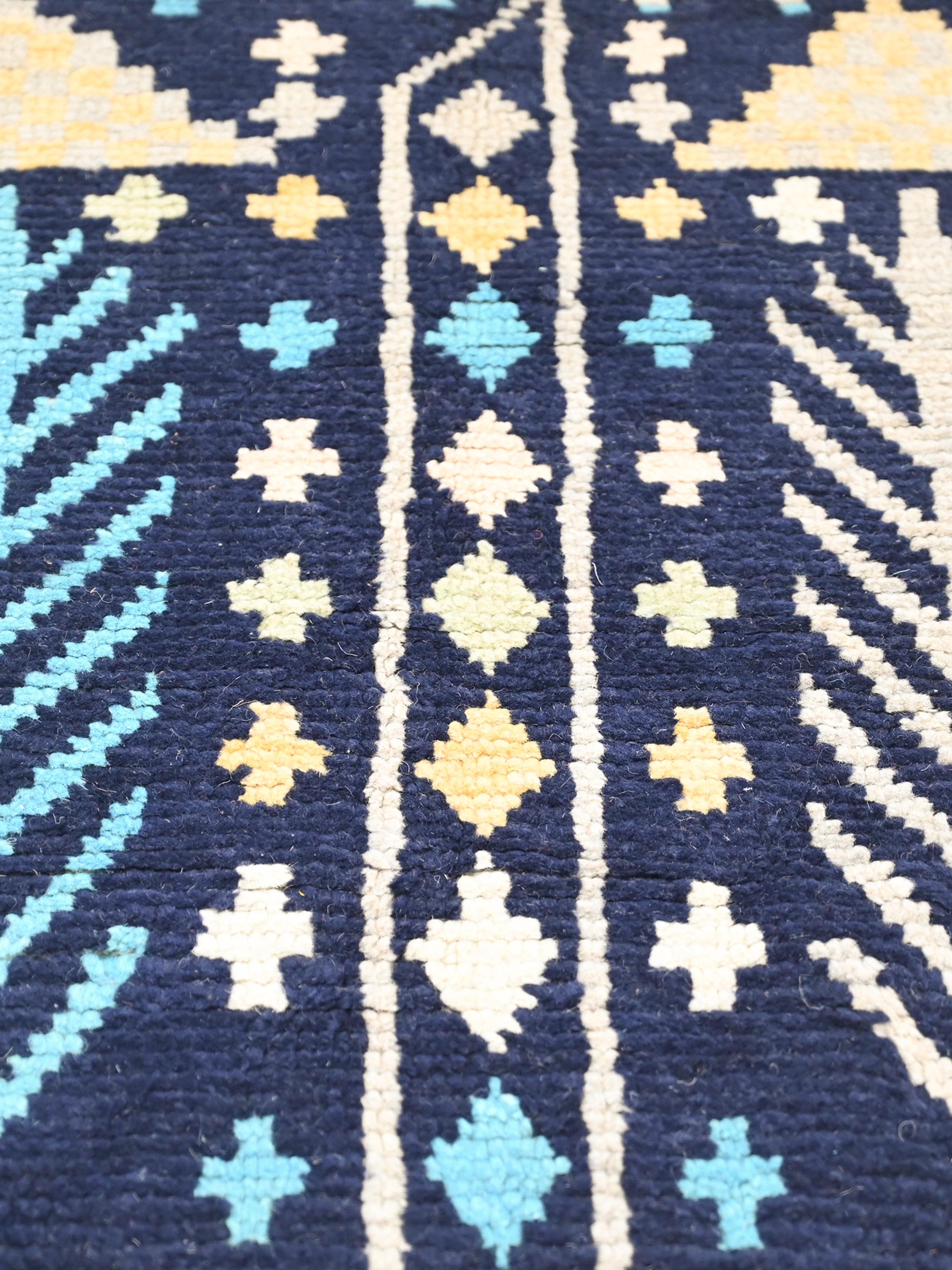
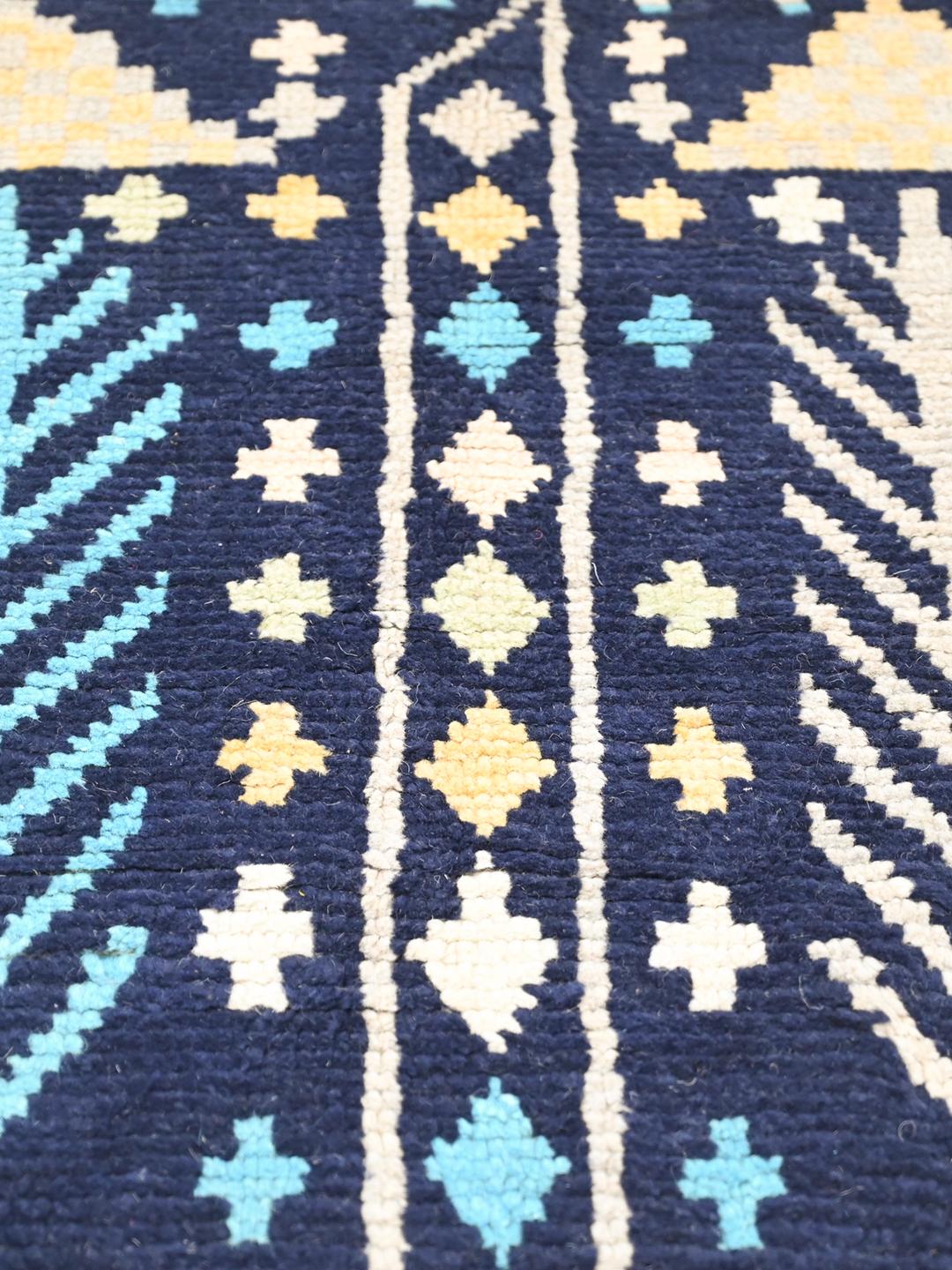
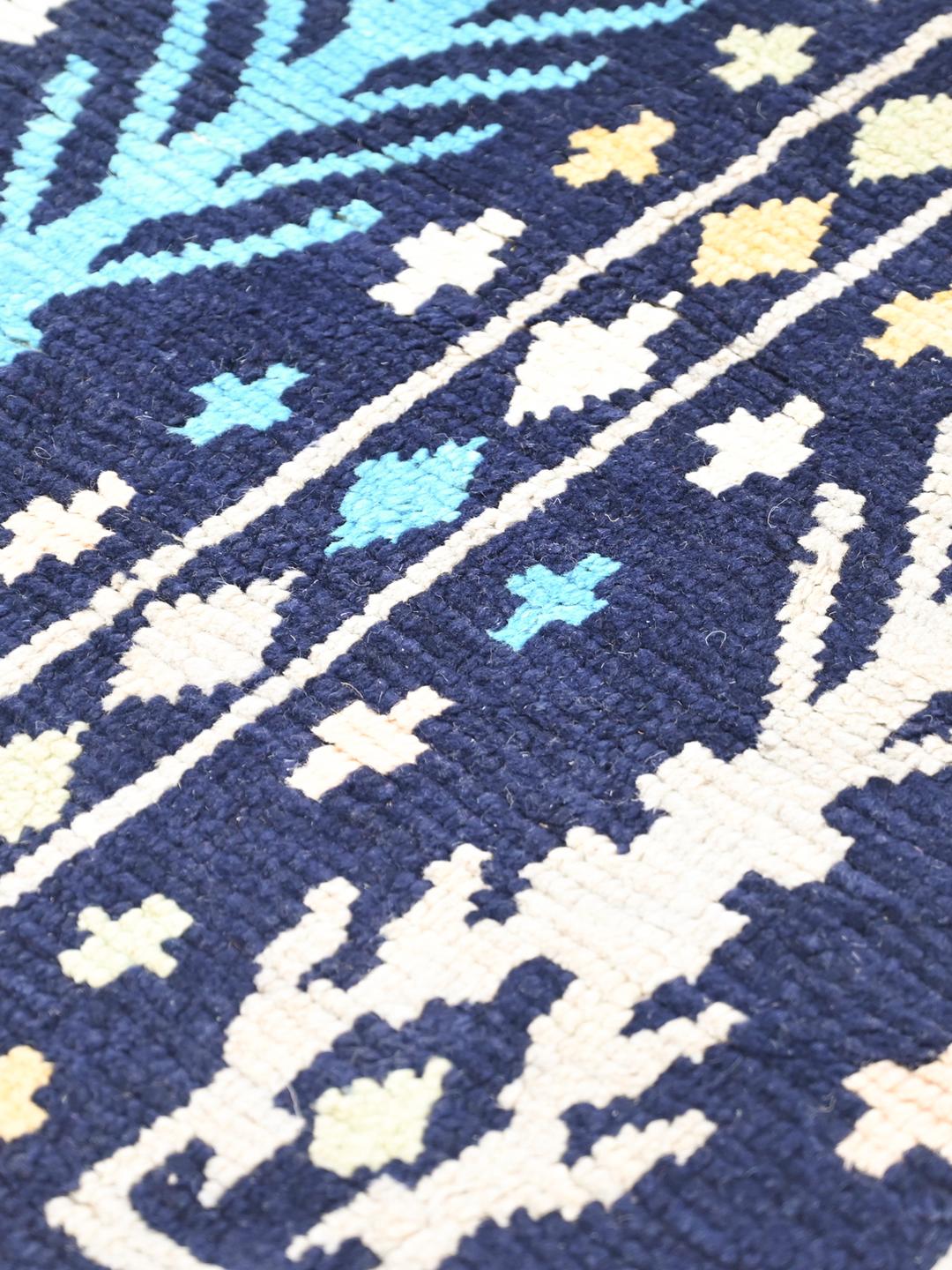
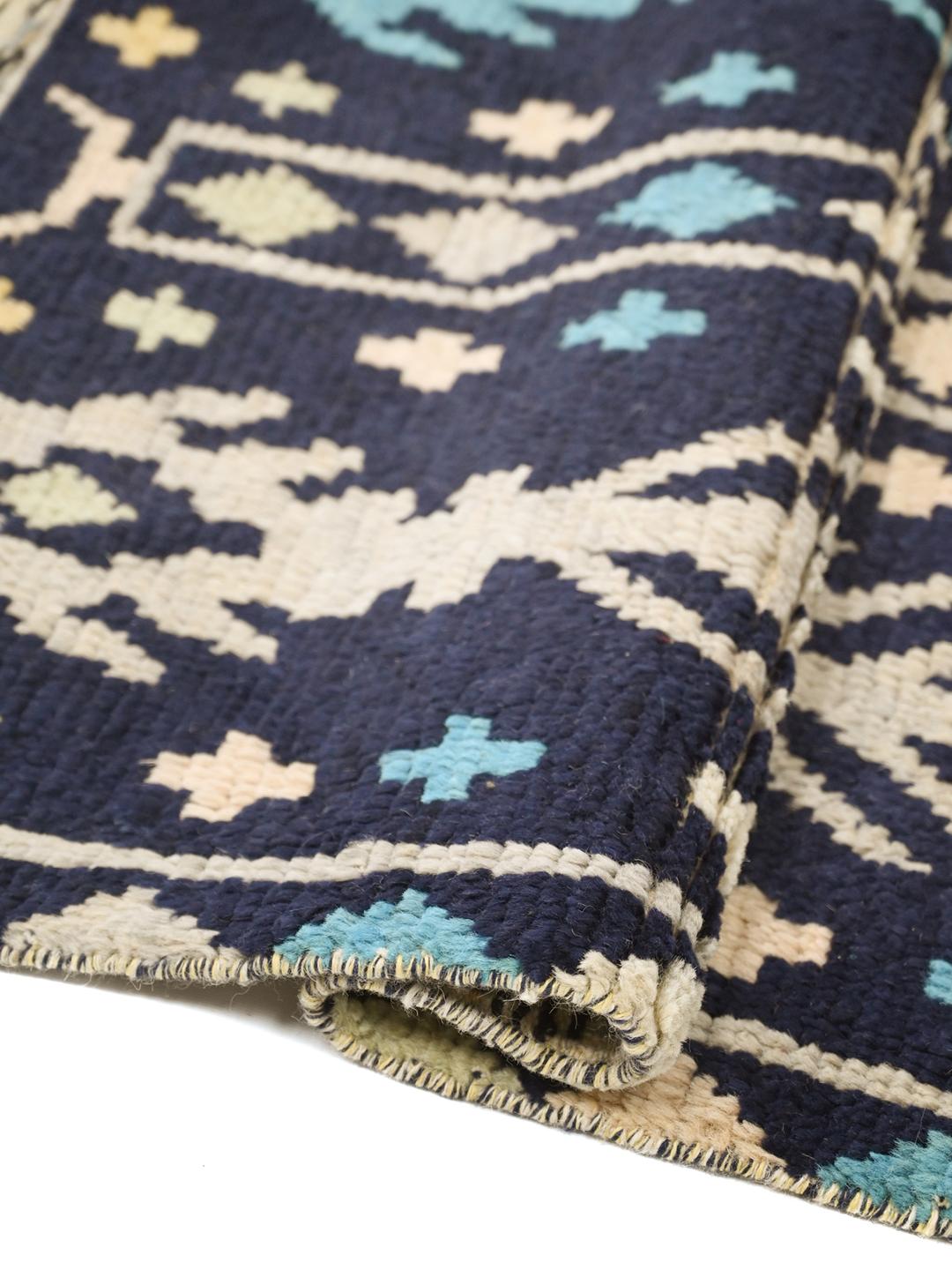
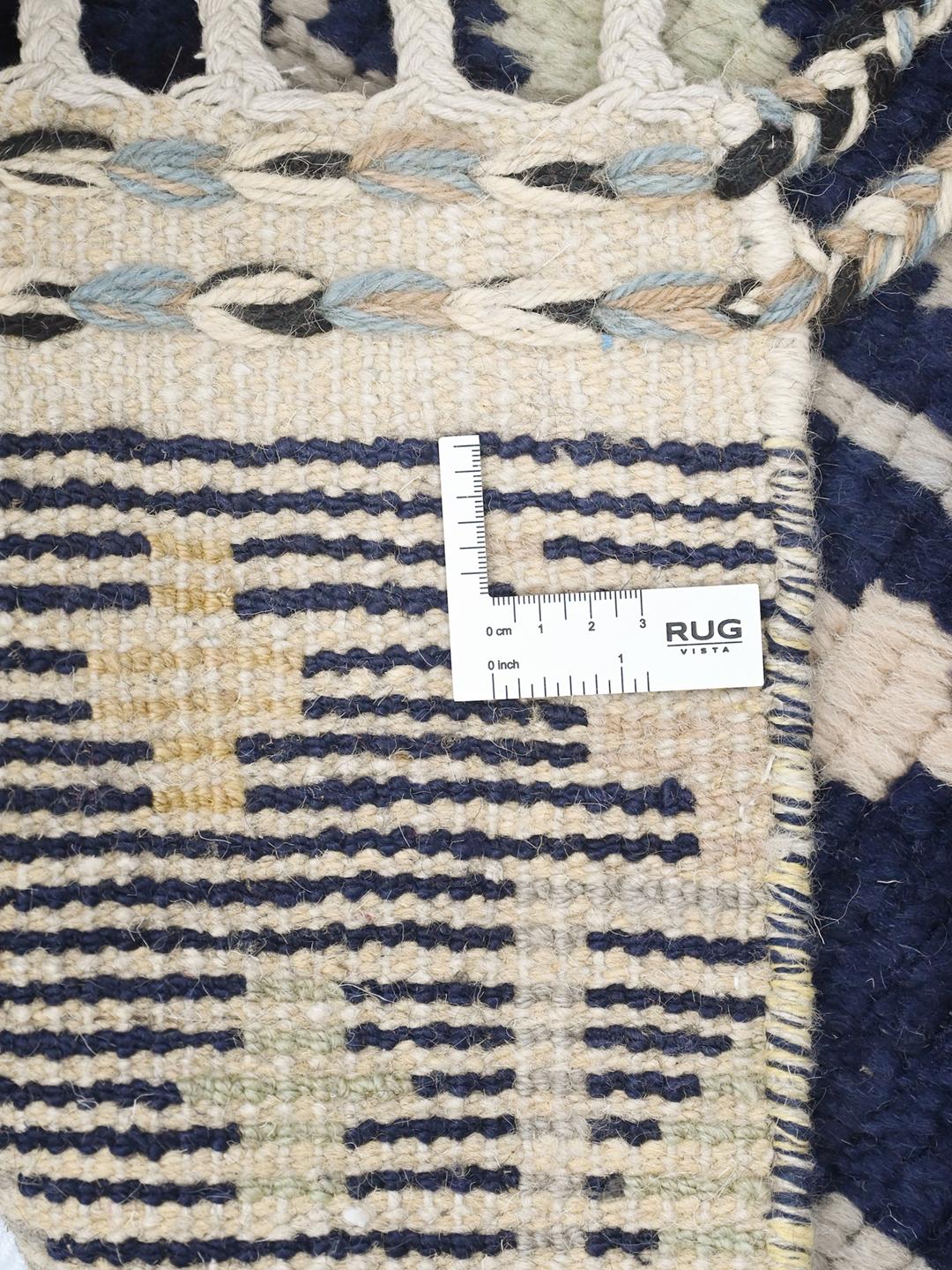
Hand knotting is one of the oldest textile arts in the world. By tying individual knots of wool around warp threads, weavers create a resilient pile that resists flattening. This structural technique ensures that intricate tribal and figurative motifs remain crisp and well-defined over time.
The visual language of Berber-style rugs relies heavily on geometric forms, tree motifs, and animal figures. These elements were historically used to tell stories, mark life events, or offer protection. Against a dark blue field, these contrasting shapes create a captivating balance of structure and organic design.
Rugs from this tradition are prized by collectors and homeowners alike for their authentic charm and individuality. Rather than following rigid factory templates, each weaver introduces personal touches, making every rug a historical record of craft culture and creative expression.