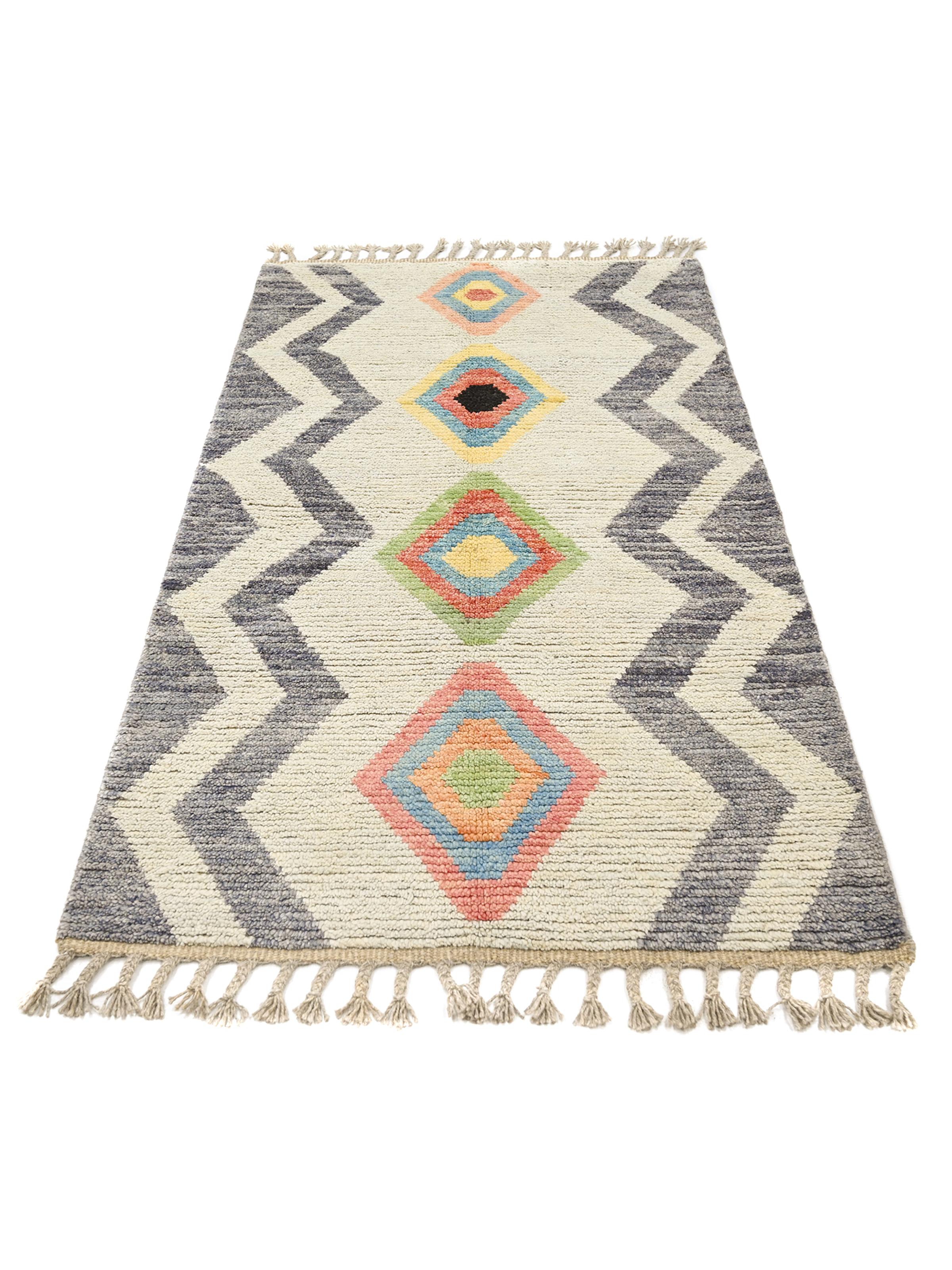
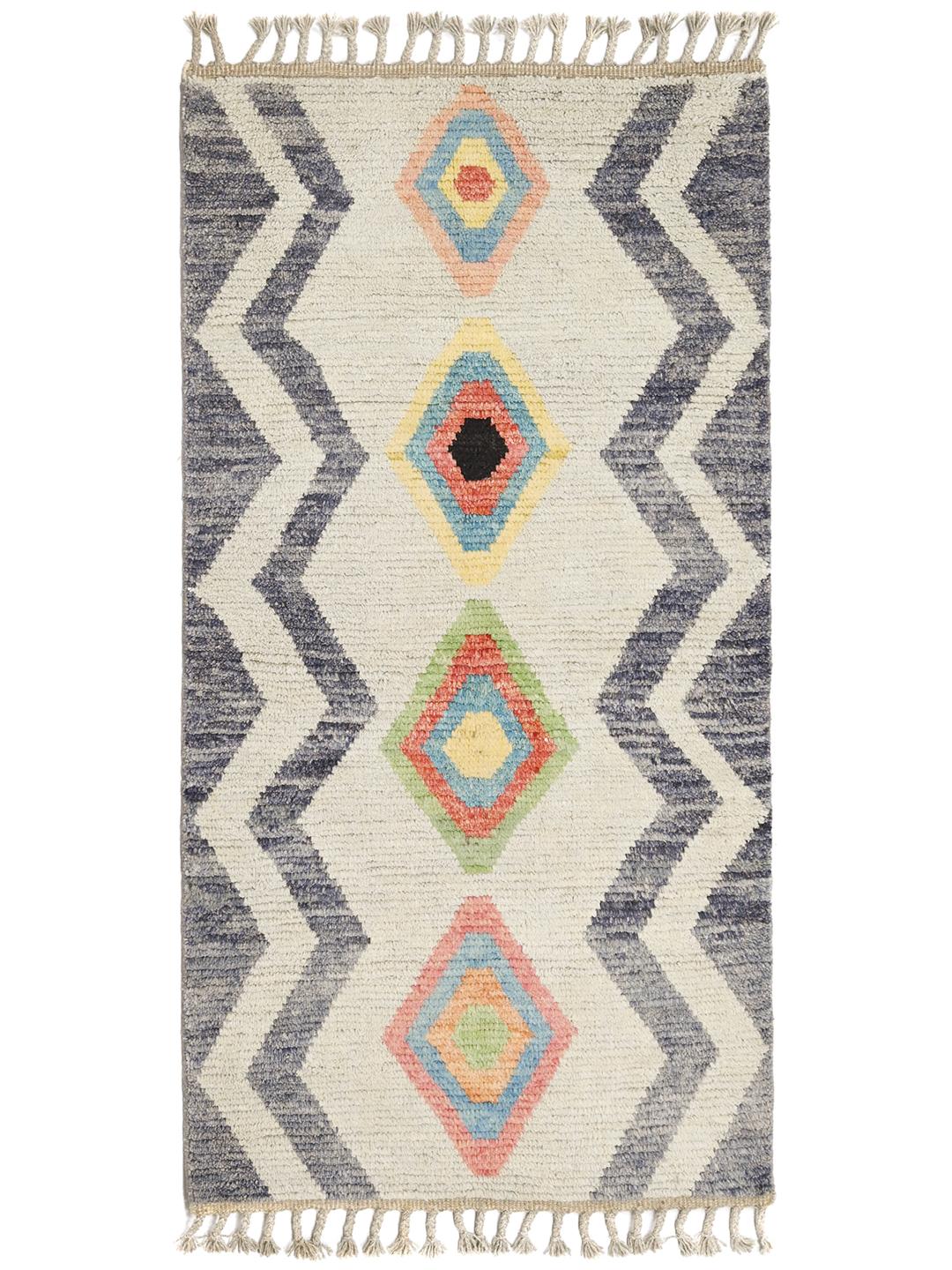
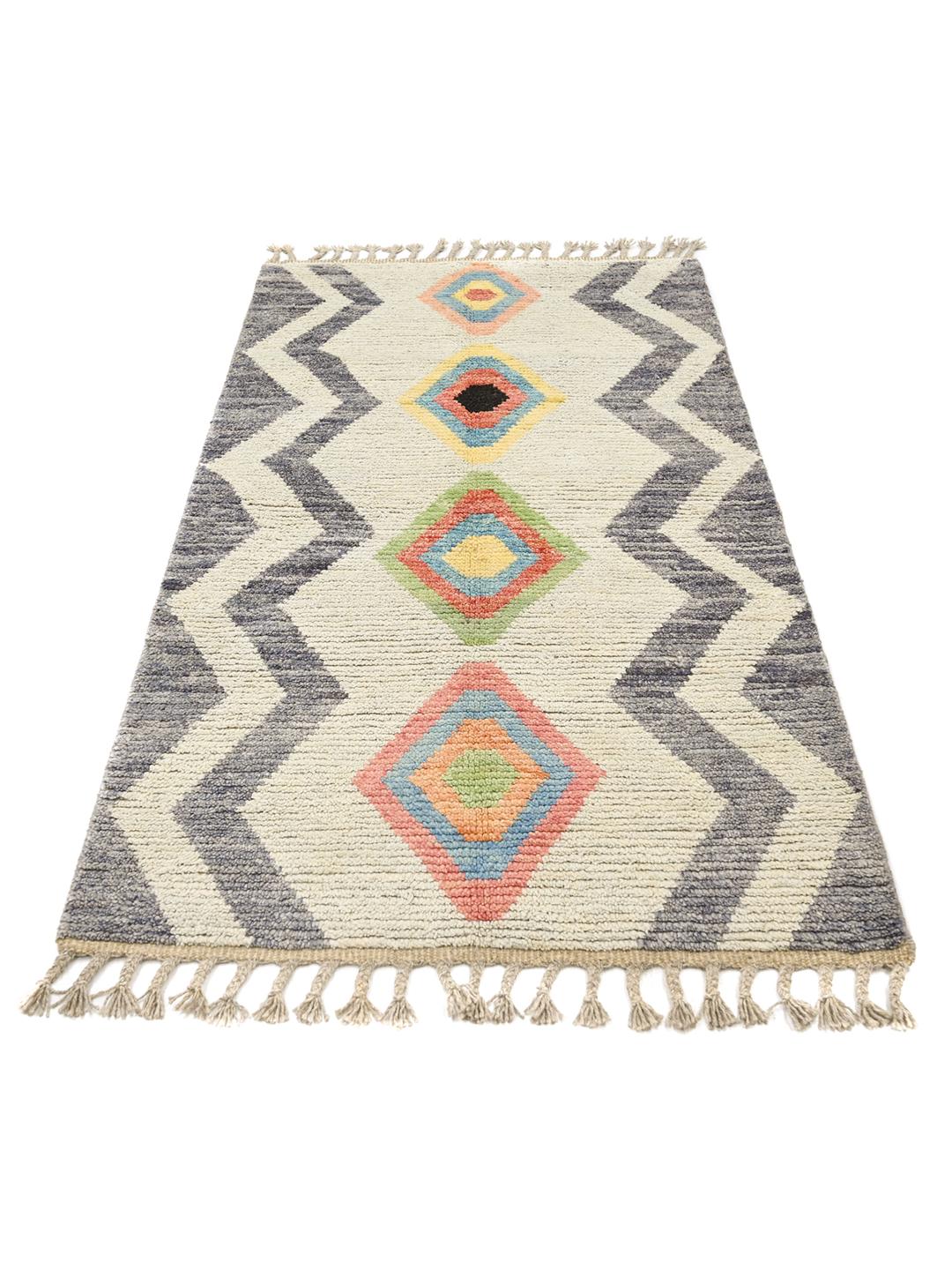
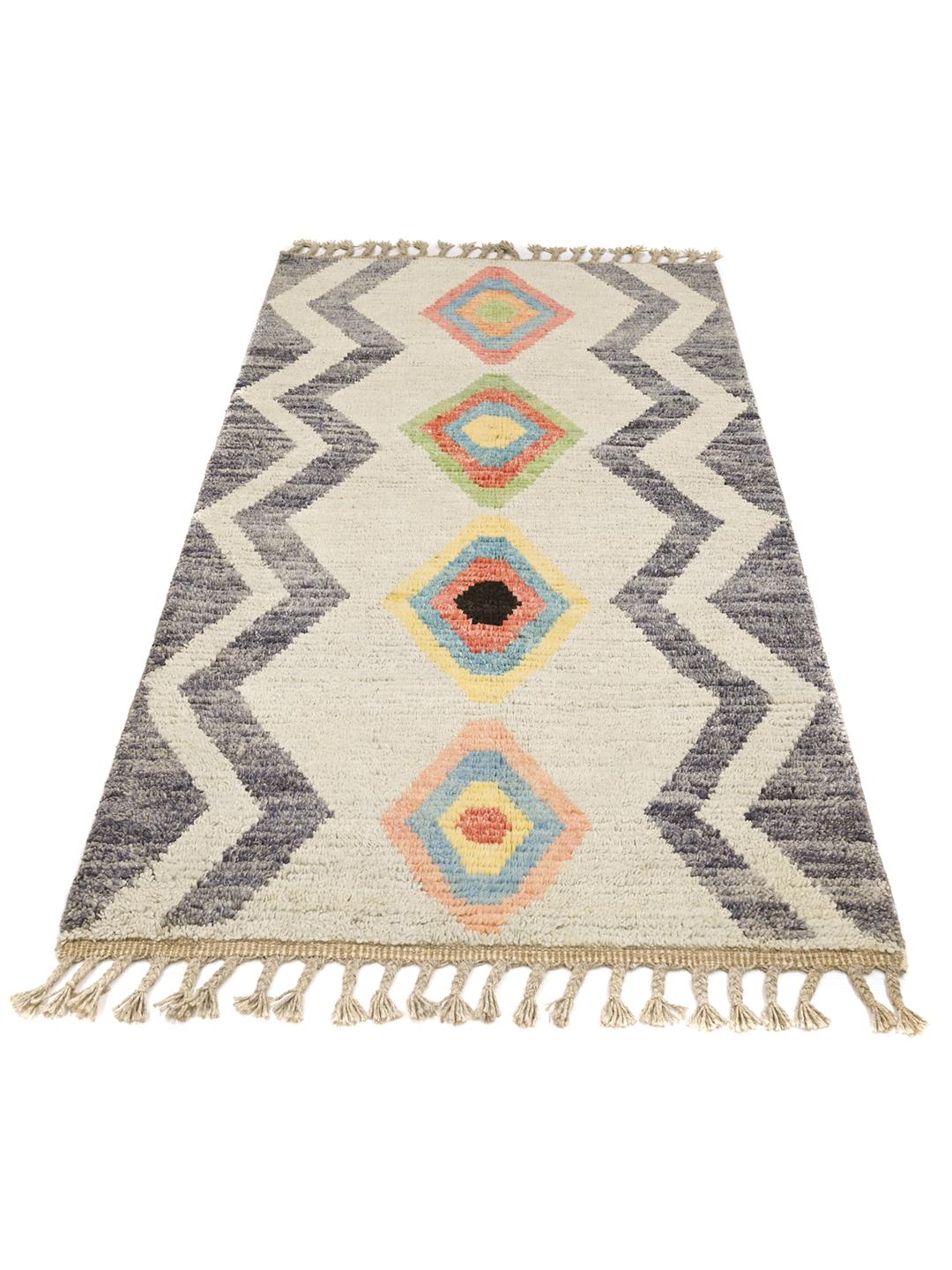
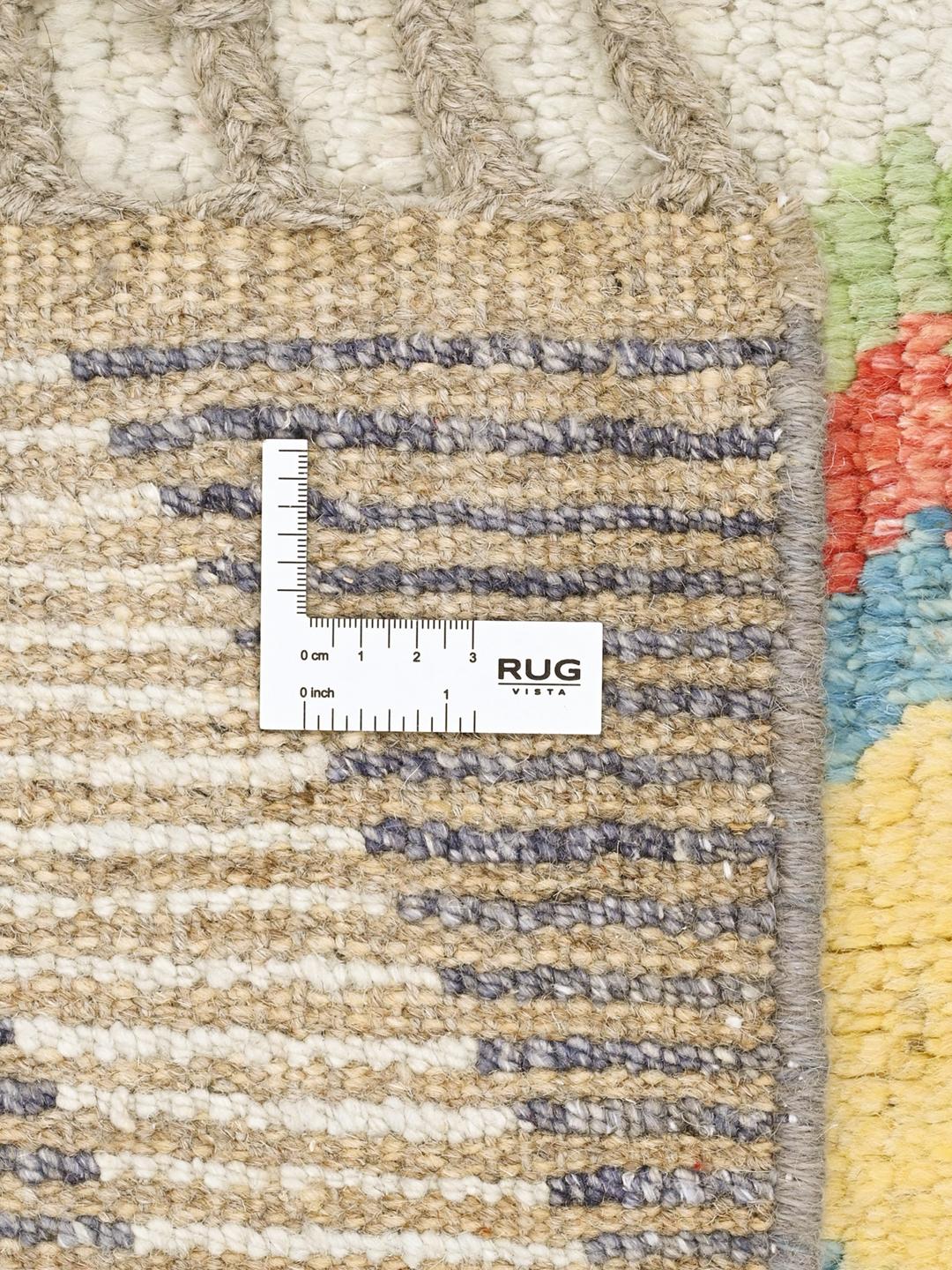
The Berber rug tradition originated among the indigenous tribes of North Africa, where hand-woven textiles served practical purposes as floor coverings, bedding, and protective cloaks. Over time, these expressive weaving styles spread and inspired artisan communities across central Asia, including Afghanistan, where local craftspeople adapted tribal geometric language to their own regional weaving methods.
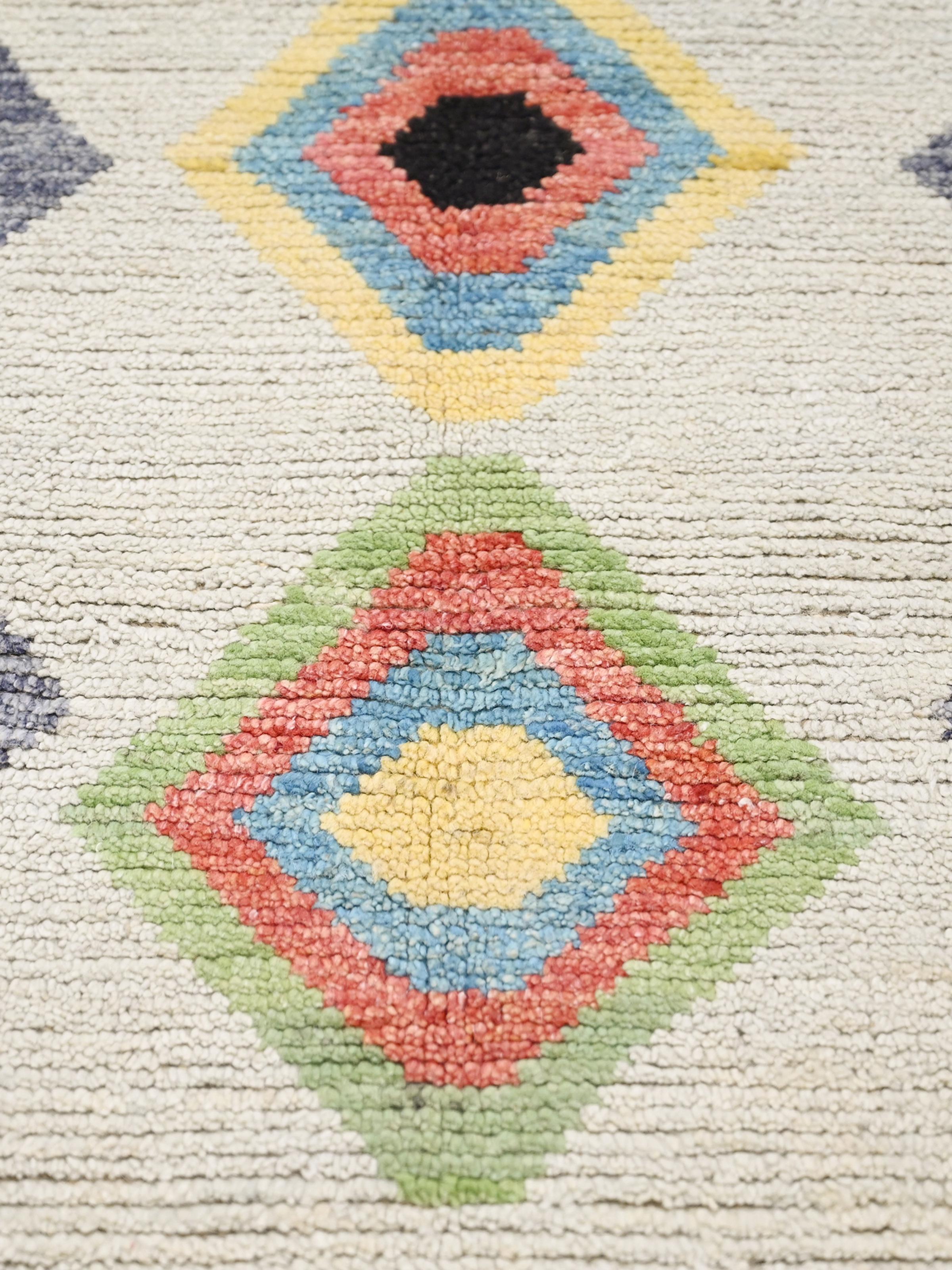
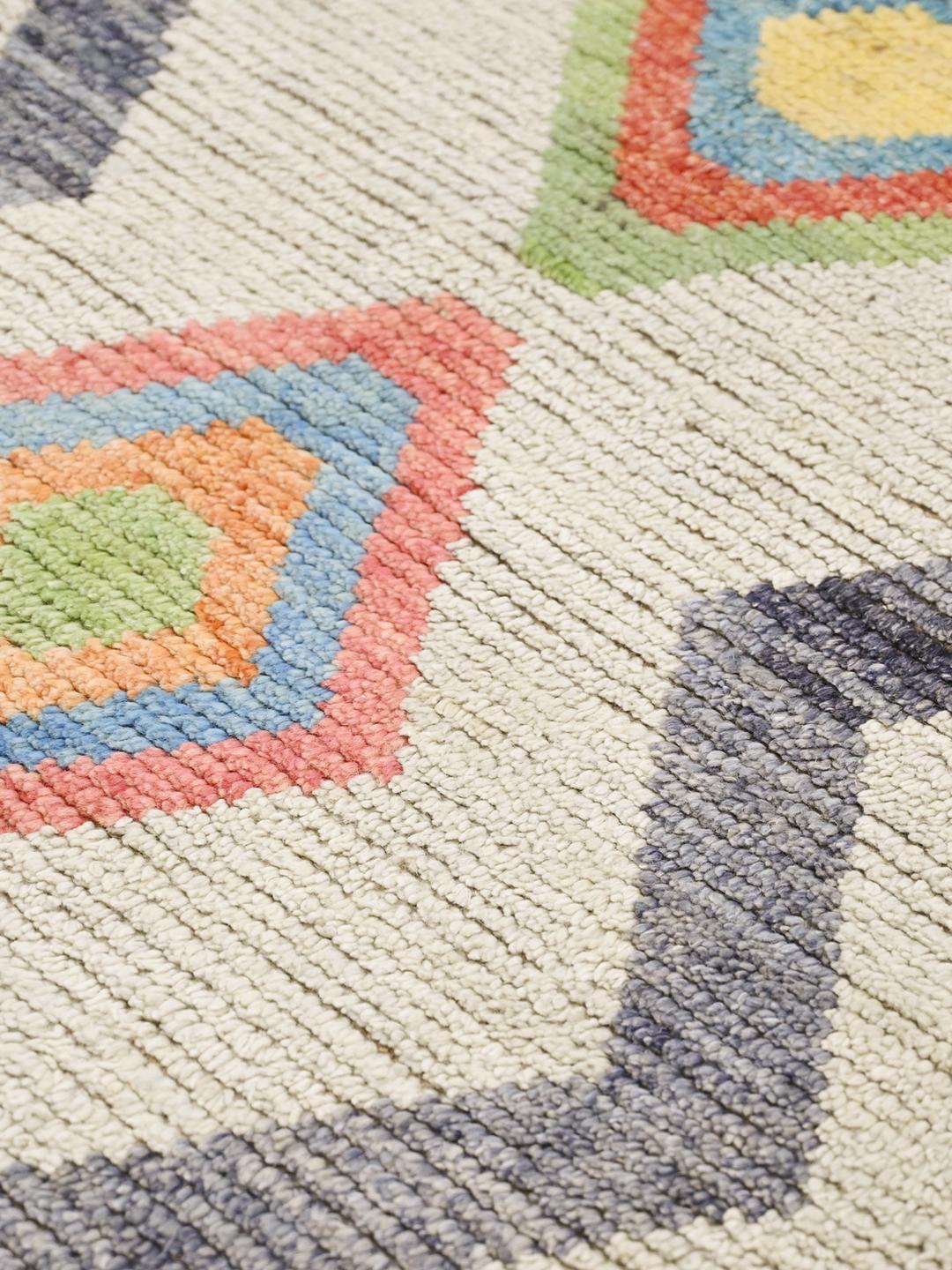
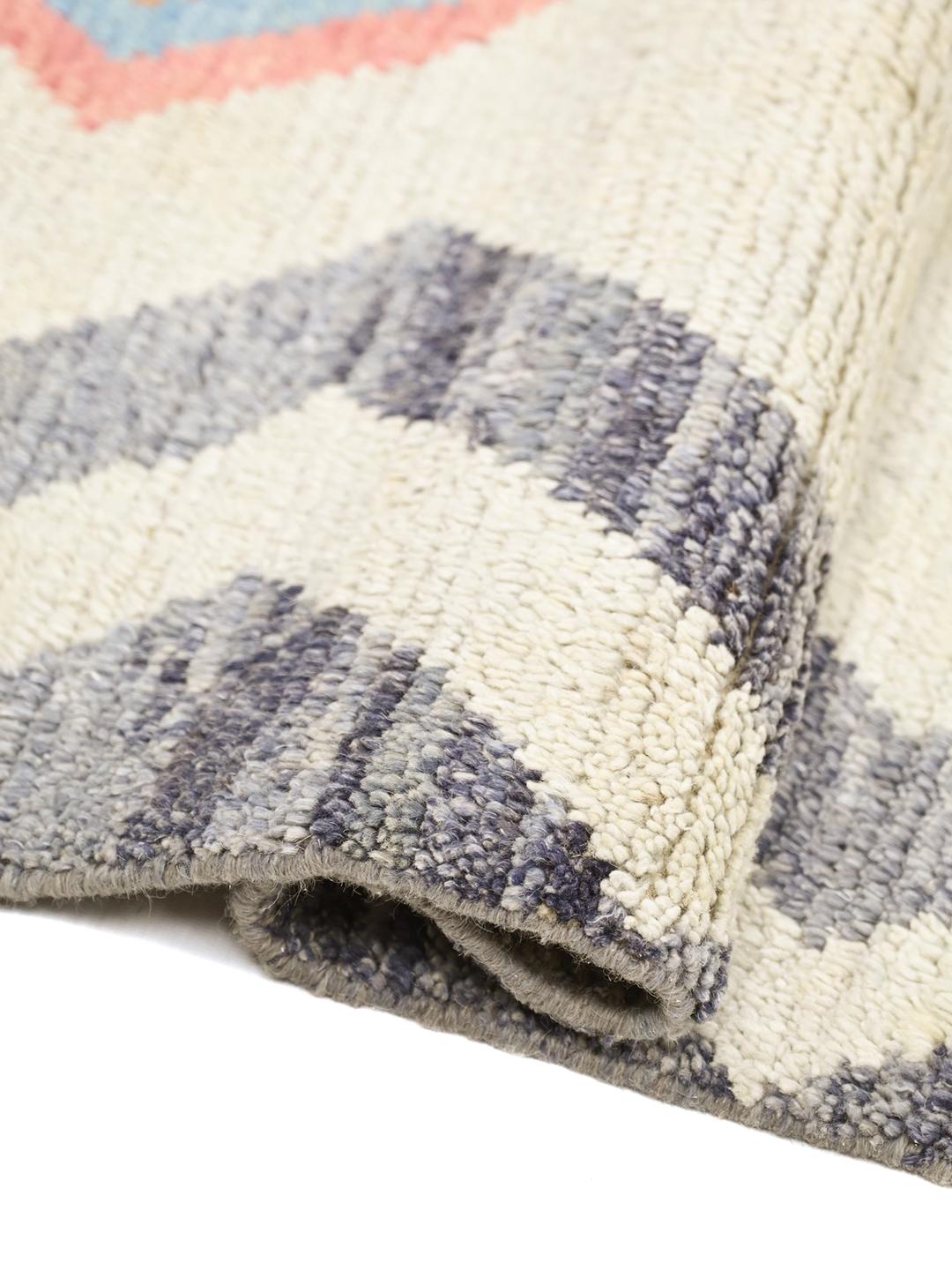
In this tradition, hand-knotting relies entirely on the weaver's natural rhythm and personal artistic choice rather than rigid printed patterns. This fluid approach gives geometric shapes a organic quality, allowing classic motifs to feel approachable and expressive rather than formal.
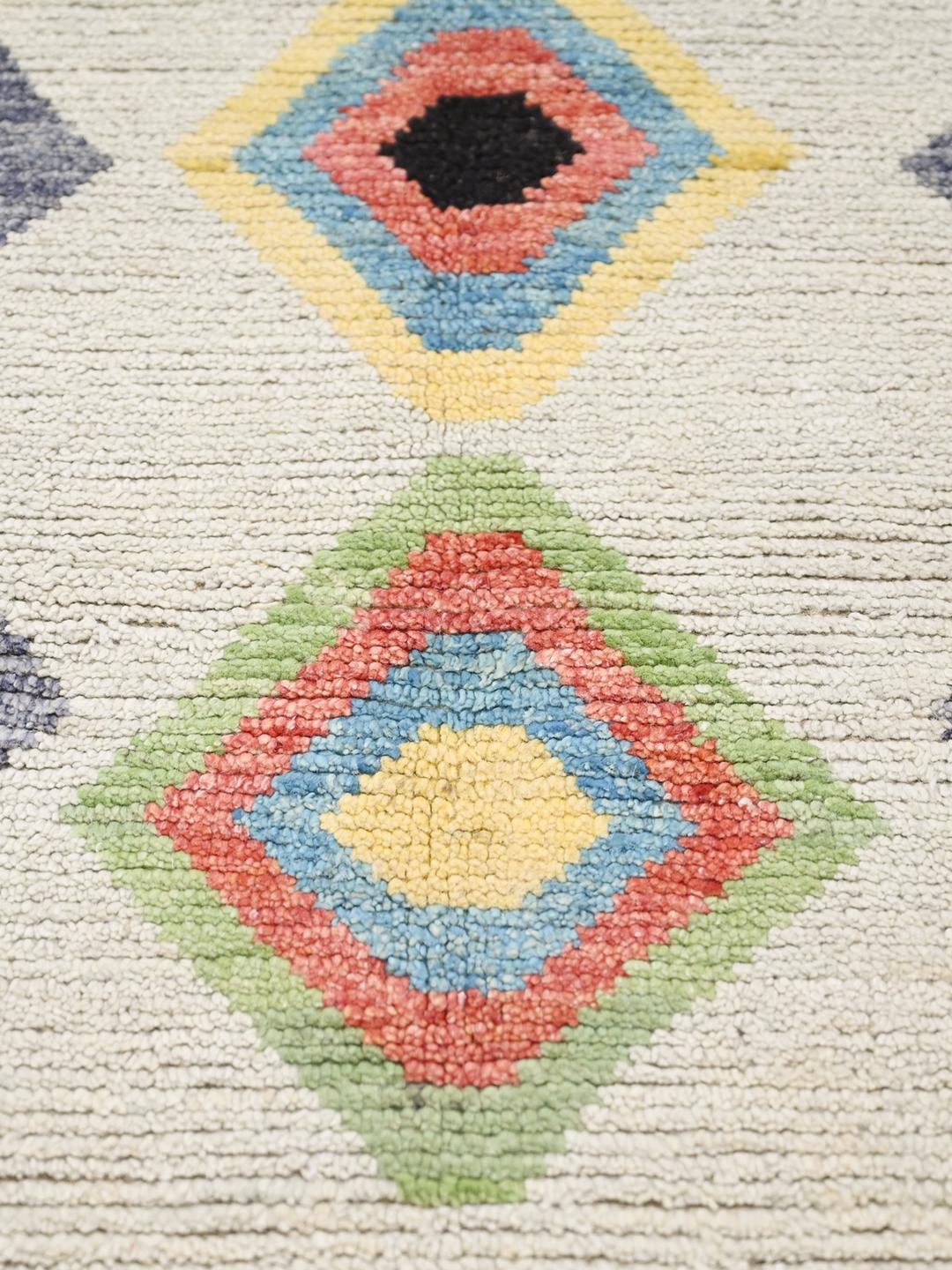
Visual motifs like diamonds and zig-zag borders carry deep historical meaning in nomadic cultures, often representing protection, harmony, and connection to the natural world. In this piece, bright primary tones are set against a natural off-white ground, offering a lively interpretation of traditional symbolic design.
Rugs from this tradition are widely appreciated by collectors and homeowners alike for their ability to bring warmth, history, and casual style into modern interiors. Acquiring a hand-knotted Berber-style rug connects your living space to a centuries-old story of human craft.