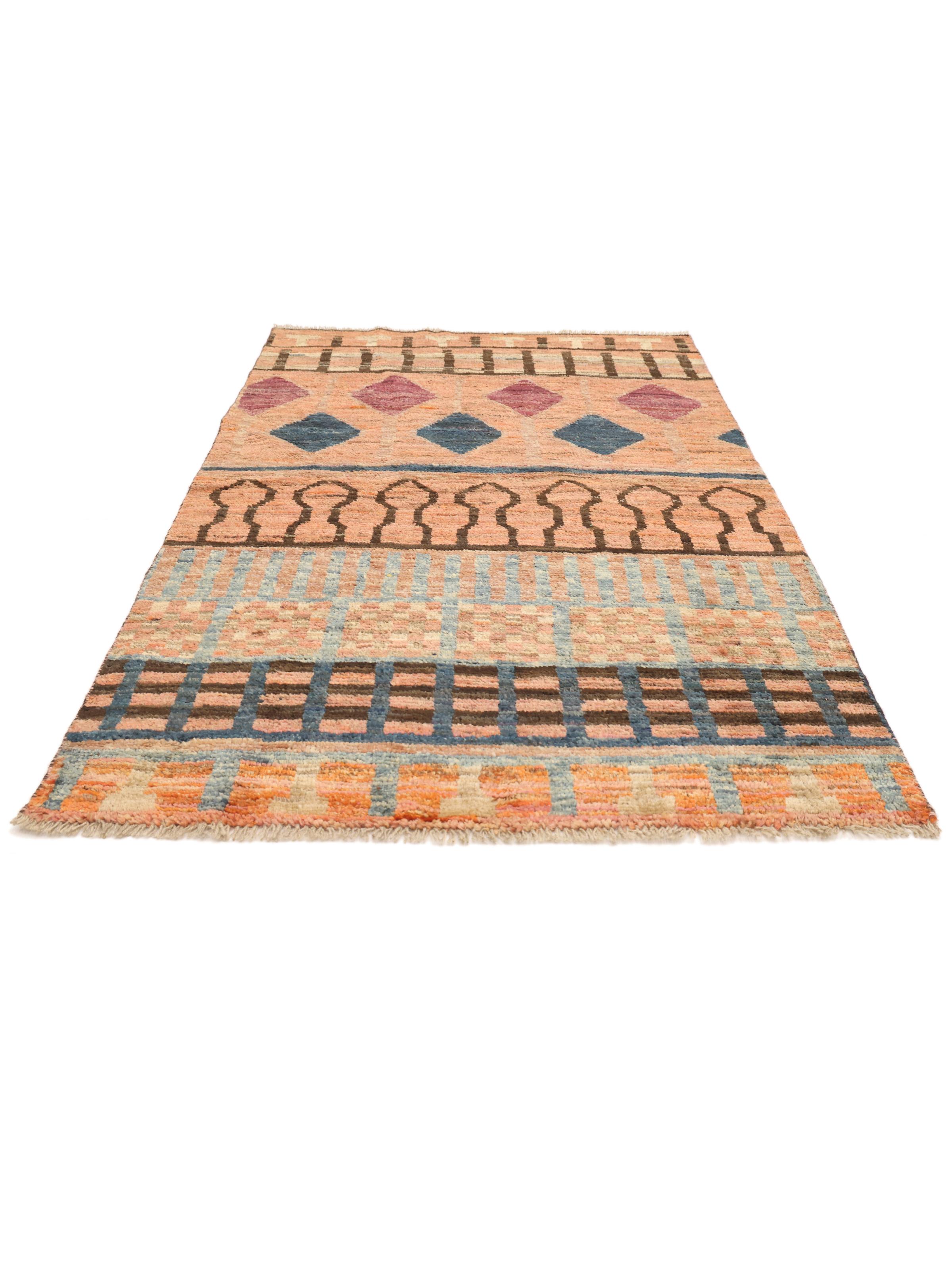
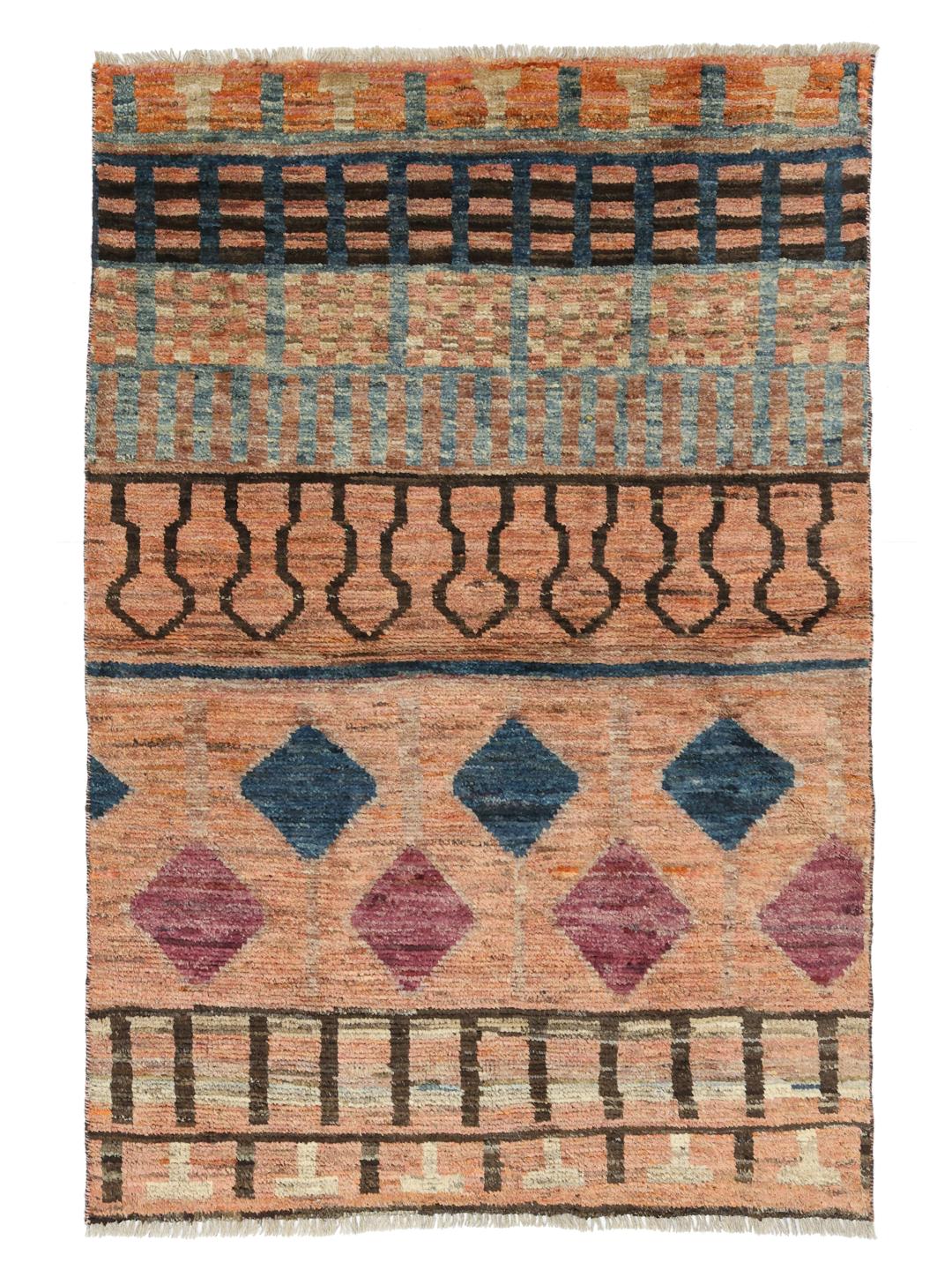
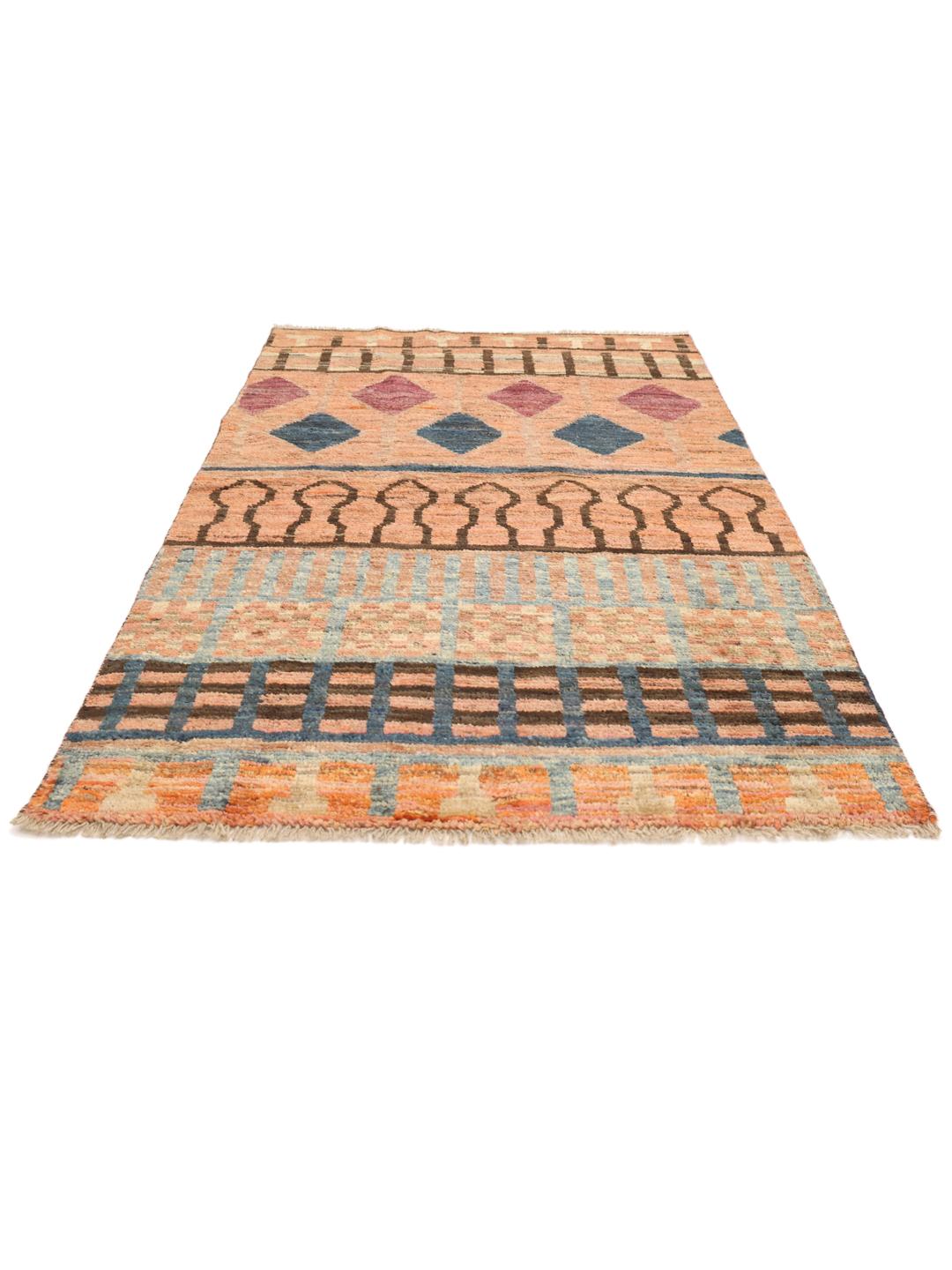
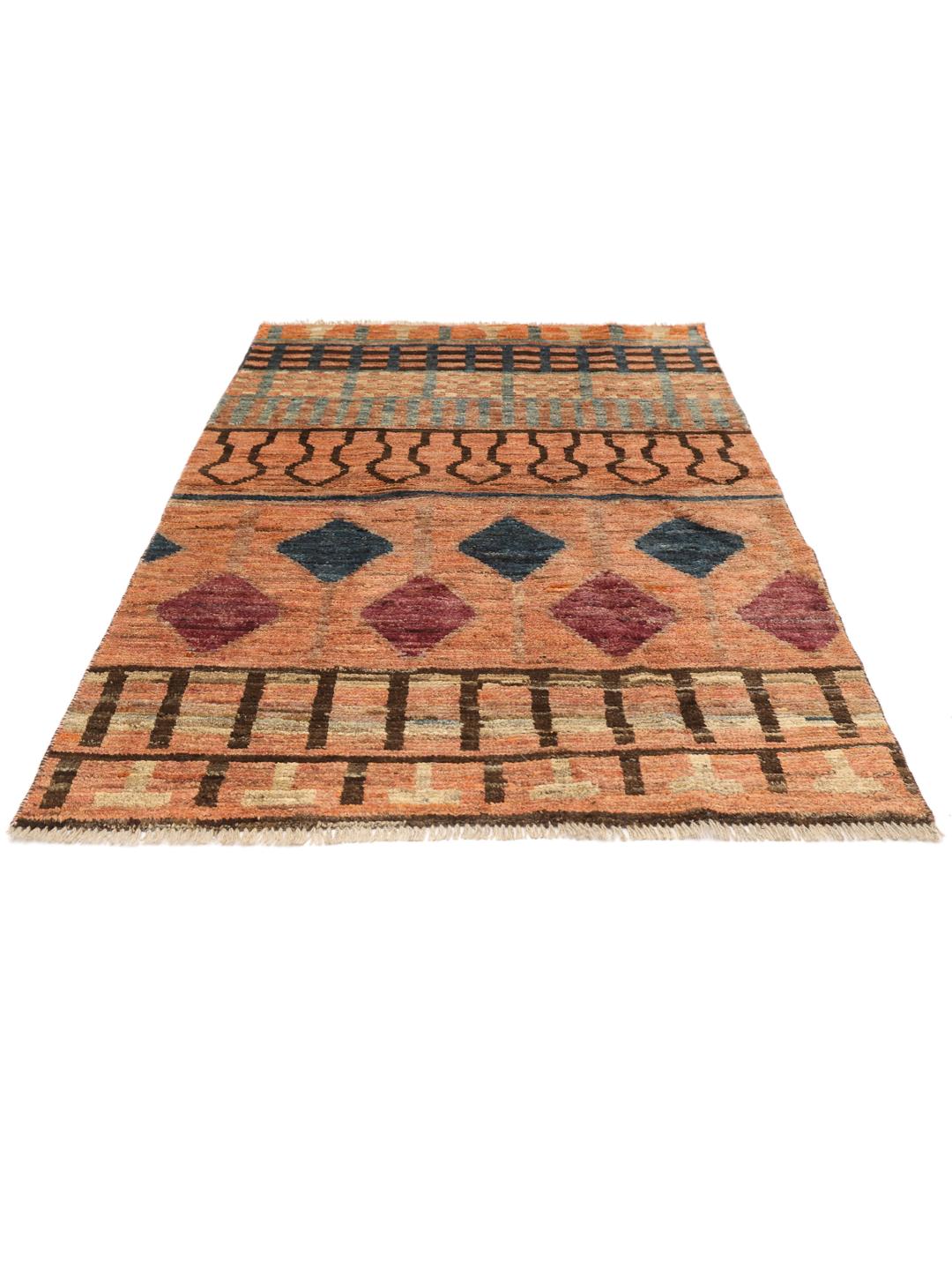
Berber rugs trace their origins back to the indigenous communities of North Africa and various tribal traditions across Central Asia, where weaving was traditionally an expression of daily life, storytelling, and cultural identity. Over generations, these nomadic crafting traditions spread, with artisans in regions like Afghanistan adapting the techniques to incorporate local materials and distinct regional aesthetics.
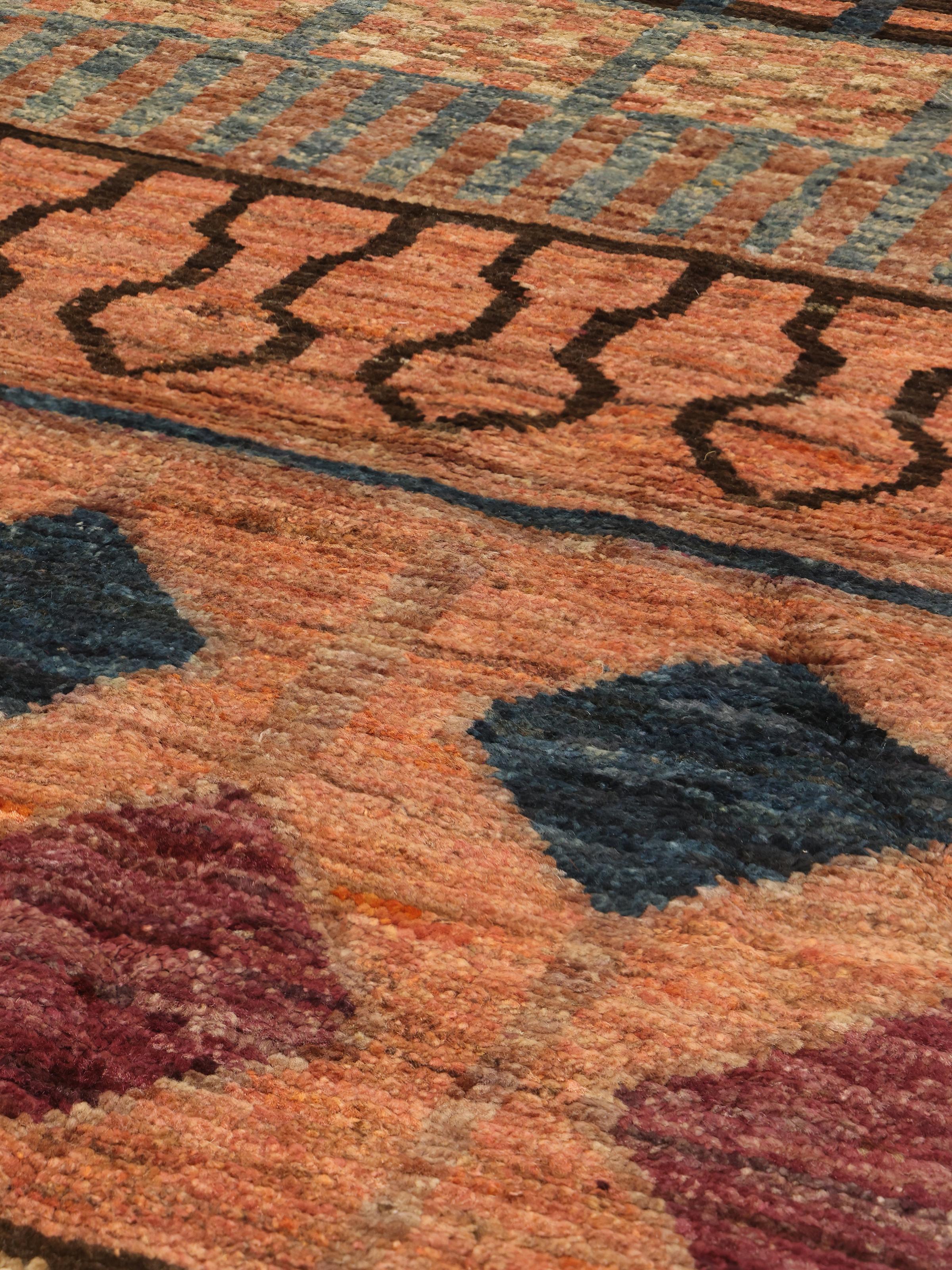
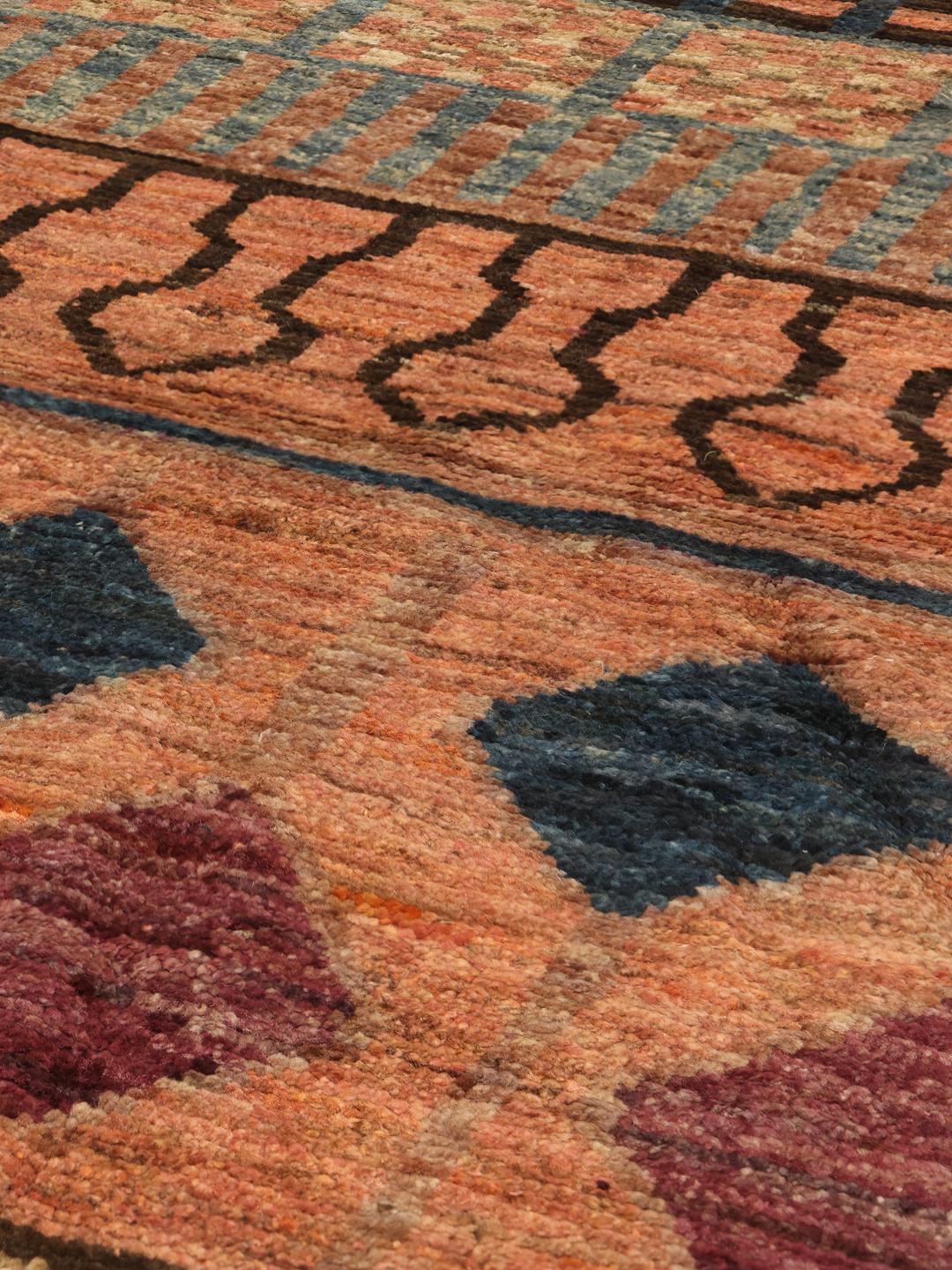
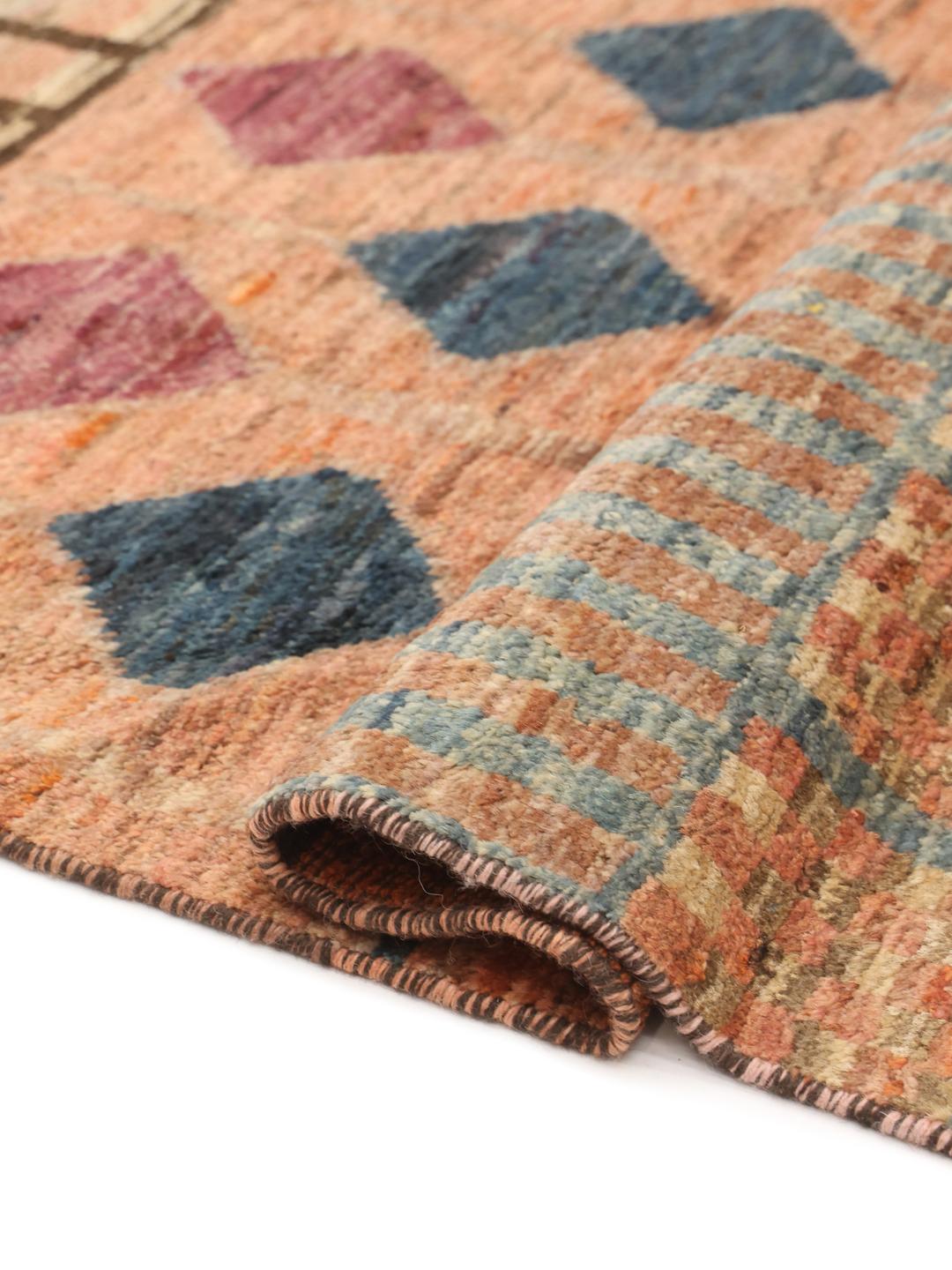
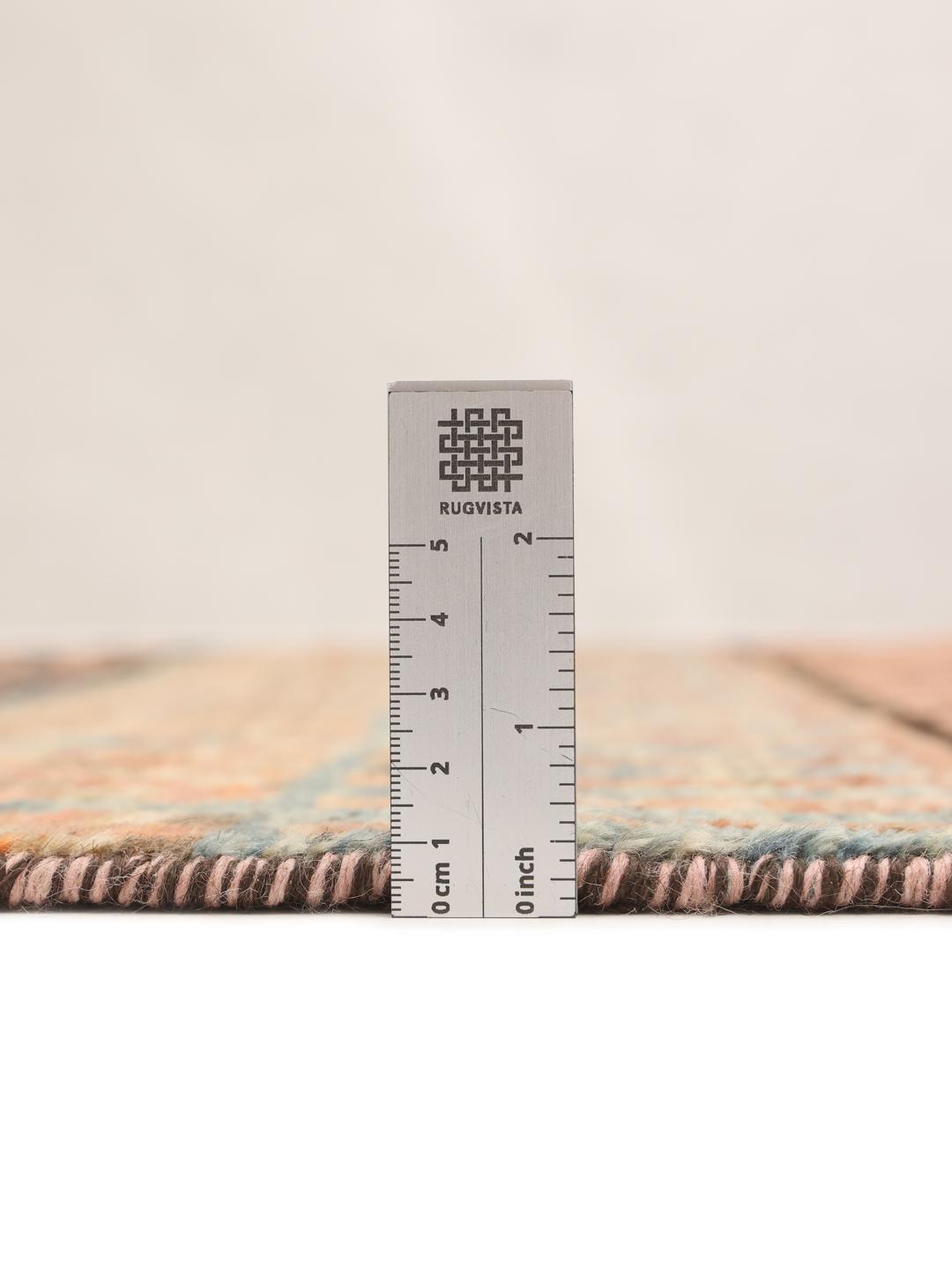
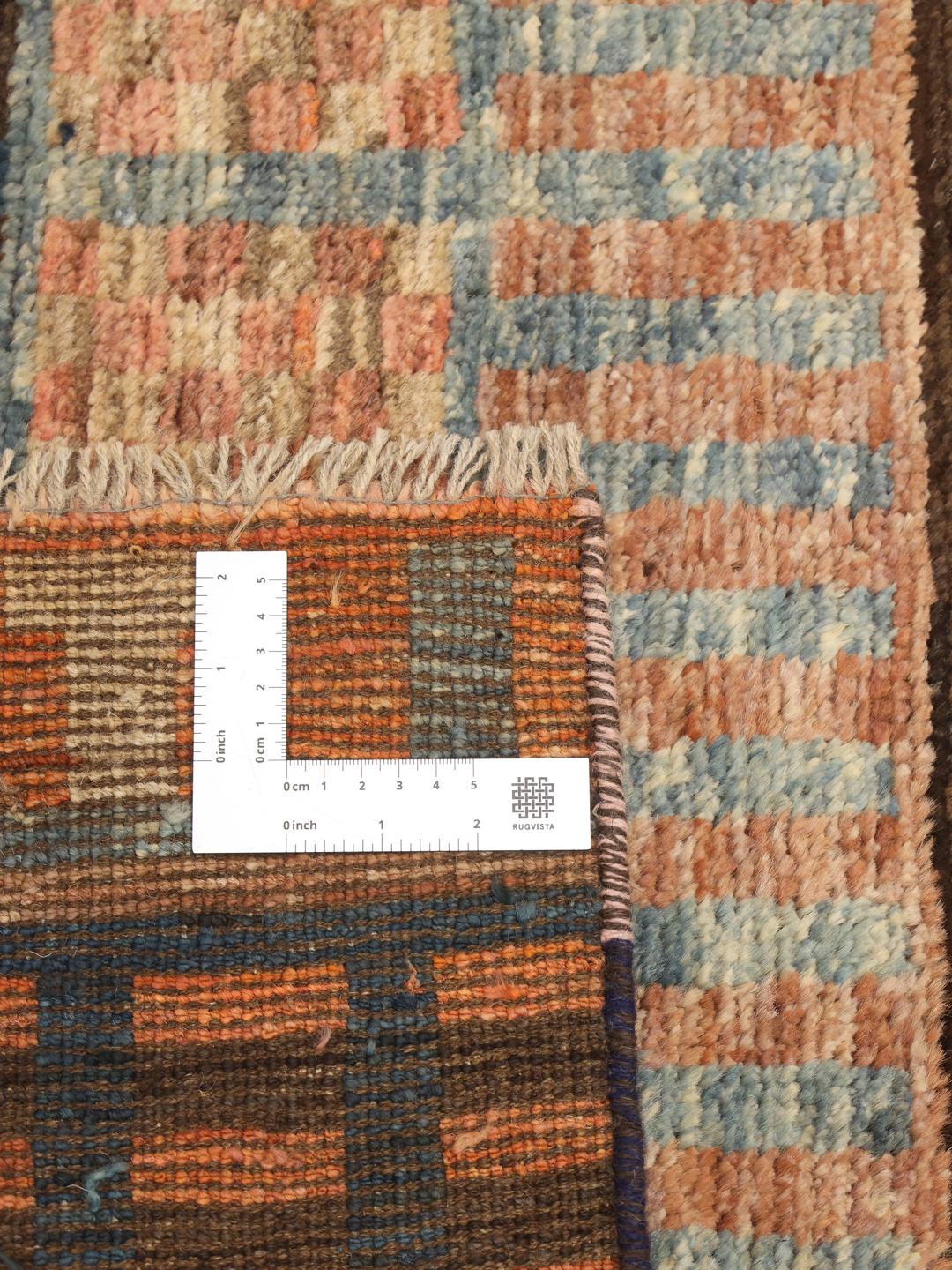
The hand-knotted technique used in this rug represents a time-honoured method of textile creation. Artisans tie individual strands of wool onto the foundation warp and weft threads by hand, building up a dense pile row by row. This meticulous process ensures that the finished textile is exceptionally durable, capable of maintaining its rich texture and appearance for decades.
The visual language of Berber rugs is defined by symbolic motifs, geometric shapes, and earthy palettes that often reflect elements of nature and tribal folklore. In this particular piece, striking diamond patterns and horizontal bands create a rhythm of shapes that feels both traditional and refreshingly expressive, showcasing the weaver's personal artistic vision.
Collecting a handmade rug of this heritage means preserving ancient craft traditions that cannot be replicated by industrial machinery. Each piece stands as a testament to the weaver's skill, offering a meaningful connection to artisanal craftsmanship and cultural history that adds genuine weight and character to any room.