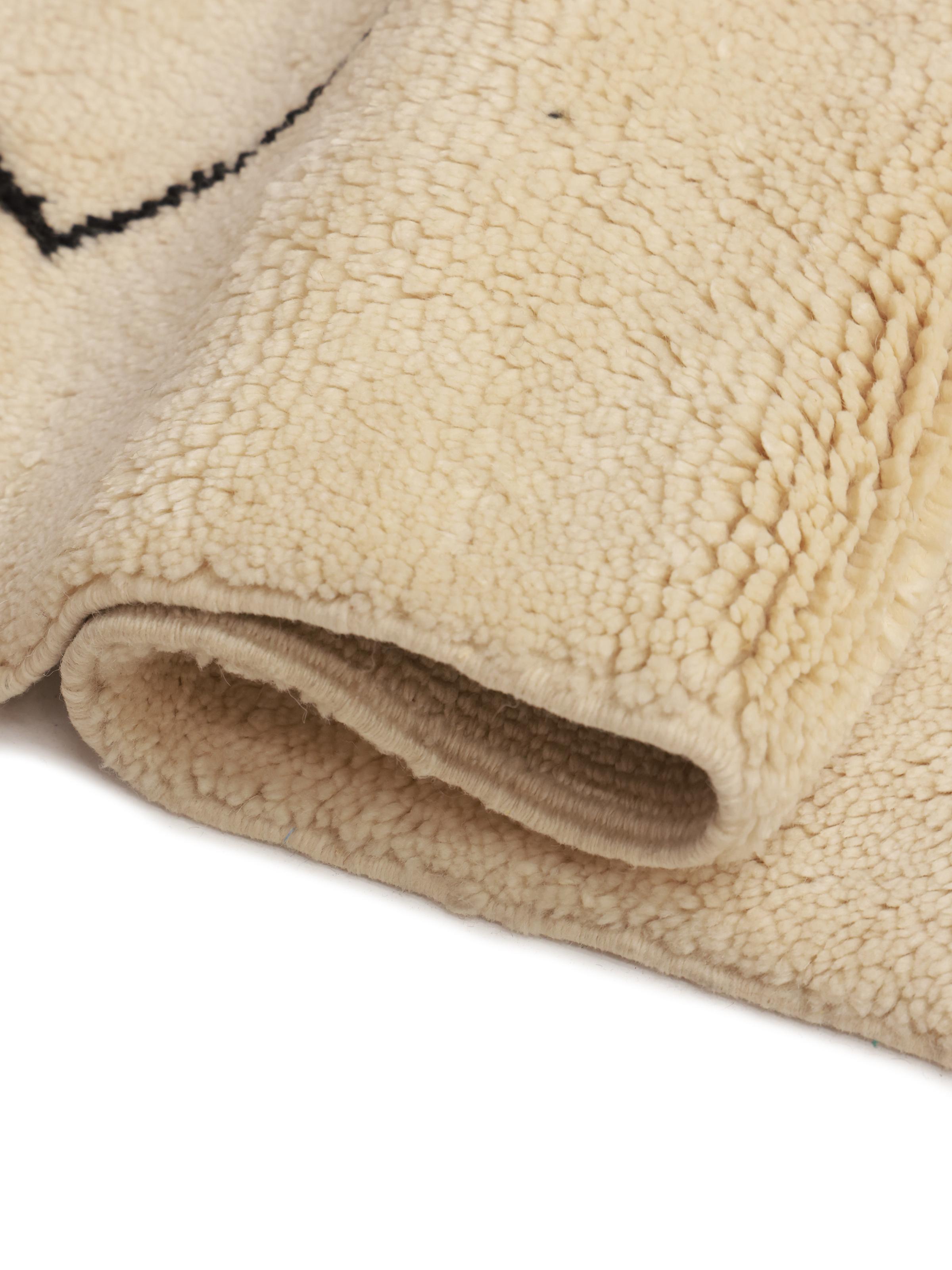
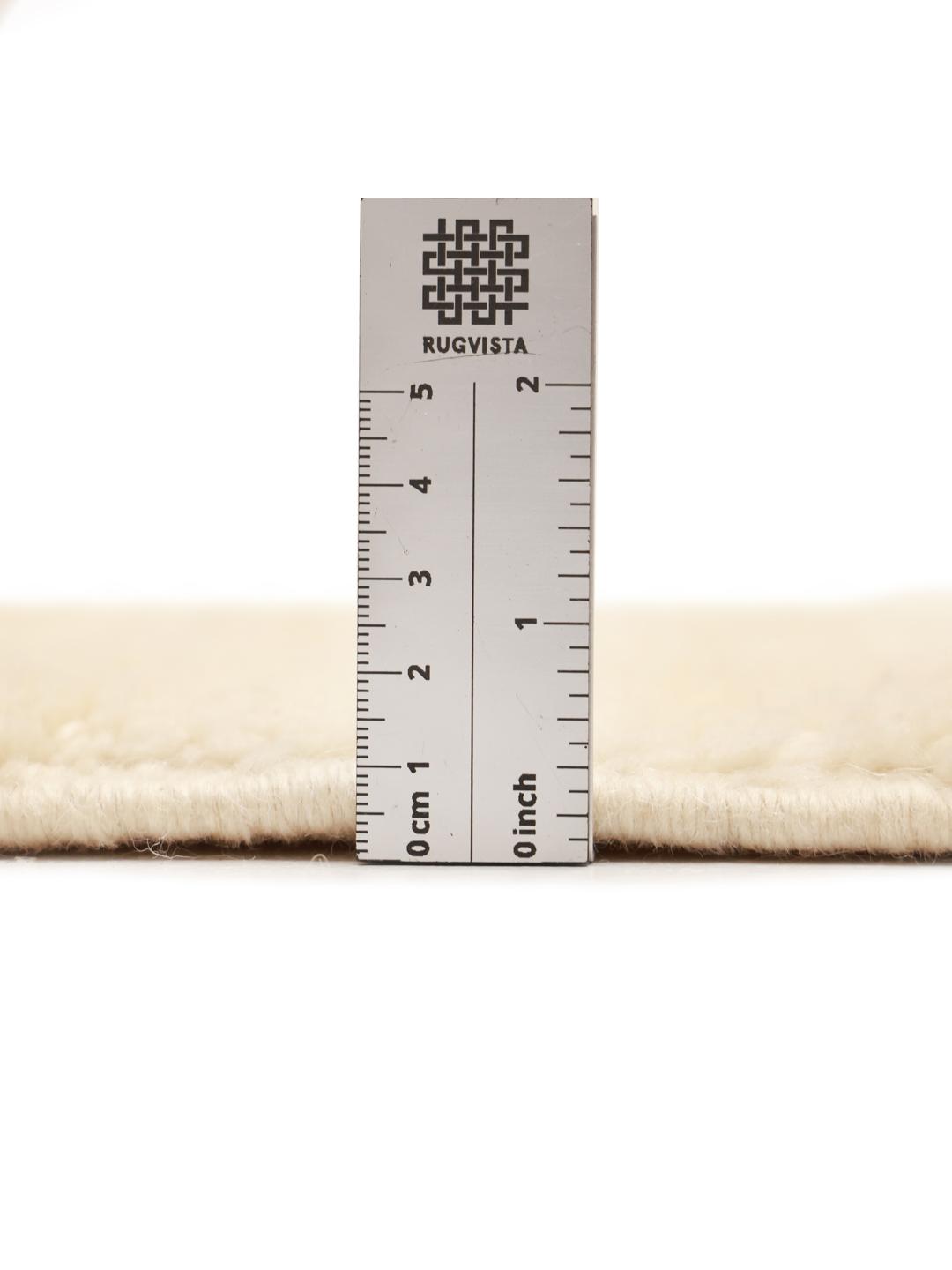
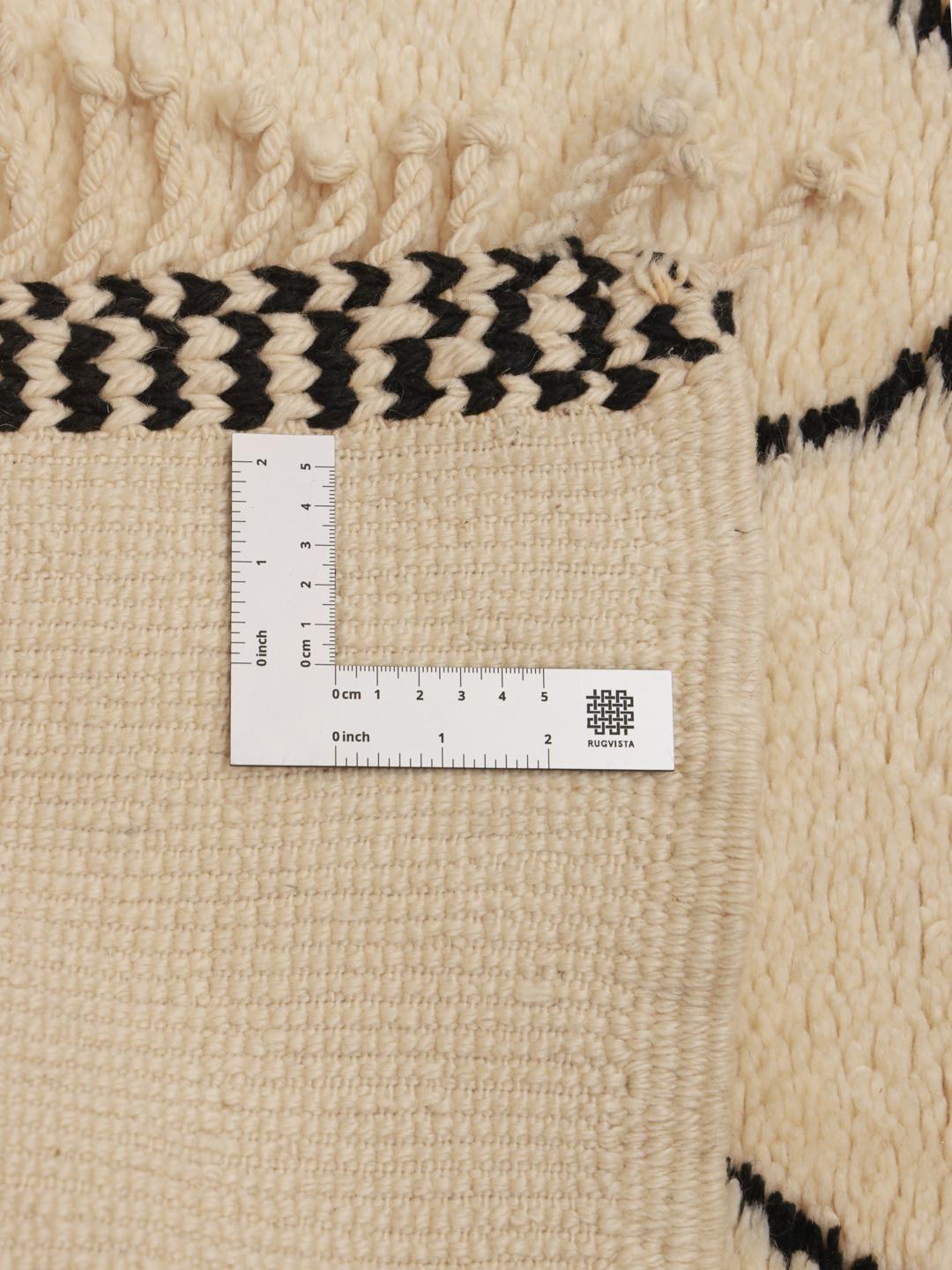
The Beni Ourain rugs originate from the high reaches of the Middle Atlas Mountains in Morocco, where they have been crafted for centuries by the Berber tribes. Traditionally, these rugs were not intended as decorative floor coverings but as functional, warm bedding and blankets designed to protect against the harsh mountain winters. This heritage of utility informs their heavy, dense construction and their focus on pure, natural materials.
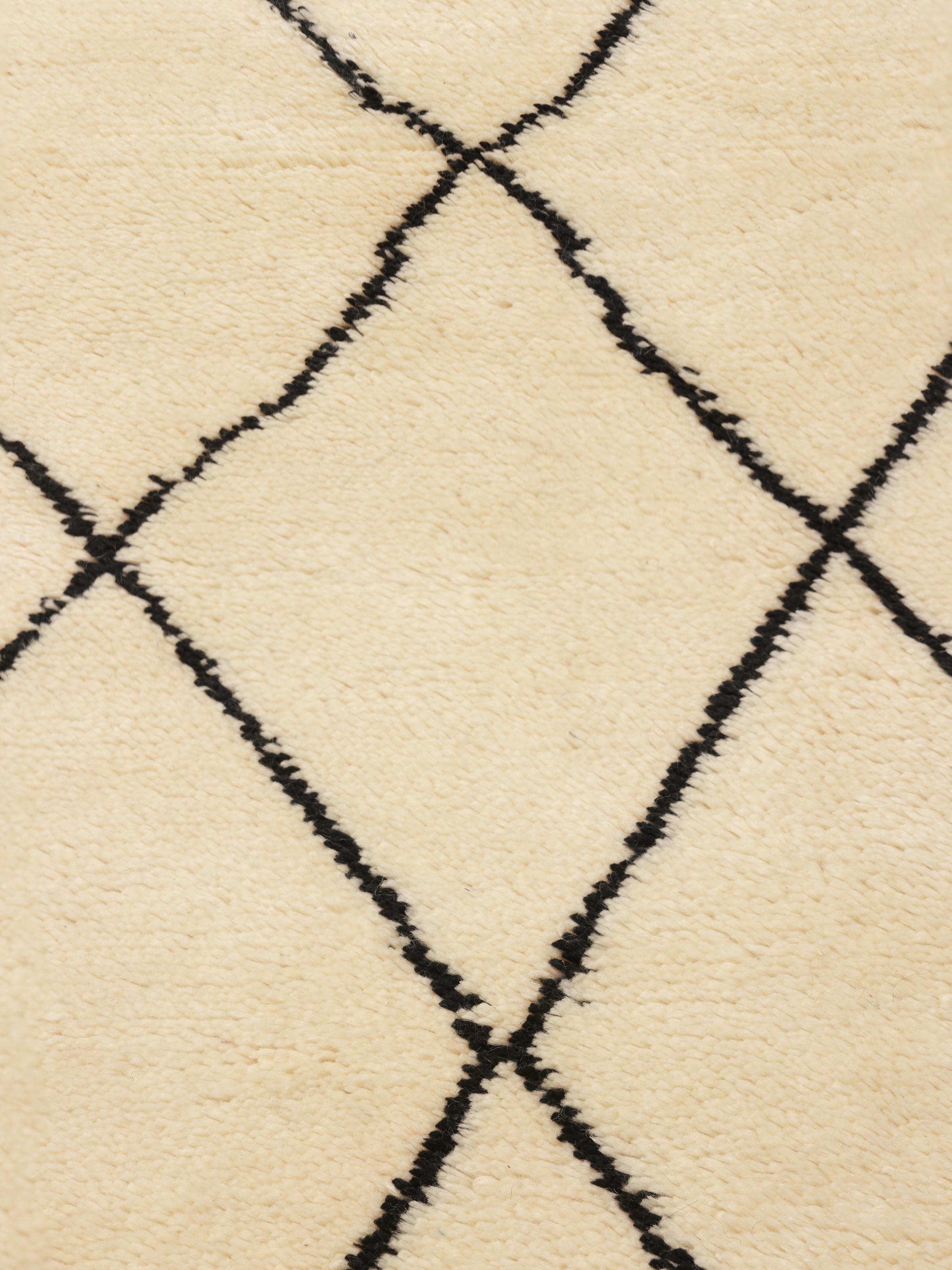
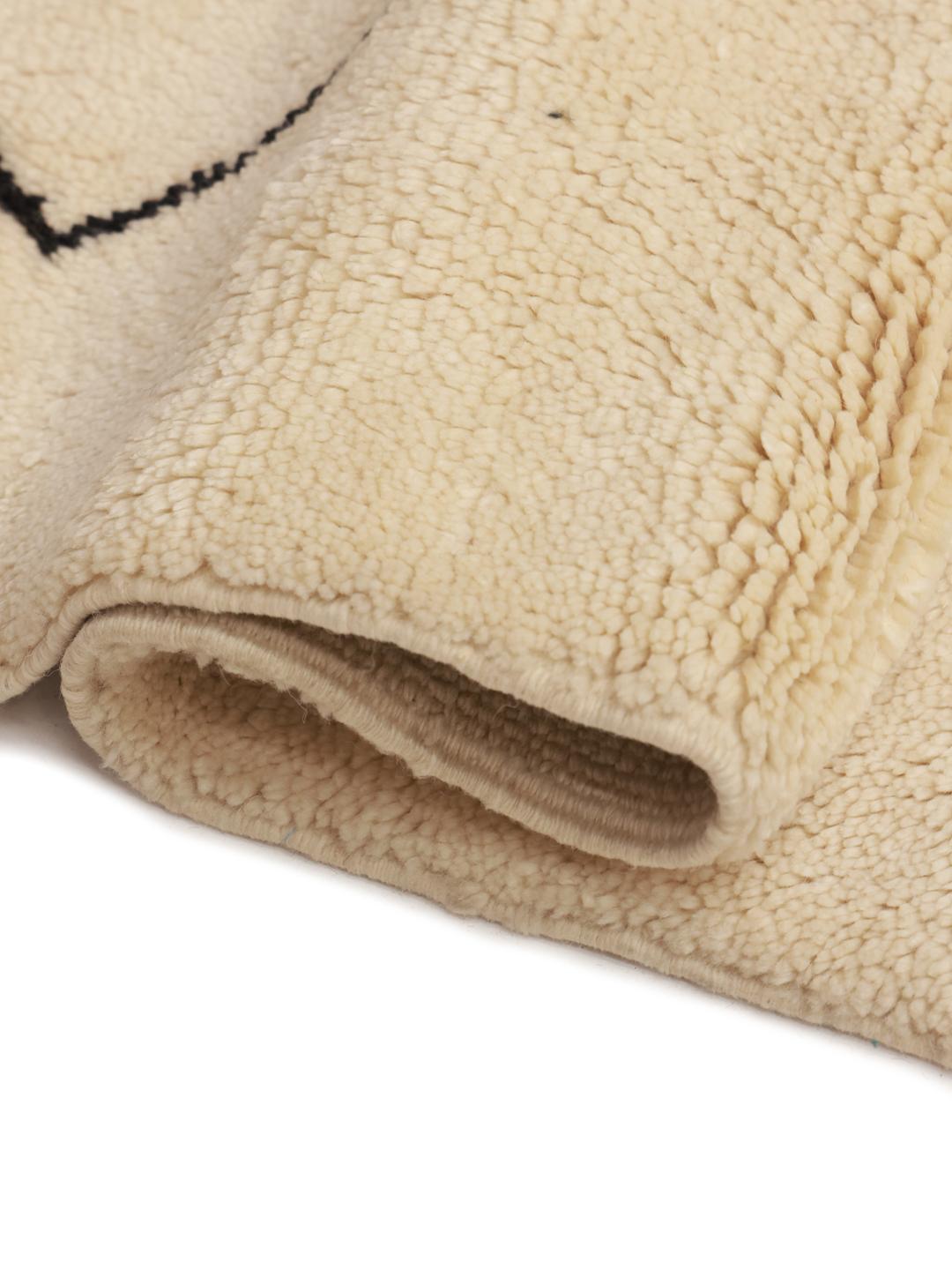
Technical terms like Beni Ourain refer to the specific group of tribes in the region known for their distinct weaving style. The use of high-quality, long-staple wool, often left in its natural undyed state, is a hallmark of this tradition. This wool is prized for its soft, lustrous quality and its natural ability to insulate, which is why these rugs are so sought after for their comfort and longevity.
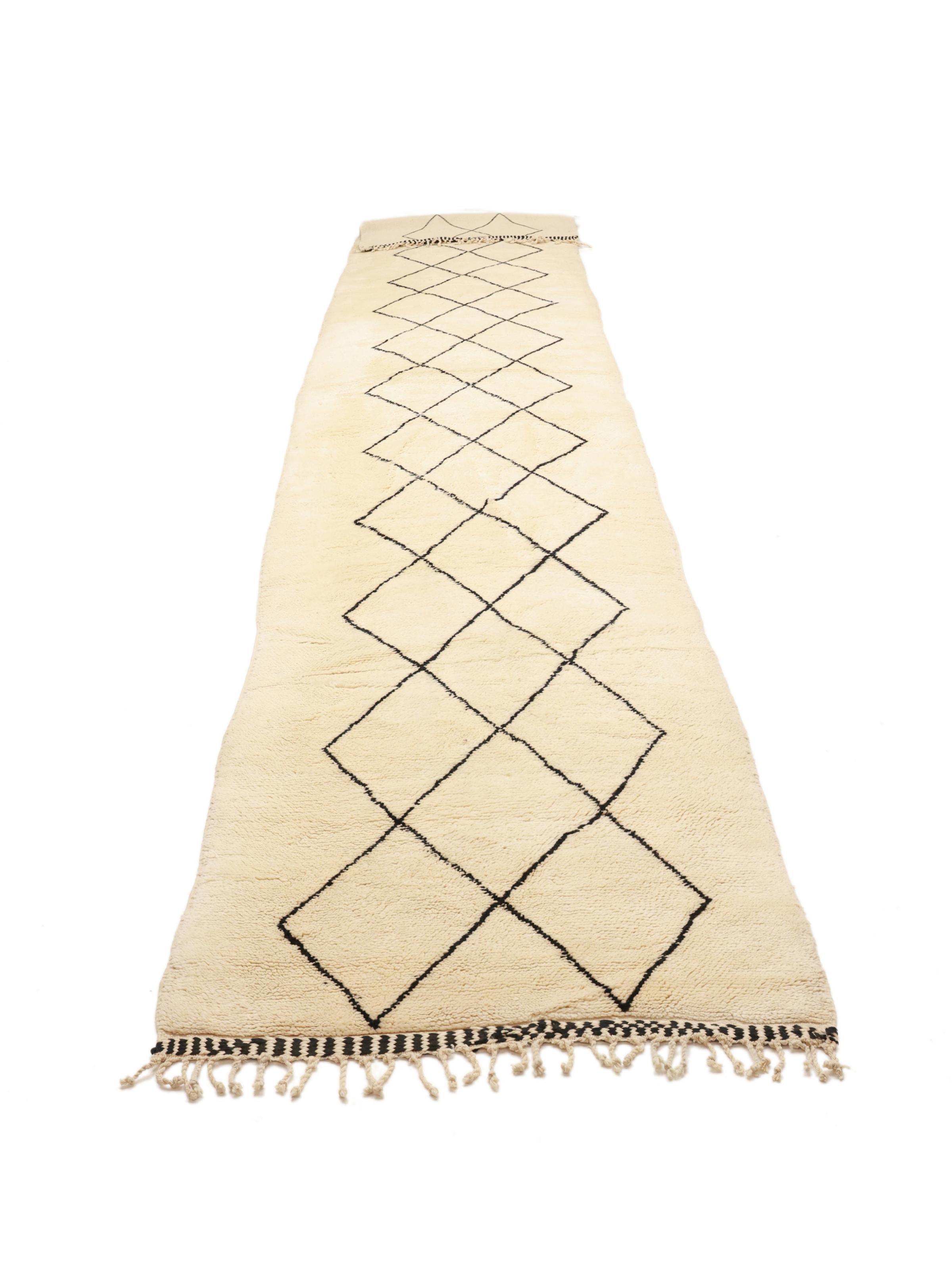
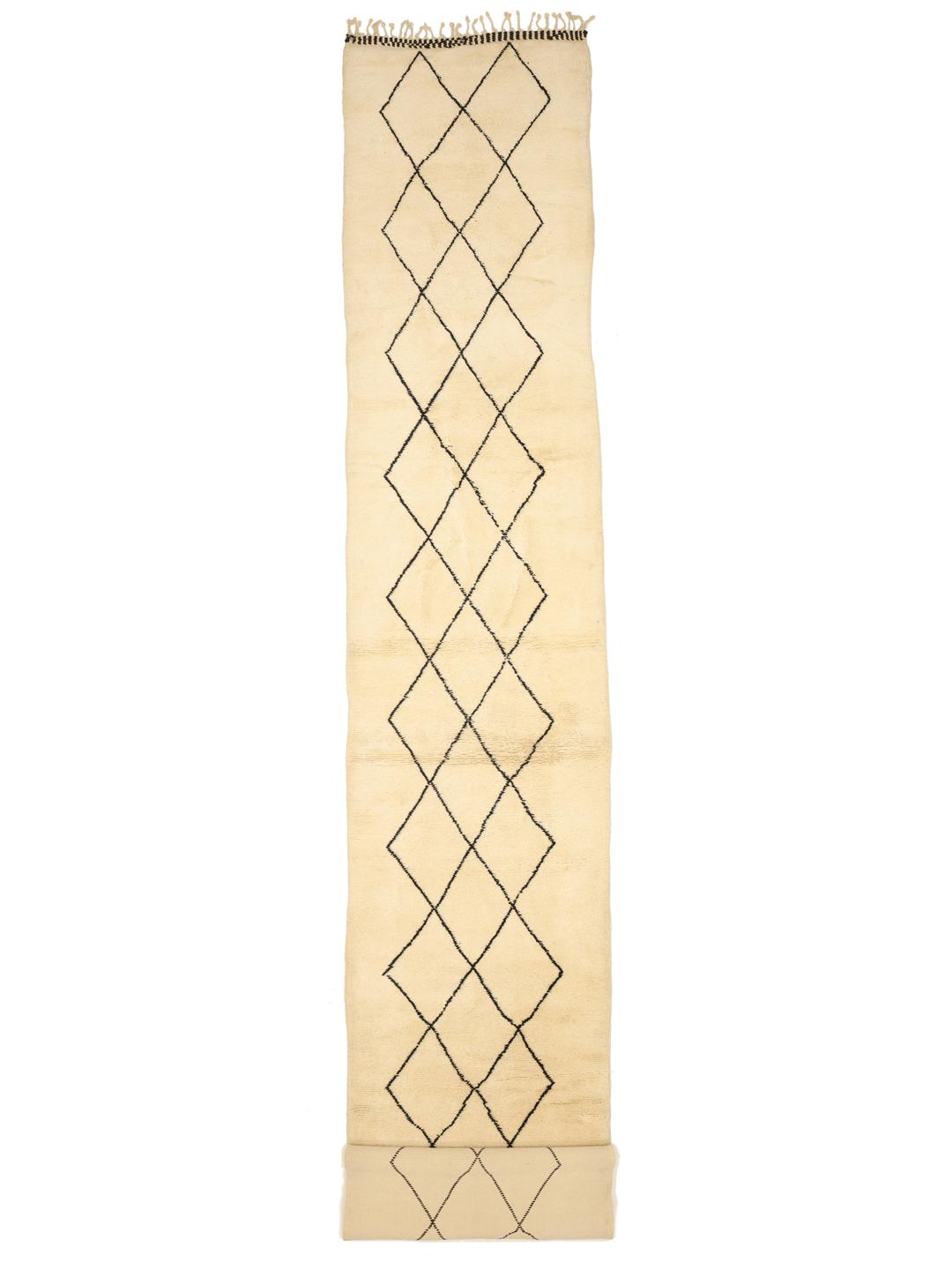
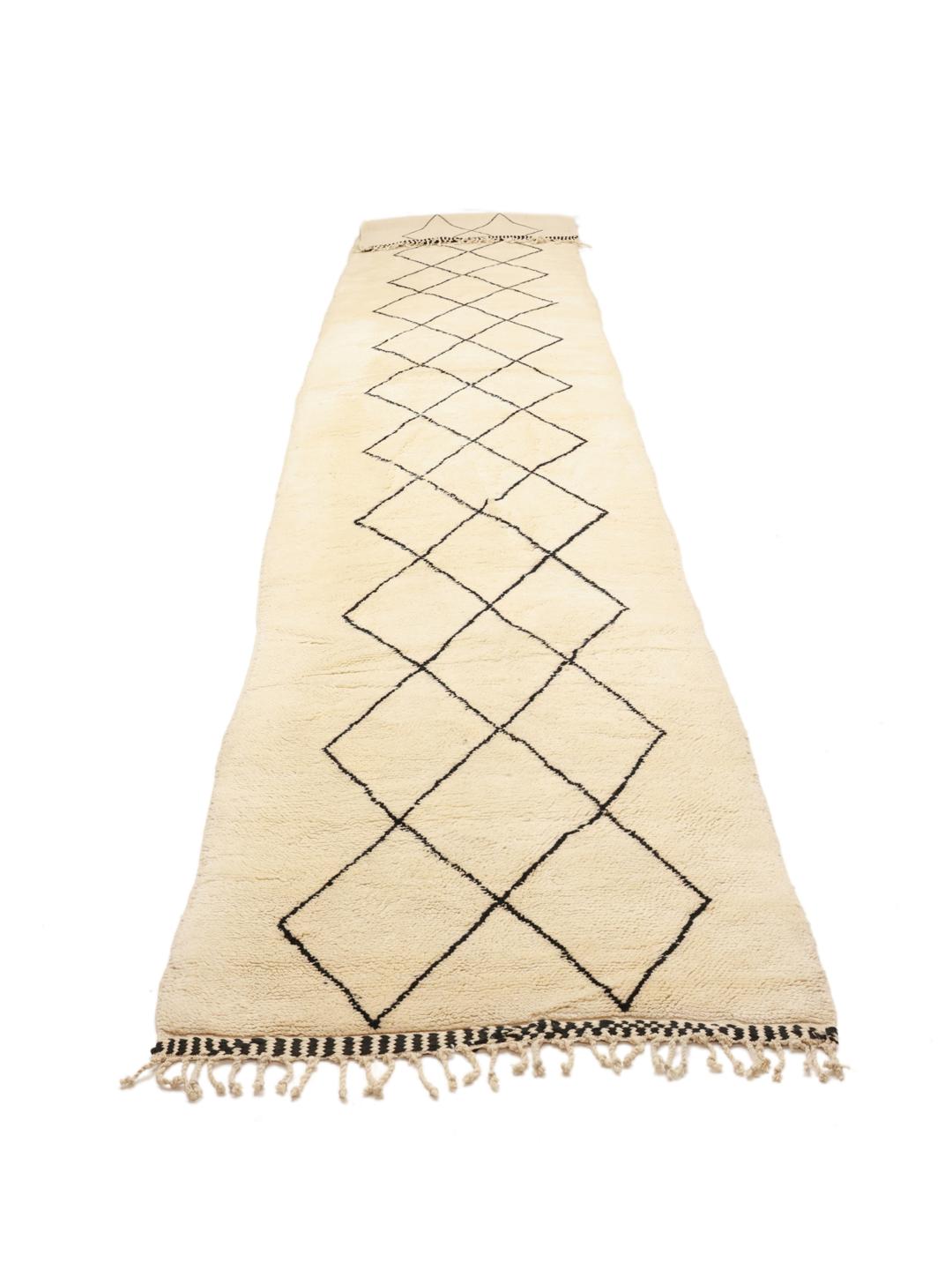
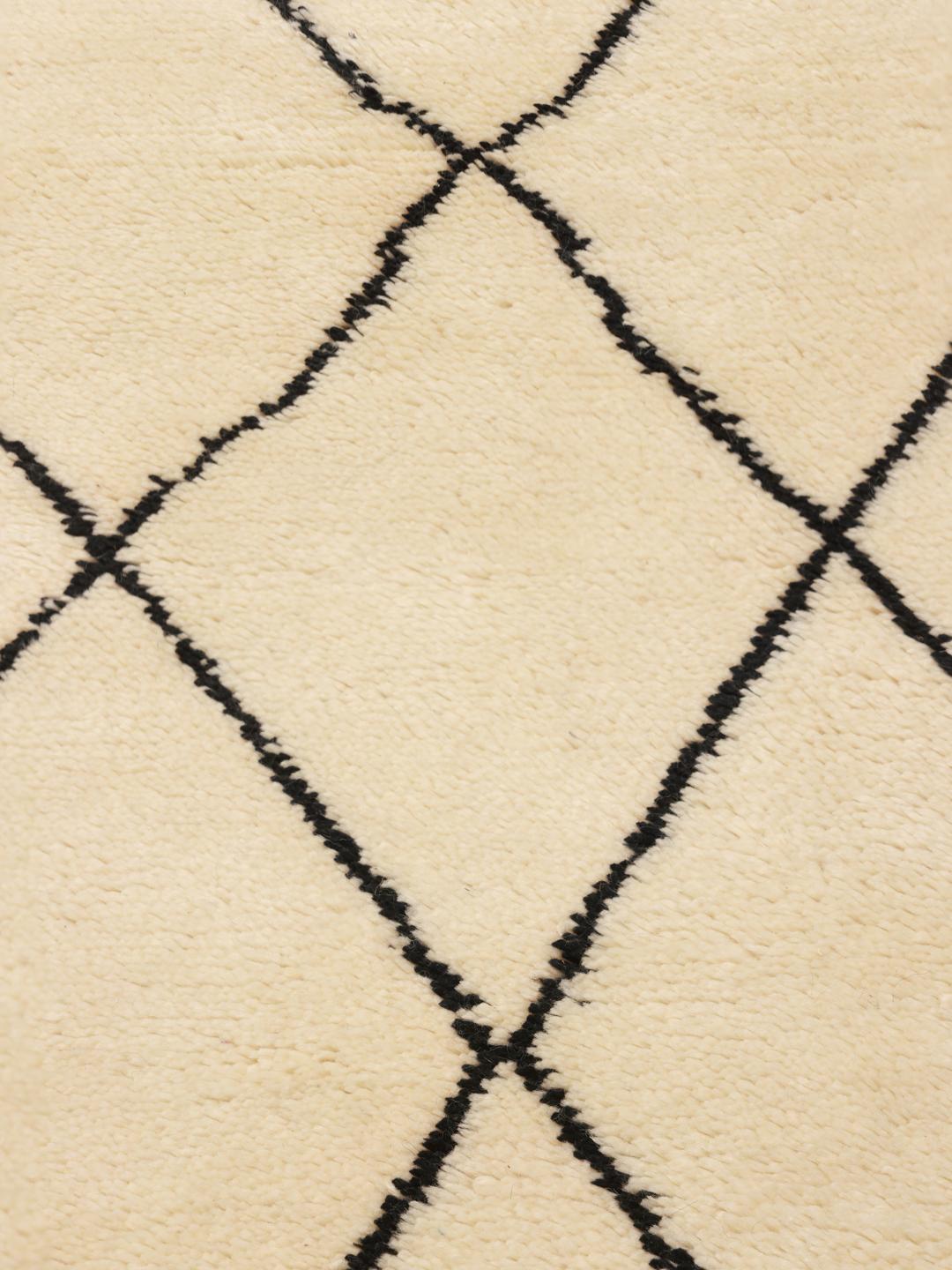
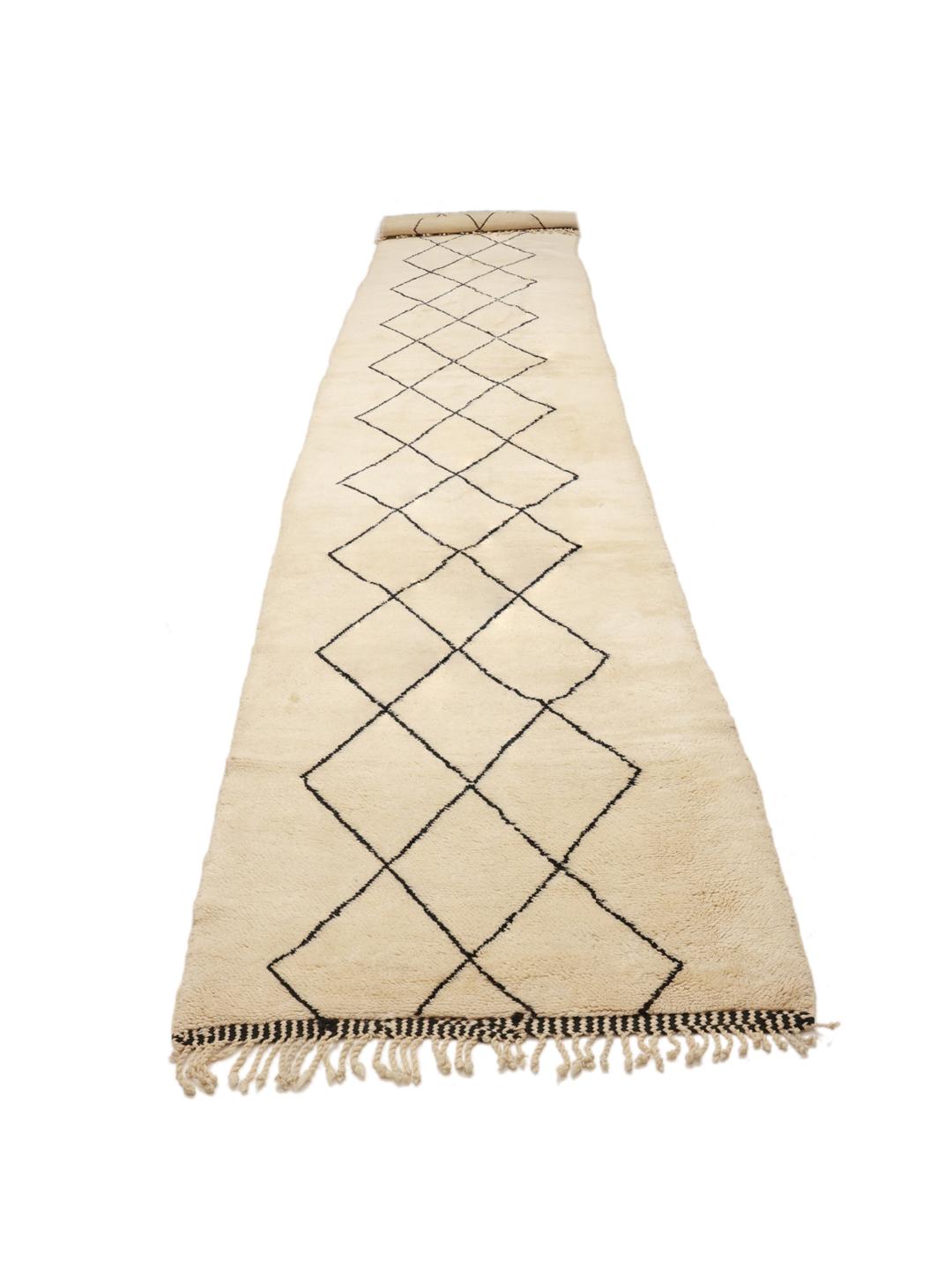
Visually, these rugs are defined by their minimalist aesthetic, typically featuring a cream or ivory field decorated with simple geometric lines or diamond patterns in dark wool. While the designs appear modern and minimalistic to the contemporary eye, they are deeply traditional, often reflecting the personal stories, beliefs, or observations of the weaver. The contrast between the dark lines and the light field is intended to be striking, making the rug a focal point of any room.
Today, these rugs are celebrated by collectors and designers worldwide for their authentic, soulful quality. Owning a piece from this tradition means connecting with a living craft that has remained largely unchanged despite the passage of time. It is a testament to the skill and cultural identity of the Berber people, and its presence in a home serves as a bridge between ancient traditions and modern living.