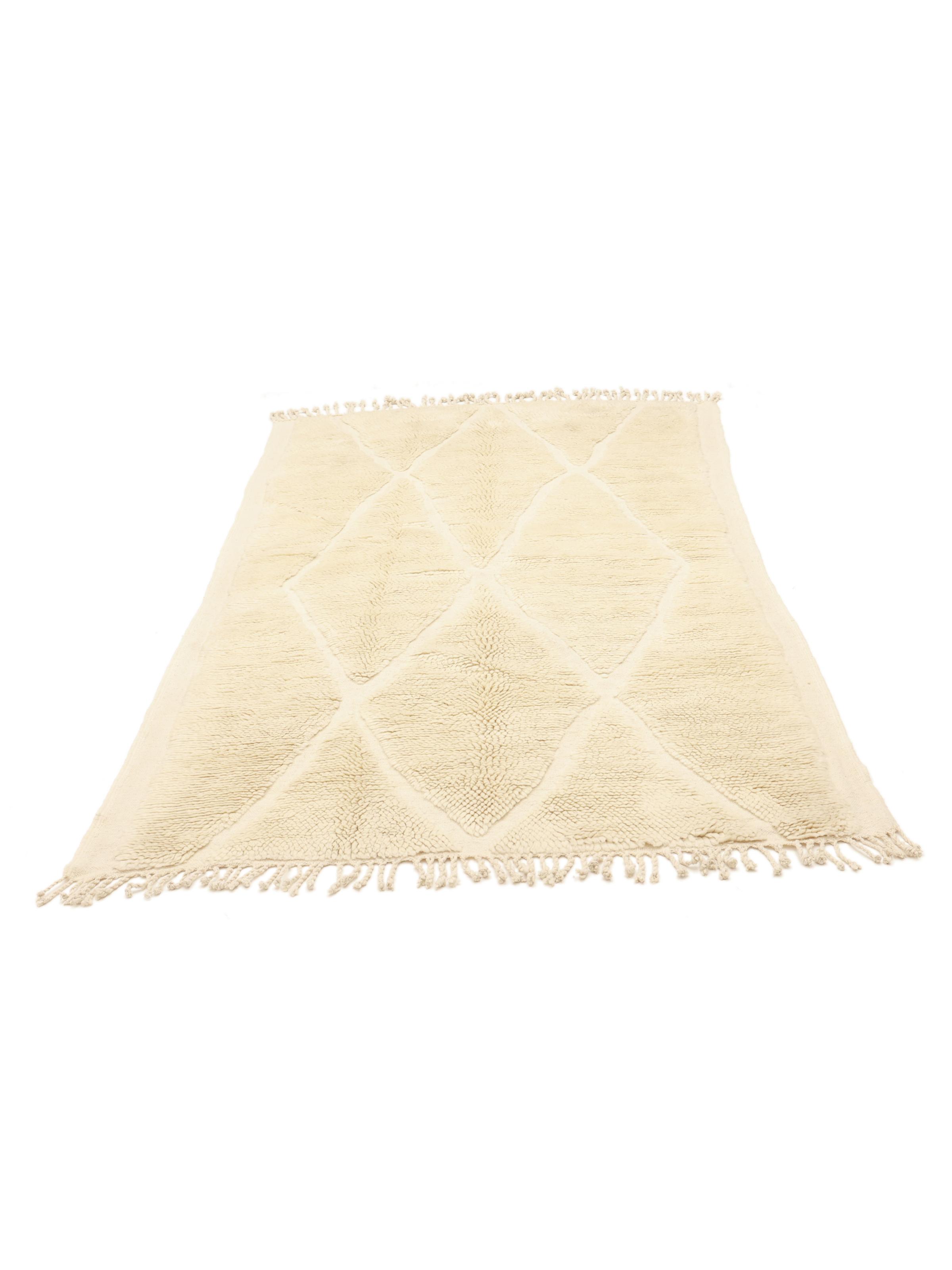
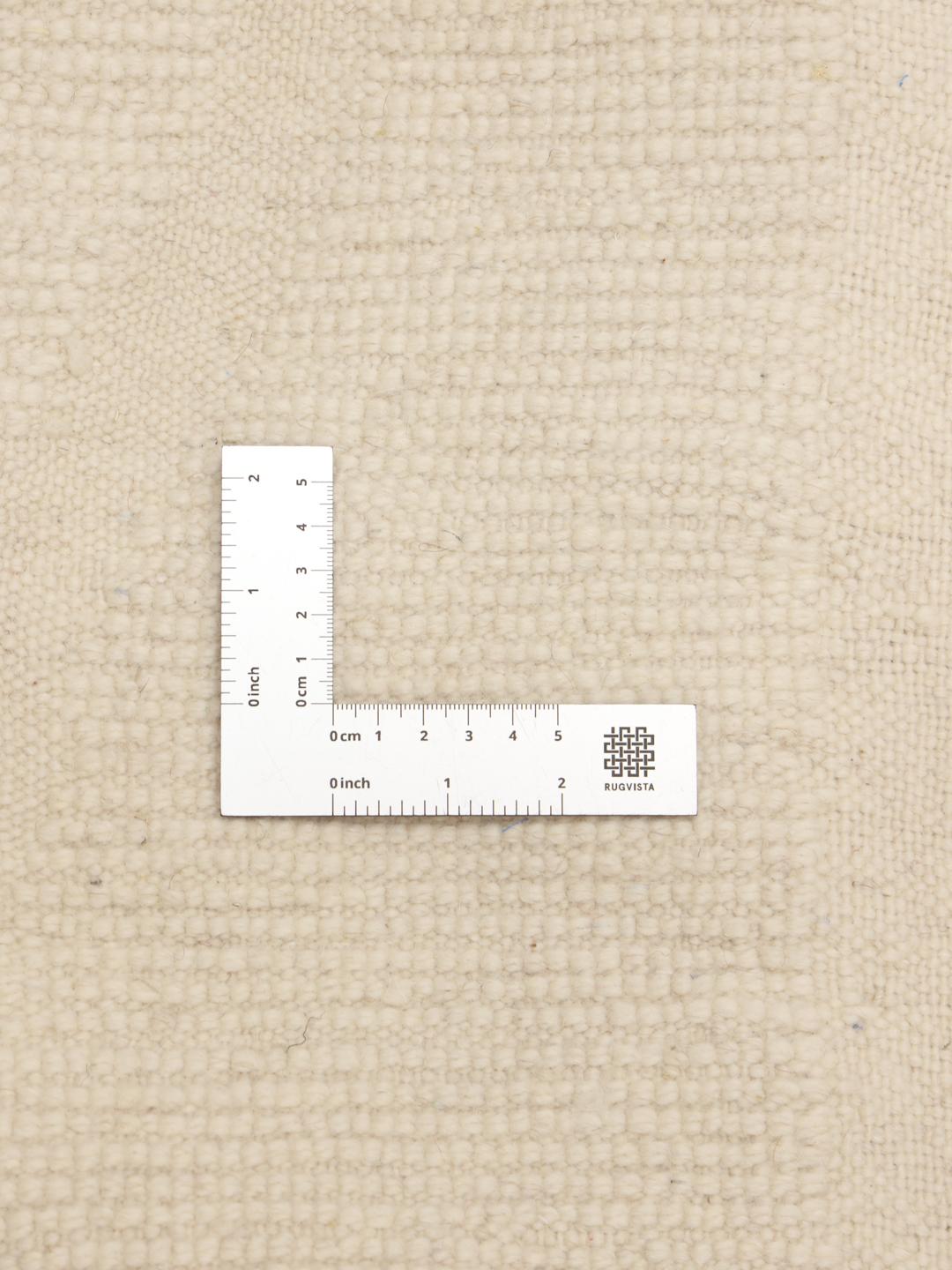
Beni Ourain rugs originate from the high peaks of the Middle Atlas mountains in Morocco, where they have been woven for centuries by nomadic tribes. These rugs were traditionally crafted as utilitarian items, serving as heavy blankets or sleeping mats to provide warmth against the harsh, cold mountain winters.
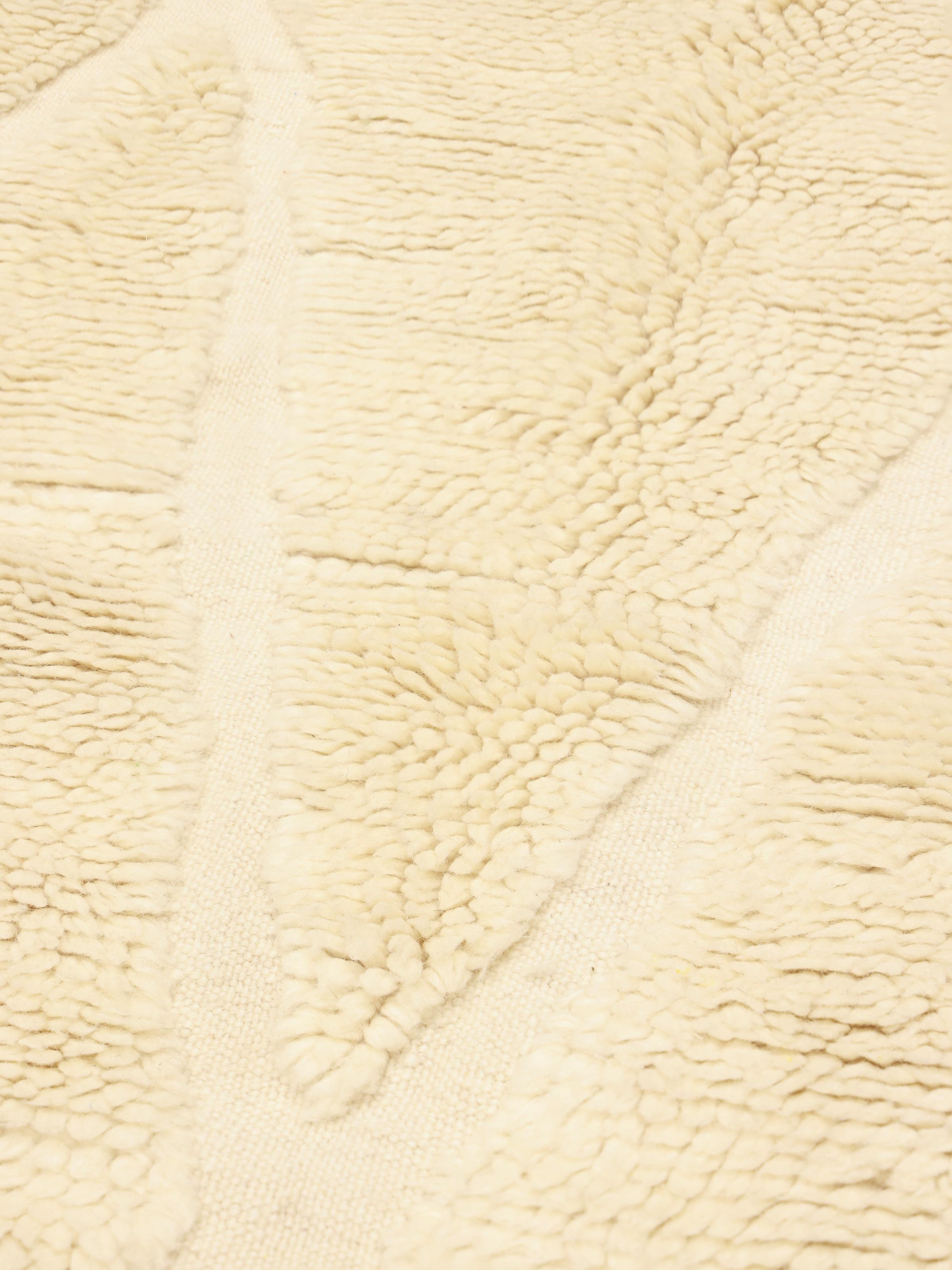
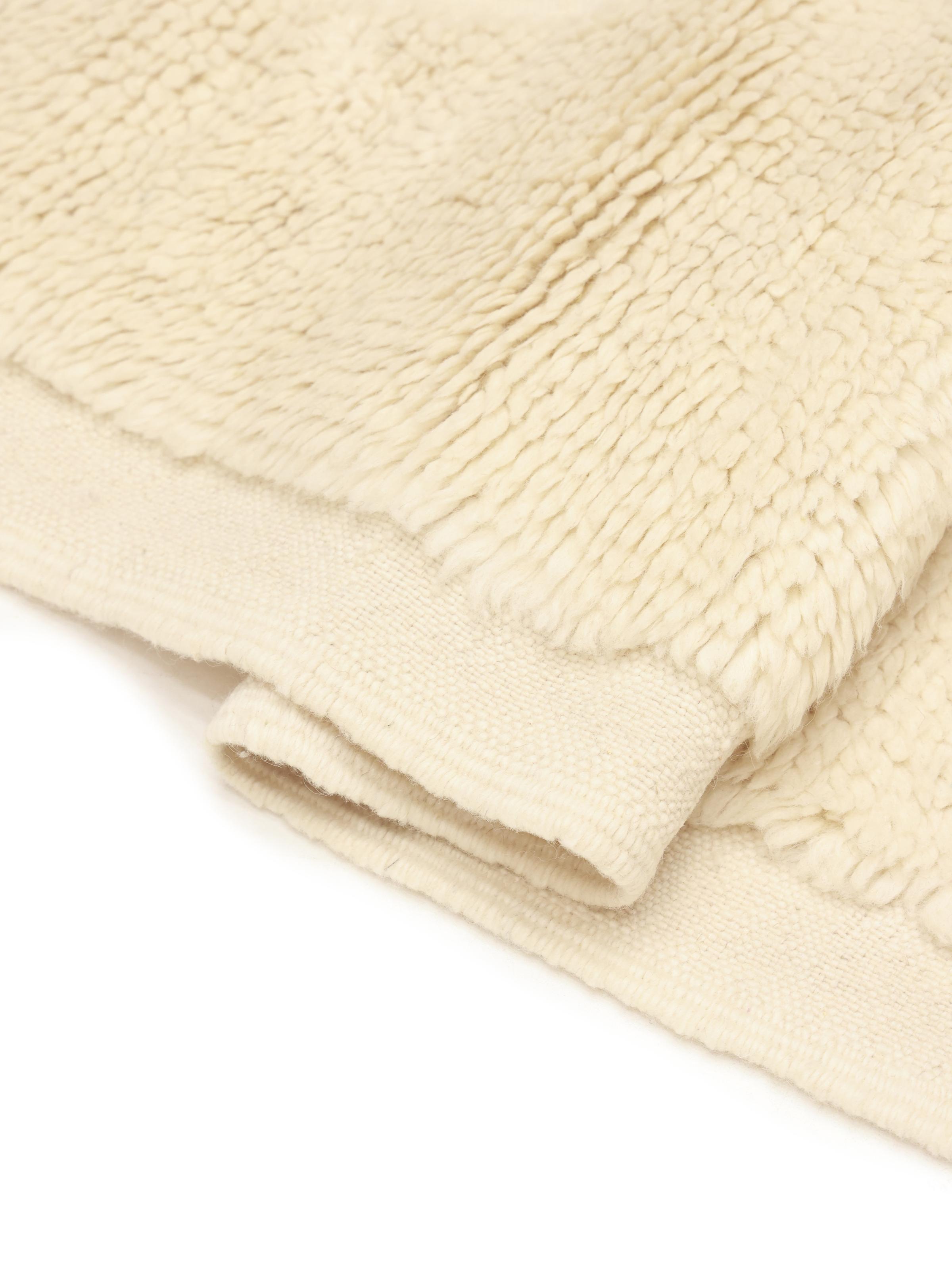
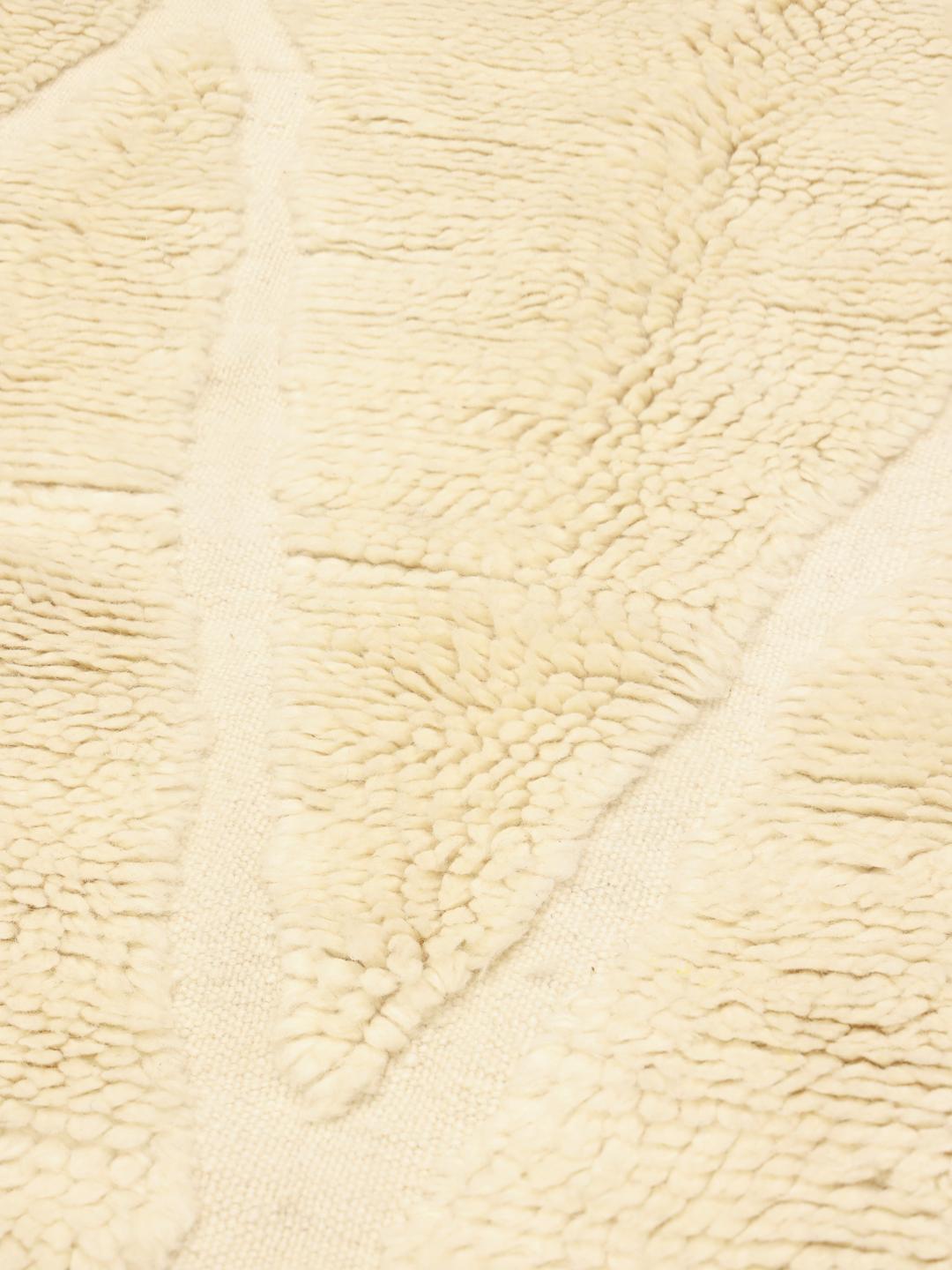
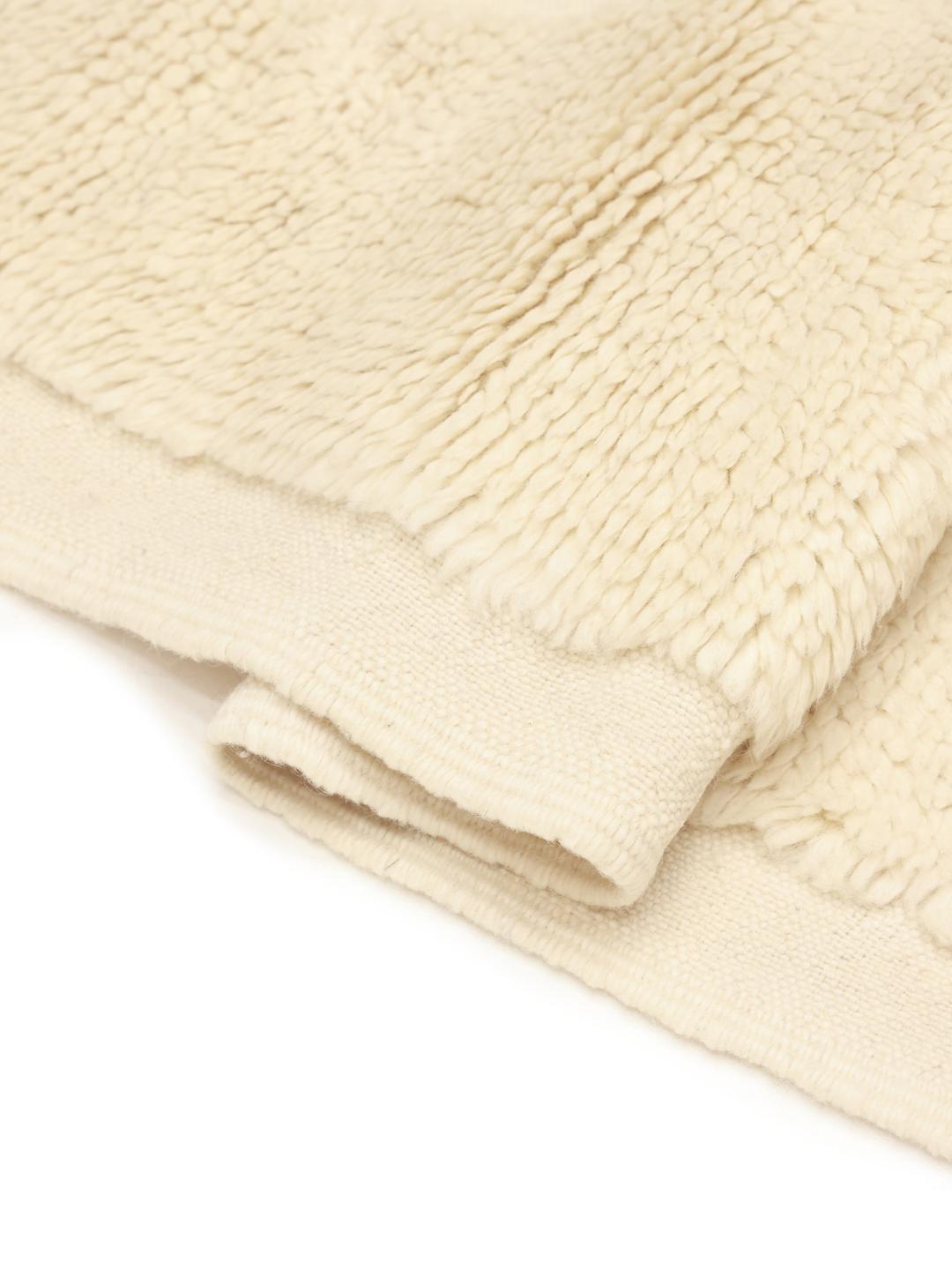
The term 'Beni Ourain' refers to the confederation of Berber tribes who developed this distinctive style. Technical quality in these rugs is defined by the use of high-quality, undyed sheep's wool, which is hand-spun to retain its natural lanolin. This creates a resilient, water-repellent, and exceptionally soft pile that is highly prized by collectors.
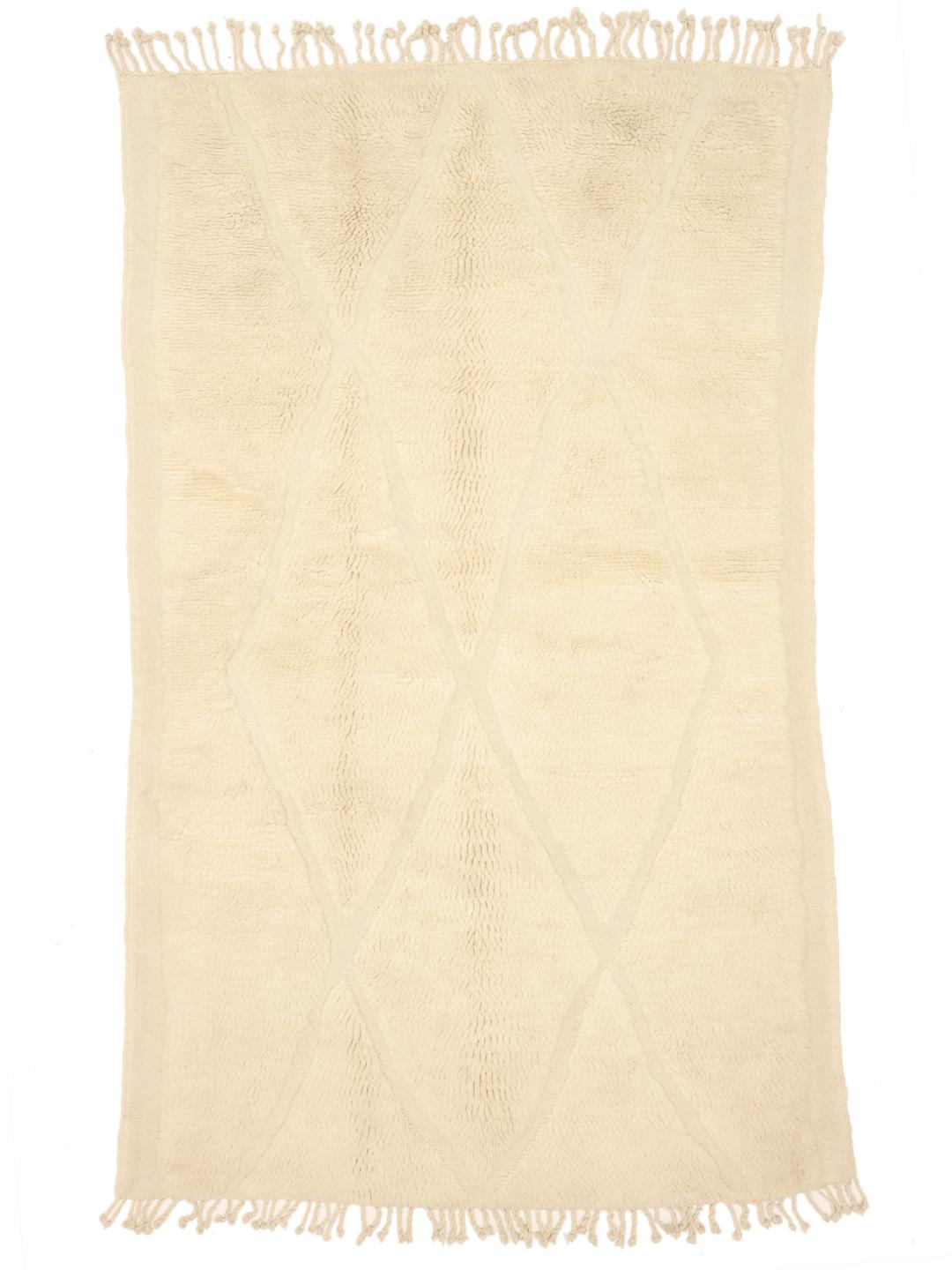
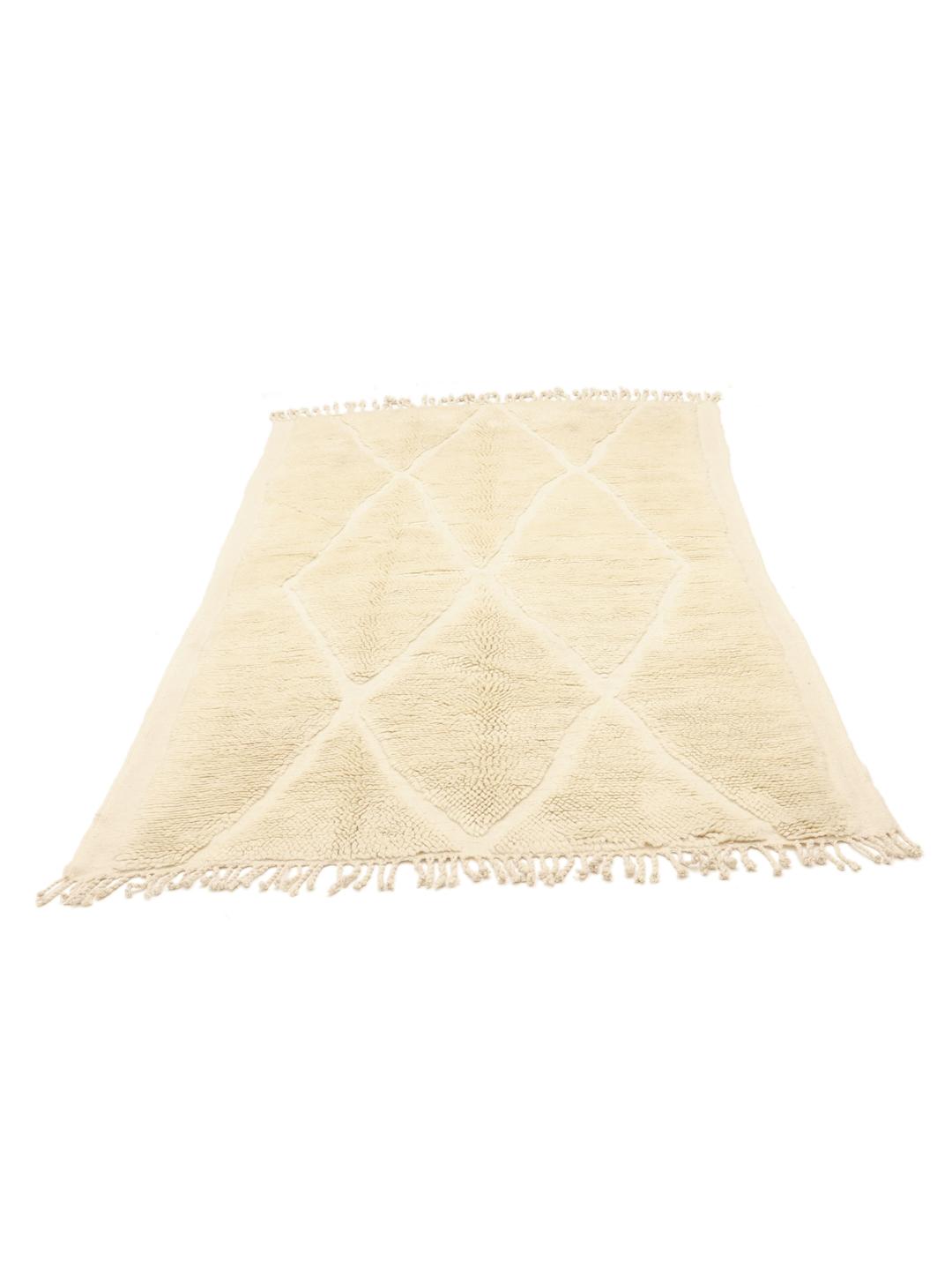
Visually, these rugs are known for their minimalist yet powerful geometric language. Typically, they feature a natural, unbleached wool field adorned with simple dark-toned lines that form diamond grids or abstract symbols. These motifs often carry personal meaning for the weaver, representing fertility, protection, or the natural world, making each piece a personal narrative captured in wool.
Today, these rugs are celebrated globally for their contribution to modern interior design, yet they remain deeply rooted in their cultural heritage. Collectors value them not only for their aesthetic appeal but as symbols of an enduring craft tradition that honours the connection between the artisan, the environment, and the home.