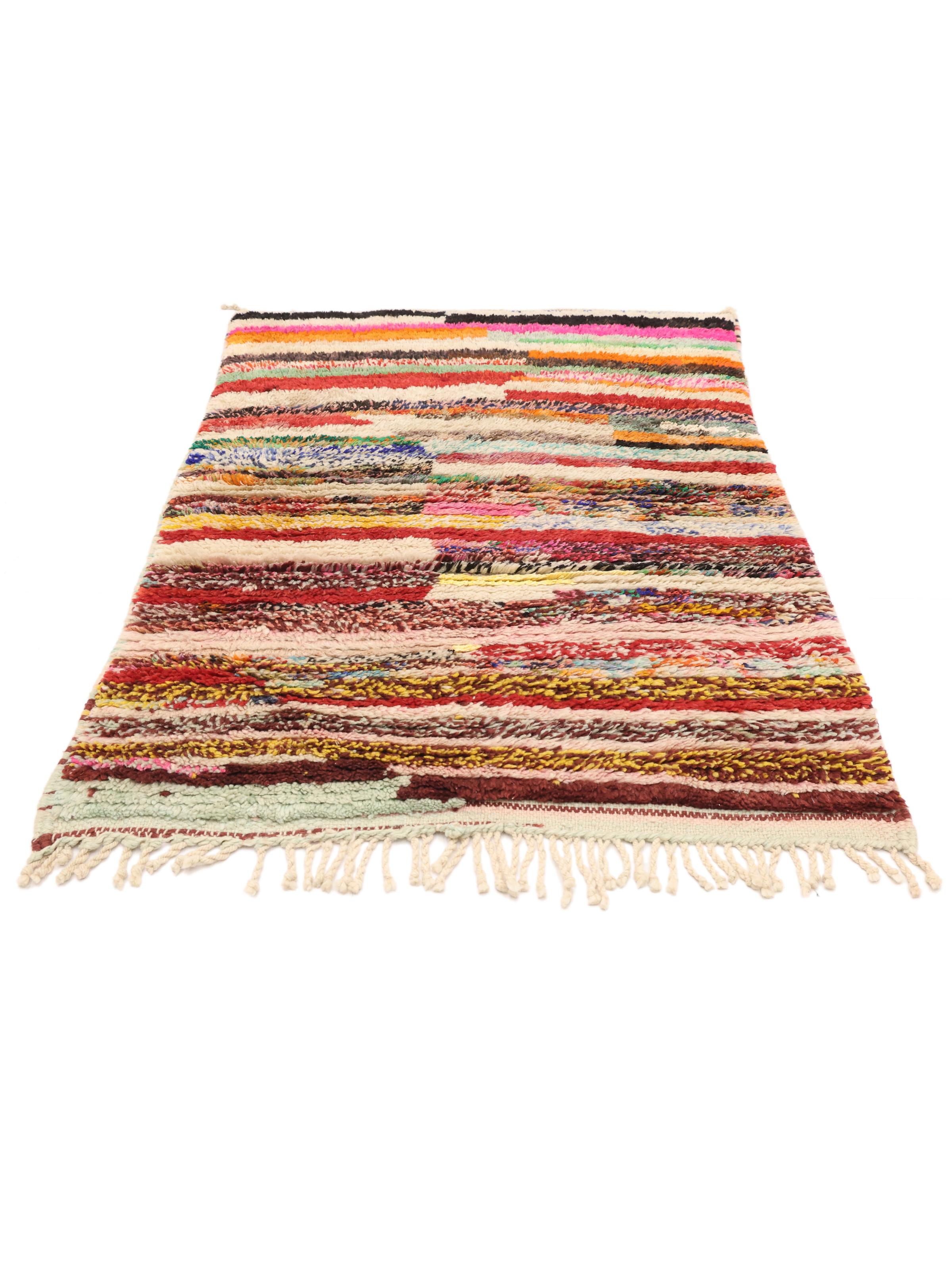
Berber rugs are deeply rooted in the cultural heritage of the indigenous peoples of North Africa, particularly the tribes of the Atlas Mountains in Morocco. For centuries, these rugs have been woven not merely as decorative items, but as essential tools for survival, providing warmth during harsh mountain winters and serving as versatile sleeping mats or blankets.
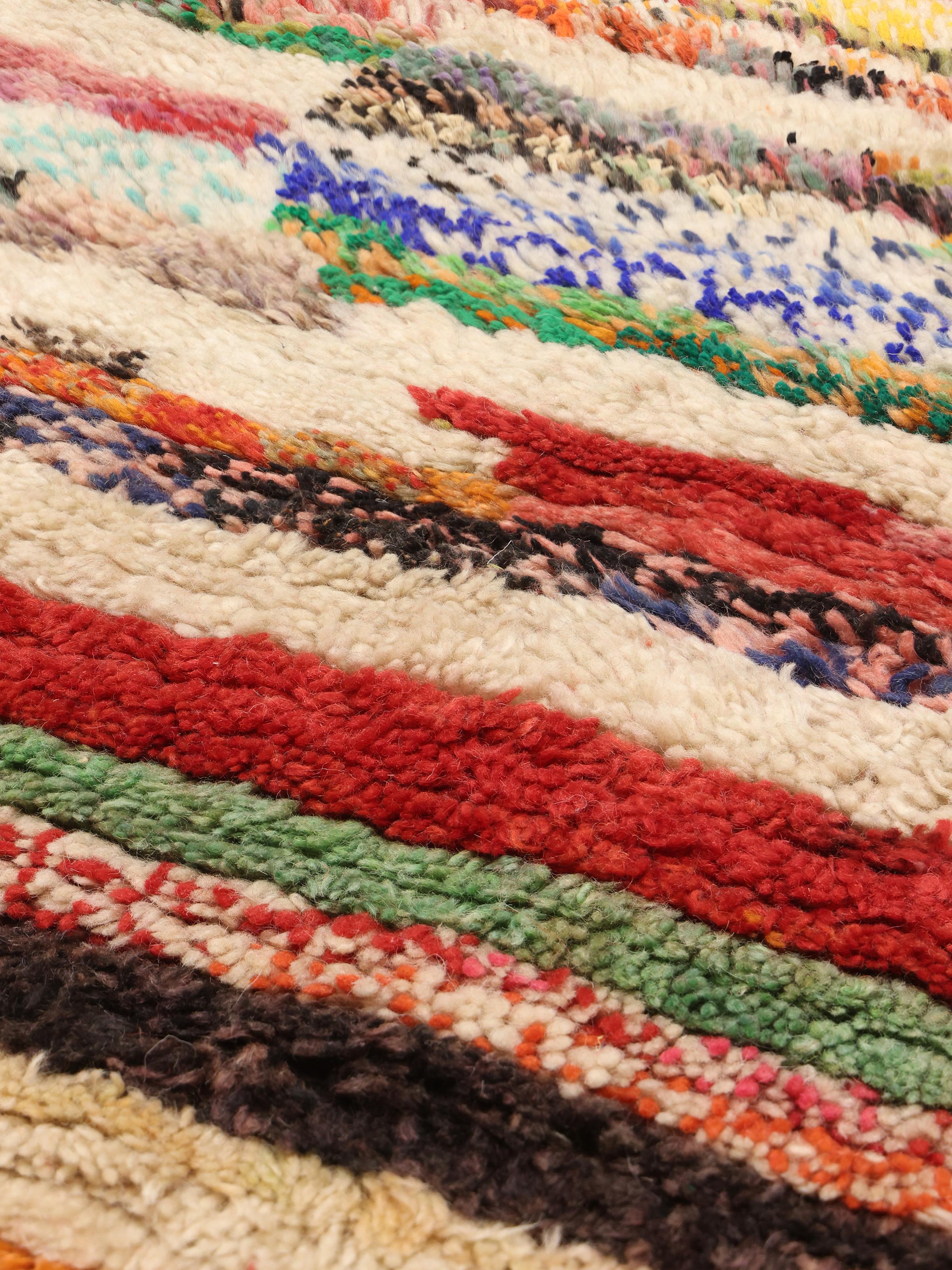
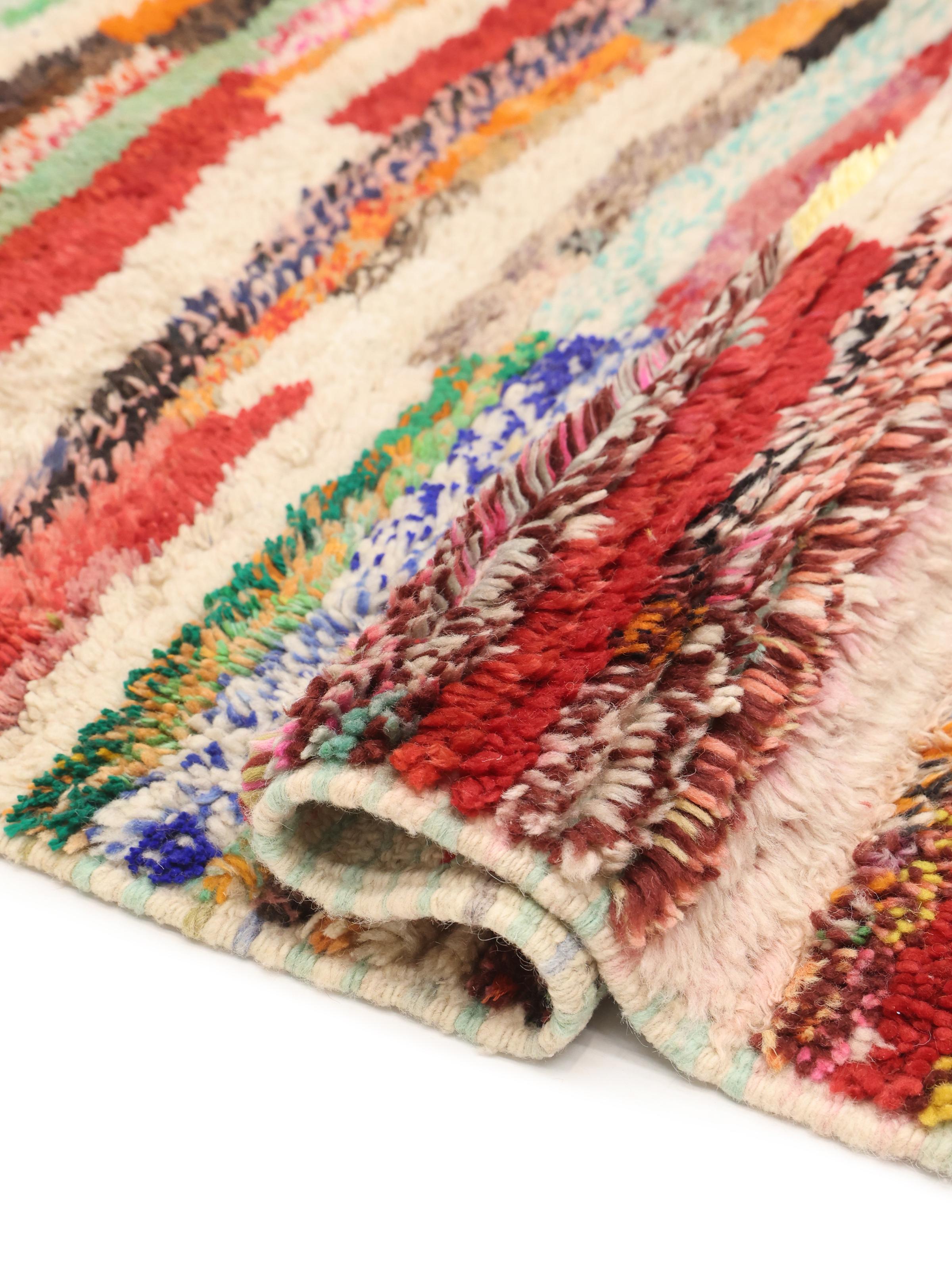
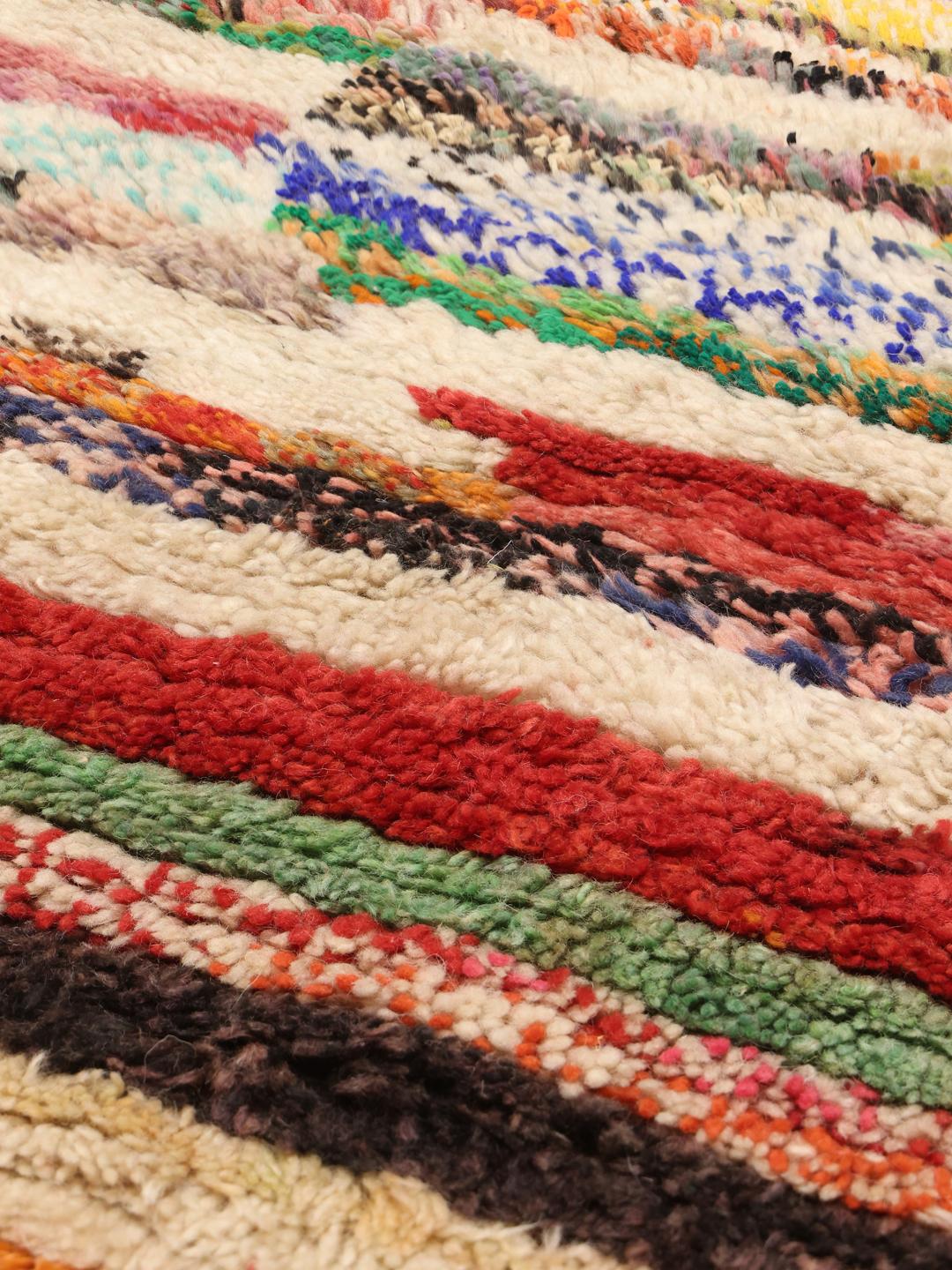
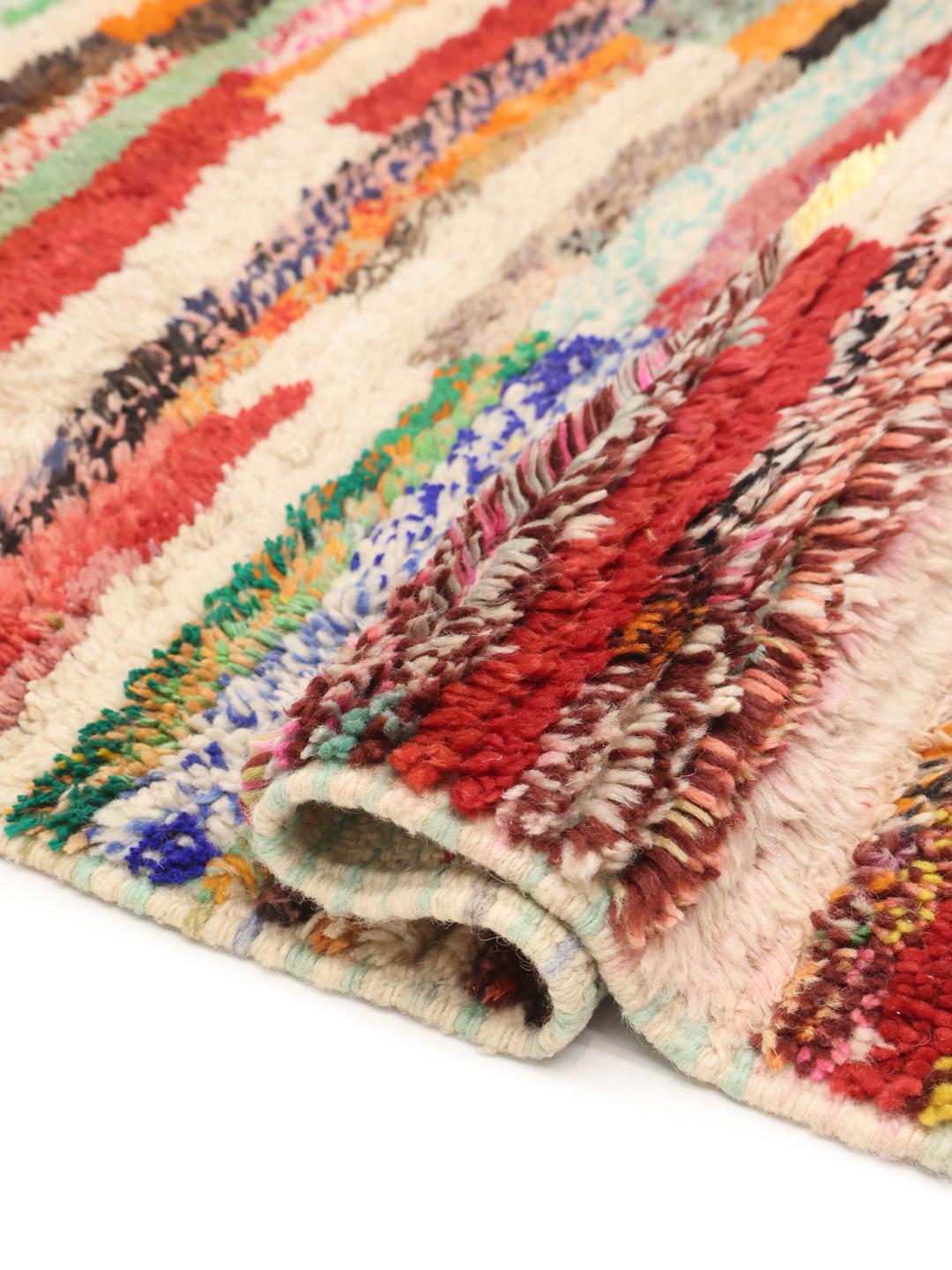
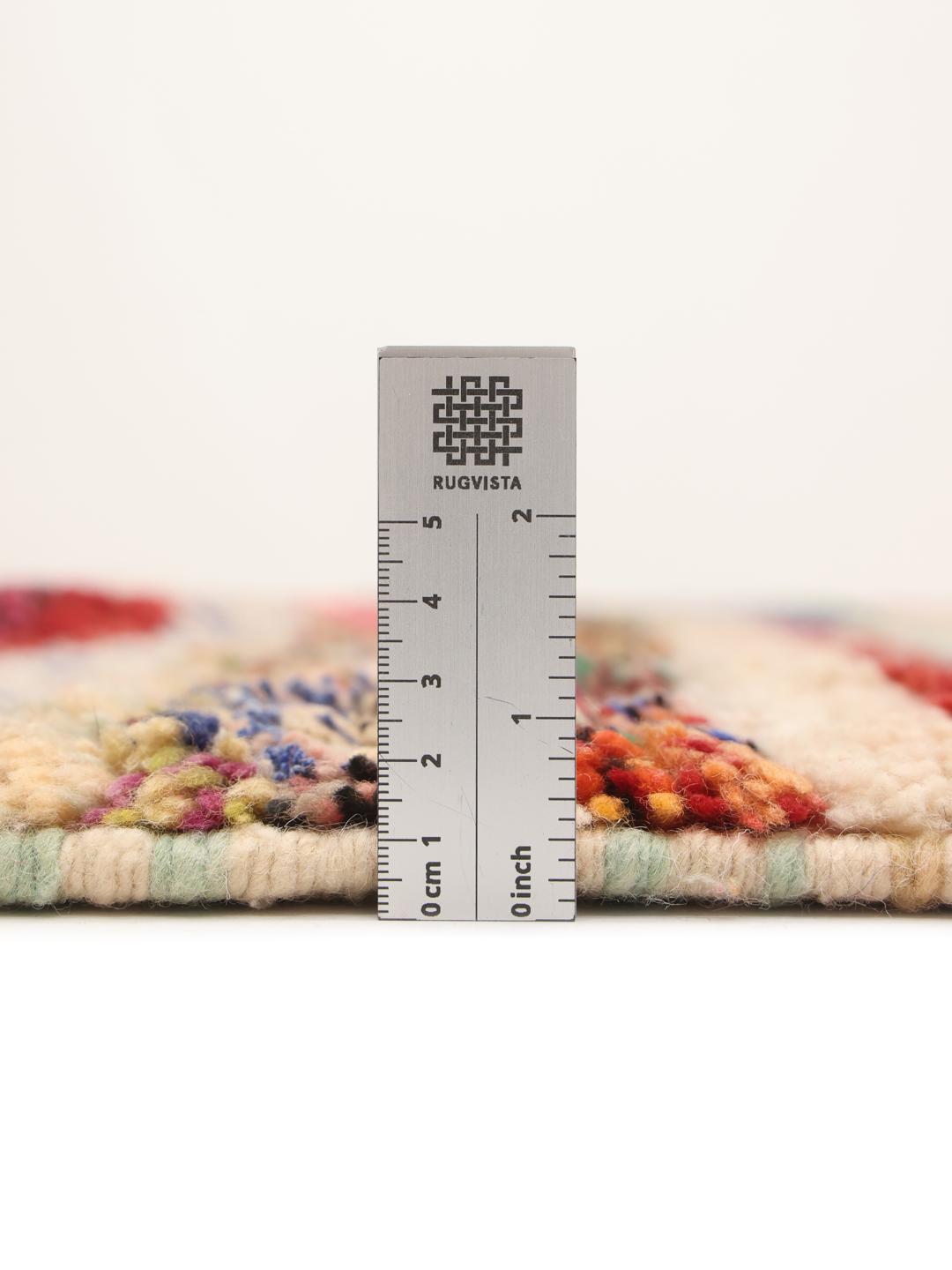
The terminology surrounding these pieces often refers to the specific tribal traditions and the regional environment. The thick, plush pile is a hallmark of the craft, intended to provide maximum insulation. This construction method relies on high-quality Wool, which is prized for its natural lanolin content, giving the finished rug a soft, resilient, and slightly lustrous finish that improves with age.
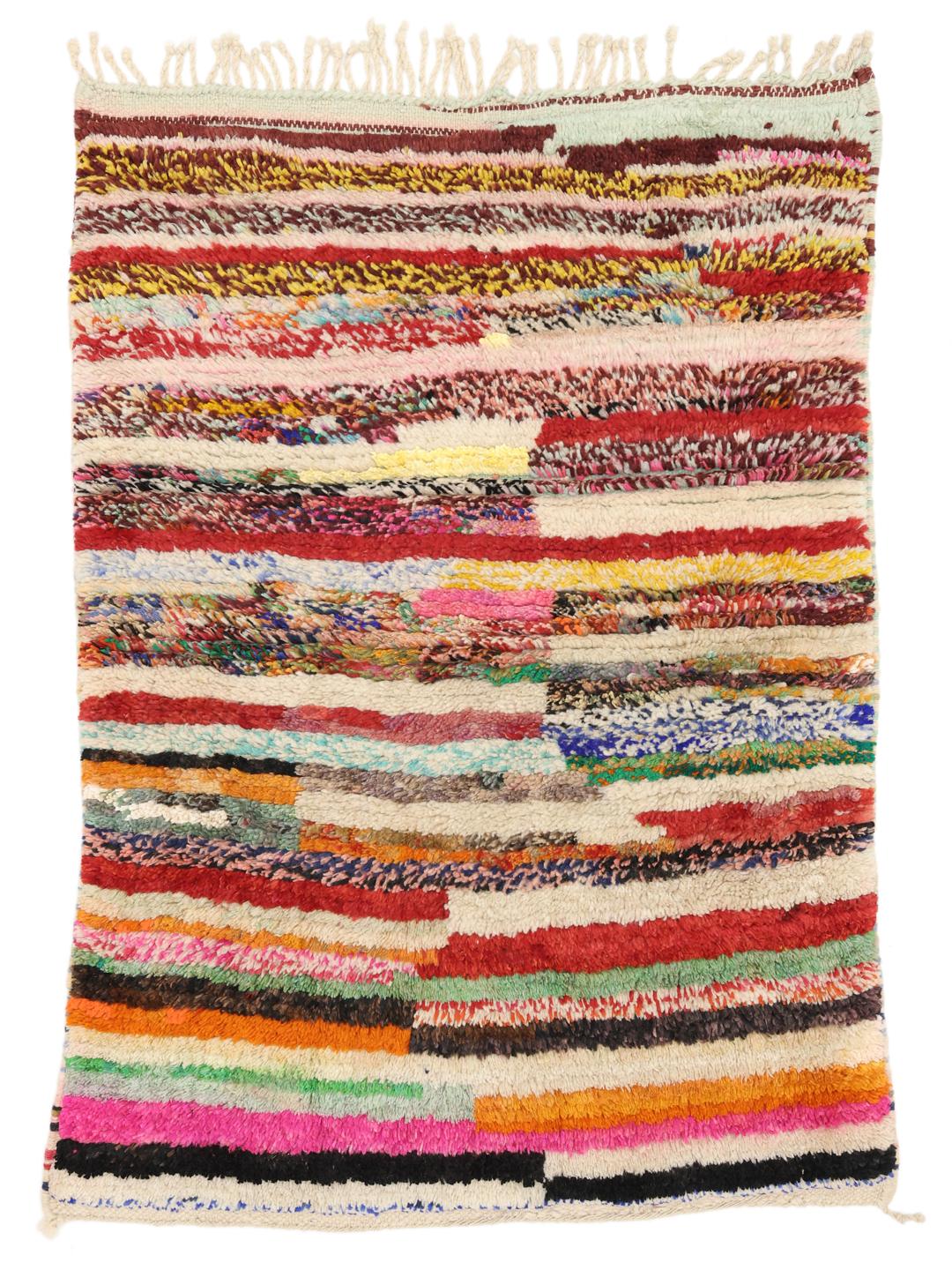
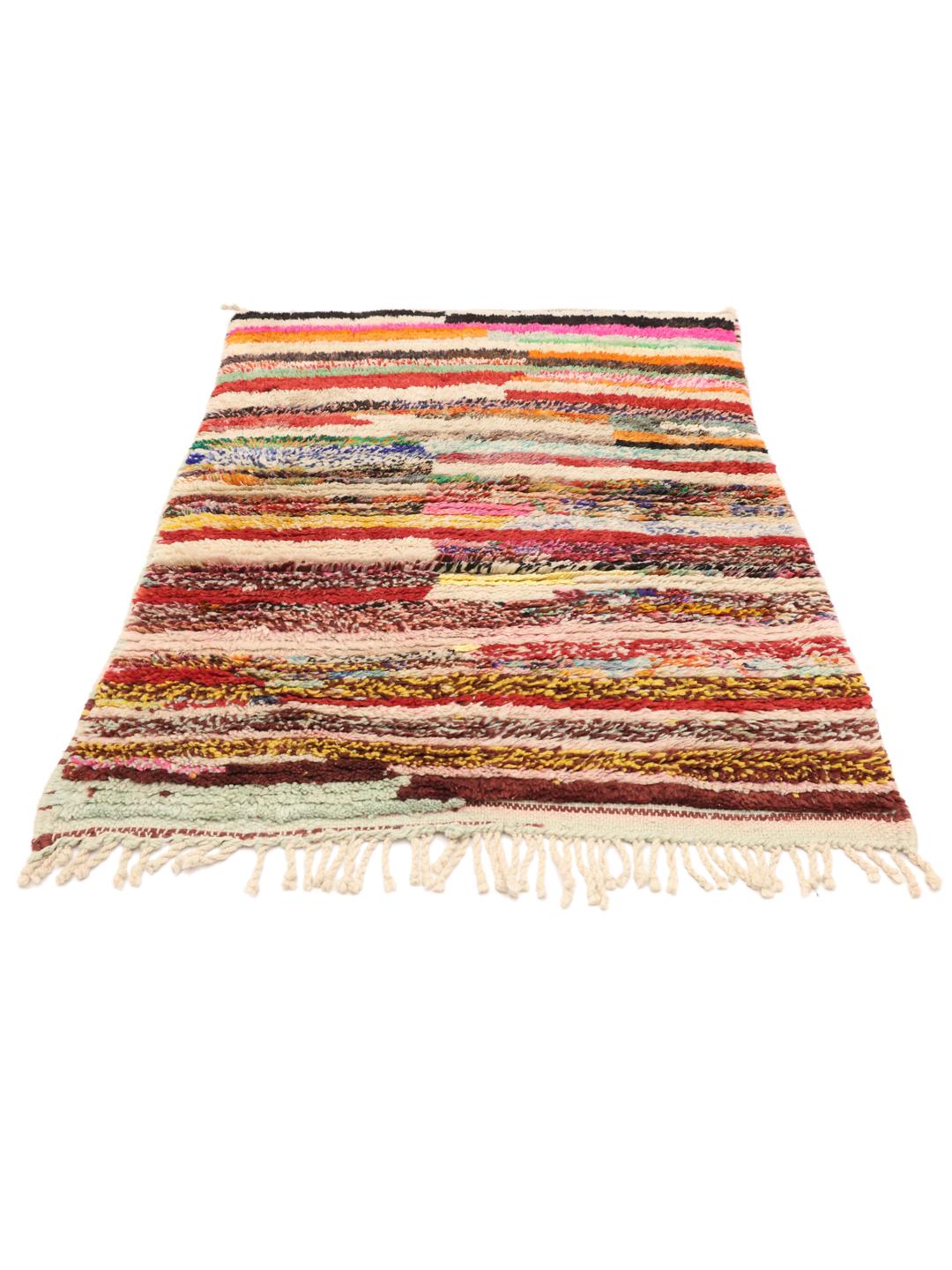
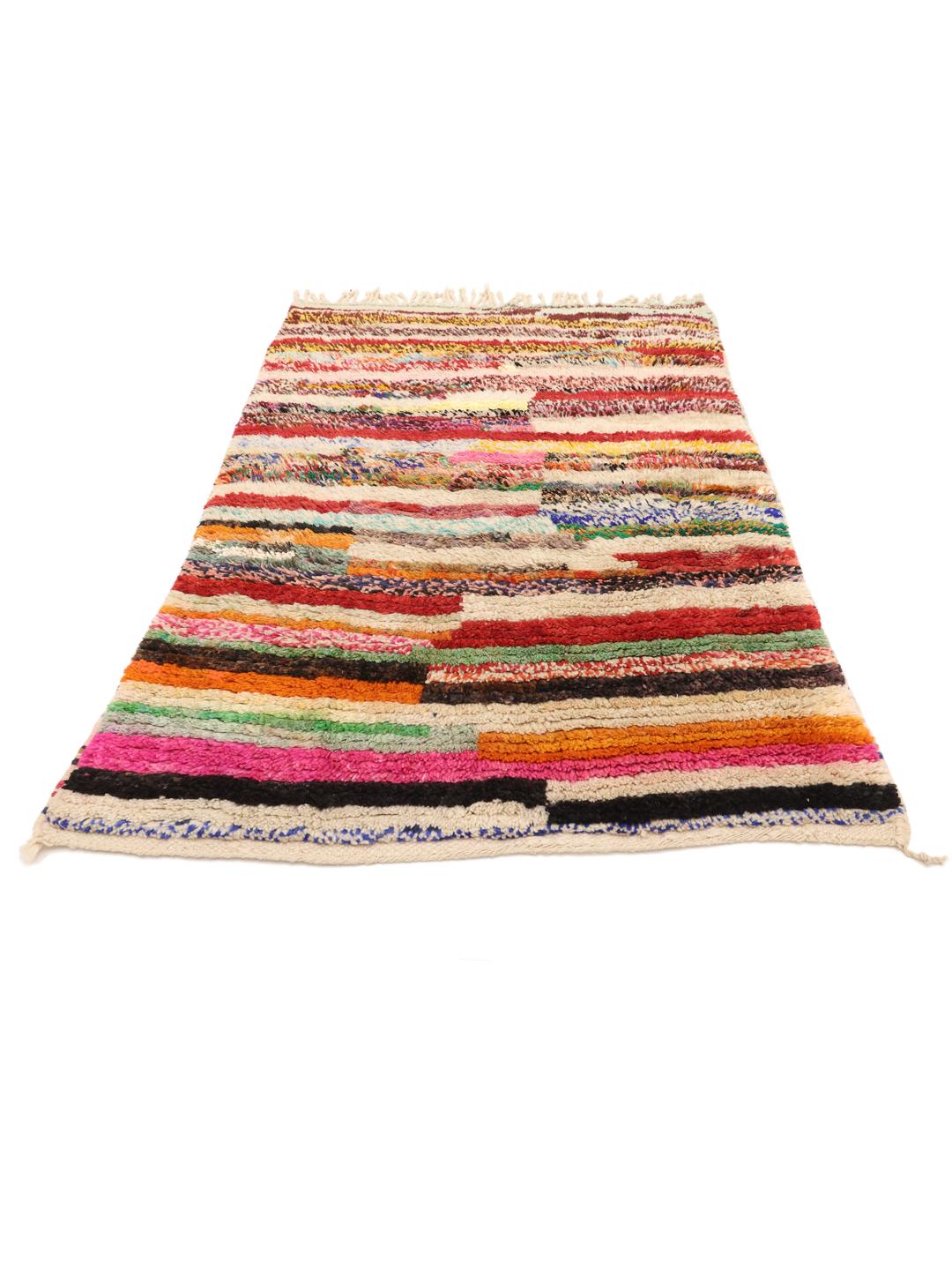
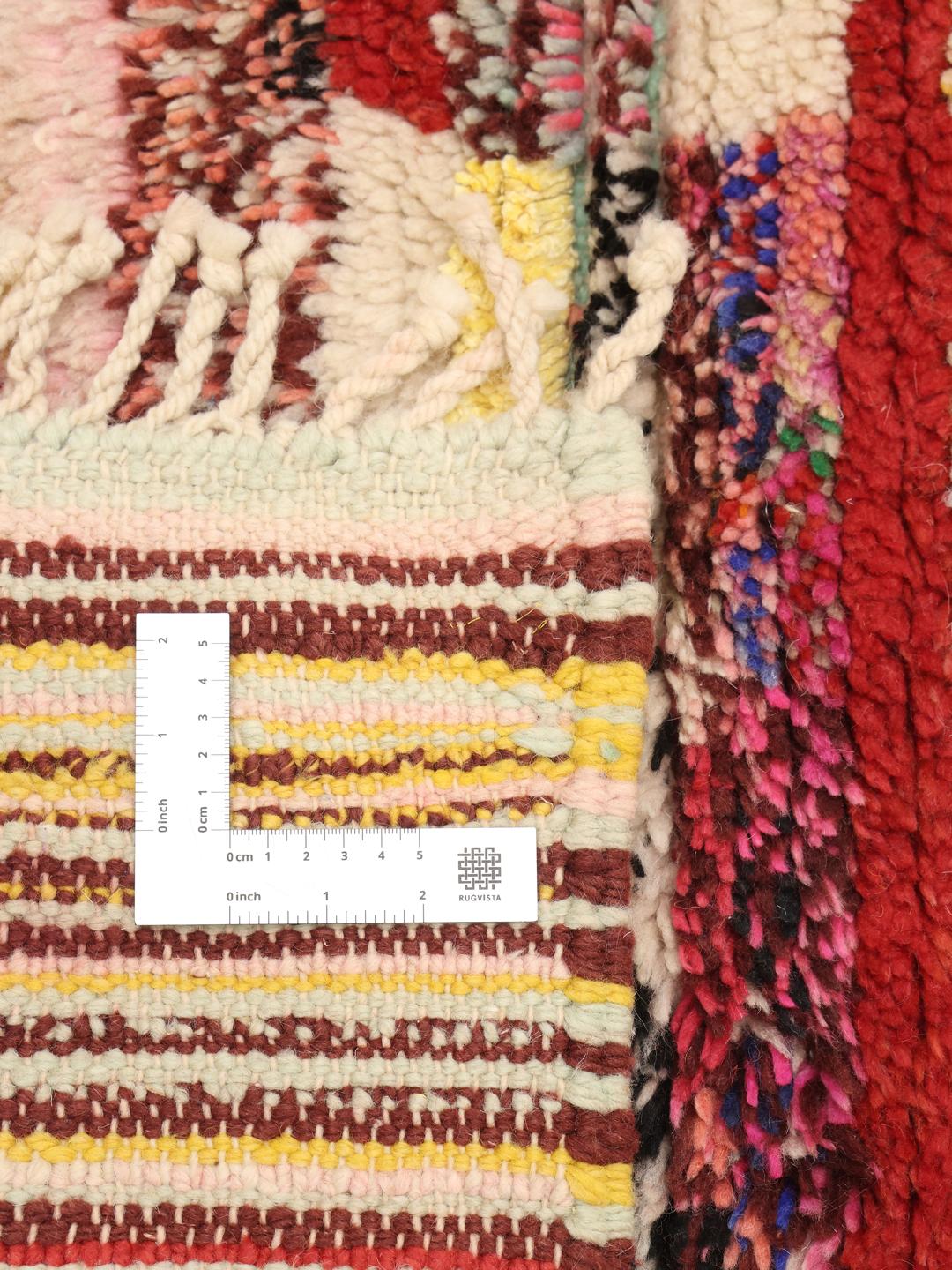
Visually, these rugs are defined by their spontaneous and often abstract design language. While some traditions favour minimalist geometric patterns, others, like this one, embrace a vibrant and expressive use of colour. These stripes and motifs often reflect the weaver's personal experiences, surroundings, and cultural symbolism, making every rug a personal expression rather than a rigid design template.
Owning a piece from this tradition is an act of supporting a craft that has survived for generations. These rugs are highly valued by collectors for their authenticity, the skill required to produce them, and the way they bridge the gap between ancient nomadic traditions and contemporary home aesthetics. They represent a connection to a slow, thoughtful way of living that prioritises natural materials and human connection.