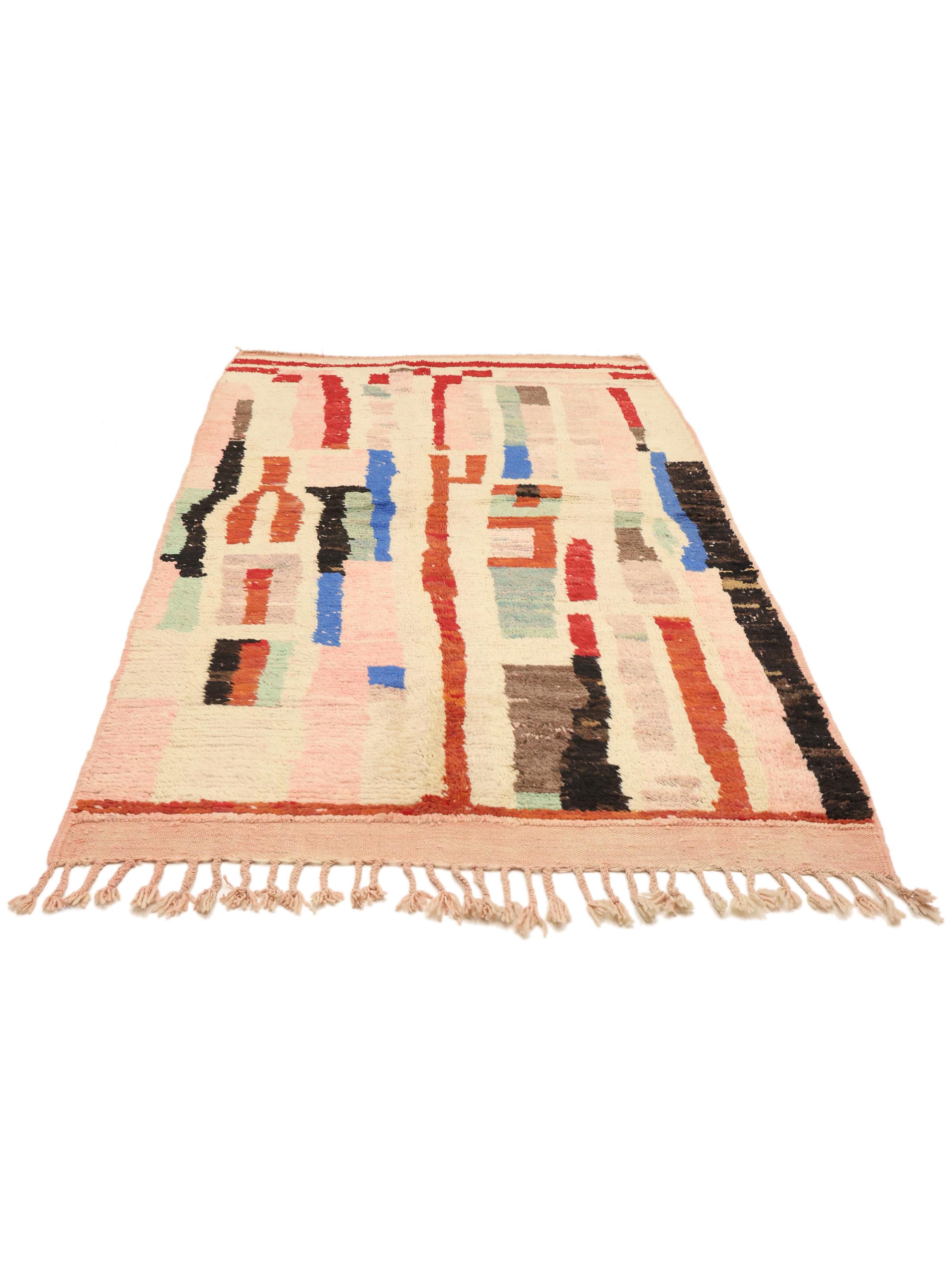
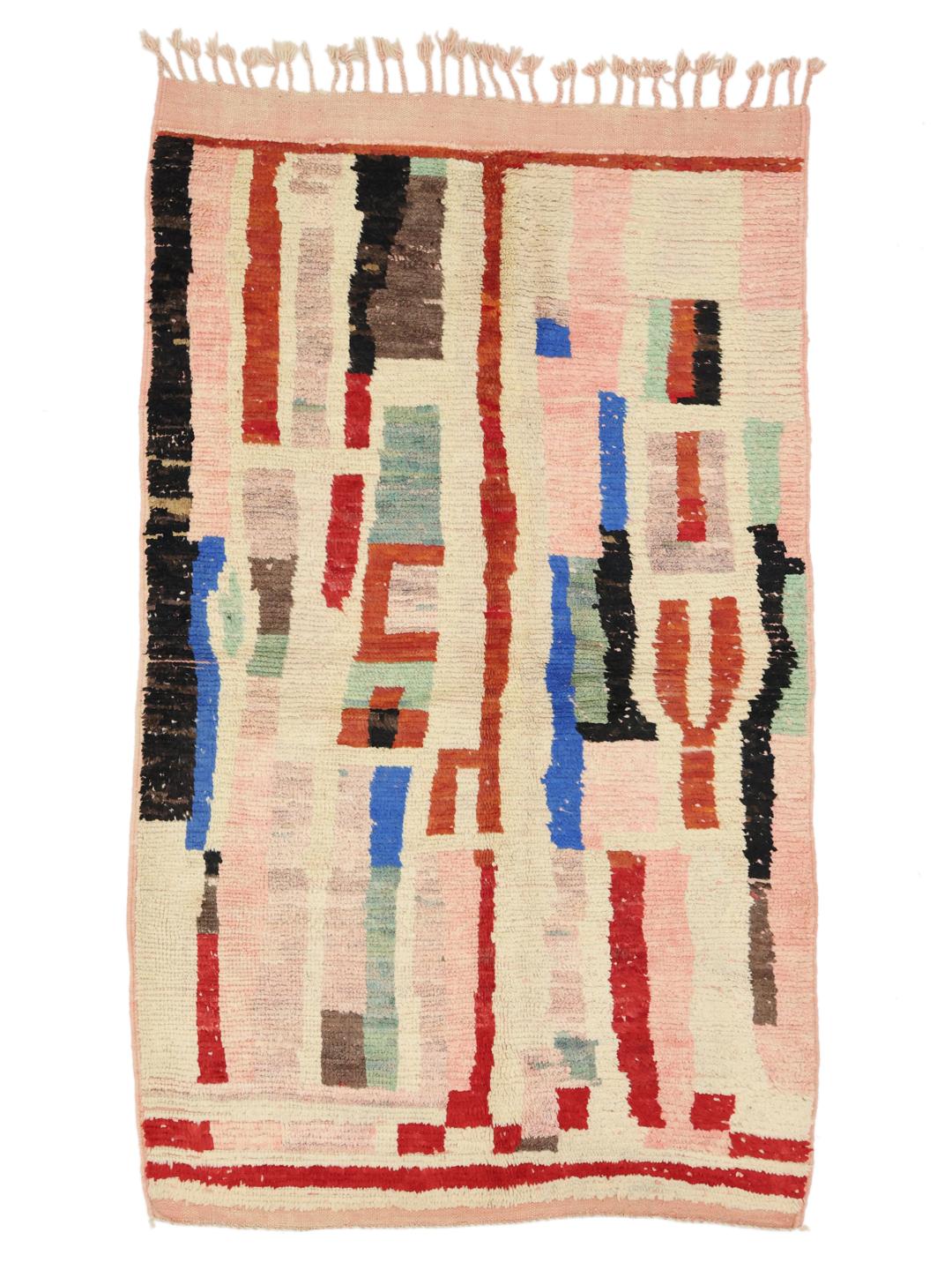
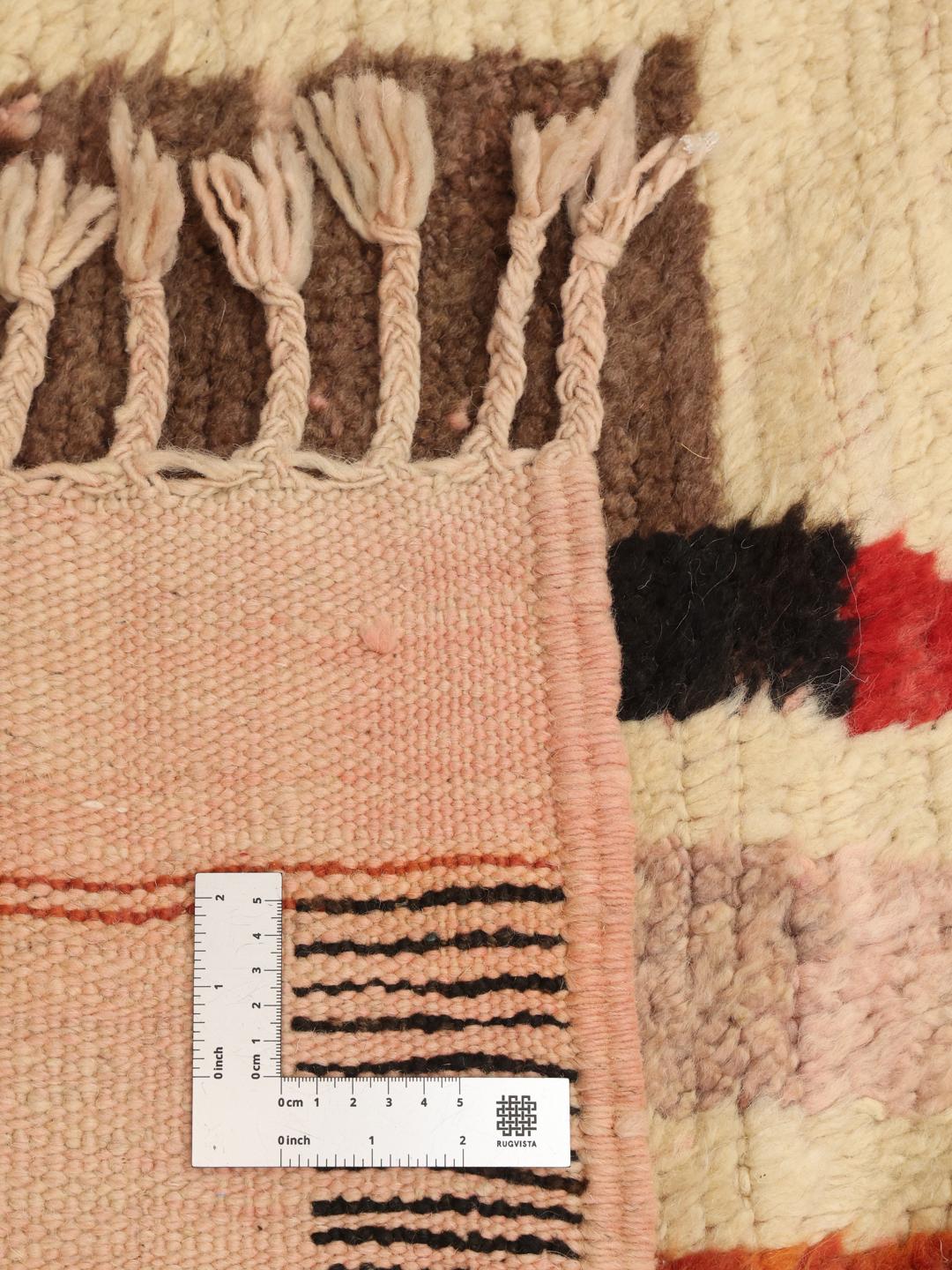
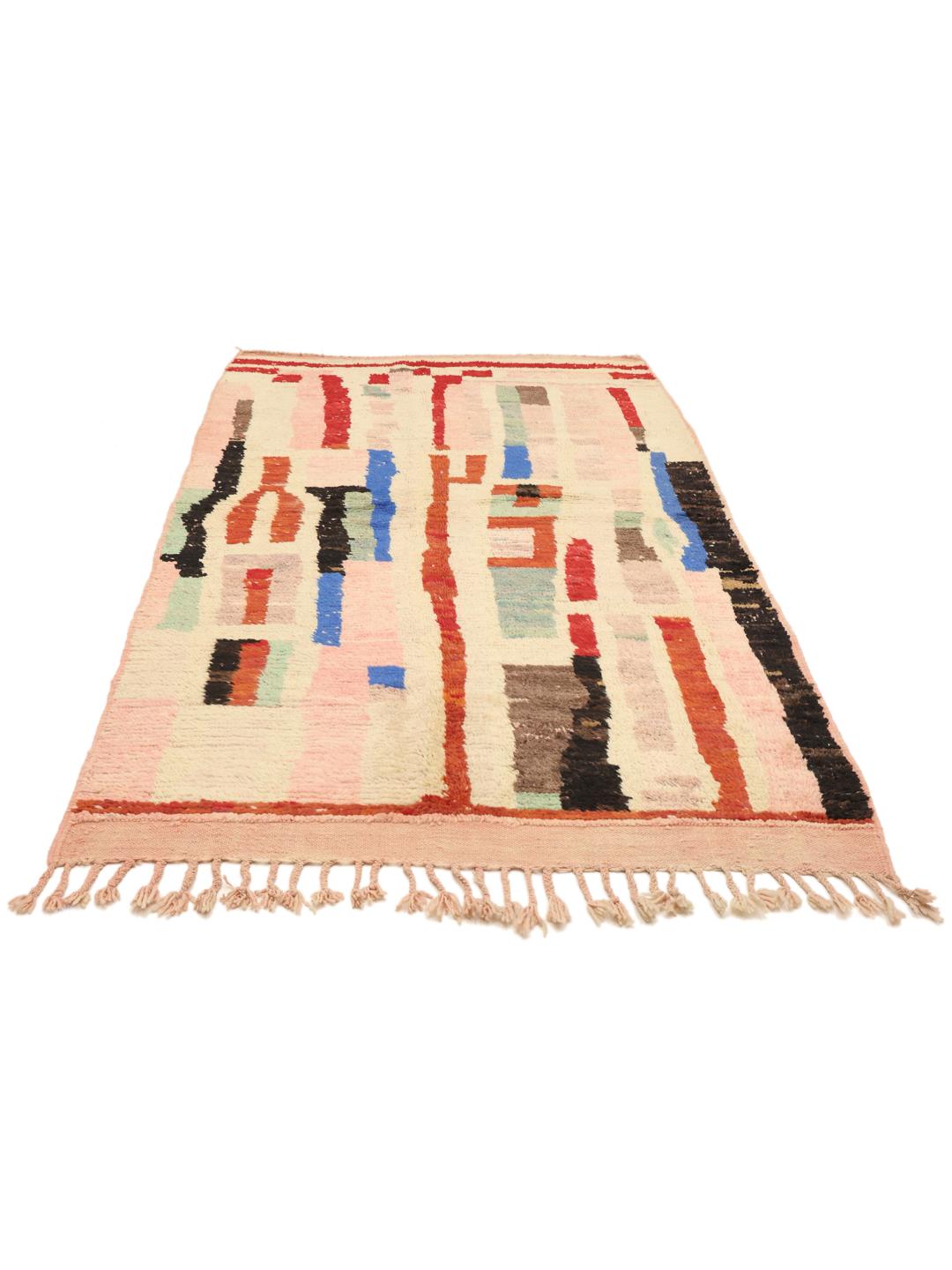
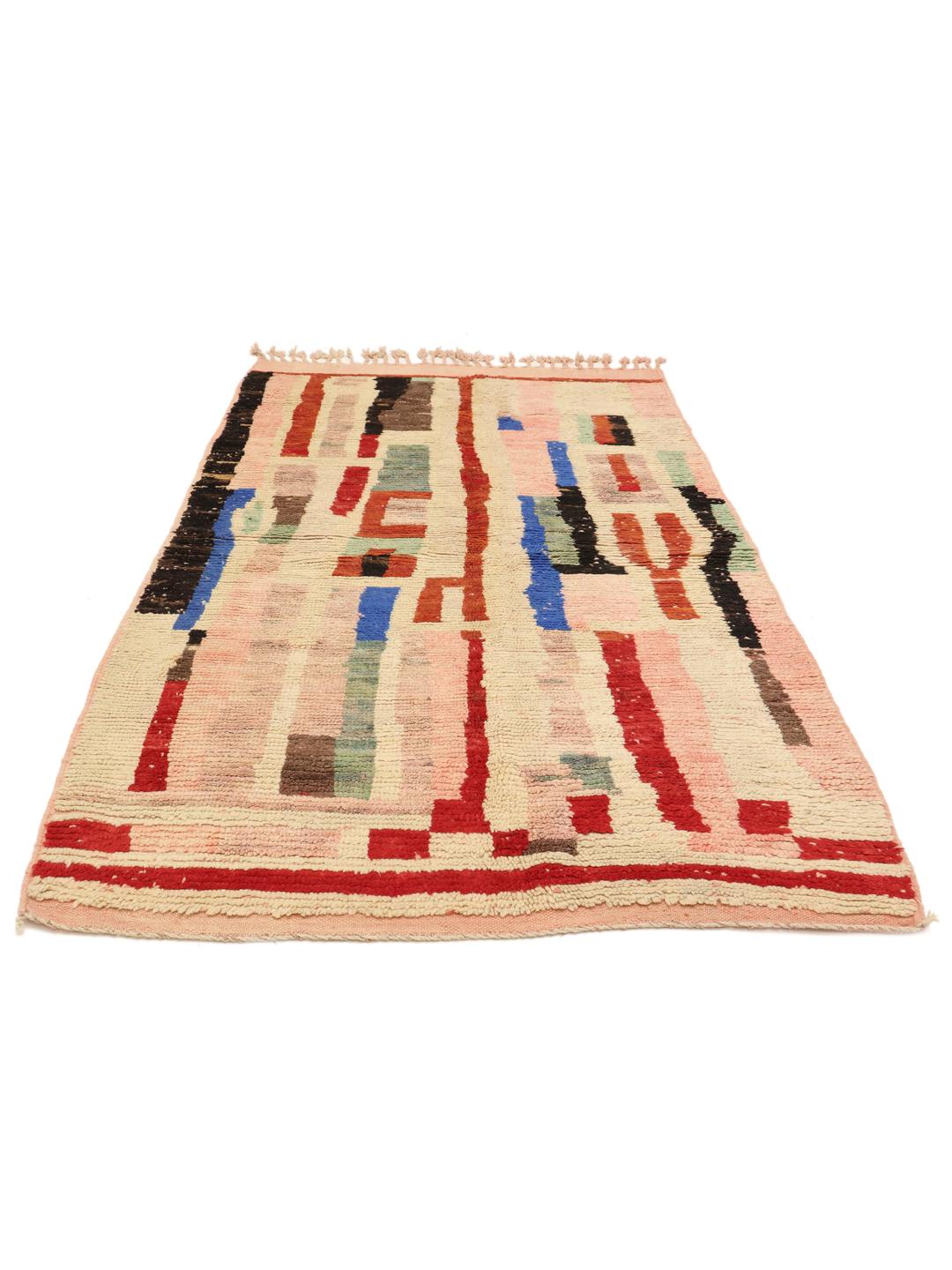
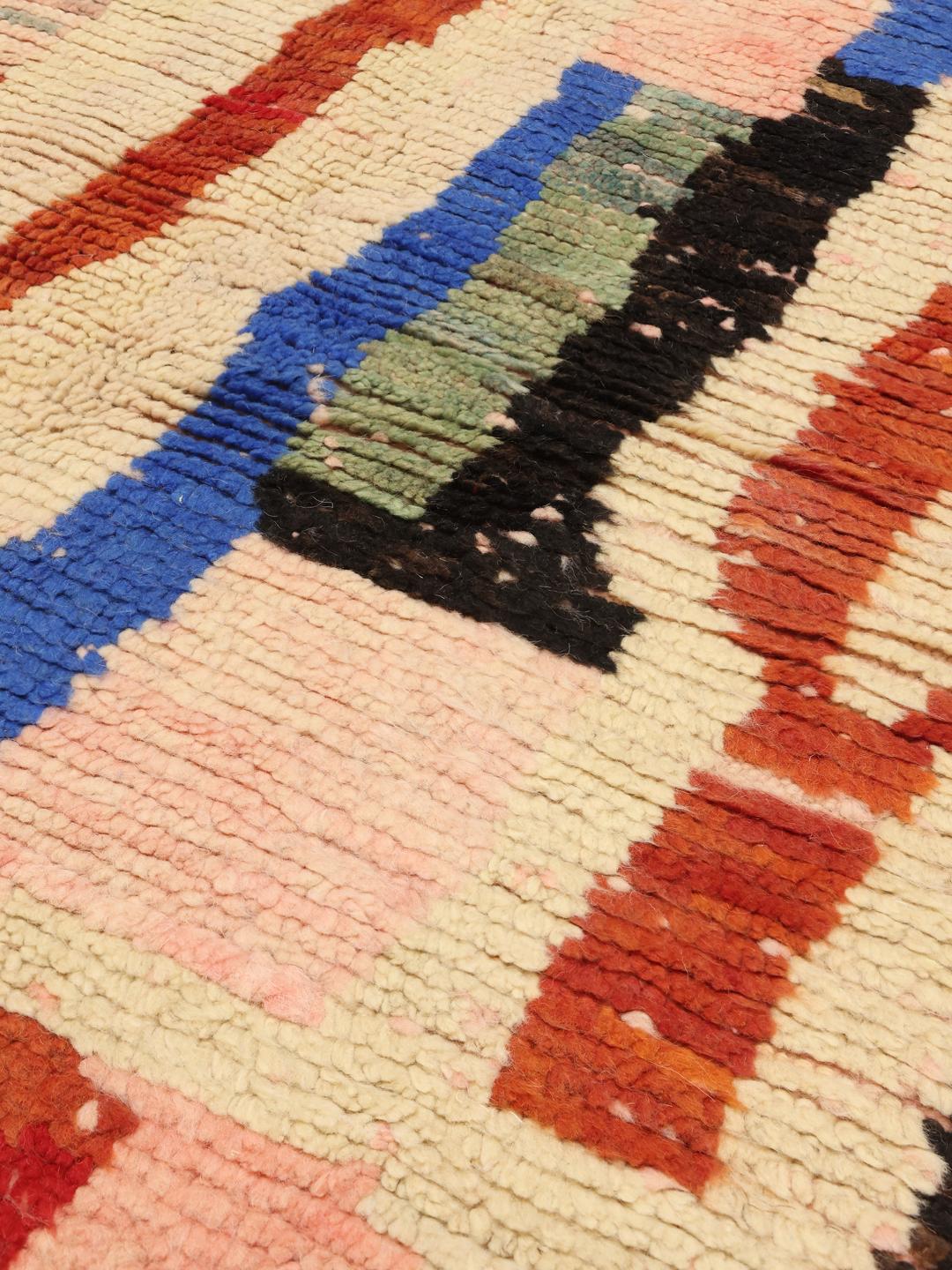
Berber rugs originate from the indigenous tribes of the Atlas Mountains in Morocco, where they have been woven for centuries as essential, functional items for nomadic life. These rugs were traditionally used for warmth, as bedding, or as floor coverings in tents, with designs often reflecting the weaver's personal stories, tribal identity, or the natural landscape of the mountainous region.
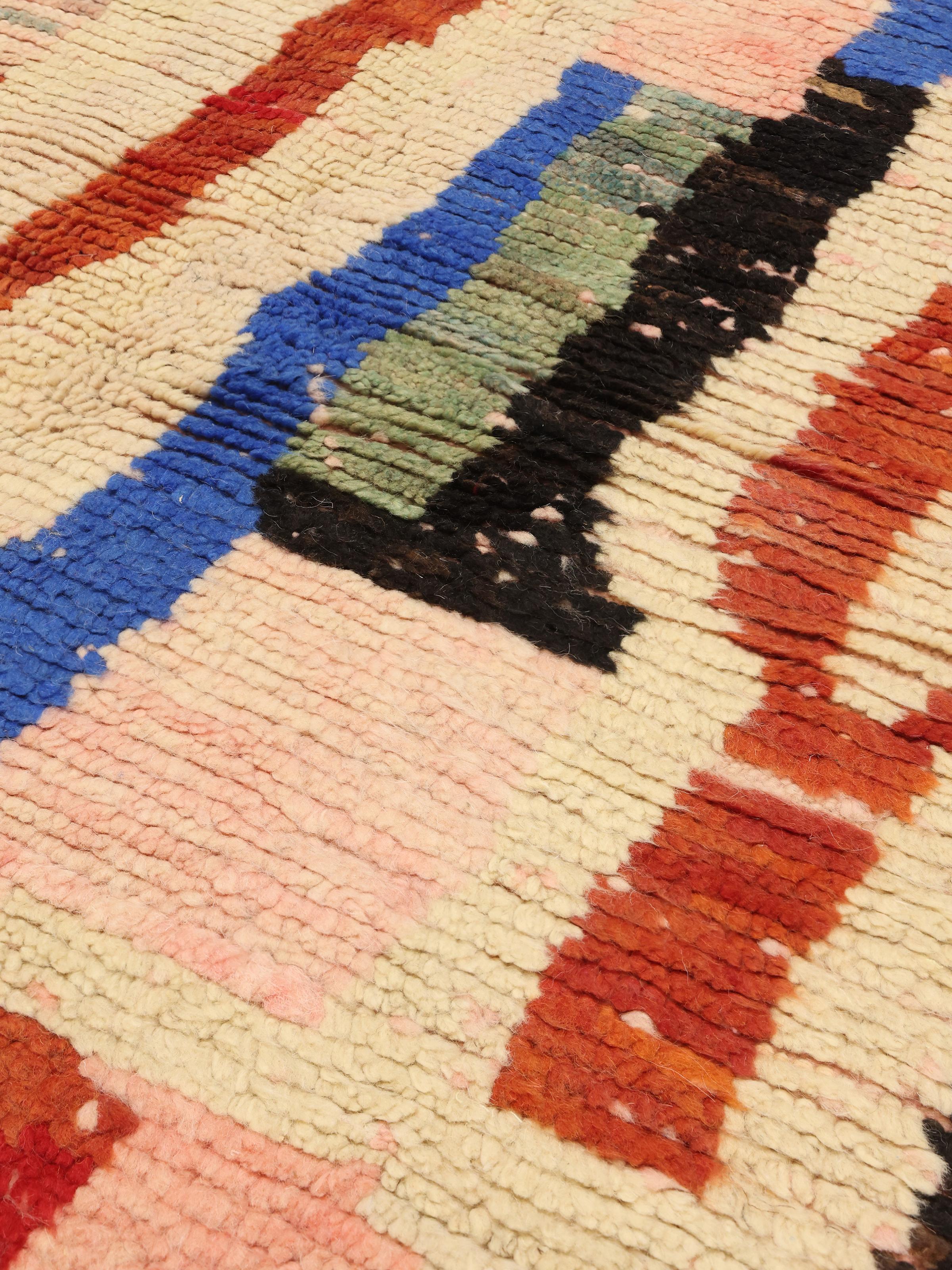
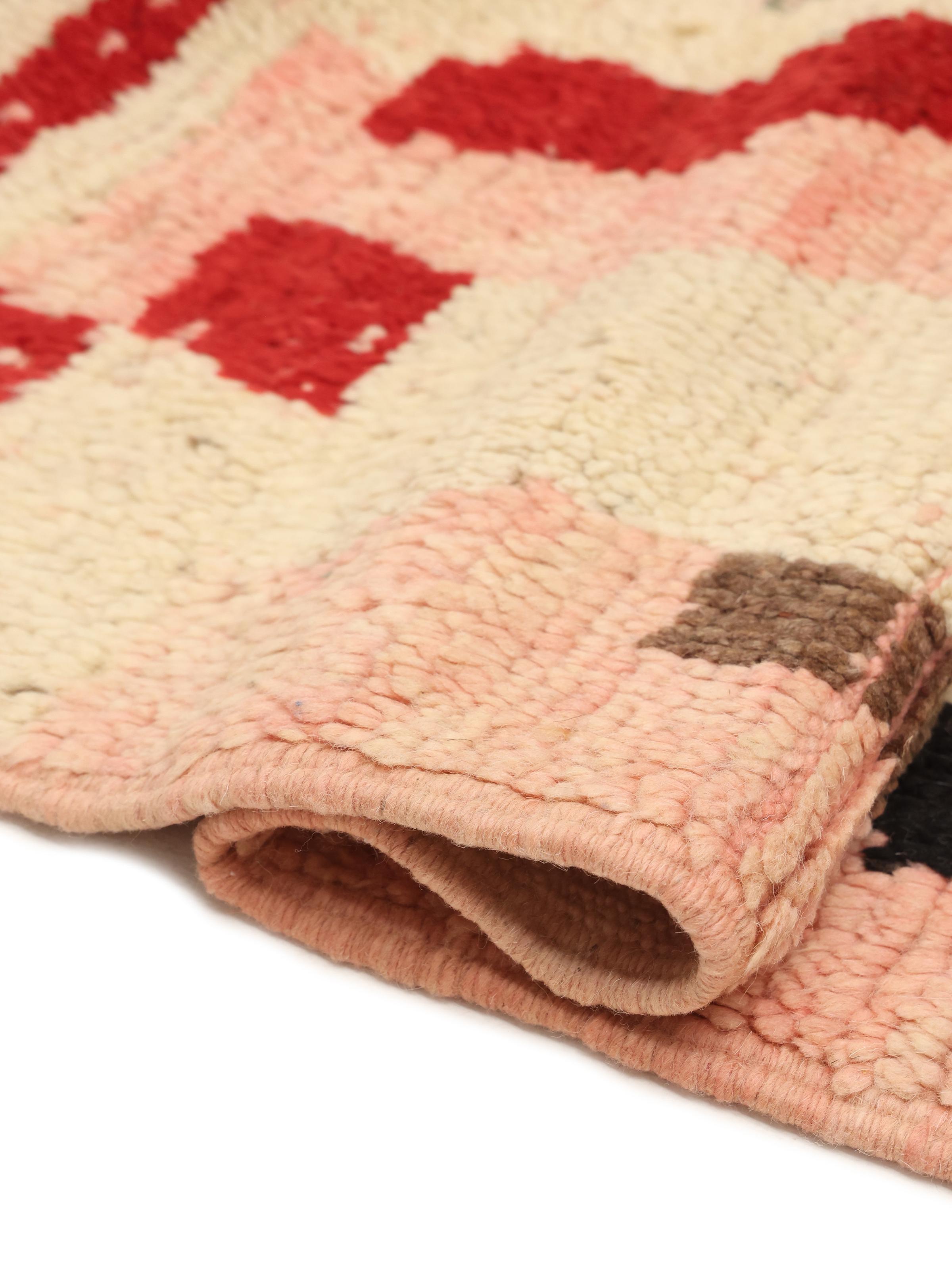
The term 'Beni Ourain' refers to the specific confederation of tribes known for their high-quality, long-staple Wool, which is prized for its exceptional softness and durability. Unlike many other rug traditions that emphasise highly complex, symmetrical patterns, these rugs are often celebrated for their minimalist or free-form artistic expression, making them highly sought after by designers and collectors worldwide.
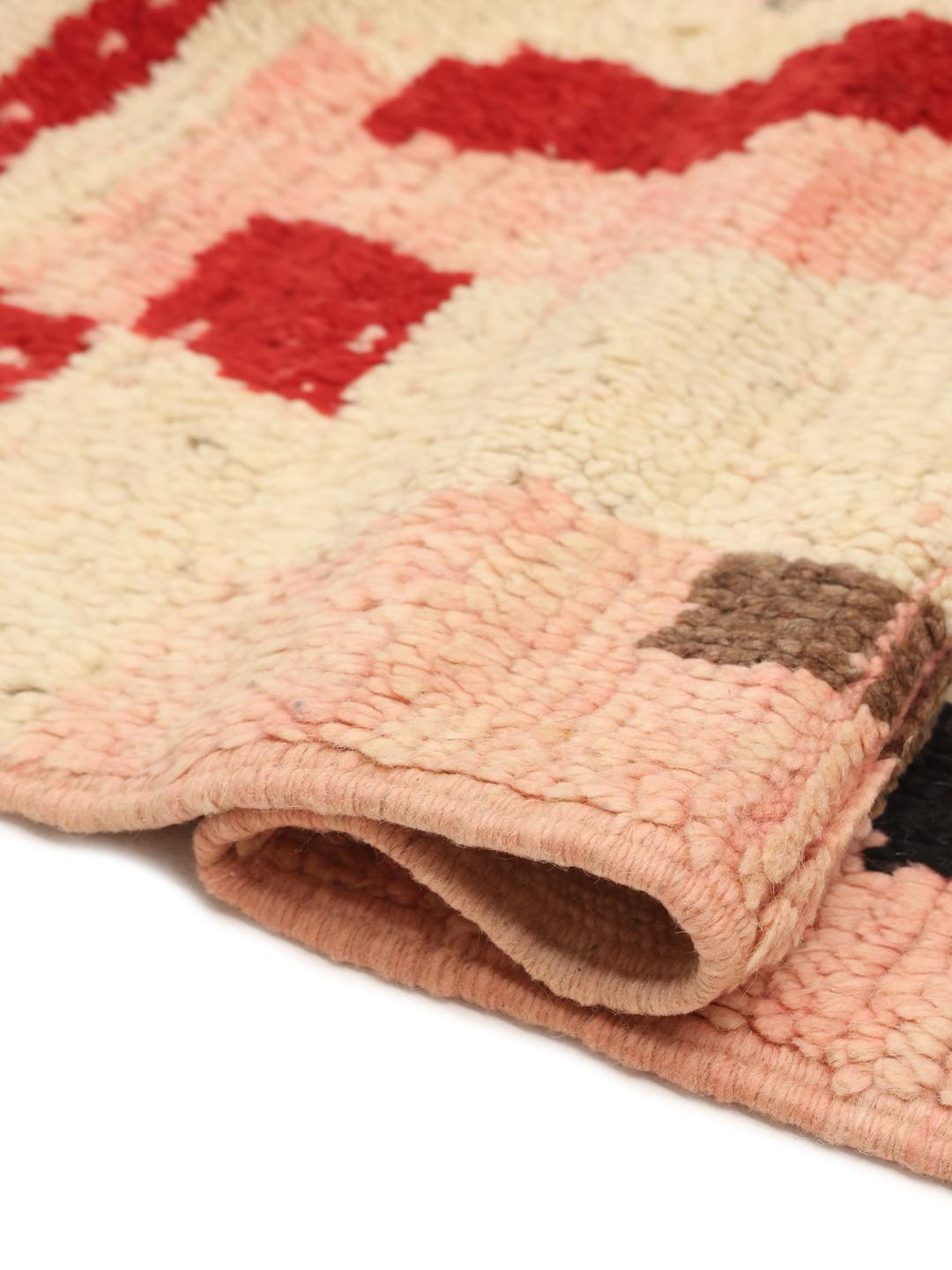
Visually, these rugs are defined by their use of undyed, natural Wool tones contrasted with bold, symbolic, or abstract shapes. The inclusion of vibrant colours in this particular piece represents a modern evolution of the tradition, where weavers have begun incorporating contemporary artistic influences into their historic craft, resulting in a fusion of old-world skill and modern visual language.
Owning a piece from this tradition is more than just acquiring a floor covering; it is an investment in a living heritage. The skill required to produce such a rug is passed down through generations, and by choosing a hand-knotted original, you are supporting the continuation of a craft that values individual expression and the preservation of ancient cultural practices.