The Berber Beni Ourain rugs originate from the Middle Atlas Mountains of Morocco, where they were traditionally woven by the indigenous tribes. These pieces were historically crafted not just as floor coverings, but as functional, insulating bedding and blankets designed to withstand the harsh, cold winters of the high-altitude mountain climate. The tradition is deeply rooted in the cultural identity of these communities, with each rug often serving as a testament to the family or tribe that created it.
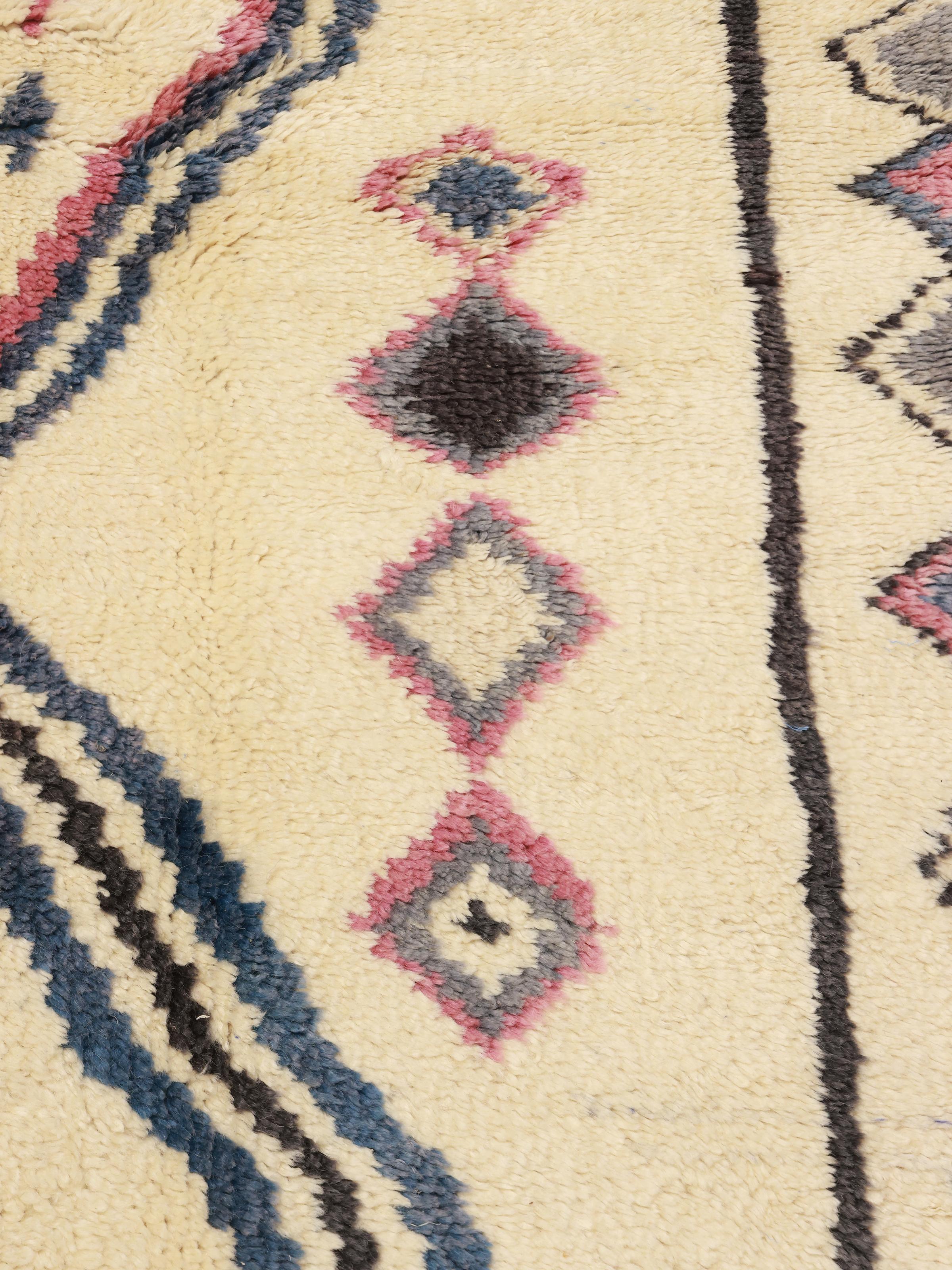
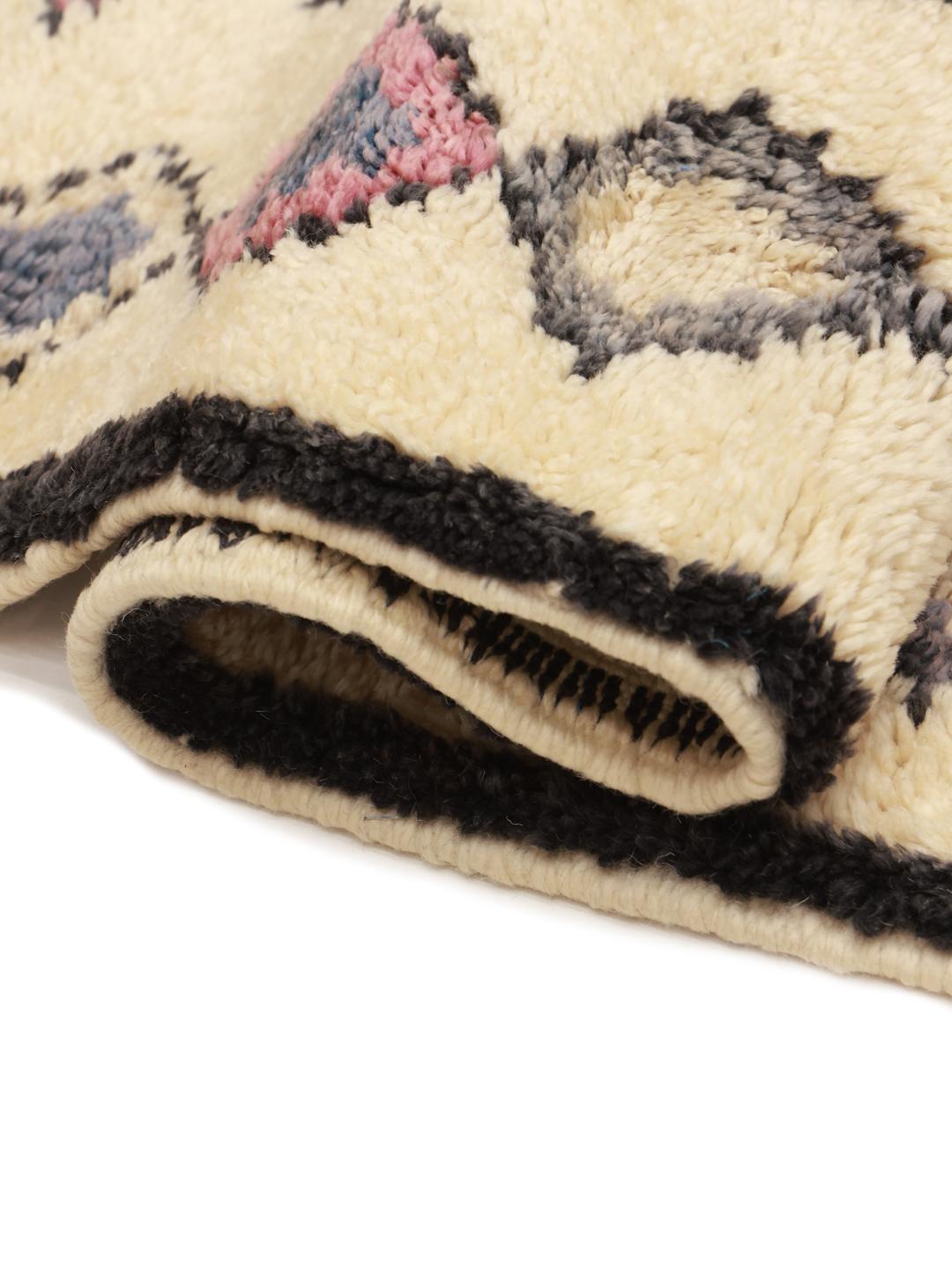
The term Beni Ourain refers to a confederation of seventeen Berber tribes, known for their specific approach to weaving. Unlike many other regional styles that focus on intricate, dense knotting, these rugs are celebrated for their thick, plush, and resilient wool. This construction provides a distinctively soft, luxurious surface that is both durable and incredibly comfortable, making them highly sought after by those who appreciate high-quality natural materials.
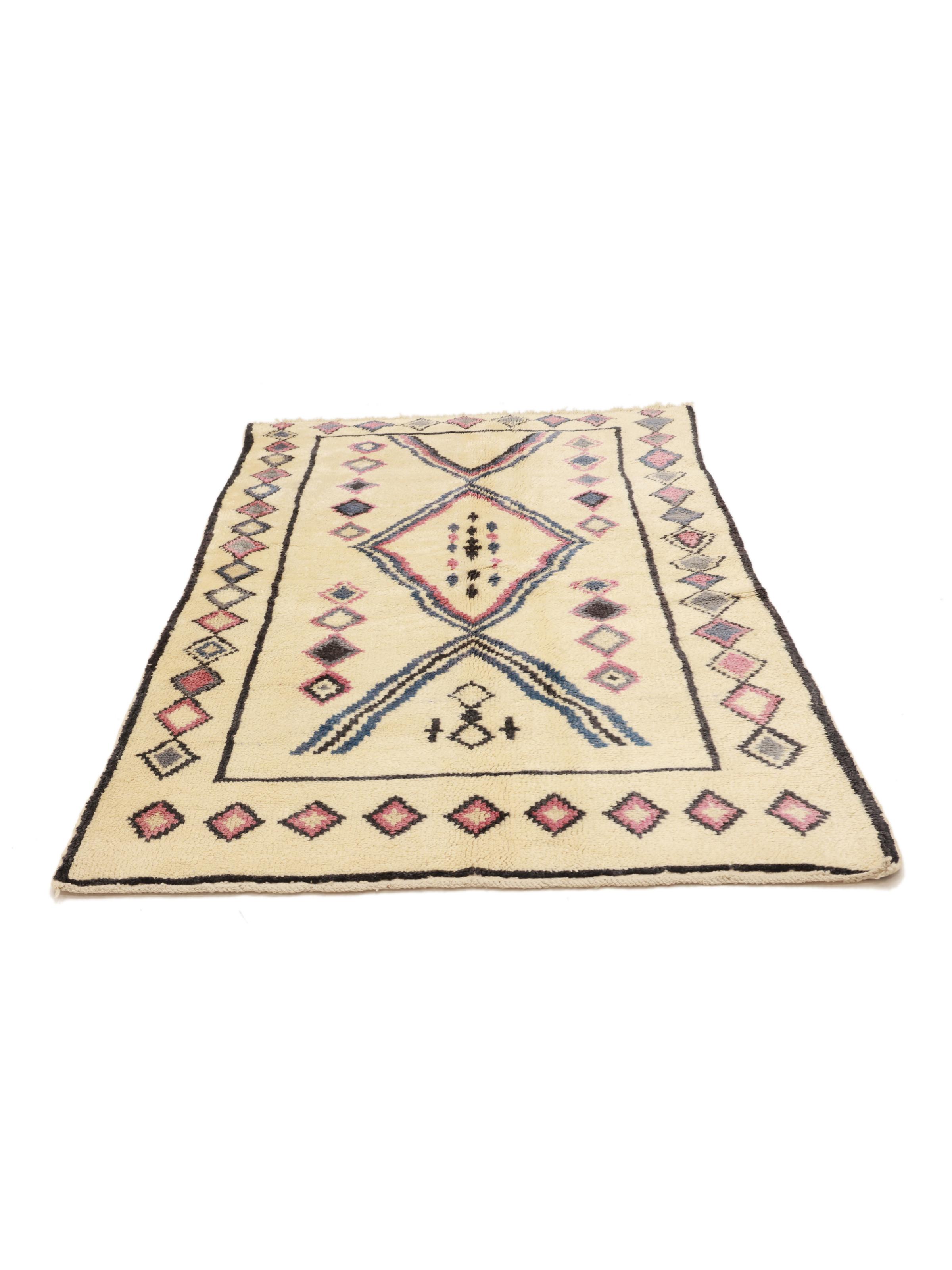
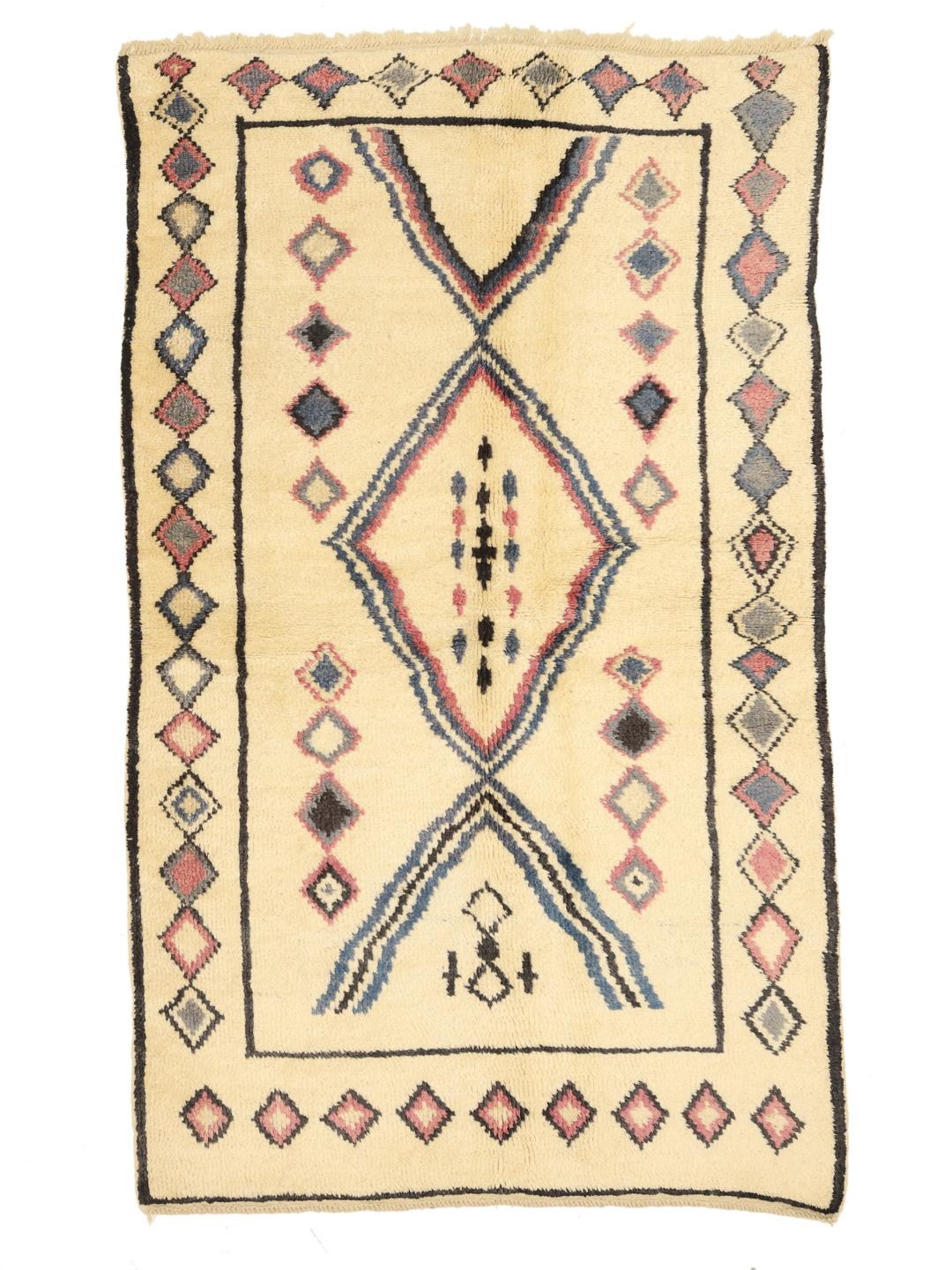
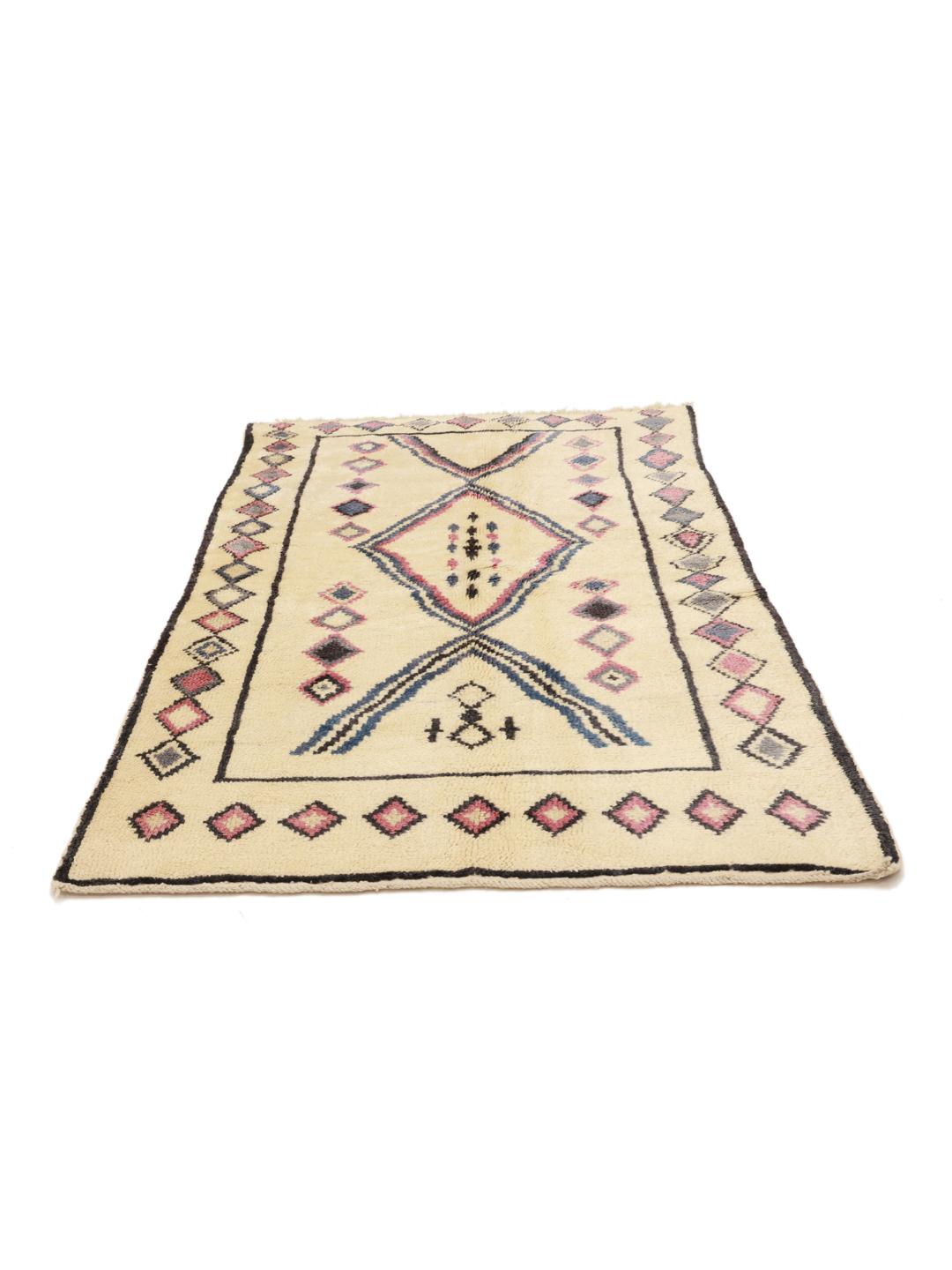
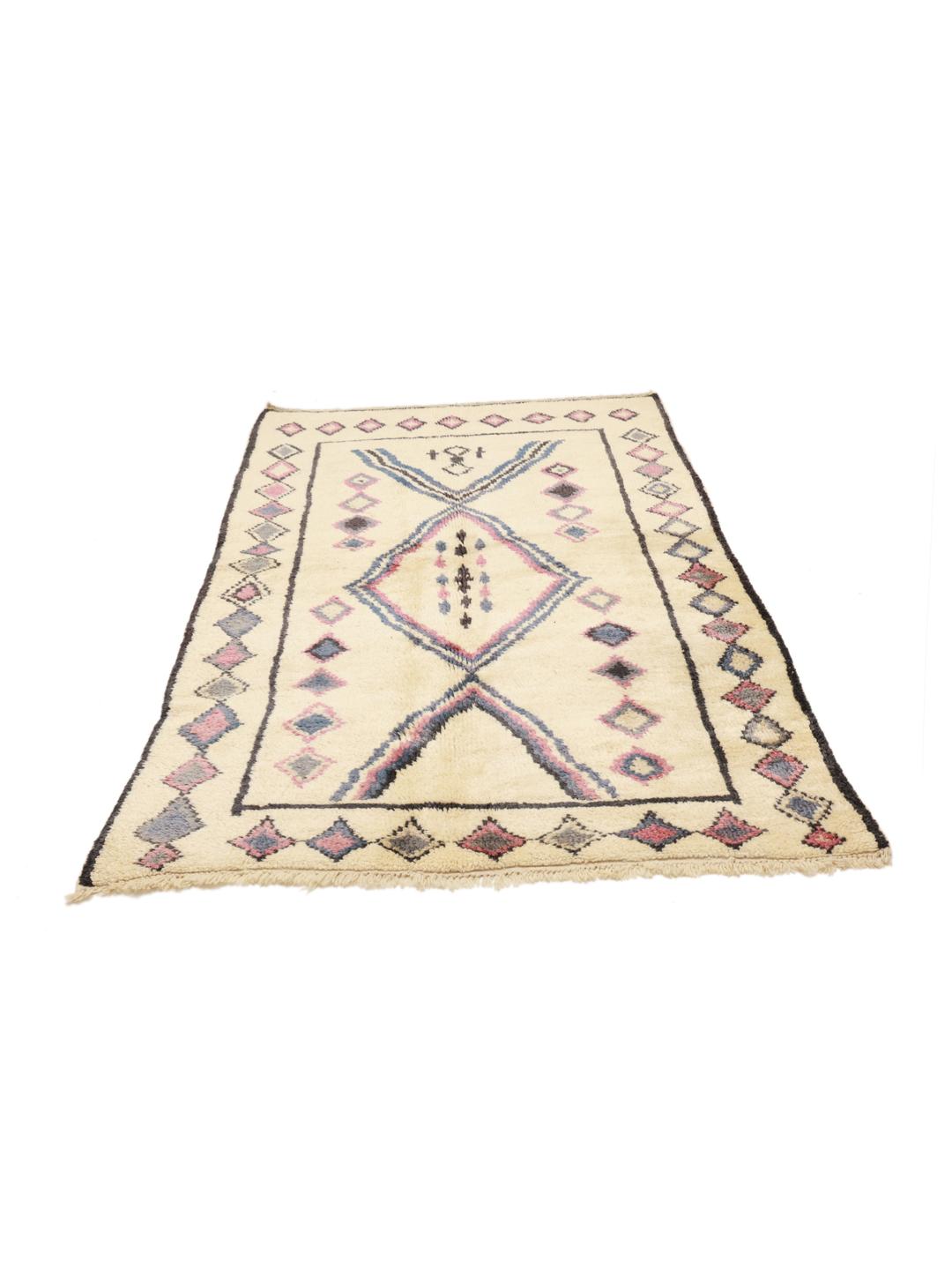
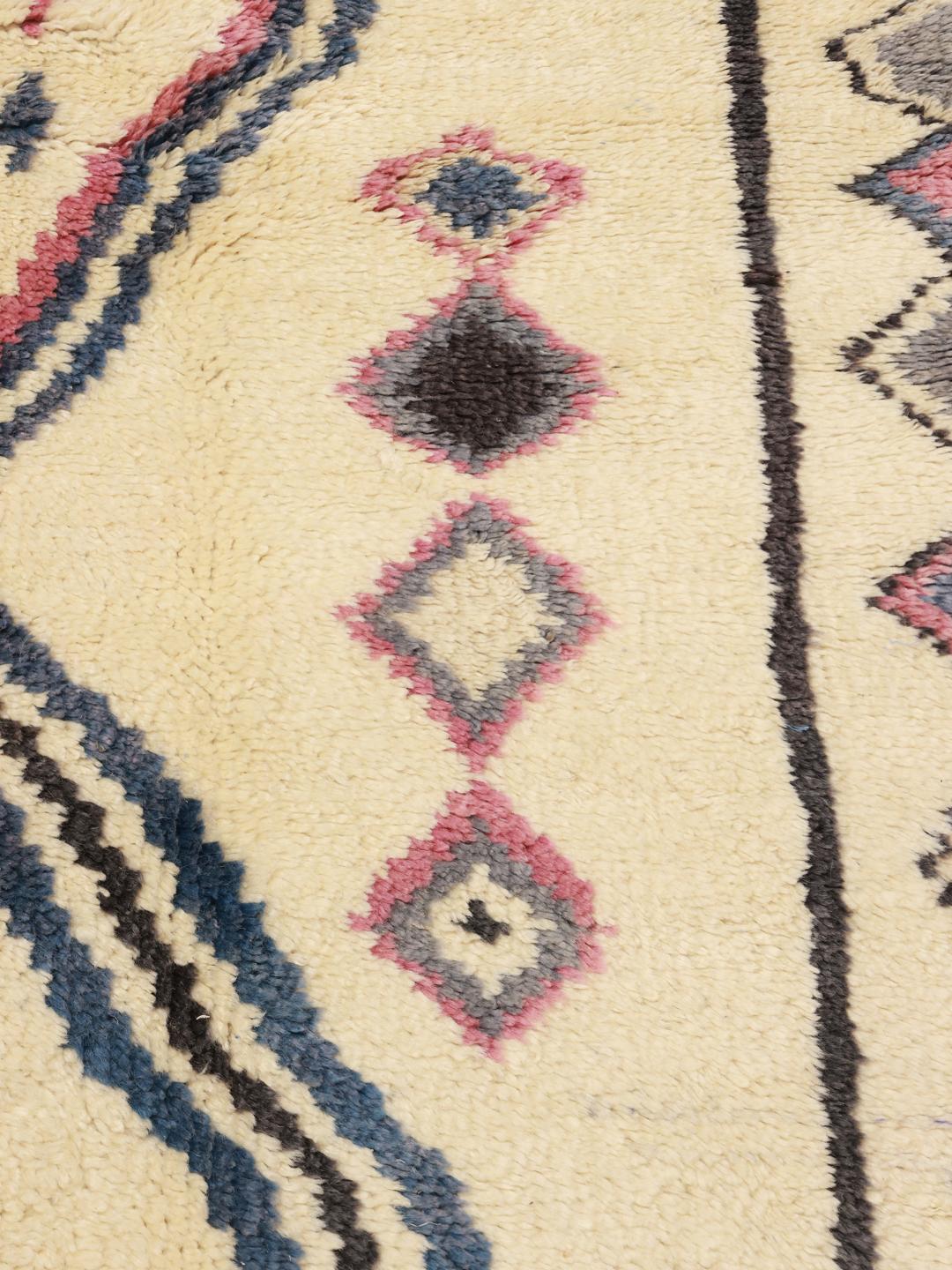
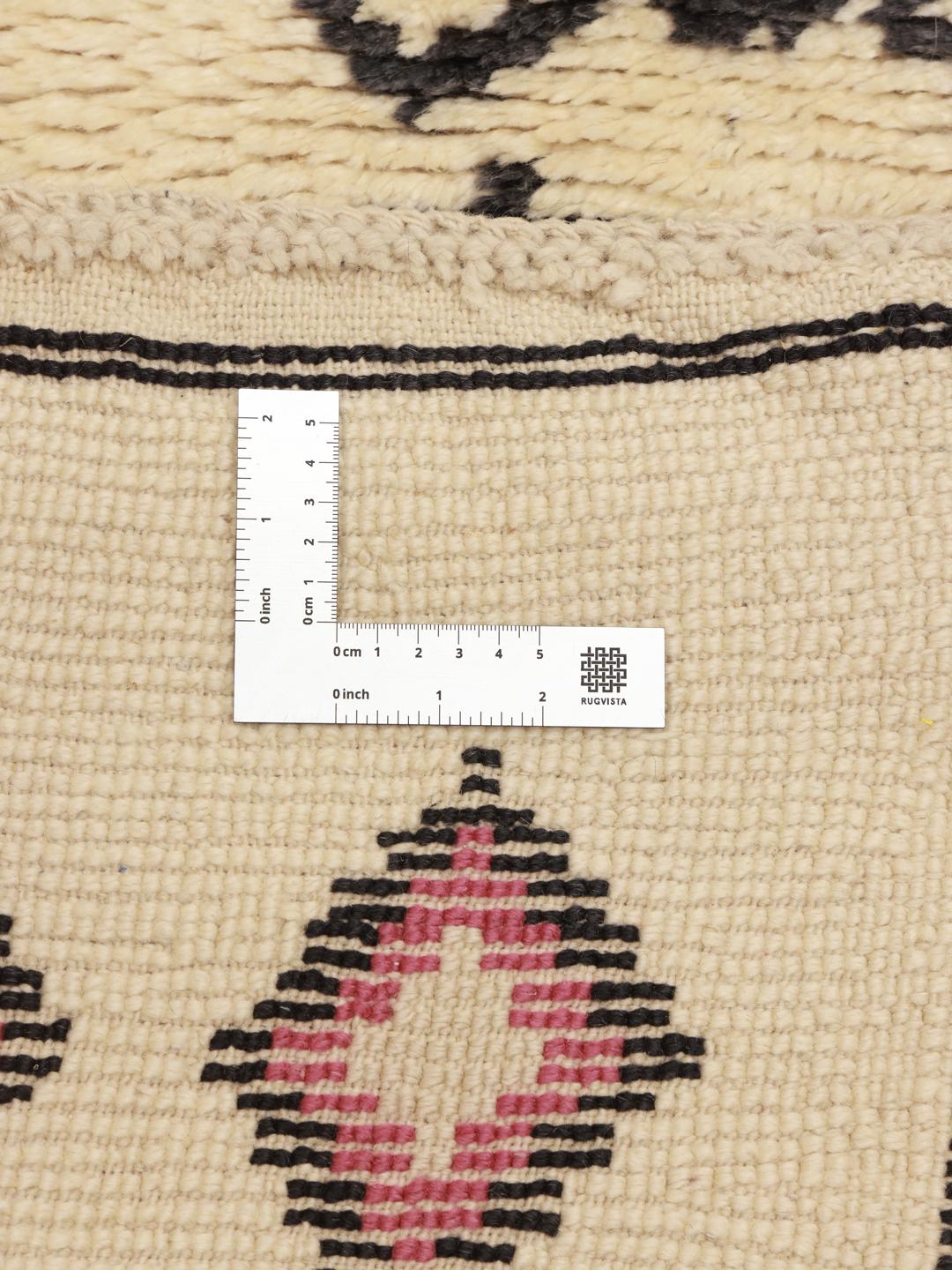
Visually, these rugs are defined by their minimalist and often abstract geometric language. Traditional designs frequently feature simple, dark, and elegant lines on a natural, undyed wool background, though many pieces incorporate subtle, symbolic motifs that reflect the weaver's surroundings or personal stories. The use of diamond shapes, as seen here, is a common feature that adds a rhythmic, balanced quality to the overall design, creating a sense of visual harmony.
Today, these rugs are prized by collectors and homeowners alike for their authentic, unpretentious beauty. They represent a bridge between ancient nomadic traditions and modern interior design, offering a timeless aesthetic that fits seamlessly into various settings. Owning a Beni Ourain rug is owning a piece of living history, a craft that has been preserved and passed down through generations, maintaining its cultural weight and artistic integrity in the contemporary world.