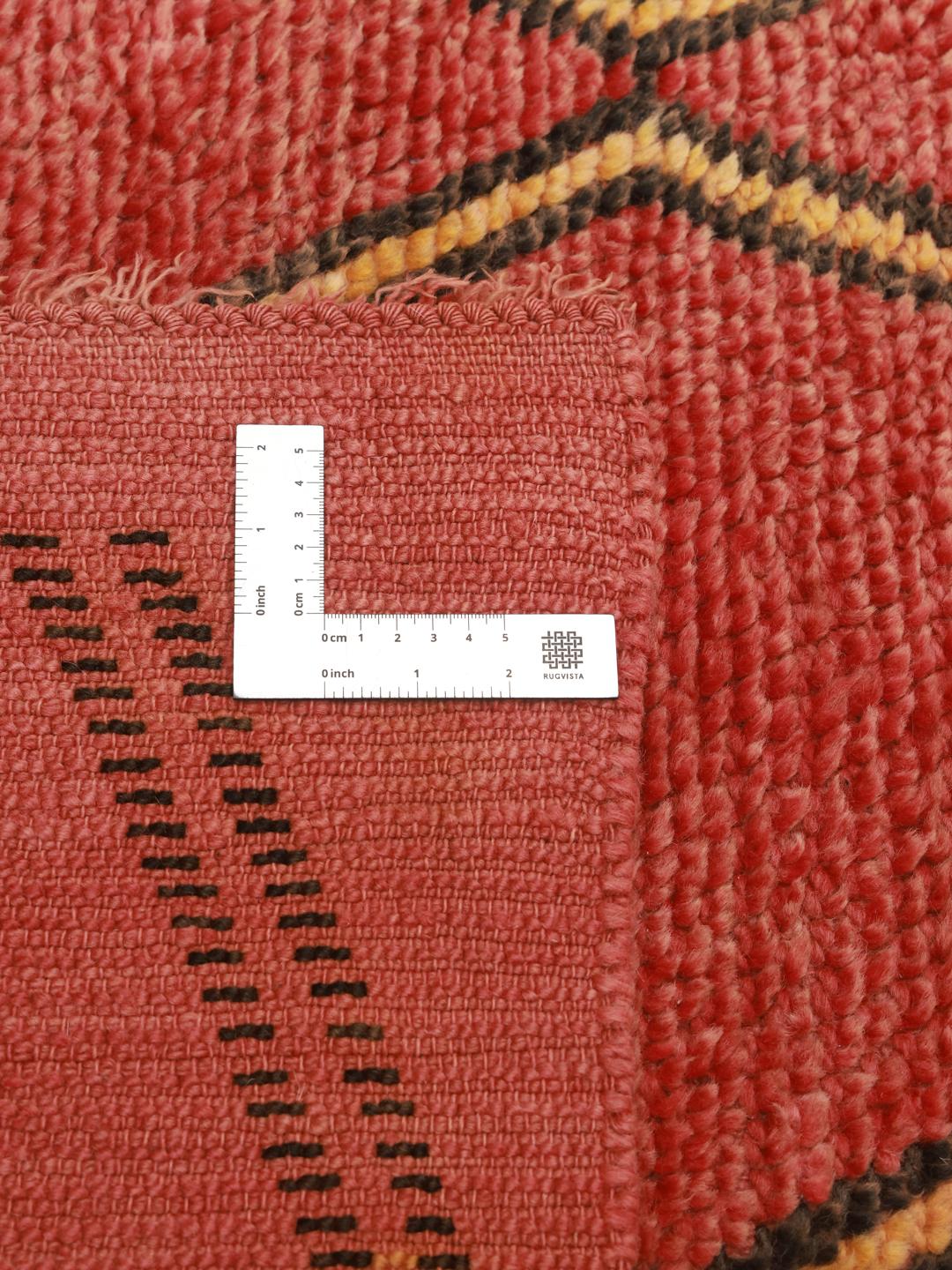
The tradition of Moroccan rug weaving is as ancient as it is diverse, with the Mid Atlas mountains serving as a major hub for this craft. These rugs have historically been woven by Berber tribes for functional use in their homes, serving as bedding, seating, and protection against the harsh mountain climate.
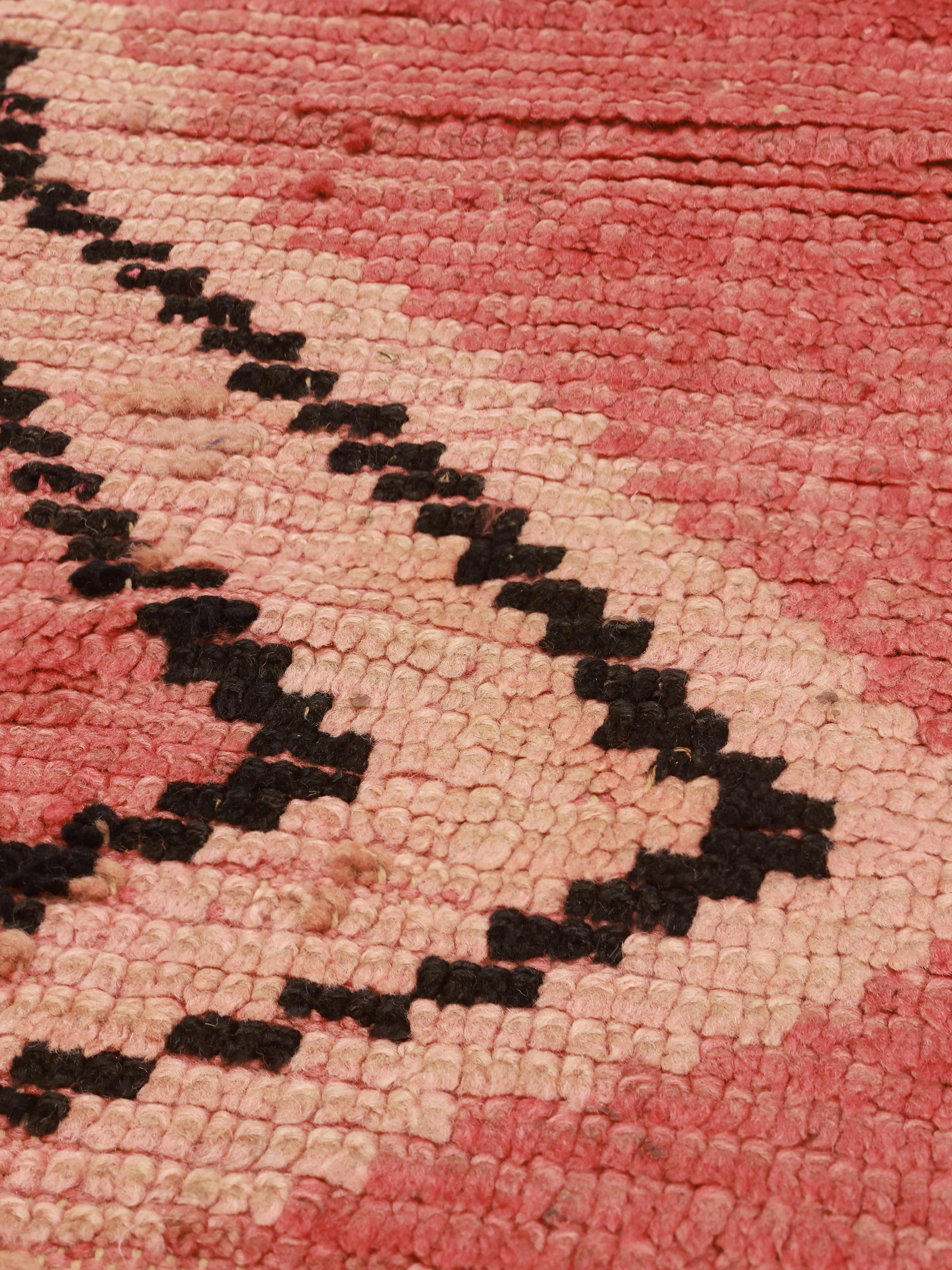
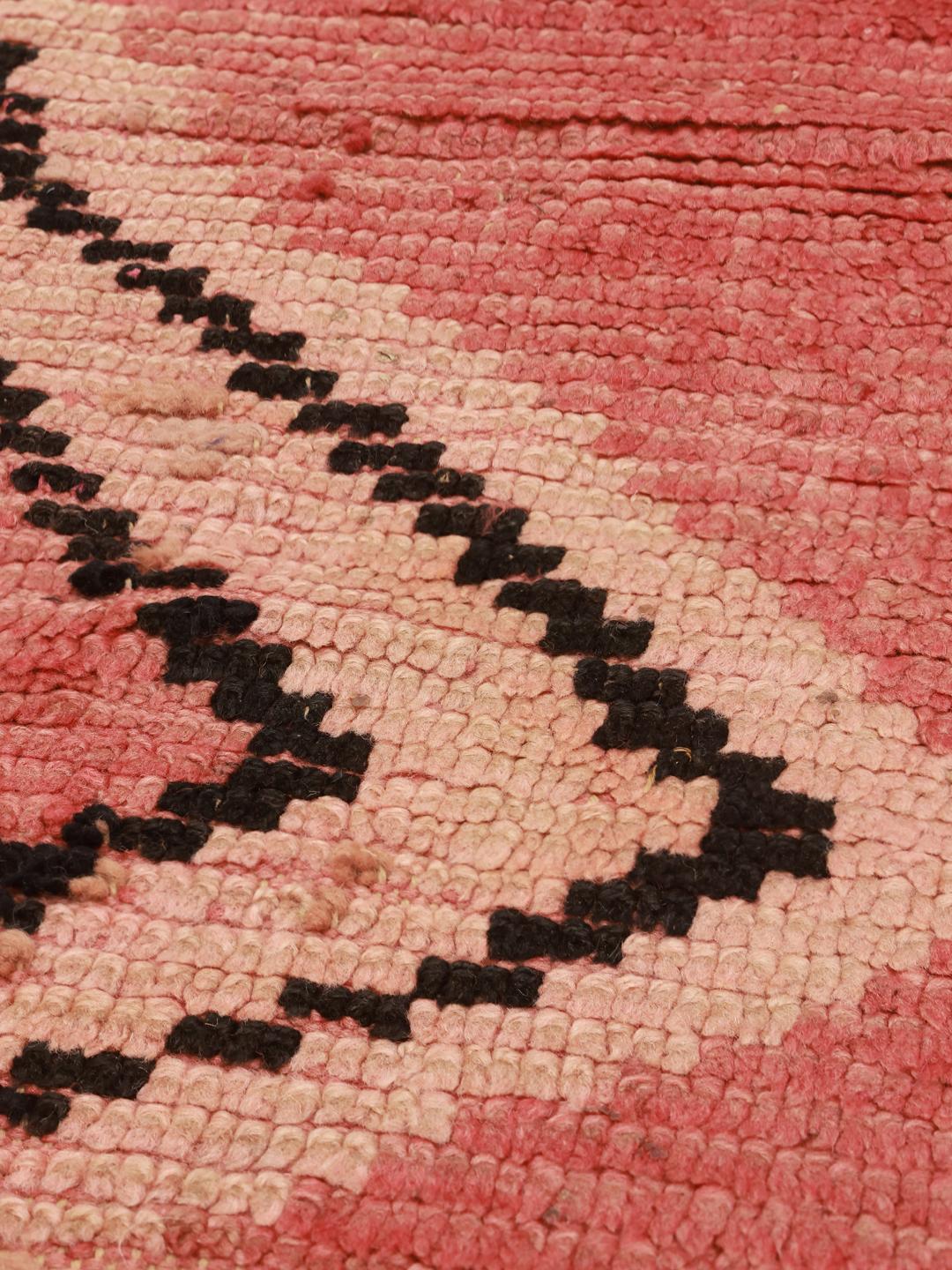
The term 'Beni Ourain' refers to a confederation of Berber tribes known for their distinct weaving style. While often associated with neutral tones, these tribal traditions also encompass the use of bold, natural dyes. The quality of these rugs is defined by the resilience of the local sheep wool, which is prized for its long, lustrous fibres.
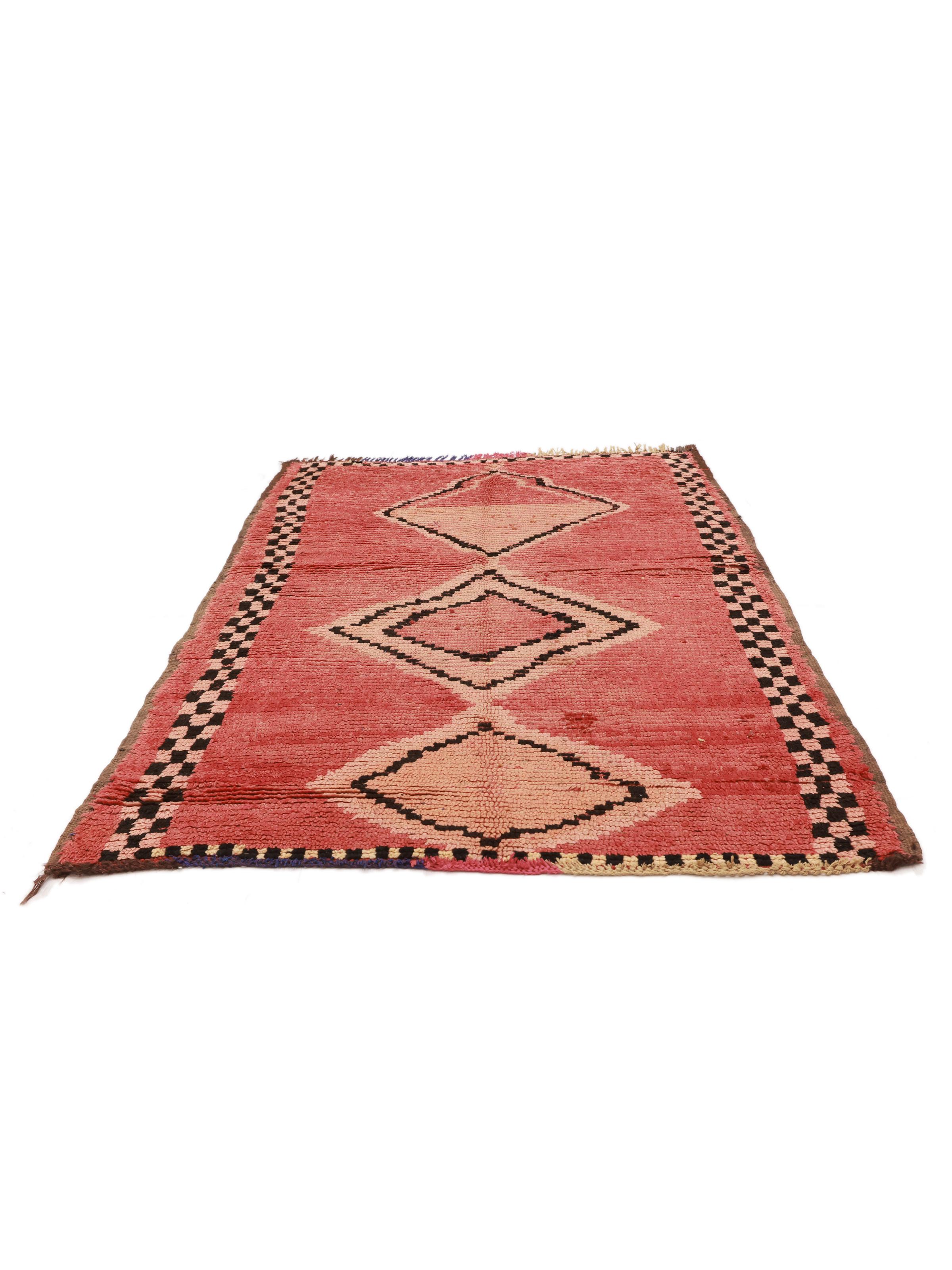
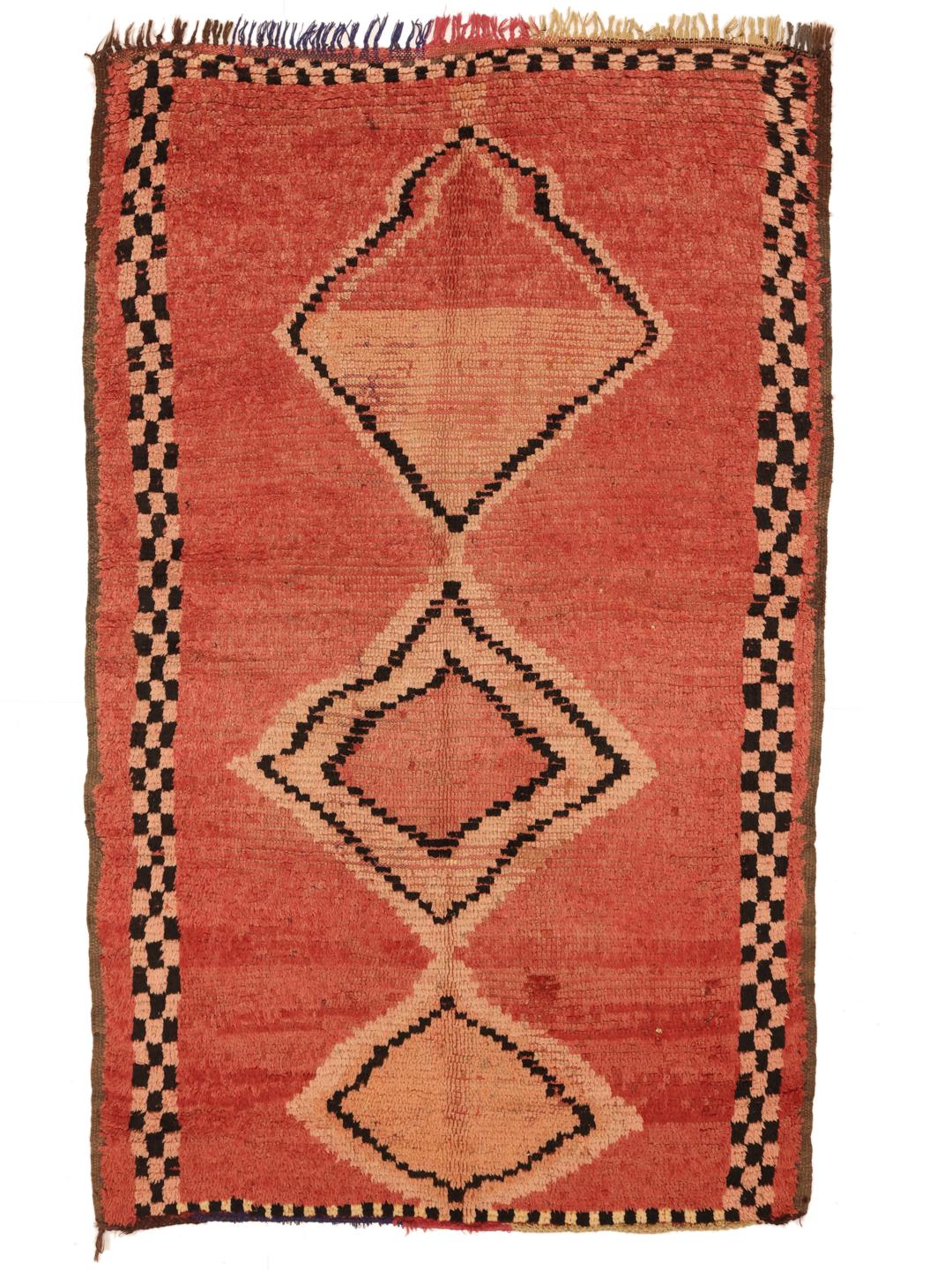
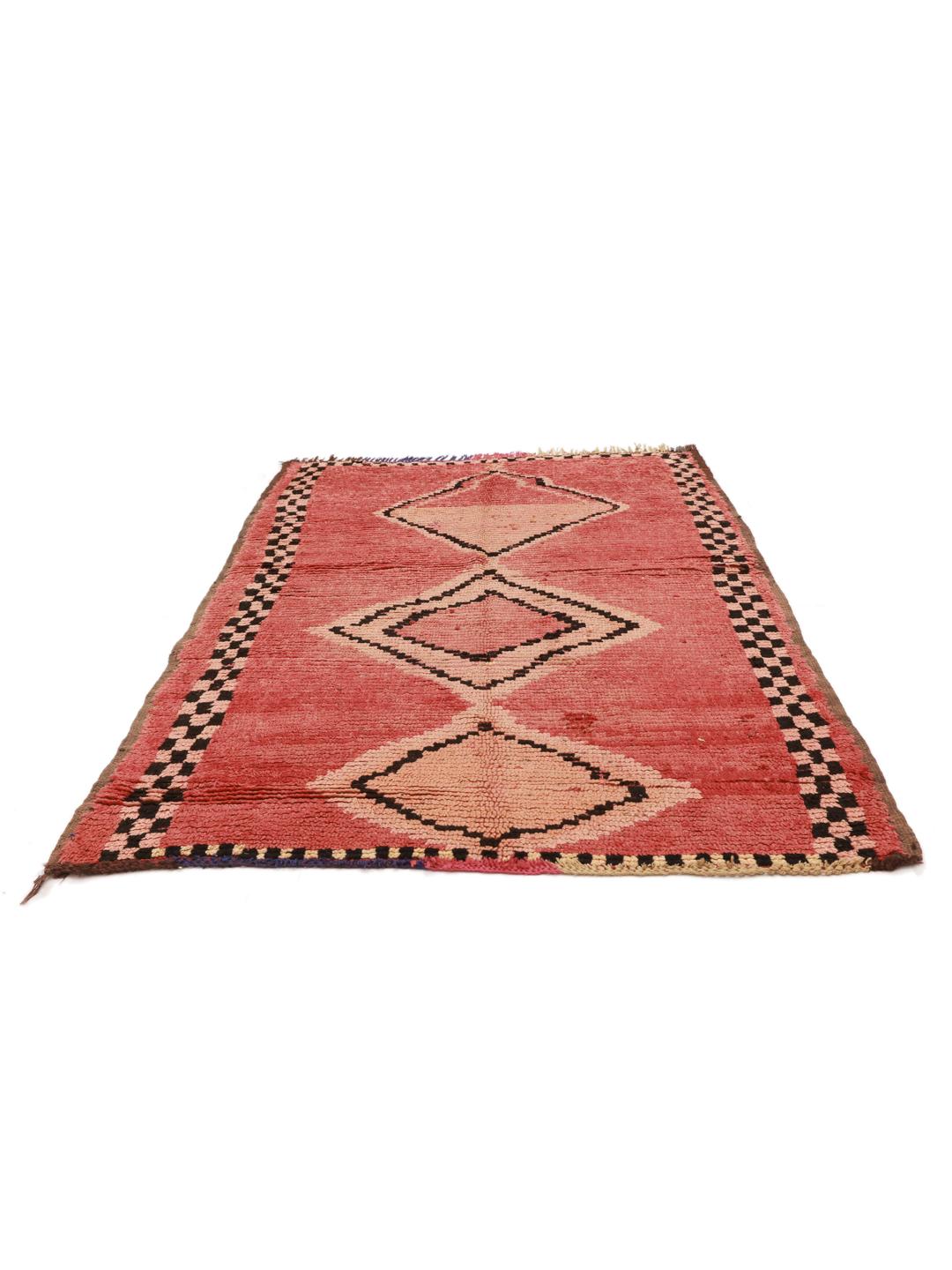
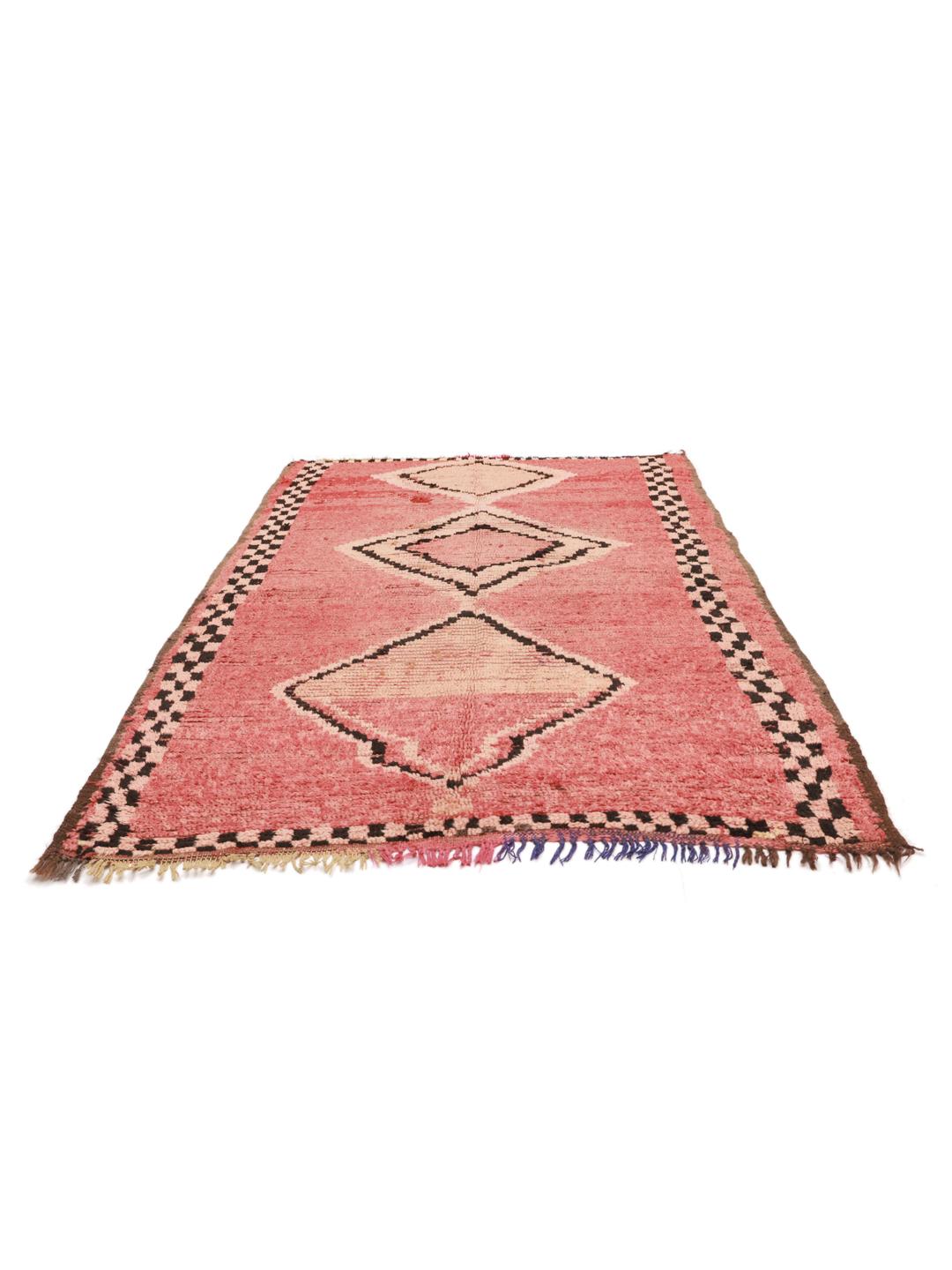
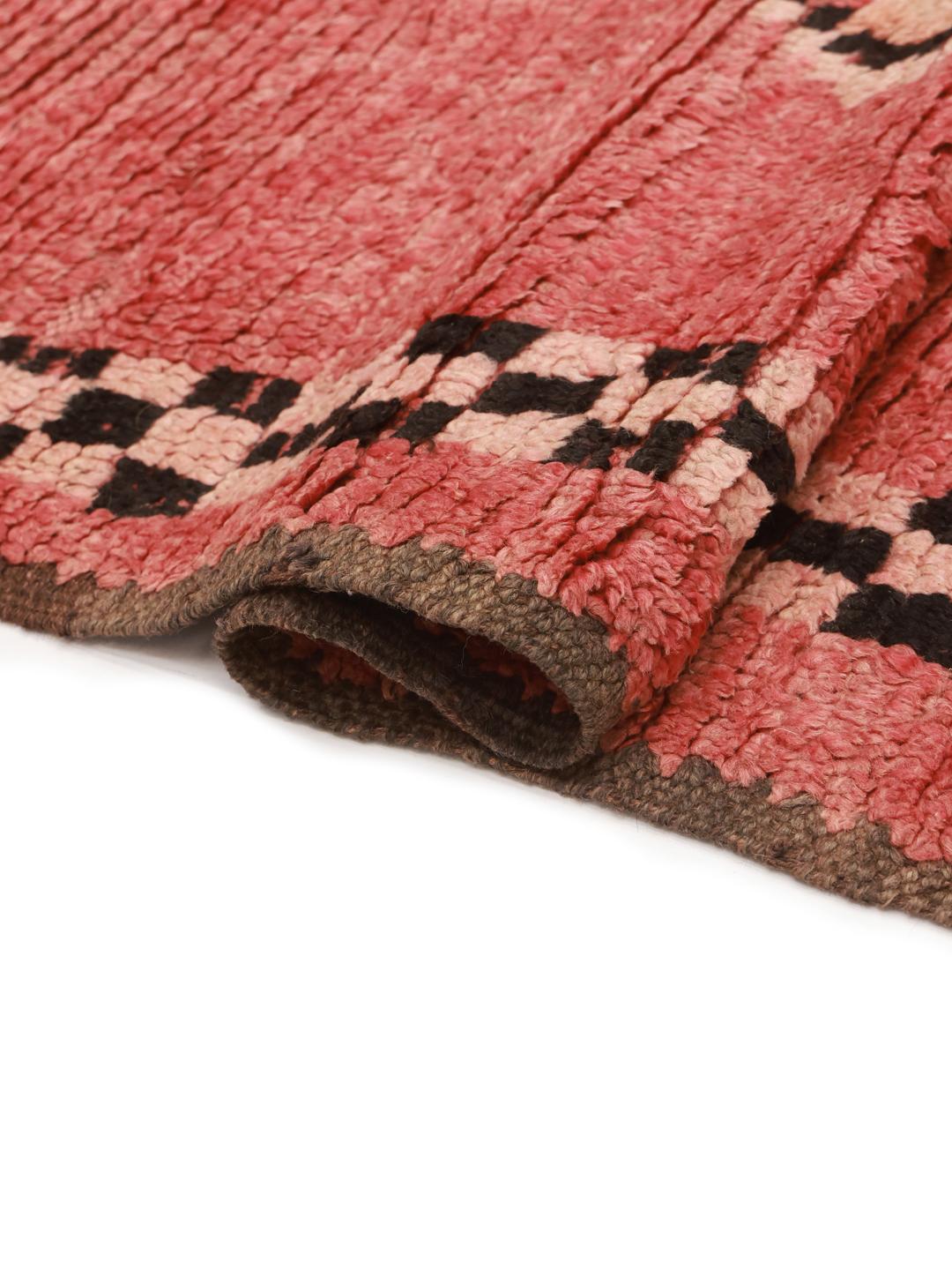
Visually, these rugs are defined by a language of symbols. Diamond shapes, often seen in this piece, are classic motifs believed to offer protection or represent fertility and community. The inclusion of a checkerboard border is a common signature, creating a formal frame that contrasts beautifully with the expressive, often asymmetrical patterns within the field.
Owning a vintage rug from this tradition is an act of preserving cultural heritage. Collectors value these pieces not only for their aesthetic beauty but for the human story embedded in every knot. They represent a connection to a nomadic way of life that balances practical necessity with deep artistic intuition.