Berber rugs originate from the Atlas Mountains of Morocco, where they have been crafted by indigenous tribes for centuries. These rugs were historically created as functional items for mountain life, serving as blankets, sleeping mats, and floor coverings to provide insulation against the cold climate. The designs are deeply rooted in the cultural identity of the tribes, often reflecting the personal stories, beliefs, and surroundings of the weavers.
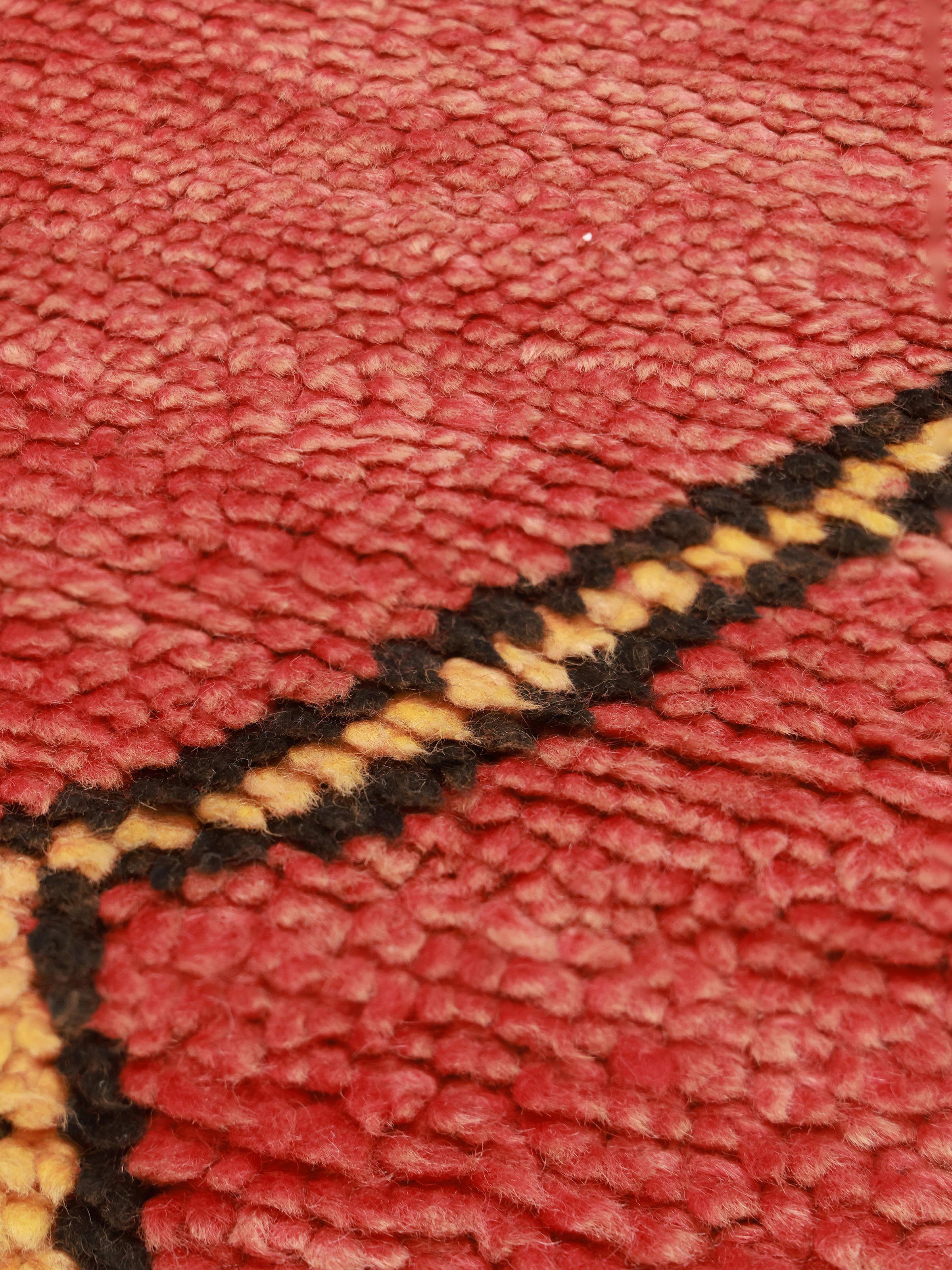
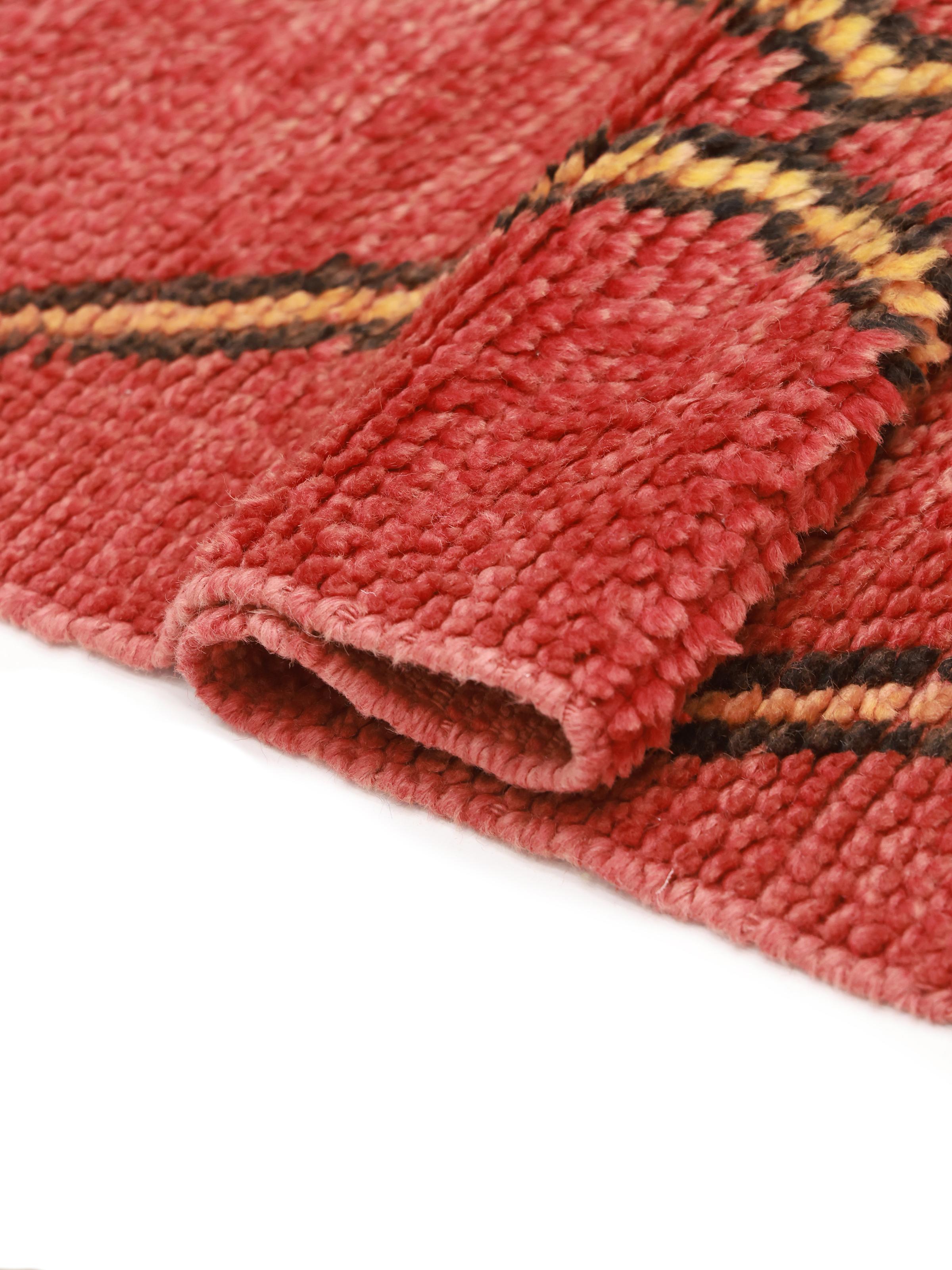
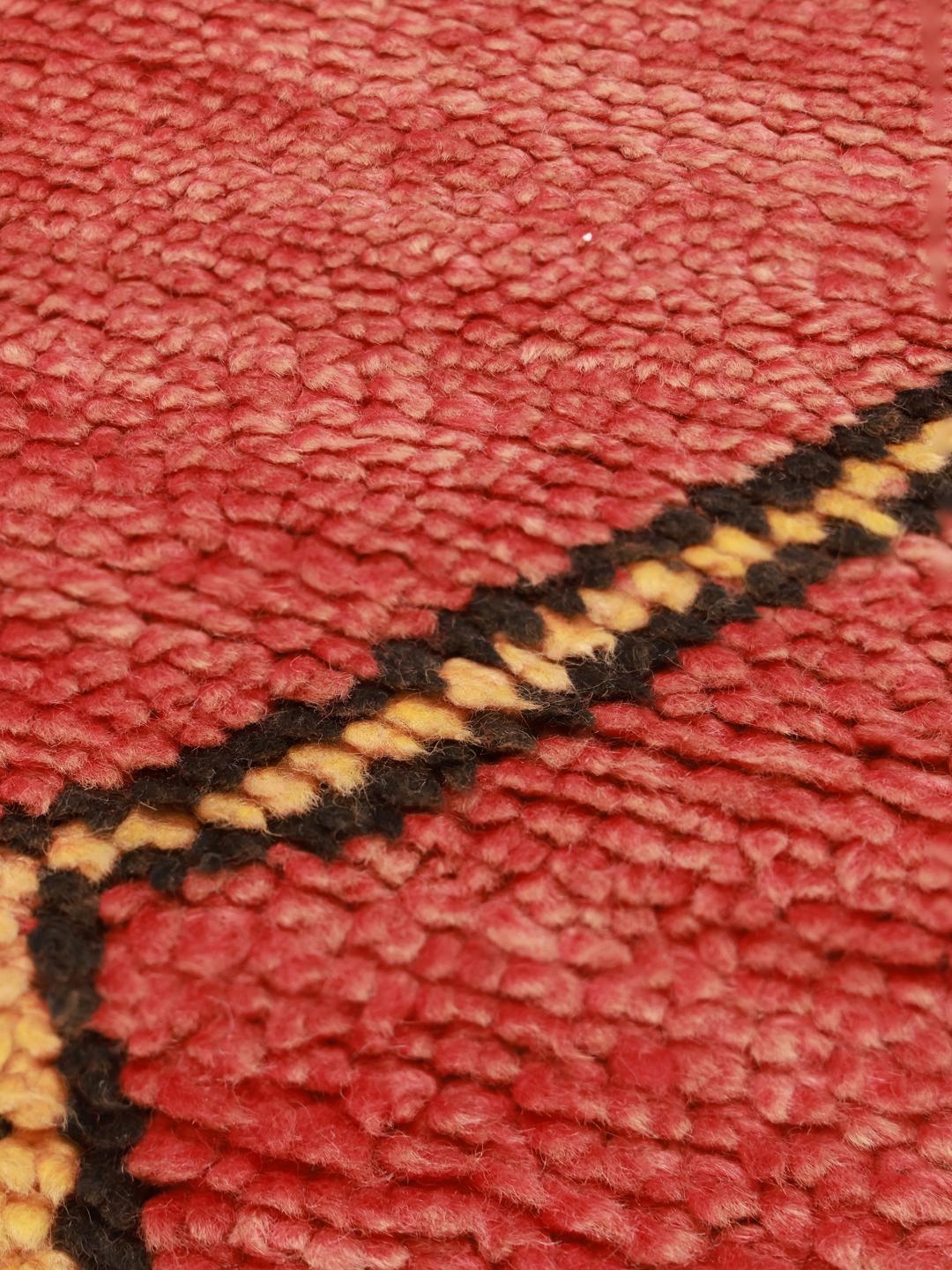
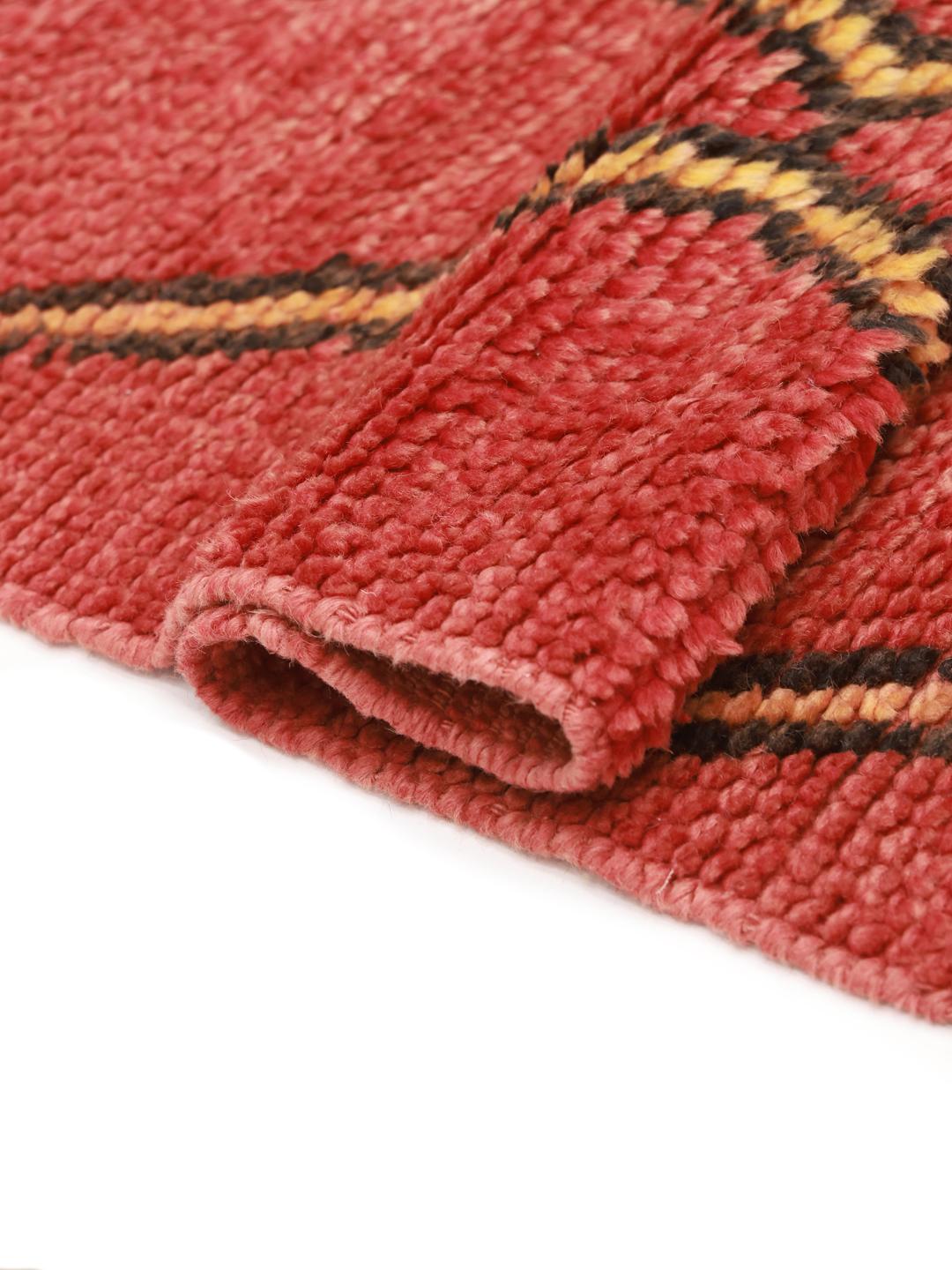
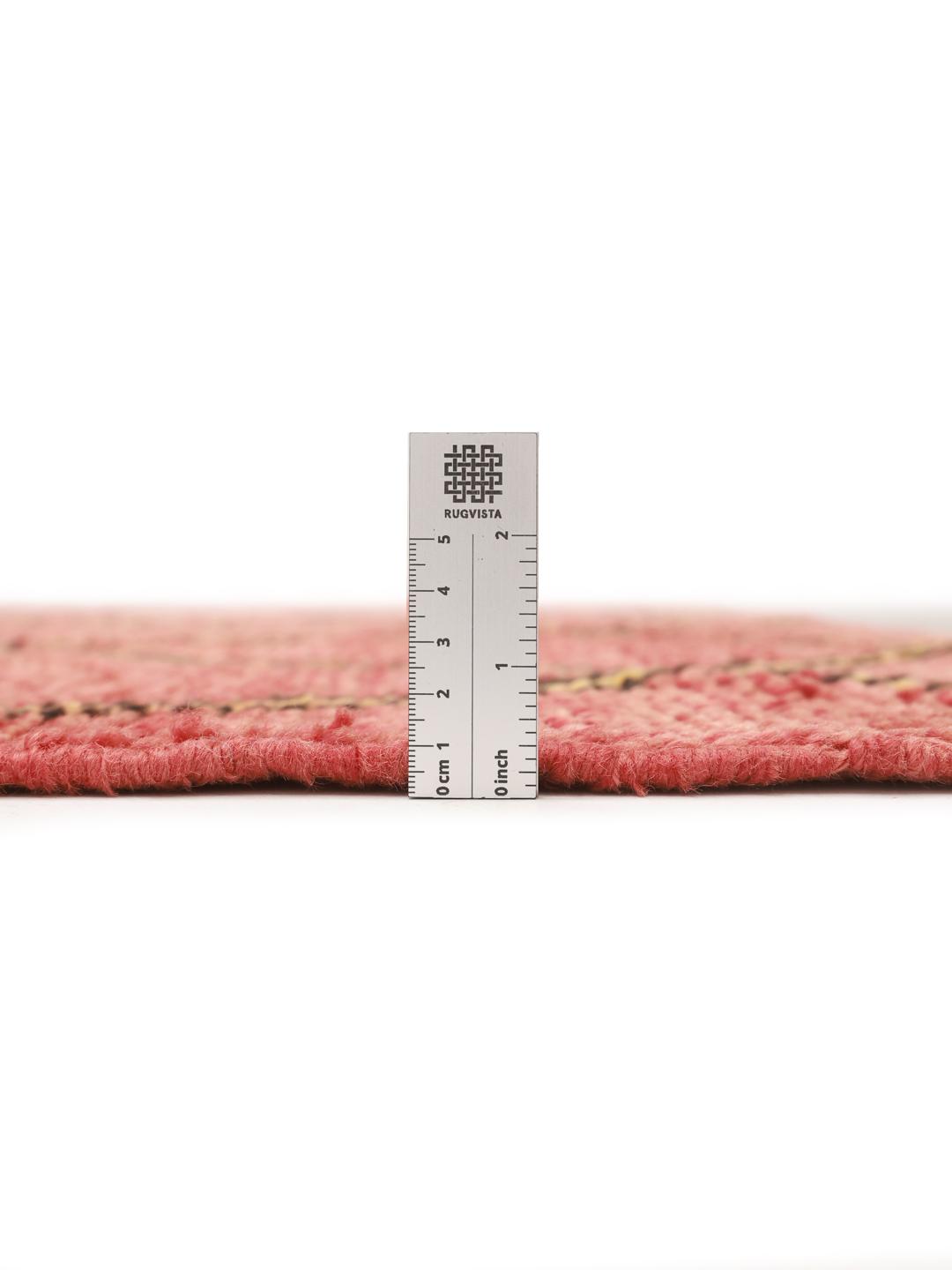
The terminology surrounding these rugs often refers to the specific tribal heritage and the construction techniques used. Unlike many other rug traditions, Berber rugs are known for their thicker, more substantial pile, which is achieved through a distinct knotting style. This construction is highly valued not only for its resilience but also for the way it creates a soft, plush surface that feels exceptionally luxurious and warm underfoot.
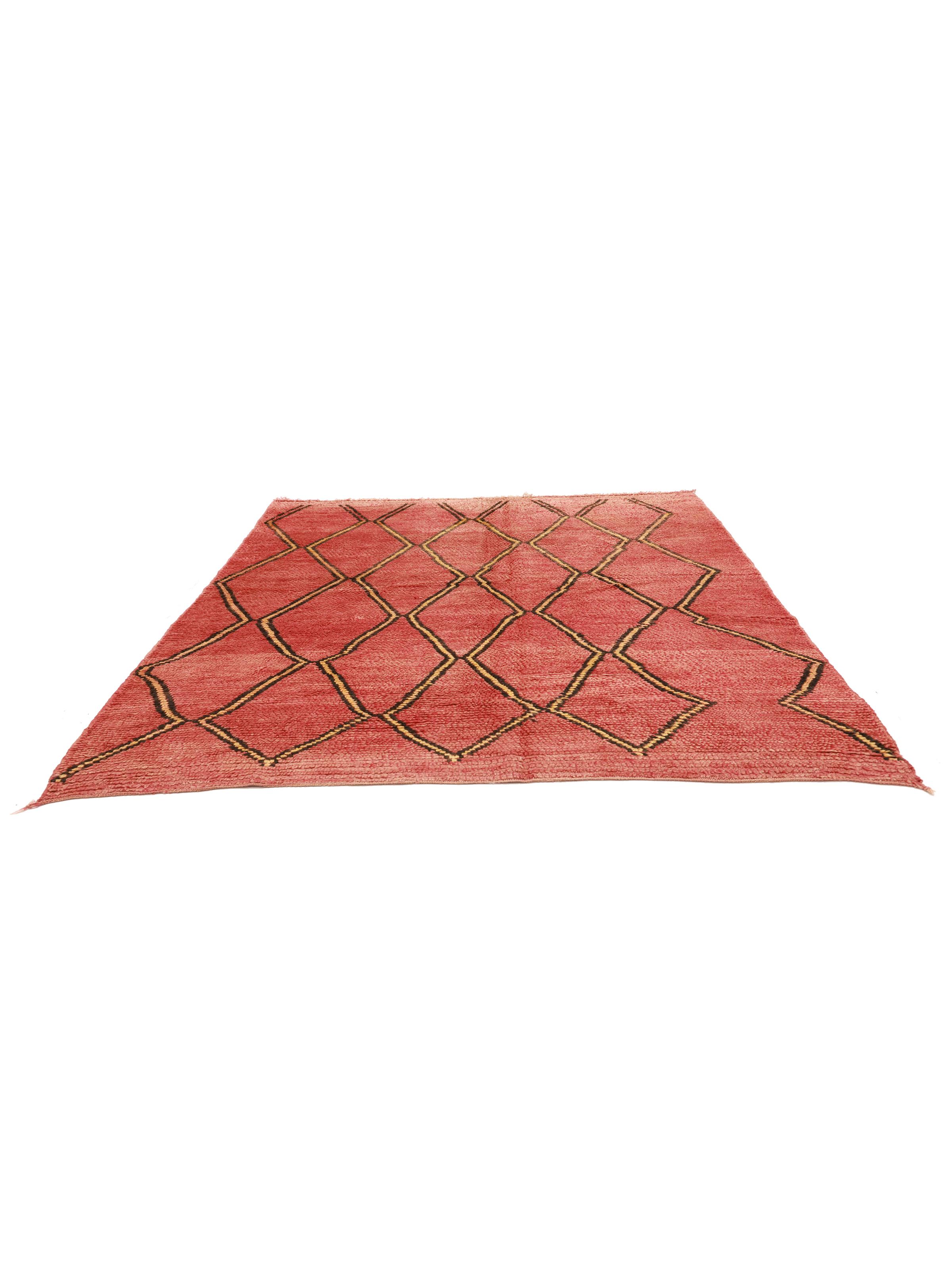
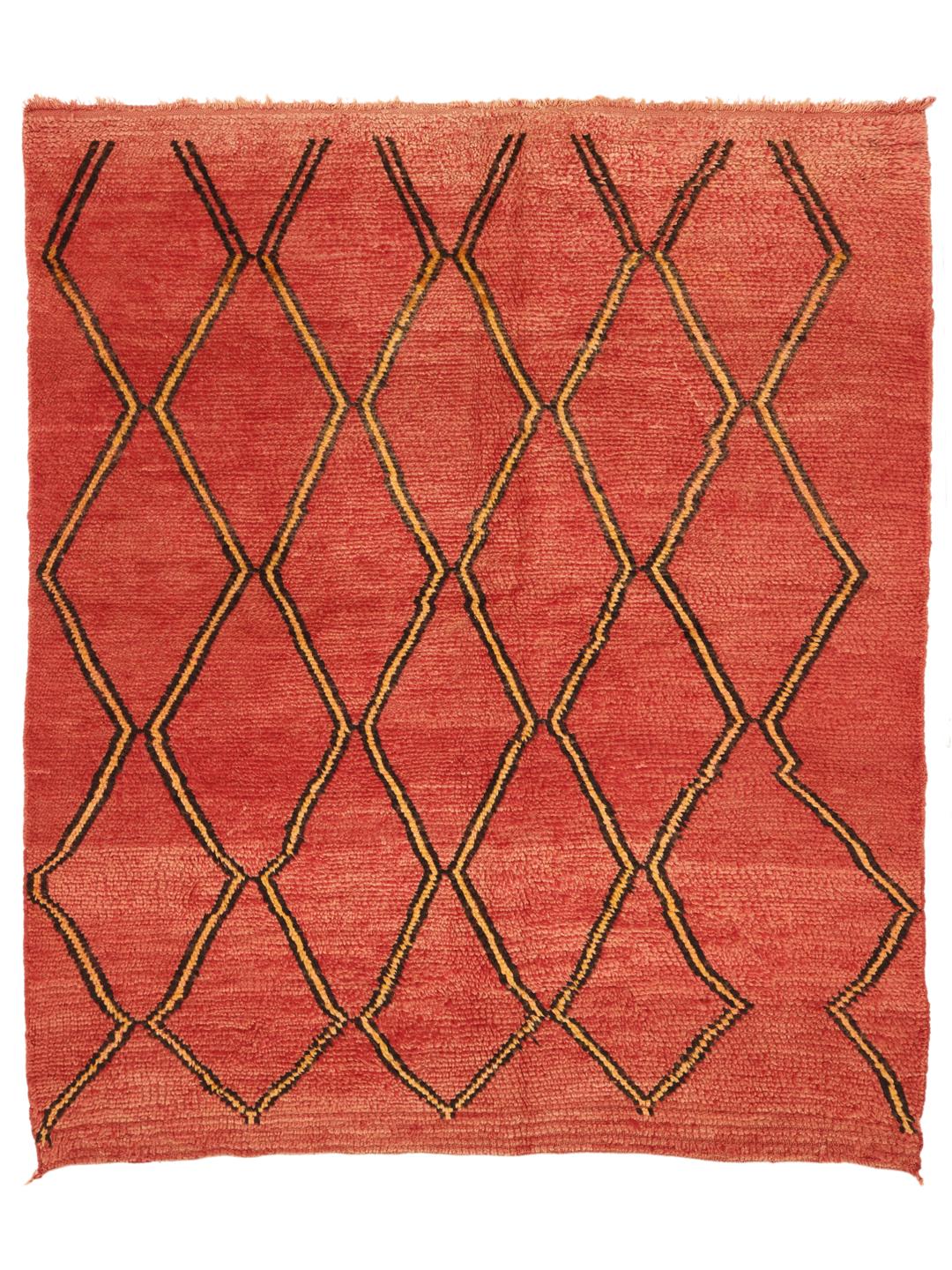
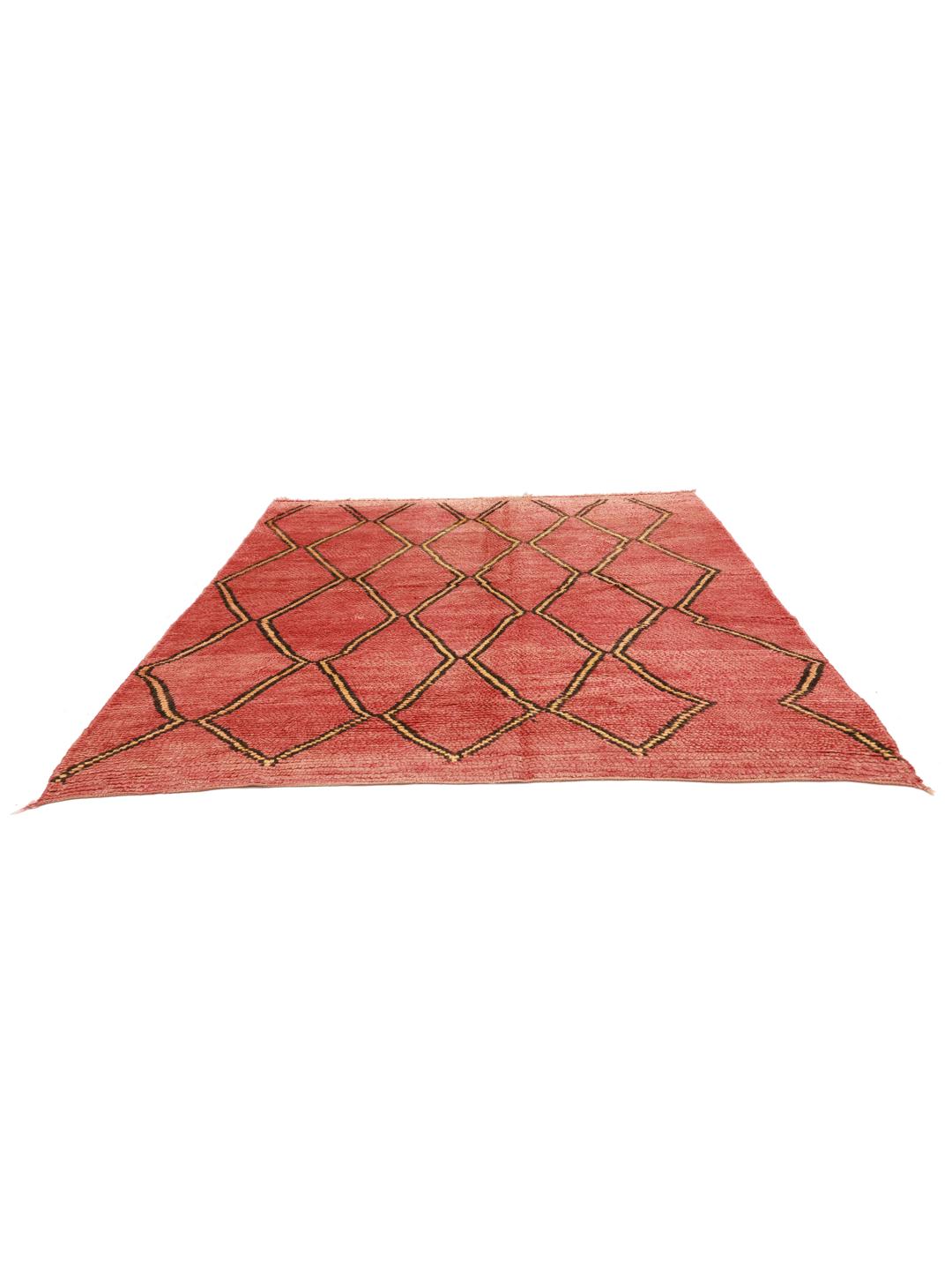
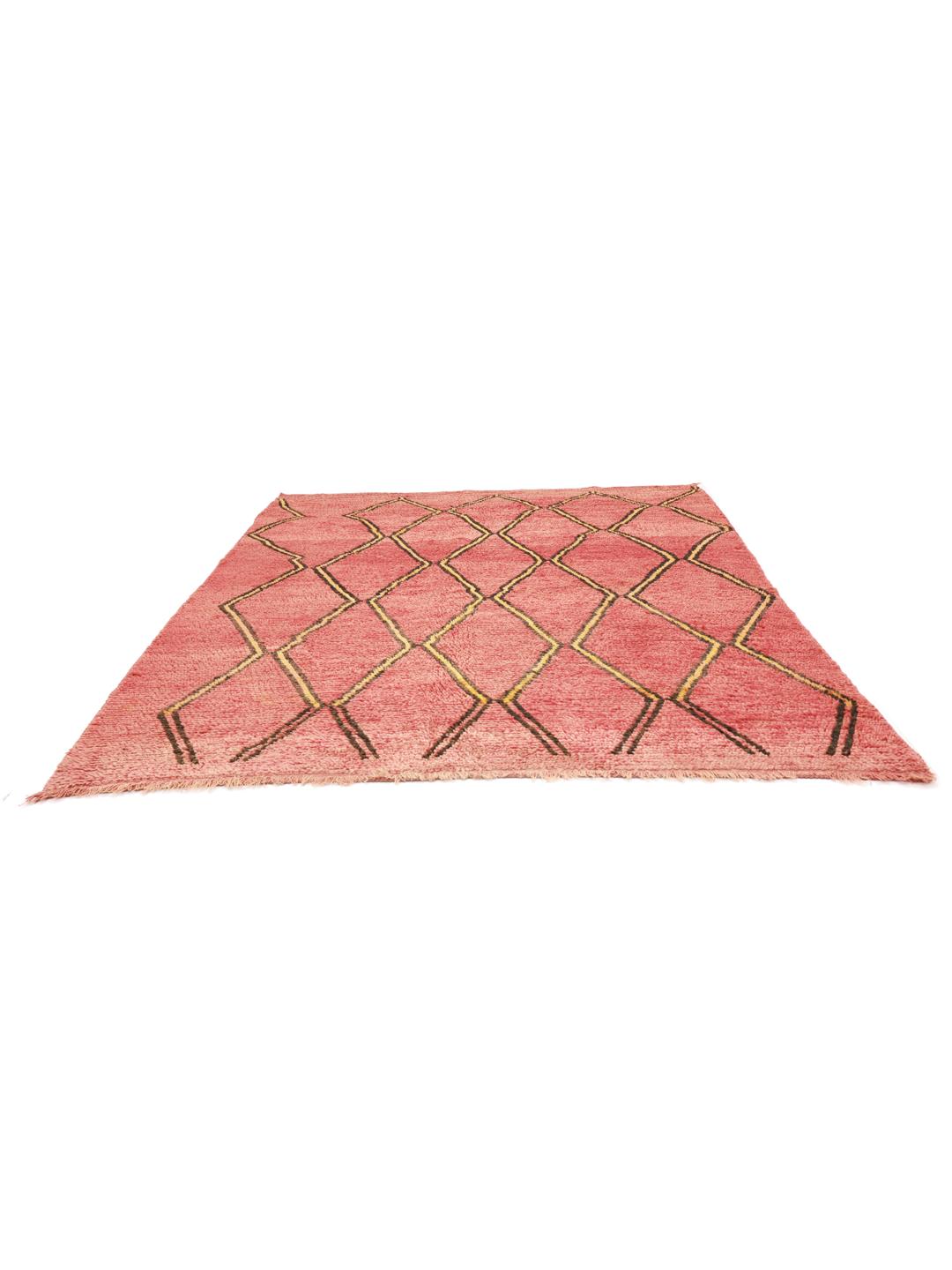
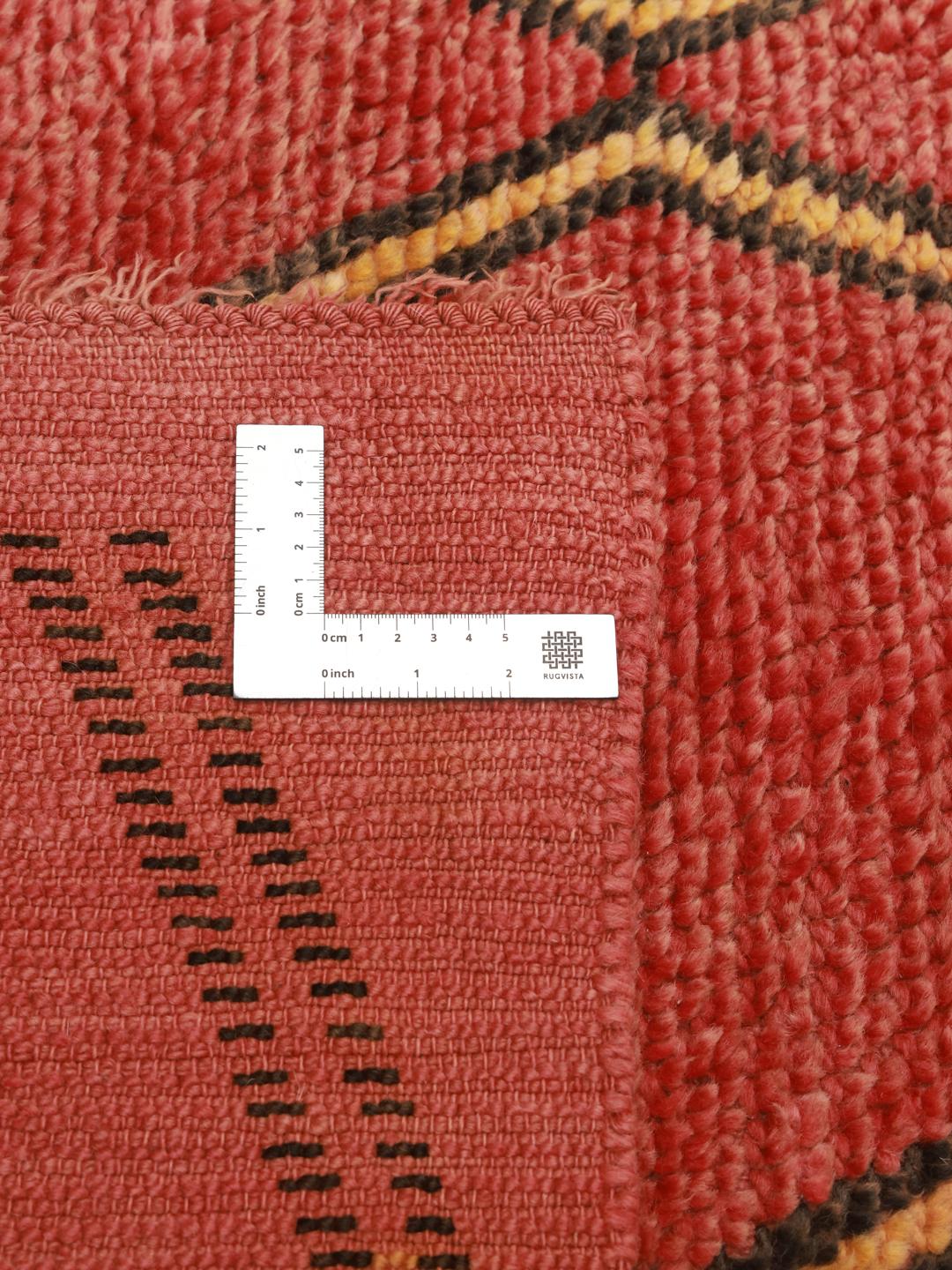
Visually, these rugs are celebrated for their minimalist, often geometric aesthetic, frequently featuring diamond motifs, lines, or abstract symbols that carry symbolic meanings such as protection, fertility, or prosperity. While traditional versions often feature a creamy white background, this particular piece stands out with its vibrant red field and bold, dark diamond lattice. This choice of colour and pattern highlights the creative freedom inherent in the Berber tradition.
Today, these rugs are highly sought after by collectors and interior enthusiasts for their raw, authentic beauty and their ability to bridge the gap between ancient craft and modern living. Owning a vintage Berber rug is an invitation to celebrate the skill of the women who crafted it and to preserve a piece of living history. It is a testament to a long-standing tradition that values individual expression and the enduring quality of natural wool.