Berber rugs trace their origins back to the indigenous tribes of North Africa, particularly the Berber people who have inhabited the Atlas Mountains for millennia. These textiles were historically woven for utilitarian purposes, serving as blankets, sleeping mats, and floor coverings to provide warmth against the harsh mountain winters. Over time, these functional pieces evolved into the highly sought-after decorative items known today.
The terminology surrounding these rugs often refers to the specific tribal traditions of the region, such as the Beni Ourain. These rugs are renowned for their high-quality wool, which is typically sourced from sheep raised in the high-altitude climate of the mountains. This wool is prized for its exceptional softness, lustre, and resilience, which are maintained through traditional cleaning and spinning methods that have been passed down through generations.
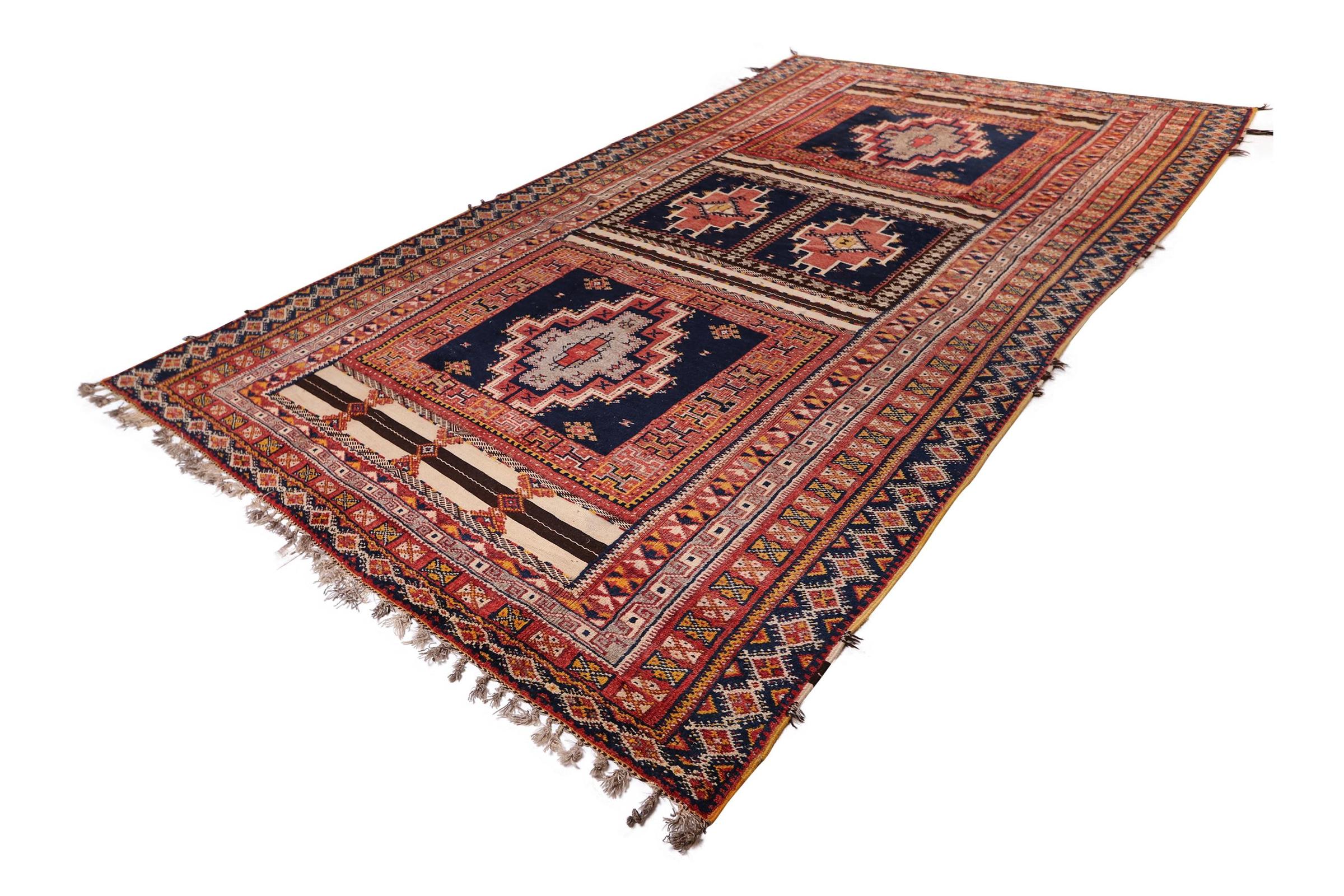
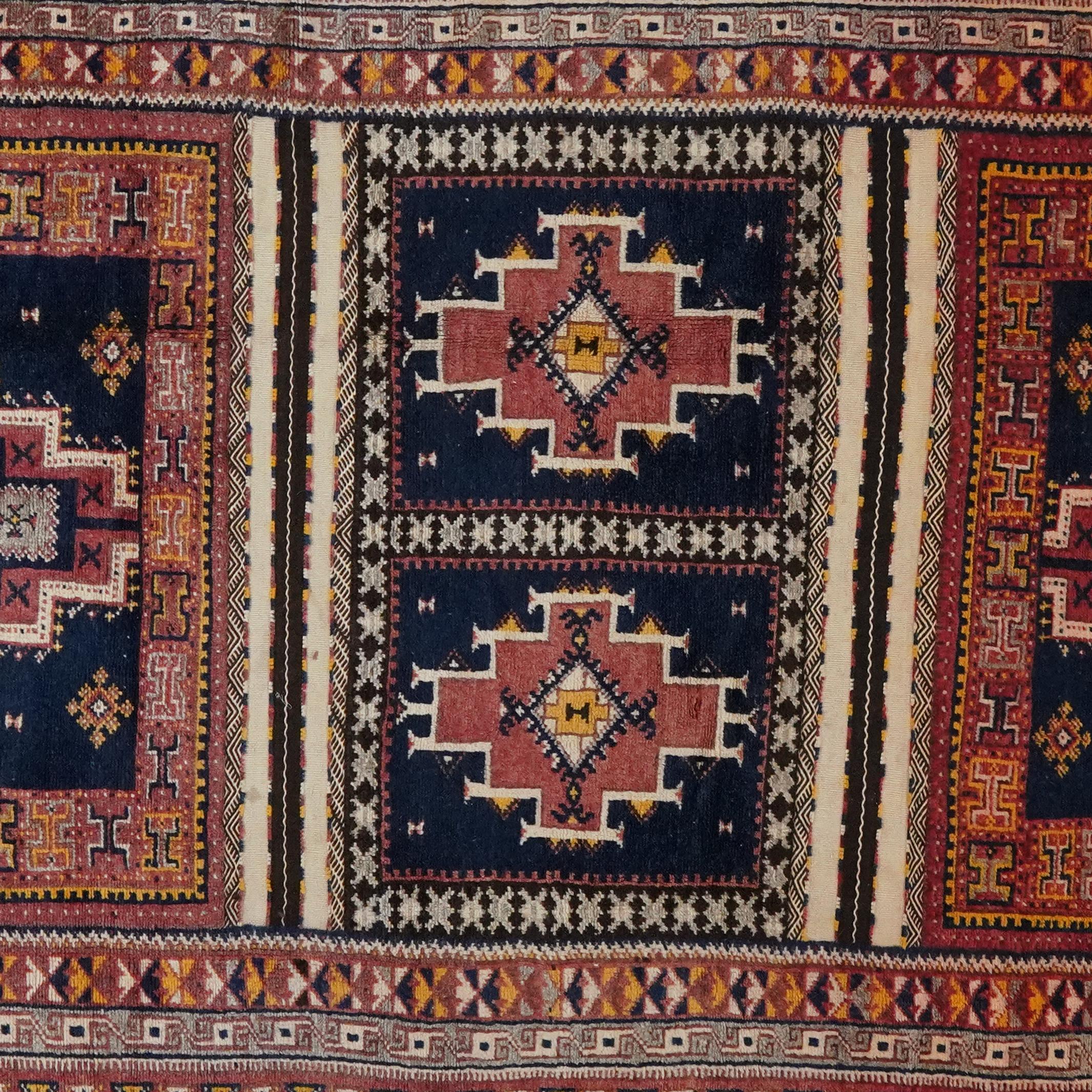
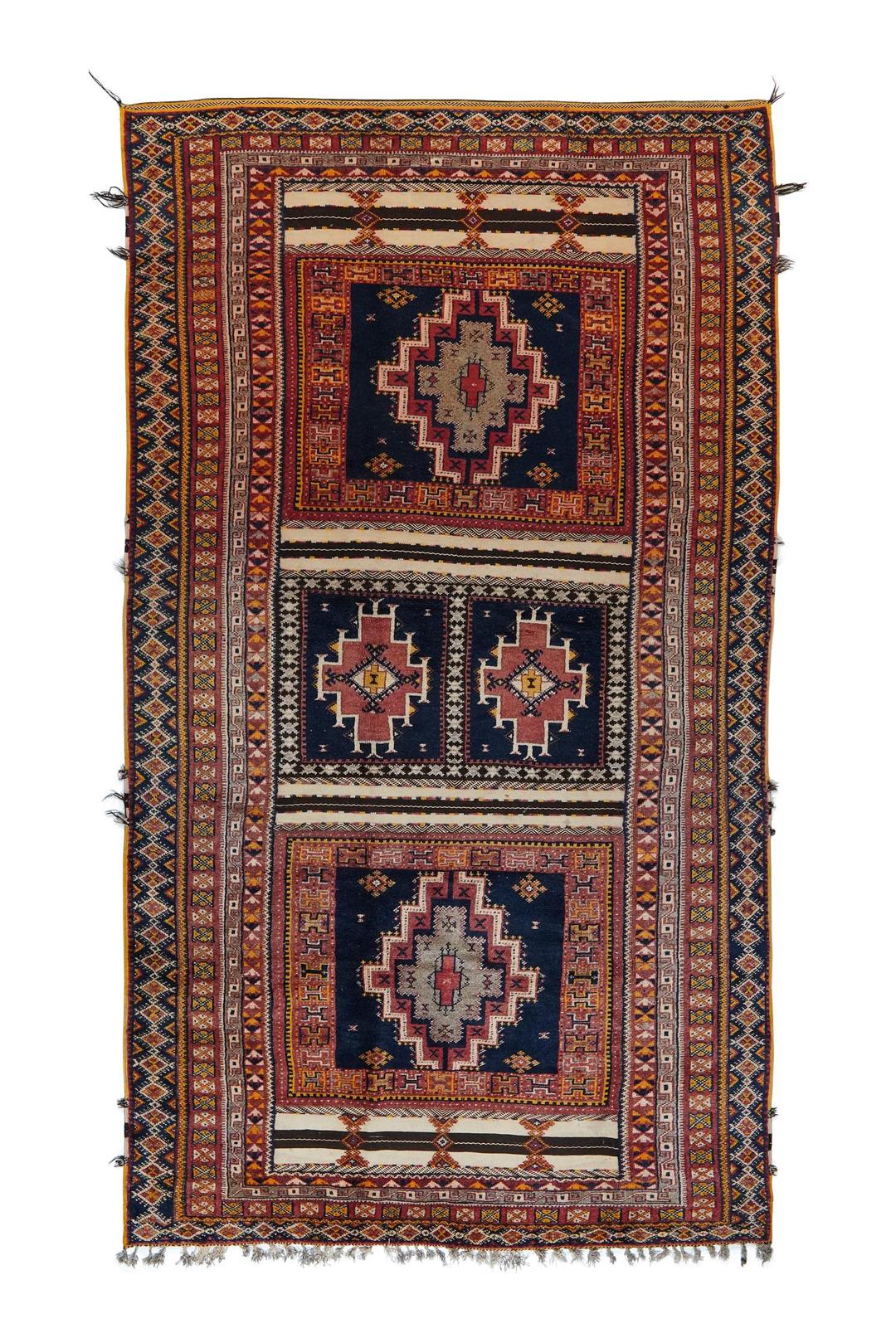
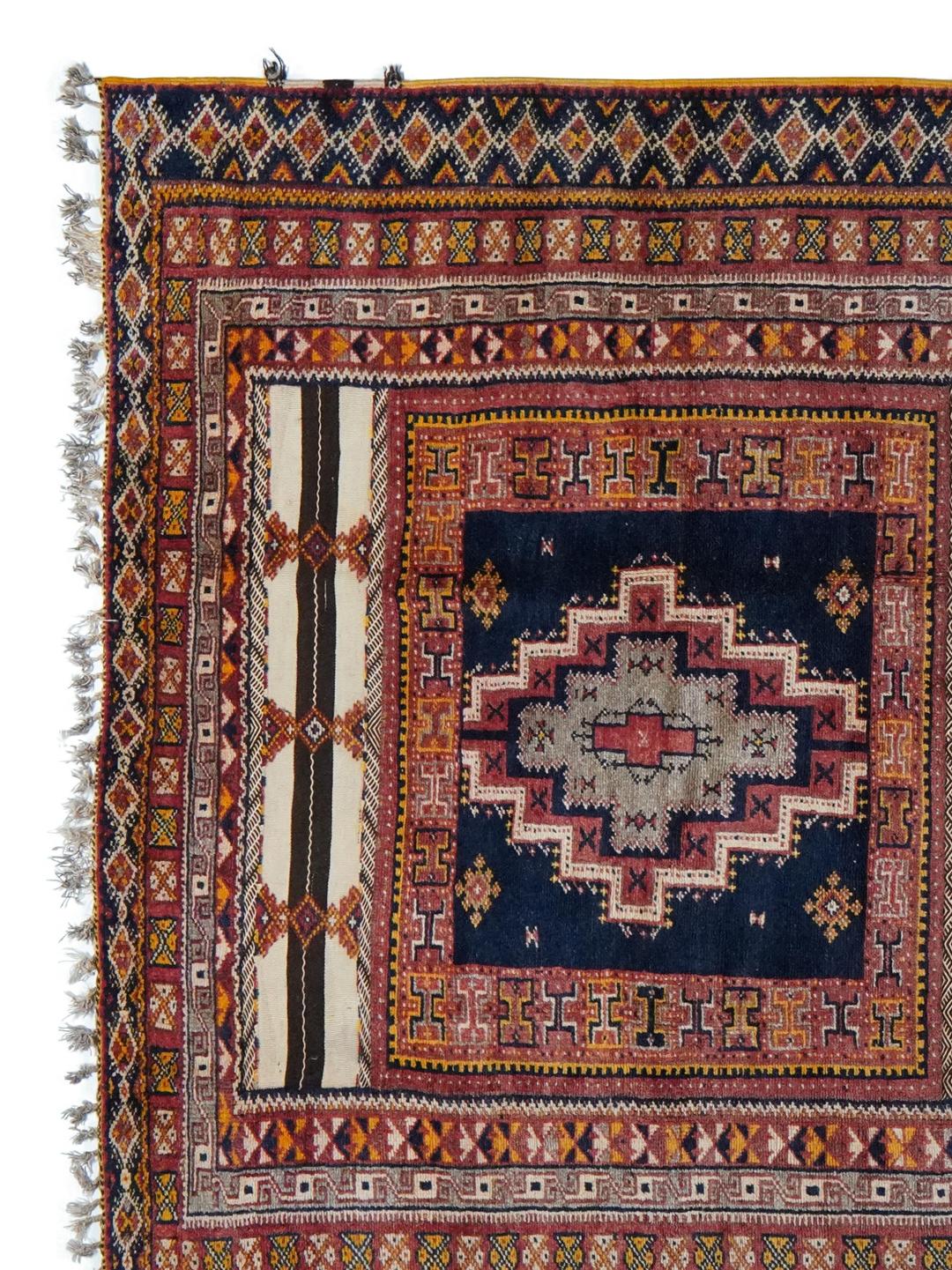
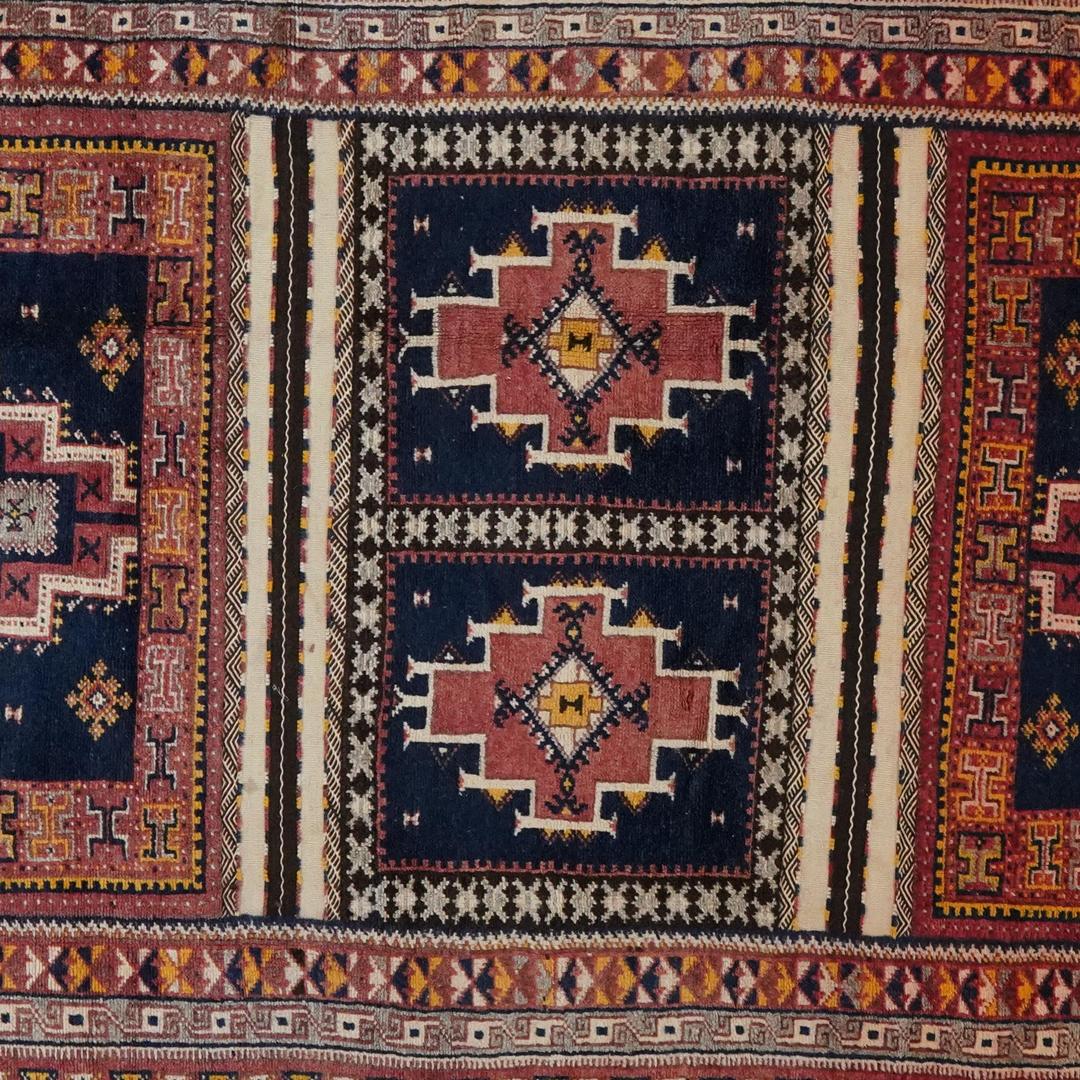
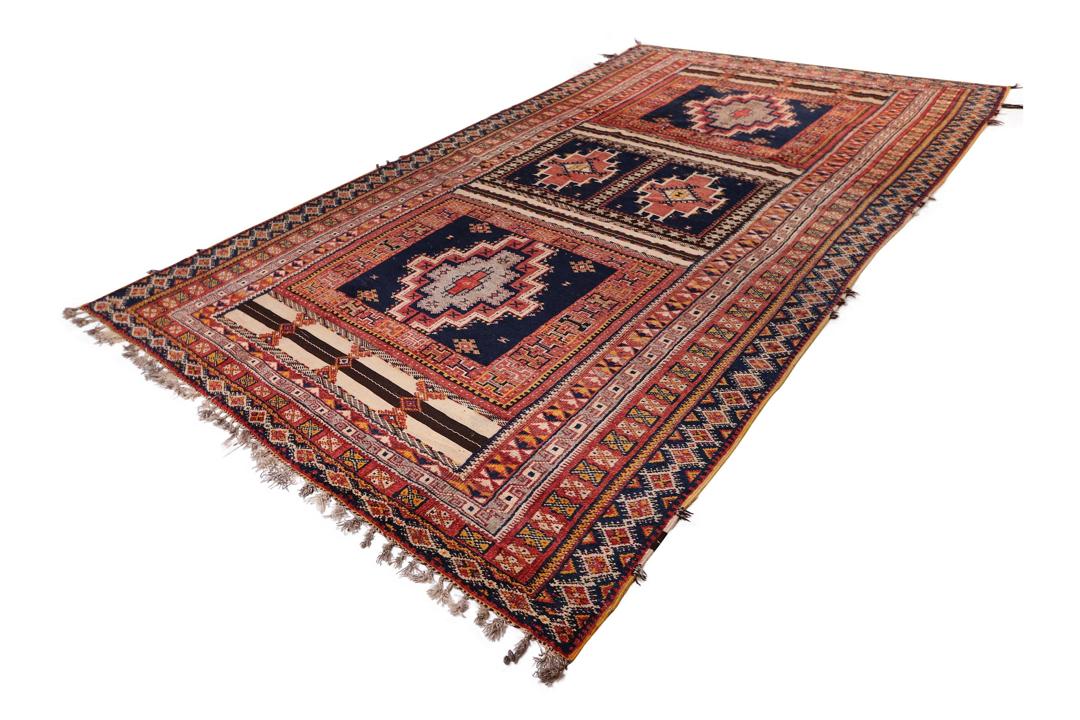
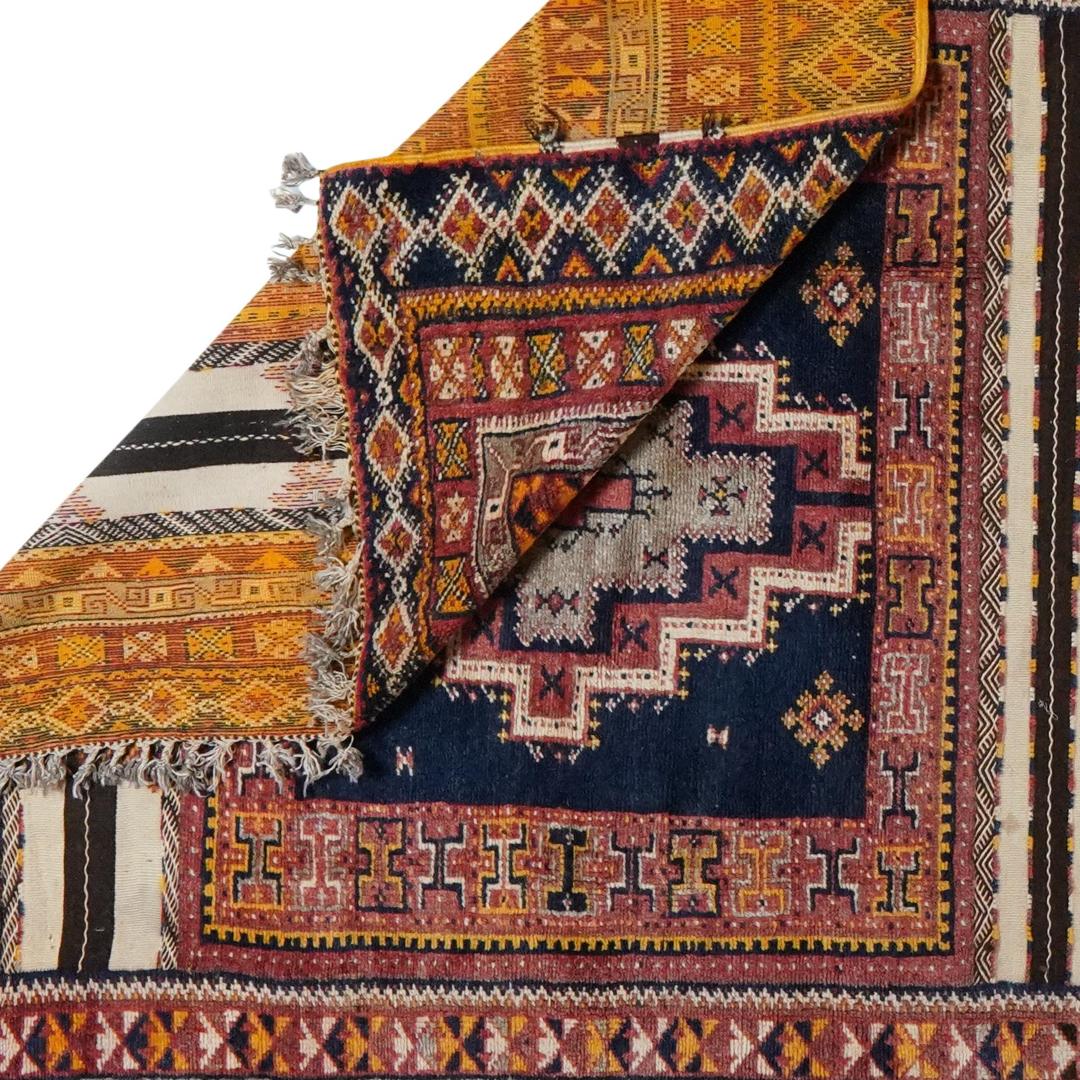
Visually, these rugs are defined by a language of geometric motifs, often featuring diamonds, crosses, and other stylized shapes that carry symbolic meaning related to the daily lives, beliefs, and environments of the weavers. While traditional designs often utilise a more neutral palette, vintage pieces frequently display a wider range of colours derived from natural dyes, as seen in this example with its bold, contrasting tones and complex geometric borders.
Collecting a vintage Berber rug is an investment in cultural heritage and artisanal skill. By owning such a piece, you are preserving the history of a craft that has survived for centuries, continuing to provide beauty and utility in modern homes. These rugs are valued not only for their aesthetic qualities but also for the stories they tell, reflecting the identity and creativity of the women who knotted them by hand.