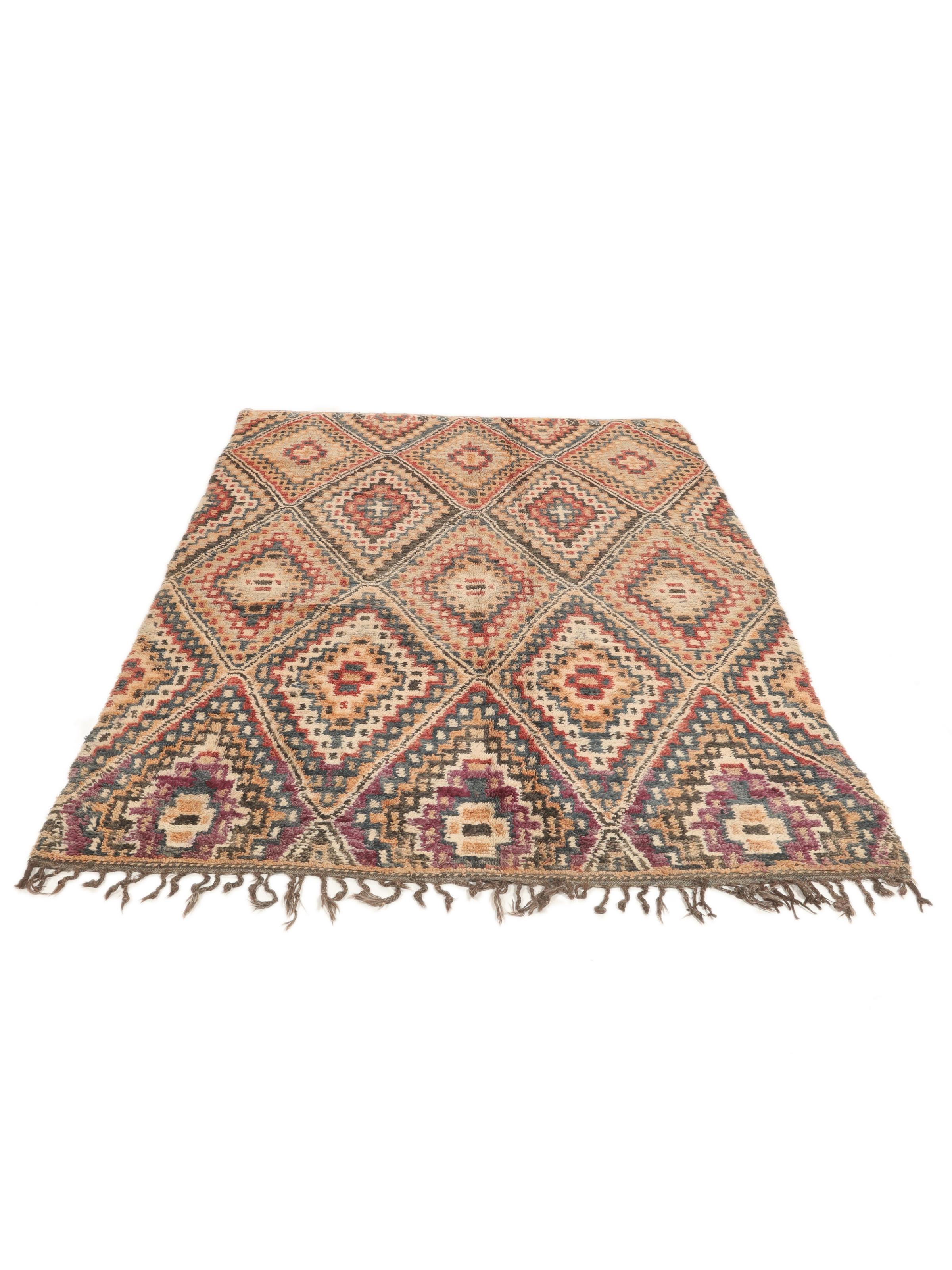
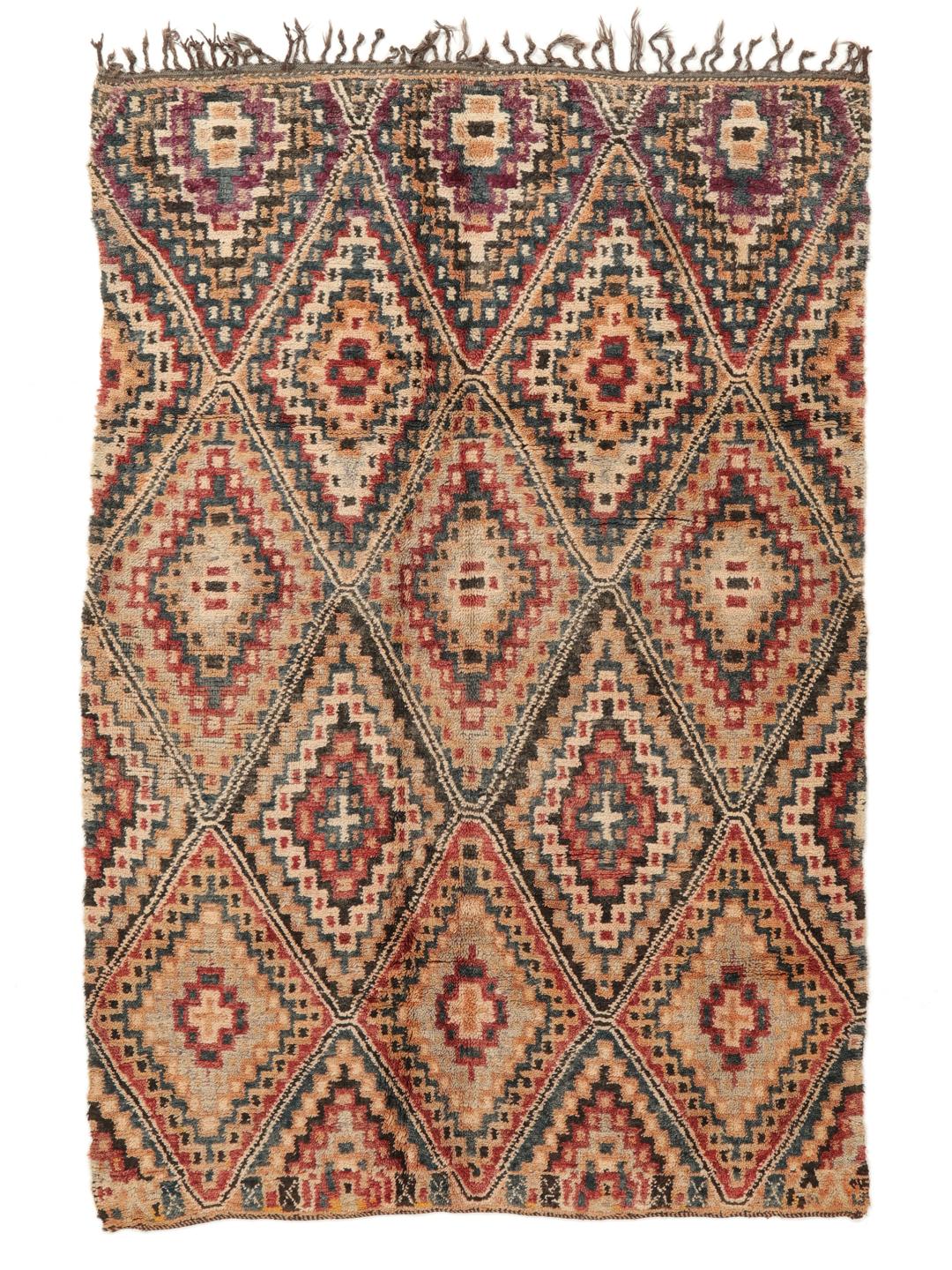
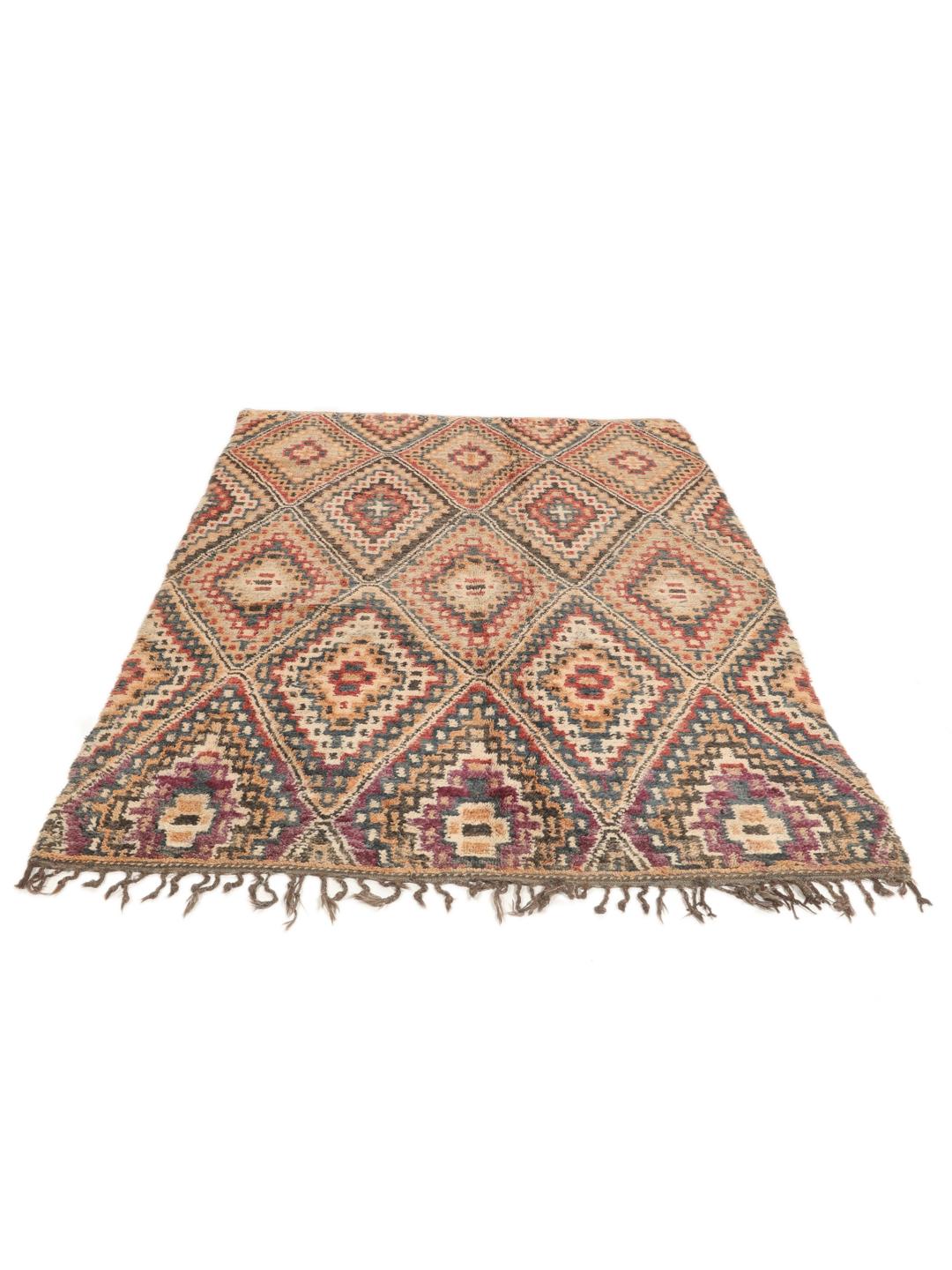
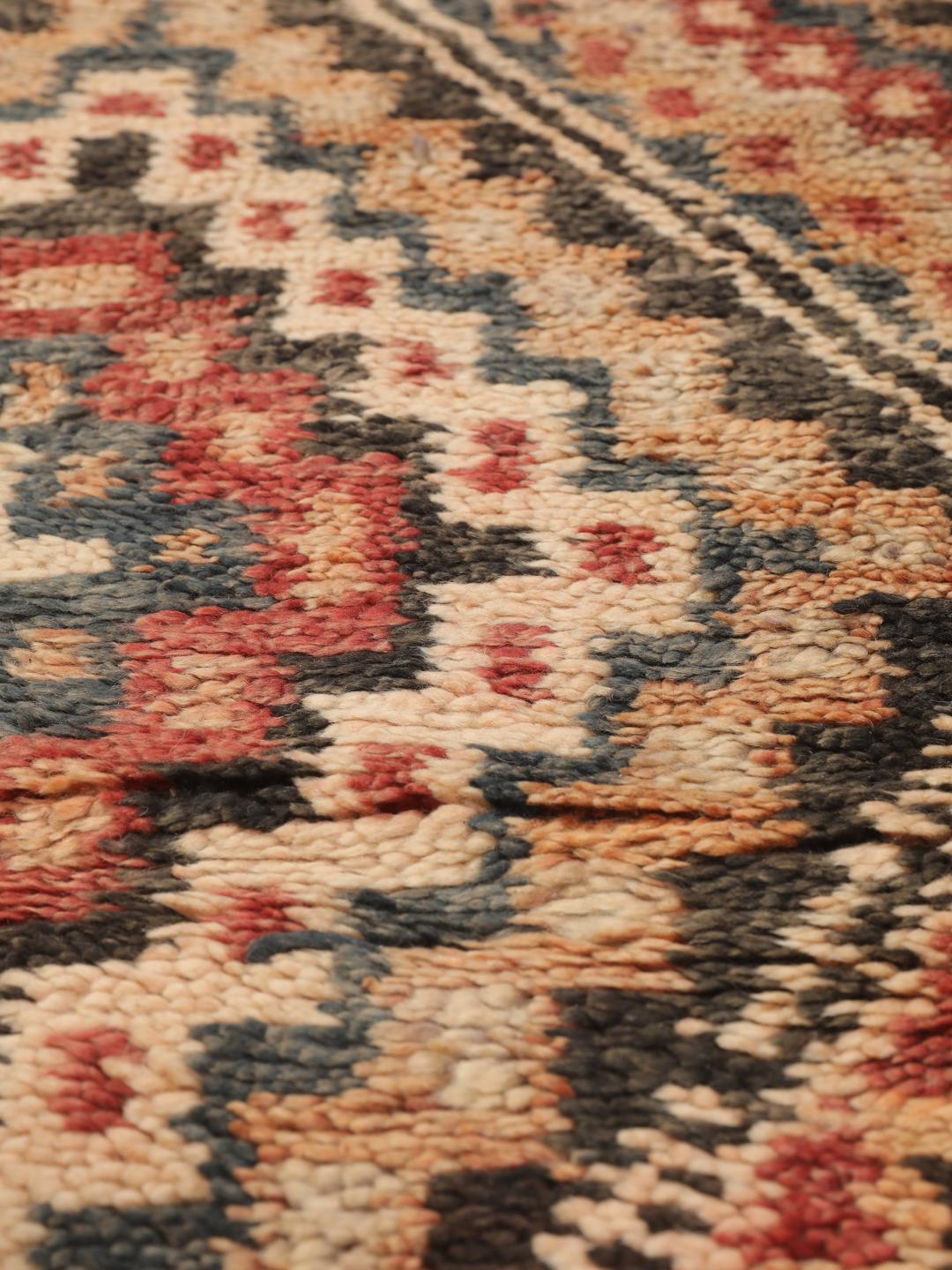
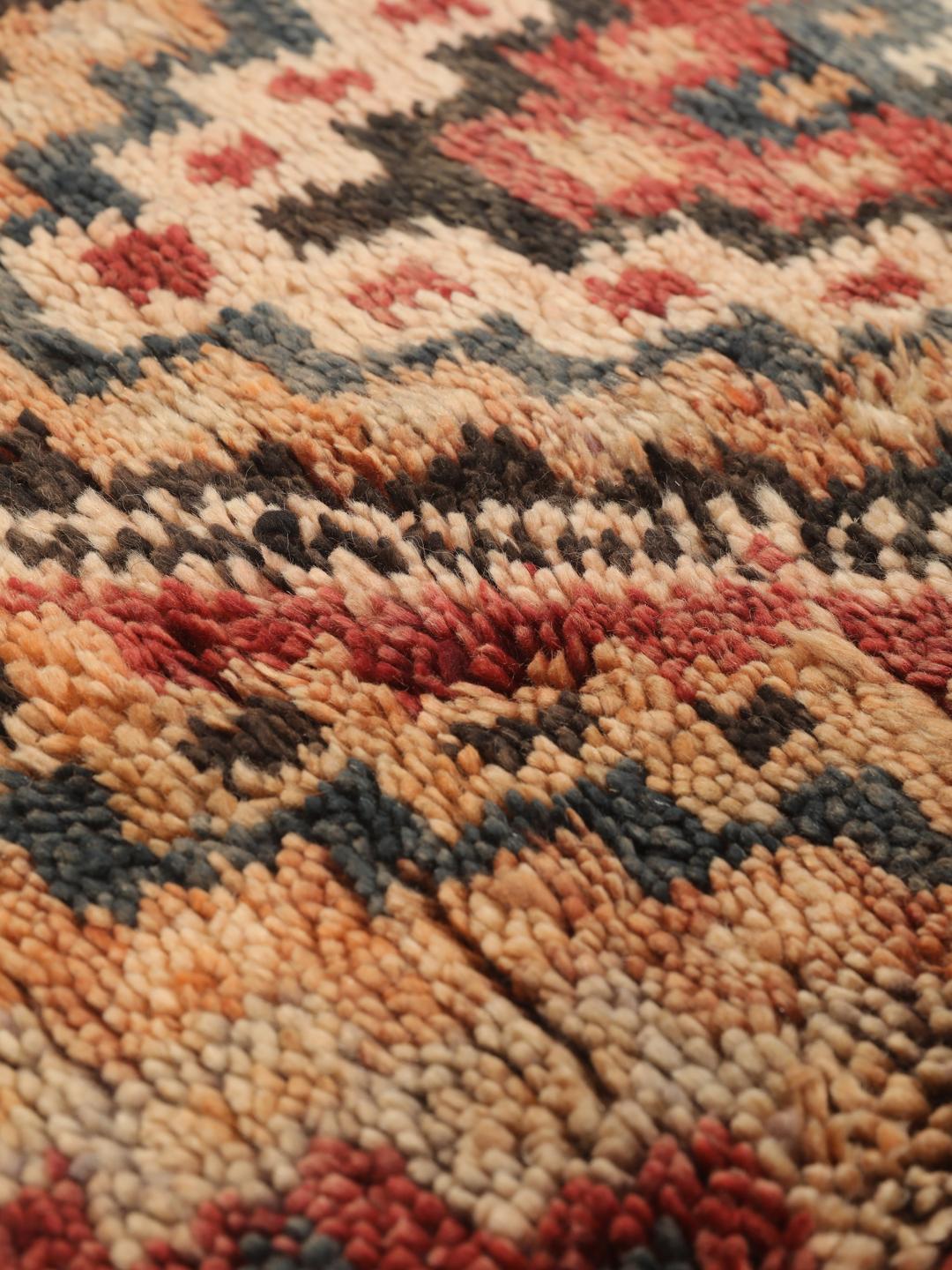
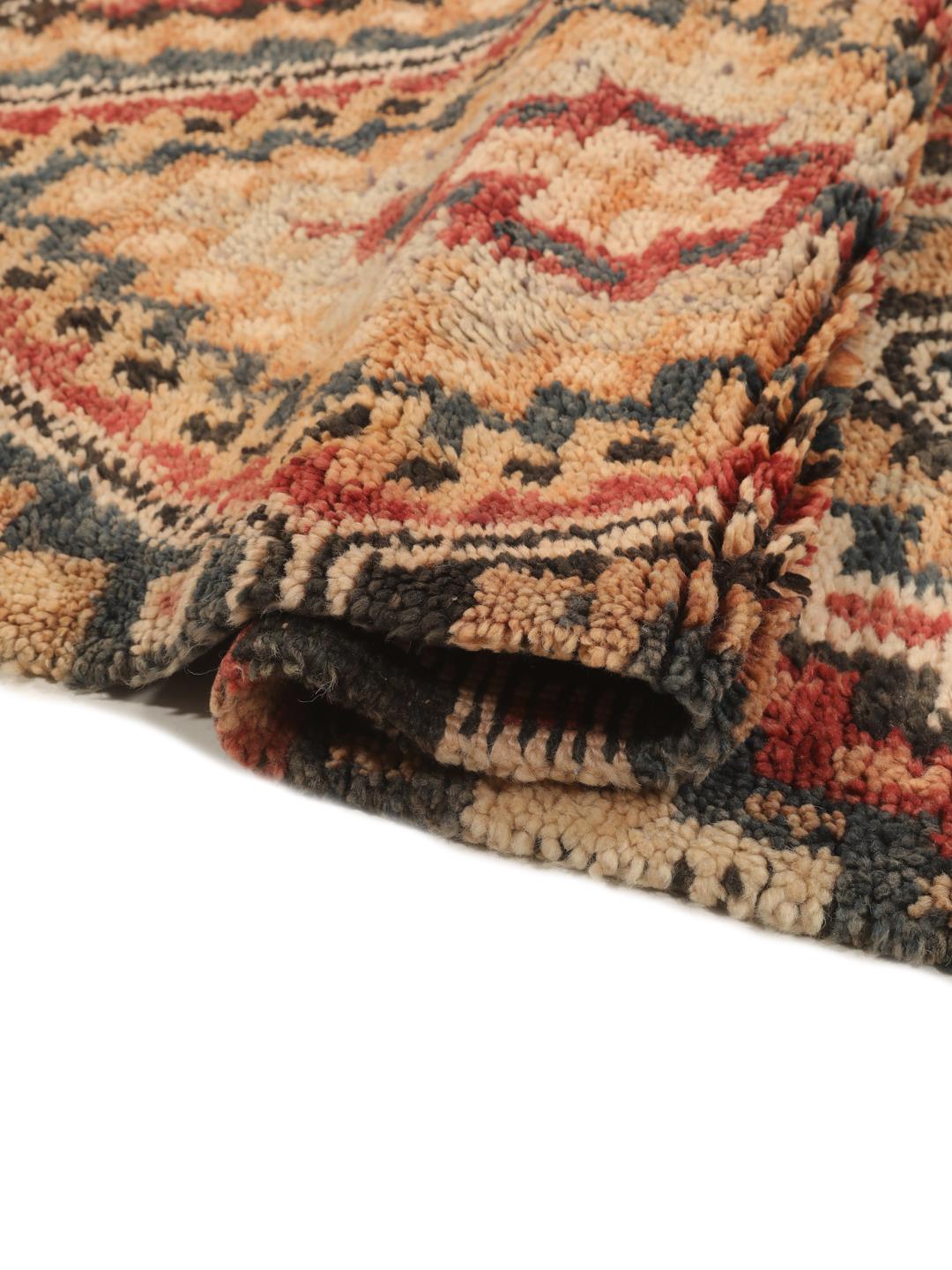
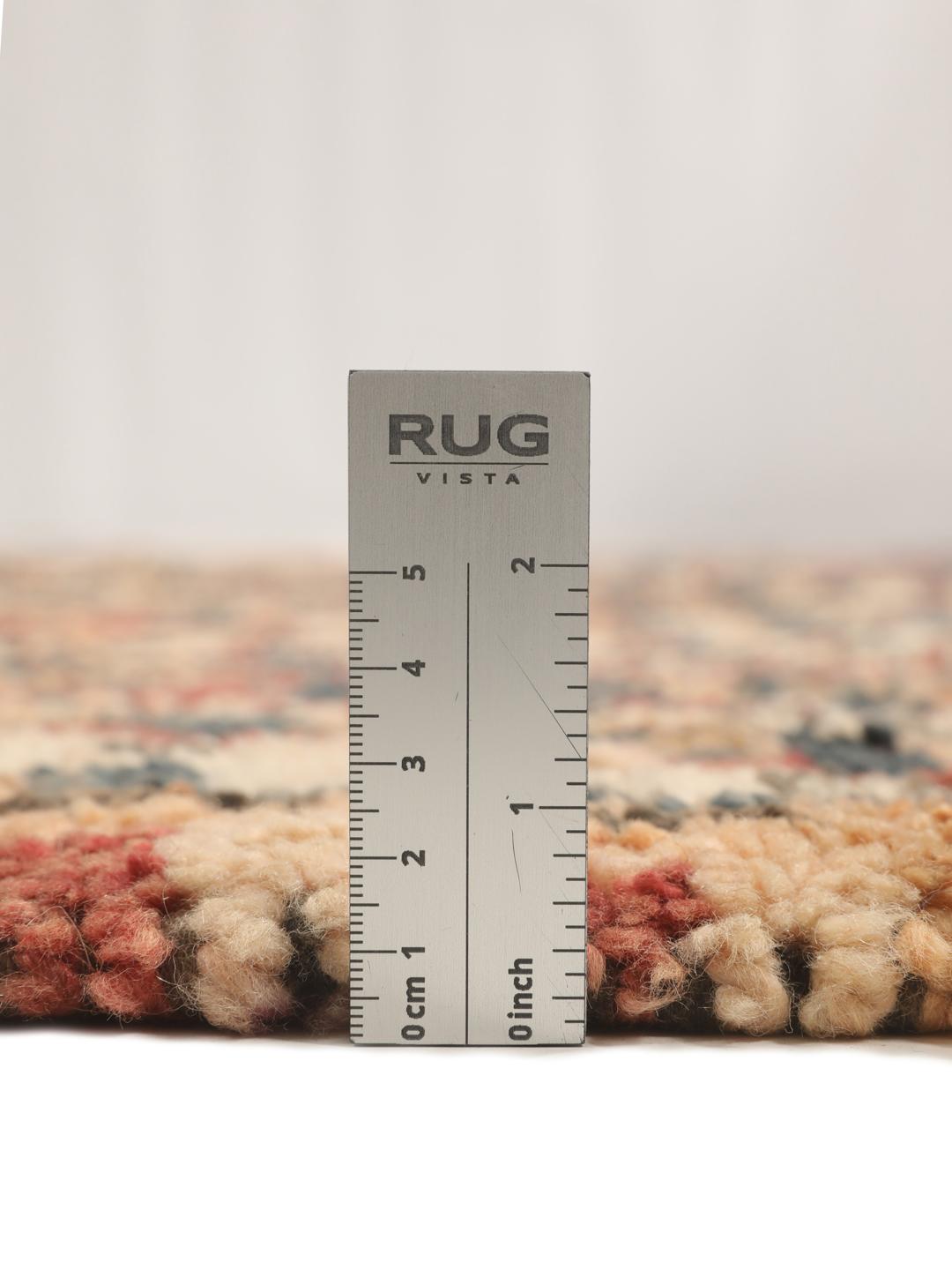
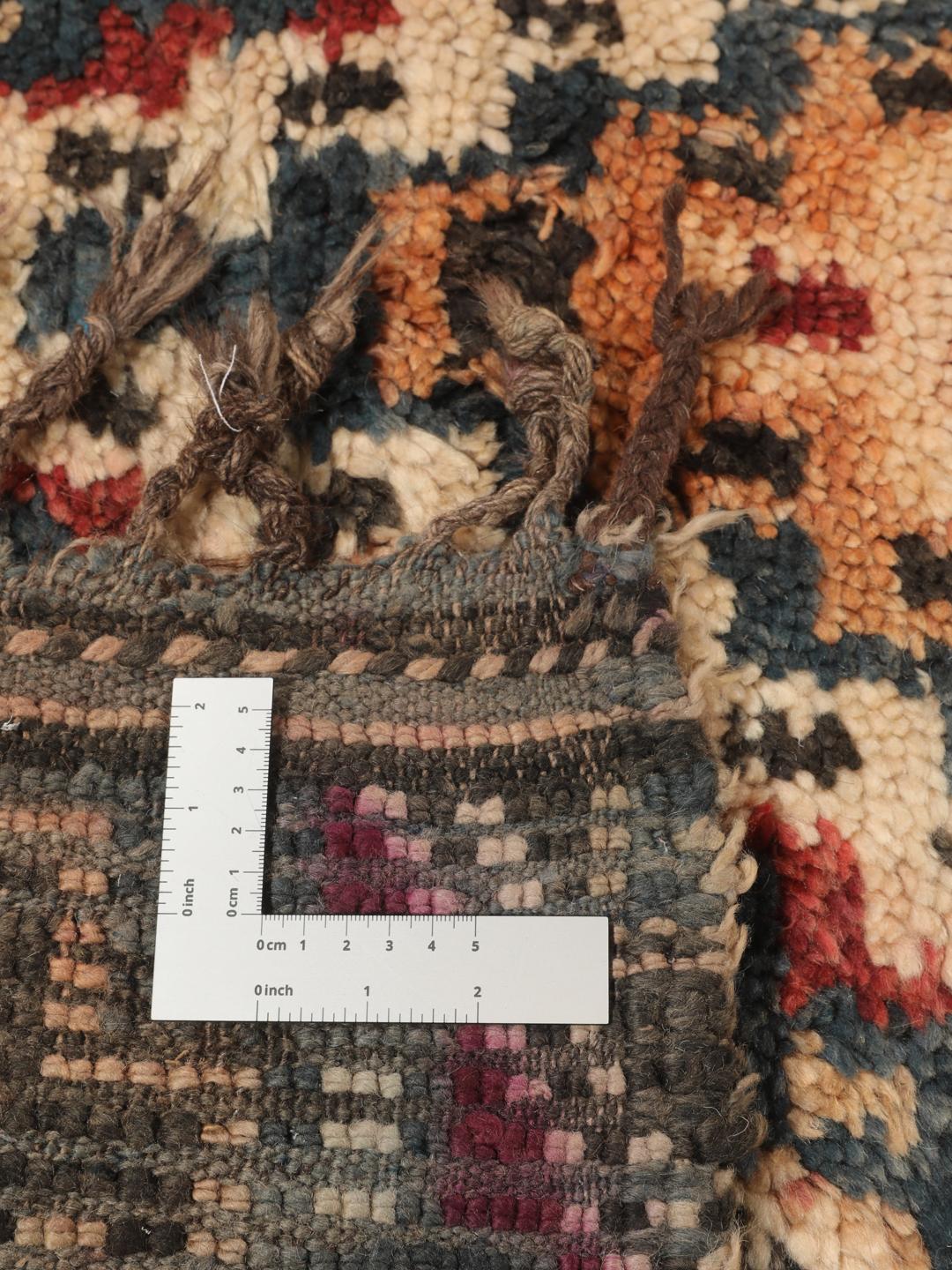
Originating from the rugged Middle Atlas mountains of Morocco, these rugs are the product of centuries-old traditions practised by Berber tribes. These communities have long relied on sheep herding as a way of life, and the wool from these animals has become the primary medium for their artistic expression, providing both warmth against the mountain chill and a canvas for storytelling.
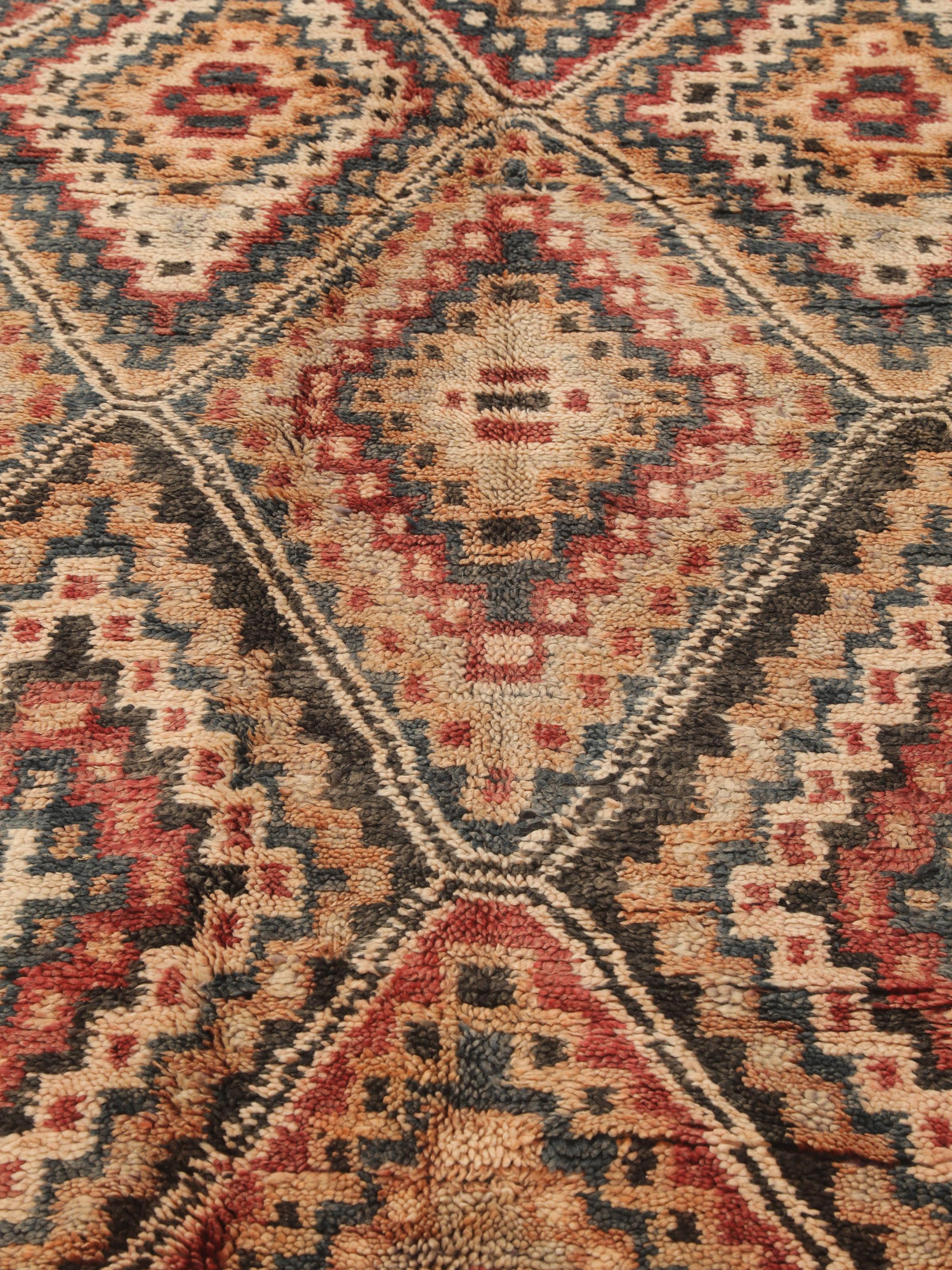
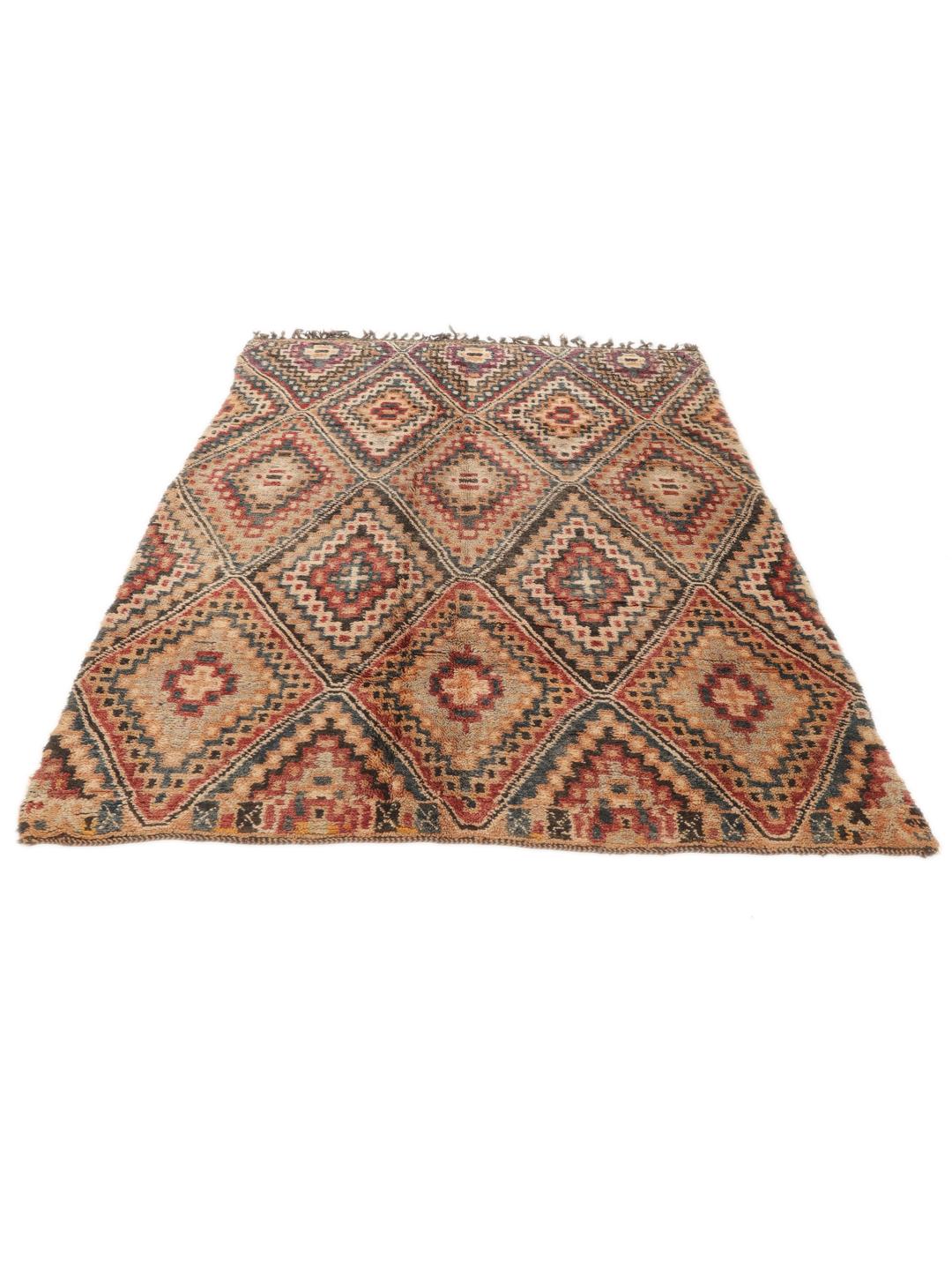
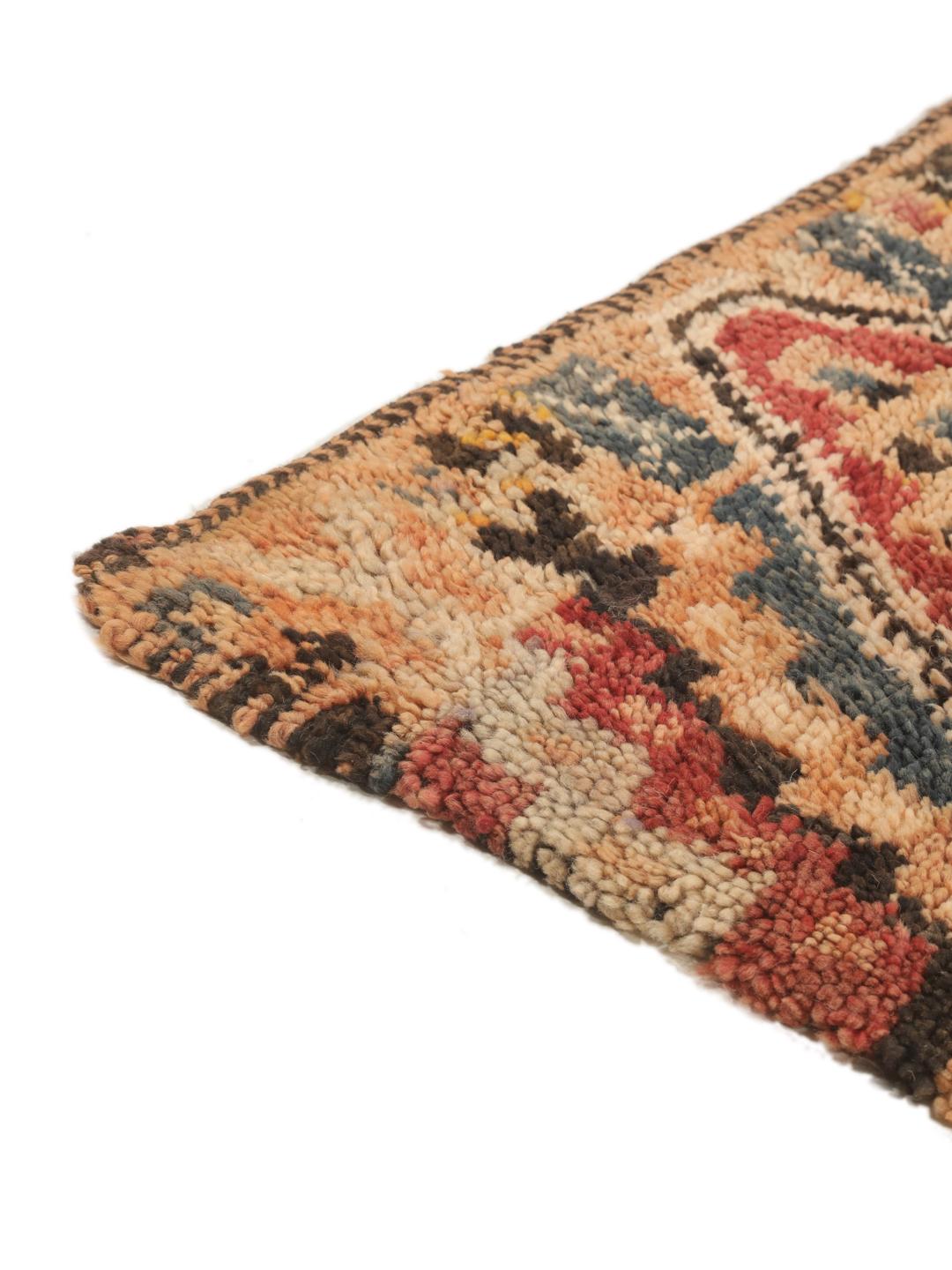
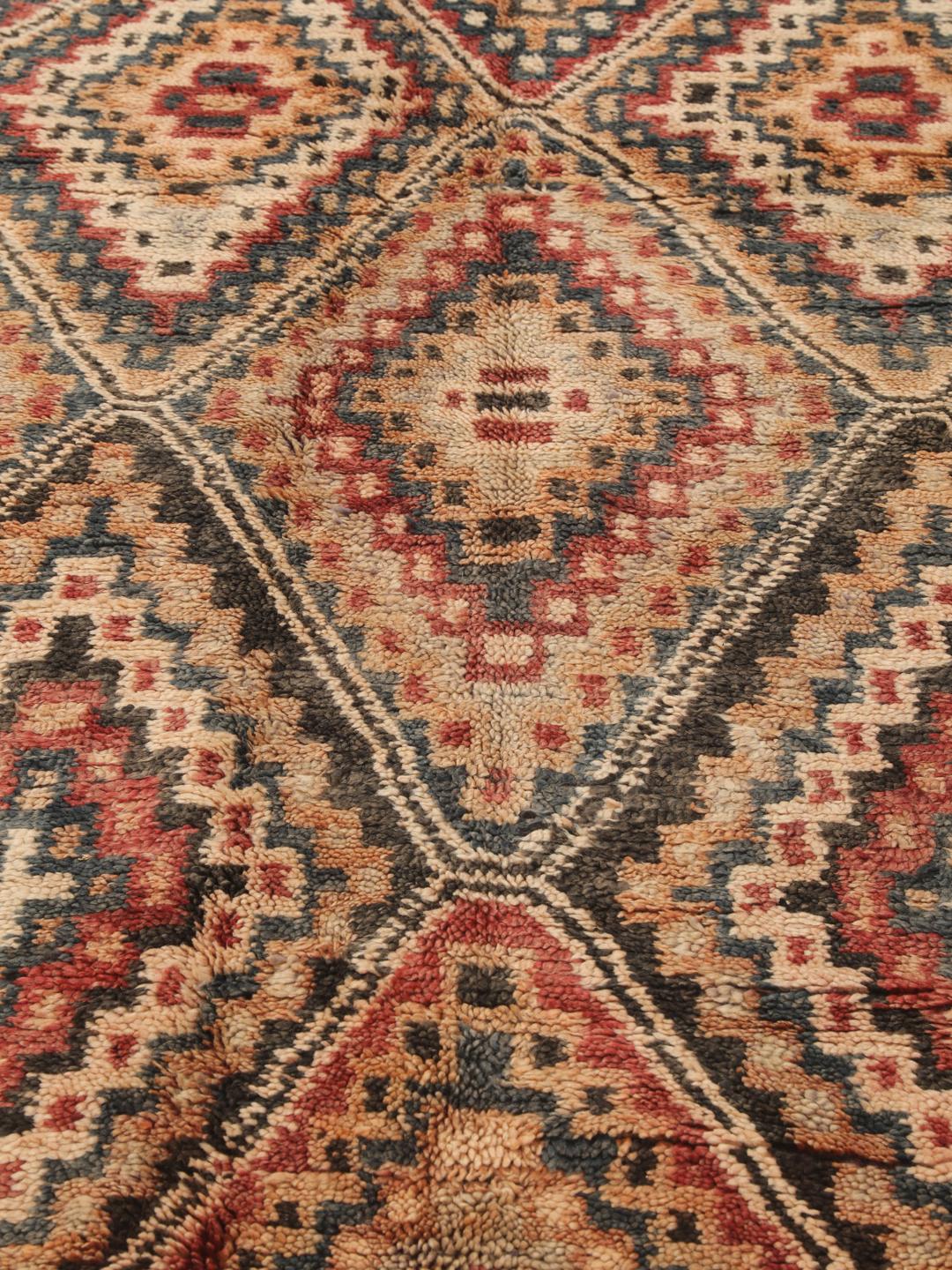
The term Beni Ourain refers to the specific tribal tradition of these weavers, known for their focus on natural, often undyed wool and bold, symbolic patterns. While contemporary styles often lean toward minimalist white and black, vintage examples like this one often feature richer, complex palettes that reflect the natural dyes available to the weavers at the time, showcasing a more vibrant side of the tradition.
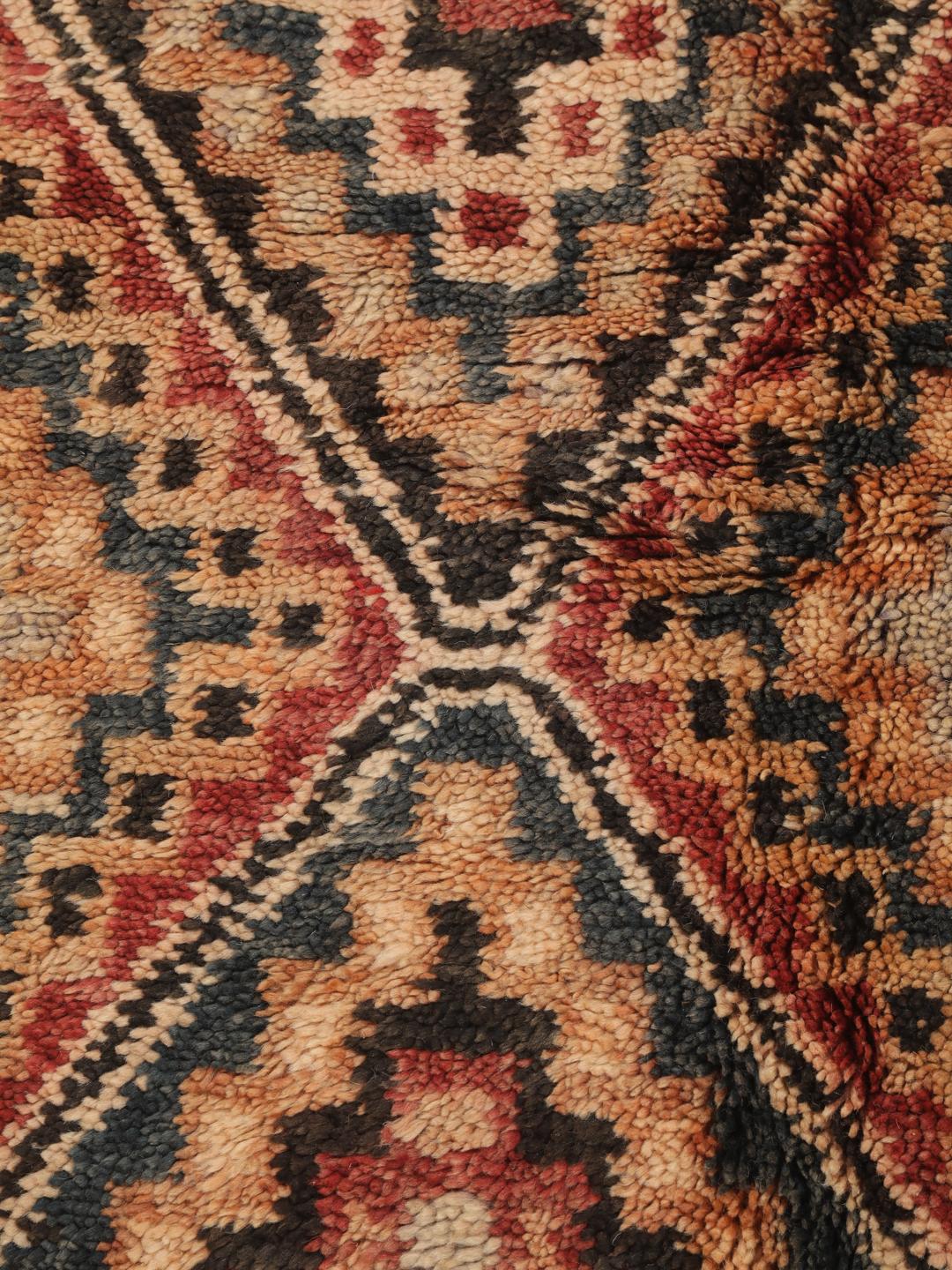
The geometric motifs found in these rugs are not merely decorative but often serve as cultural markers. Diamonds, zig-zags, and small cross-like symbols are frequently used to represent aspects of daily life, protection, or the natural landscape of the Atlas mountains. Each rug acts as a visual language, where the weaver translates her personal experience into the intricate structure of the piece.
Owning a vintage piece from this region is a way to connect with a legacy of independent craft that has remained largely unchanged for generations. These rugs are highly valued by collectors for their authenticity and the way they bridge the gap between traditional nomadic utility and contemporary interior design, standing as symbols of enduring human skill.