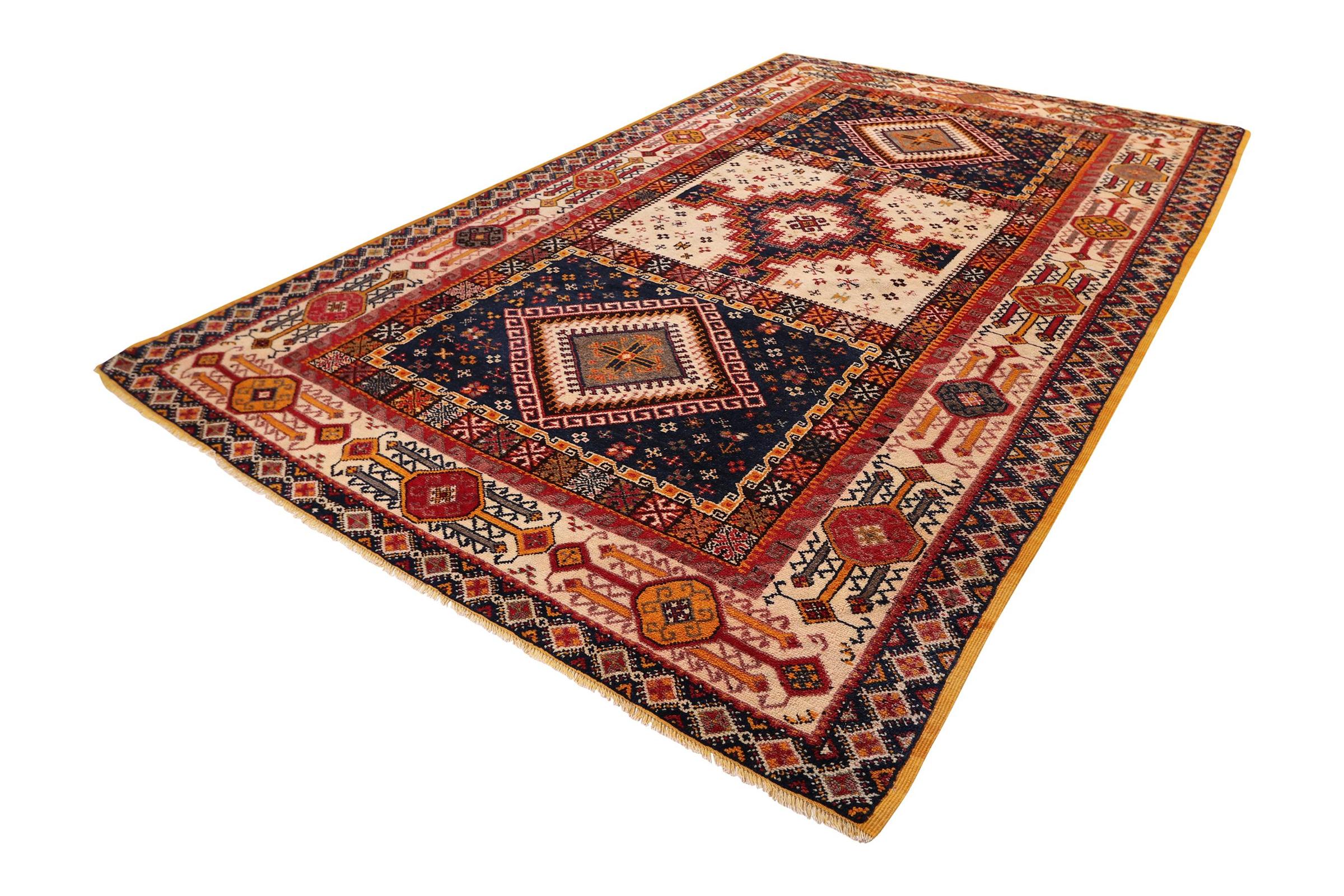
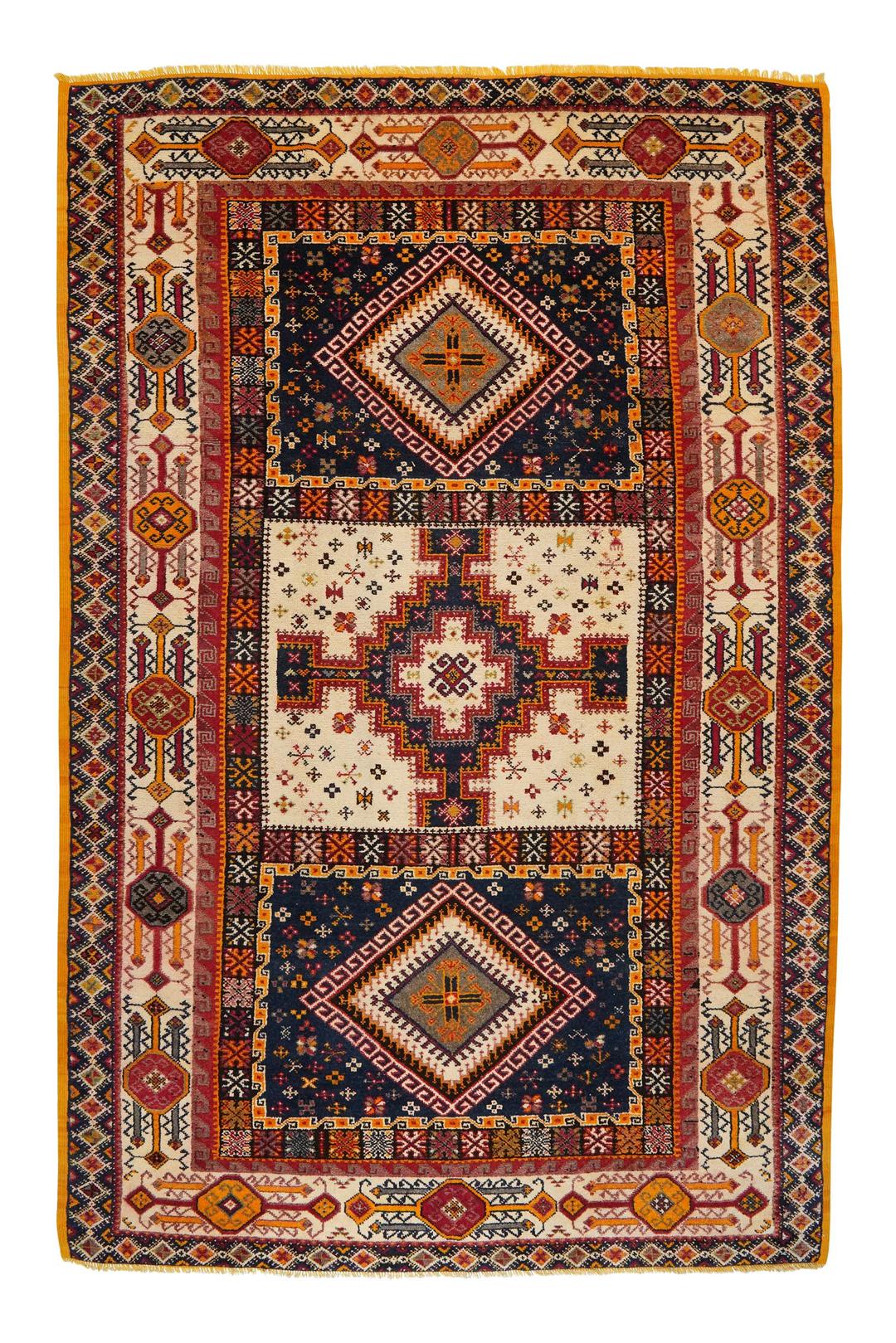
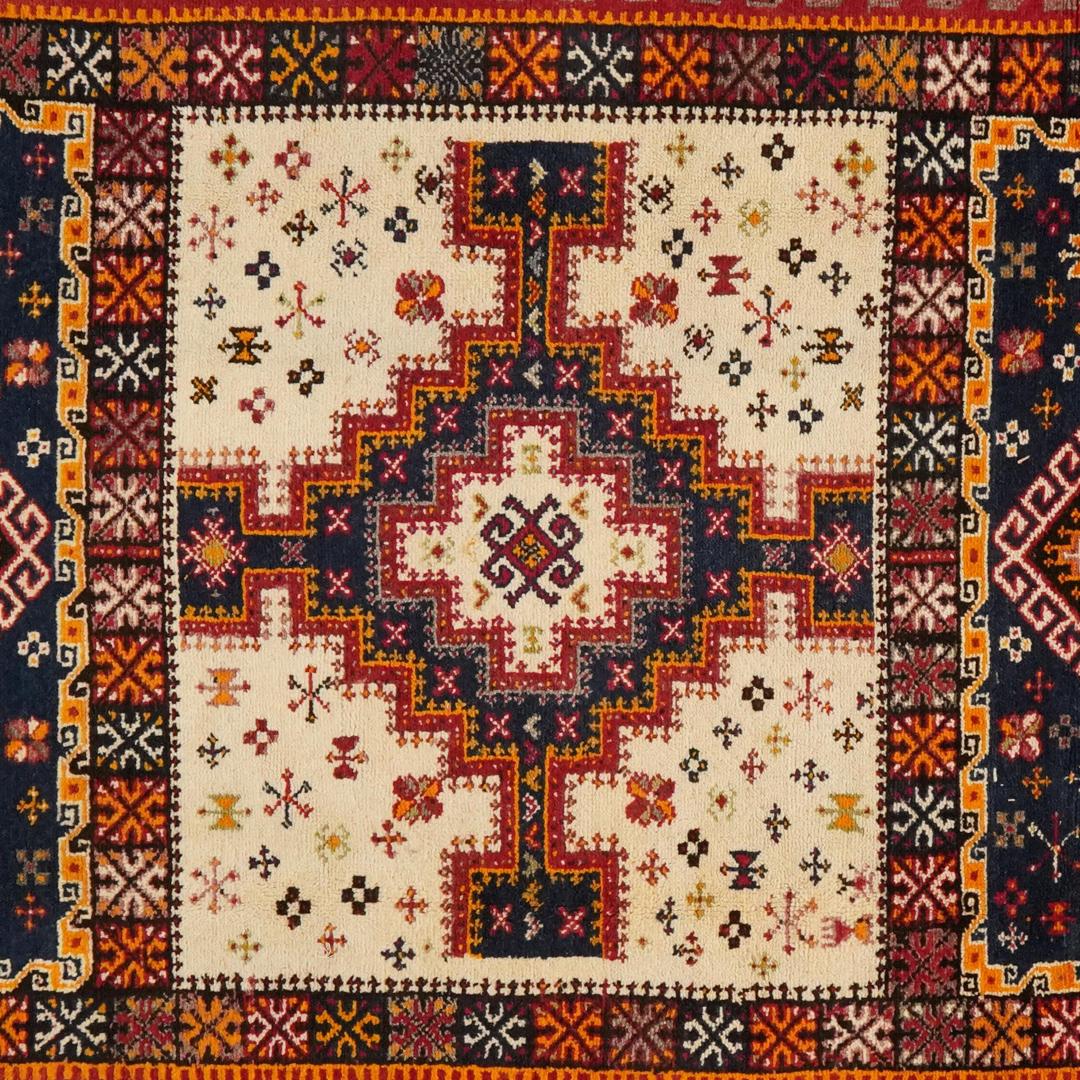
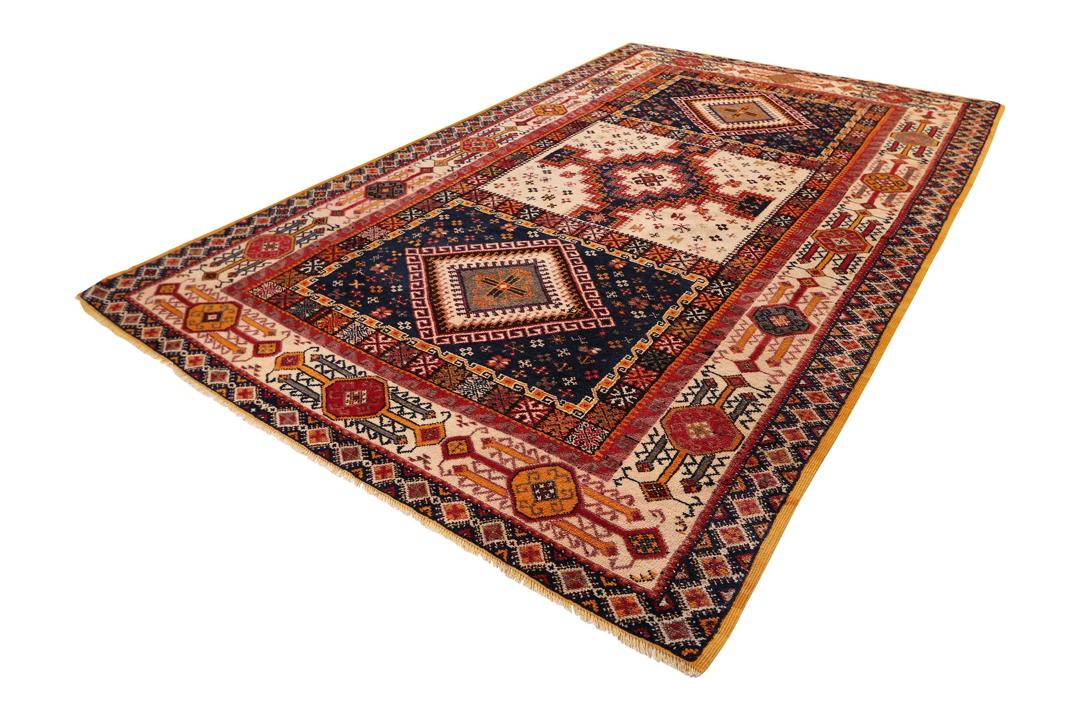
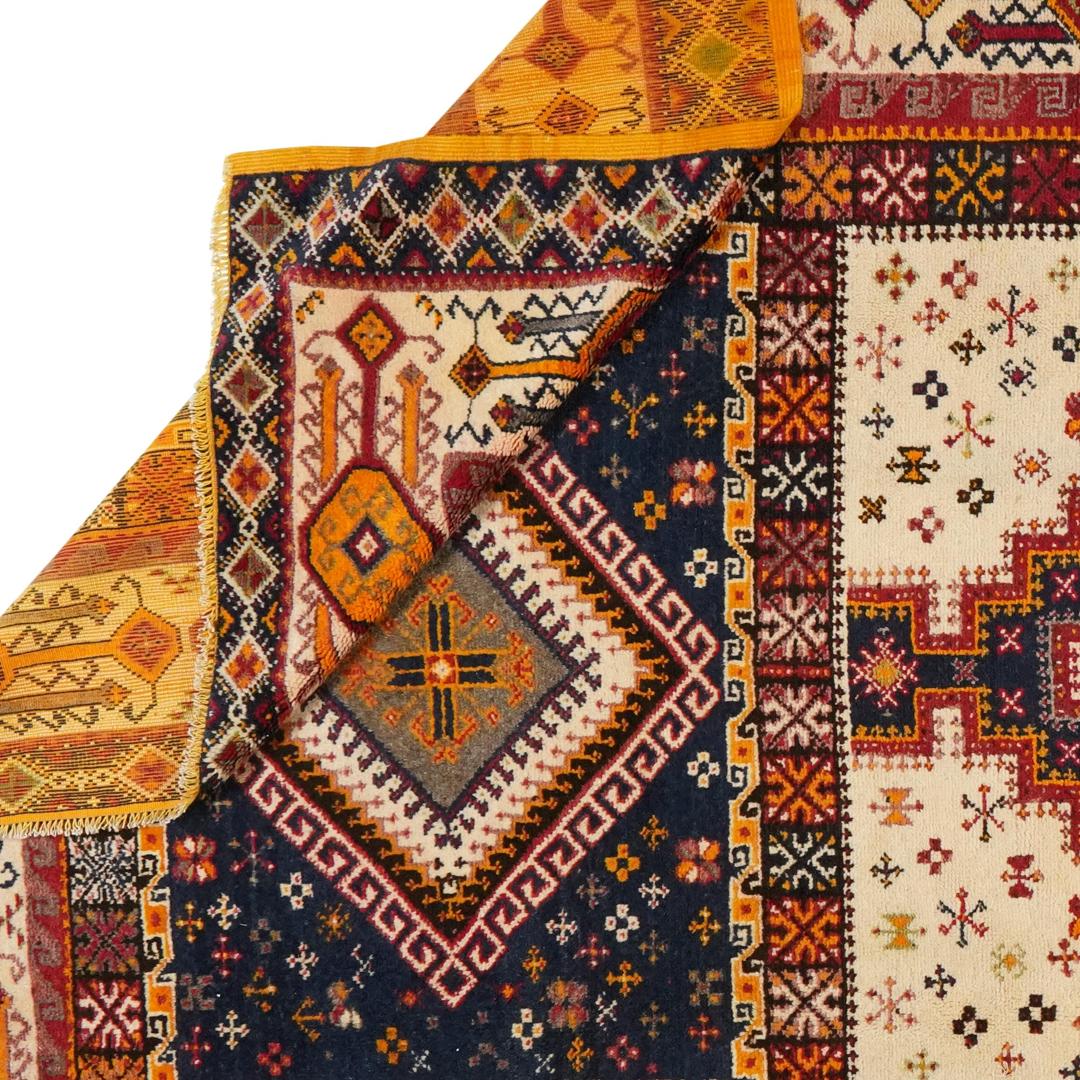
Berber rugs originate from the indigenous tribes of the Atlas Mountains in Morocco. These rugs were historically woven by women for domestic use, serving as warm bedding, blankets, and floor coverings to protect against the harsh mountain climate. Each piece reflects the environment and the life of the weaver, often incorporating symbols and motifs that tell stories of family, nature, and spirituality.
The term Beni Ourain refers to a specific group of Berber tribes known for their high-quality, long-pile Wool creations. While traditionally known for minimalist, diamond-grid patterns, the Mid Atlas region is celebrated for a more diverse array of designs, often incorporating more complex geometric shapes and a broader range of natural, earth-toned dyes.
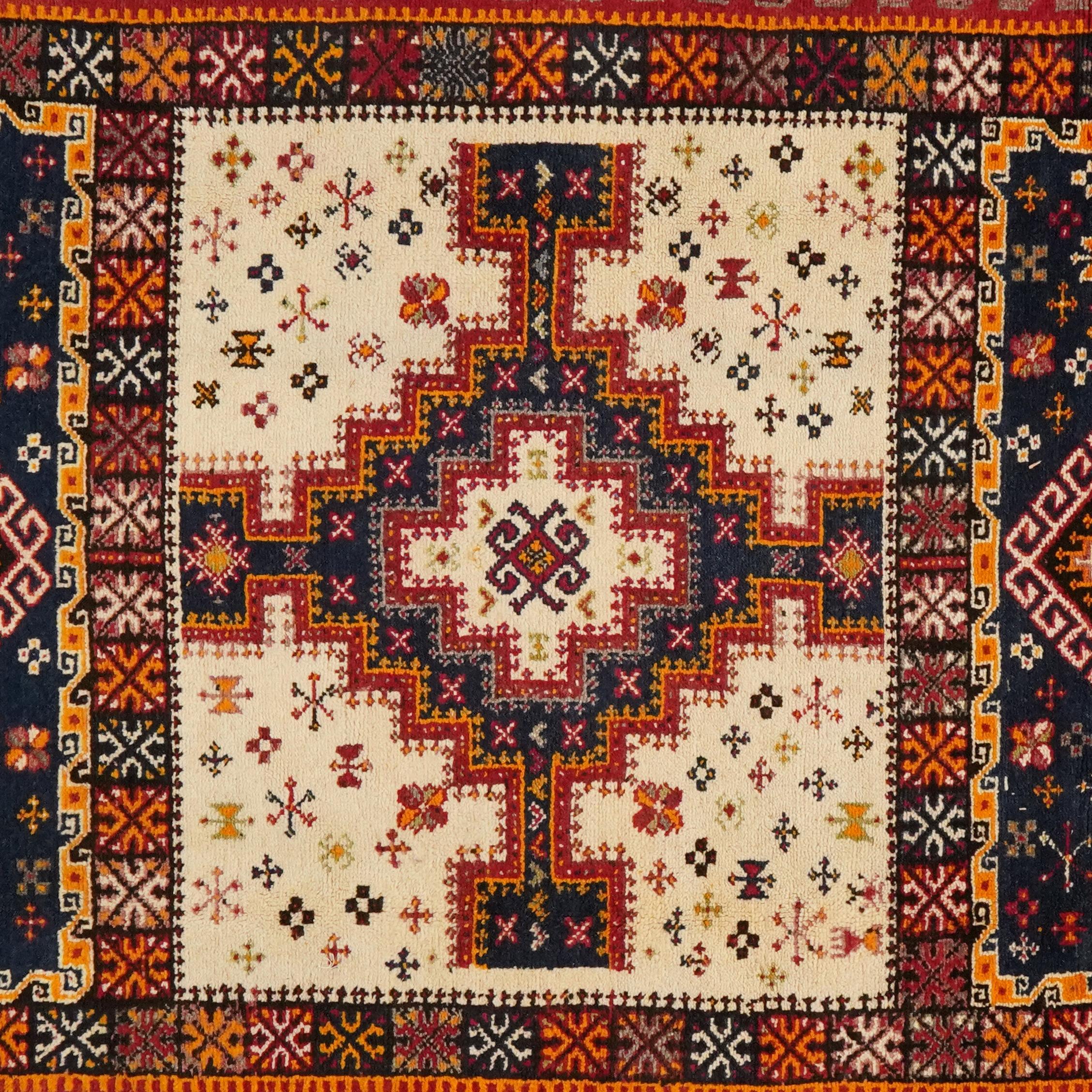
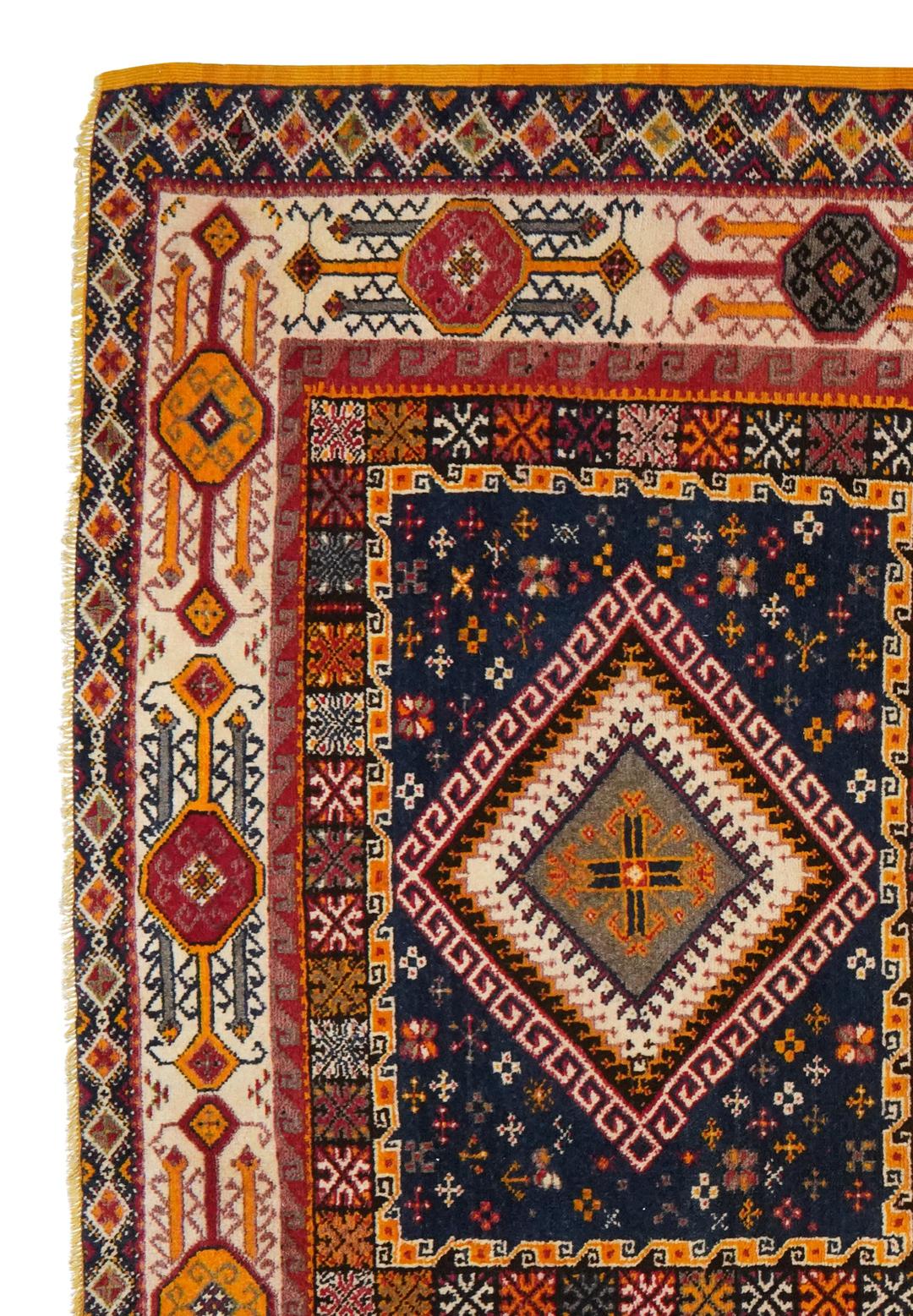
Design elements in these rugs are deeply symbolic. You will often find medallions, zig-zags, and latch-hook motifs that have been passed down through generations. The geometric language is not merely decorative but functions as a visual record of tribal identity and cultural history, making every rug a narrative piece as much as a functional one.
Owning a hand-knotted Berber rug is an investment in human history and traditional skill. These rugs are highly prized by collectors for their authenticity and the way they bridge the gap between ancient nomadic traditions and modern interior design. By choosing this piece, you are supporting the continuation of a craft that has survived for centuries.