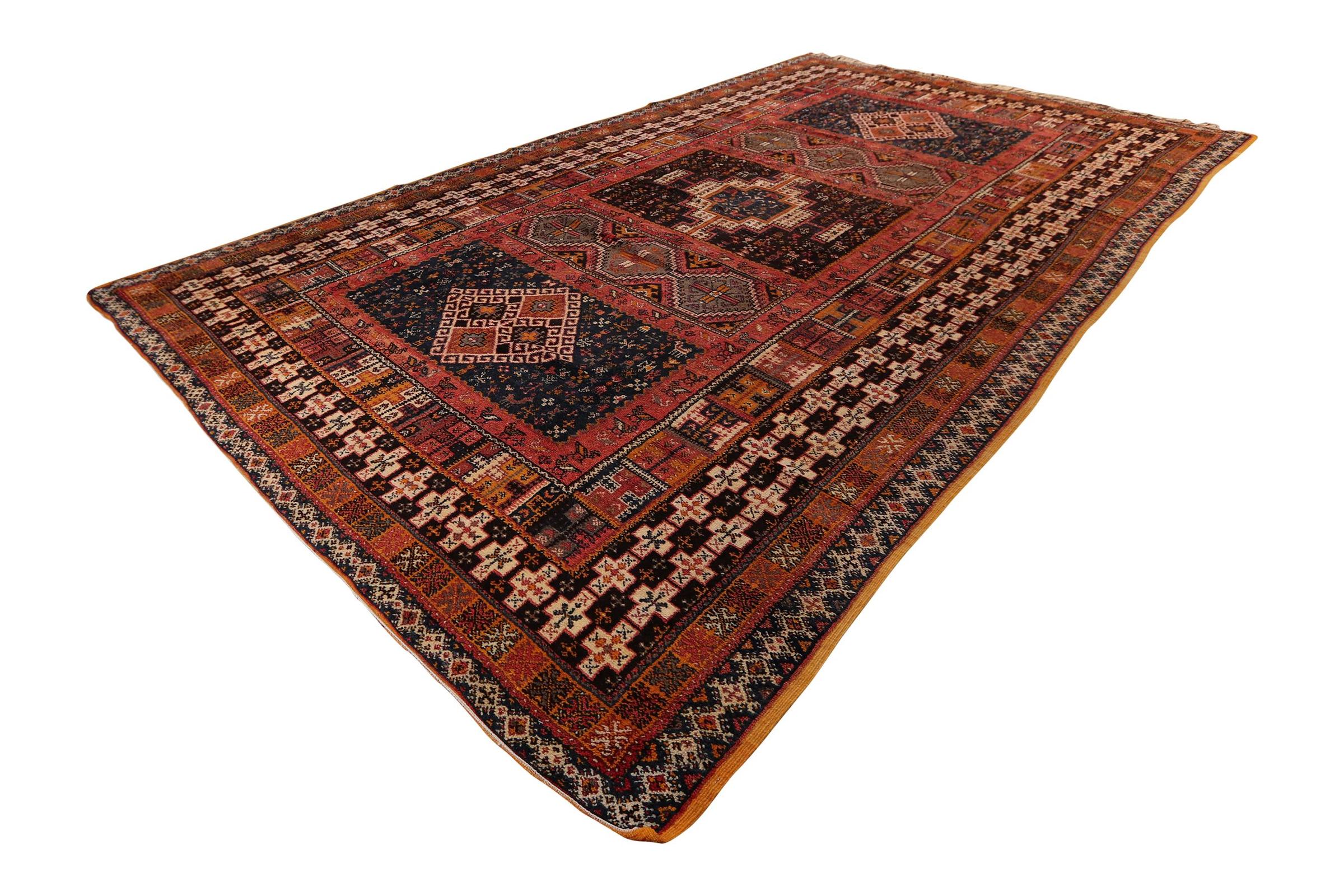
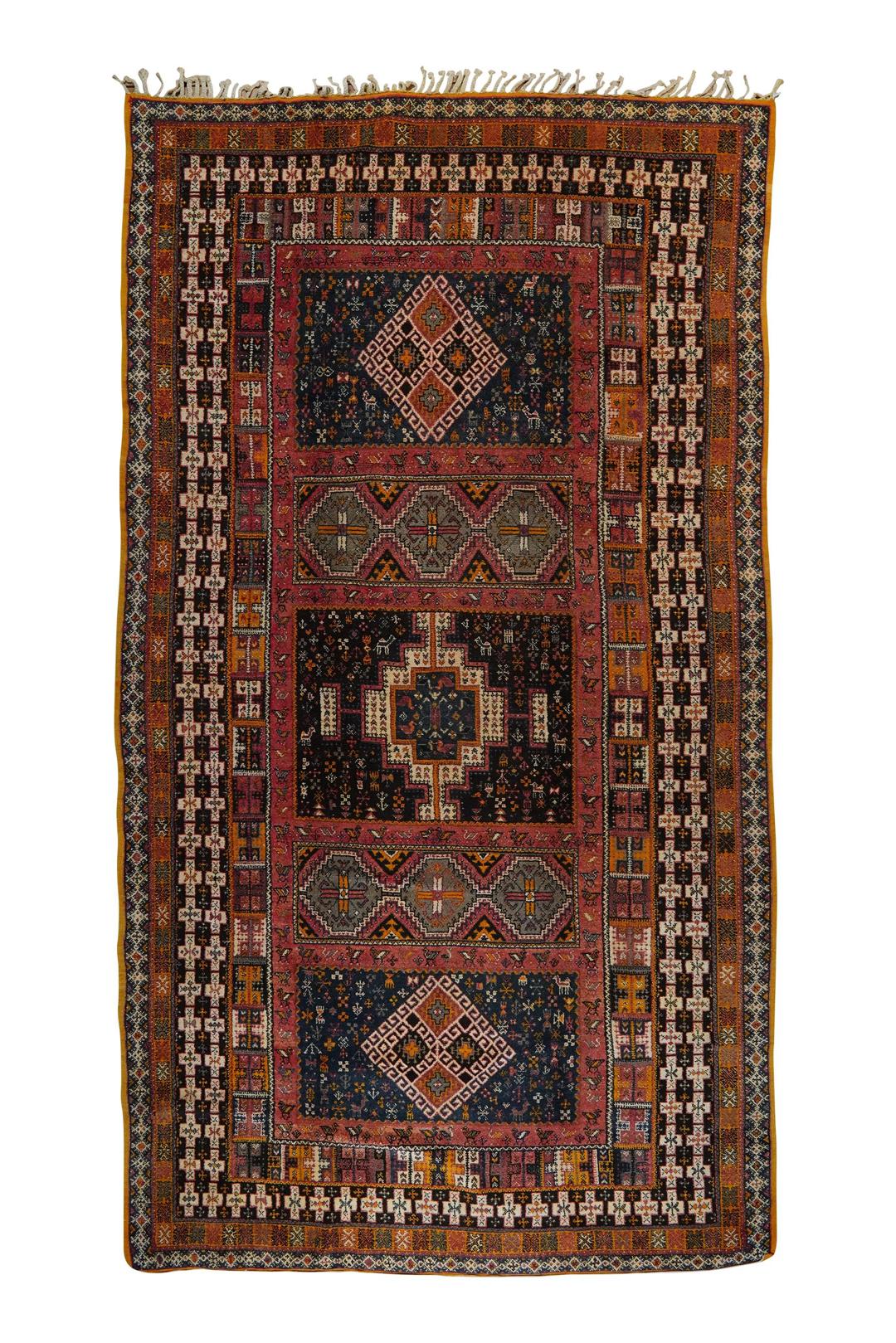
Berber rugs originate from the diverse tribes inhabiting the Atlas Mountains of Morocco. These textiles were historically woven not as commercial products, but as essential household items for warmth, bedding, and floor coverings in the nomadic and semi-nomadic lifestyles of the Berber people. Each rug is deeply connected to the environment and the specific tribal lineage of the weaver.
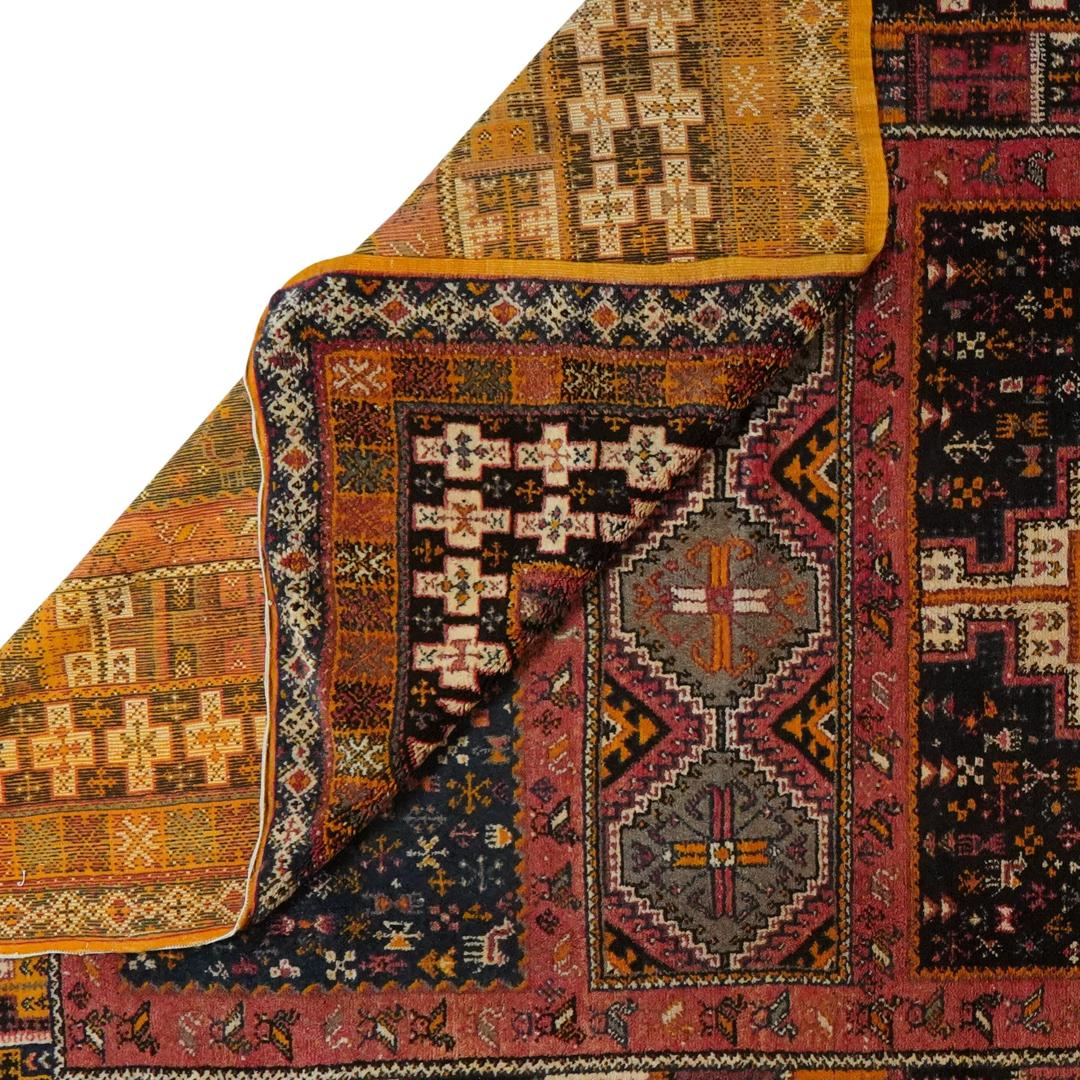
The terminology used to describe these rugs often centres on the specific tribal techniques and the types of wool sourced from local mountain sheep. In the Middle Atlas region, the focus is often on dense, high-pile constructions designed to insulate homes against the cold. The quality of these rugs is defined by the resilience of the wool and the traditional, time-honoured methods of carding and spinning that give the pile its characteristic lustre and durability.
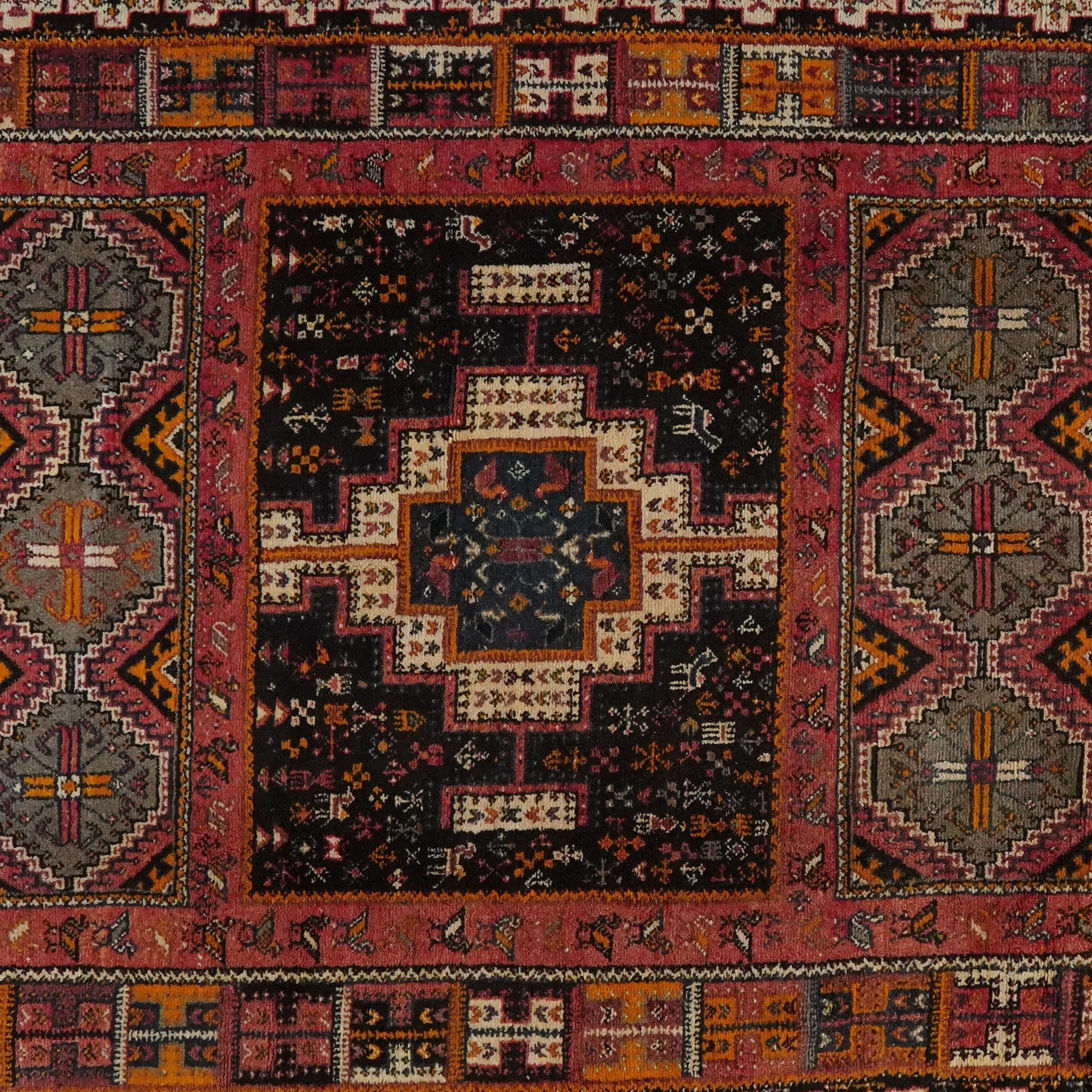
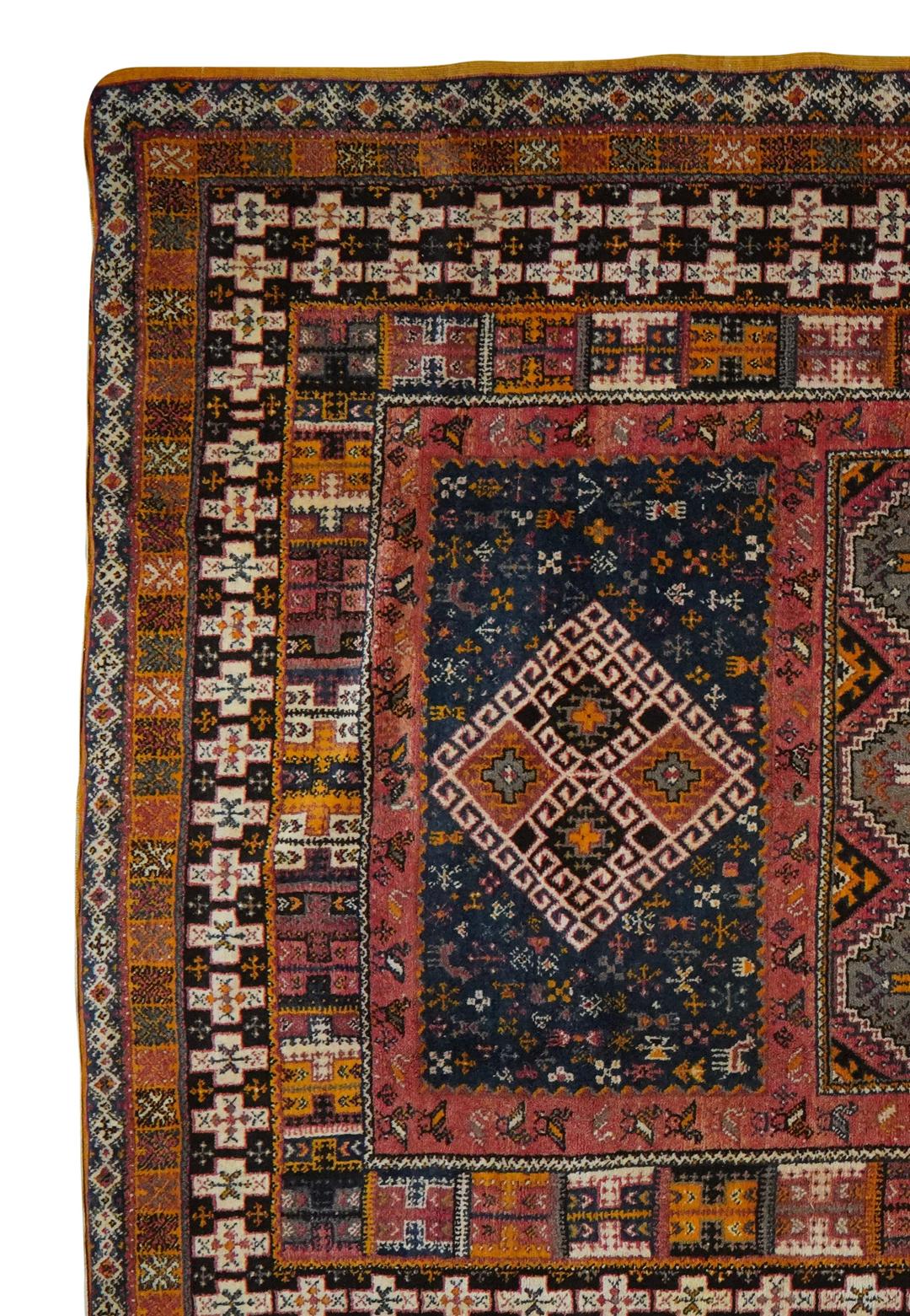
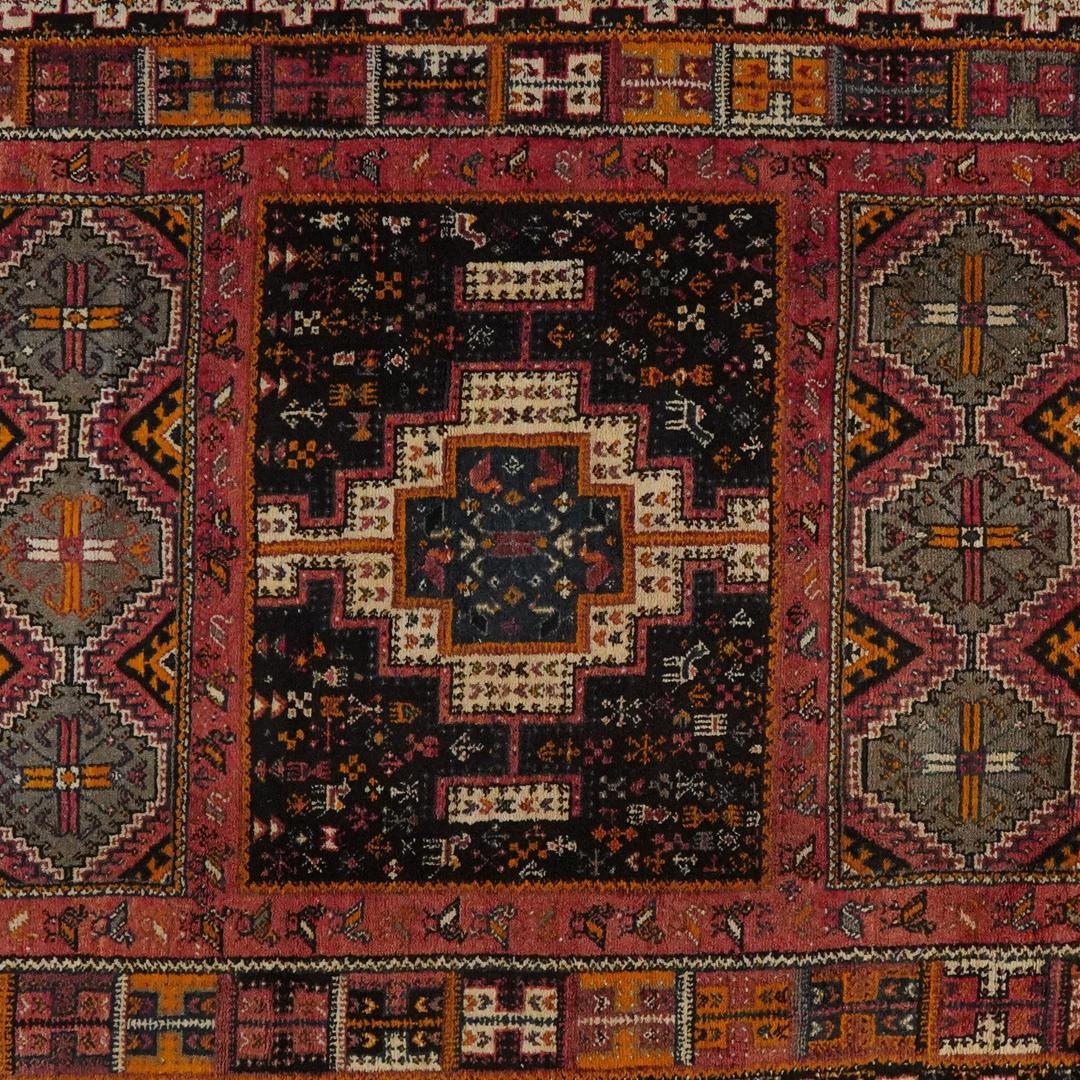
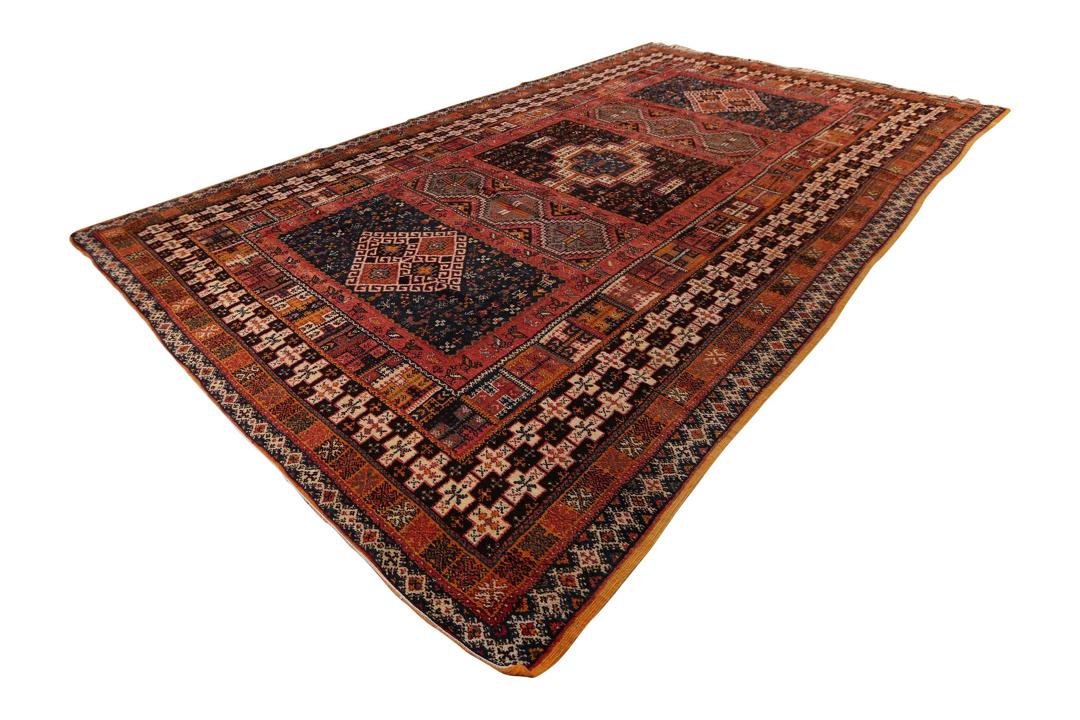
Signature design elements in these rugs often include a variety of geometric motifs, such as diamonds, zig-zags, and stylized representations of nature, fertility, or protection. In this specific piece, the use of panels and distinct ornamental borders is a hallmark of more complex, sophisticated weaving traditions. The bold use of colour, derived from natural dyes, creates a visual language that is both ancient and strikingly modern in its aesthetic appeal.
Today, these rugs are highly sought after by collectors who value the intersection of cultural history and functional design. Owning a vintage Berber rug is an investment in a living tradition, representing the skill of anonymous female weavers who passed their artistic vocabulary through generations. These pieces carry a weight of heritage that transforms them from mere floor coverings into cherished family artefacts.