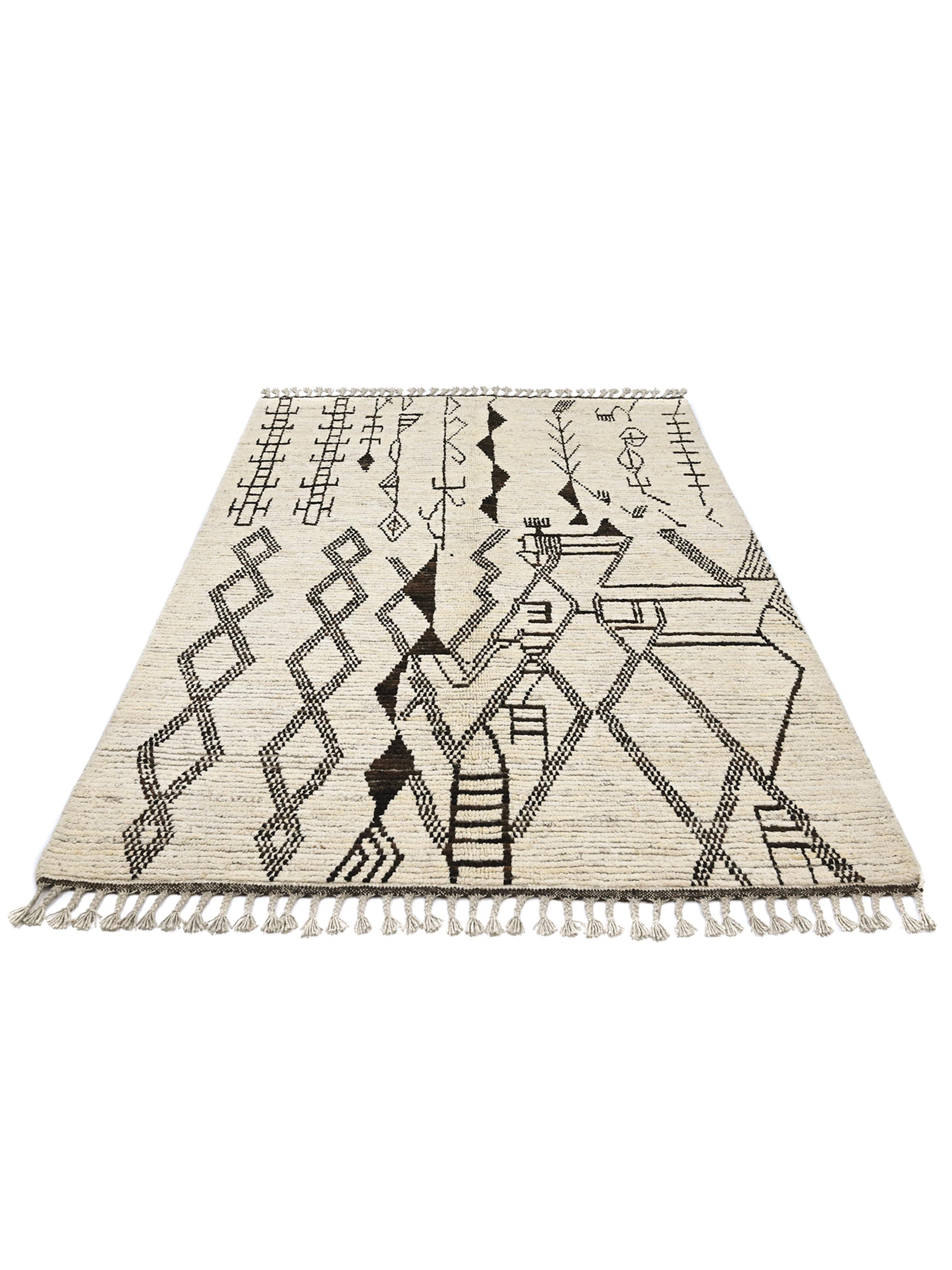
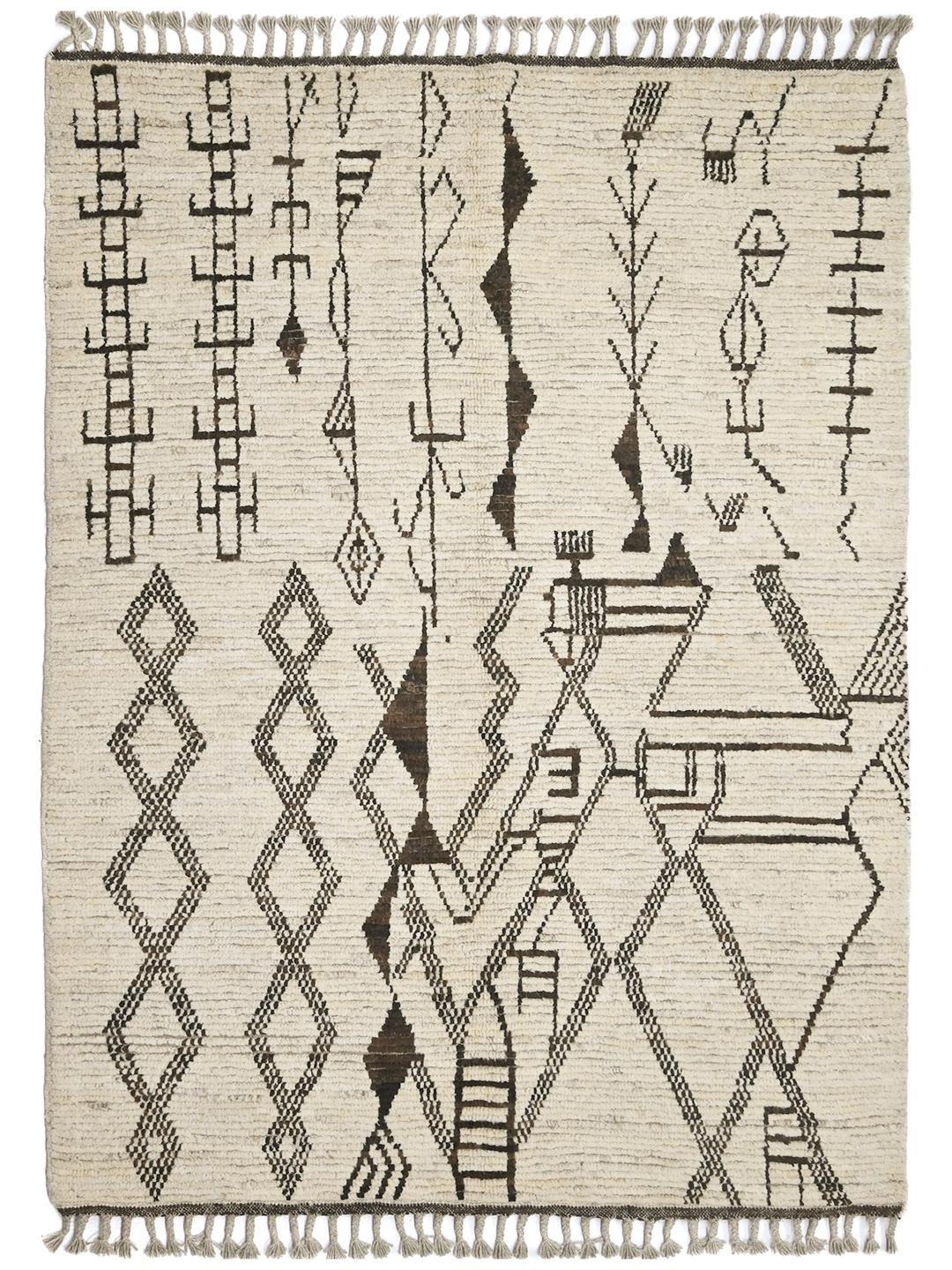
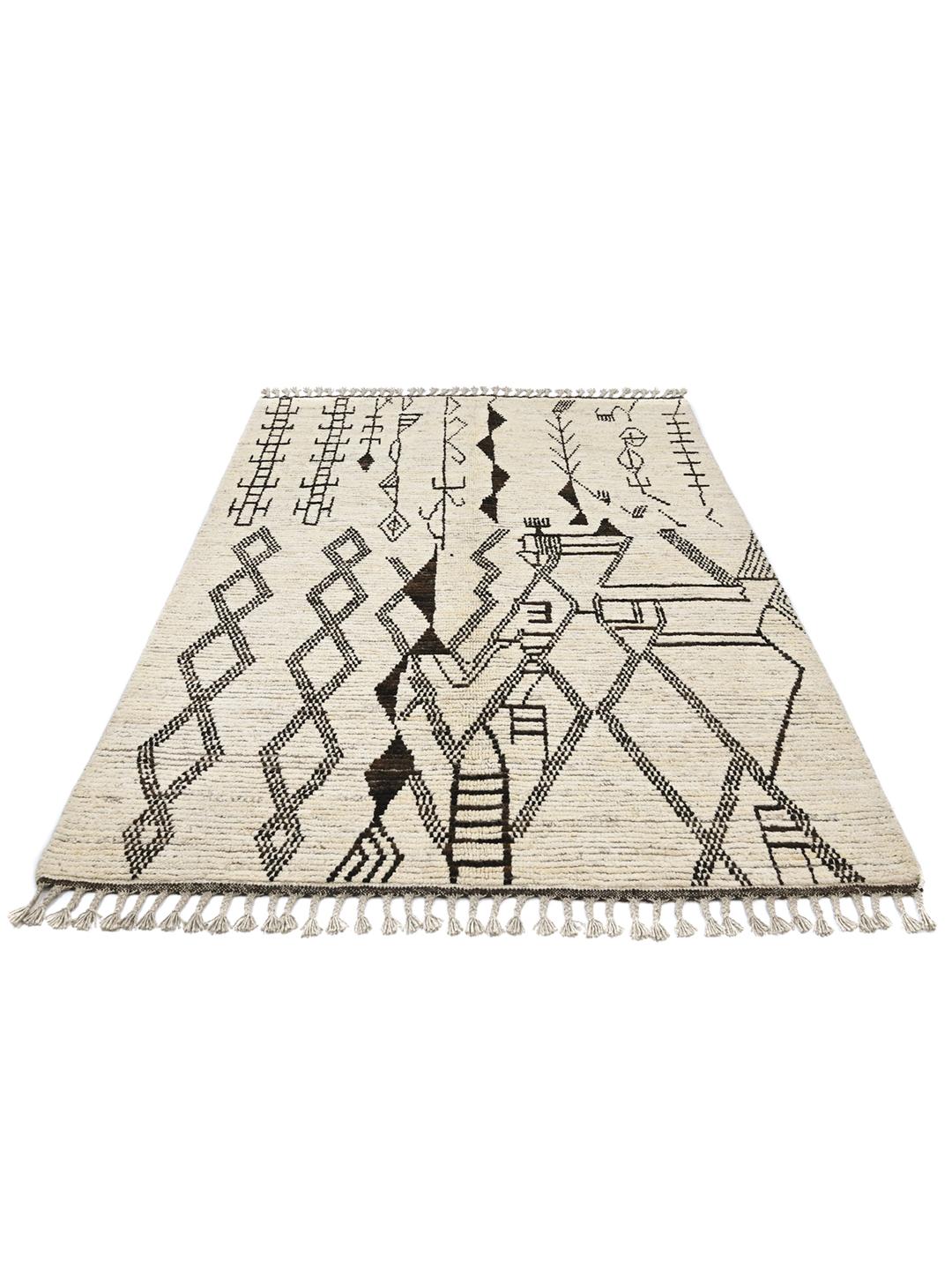
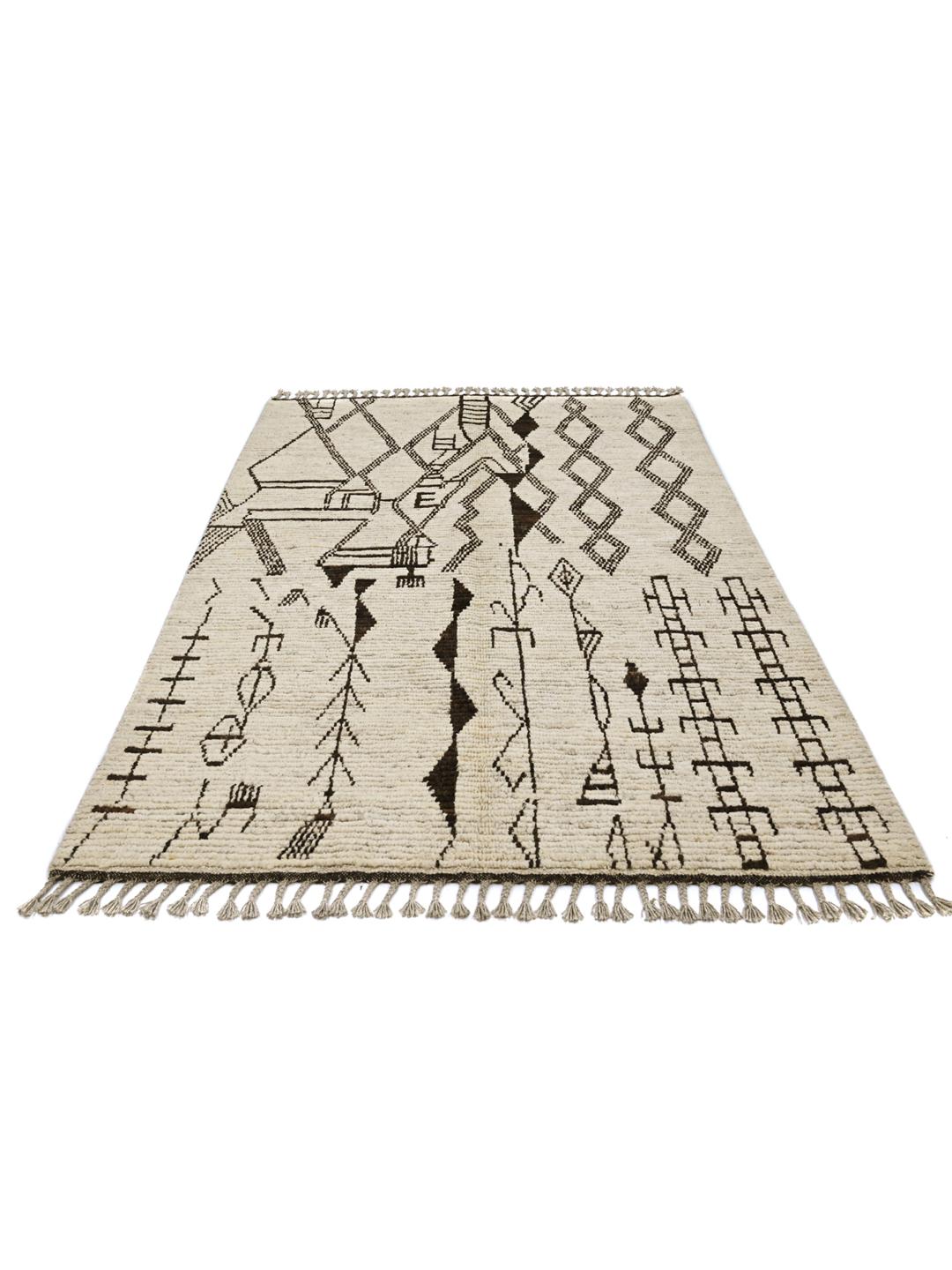
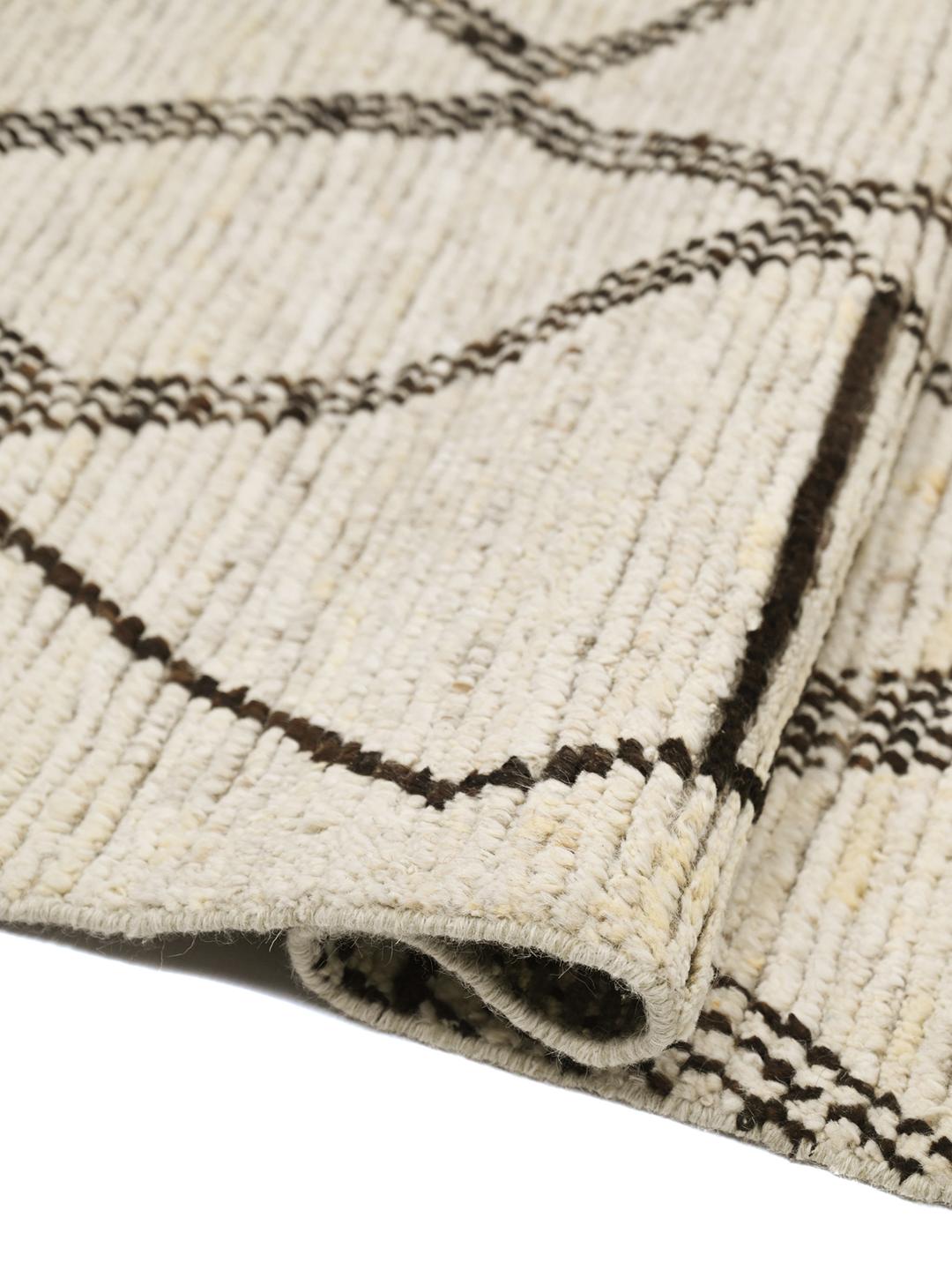
Berber style rugs trace their origin to the indigenous tribes of North Africa, though their distinctive design language has inspired weavers across traditional rug-making regions, including Afghanistan. Historically crafted as bedding or floor coverings for nomadic life, these textiles focused on practical warmth paired with deeply personal geometric expressions.
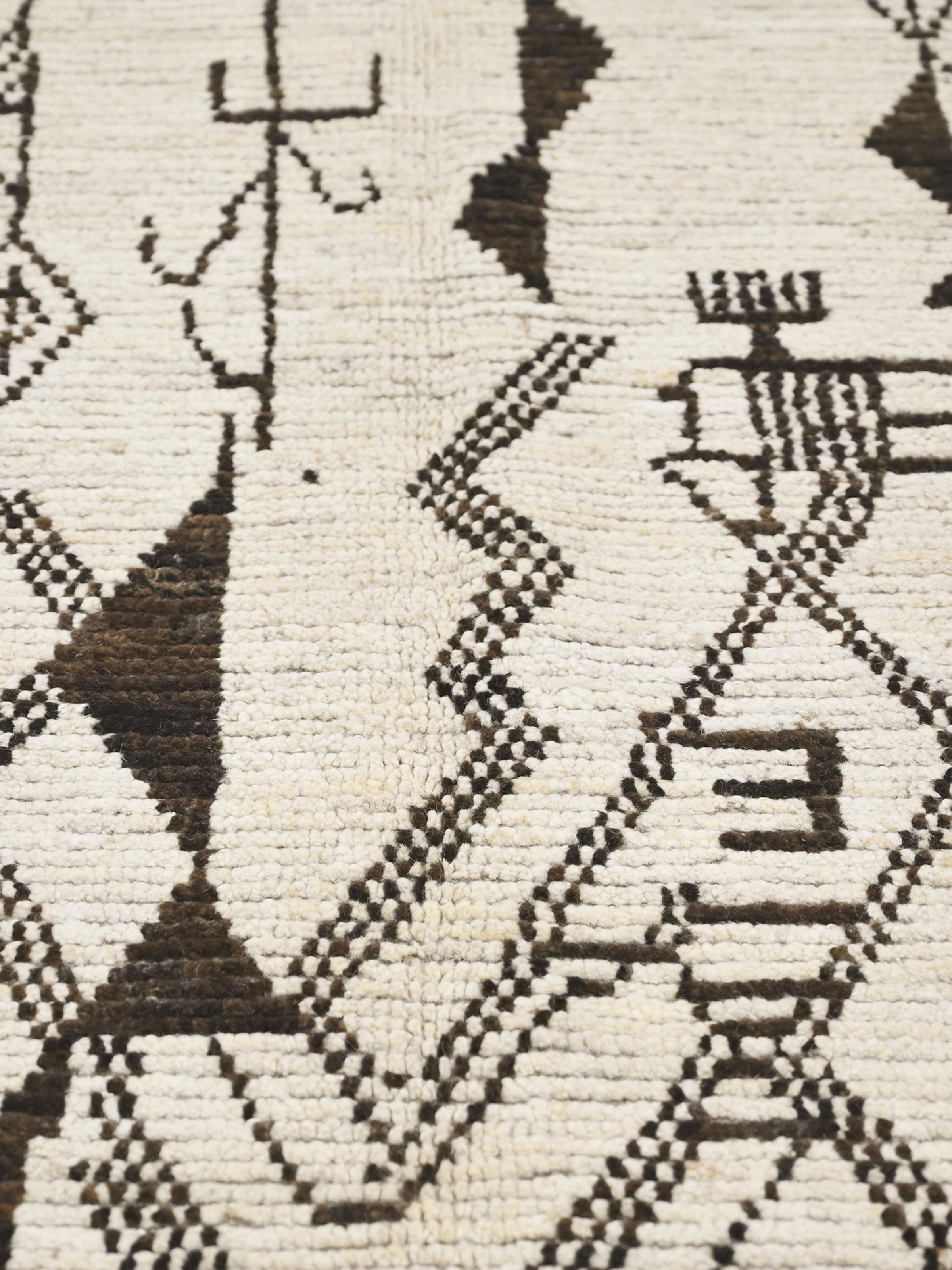
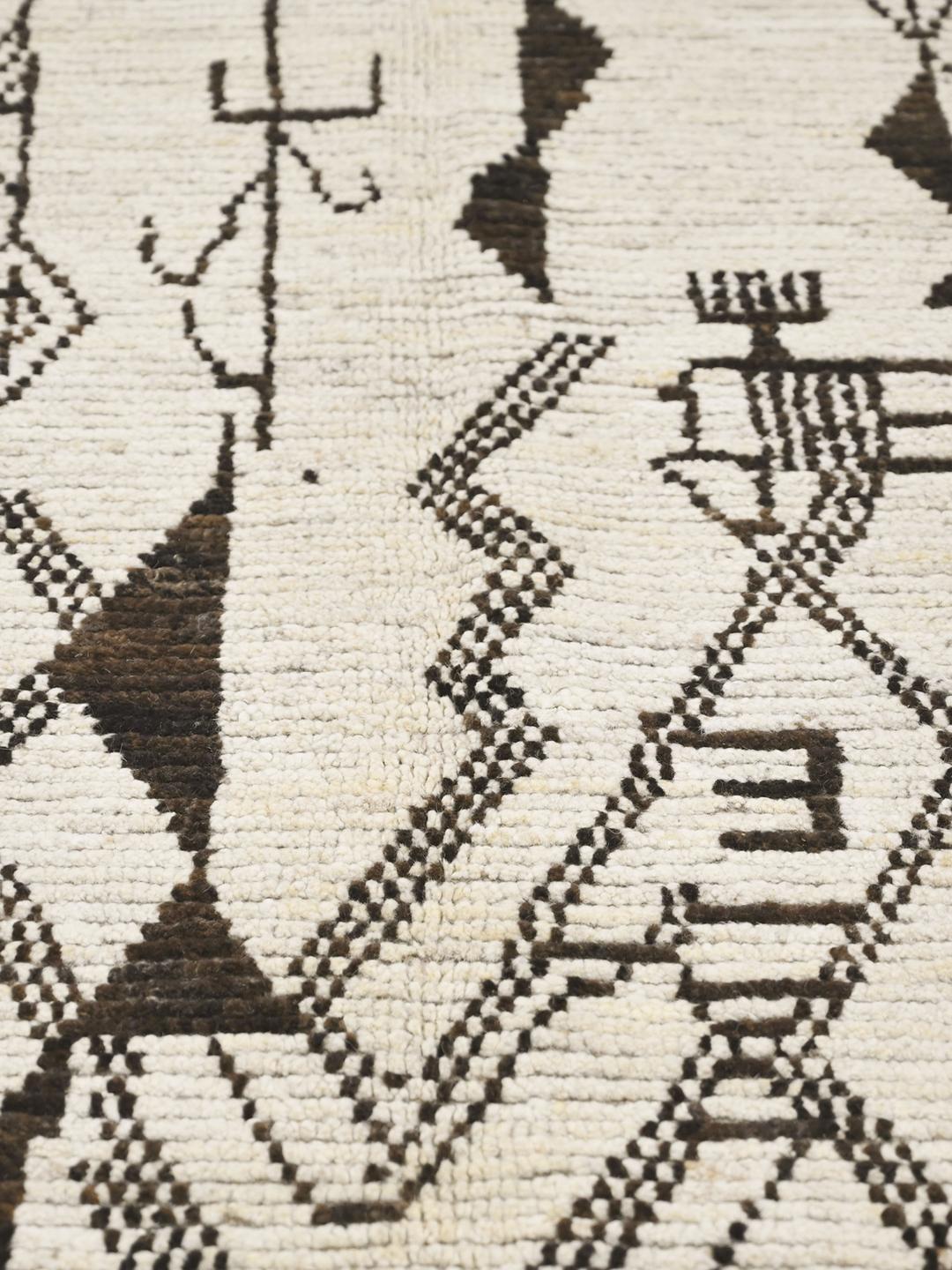
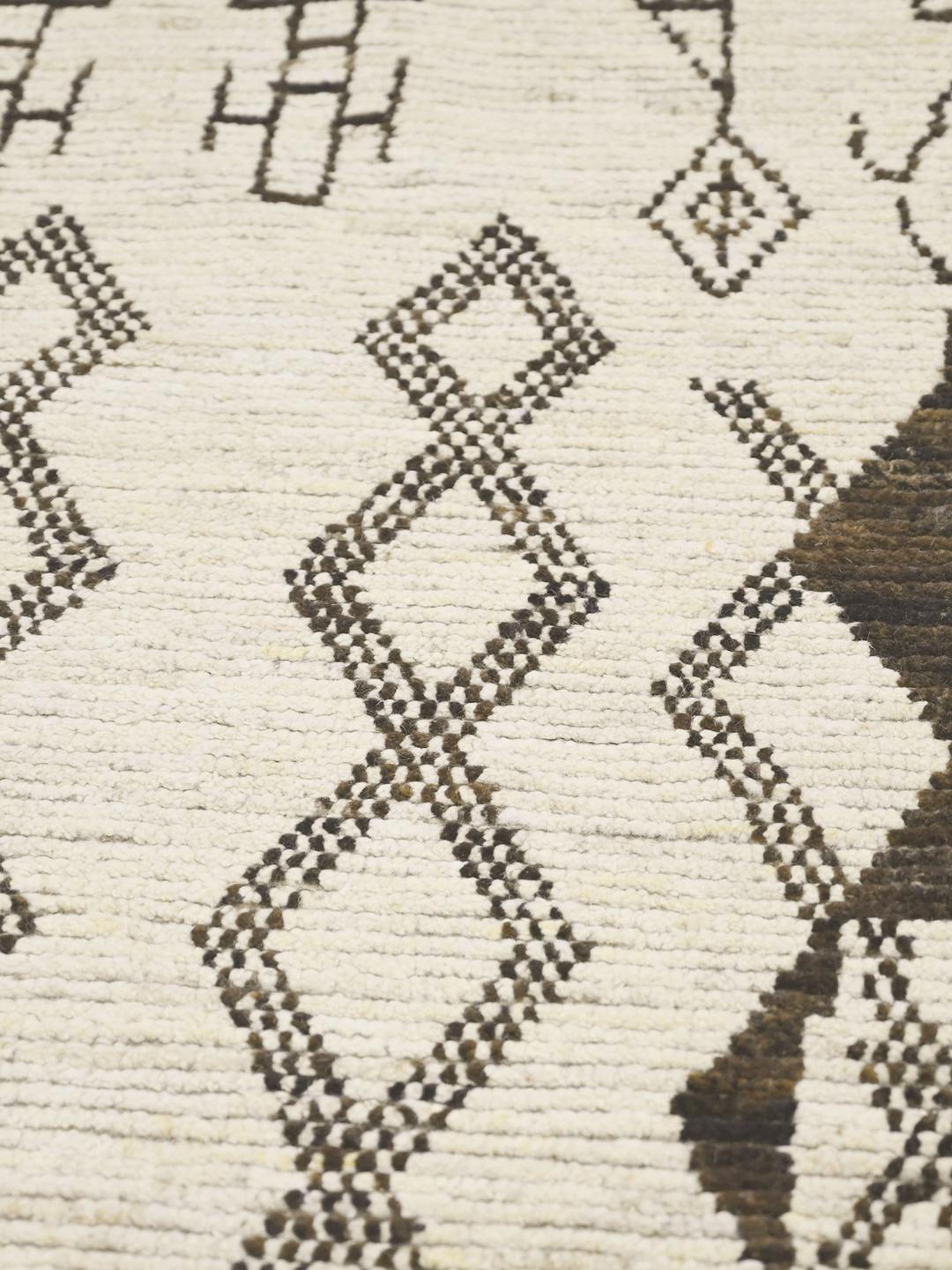
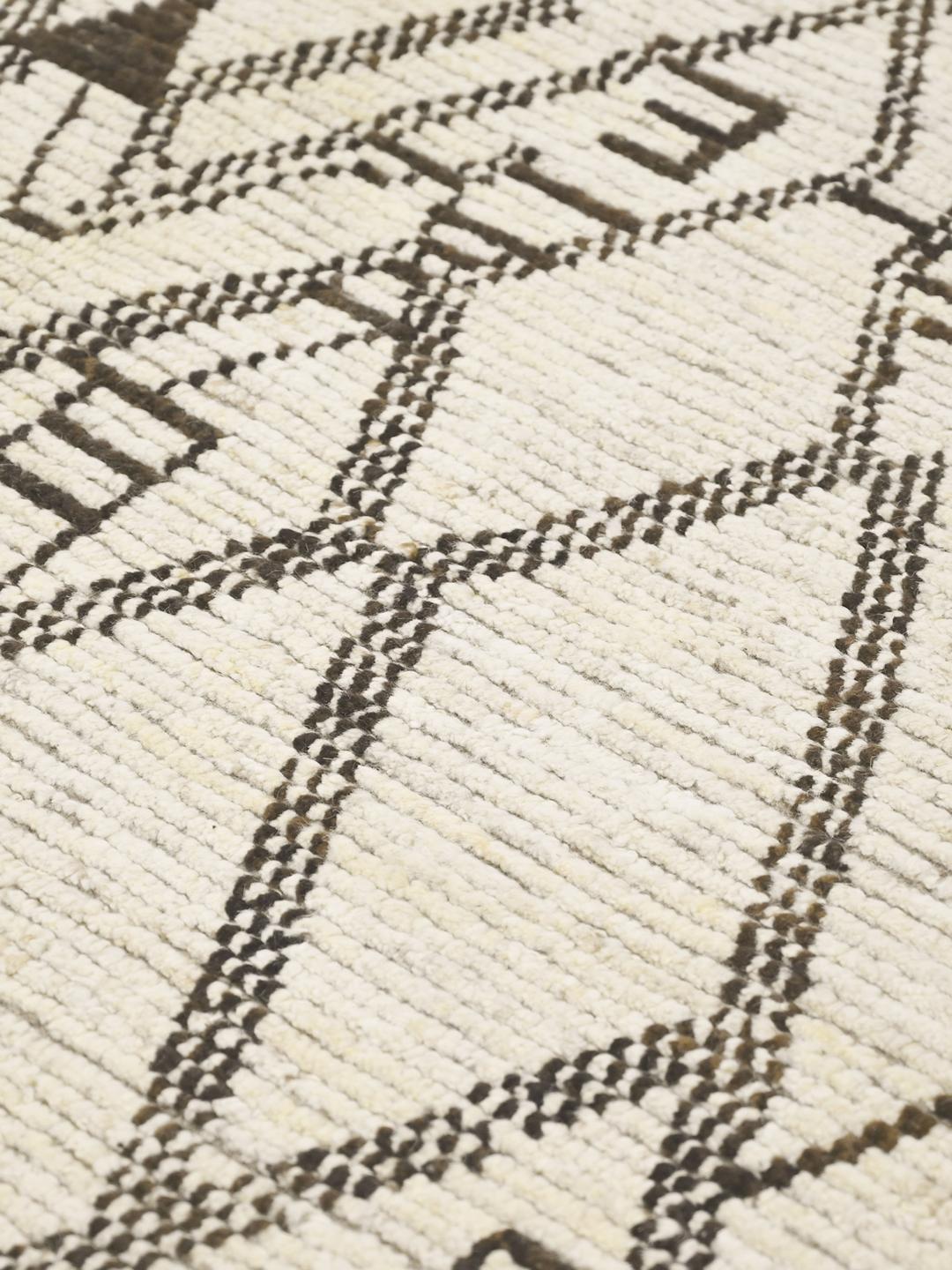
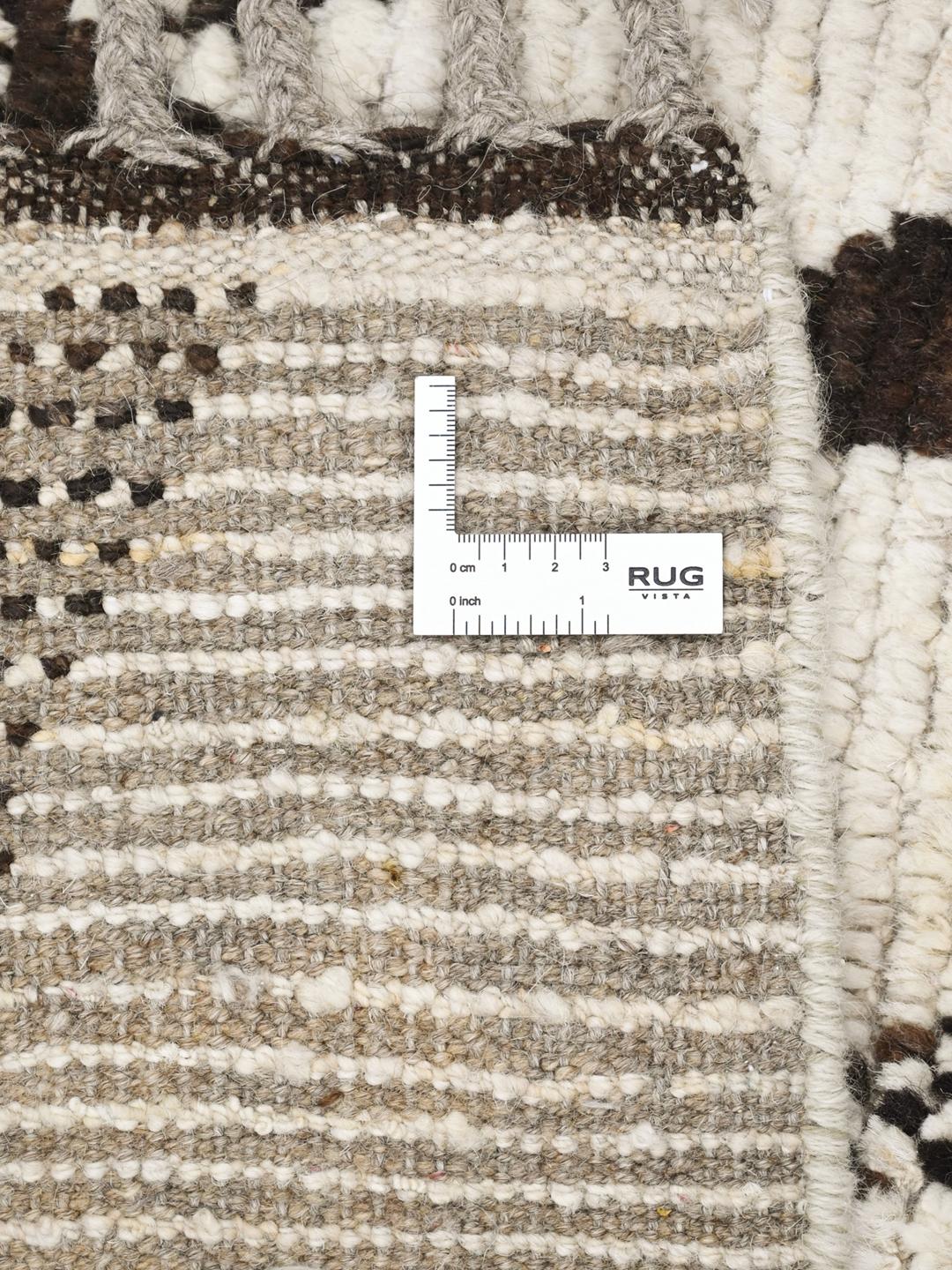
The phrase hand knotted refers to the meticulous practice of securing individual yarn loops around structural threads. In this rug, using a wool pile allows for natural warmth, breathability, and resilience, giving the classic tribal motifs a tactile depth that machine weaving cannot match.
Signature visual elements of this tradition include neutral, un-dyed fields offset by simple dark linework, diamond grids, and abstract tribal symbols. Rather than rigid symmetry, the patterns often flow with minor variations, capturing the individual hand of the weaver and telling a subtle story through shape.
Rugs from this tradition are widely appreciated by collectors and design enthusiasts alike for their effortless adaptability. Their minimalist color palette and organic geometry bridge ancient tribal art and modern interior design, making them valued pieces of functional art.