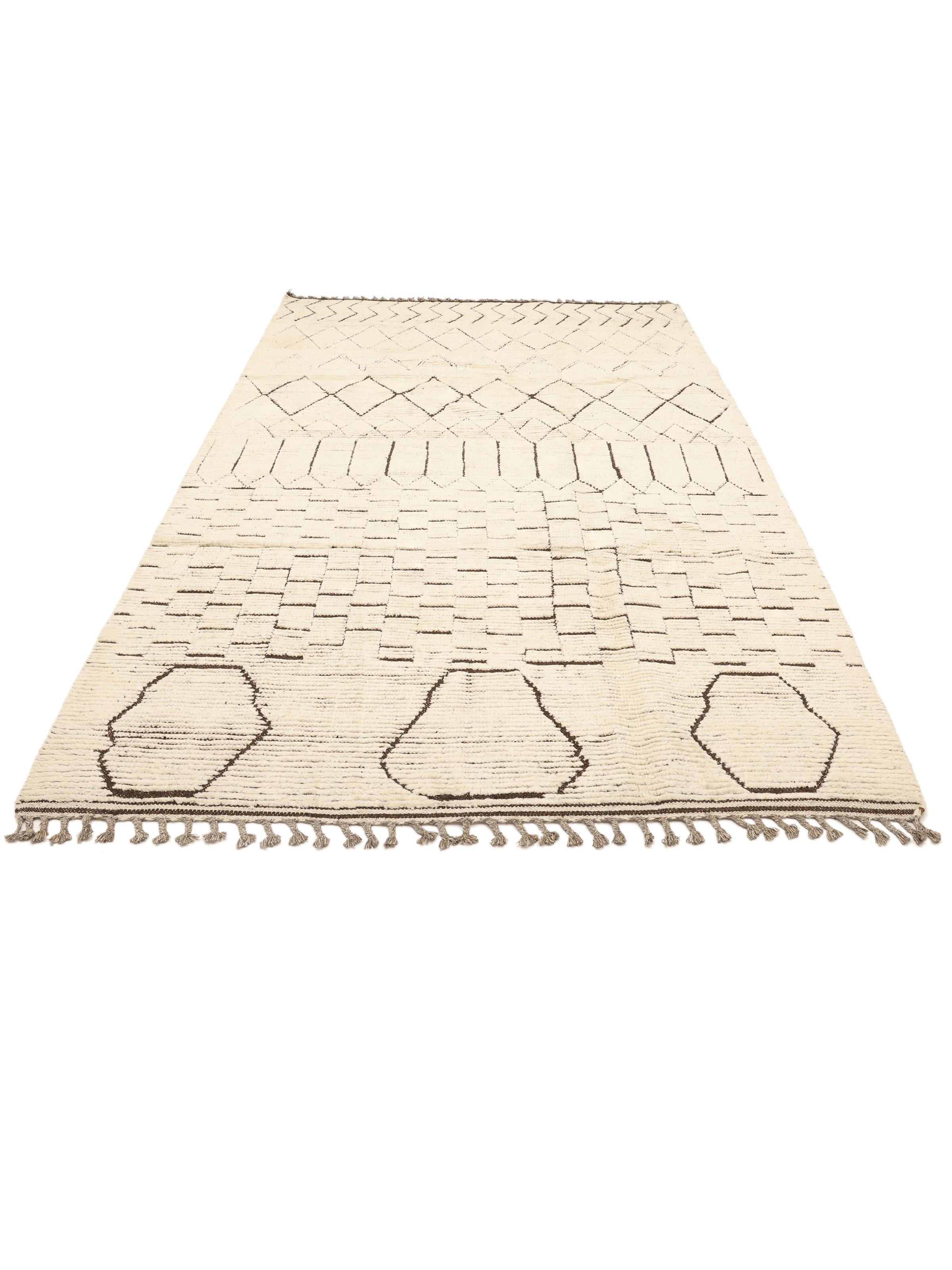
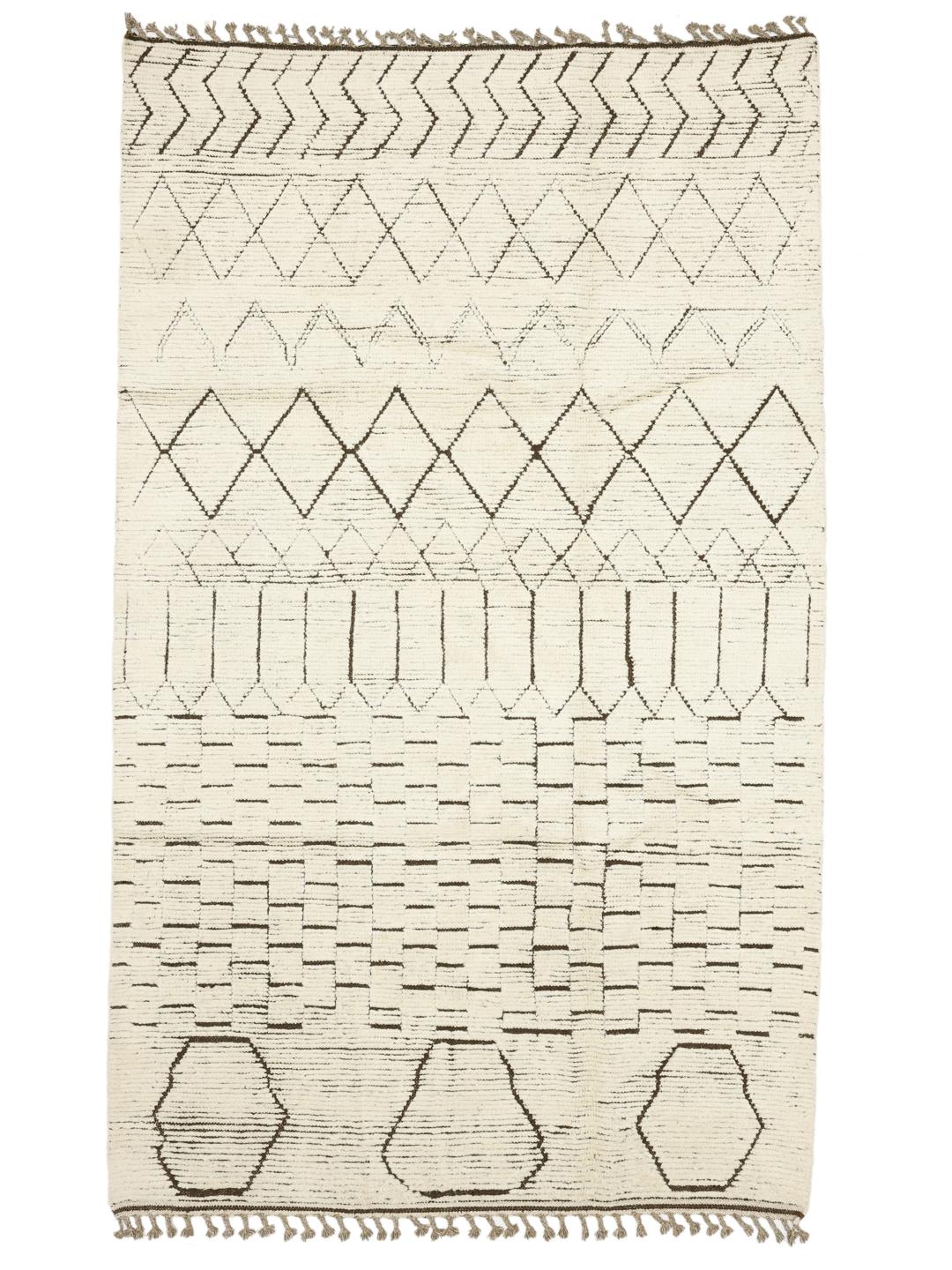
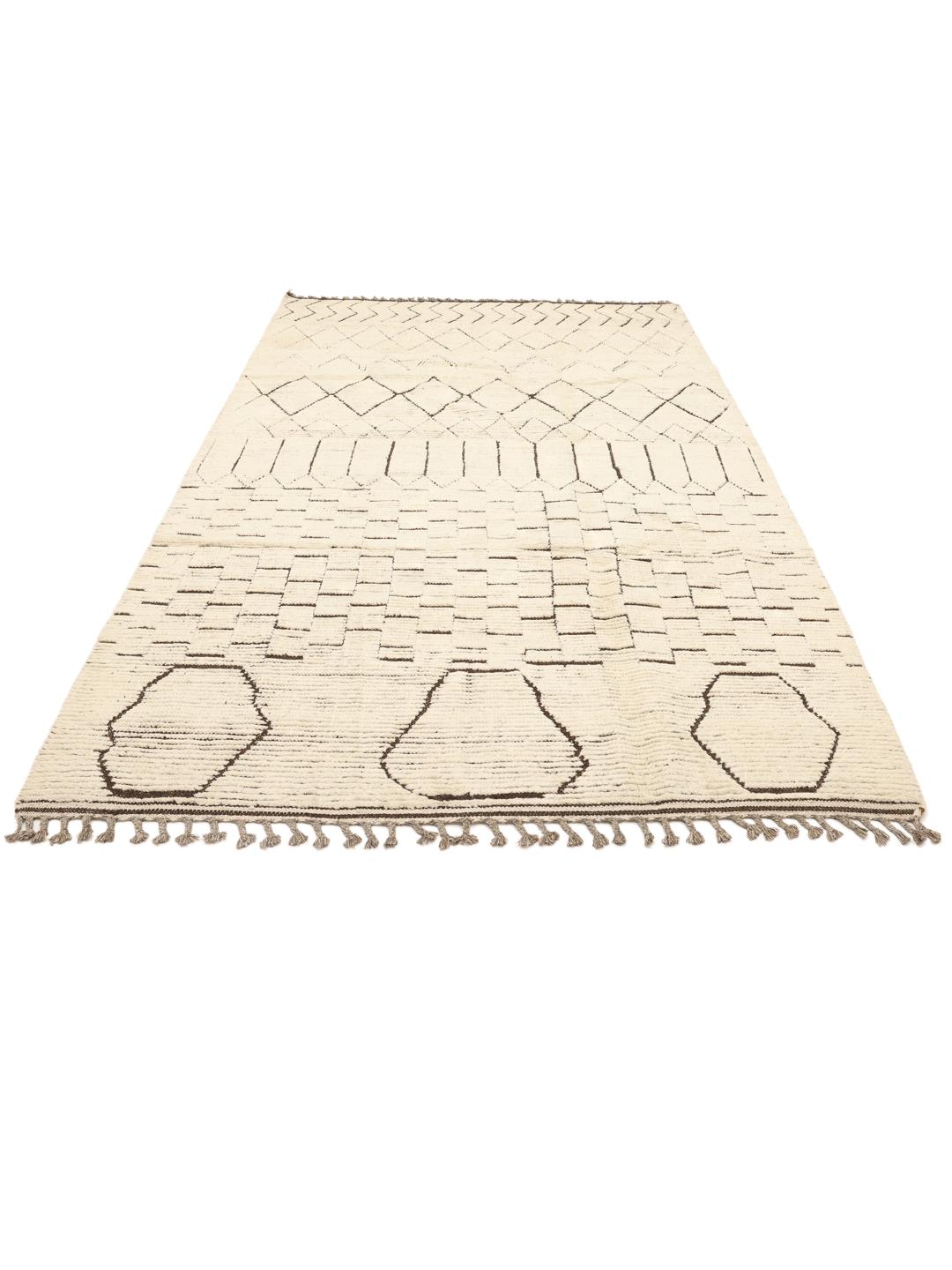
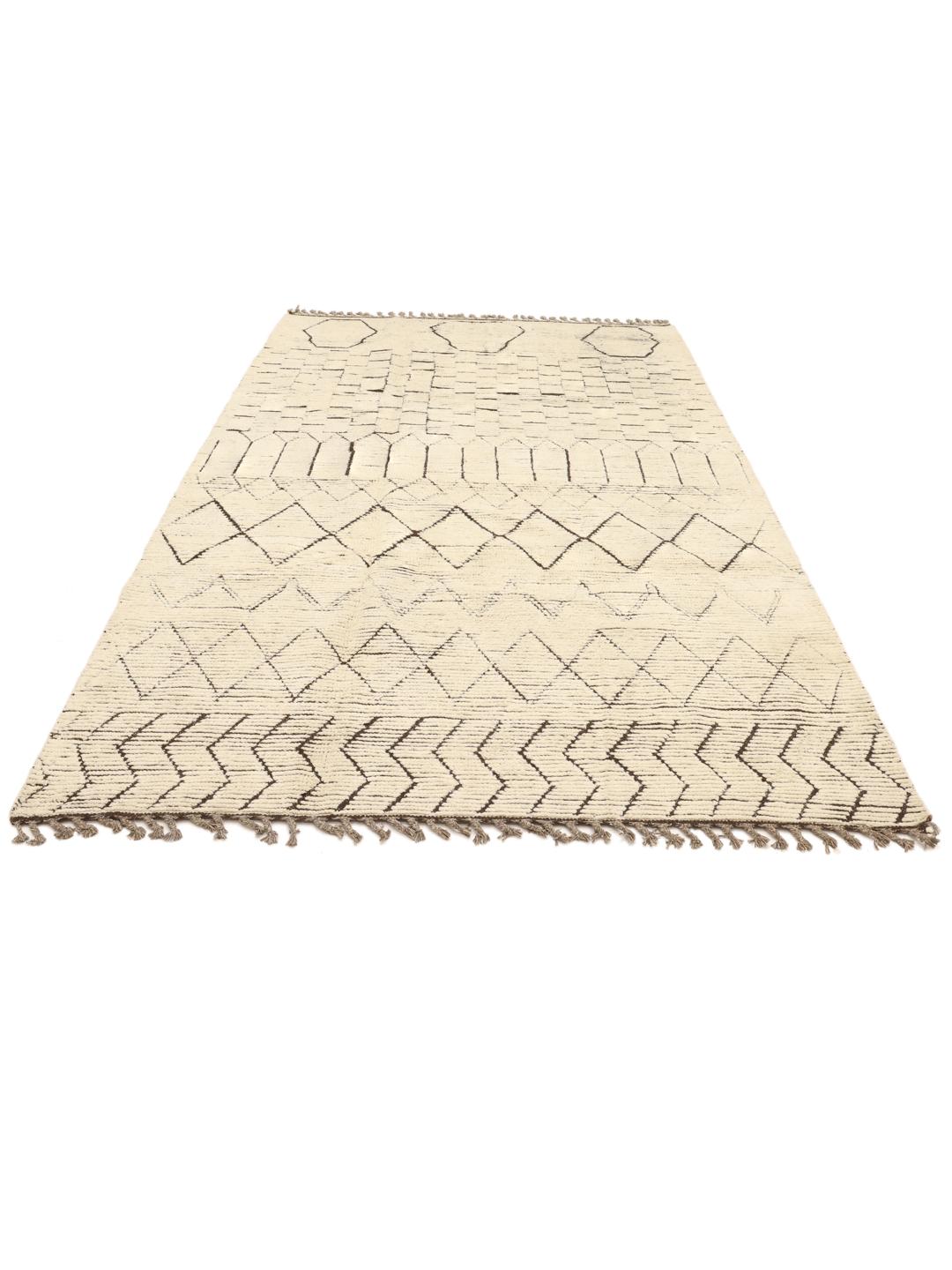
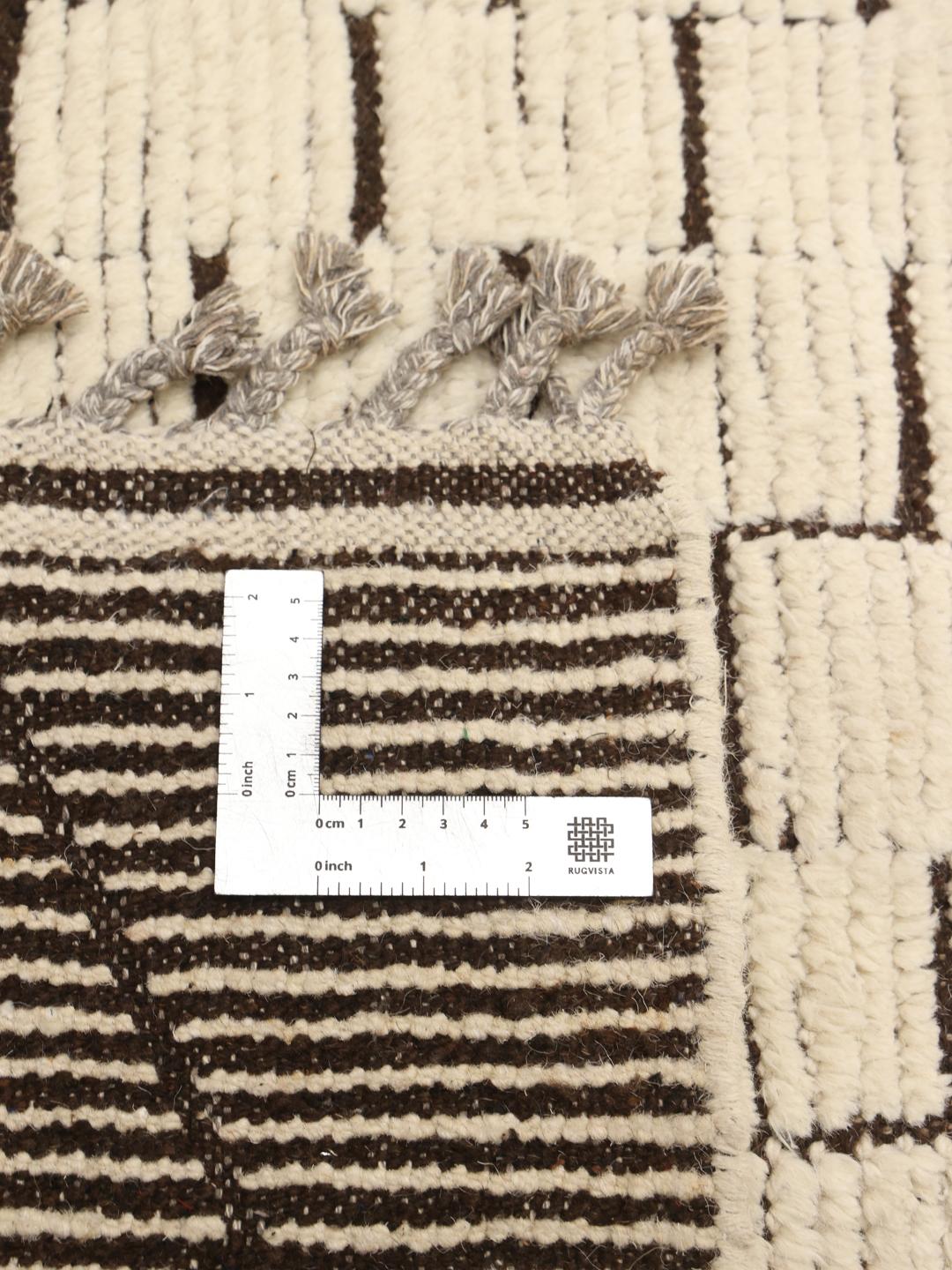
The Berber style, while historically rooted in the mountainous regions of North Africa, has inspired weaving traditions across the globe, including the vibrant craft communities of the Middle East. In these regions, weavers have adapted the characteristic thick, soft pile and minimalist geometric language to create their own unique interpretations. This cross-pollination of styles has resulted in a beautiful evolution of the form, blending ancient tribal motifs with the specific wool-working expertise found in the Middle East.
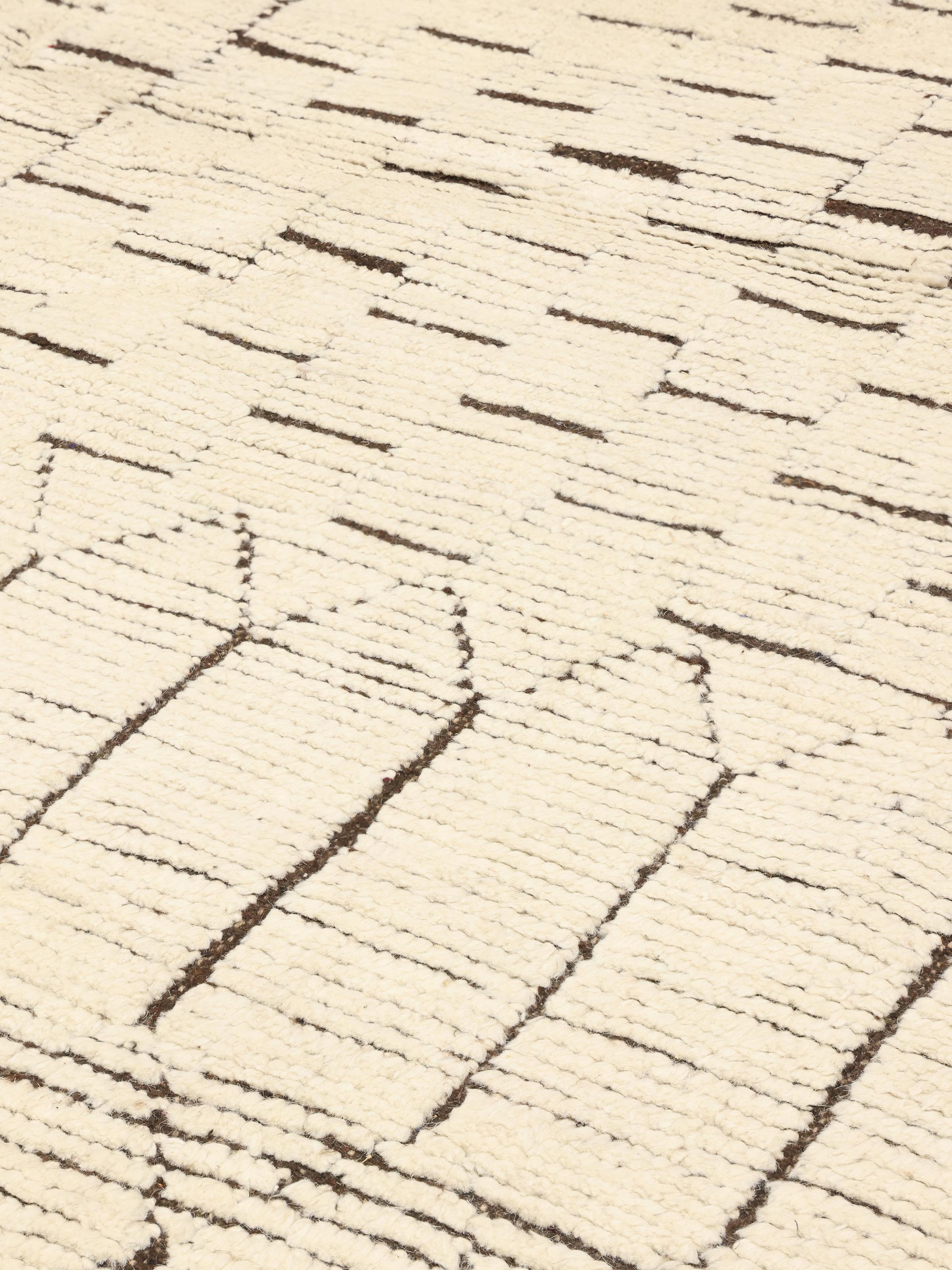
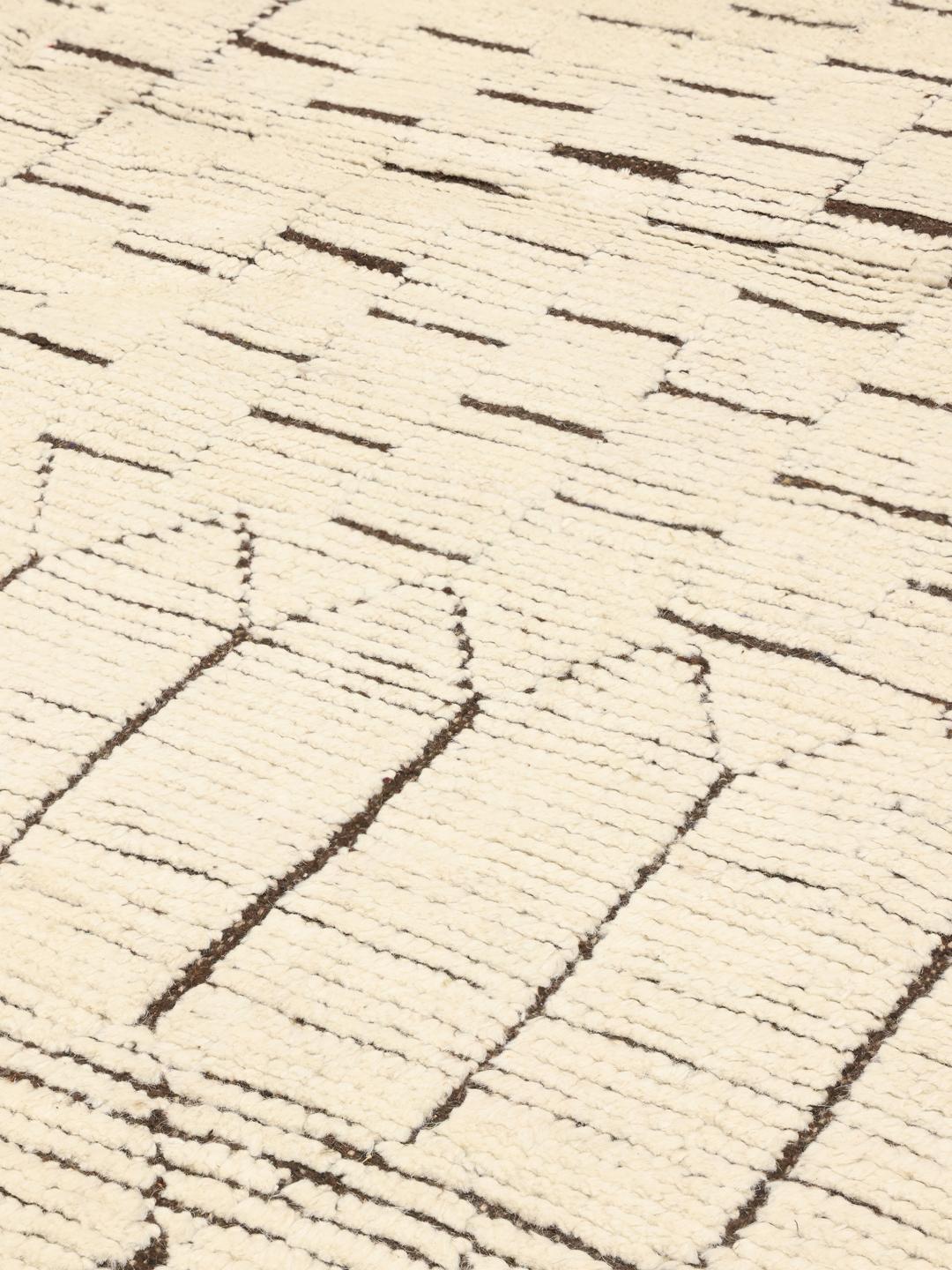
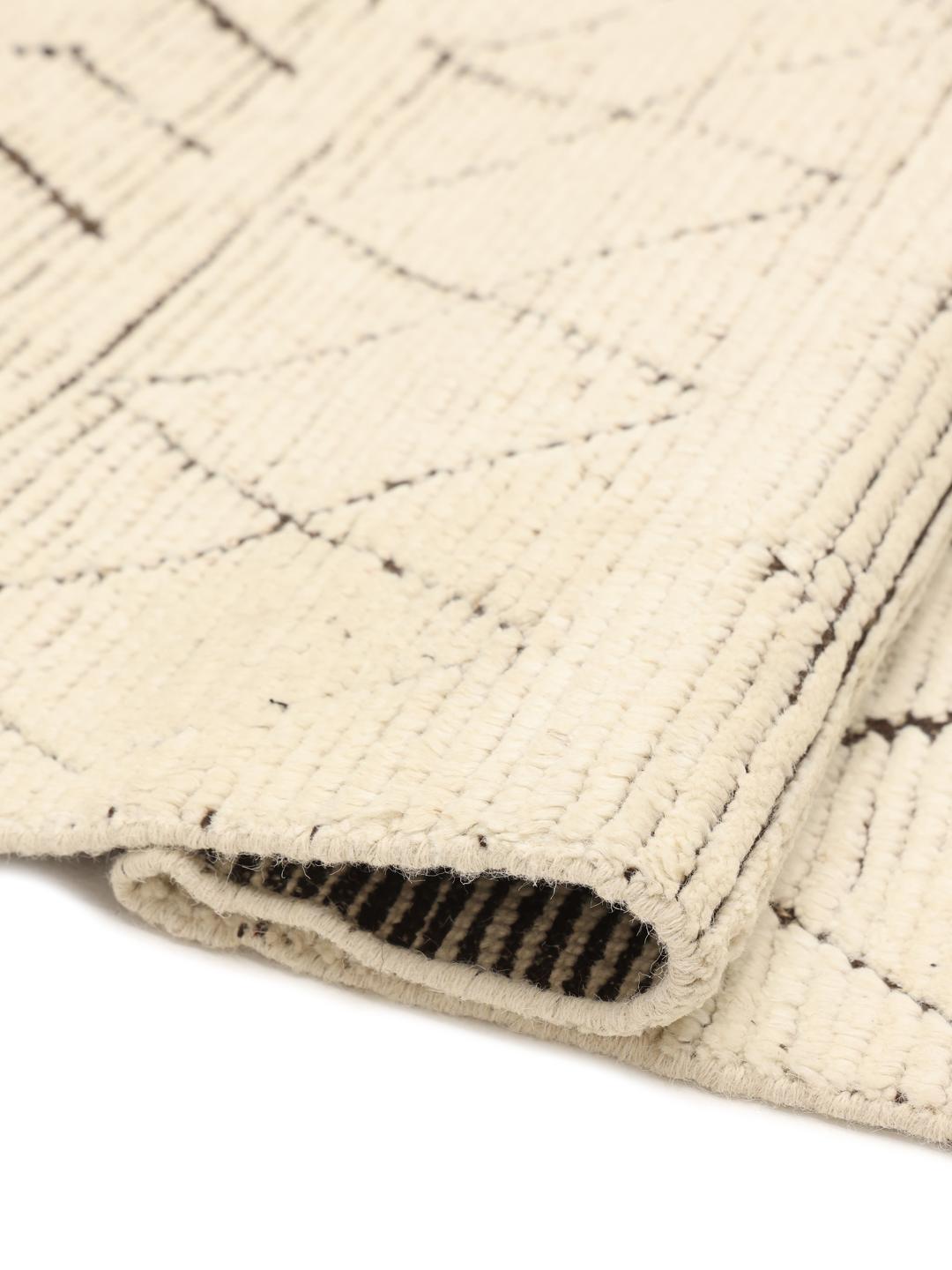
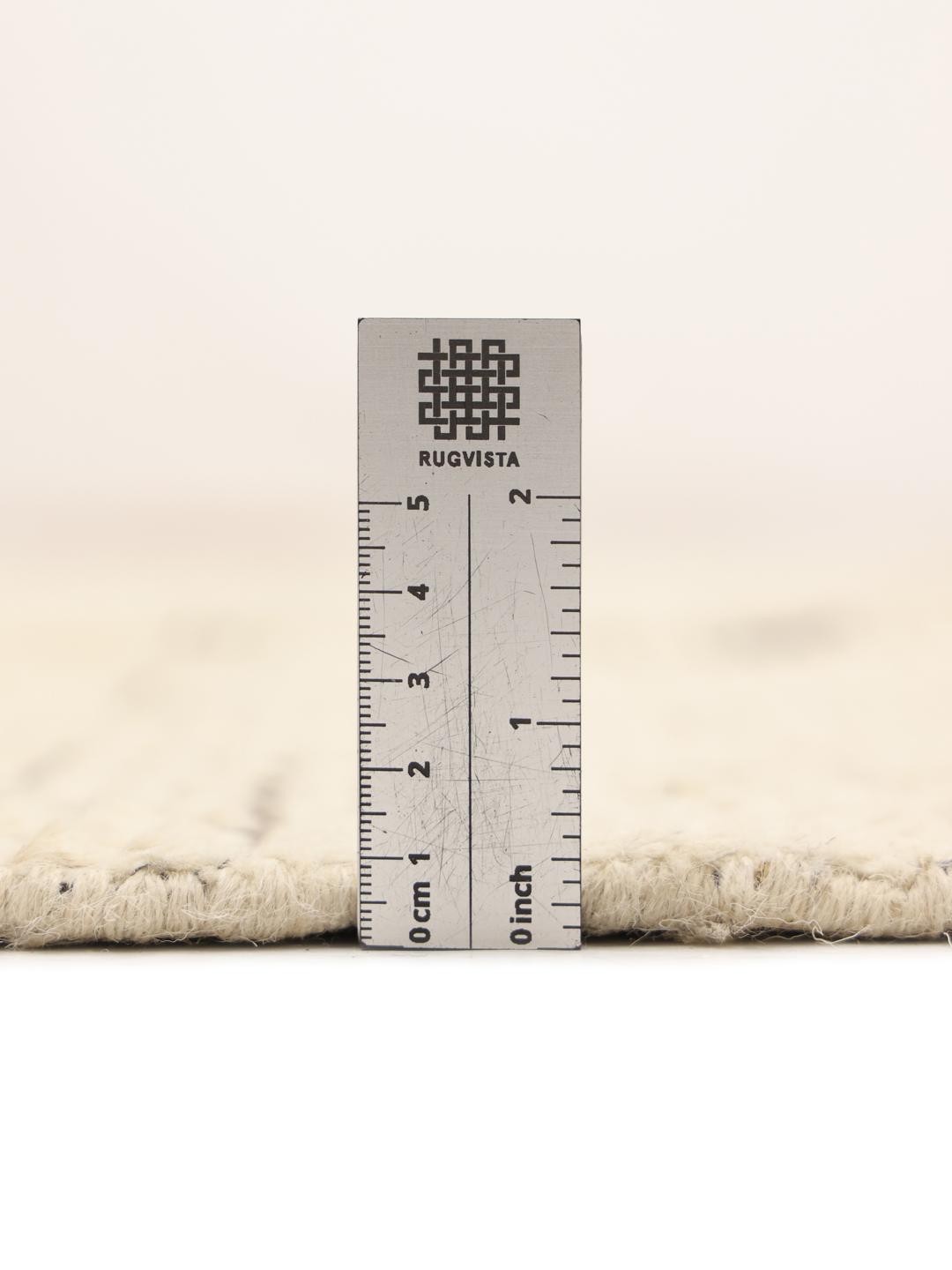
Technical quality in these rugs is often defined by the density of the hand-tied knots and the quality of the wool. Using 2ply wool, for instance, allows for a stronger, more resilient pile that retains its lustre and soft texture for years. When you feel the density of this rug, you are experiencing the result of a long-standing tradition of choosing high-quality materials to ensure that the rug is not only soft to the touch but also capable of withstanding the test of time.
The visual language of these rugs is defined by a reliance on simple, powerful symbols. Often, these include diamonds, stripes, and tribal shapes that have been passed down through generations of weavers. These motifs are not merely decorative but serve as a visual shorthand for the cultural history and personal stories of the artisan. The use of a neutral base colour allows these dark, geometric elements to stand out, creating a balanced aesthetic that feels both ancient and contemporary.
Owning a hand-knotted rug of this calibre is an investment in cultural heritage and human skill. Because each rug is made by hand, it reflects the specific choices and the singular focus of the person who created it. By bringing such a piece into your home, you are supporting a tradition of craftsmanship that values the slow, intentional creation of beautiful objects over the mass production of the modern world.