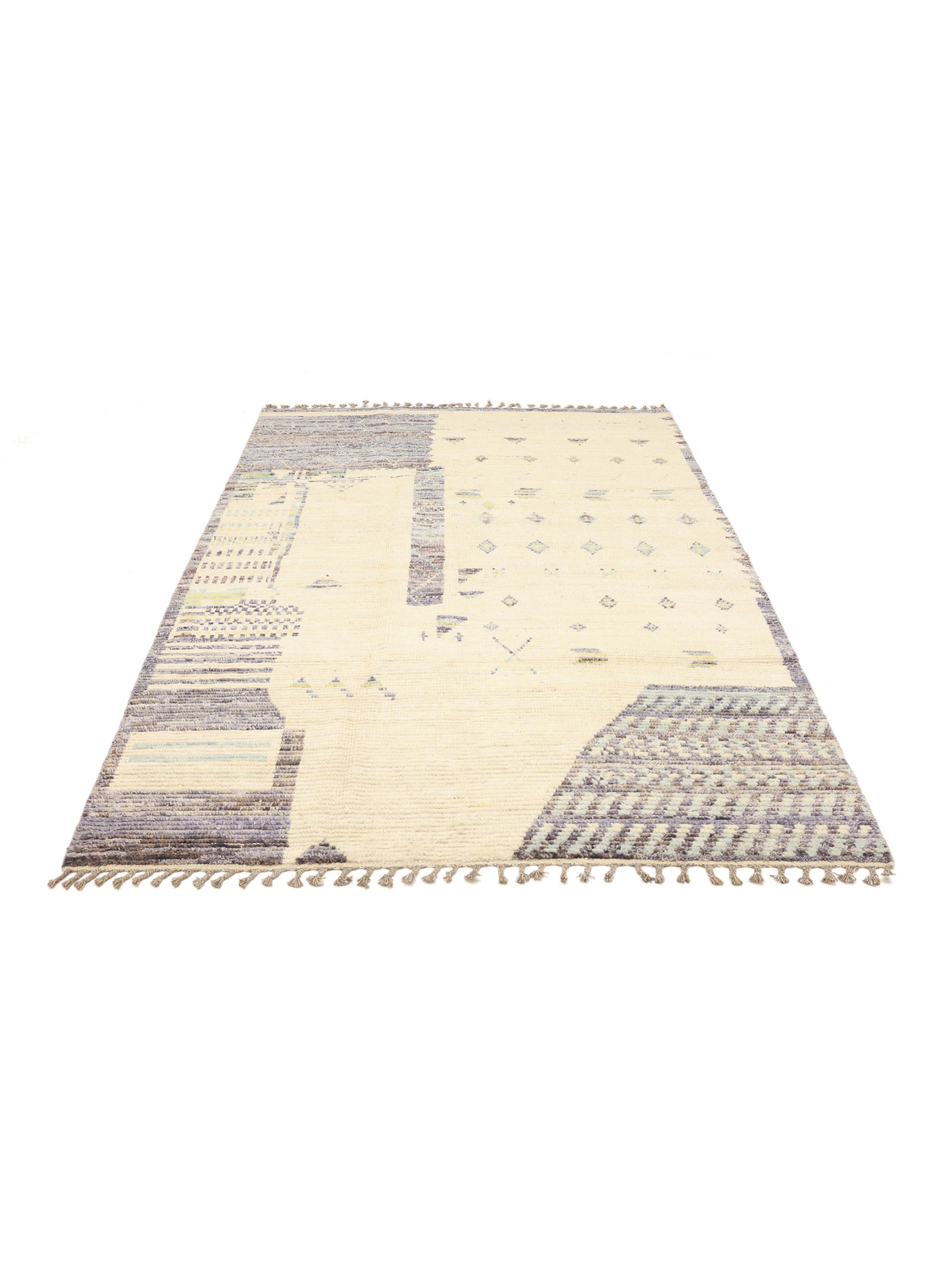
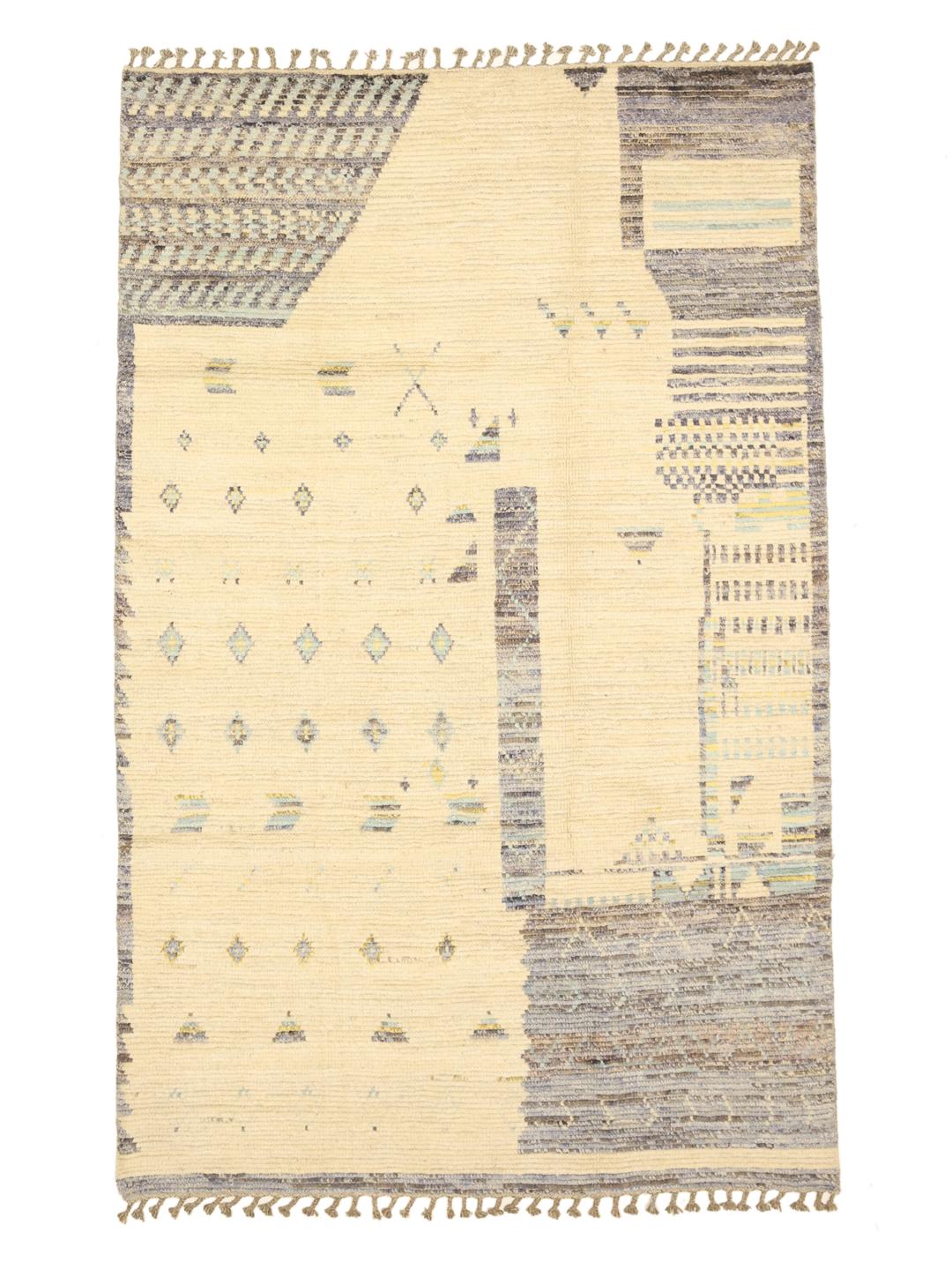
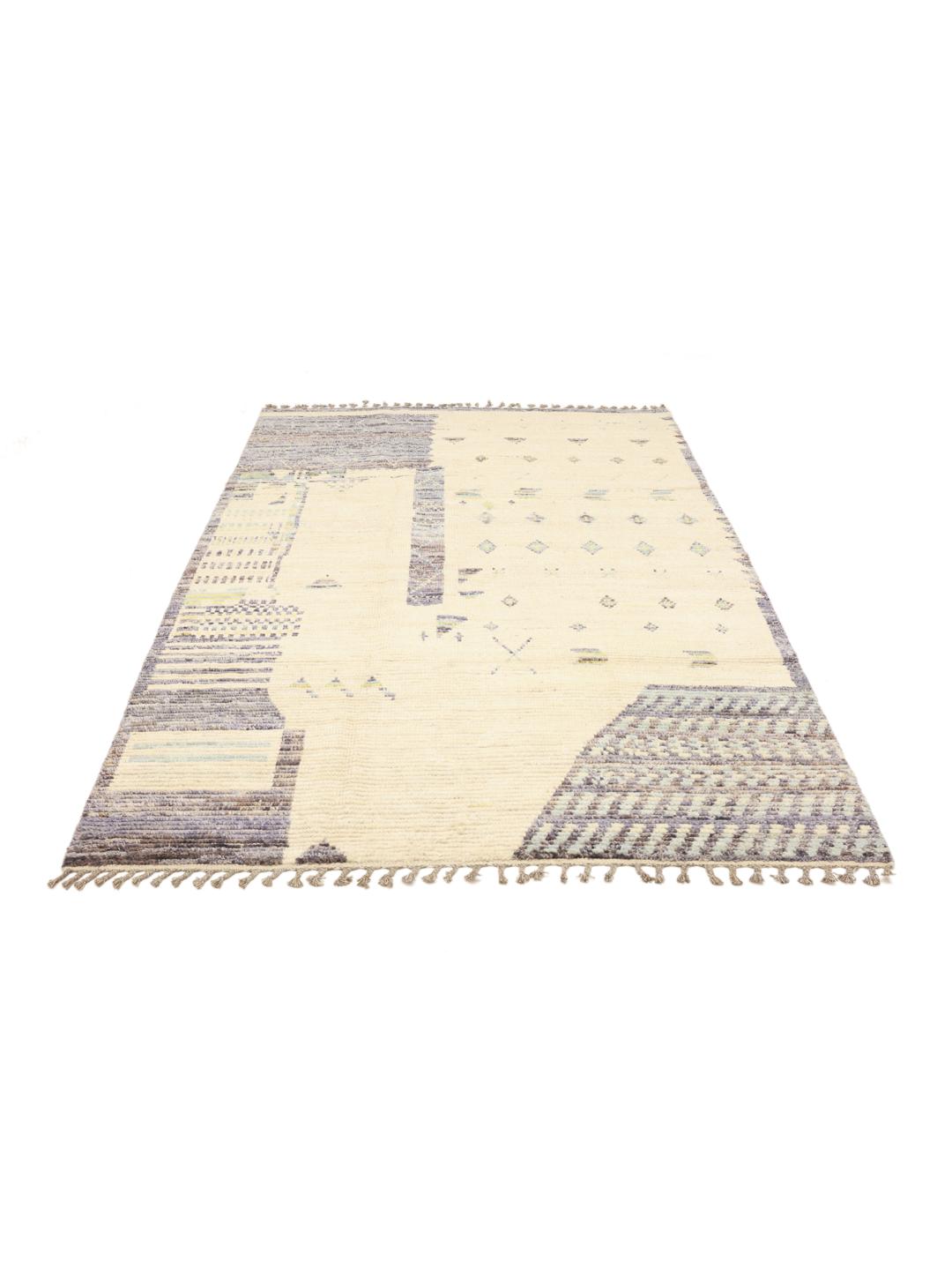
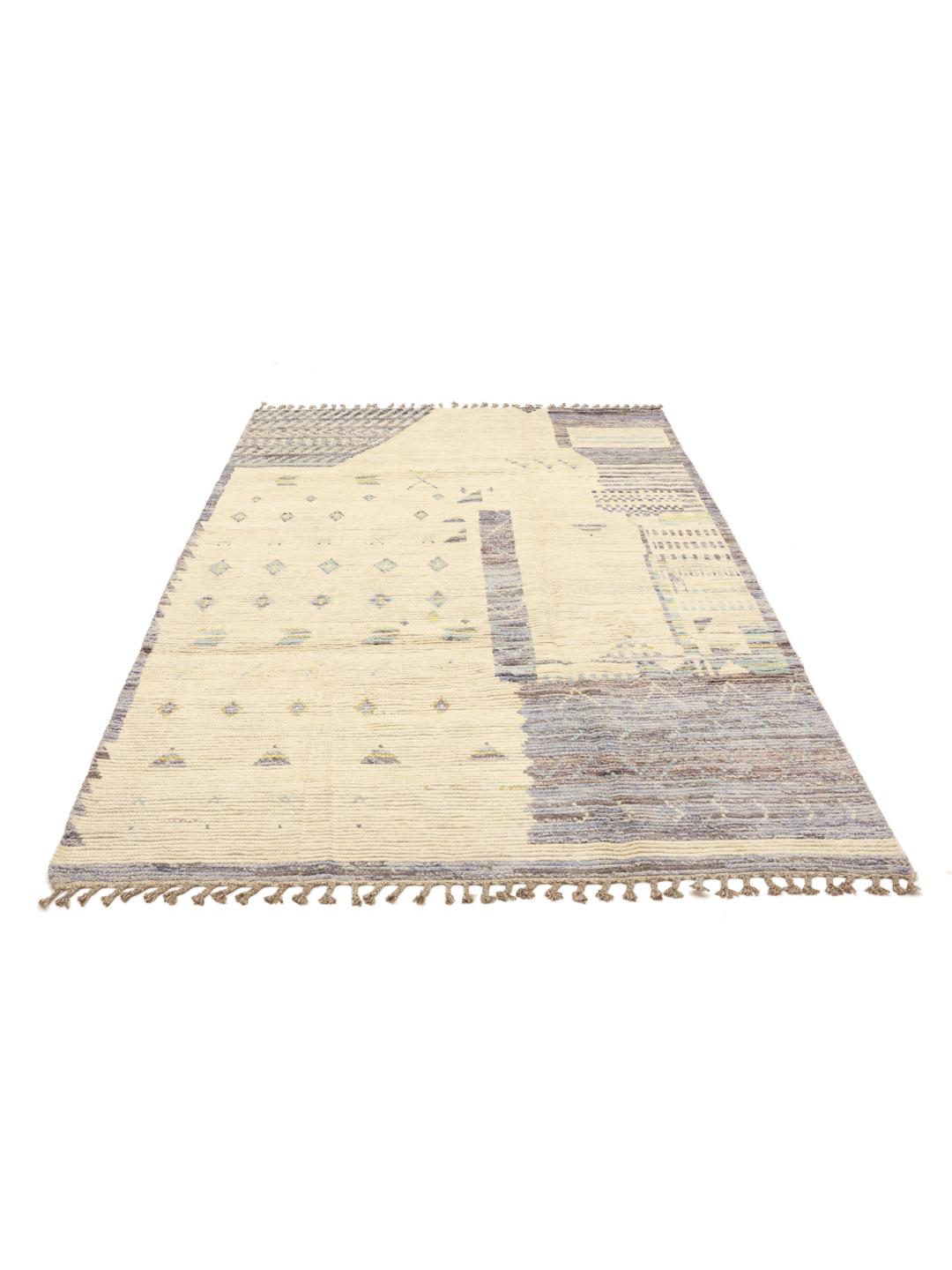
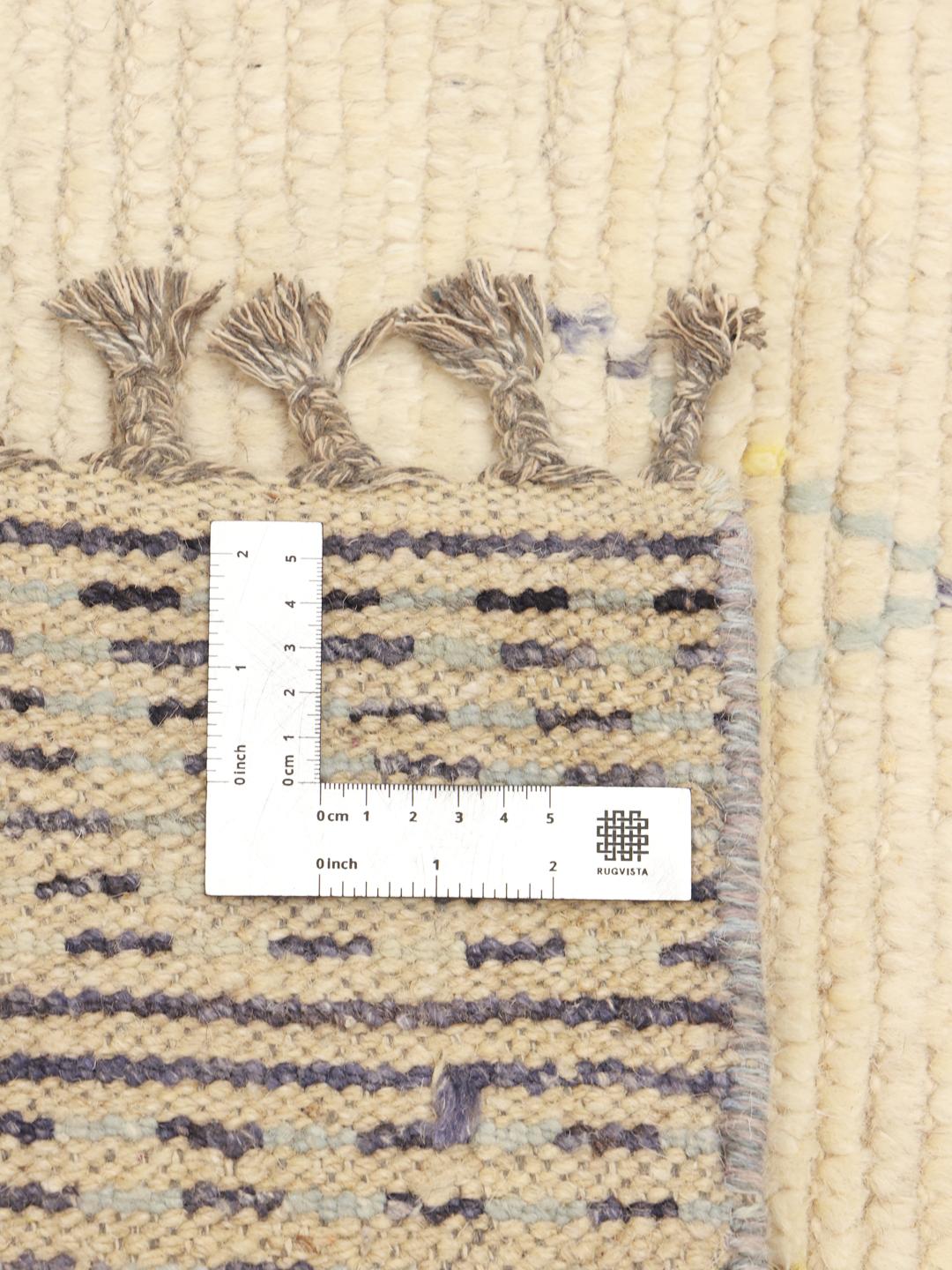
The Berber style of rug-making has its roots in the mountainous regions of North Africa, where nomadic tribes traditionally wove textiles for functional use as bedding, blankets, and floor coverings. Over time, the aesthetic of these rugs—known for their thick, high-pile wool and abstract geometric symbols—has influenced weaving traditions across the globe, including in Afghanistan.
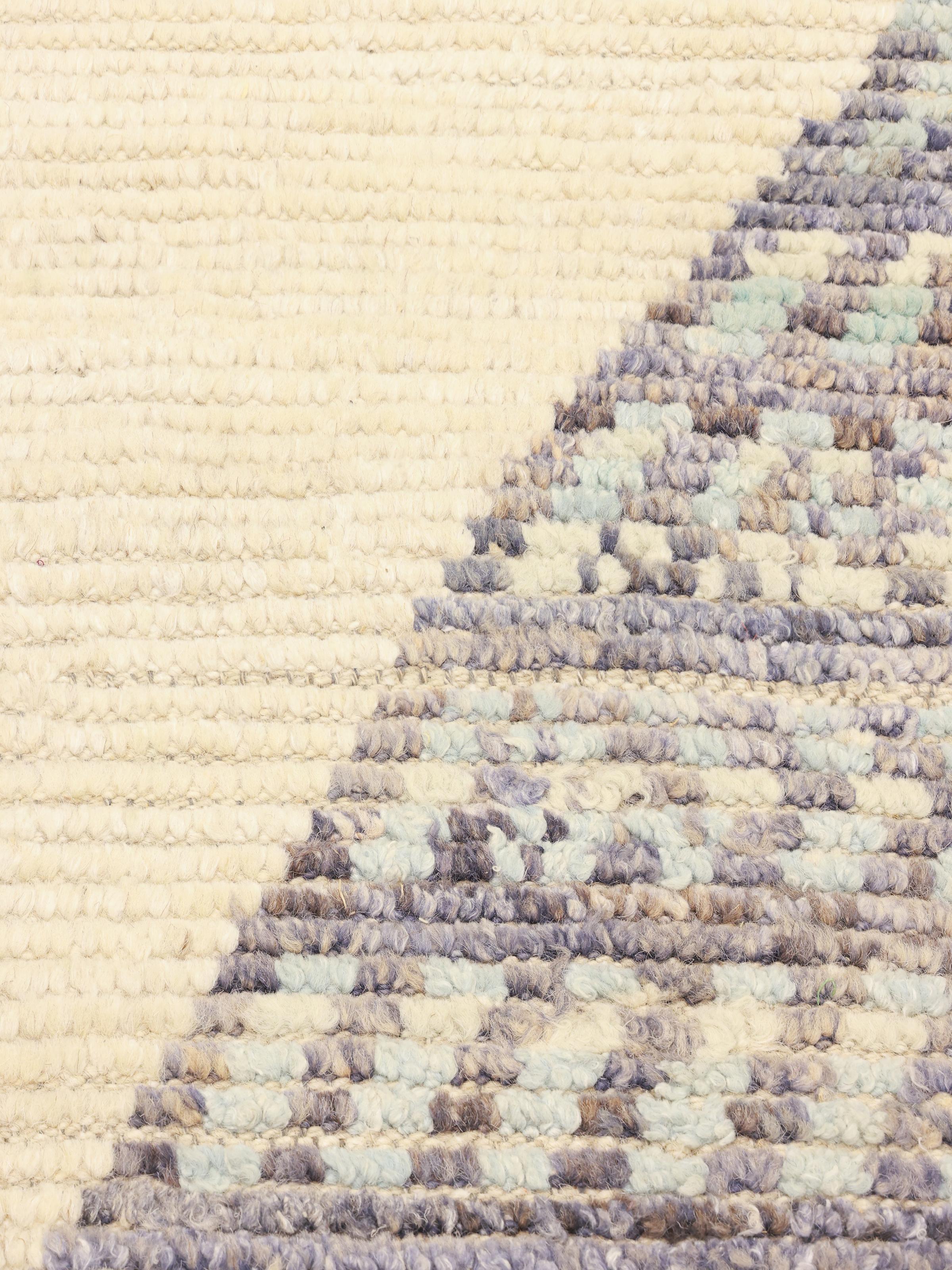
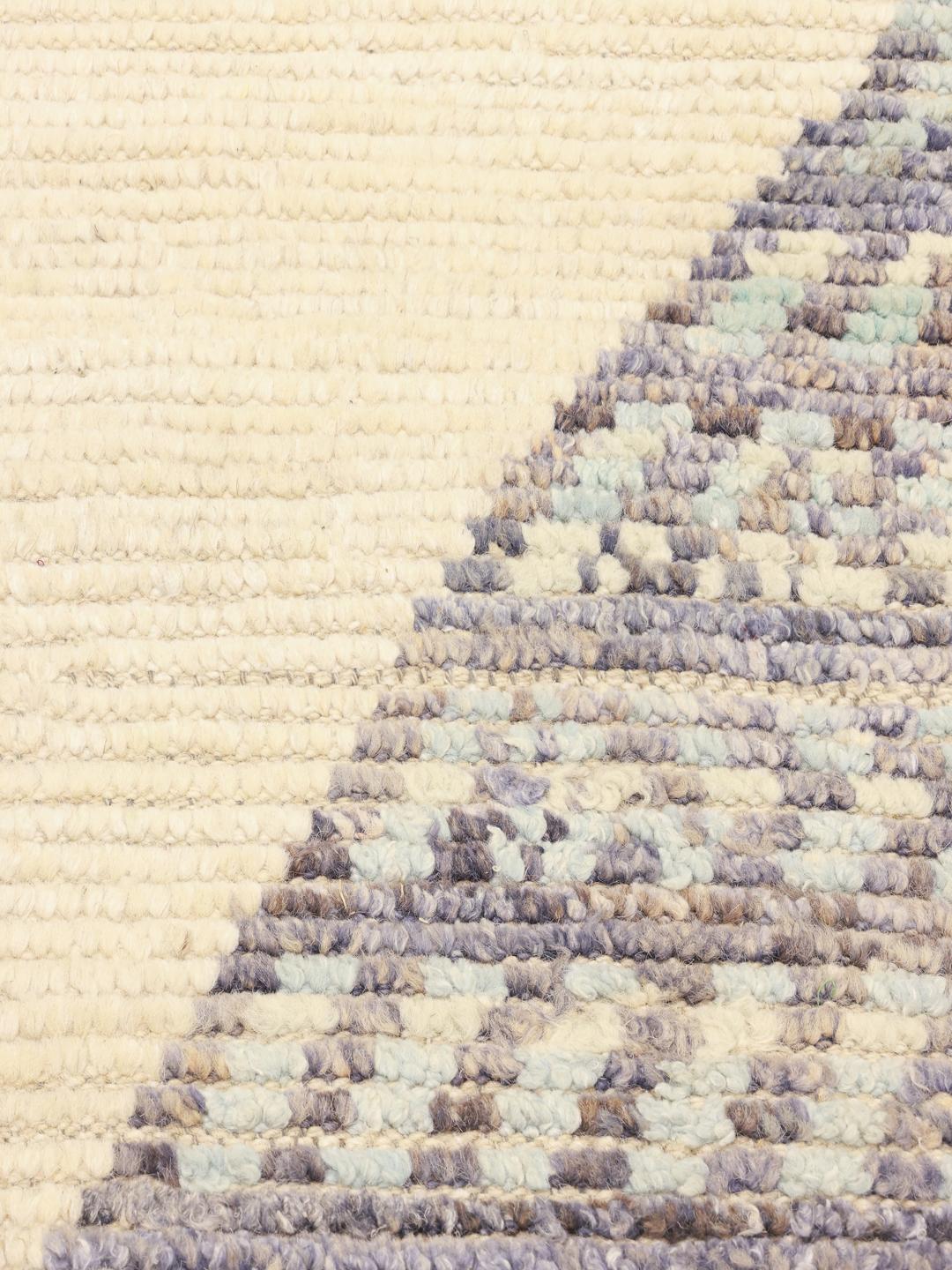
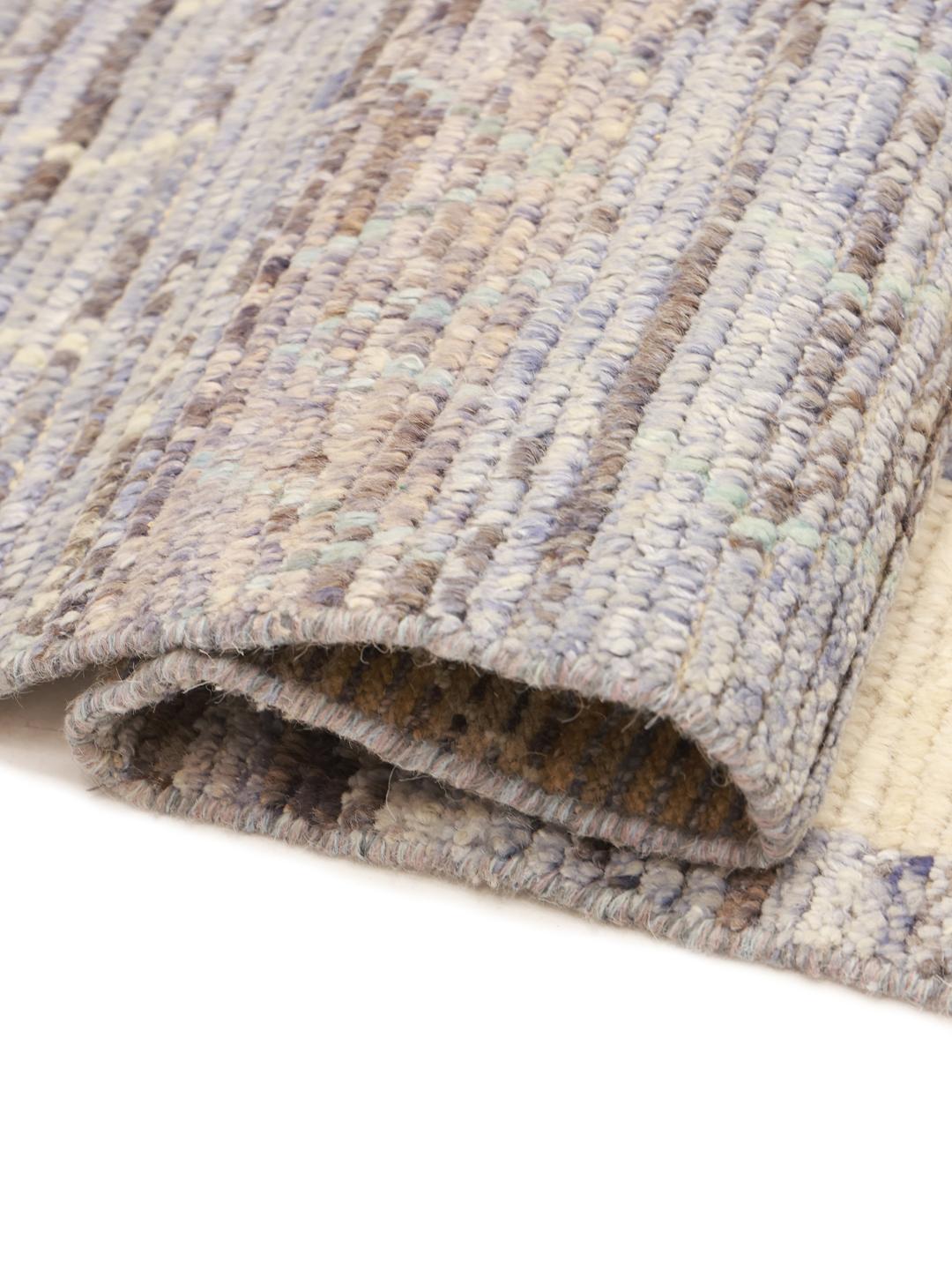
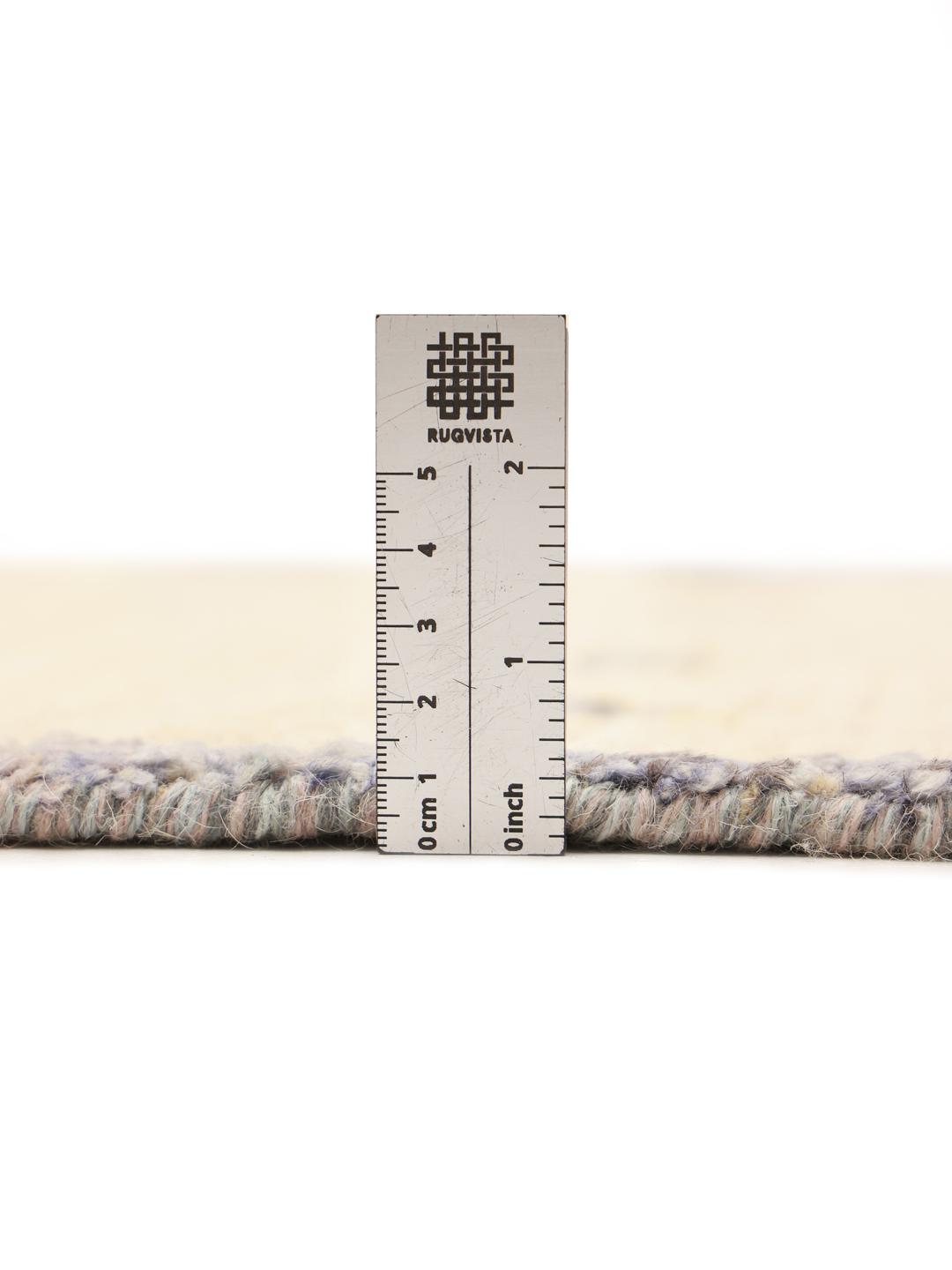
The term 'Berber' refers less to a single geographic origin and more to a specific weaving philosophy that prioritises heavy, durable wool and a natural, unpretentious aesthetic. In the context of Afghan production, this style incorporates local spinning techniques and wool quality to create pieces that feel authentic and grounded, often utilising traditional hand-carding methods to maintain the fibre's natural lanolin and lustre.
Design-wise, these rugs are defined by their minimalist yet expressive nature. They typically feature a light, neutral field punctuated by symbolic motifs, which often serve as a personal language for the weaver. These symbols can represent everything from protection and fertility to the natural landscape, making each rug a narrative piece that connects the owner to the history of the craft.
Collecting a rug from this tradition is an act of preserving a heritage of skill and patience. Because they are not mass-produced, these rugs offer a unique character that synthetic alternatives lack. They are valued for their ability to soften a room while providing a connection to the human hands that shaped the wool into a lasting and meaningful object for the home.