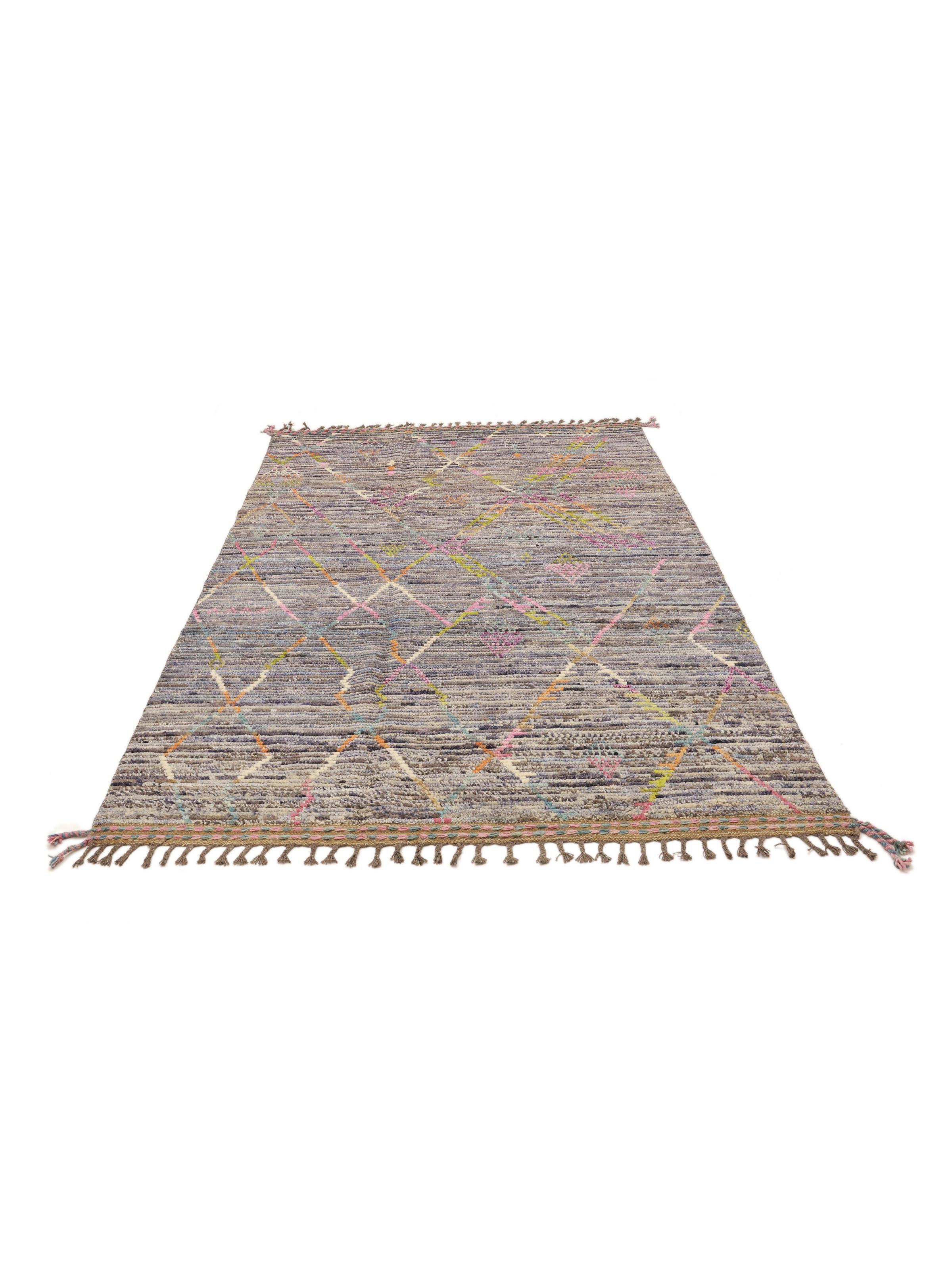
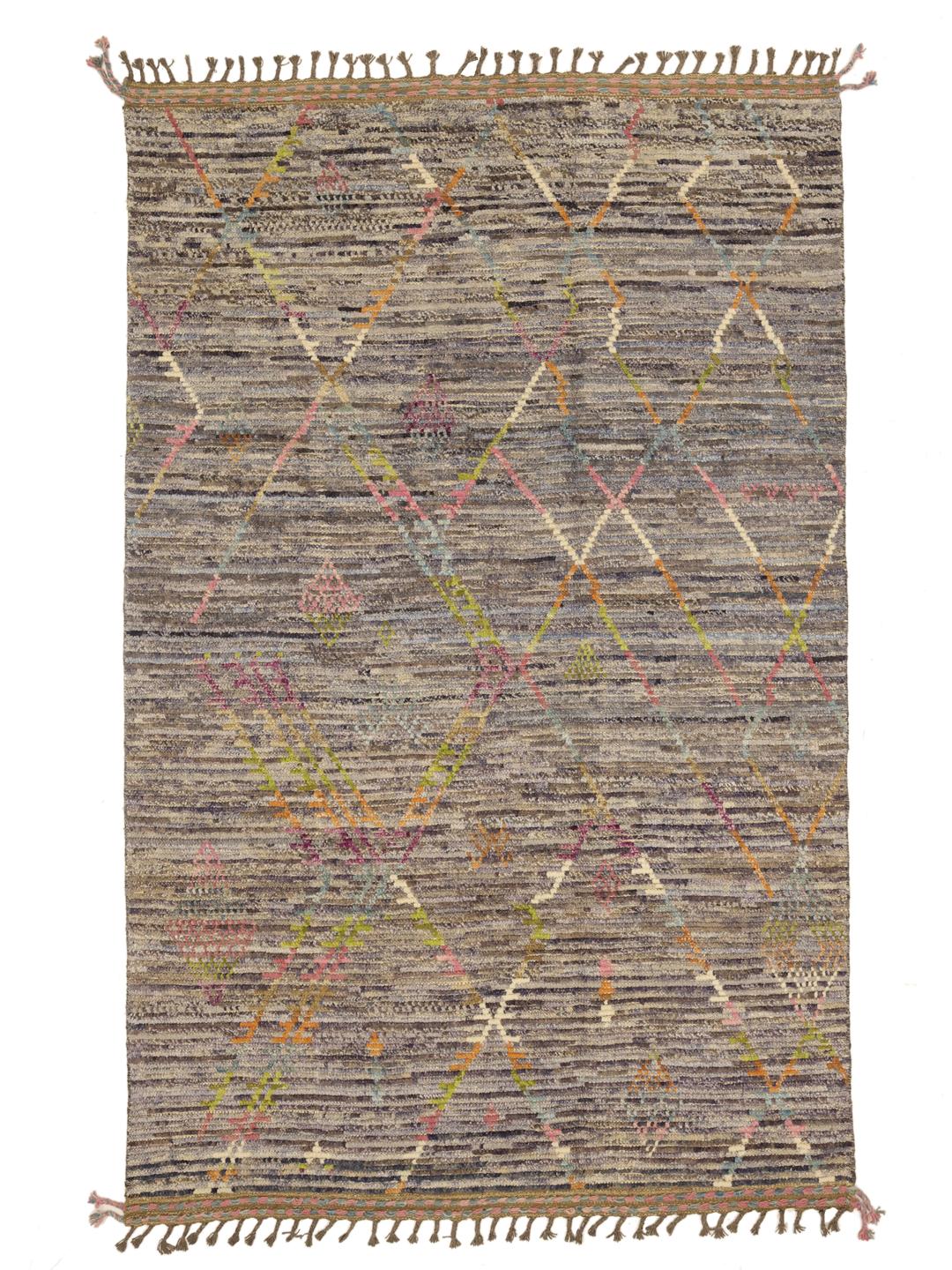
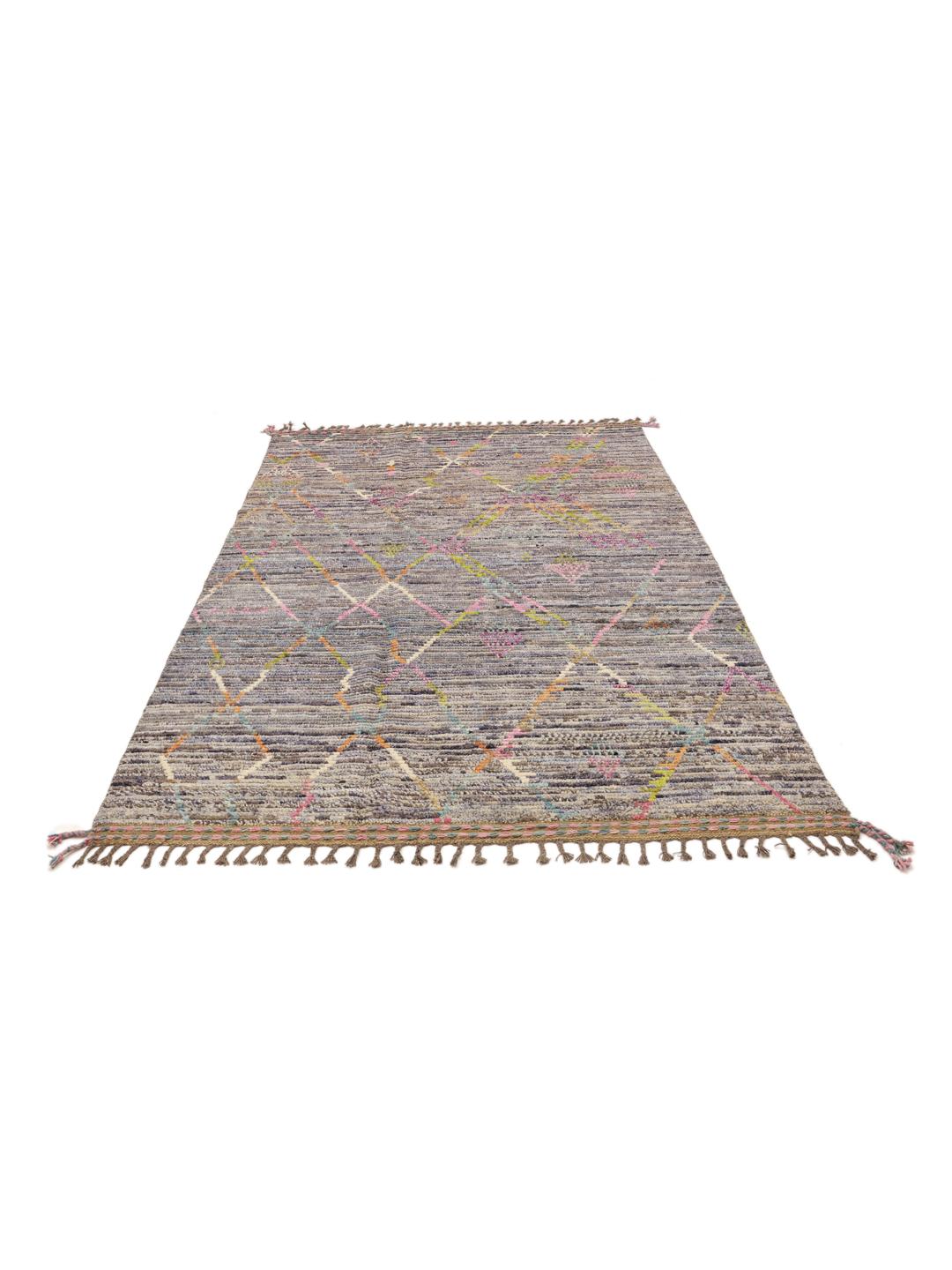
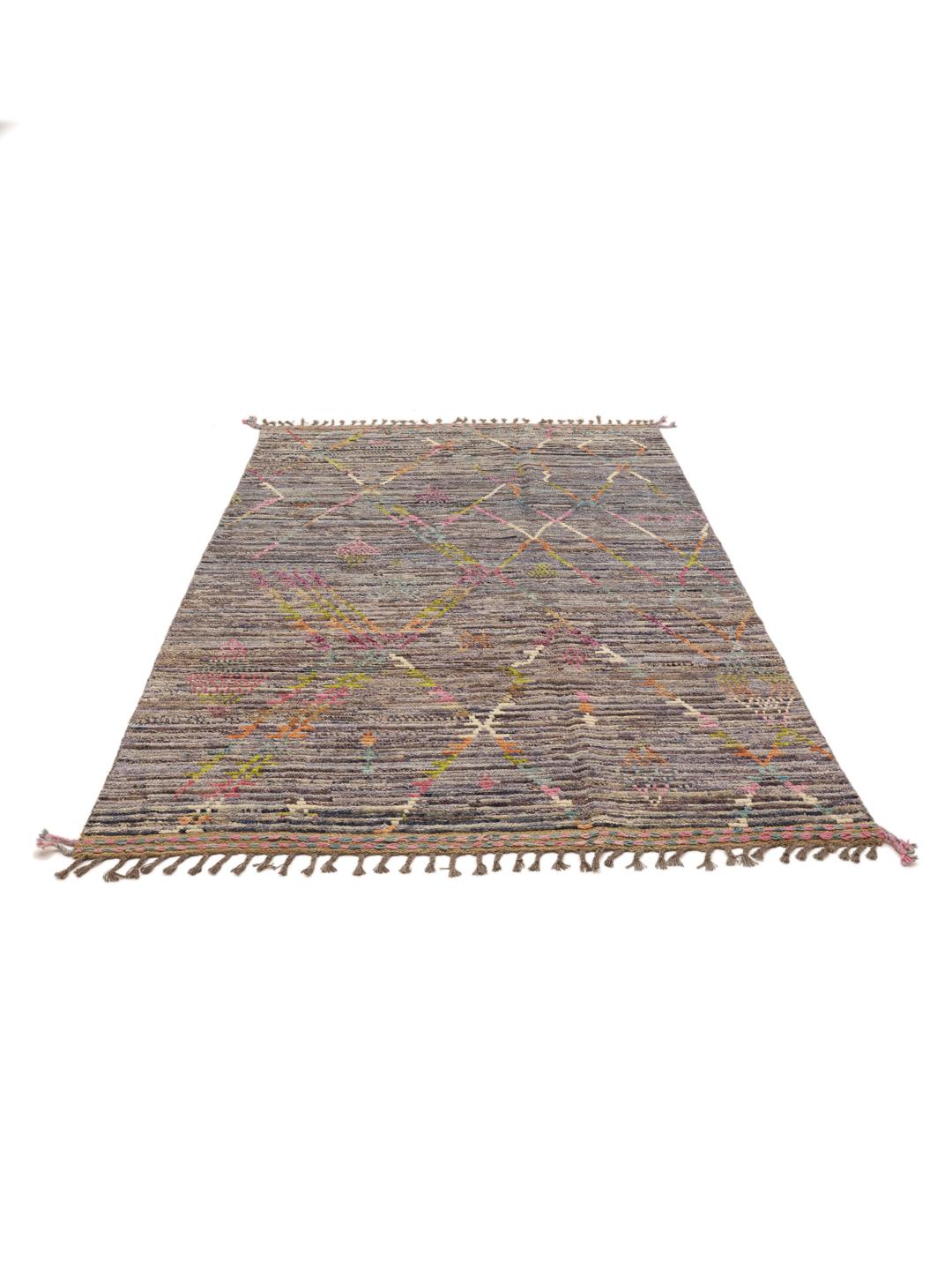
The Berber style tradition, while rooted in the nomadic history of North Africa, has found a remarkable second home in the weaving centres of Afghanistan. Here, artisans have adopted the iconic, minimalist aesthetic of the Berber tradition and infused it with their own deep-seated knowledge of Wool craftsmanship and colour theory.
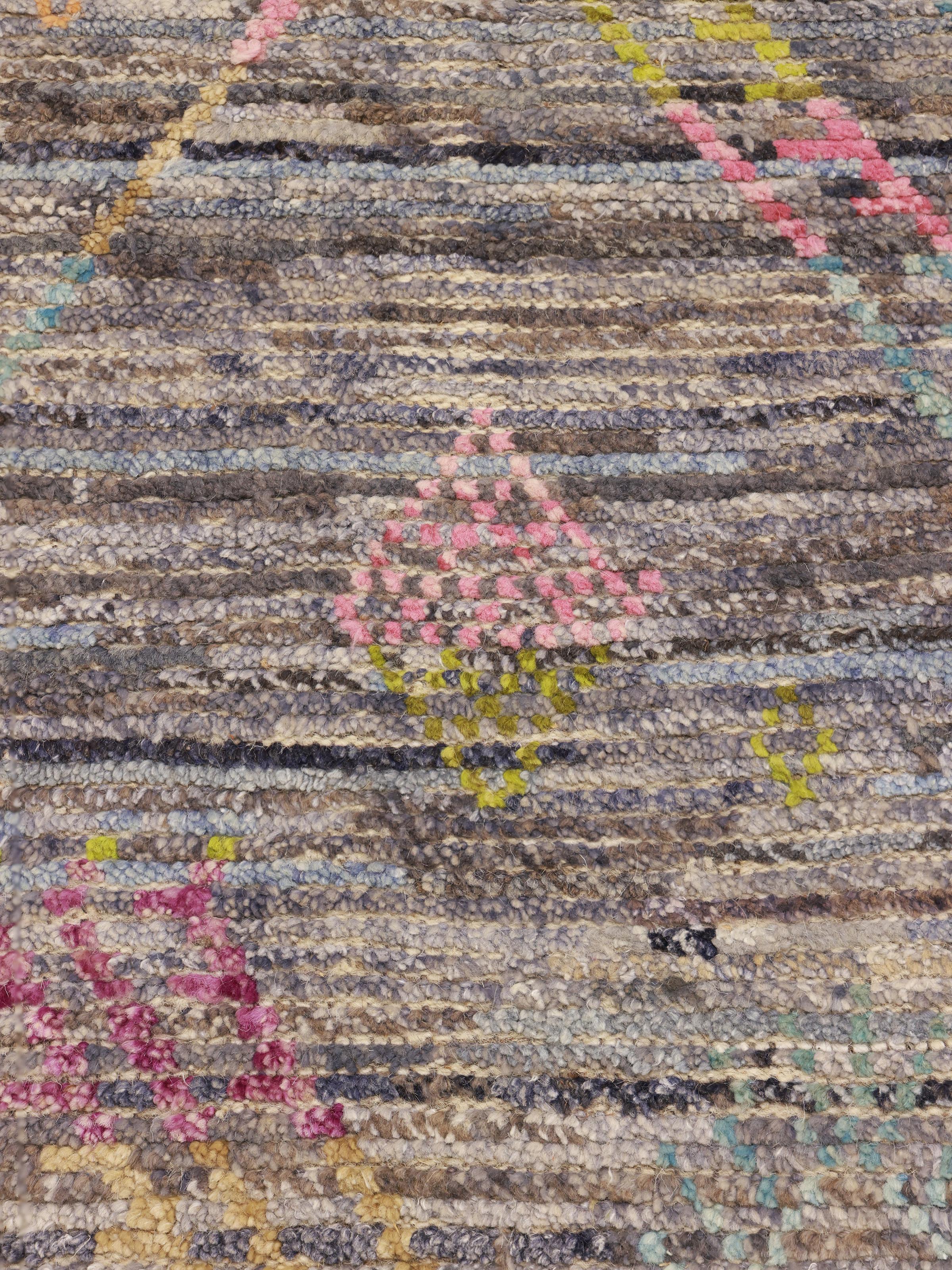
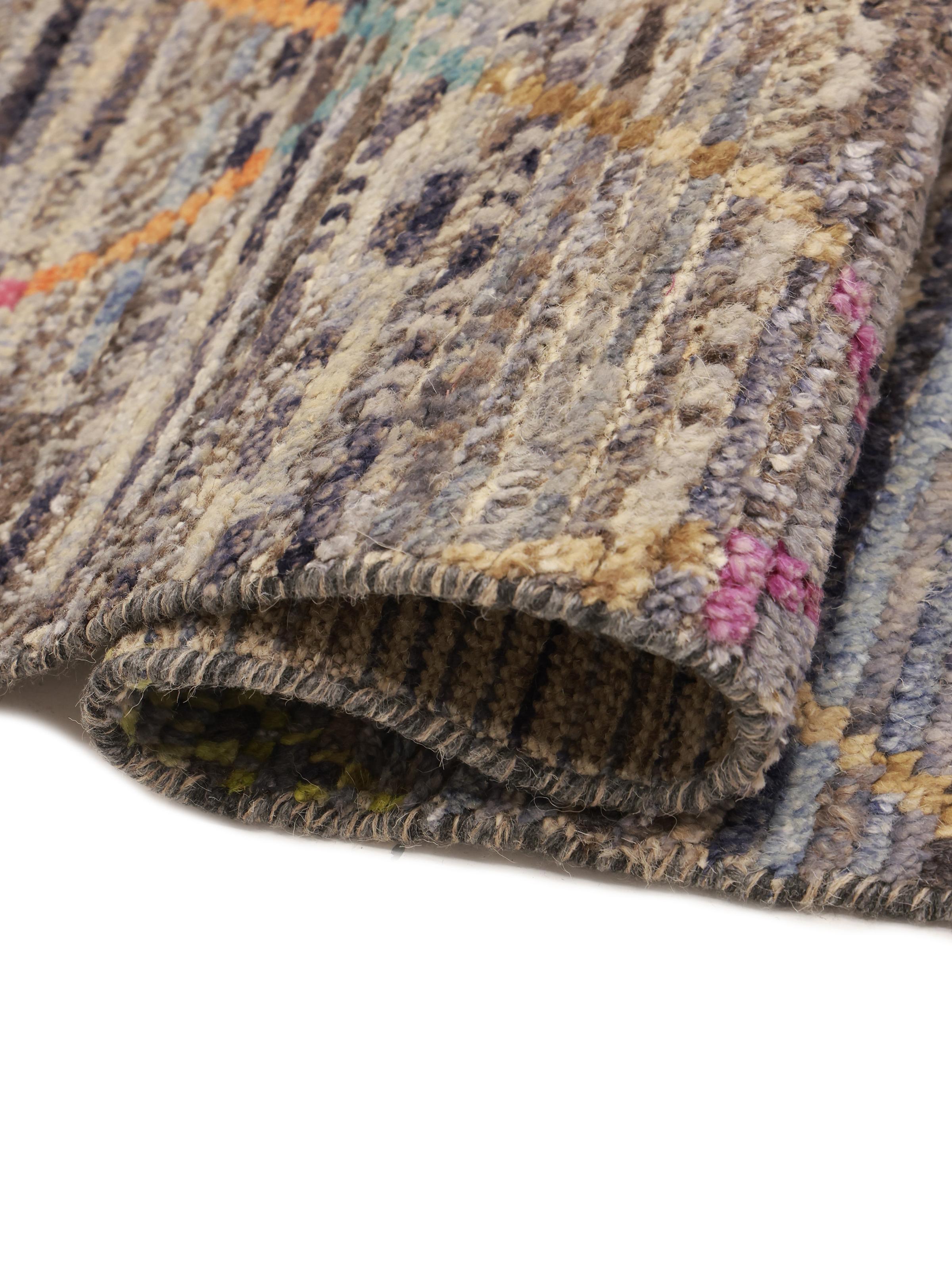
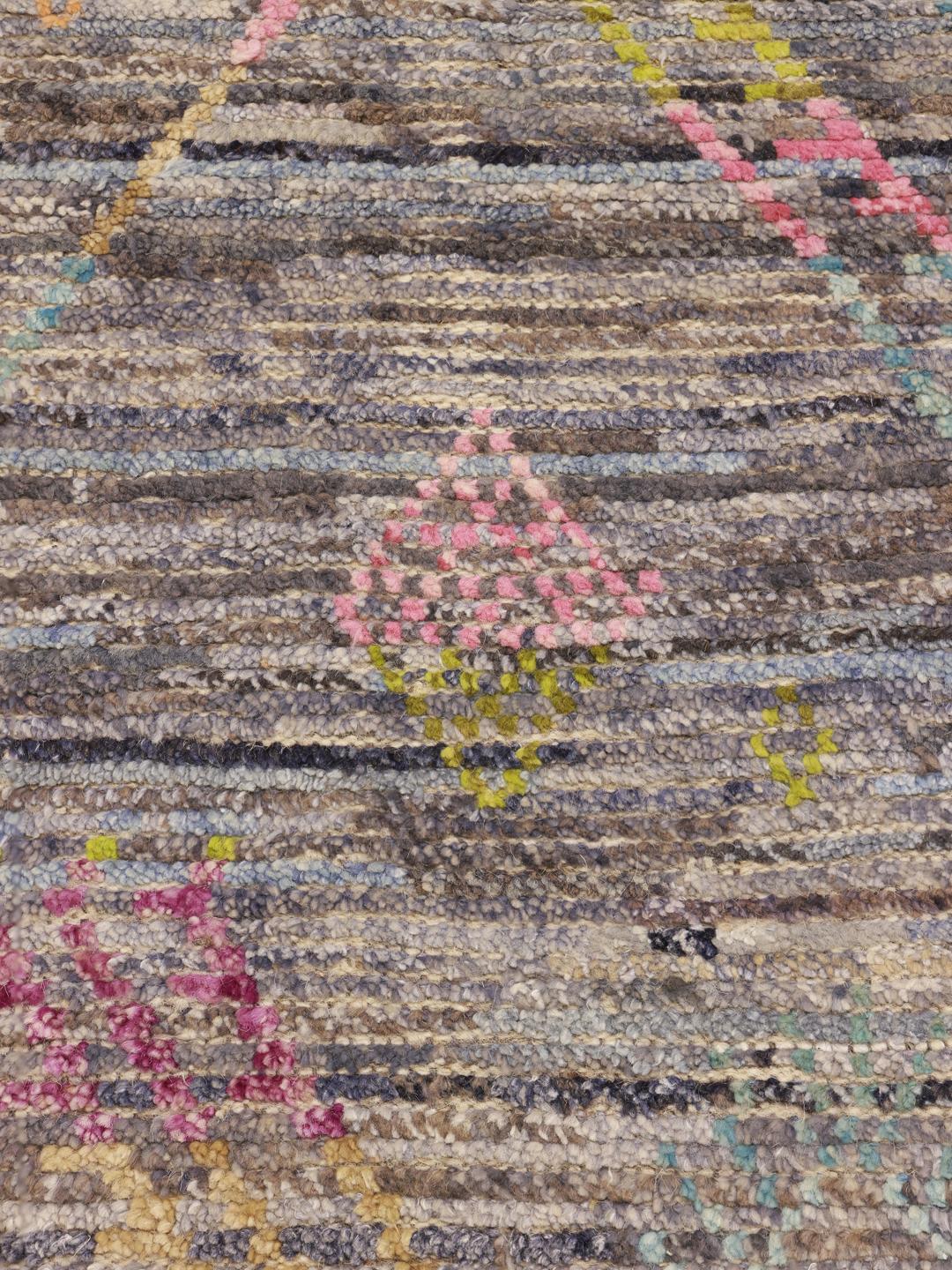
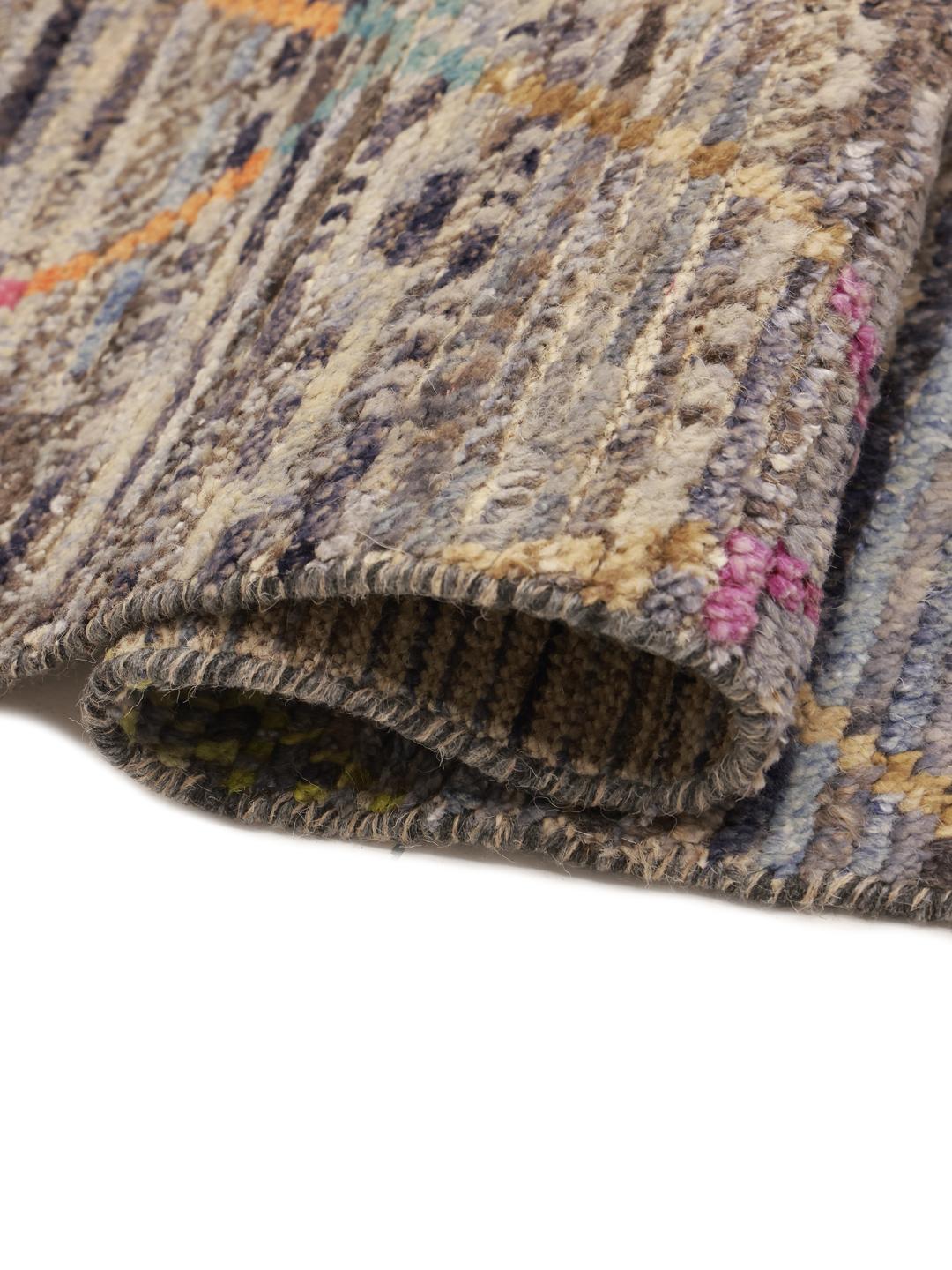
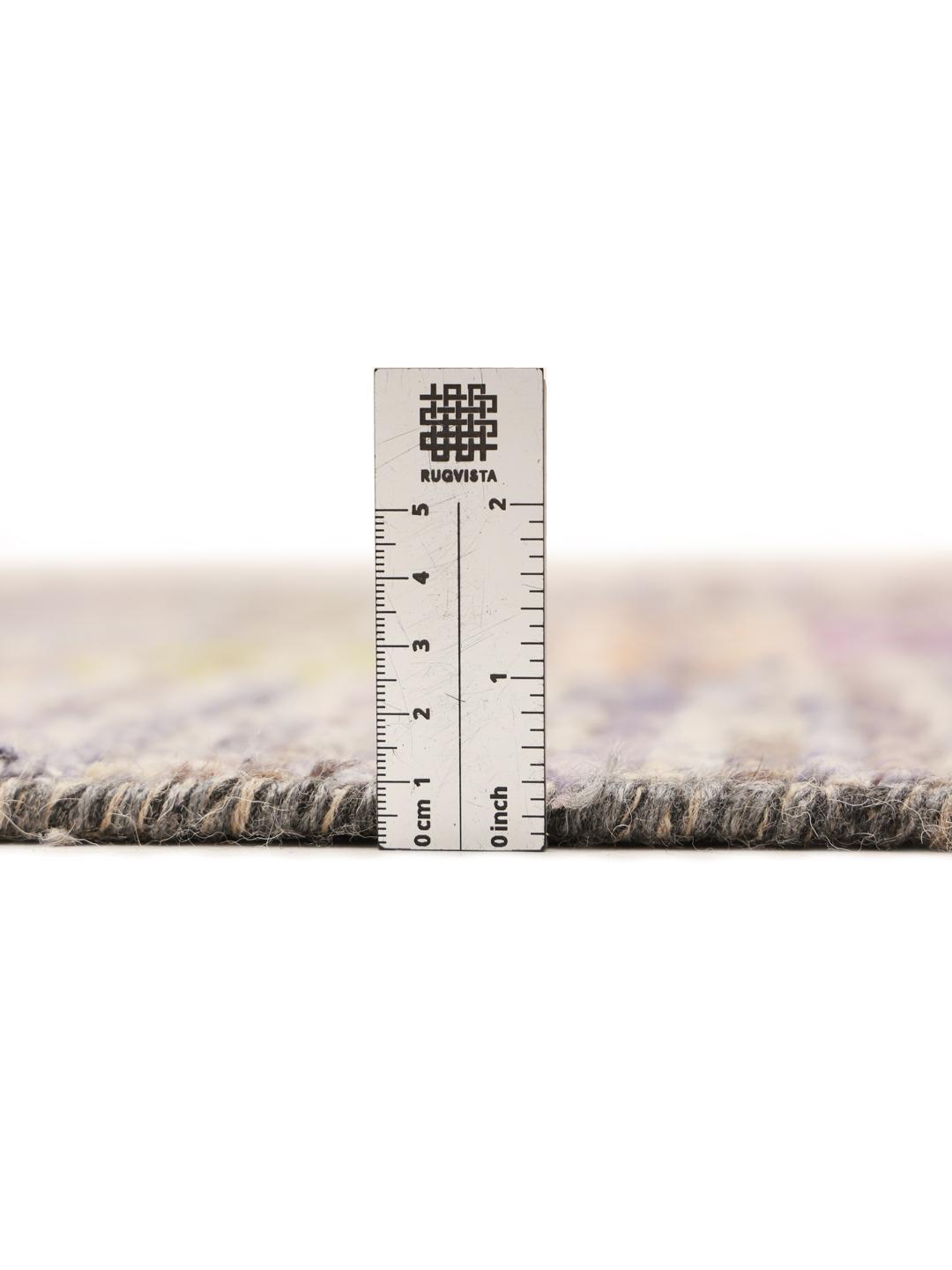
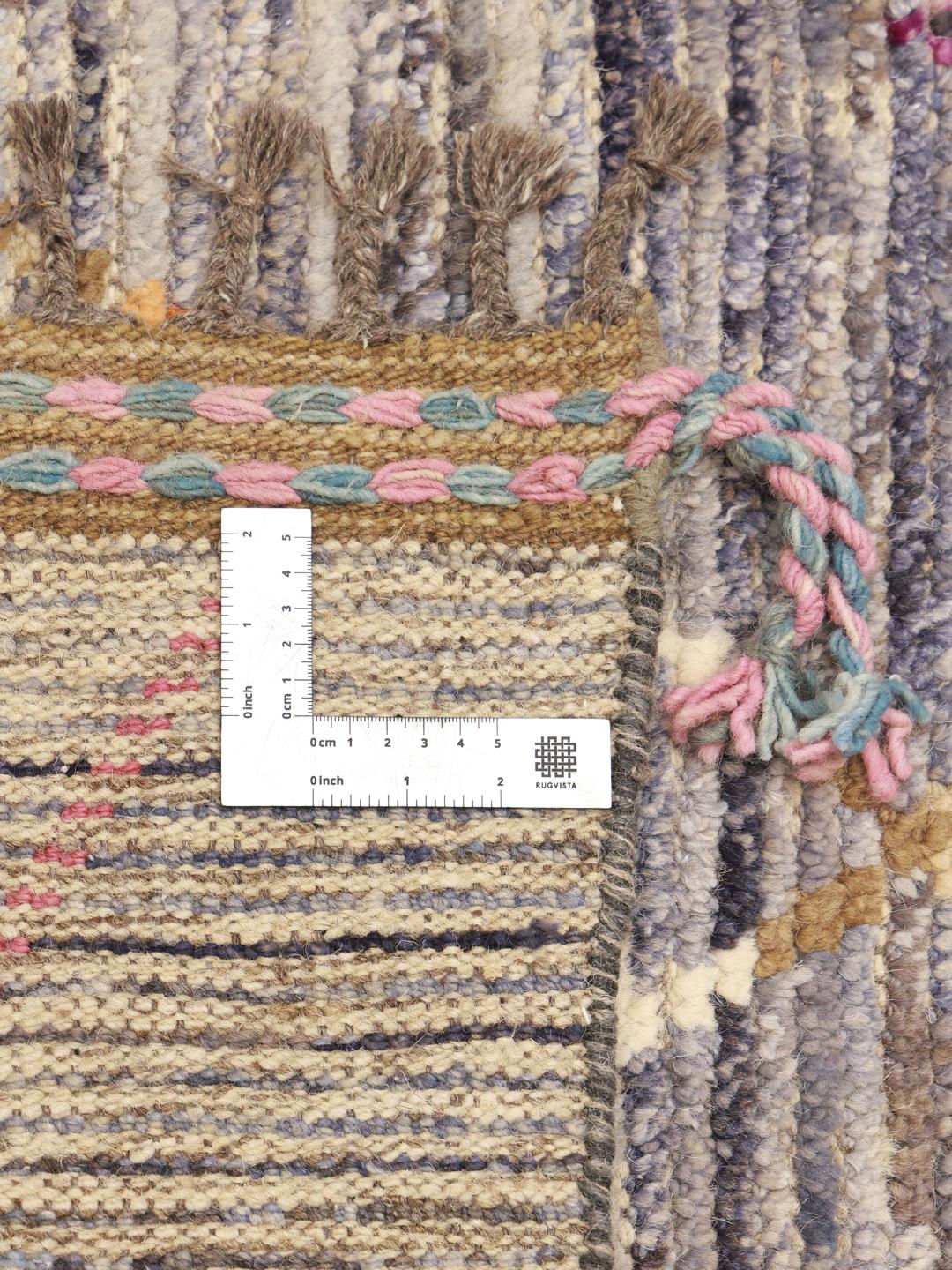
The construction of these rugs relies on traditional hand-knotting techniques that have been passed down through generations. This method is vital, as it allows for a density and consistency that single-ply or machine-made alternatives simply cannot match. The result is a pile that is not only visually rich but also exceptionally durable and capable of retaining its shape over many years of use.
Visually, these pieces are defined by their use of high-contrast, often geometric patterns, such as the diamond motifs seen here. While the field might be a muted, neutral tone, the inclusion of vibrant, multi-coloured accents provides a lively counterpoint that reflects the artistic freedom of the weaver. Each pattern is not merely decorative but often holds symbolic meaning, representing elements of the natural world or the weaver's personal environment.
Owning a hand-knotted rug from this tradition is an act of supporting a heritage of skill and patience. Collectors value these pieces for their authenticity and the human element present in every thread. By choosing a rug of this nature, you are not just purchasing a floor covering, but a piece of cultural history that connects your modern home to a long-standing legacy of artisanal excellence.