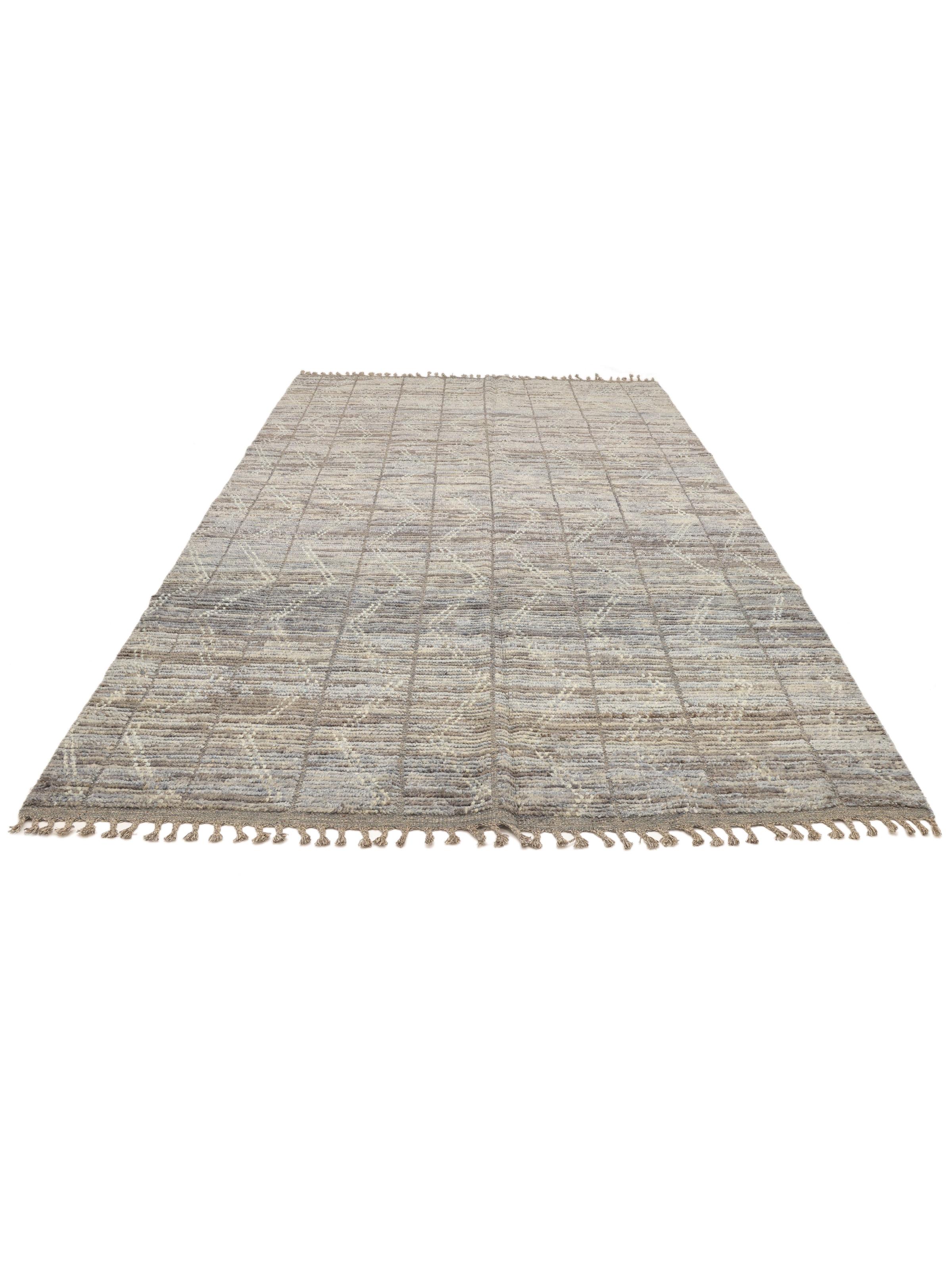
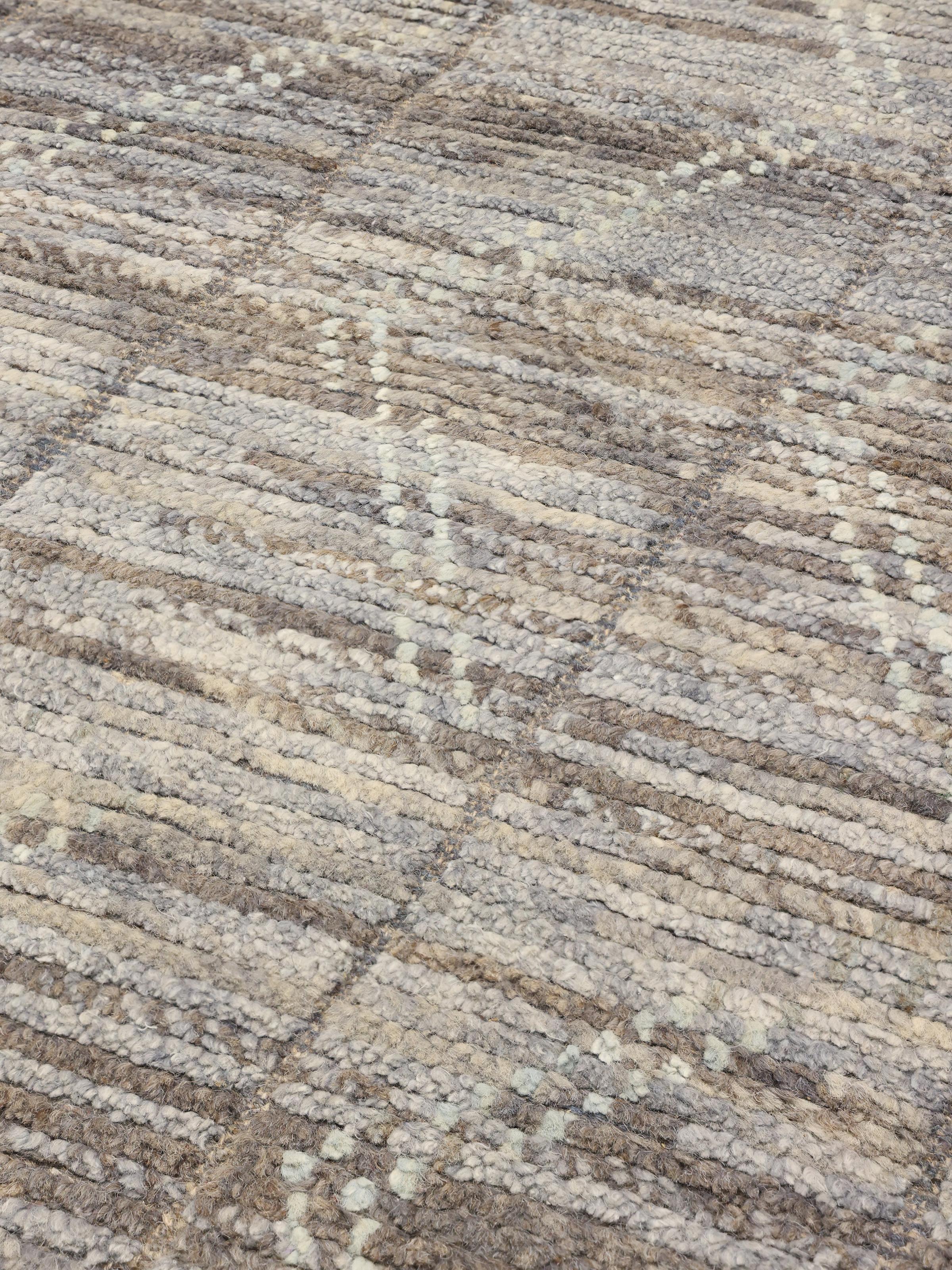
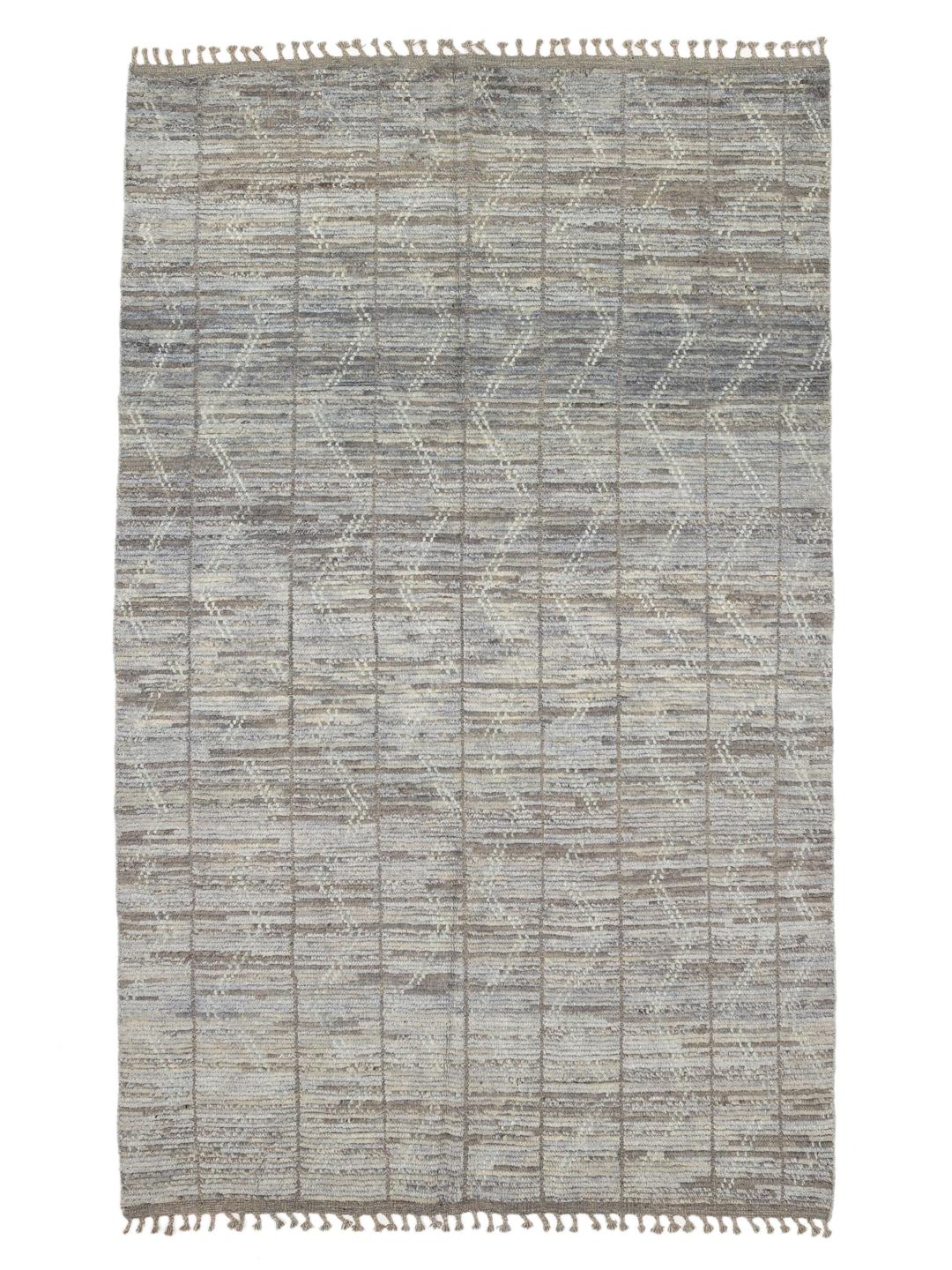
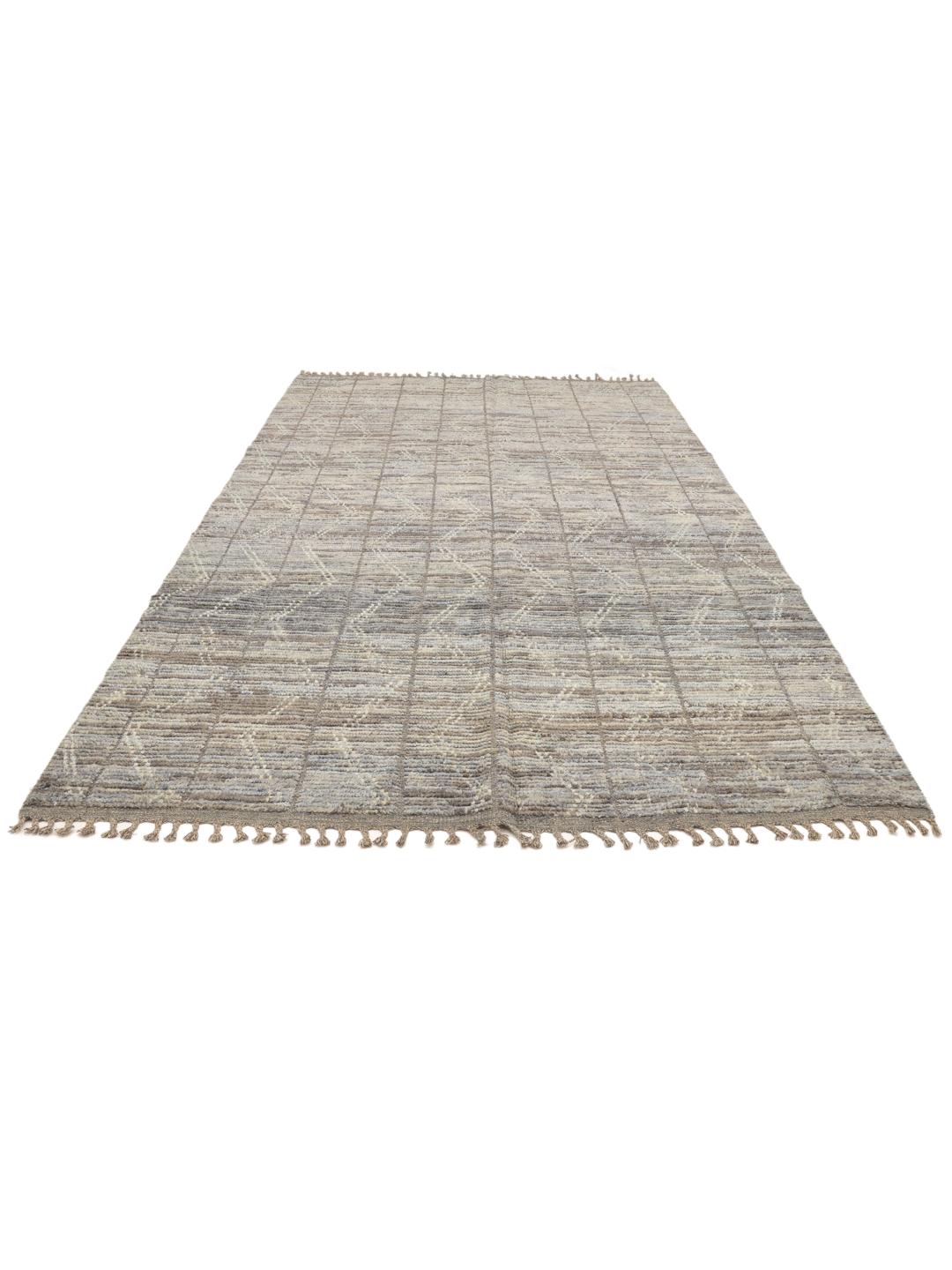
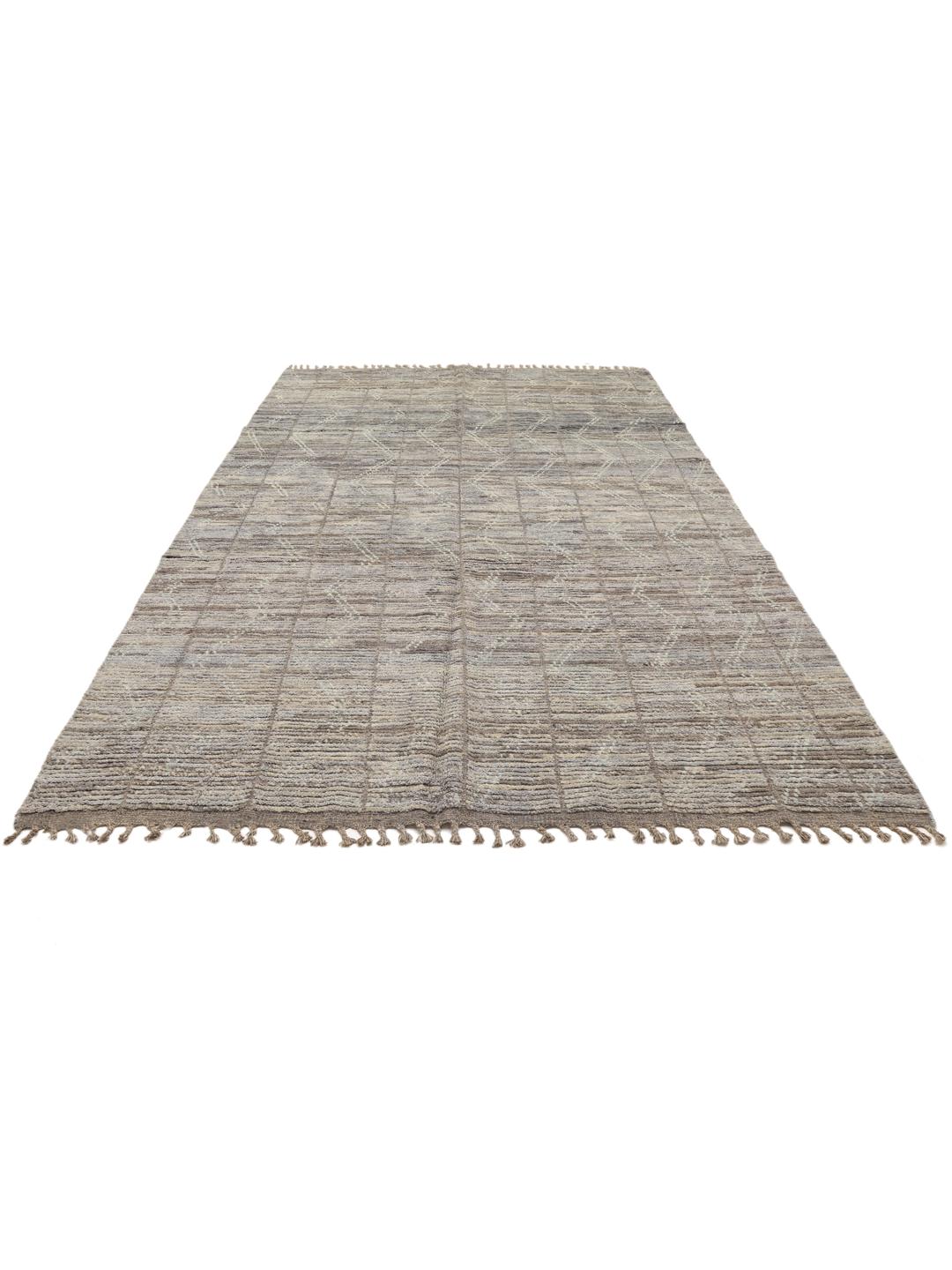
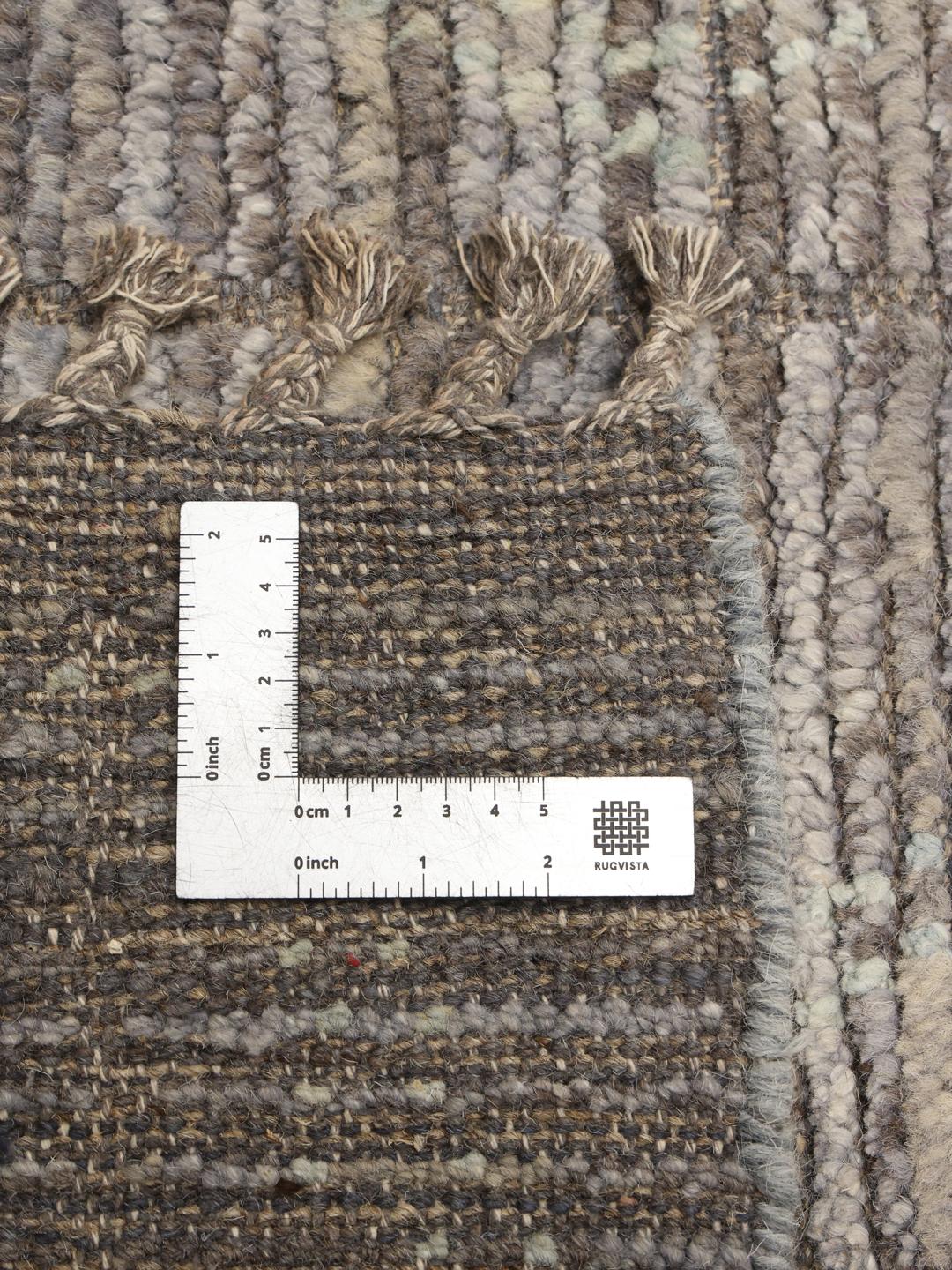
The Berber style traces its origins to the indigenous weaving traditions of North Africa, where hand-knotted rugs were created for both practical use and symbolic storytelling. Over time, these aesthetic principles have travelled and been adopted by master weavers in Afghanistan, who have adapted the minimalist, shaggy, and tactile language of the style to their own rich cultural context.
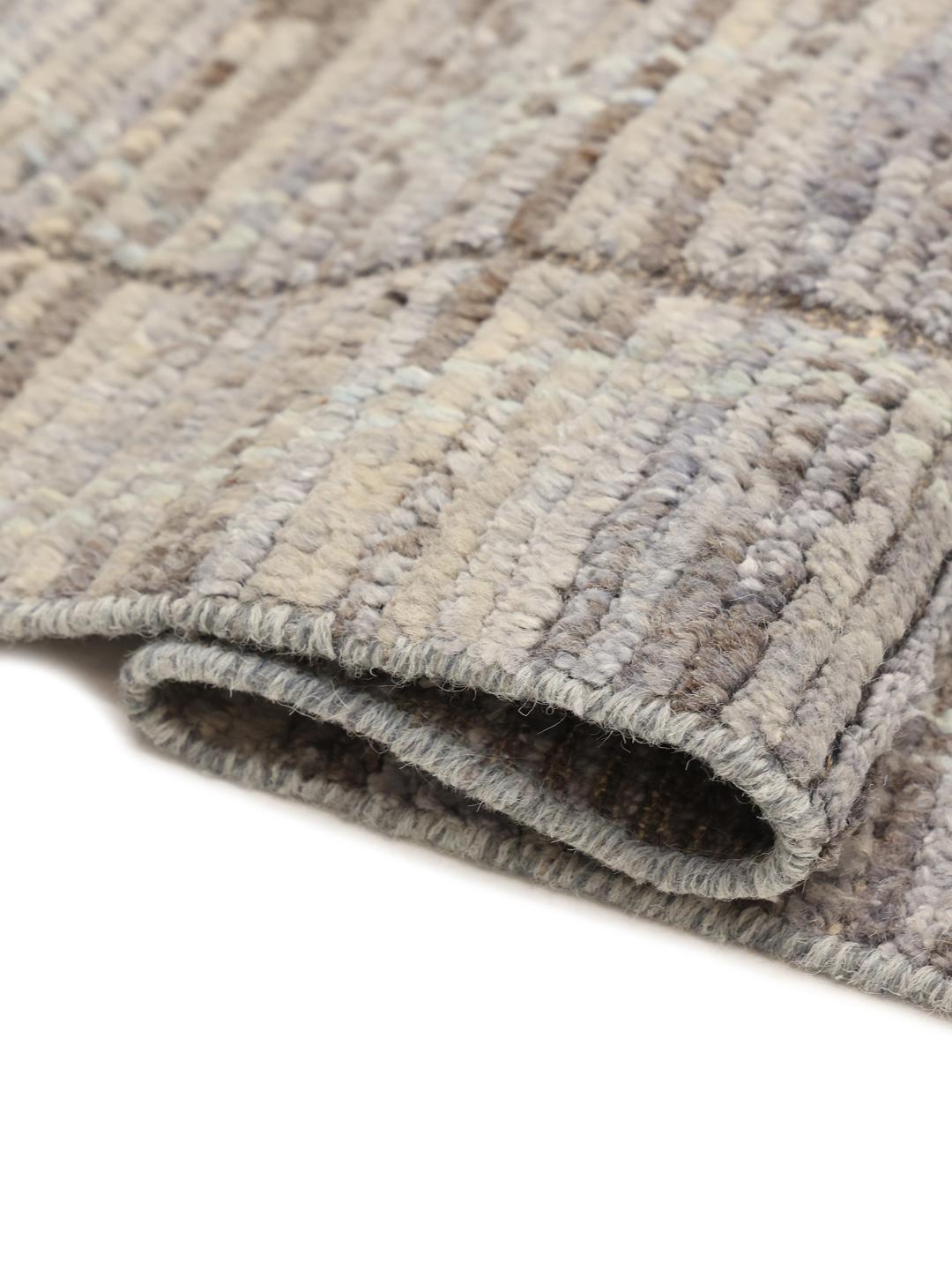
In the context of Afghan weaving, these rugs are often characterised by their focus on natural, undyed wool tones and simple geometric motifs. This evolution reflects a fusion of historical techniques, where the emphasis remains on the quality of the raw material and the strength of the foundation, ensuring that the rug serves as a functional textile that ages with grace.
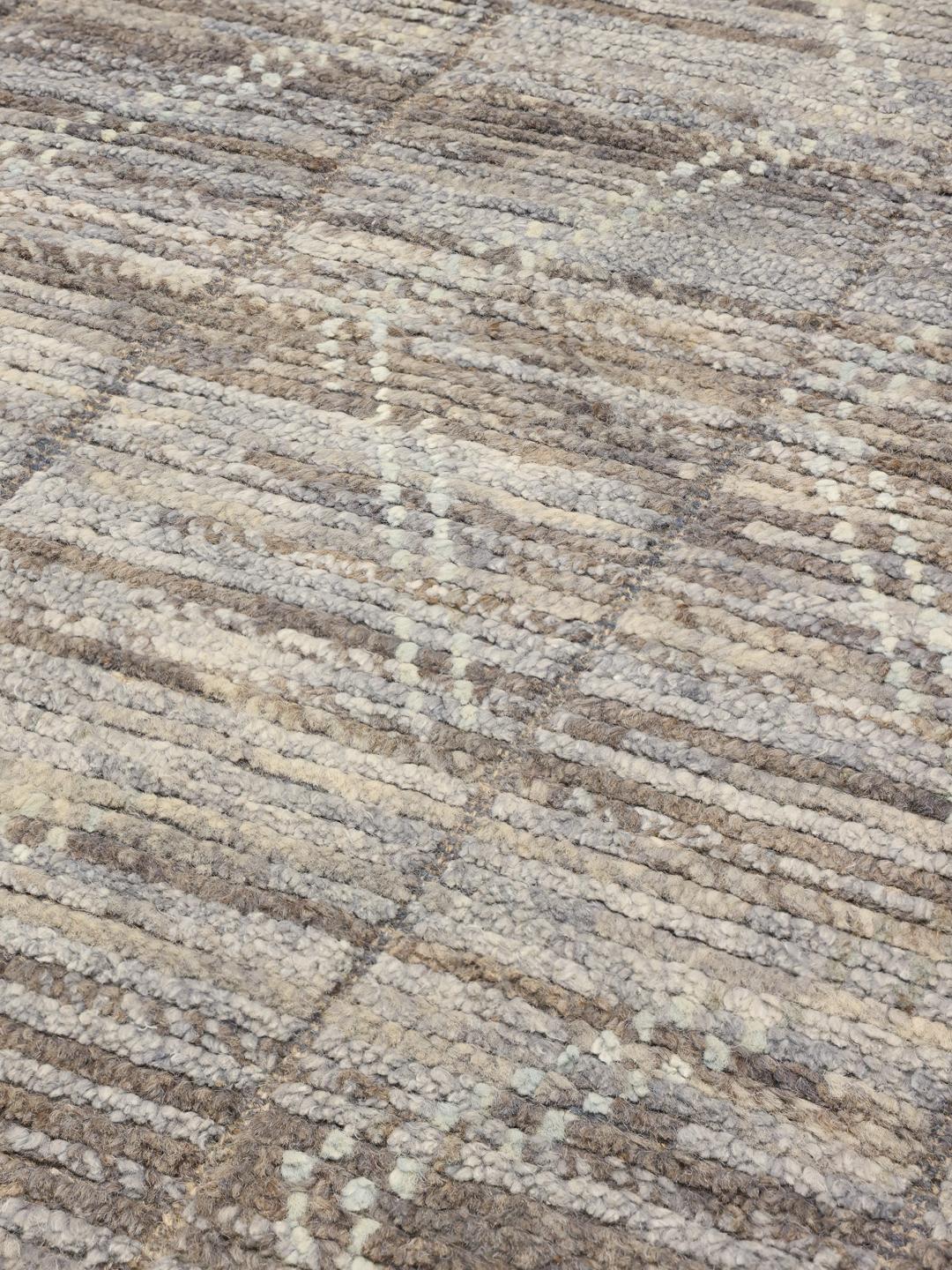
The design of this rug relies on a sophisticated use of negative space and subtle linearity. Rather than relying on complex, dense patterns, it utilises a clean, grid-like structure that highlights the texture of the wool. This minimalist approach creates a sense of airiness and balance, allowing the inherent beauty of the hand-spun fibres to take centre stage.
Owning a piece from this tradition is a commitment to heritage and skilled workmanship. These rugs are highly valued by collectors and enthusiasts who appreciate the human element in every thread, viewing their purchase not merely as a floor covering, but as a connection to a long-standing lineage of craft that prioritises patience, intentionality, and lasting quality.