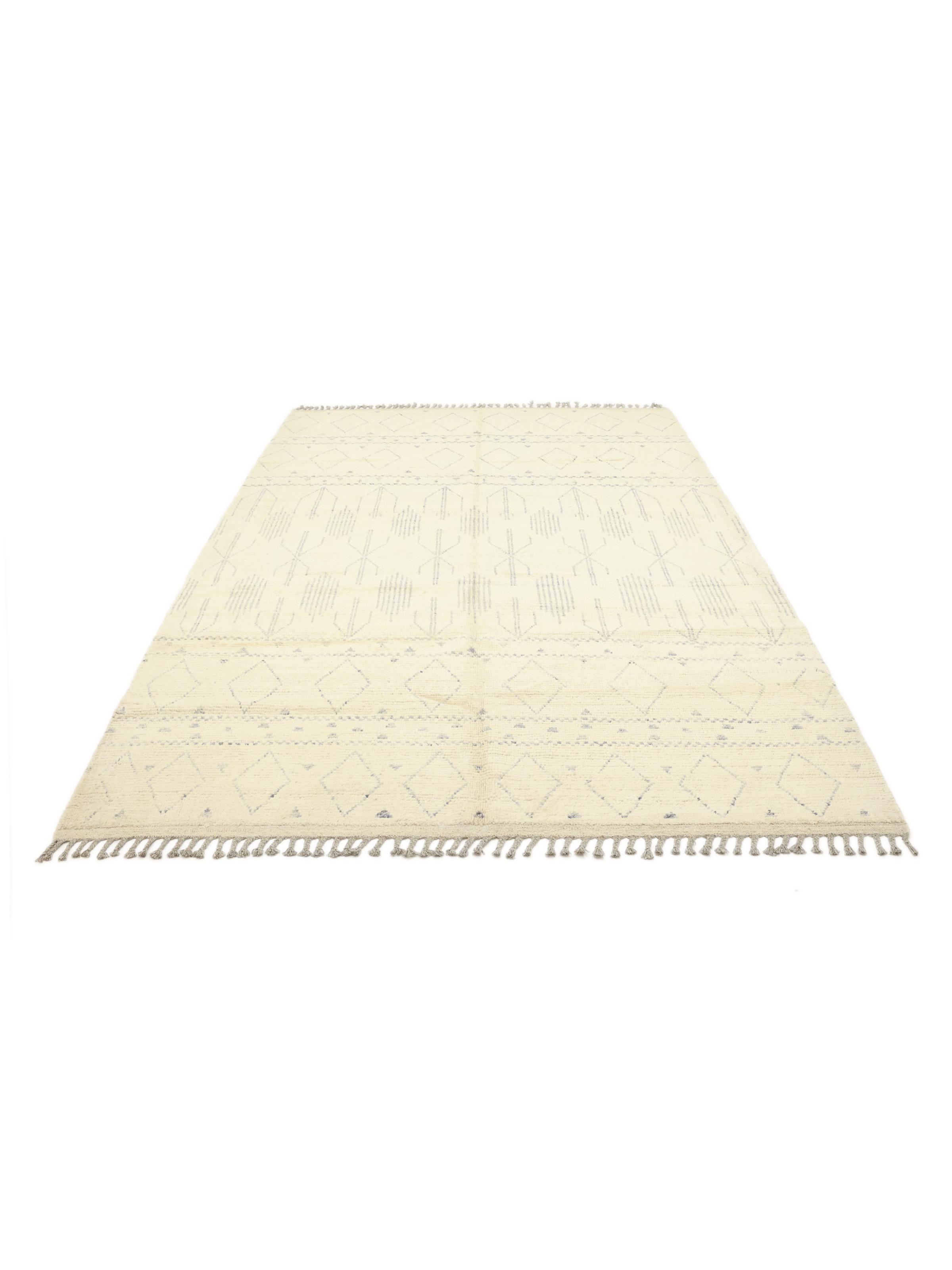
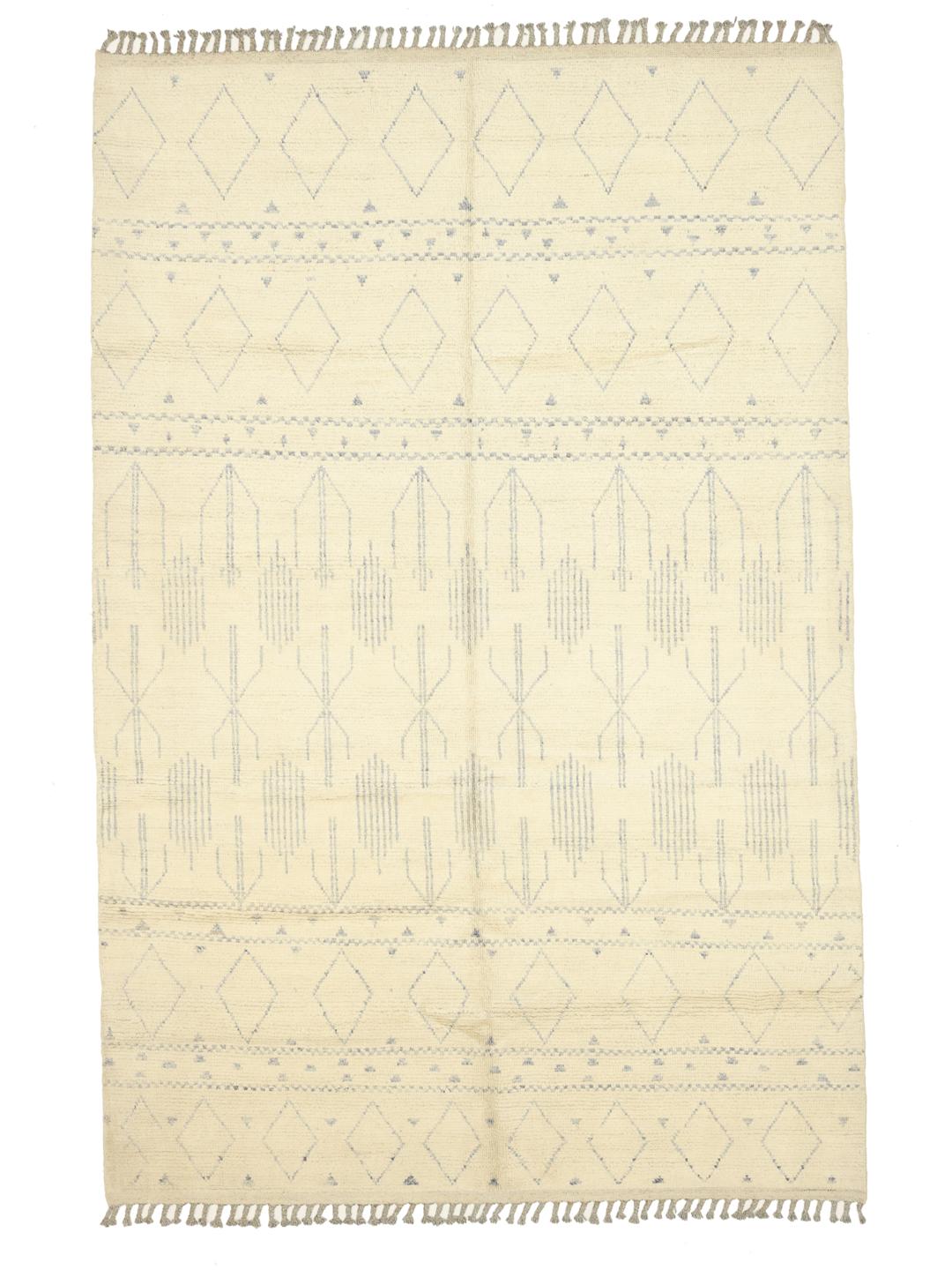
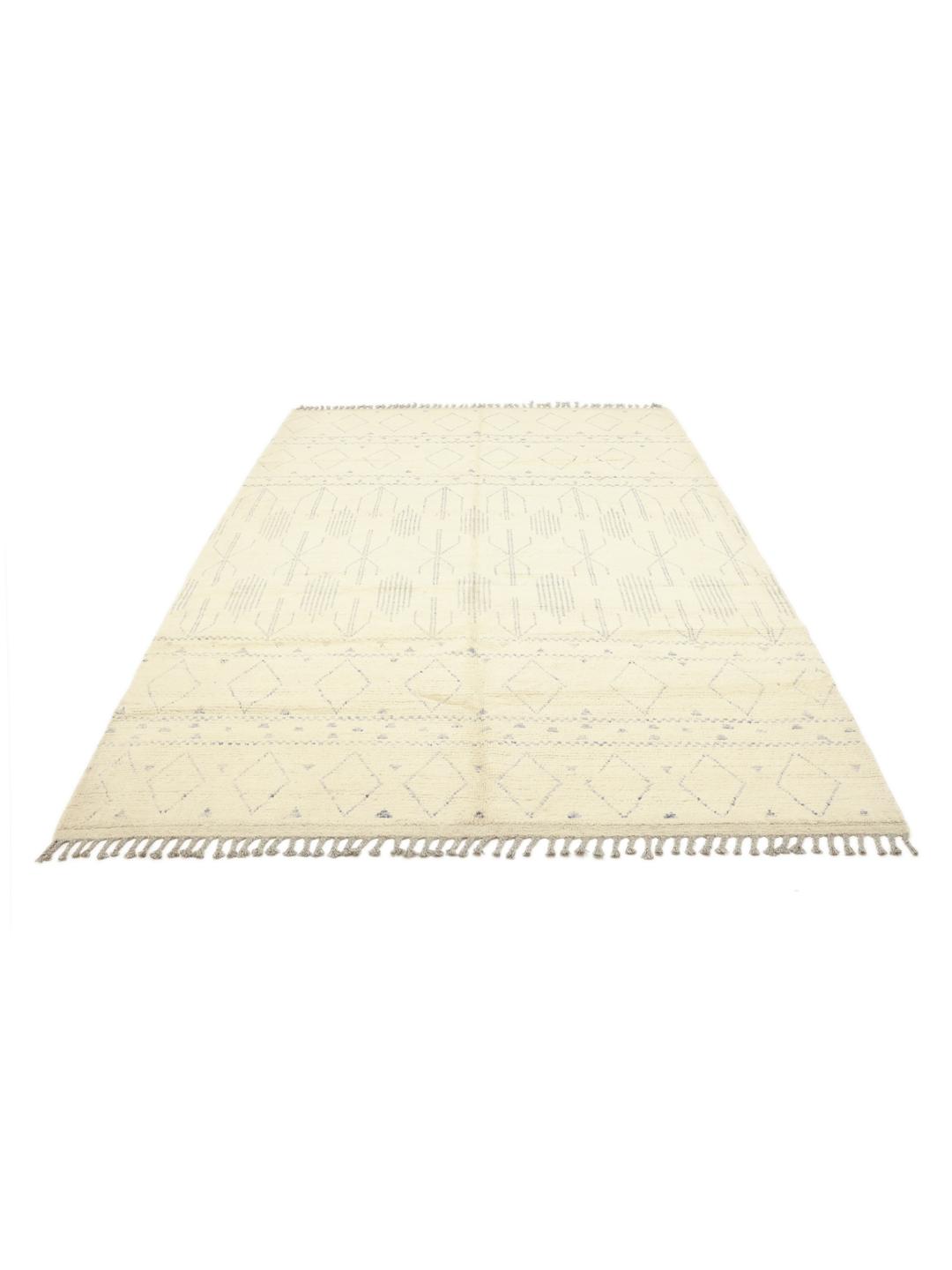
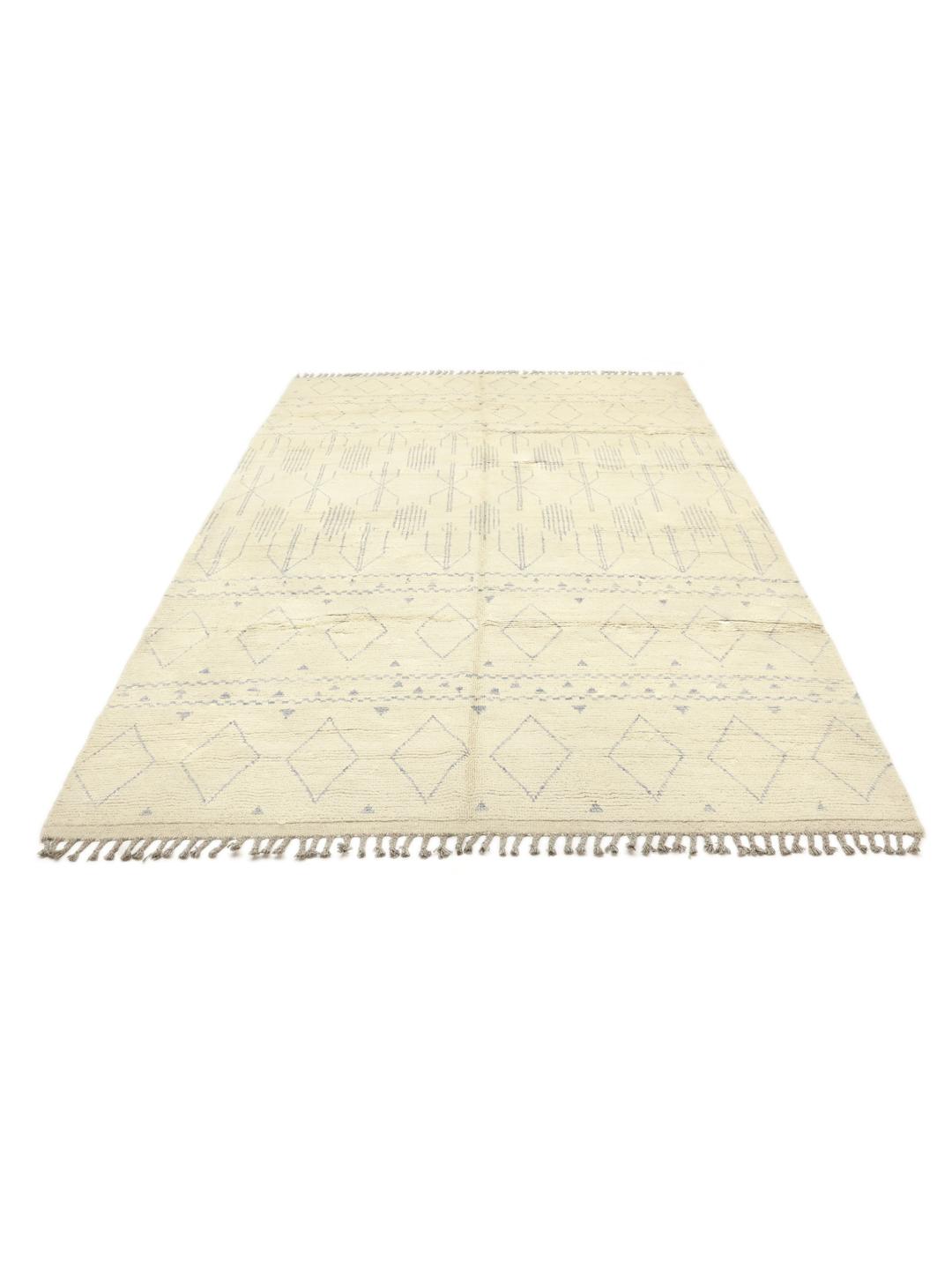
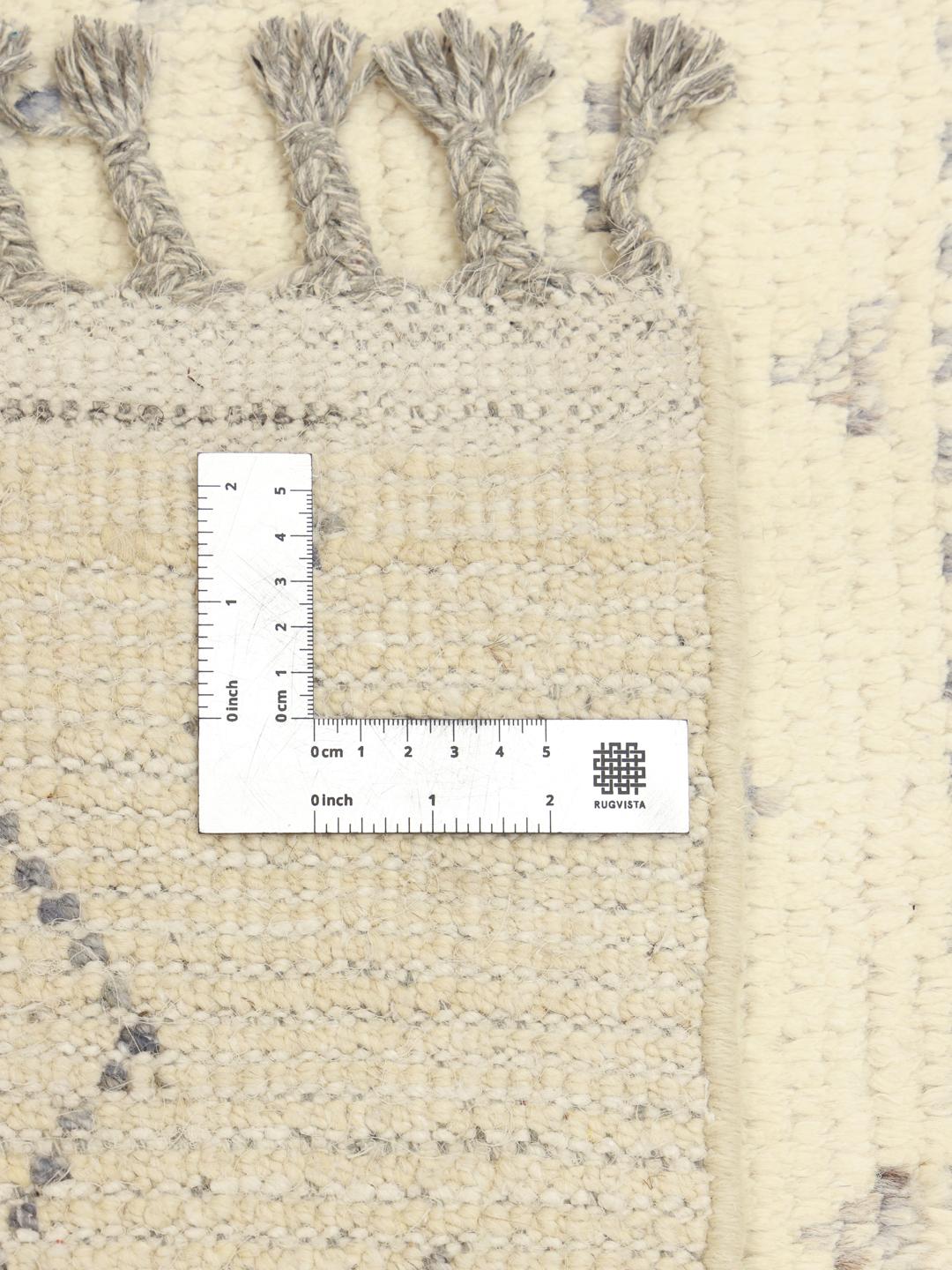
The Berber style of rug-making has its roots in the mountainous regions of North Africa, where nomadic tribes traditionally wove these pieces for warmth and utility. Over generations, the aesthetic has migrated and evolved, finding a home in the workshops of Afghanistan where skilled artisans have adopted these iconic, minimalist traditions to create modern expressions of an ancient craft.
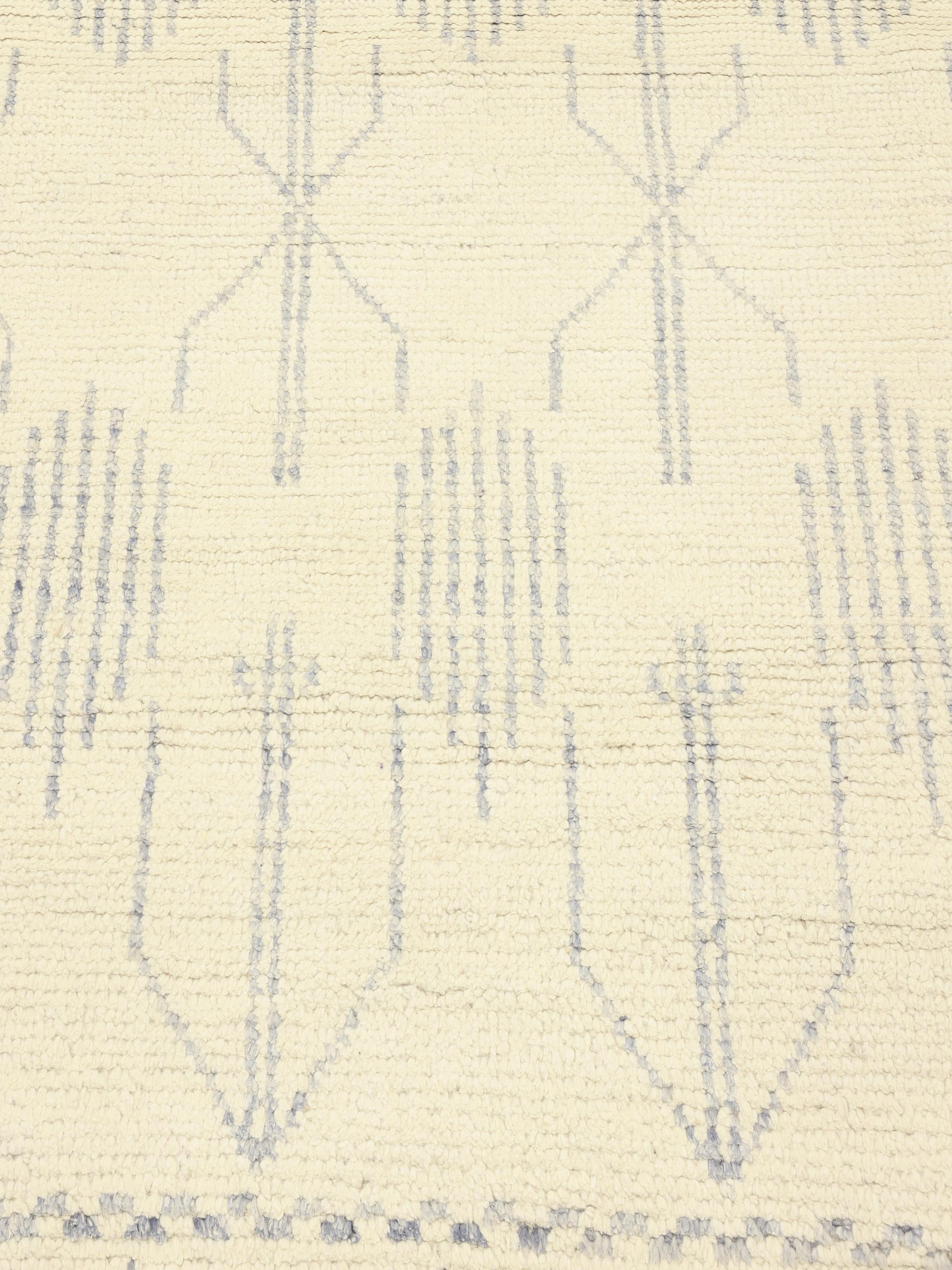
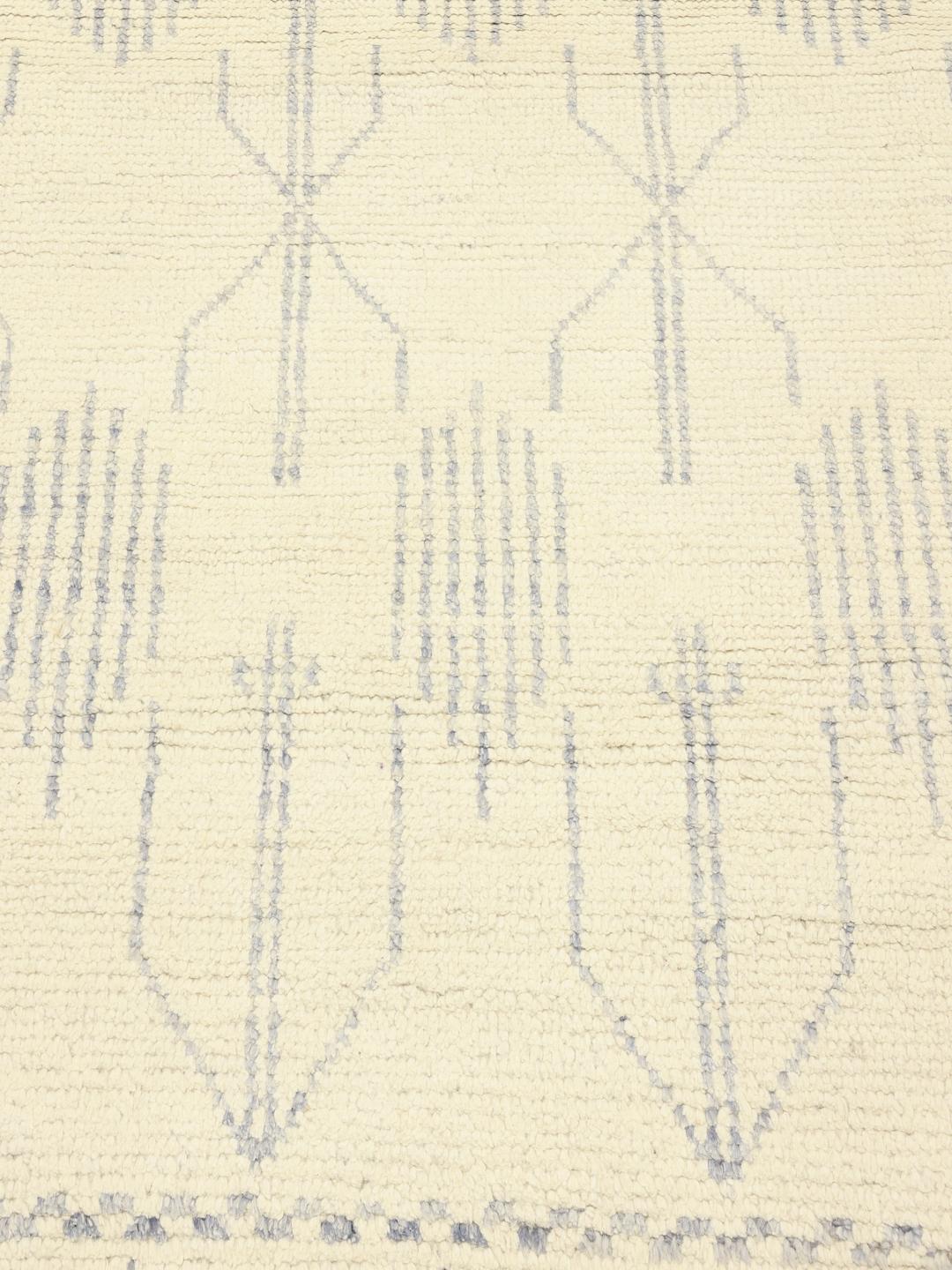
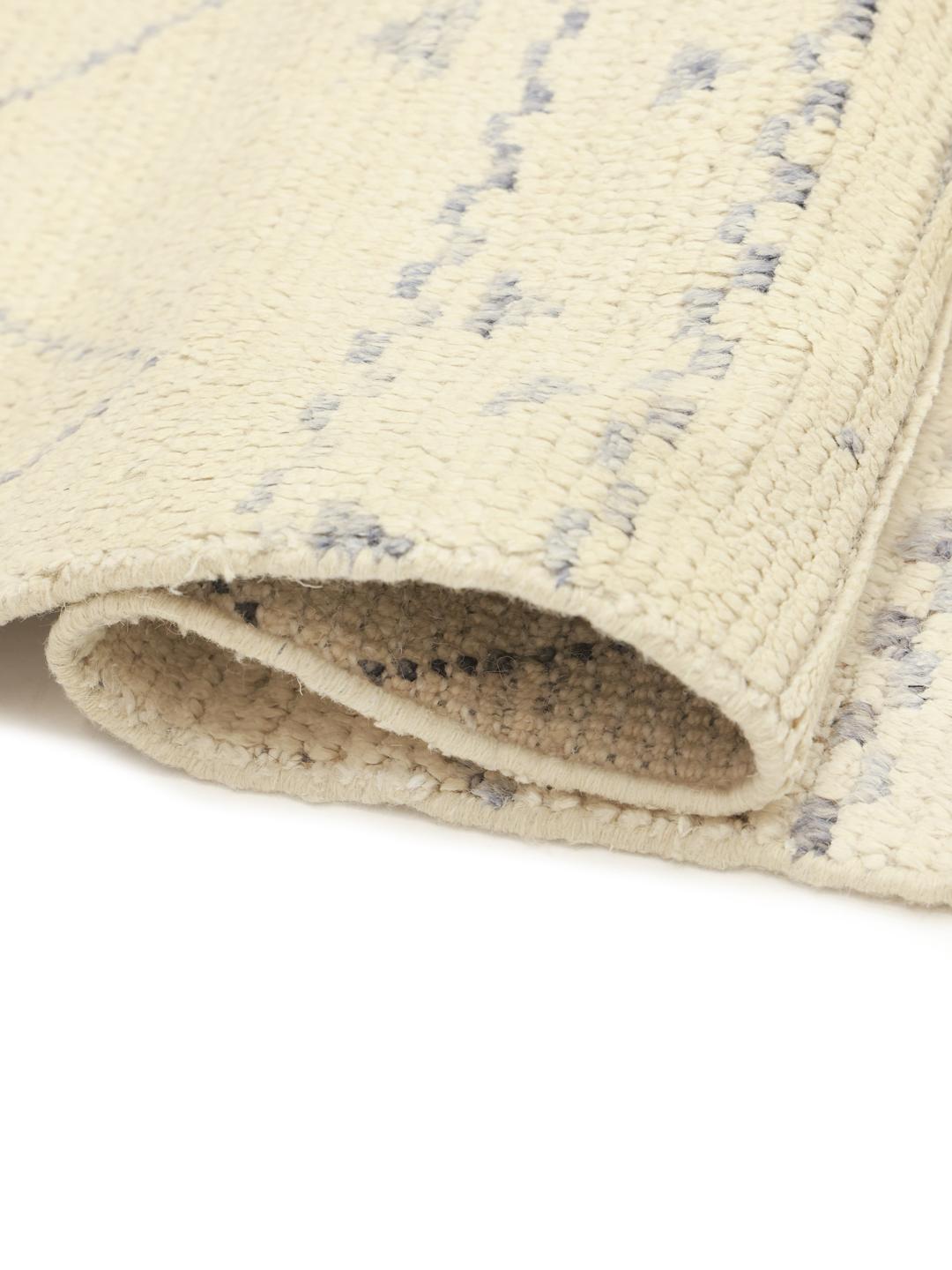
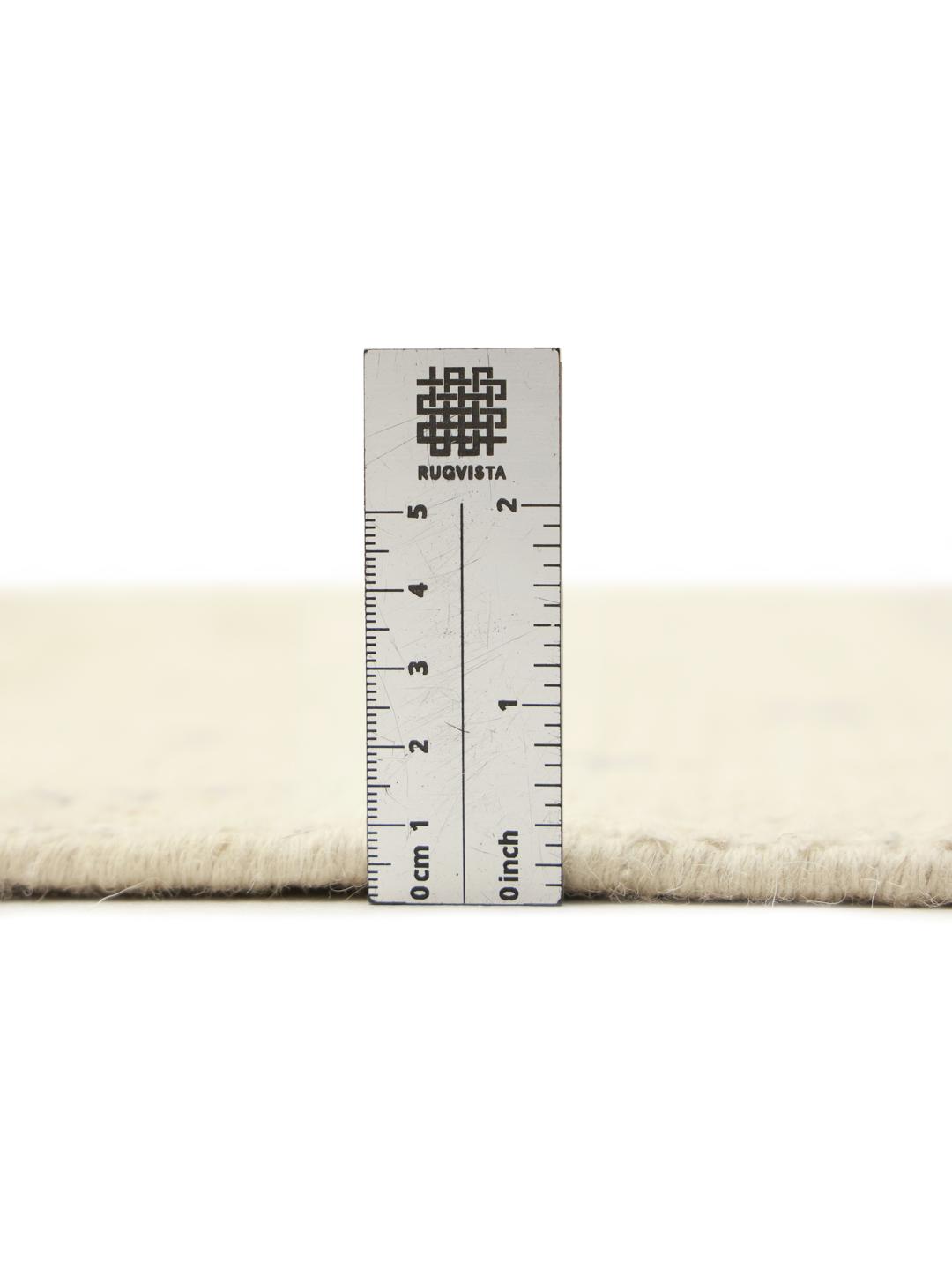
The term 'Berber' refers to the specific design language characterised by simple, often geometric, motifs and a focus on natural, undyed wool. These rugs are celebrated for their thick, luxurious pile and their ability to bring a sense of rustic comfort to modern interiors. The technical mastery required to maintain such even, clean lines in a hand-knotted format is a testament to the artisan's deep understanding of their craft.
Design elements in this style often feature symbolic shapes like diamonds and crosses, which historically served as protective talismans for the weavers. In this particular piece, the subtle, organic patterns are arranged with a sense of deliberate calm, moving away from overly ornate designs in favour of a clean, rhythmic flow that emphasises the beauty of the material itself.
Collecting these rugs is an investment in cultural heritage and human skill. Each piece acts as a bridge between traditional nomadic life and contemporary living, offering a unique narrative that mass-produced items lack. By acquiring this rug, you are preserving a centuries-old tradition and supporting the talented individuals who continue to keep these historic techniques alive.