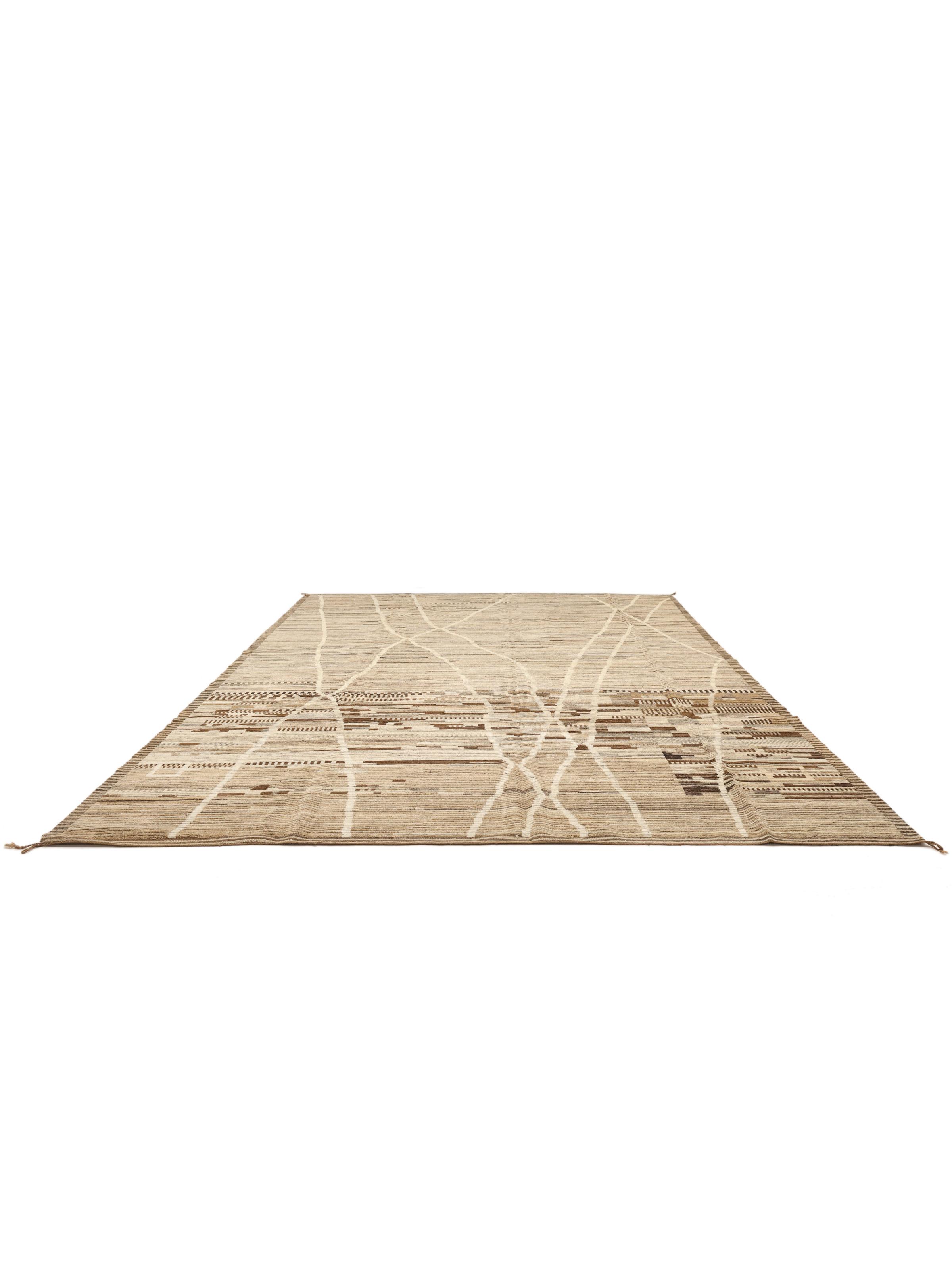
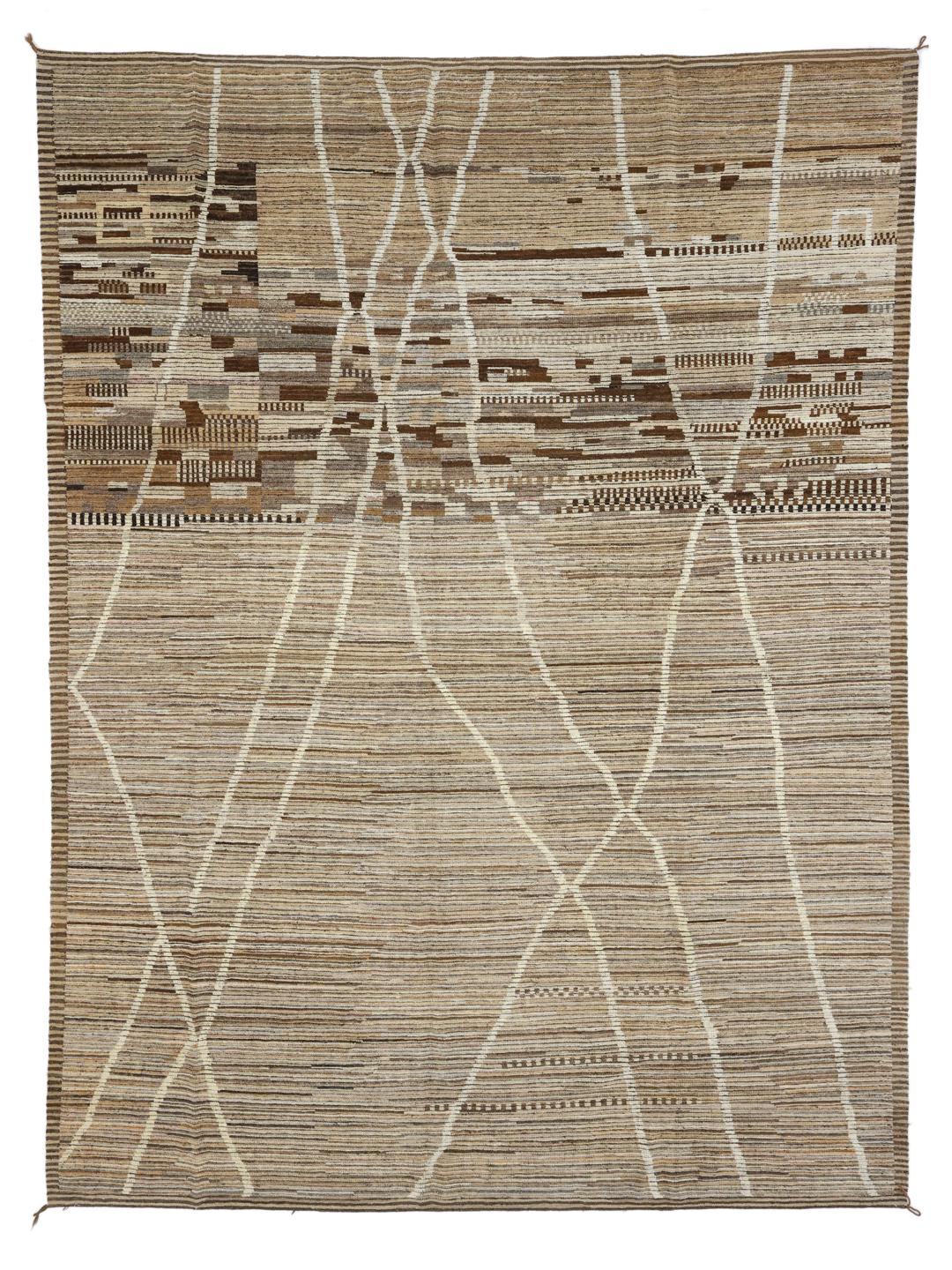
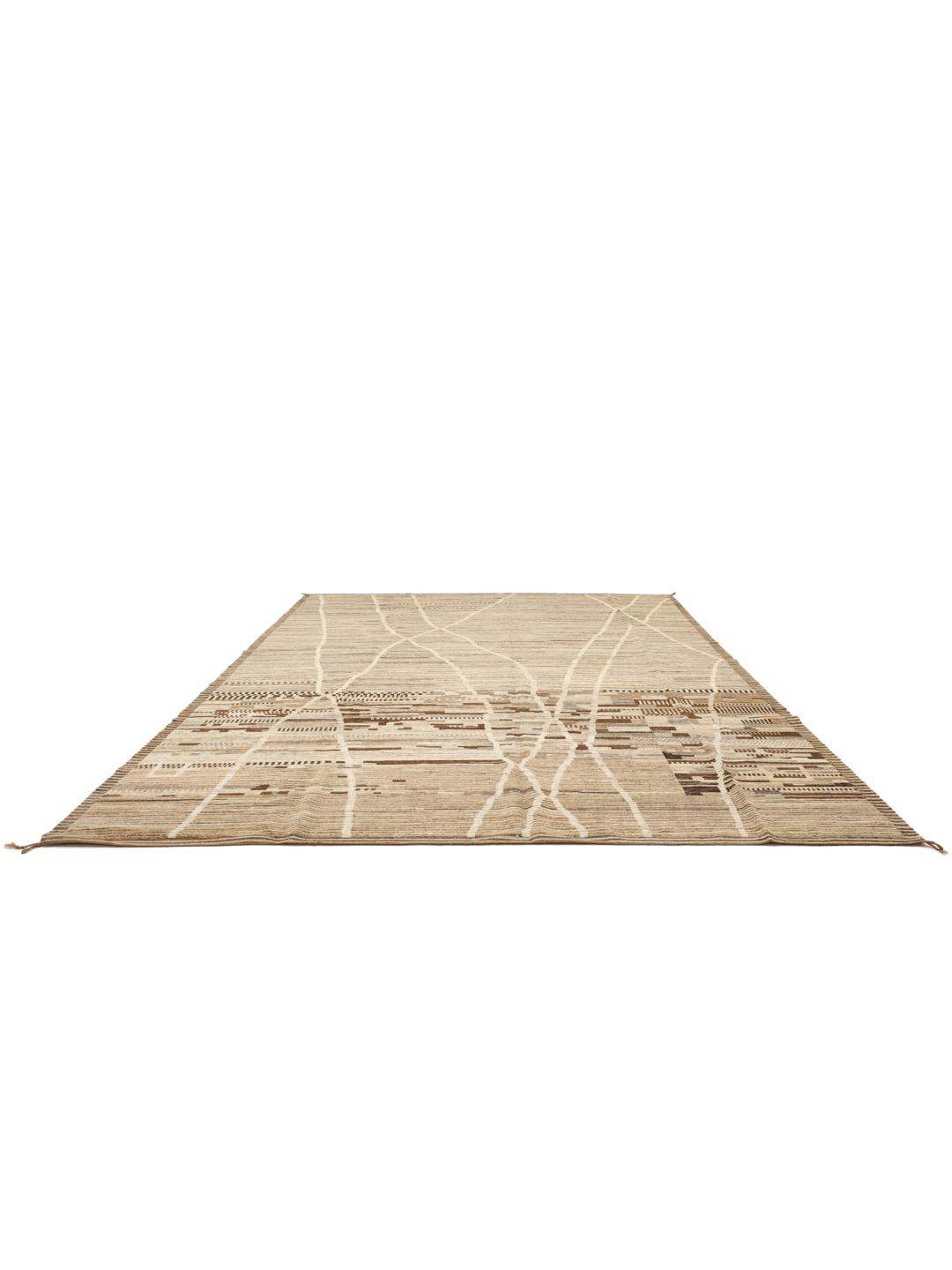
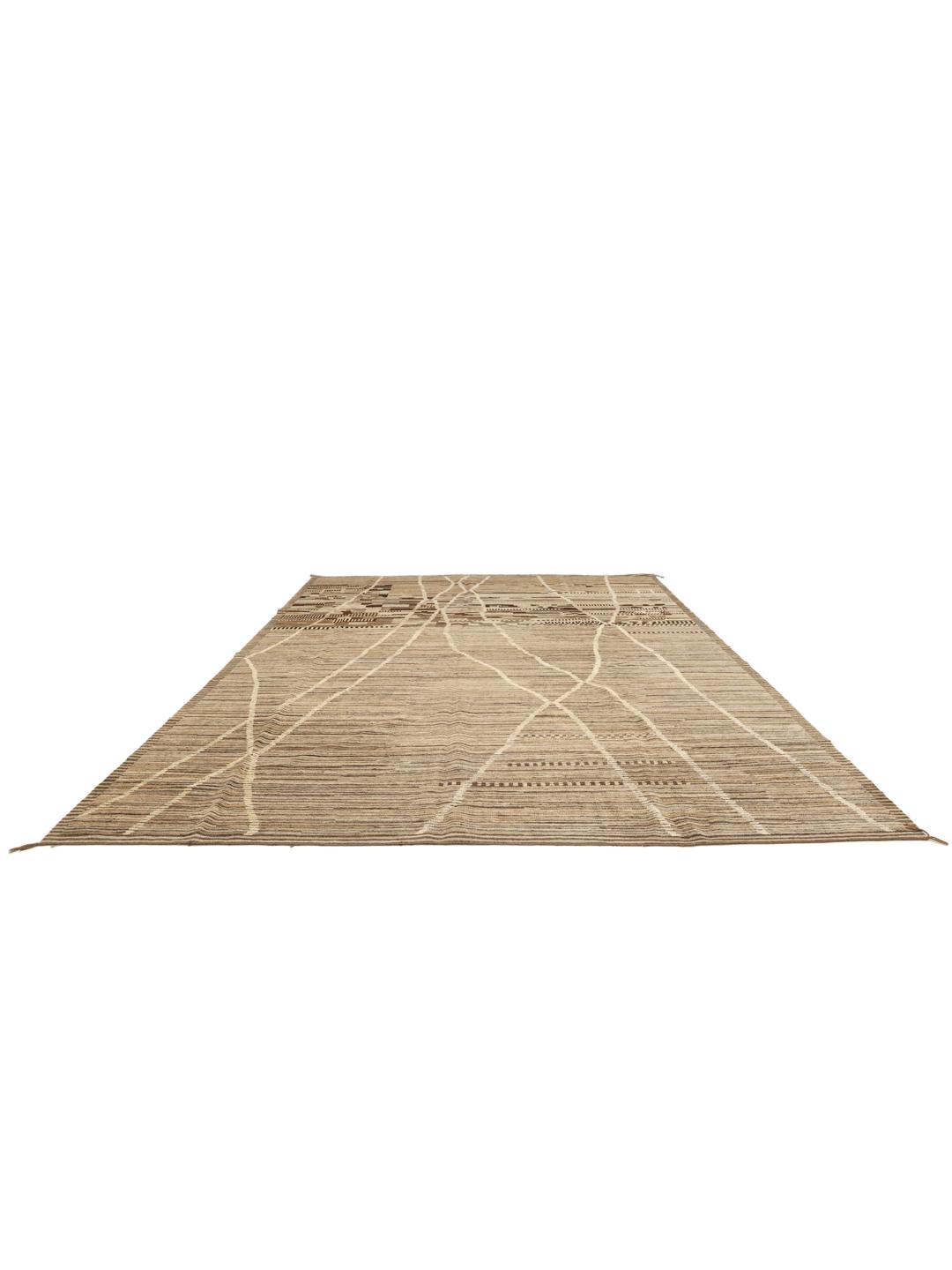
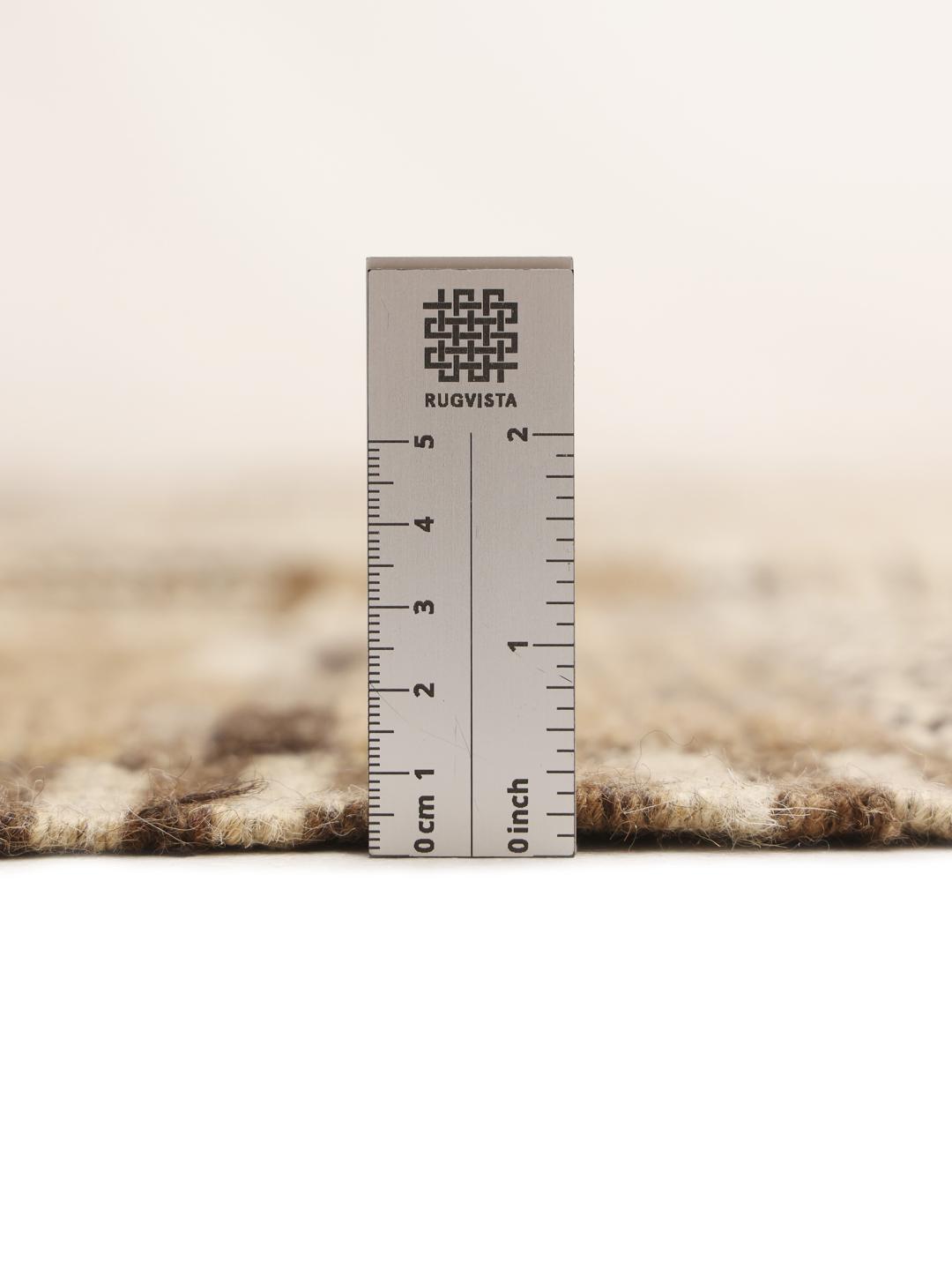
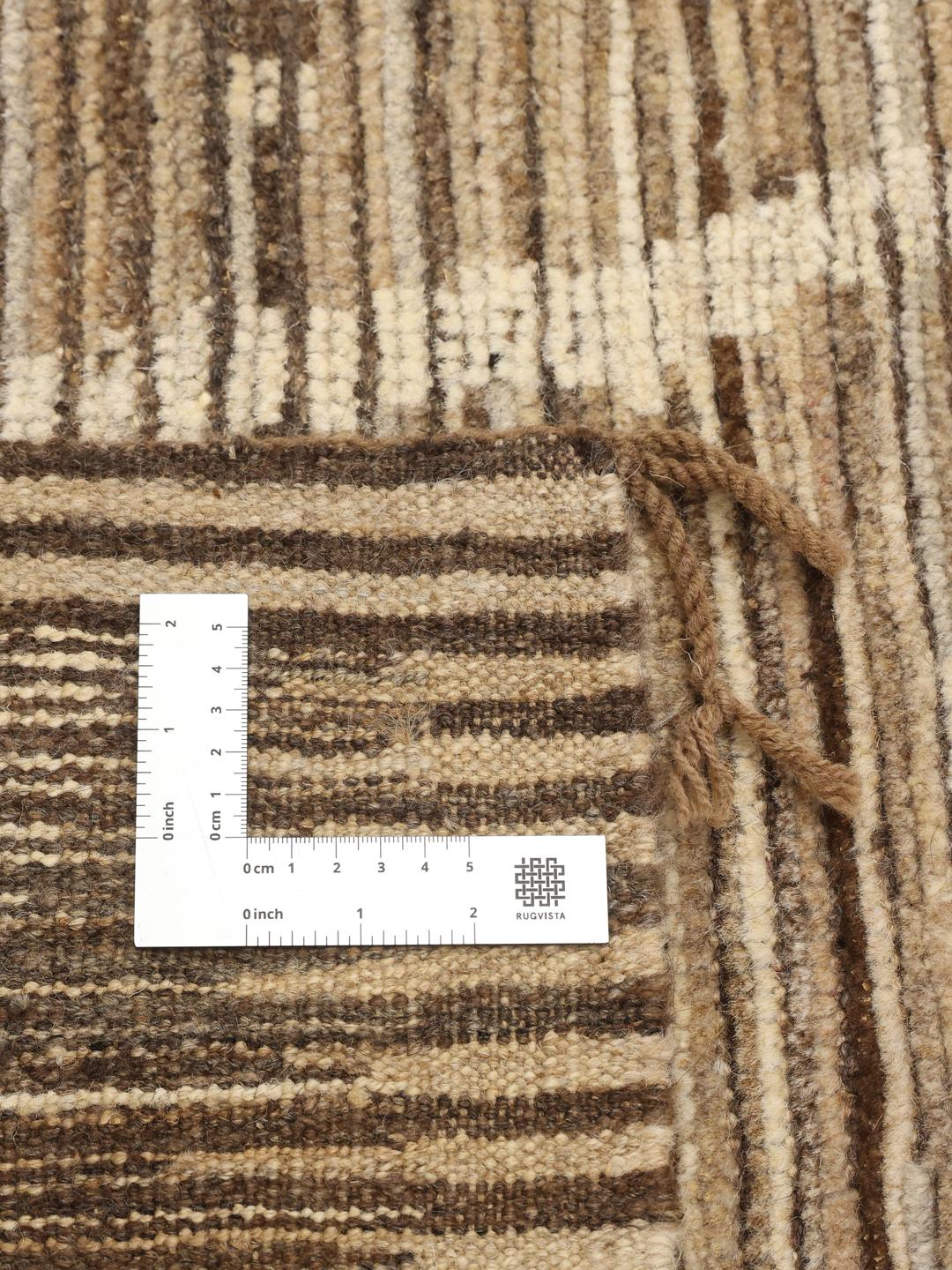
The Berber style originates from the nomadic traditions of the Atlas Mountains in North Africa, where hand-woven rugs were created for domestic warmth and protection from the elements. Over generations, the aesthetic—characterised by its thick, plush pile and minimalist, geometric motifs—has travelled and evolved, finding a vibrant second home in the weaving centres of Afghanistan.
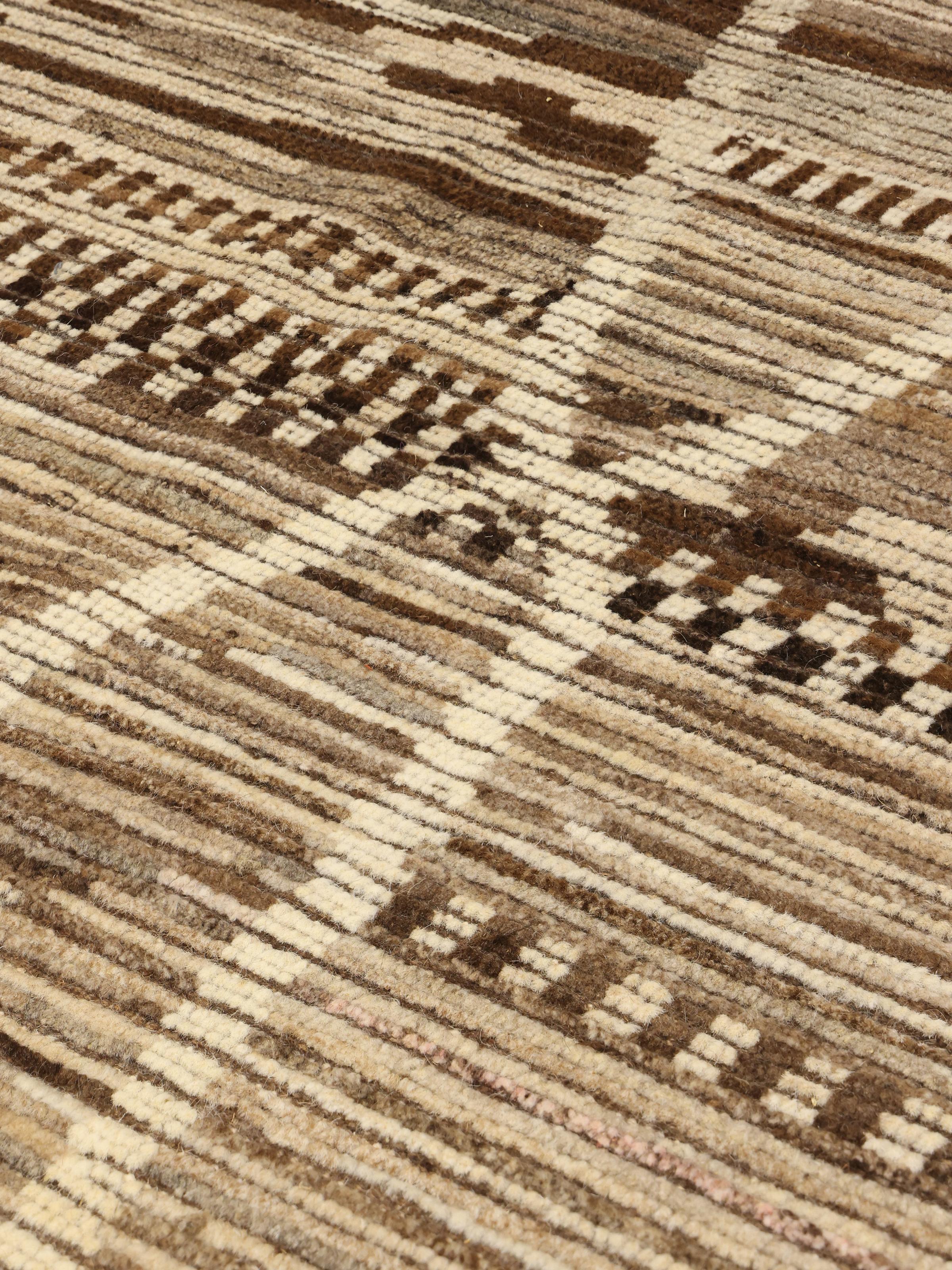
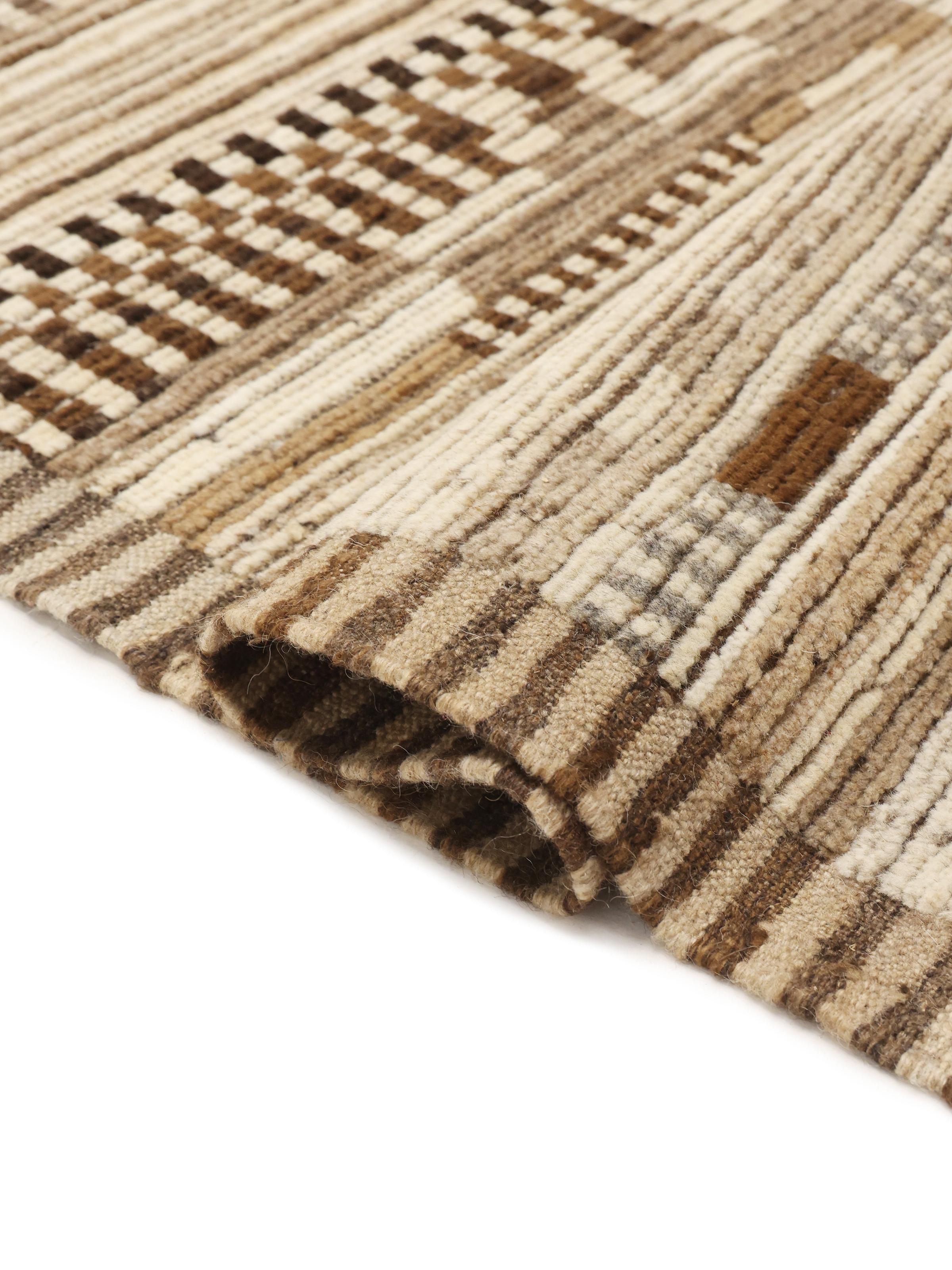
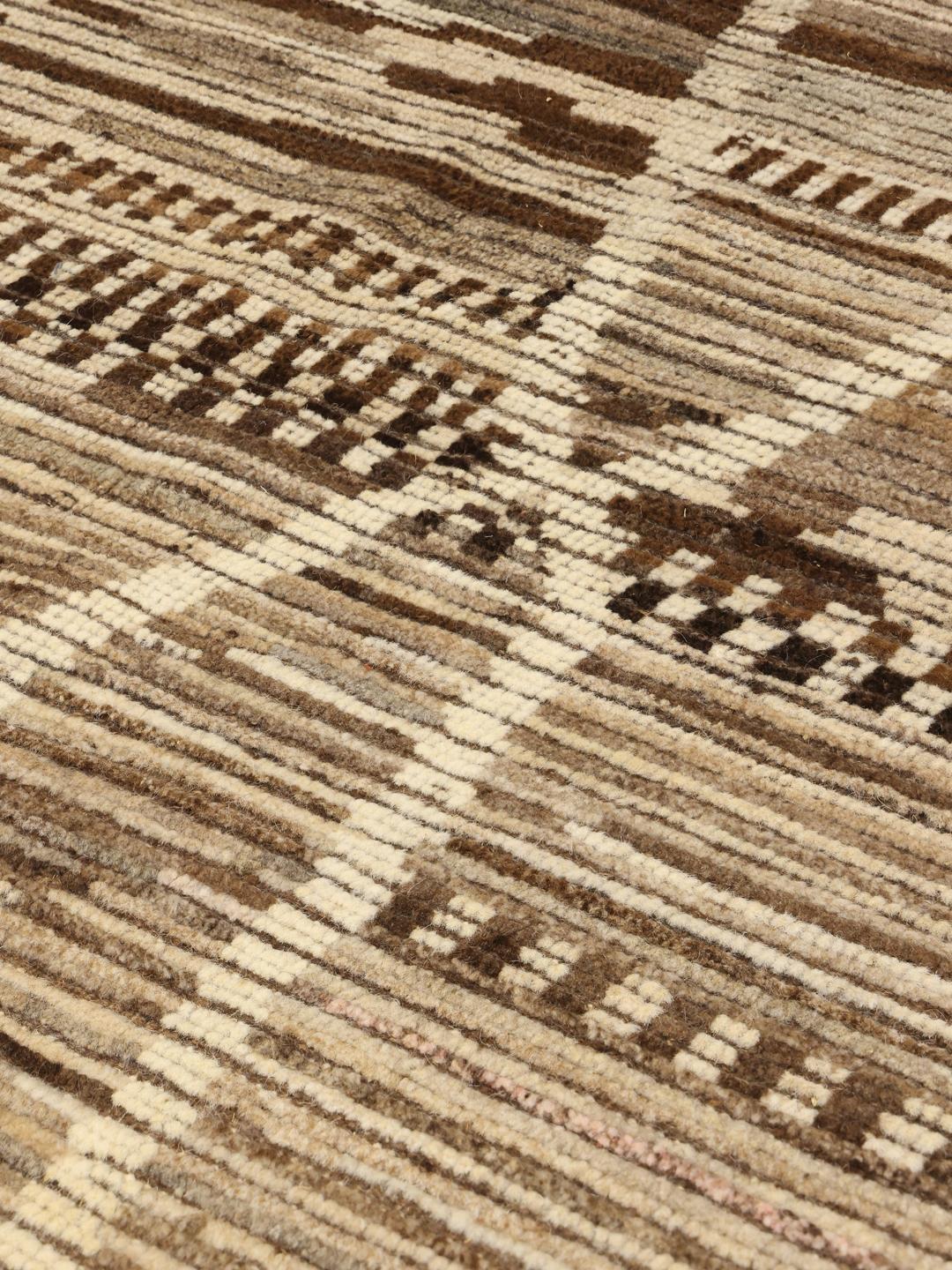
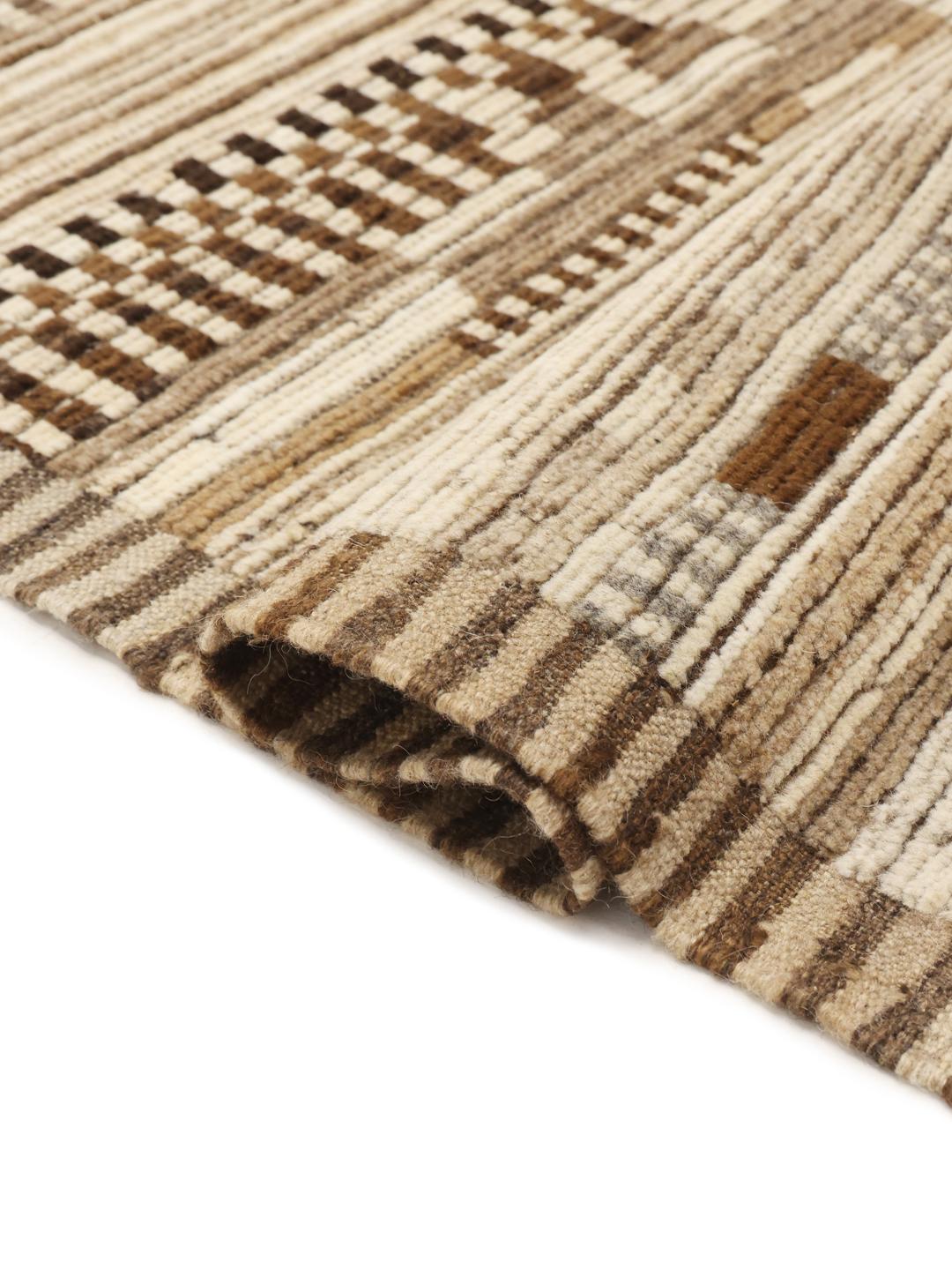
In the context of Afghan craftsmanship, the term 'hand-knotted' refers to the technique of tying individual strands of Wool onto a foundation. This is a time-honoured method that allows for greater control over pattern and density compared to other weaving styles. The 2-ply construction often utilised in this region means the Wool is twisted for extra strength, resulting in a pile that is more lustrous and resilient against daily wear.
Visually, these rugs are known for their focus on negative space and abstract, often spontaneous, geometric patterns. While traditional designs might feature diamonds or broken lines, the modern evolution of the style often incorporates more artistic, free-flowing motifs. The use of earthy, undyed, or naturally dyed Wool is a hallmark that honours the rug's connection to the landscape.
Collecting a rug from this tradition is an investment in cultural heritage and human skill. Because these pieces are made by hand without the use of automated looms, they carry the subtle imperfections of the human hand, which are celebrated as markers of authenticity. Owning such a rug is a way to connect with a long lineage of artisans who have kept this essential craft alive through changing times.