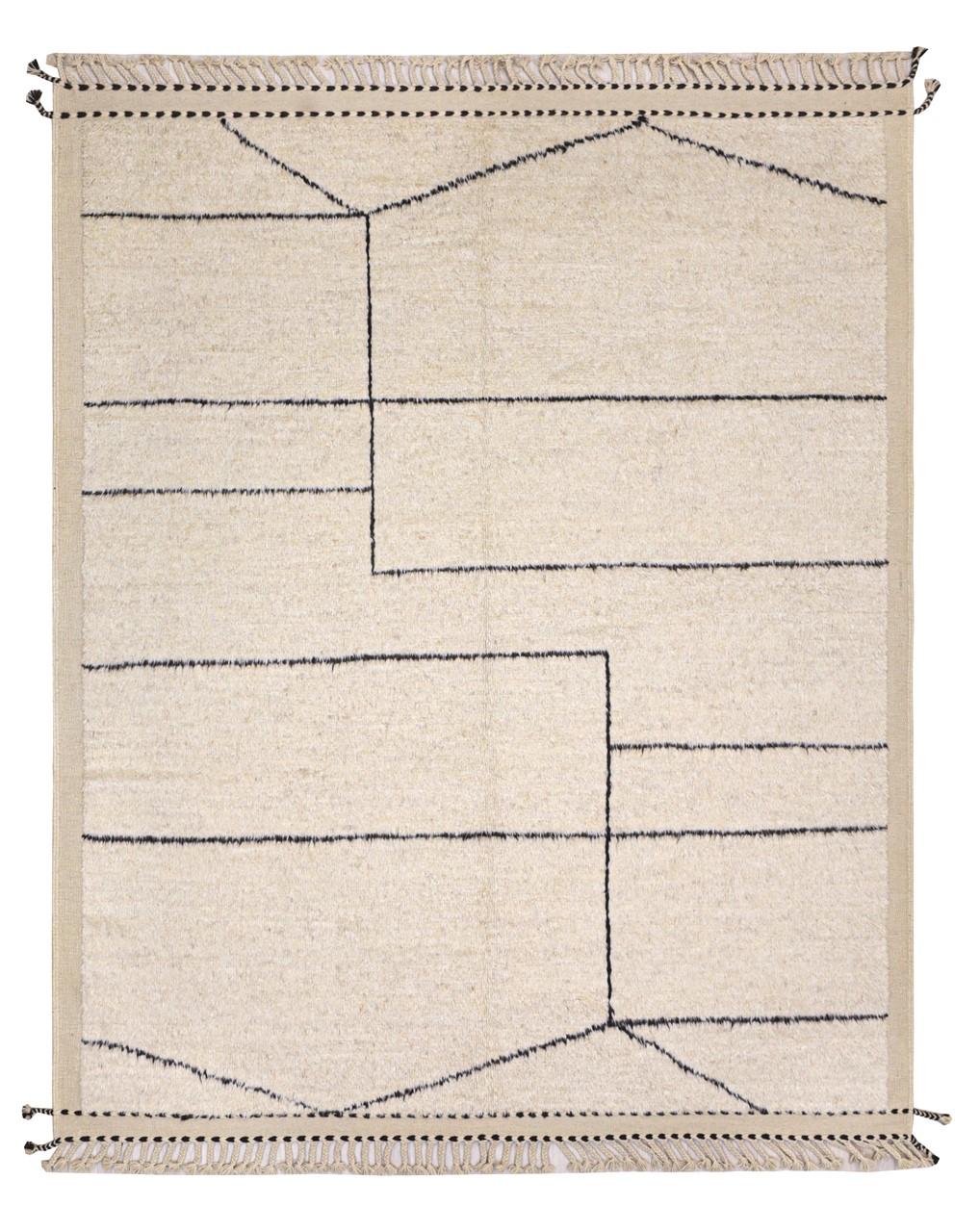
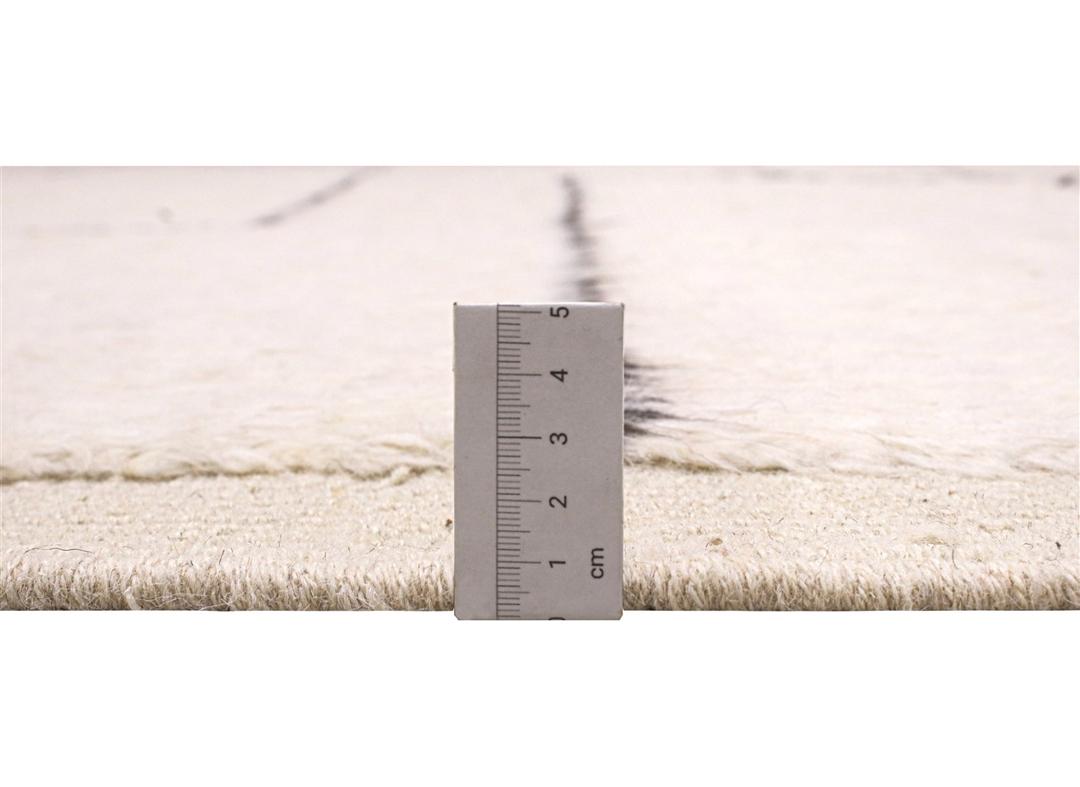
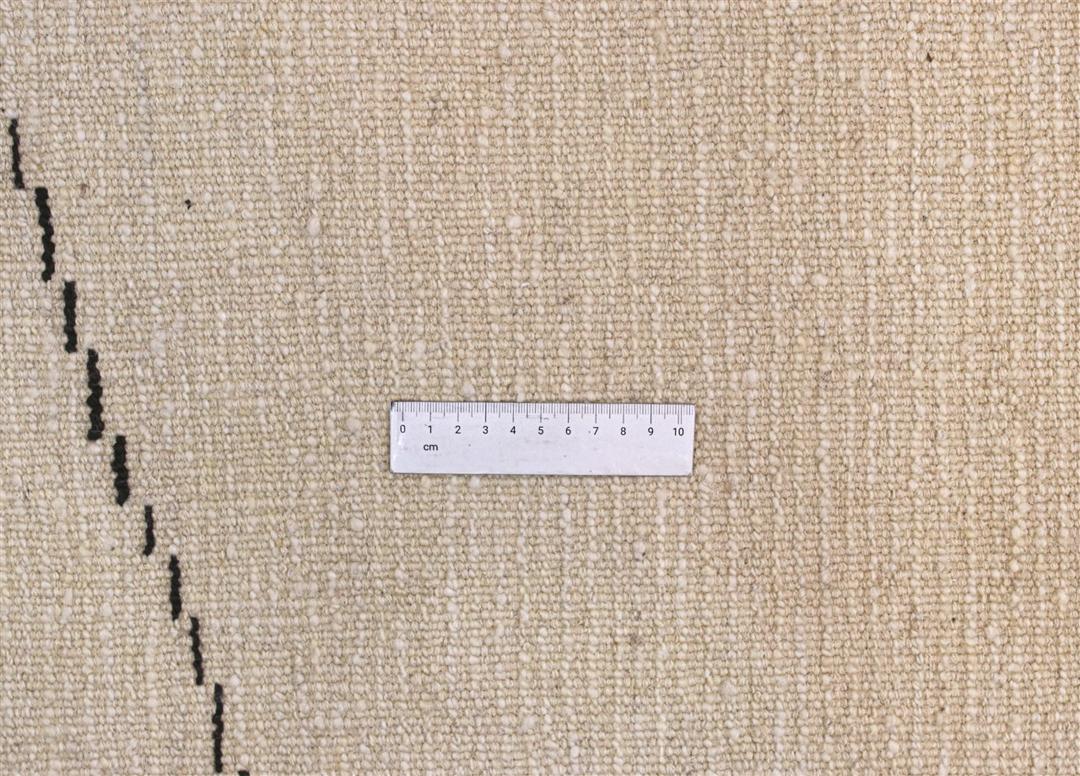
The tradition of Berber-style rugs has a fascinating history that spans across North Africa and has been interpreted by weavers in Afghanistan, where this piece was created. Traditionally, these rugs were woven by nomadic tribes to provide insulation and comfort in harsh environments. Over time, the style has evolved, with weavers in the Middle East adopting these iconic aesthetic principles to create rugs that blend ancient techniques with a contemporary, minimalist vision.
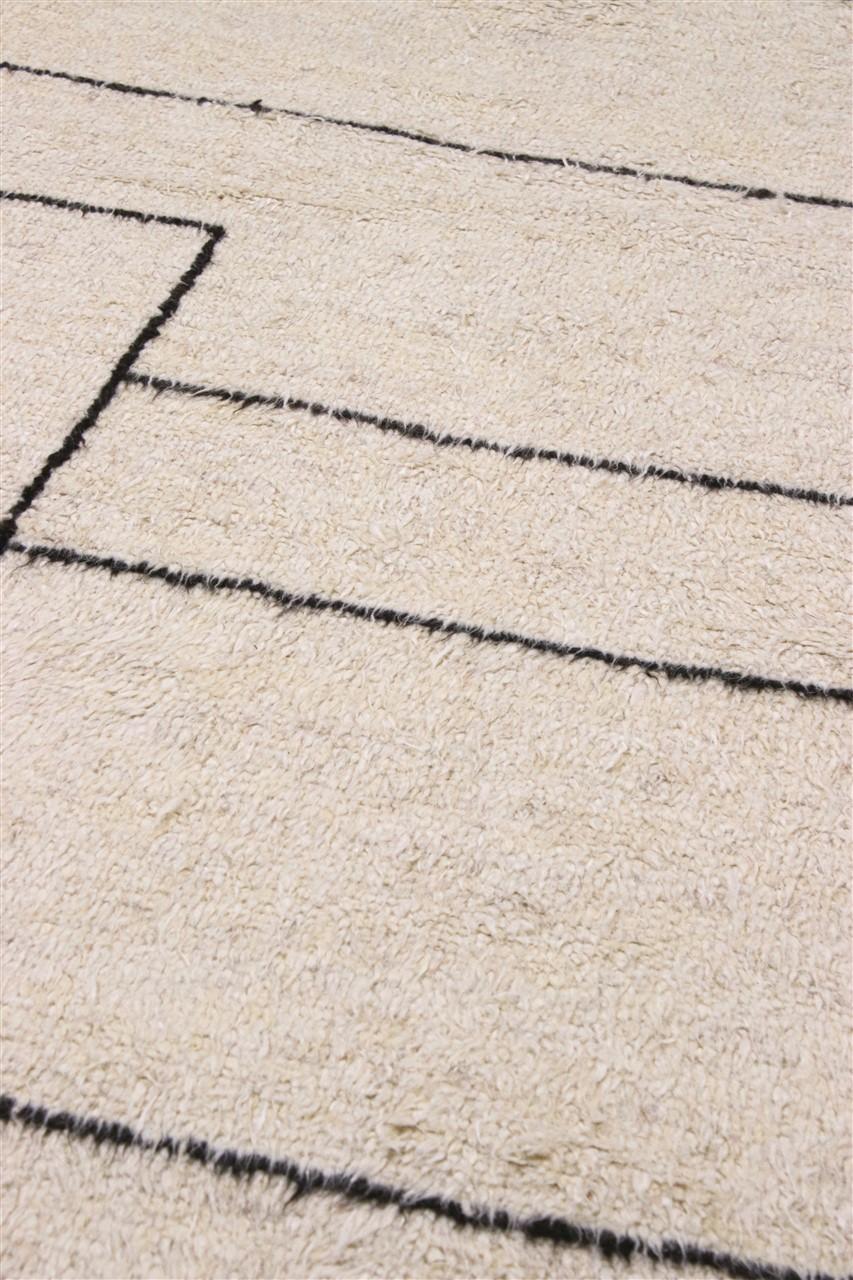
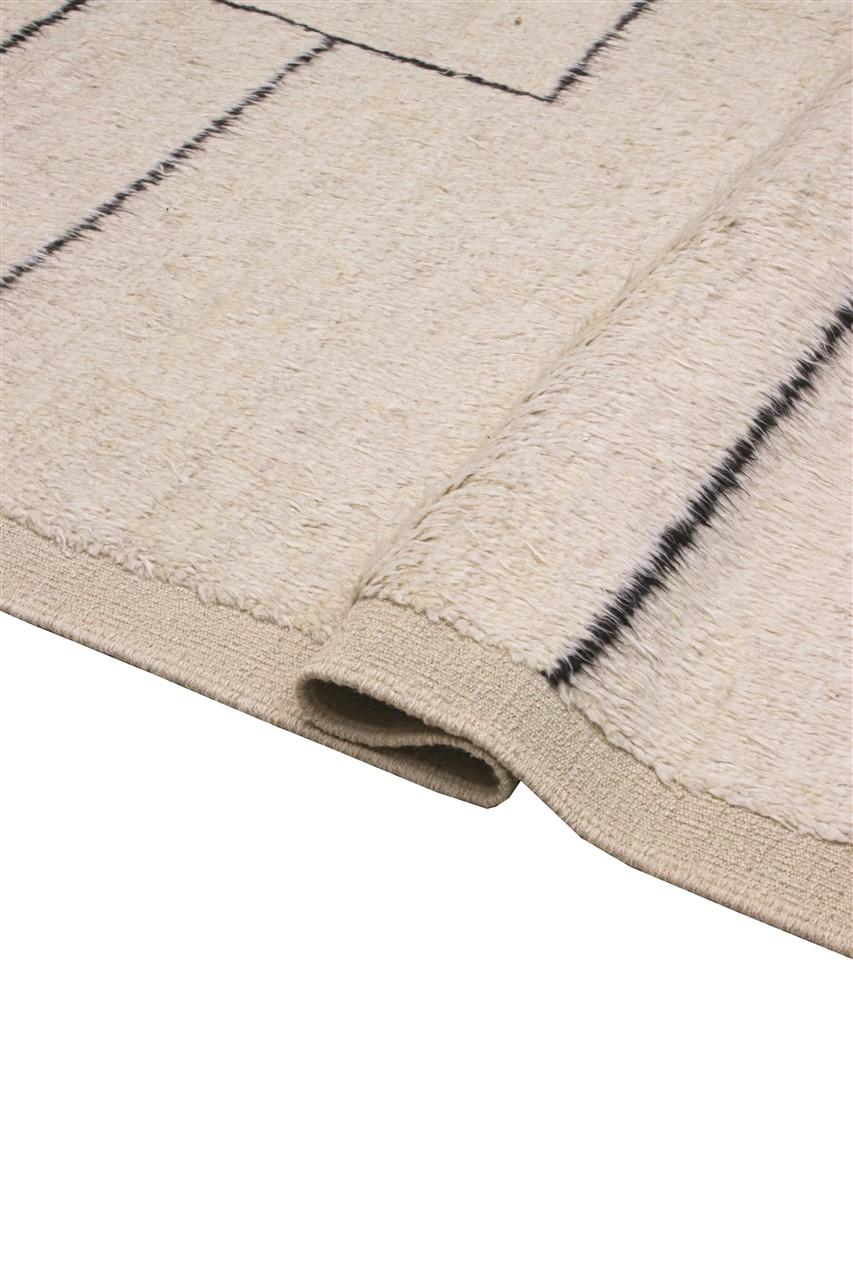
The term hand-knotted refers to the oldest and most respected method of rug making, where each knot is tied individually onto the foundation. This creates a highly durable, dense pile that is far superior to rugs with glued or machine-stitched backings. For the customer, this means a rug that does not shed easily and can hold its intricate details for decades, making it a wise and long-term investment for the home.
Visually, this rug is defined by its minimalist design, which stands in contrast to the heavily patterned rugs often associated with the region. By using clean lines and open spaces, it emphasises the natural texture and raw beauty of the wool. This minimalist approach is a modern evolution of the traditional tribal motifs, allowing the rug to serve as a versatile piece that complements rather than competes with other decor elements.
Collecting a hand-knotted rug from this tradition is an act of preserving a craft that has been passed down through generations. These rugs are valued not just for their aesthetic appeal, but for the human story behind every knot. Owning one means you are part of a long lineage of appreciation for slow, considered production and the enduring quality of natural materials.