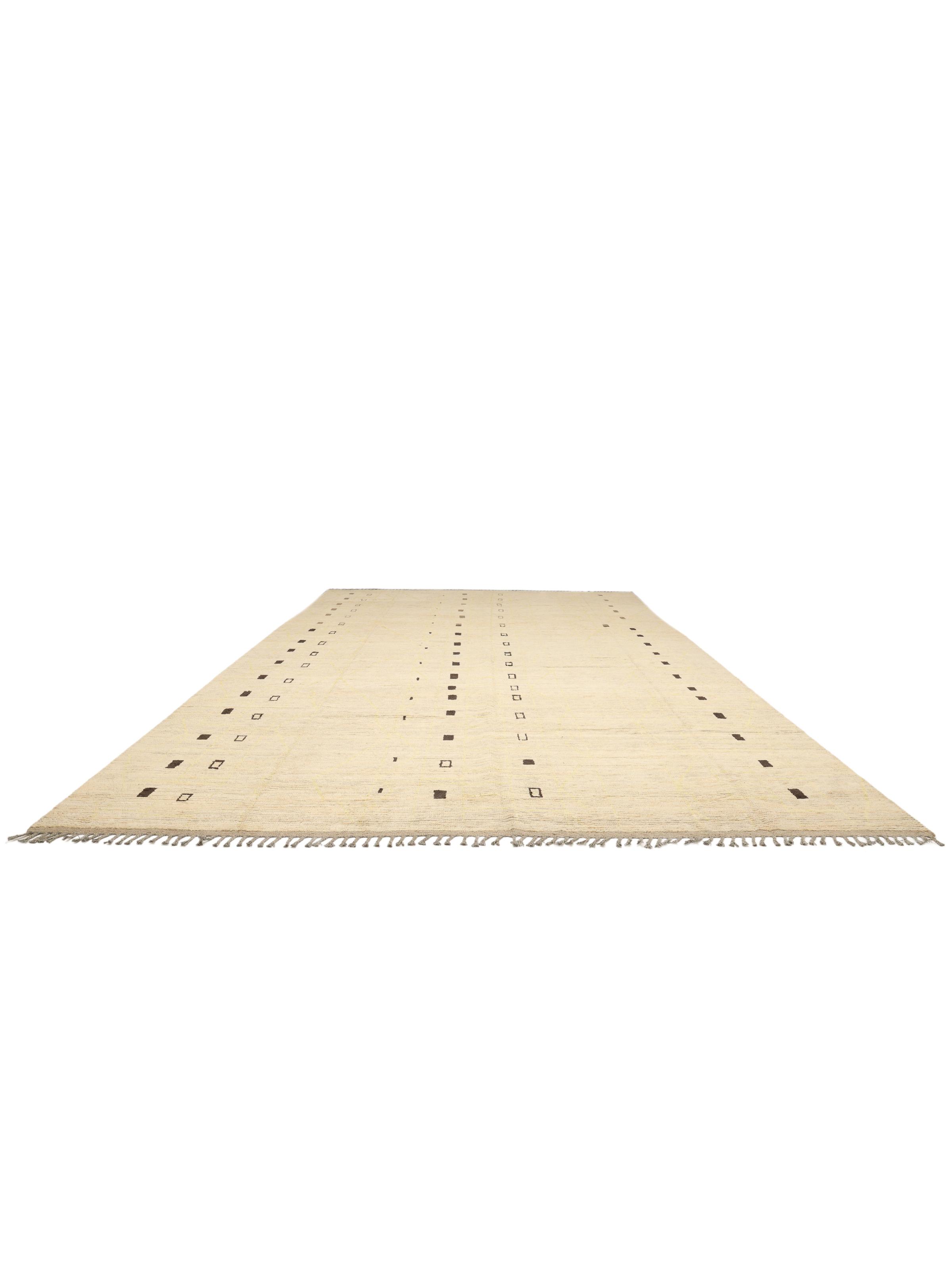
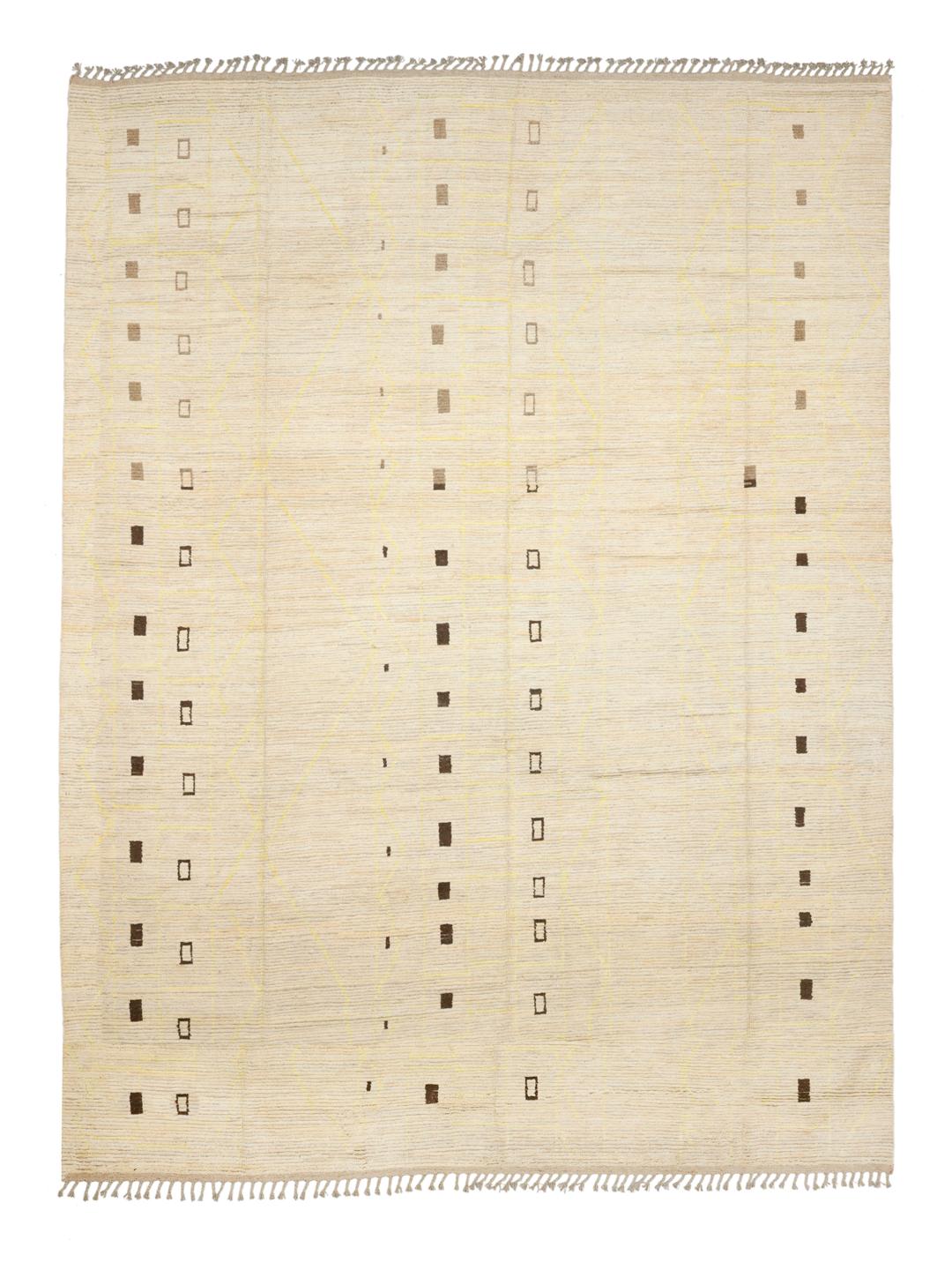
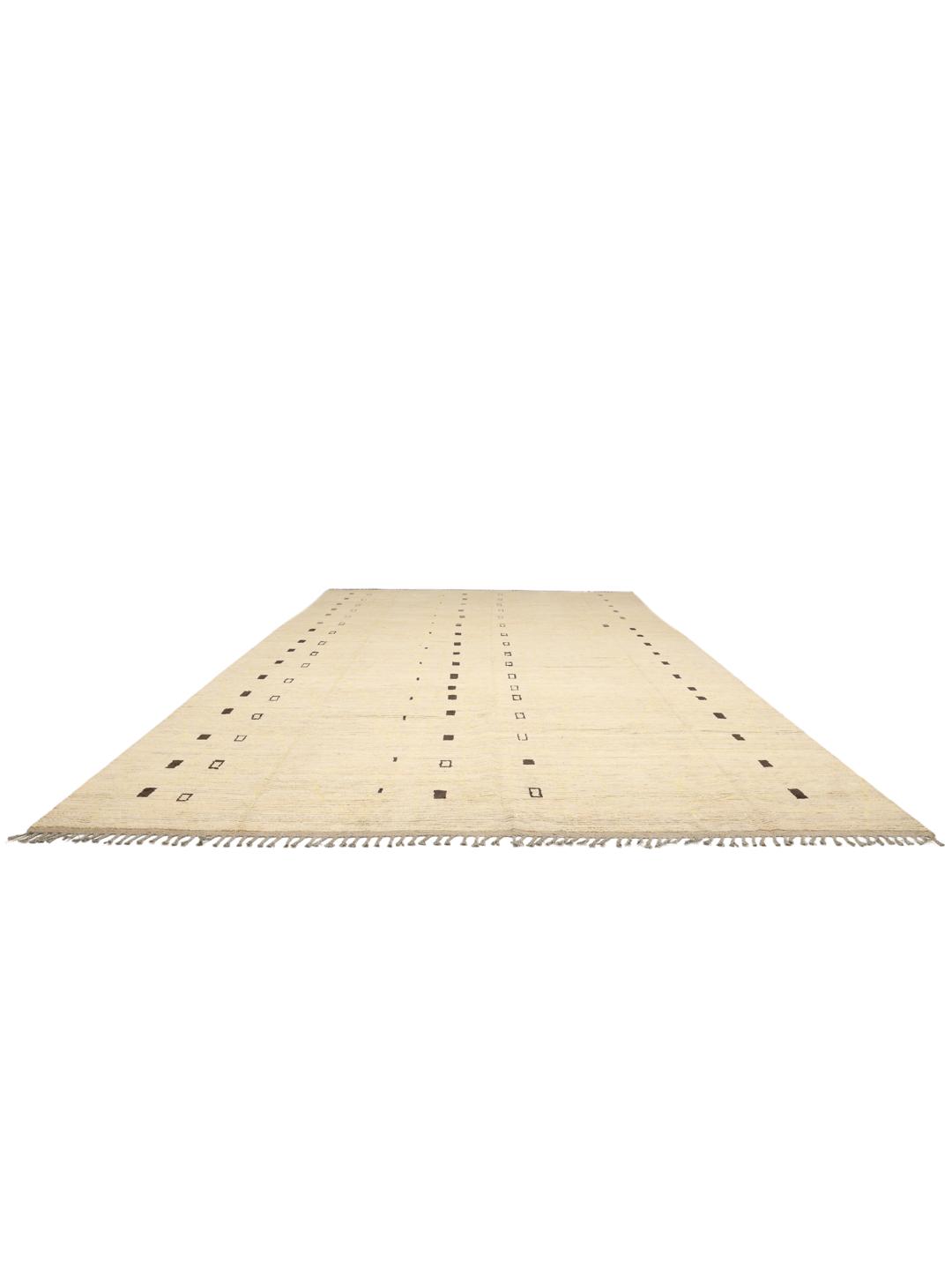
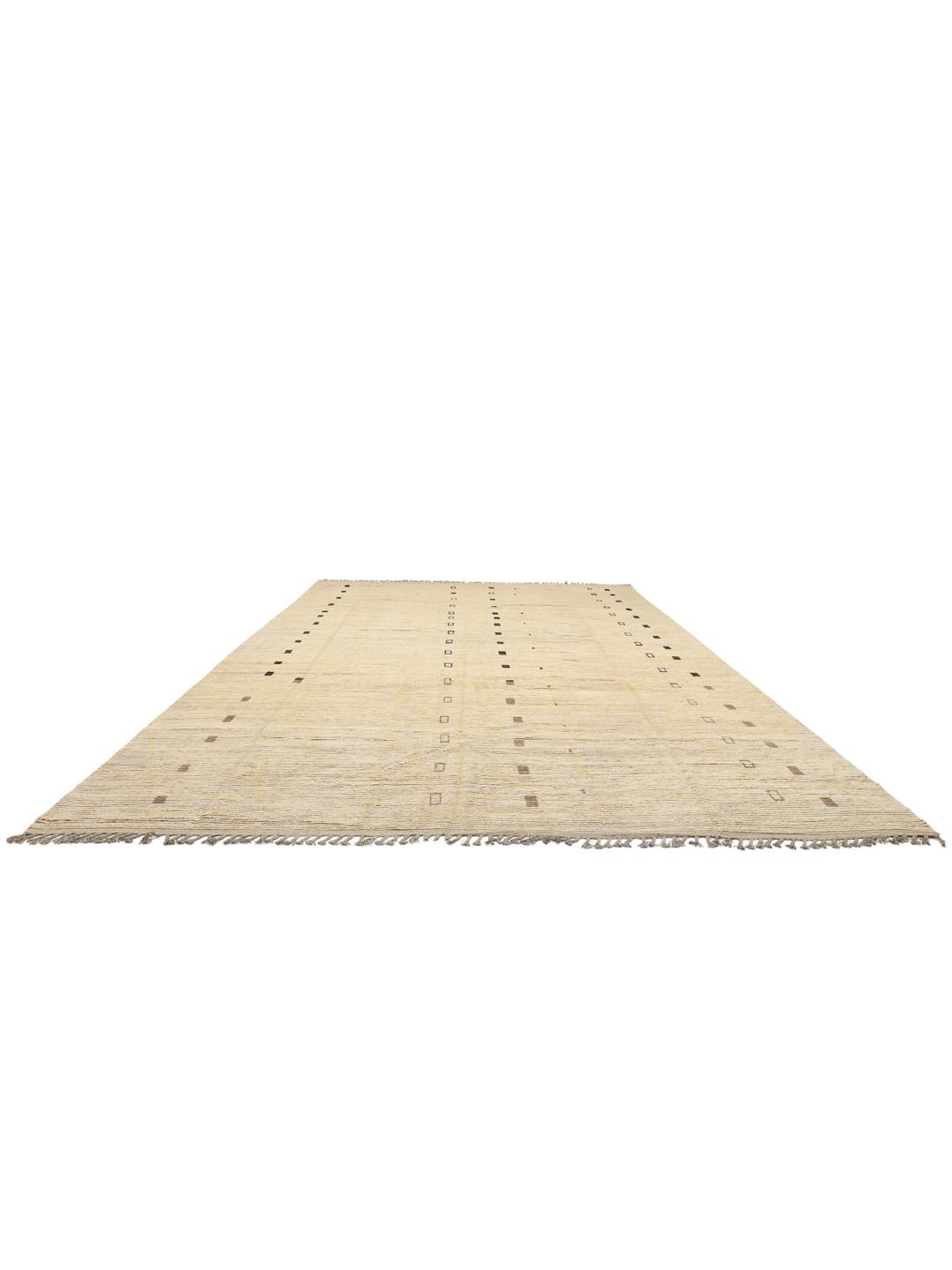
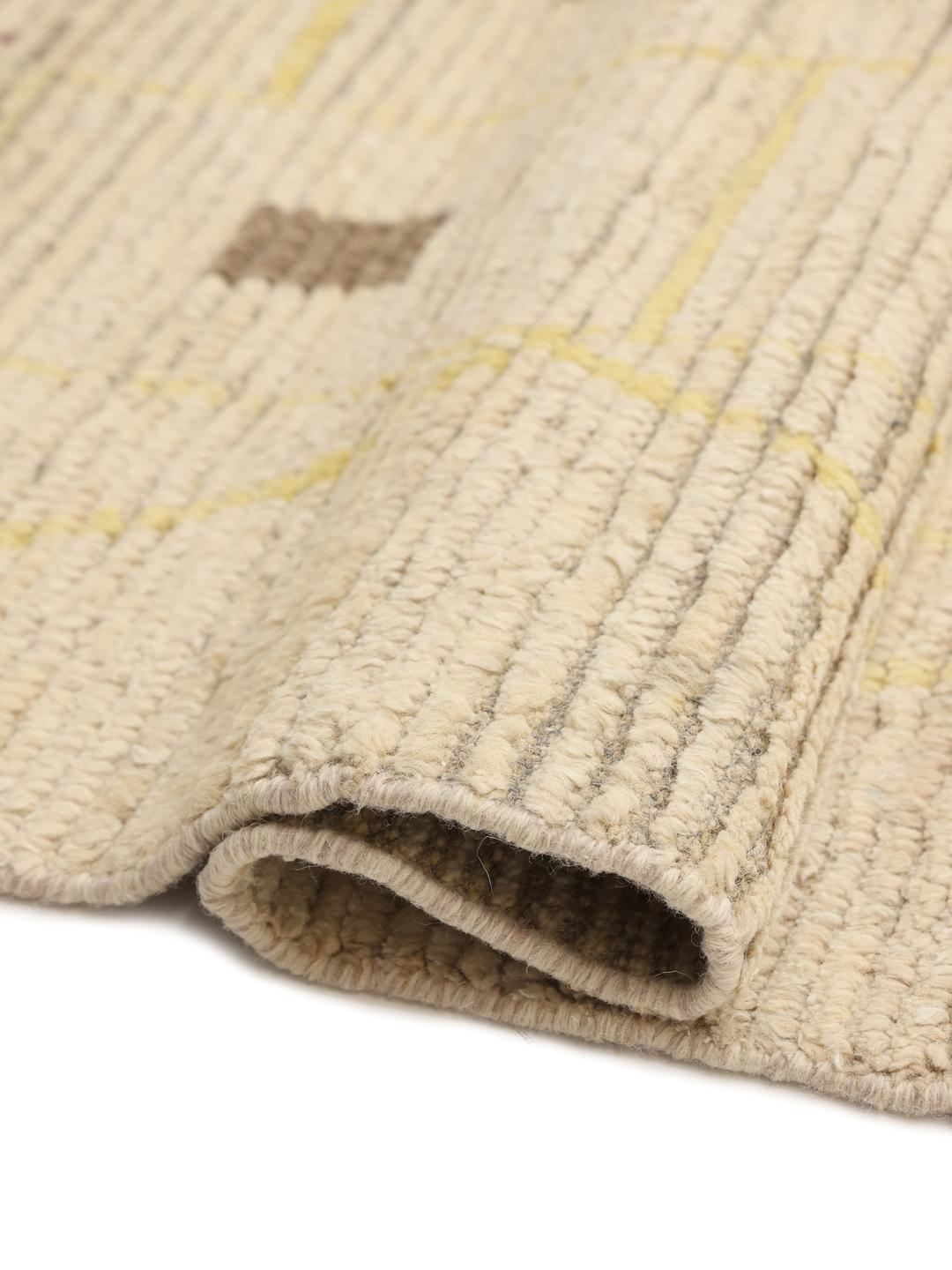
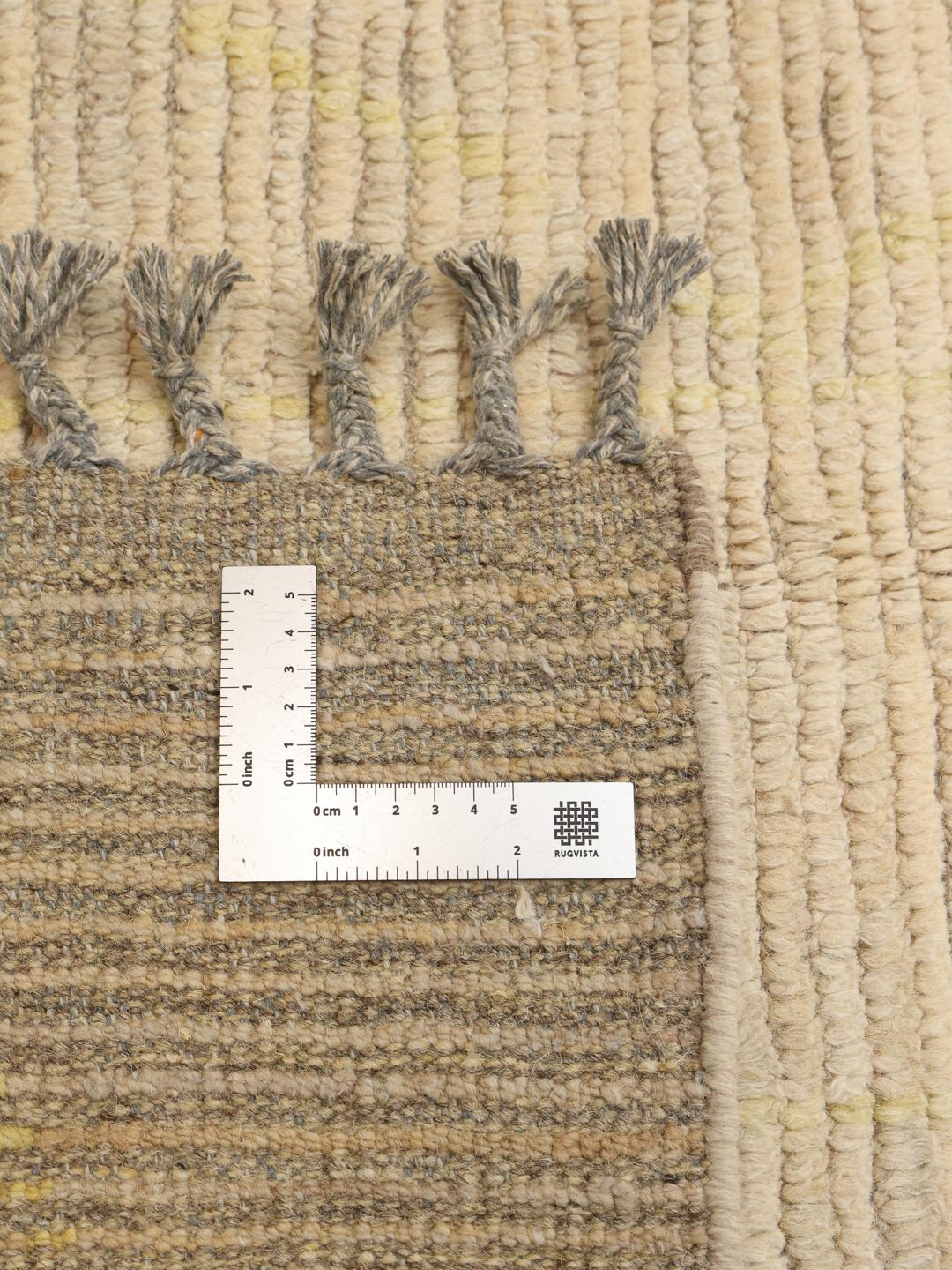
The tradition of Berber-inspired weaving has evolved far beyond its North African roots, finding a new and vibrant home in the workshops of Afghanistan. While the style is traditionally associated with the nomadic tribes of the Atlas Mountains, Afghan weavers have embraced its aesthetic, blending these timeless influences with their own deep-rooted expertise in knotting and textile artistry.
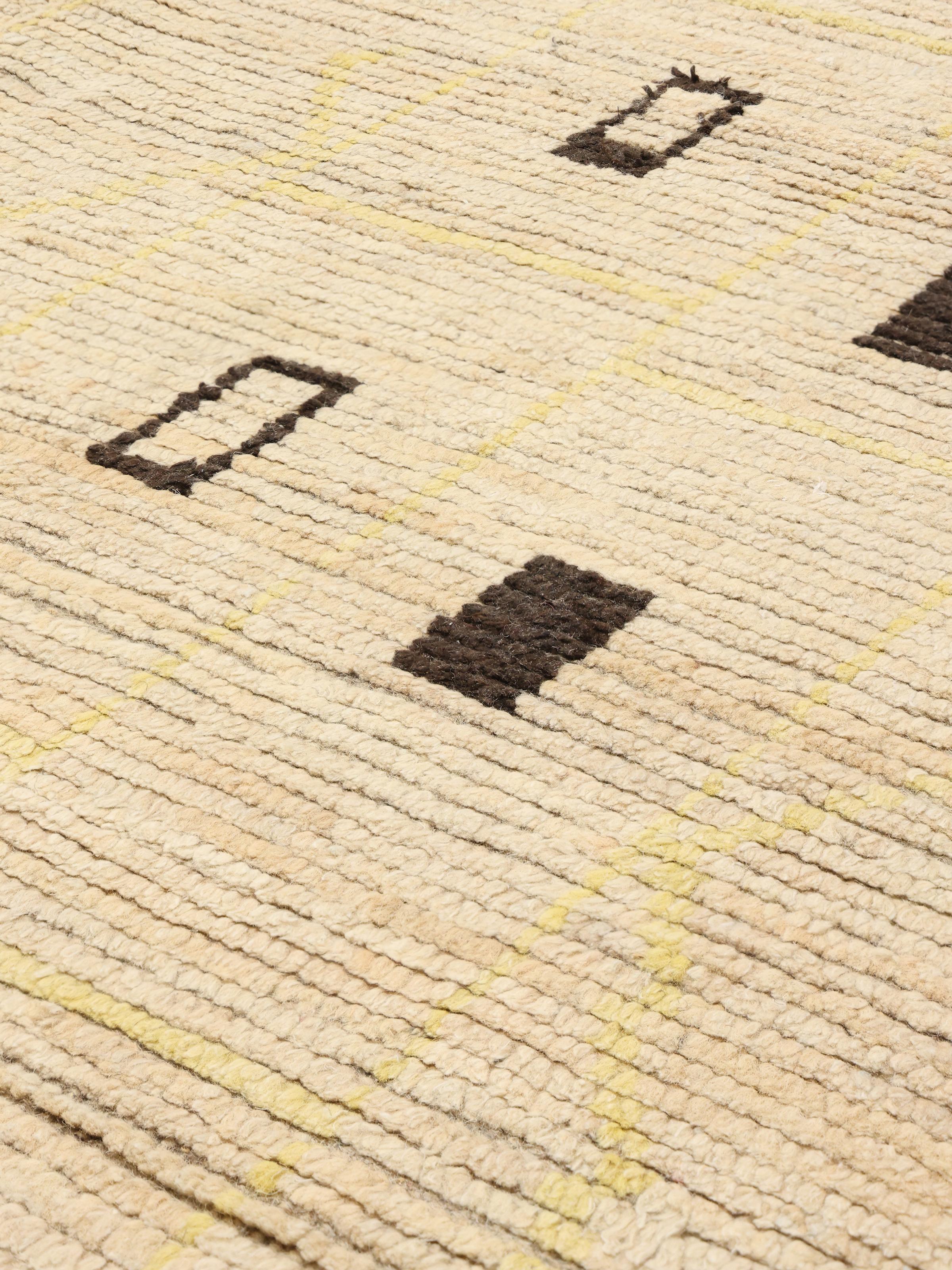
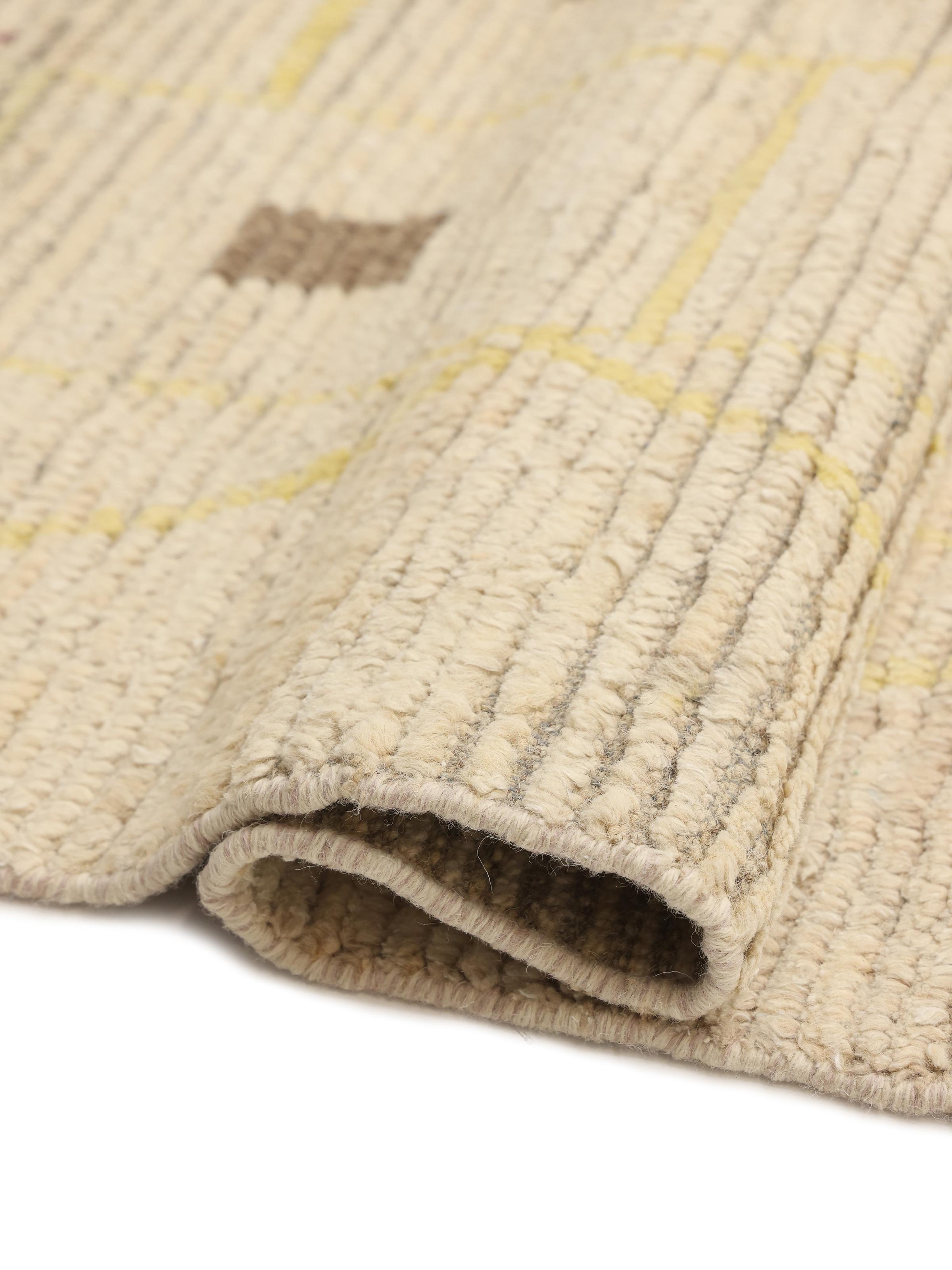
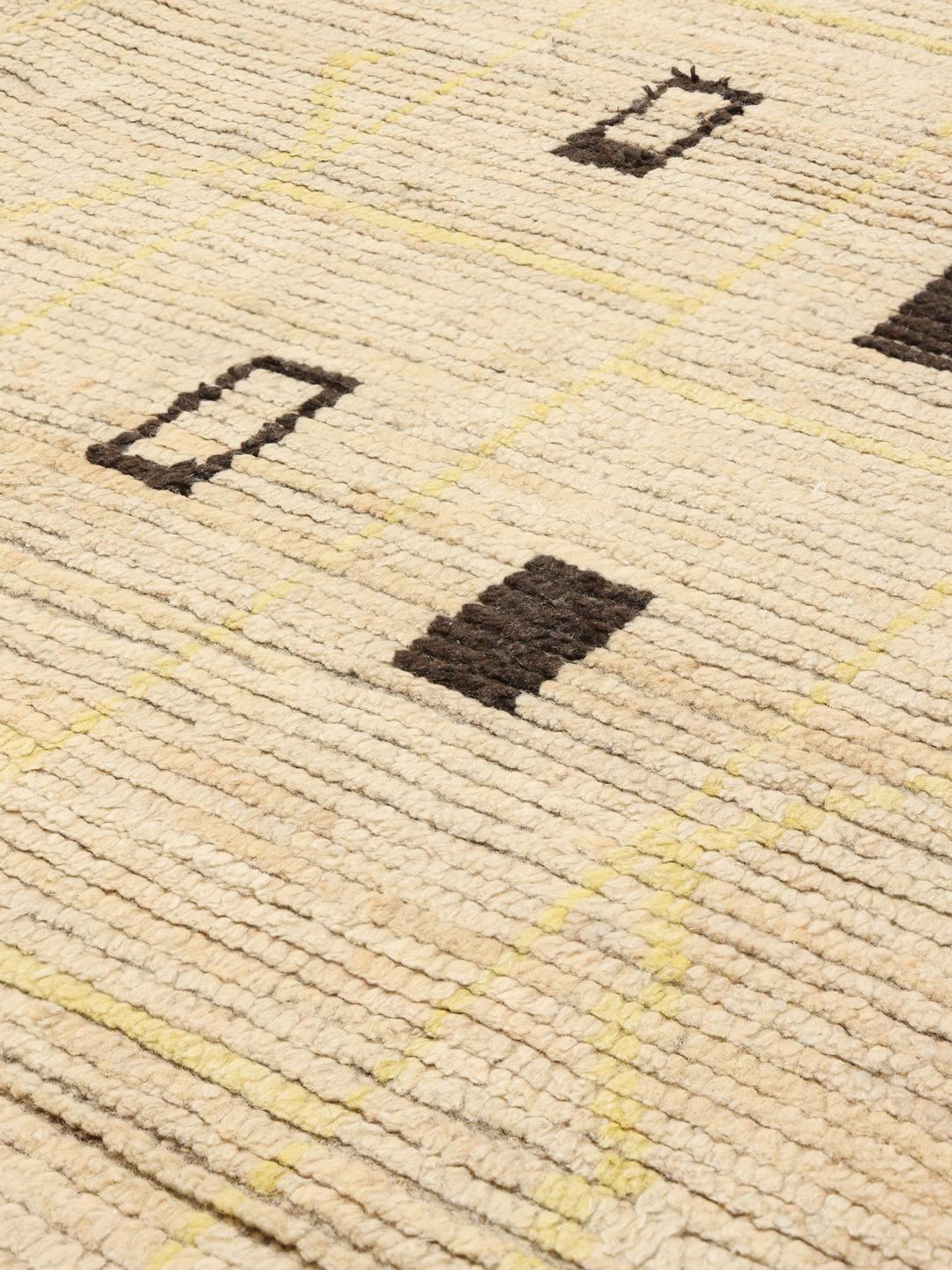
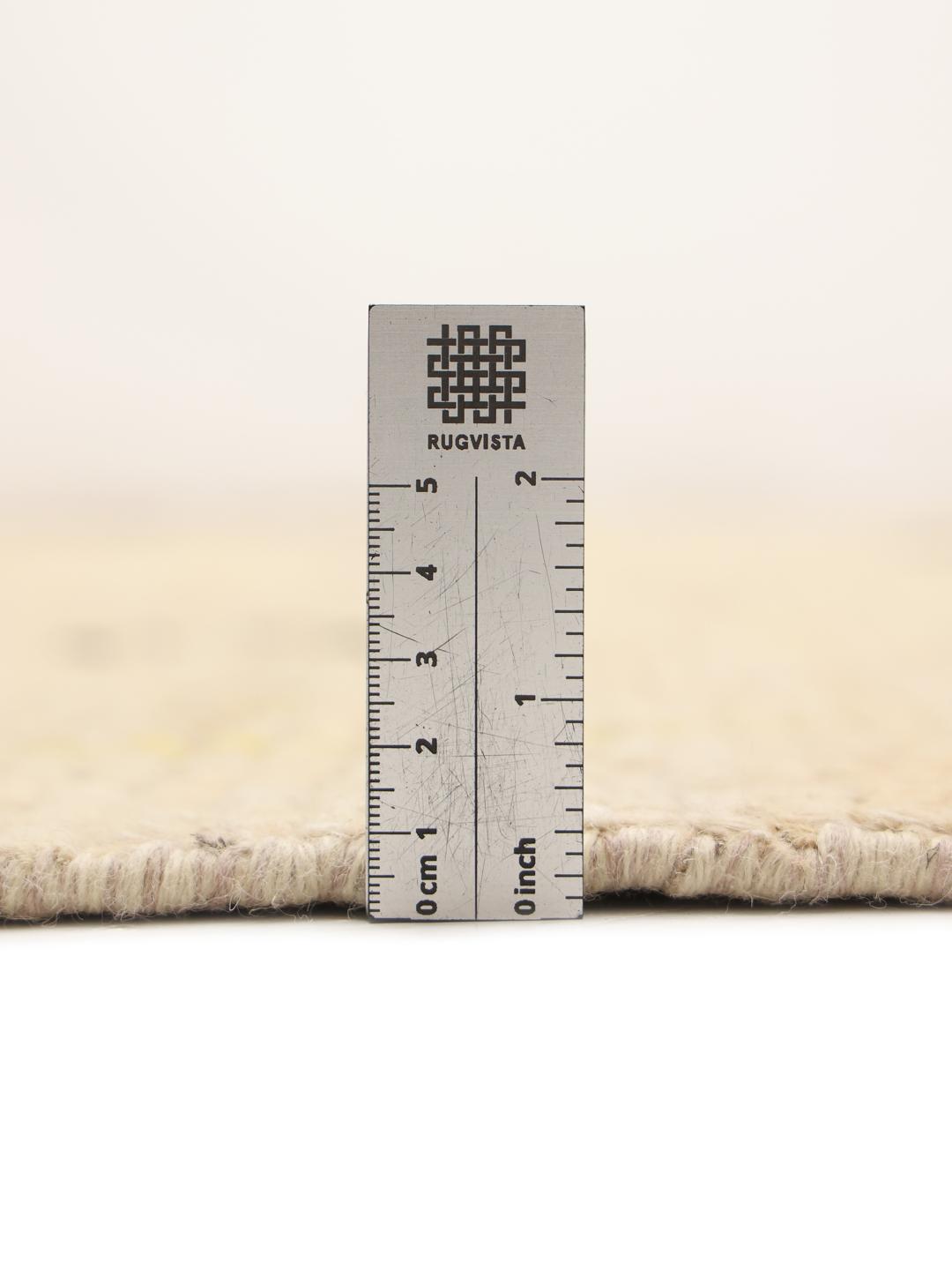
In the context of this rug, the term Berber style refers to a specific approach to construction that prioritises a thick, plush pile and a minimalist design language. This focus on the tactile quality of the Wool ensures that the rug is not just a visual highlight but a functional comfort that softens the acoustics of a home and provides a warm, cushioned surface to walk on.
Visually, these rugs are defined by their departure from ornate, complex motifs in favour of open, airy fields and simplified geometric shapes. The use of natural, undyed Wool colours combined with subtle accents creates a clean, modern look that remains deeply connected to historical weaving practices. This particular piece showcases a deliberate, sparse pattern that emphasises the natural texture of the fibres.
Owning a hand-knotted rug from this tradition is an investment in cultural heritage and human skill. Because these pieces are made without the use of industrial machinery, they carry the mark of the individual who crafted them. This makes each rug a unique testament to a craft that has been passed down through generations, offering a level of authenticity that mass-produced alternatives simply cannot replicate.