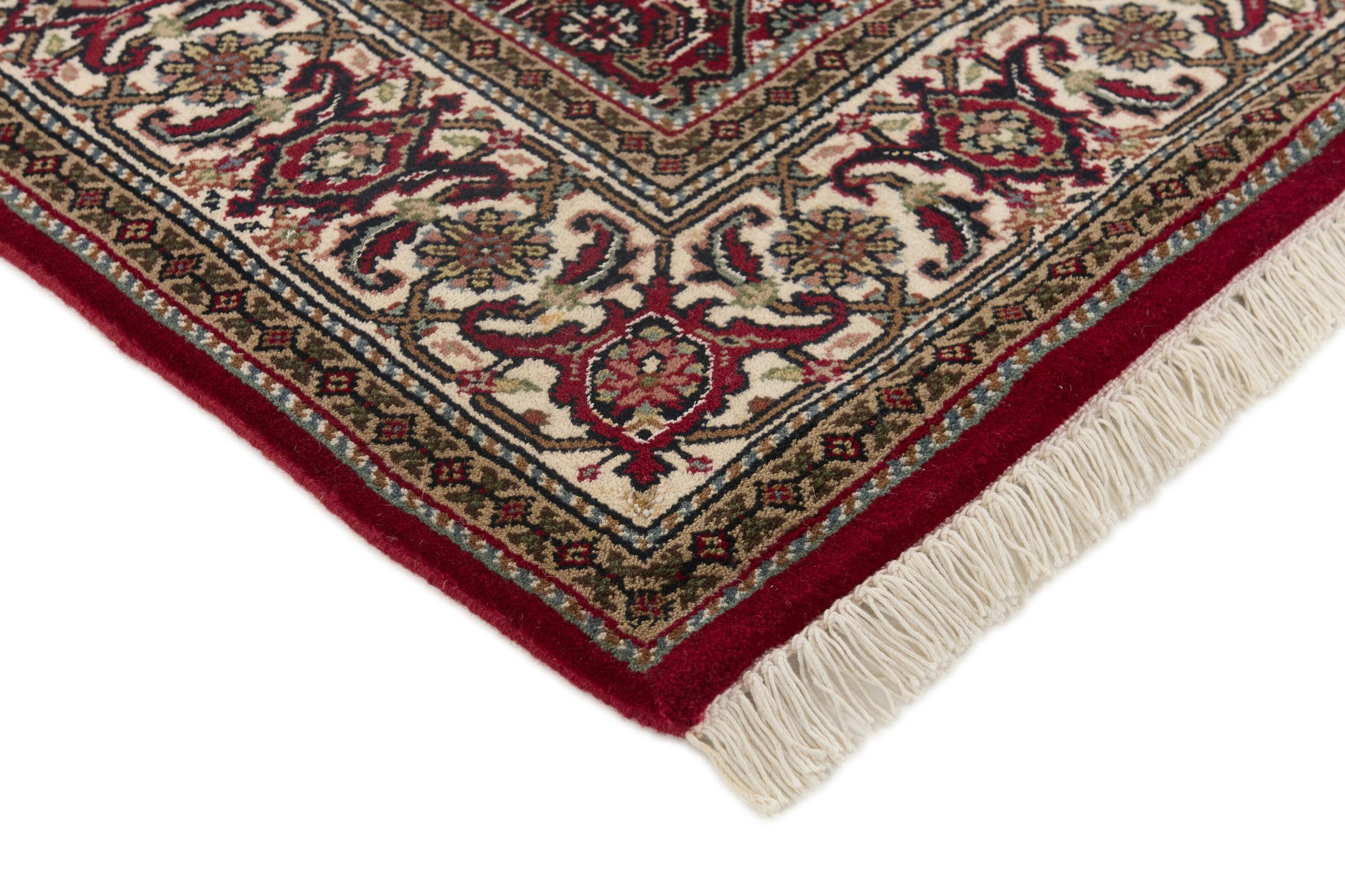
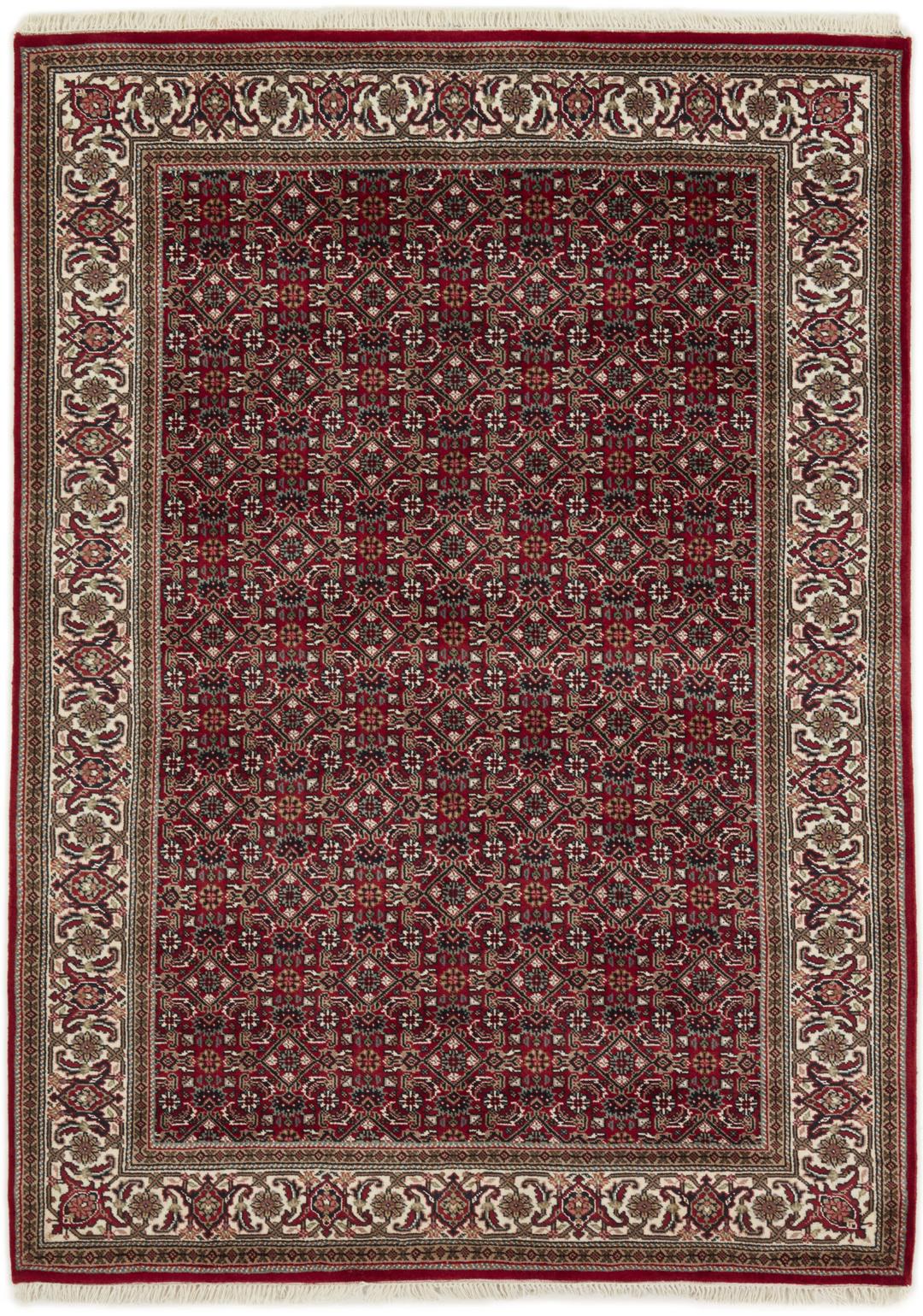
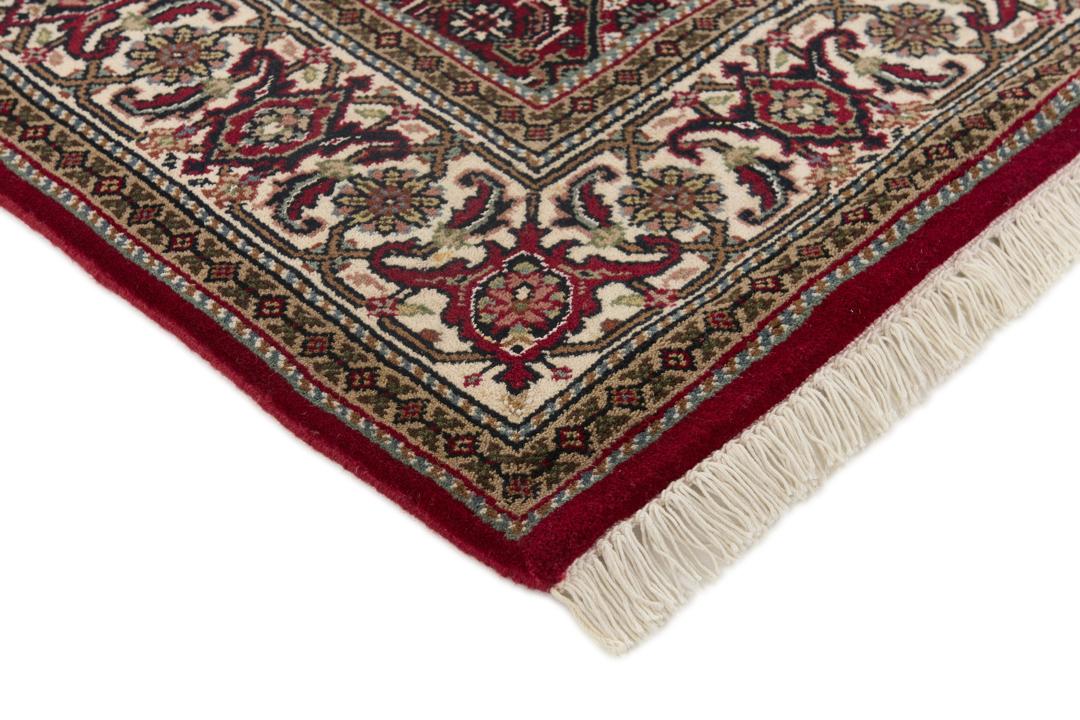
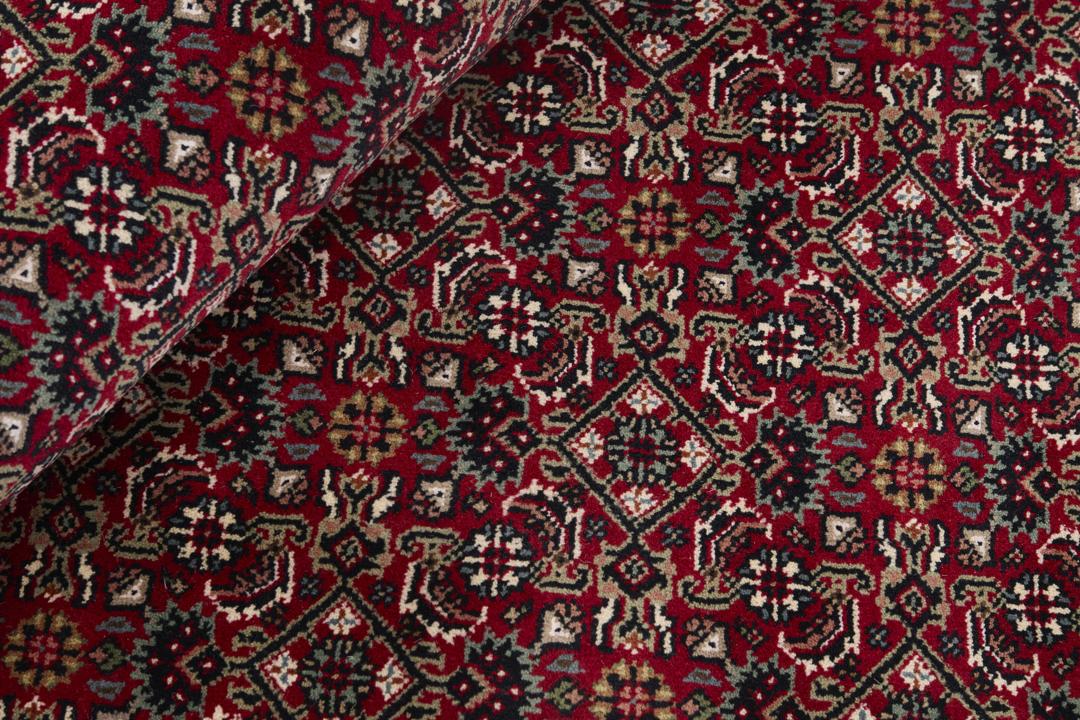
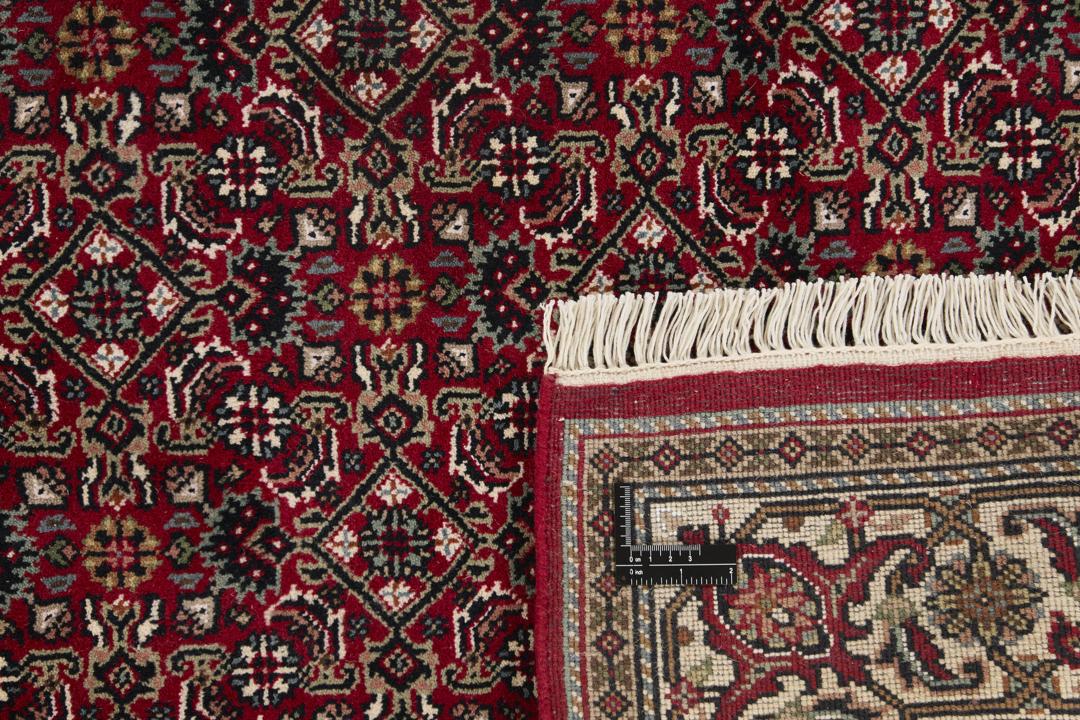
The Bidjar rug tradition traces its roots back to the Kurdish region of the Middle East, specifically the town of Bidjar, historically known as the 'Iron Rug' capital. These rugs earned their reputation for being some of the most durable and densely woven pieces in the world, prized for their strength and longevity. Today, this rich legacy is expertly carried forward by skilled artisans in India who continue these time-honoured weaving techniques.
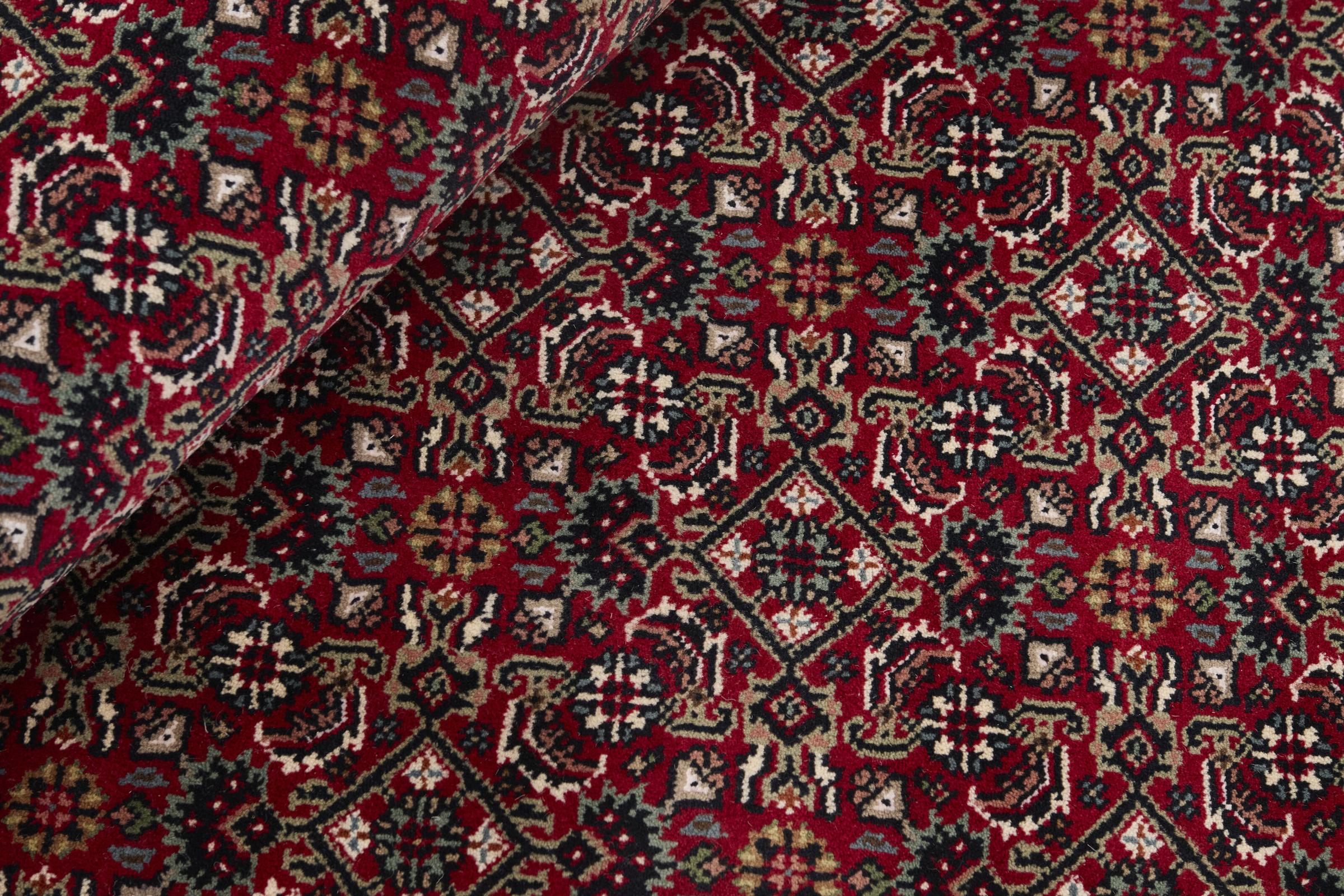
The term 'Bidjar' is synonymous with a specific, robust construction style. Historically, these rugs were produced using a unique technique where the weft threads were hammered down so tightly that the pile stood almost upright, creating a dense, carpet-like surface. This method is what gives the rug its legendary resilience, allowing it to maintain its shape and pattern intensity even after decades of use.
Visually, the Bidjar tradition is defined by its bold, often symmetrical floral and geometric motifs. Central medallions are common, surrounded by intricate borders that frame the field in a balanced, harmonious way. While the traditional palette is often dominated by deep reds, blues, and ivories, the patterns themselves reflect a sophisticated blend of tribal energy and formal composition that has captivated collectors for generations.
Collecting a rug from this tradition is an investment in human skill and cultural history. These pieces are valued not only for their aesthetic beauty but for the narrative they carry—a story of migration, artistic evolution, and the pursuit of perfection in textile craft. To own a piece like this is to appreciate the enduring value of a craft that prioritises quality and character above all else.