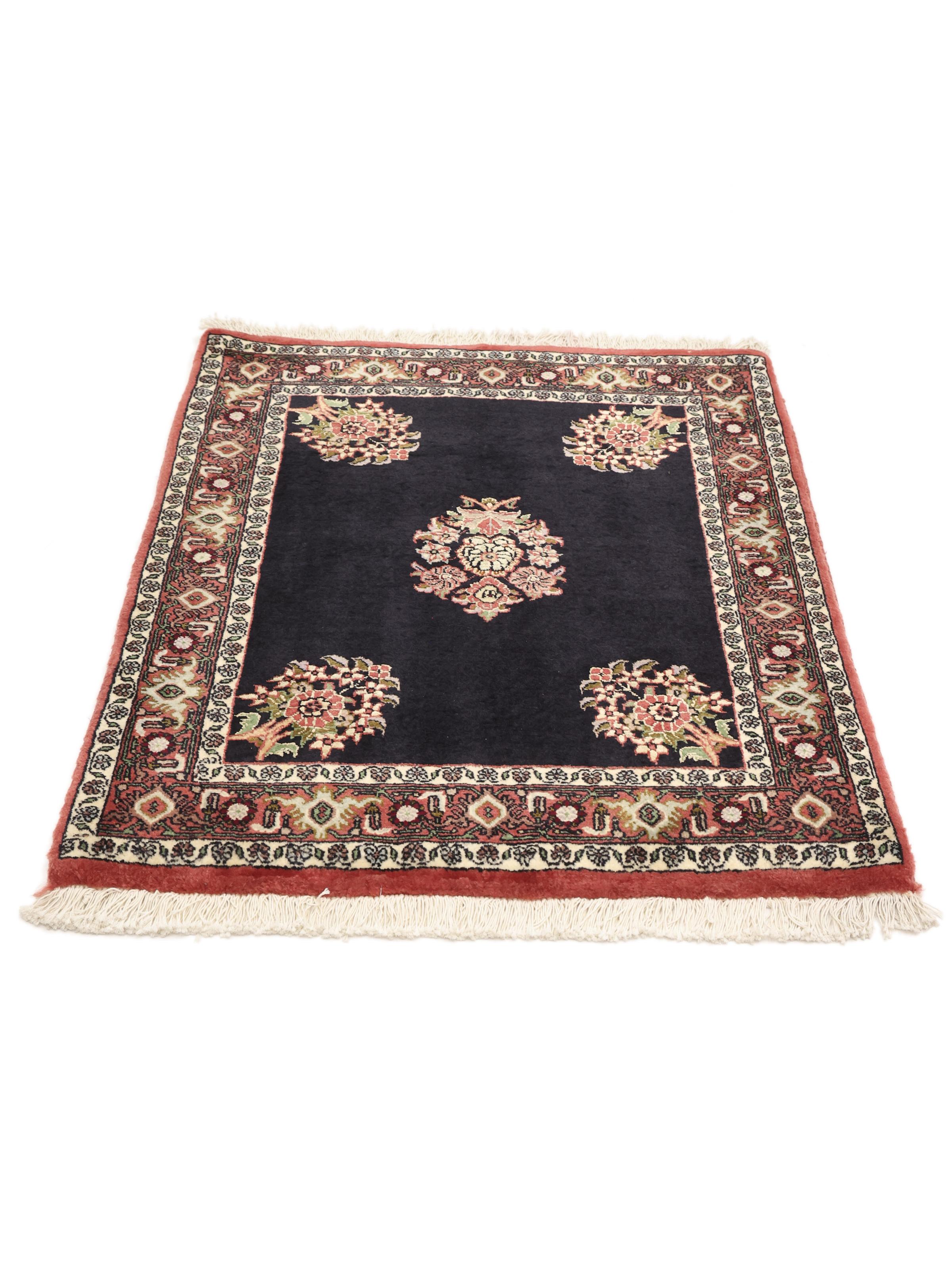
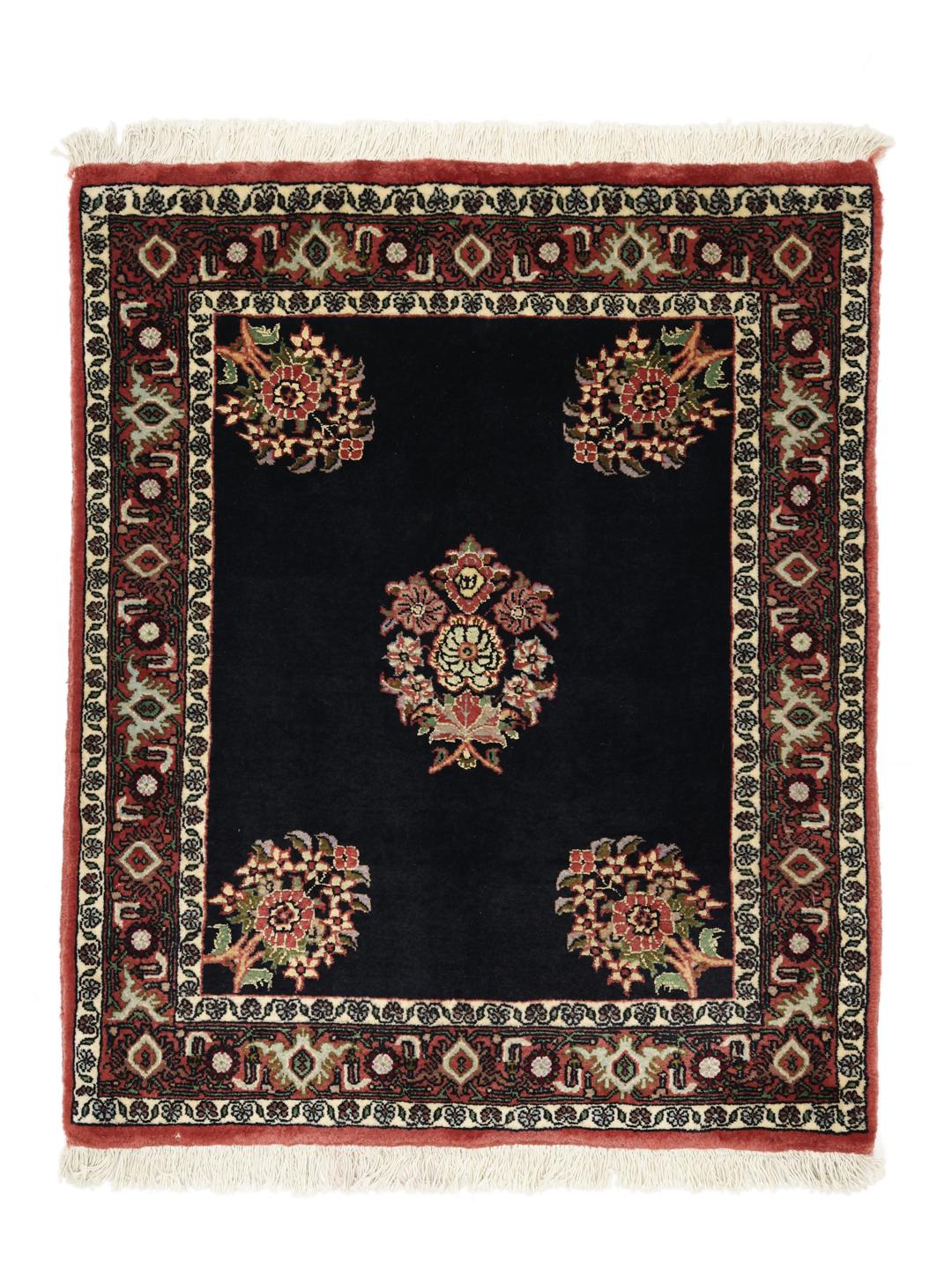
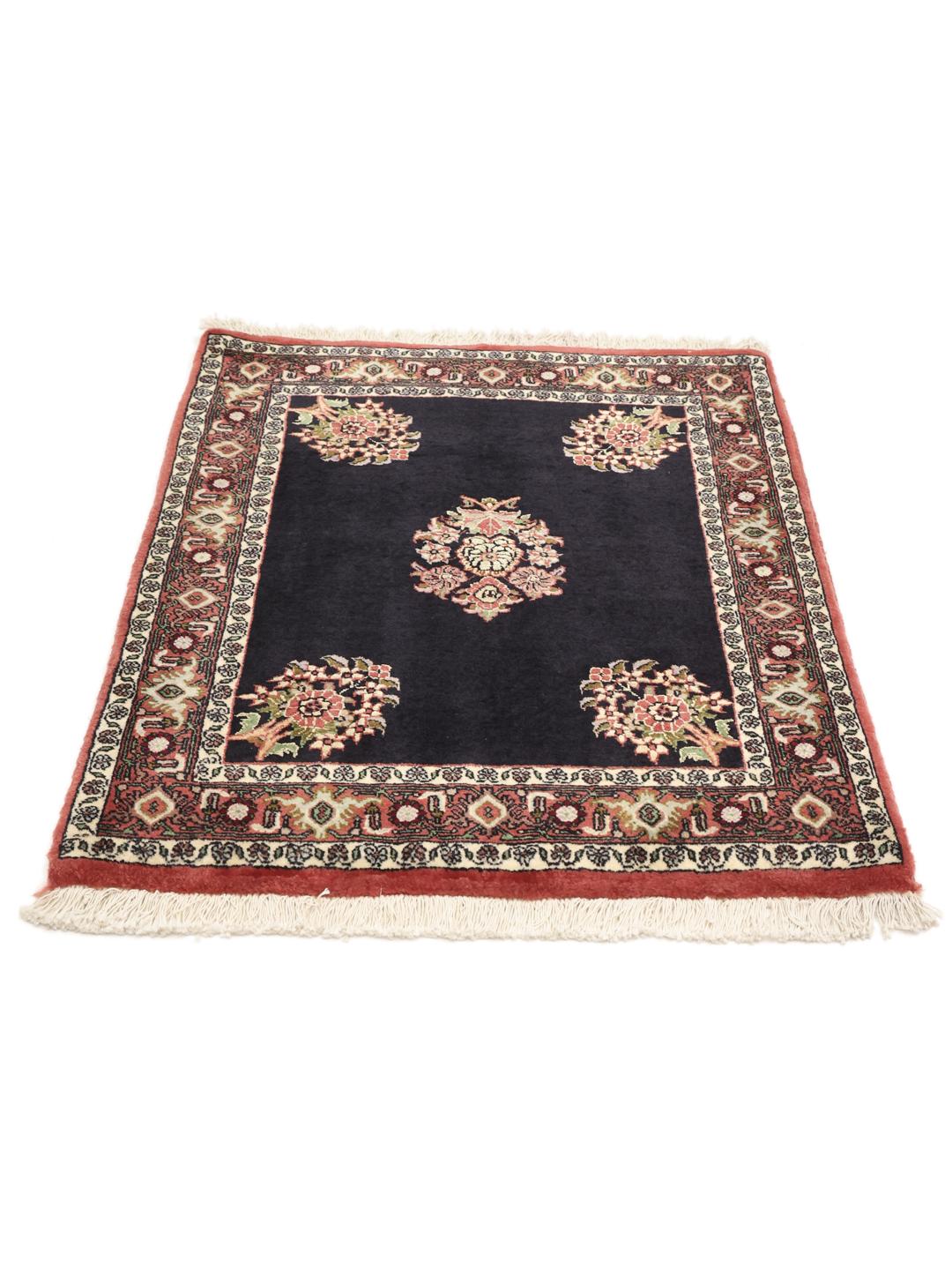
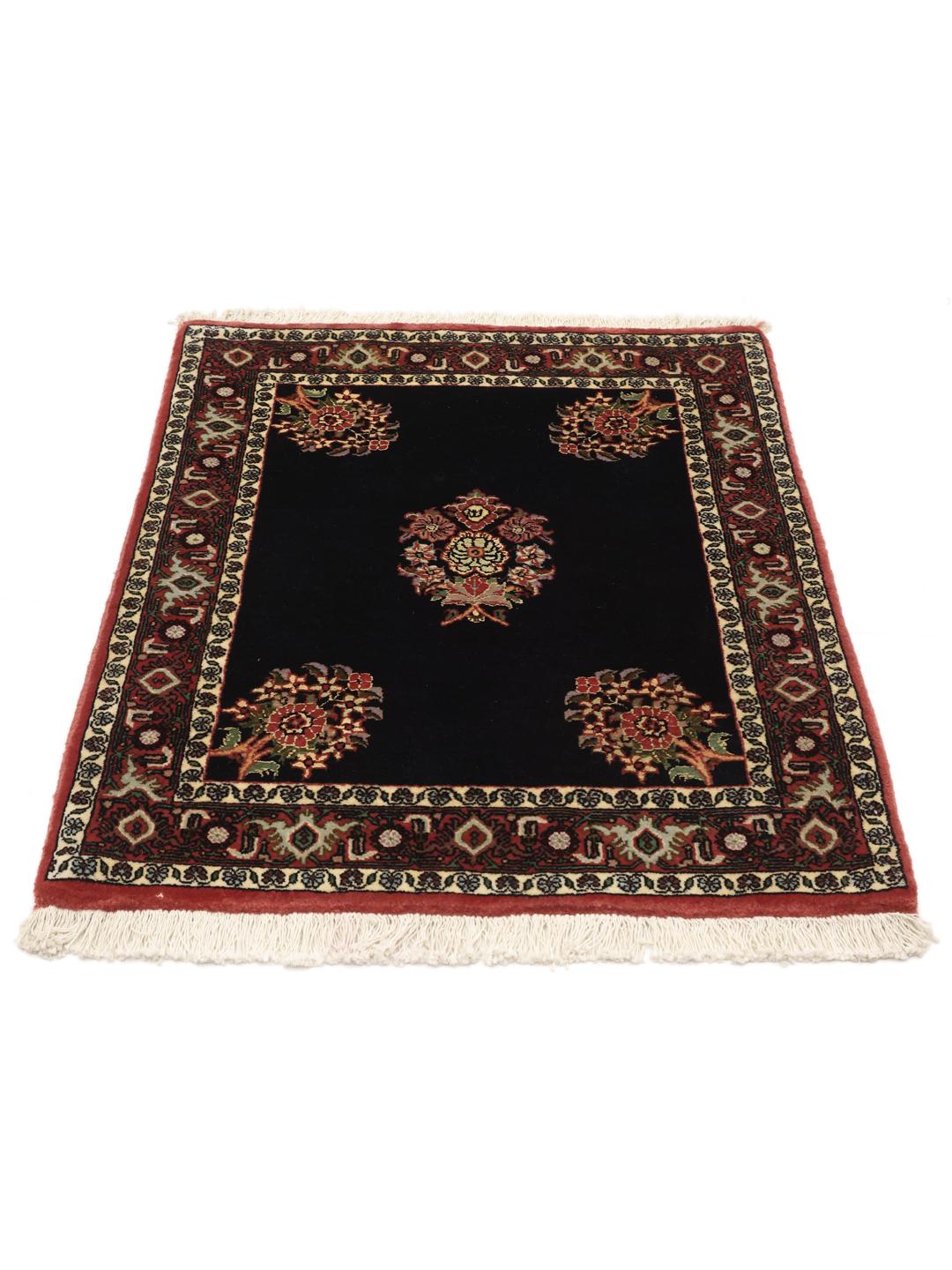
The Bidjar rug tradition originates from the Kurdish regions of the Middle East, specifically the town of Bidjar and surrounding areas like Takab. Known as the iron rugs of the region, these pieces have earned a legendary reputation for their heavy, compact, and durable construction that is virtually unmatched in the world of traditional weaving.
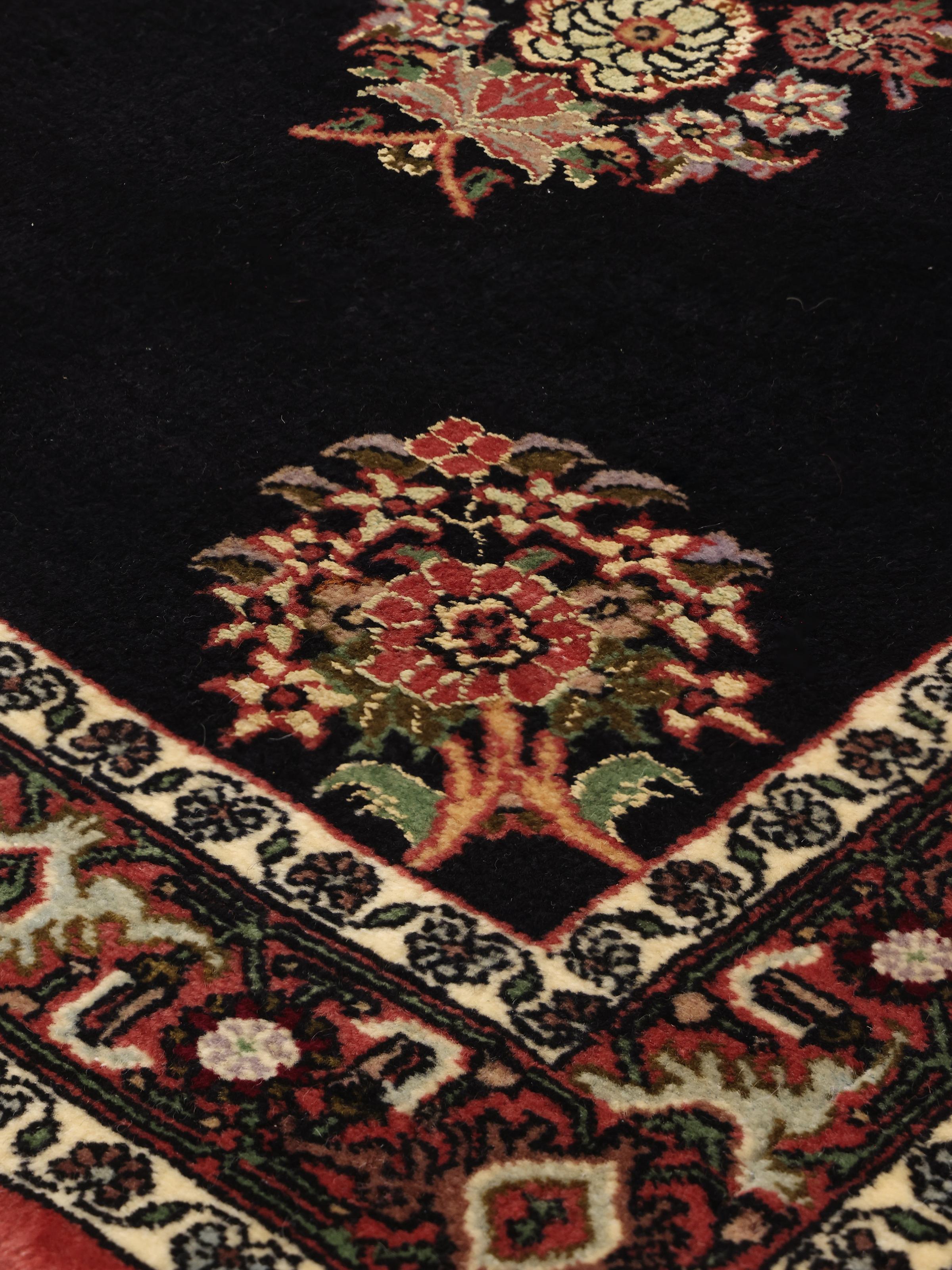
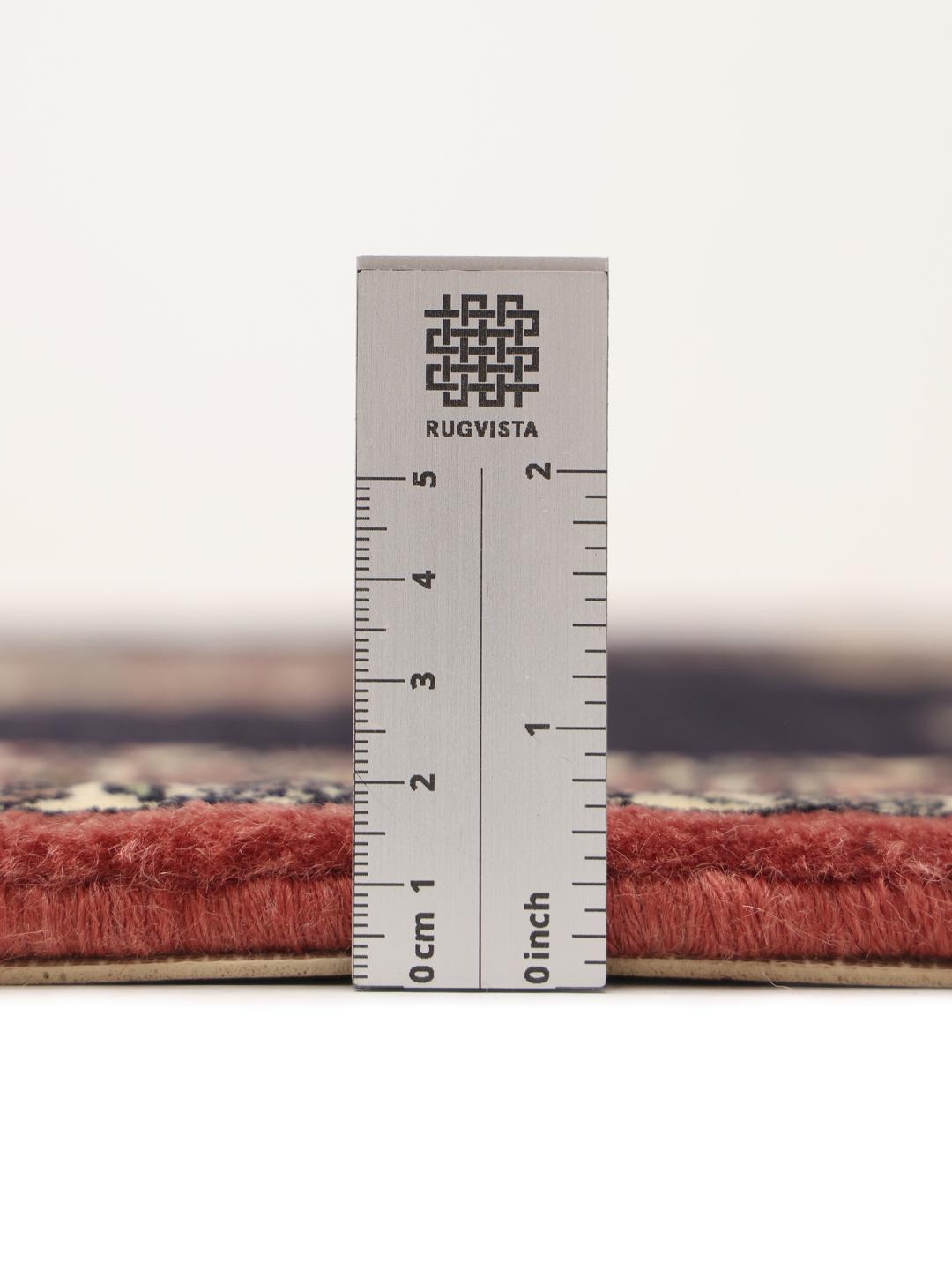
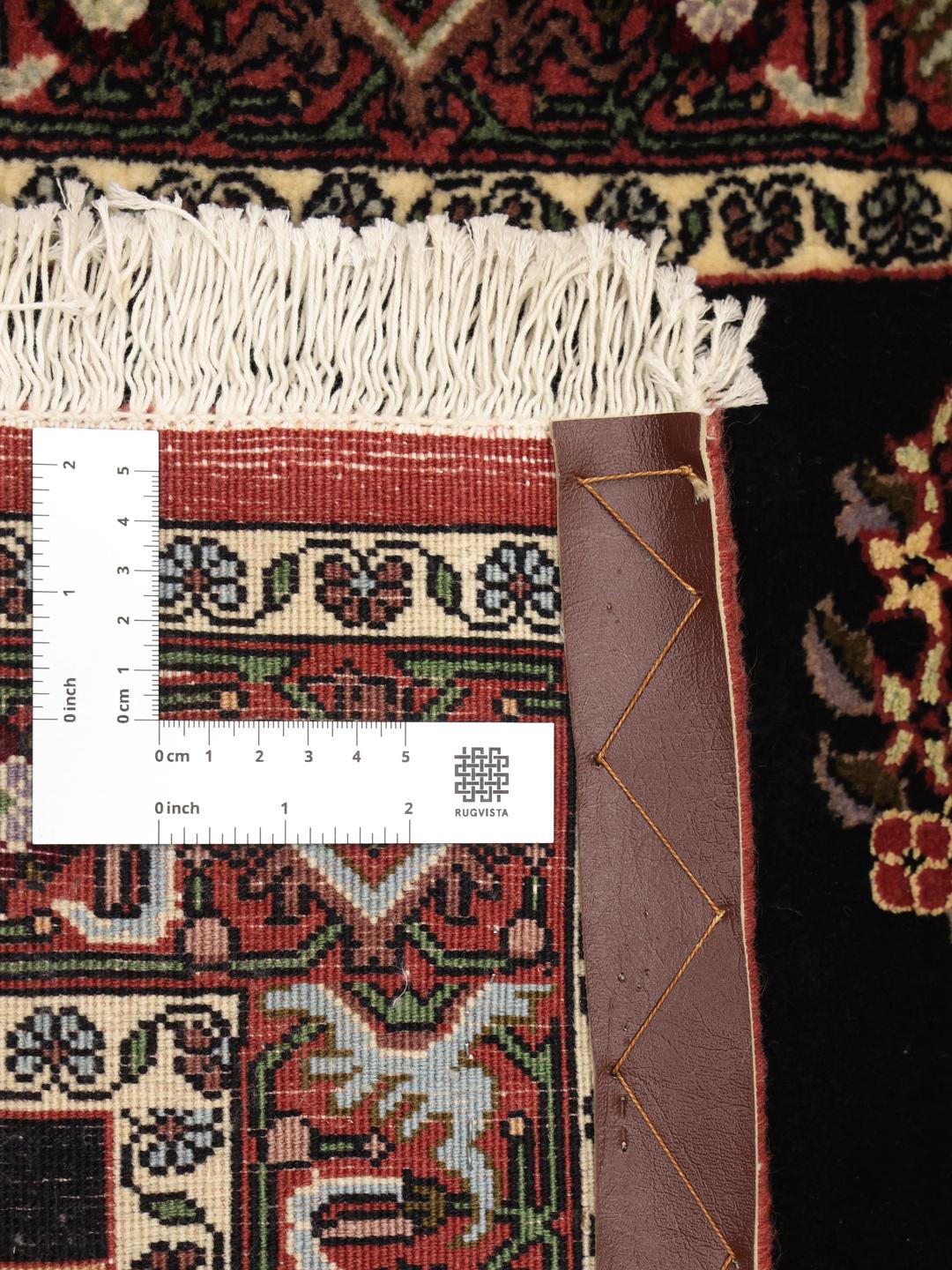
The defining characteristic of a Bidjar rug is its unique weaving technique, which involves hammering down the wefts with a heavy metal comb. This process creates a dense, rigid structure that allows the pile to stand upright, resulting in a rug that is not only exceptionally long-lasting but also one that retains its intricate patterns with remarkable precision over generations.
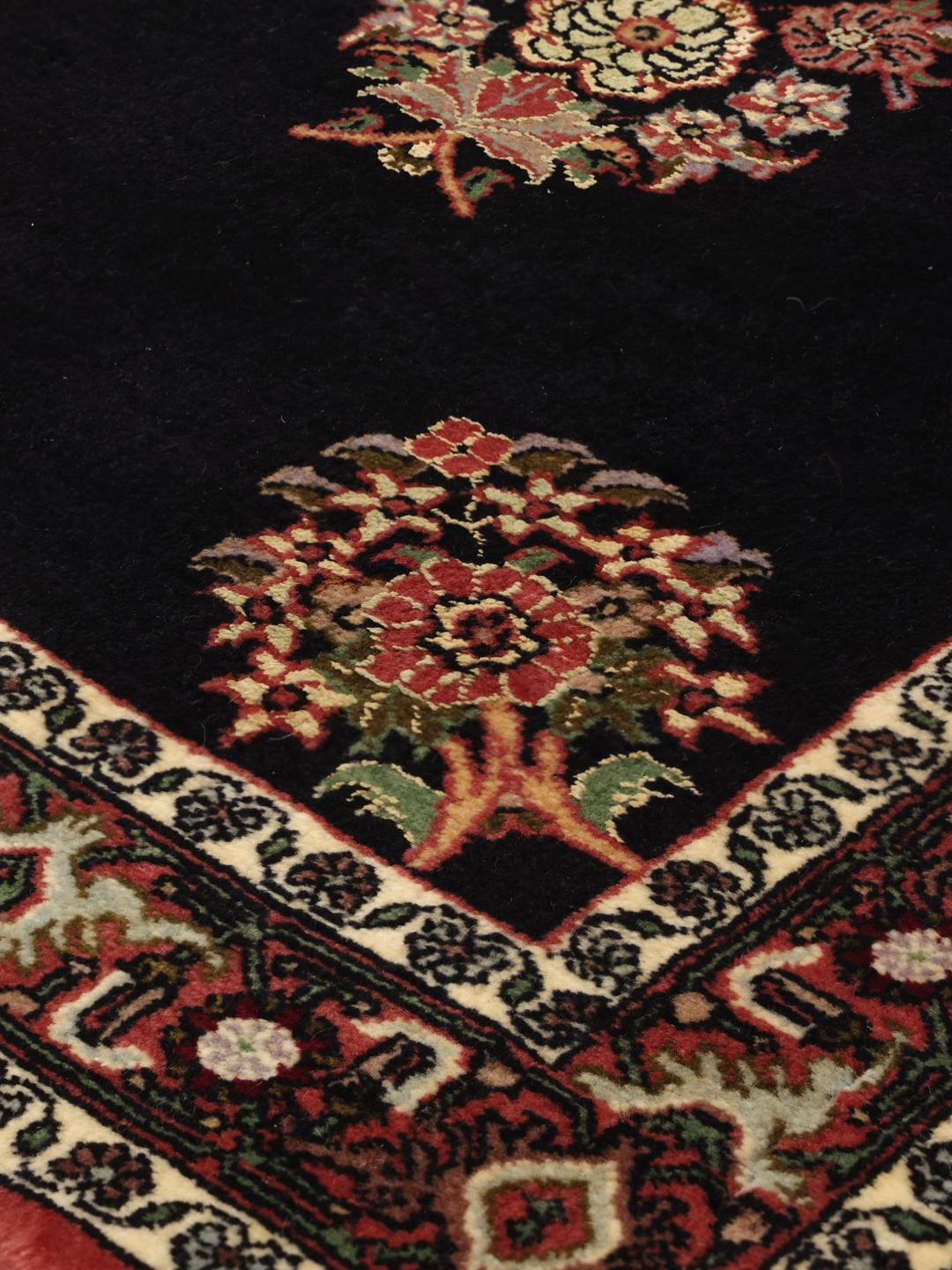
Visually, these rugs often feature bold, confident designs. While they can incorporate a variety of motifs, floral elements and medallion patterns are common, often executed with a sense of balance and strength. The use of deep, saturated colours like the black and red seen here creates a dramatic contrast, highlighting the artistry inherent in the local weaving heritage.
Collecting a Bidjar rug is an investment in a storied tradition that prioritises longevity and craft. These rugs are valued not just for their aesthetic appeal, but for the tangible evidence of human skill and the cultural history embedded in every knot. They remain a prized choice for those who seek a floor covering that functions as both a durable tool and a lasting piece of art.