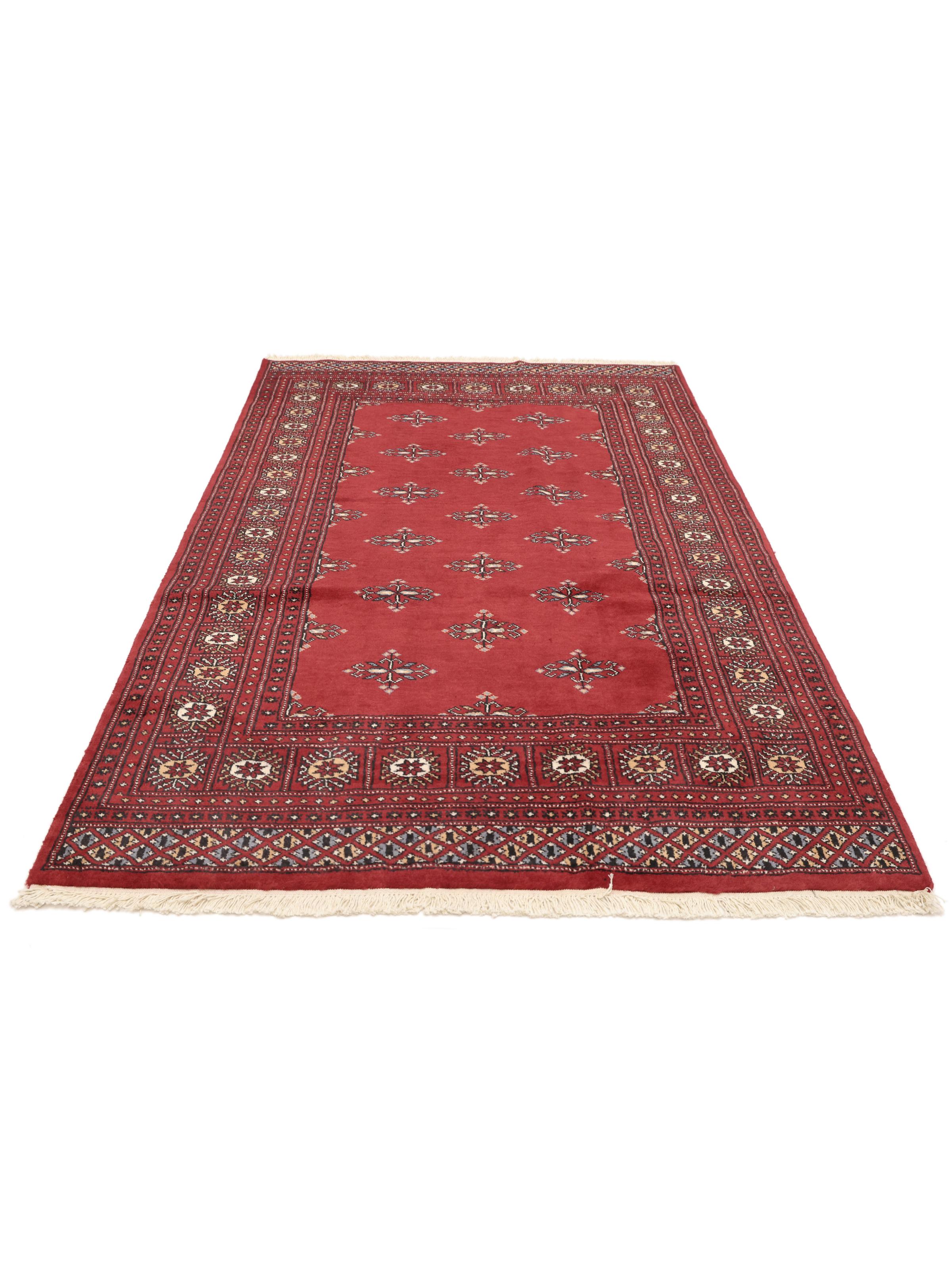
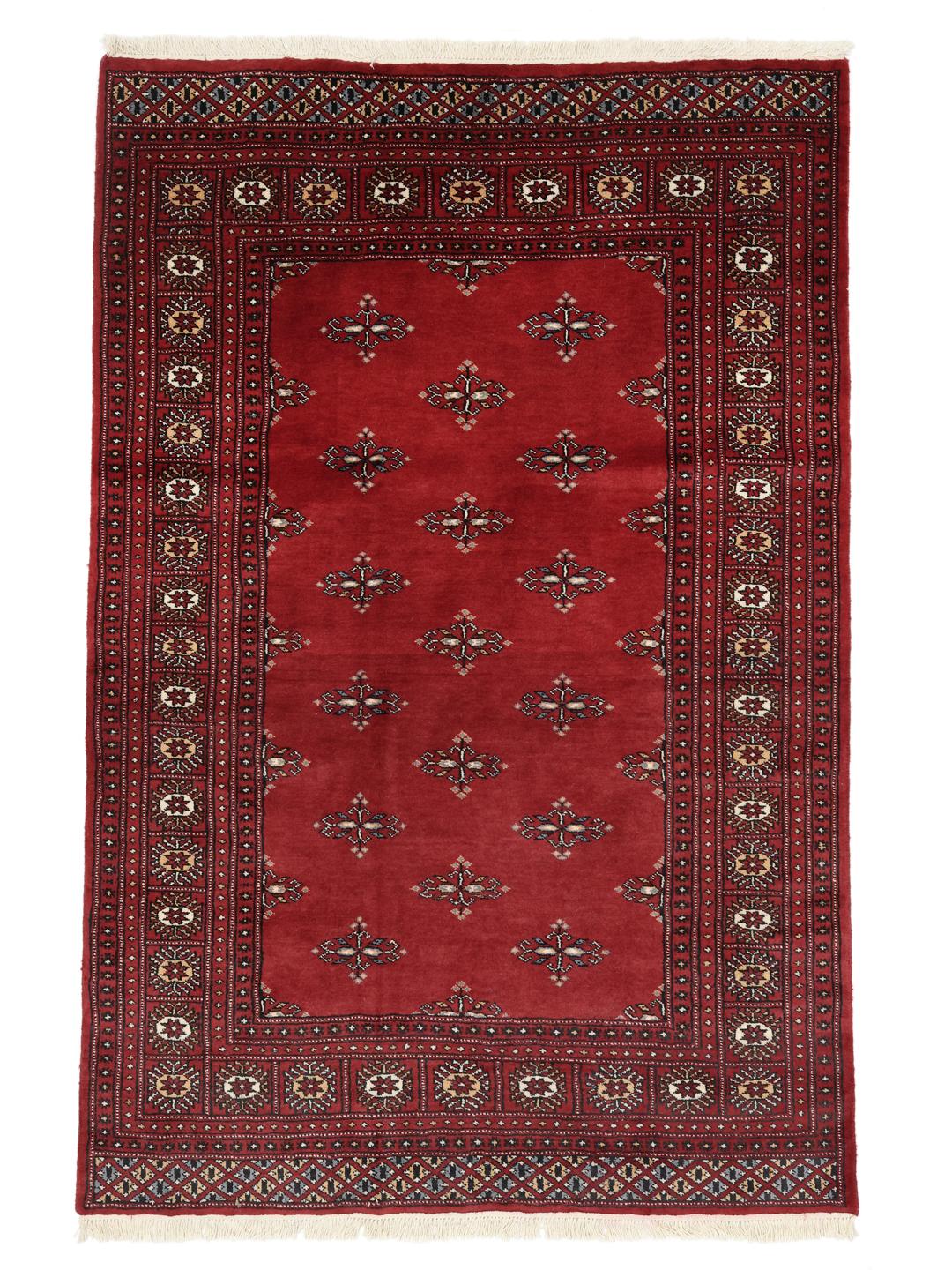
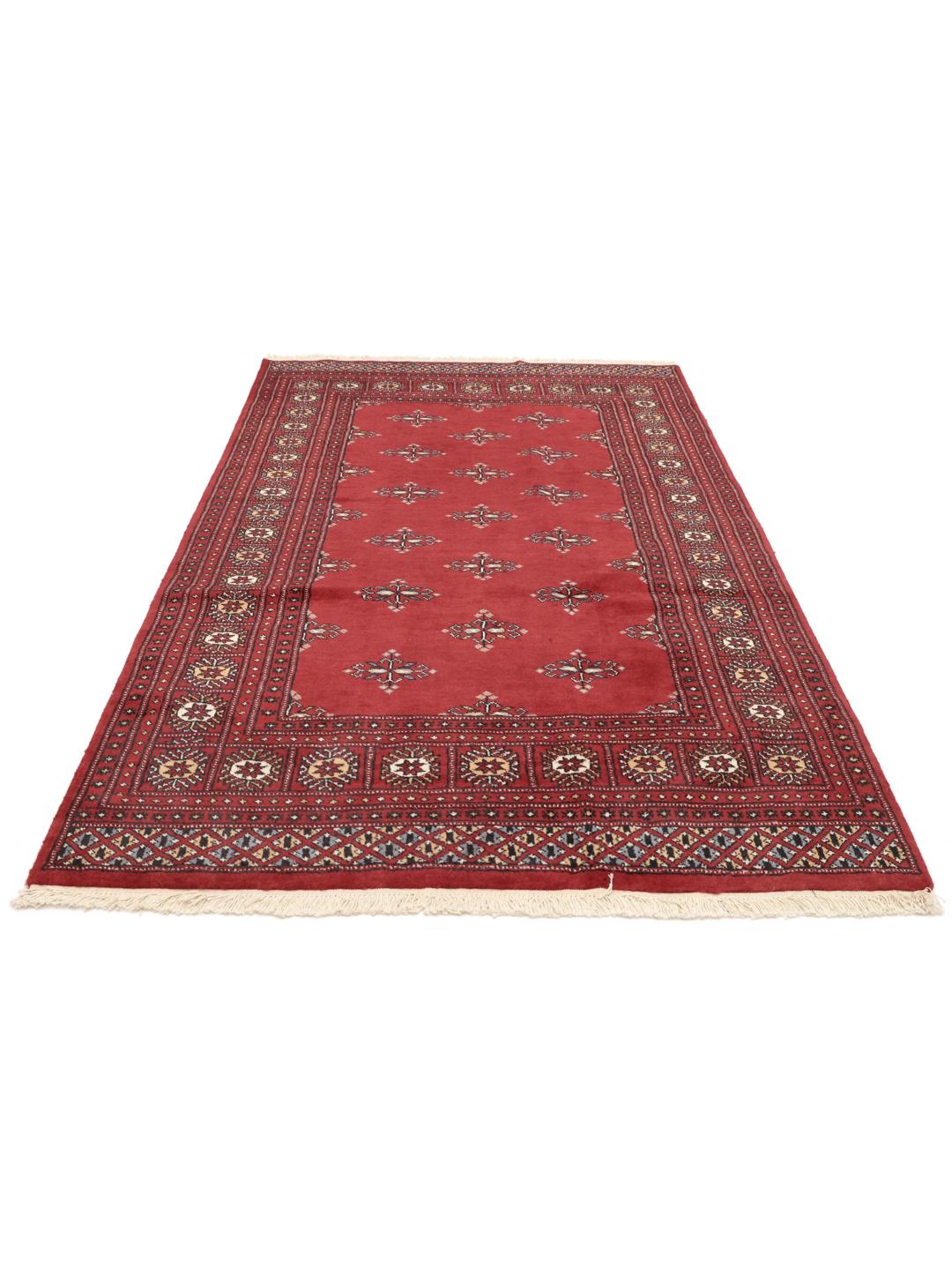
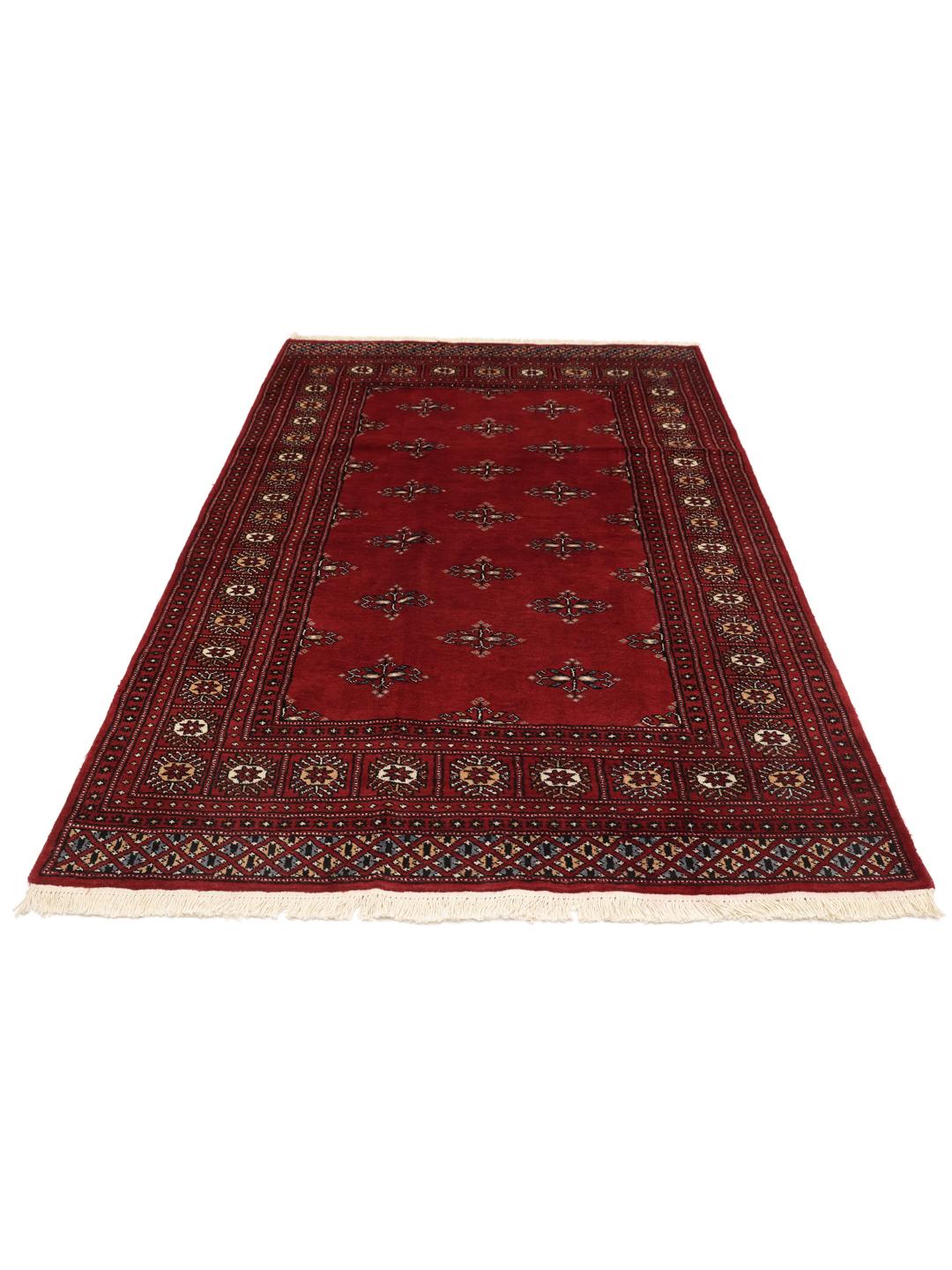
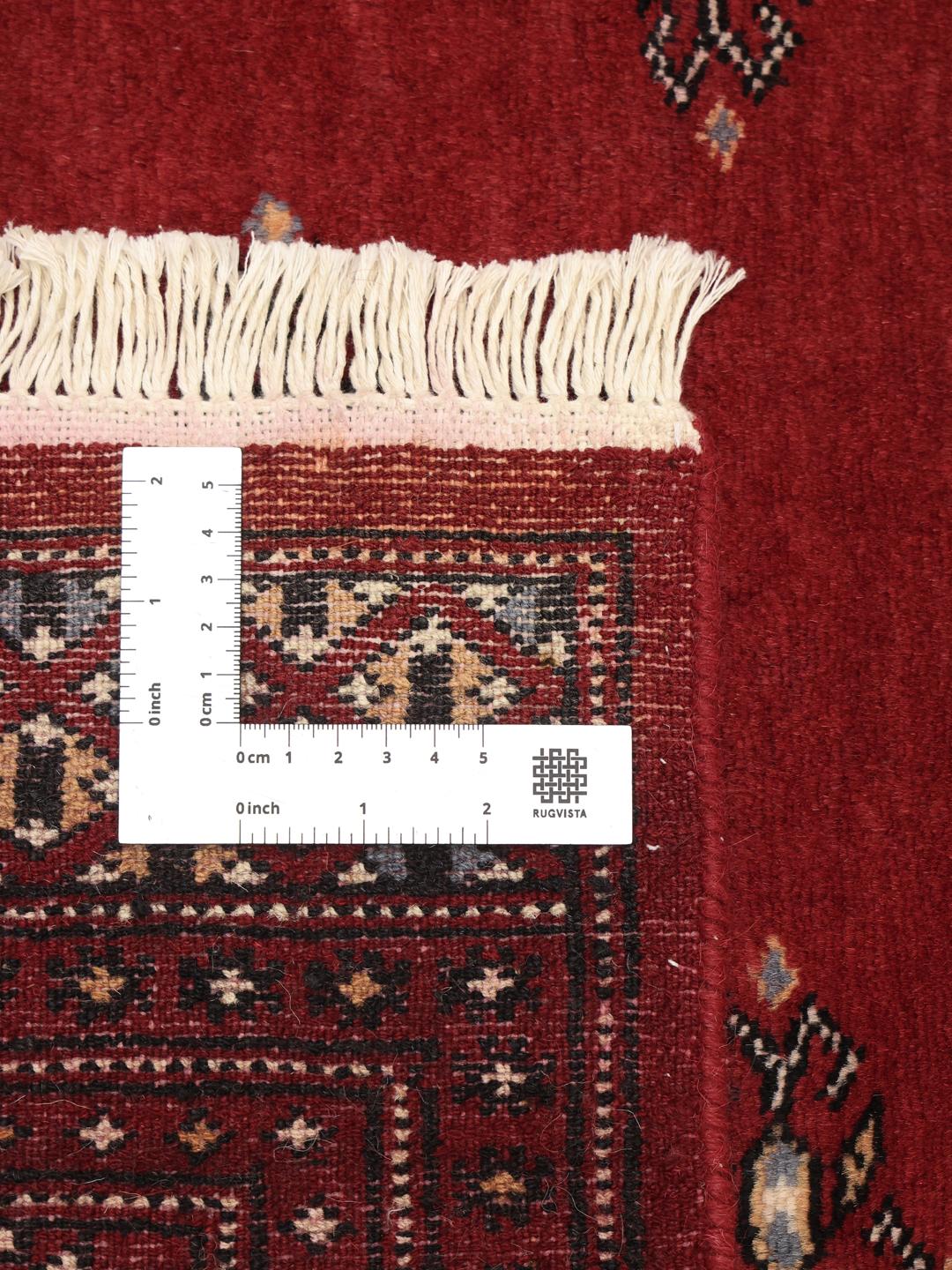
Bokhara rugs take their name from the ancient Silk Road city of Bukhara, a historic hub for trade and craftsmanship in Central Asia. While the traditional designs originated among nomadic tribes in the region, the finest examples today are expertly crafted in Pakistan, where the tradition has been preserved and elevated by generations of master weavers.
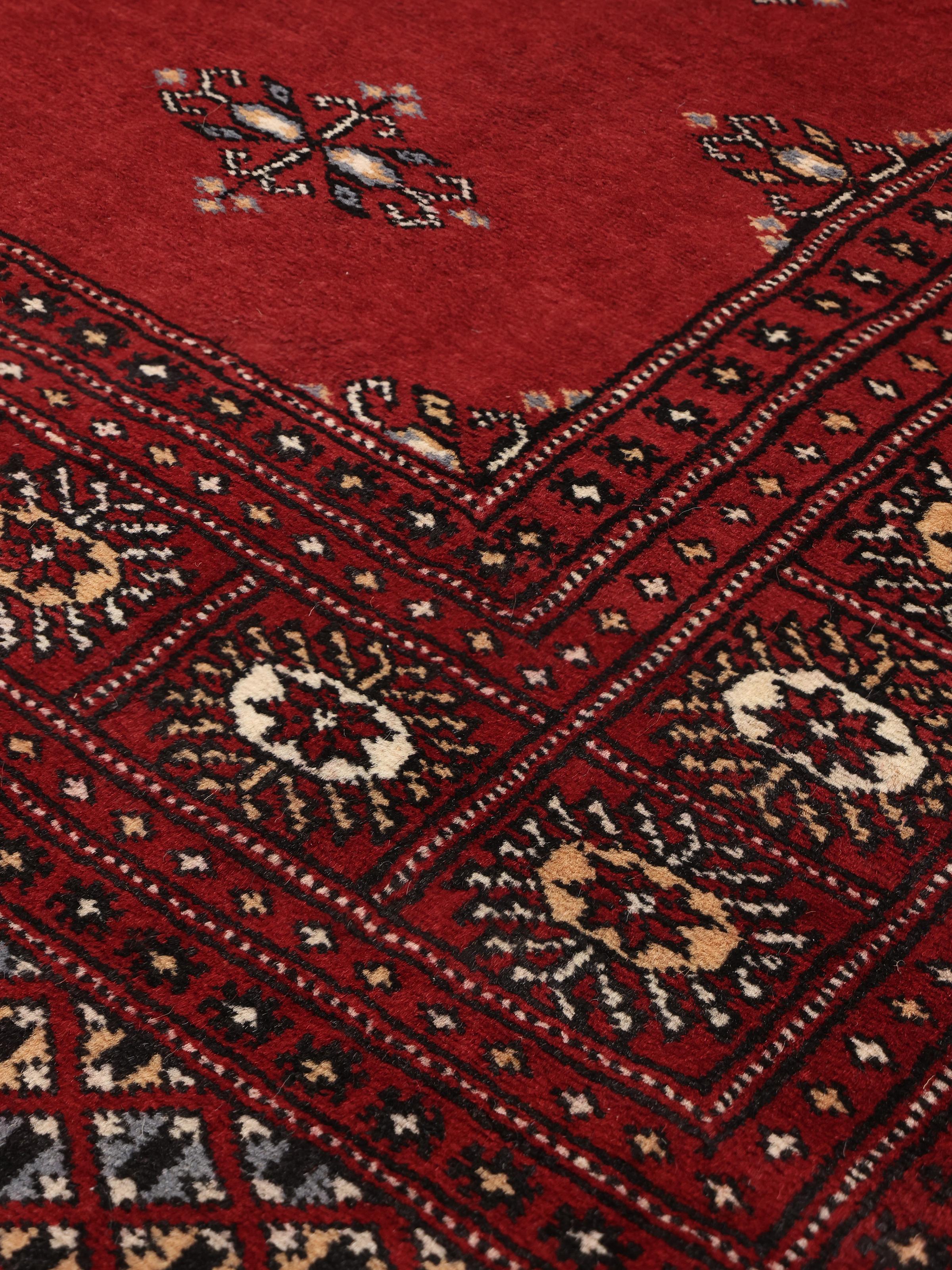
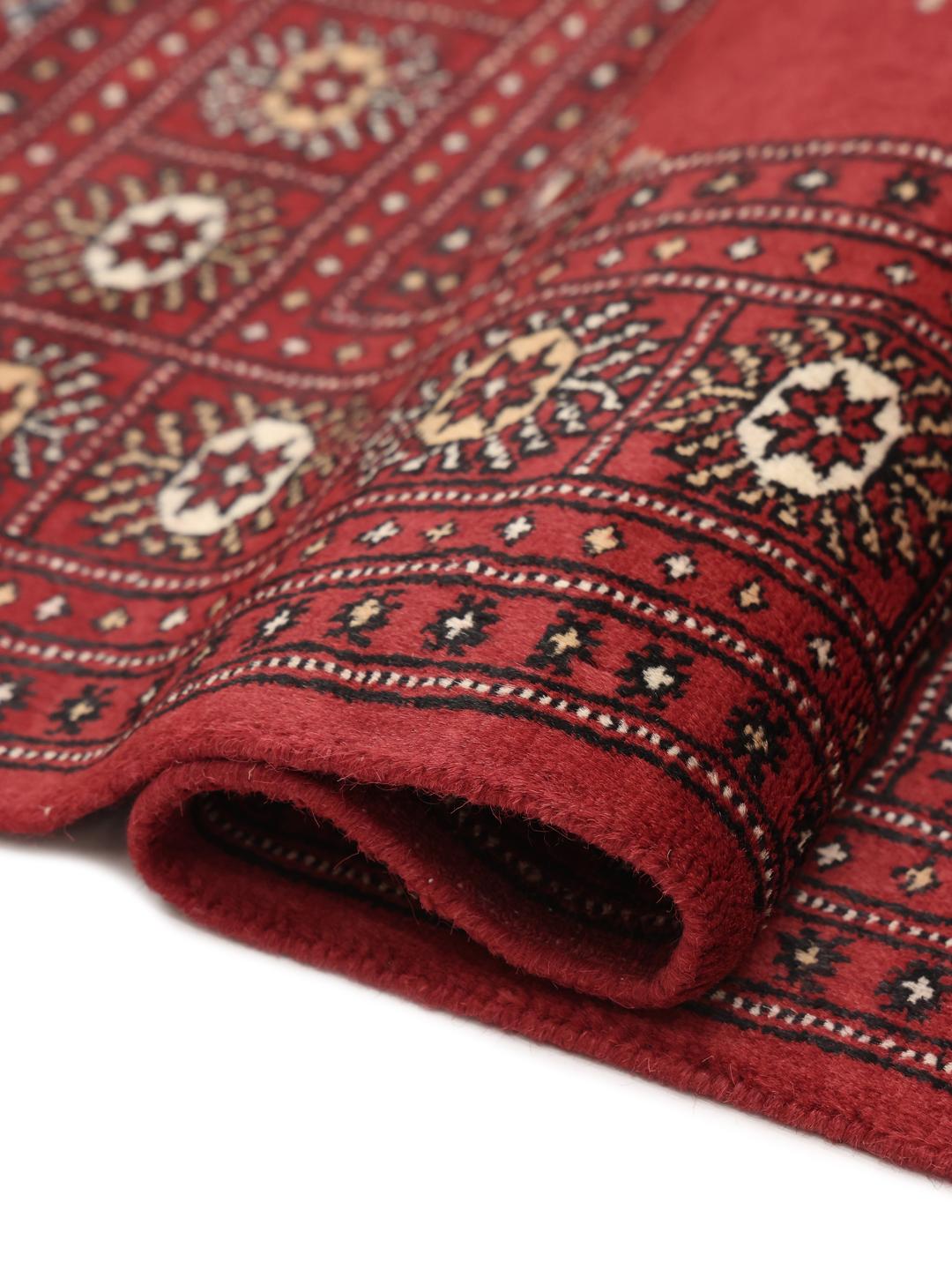
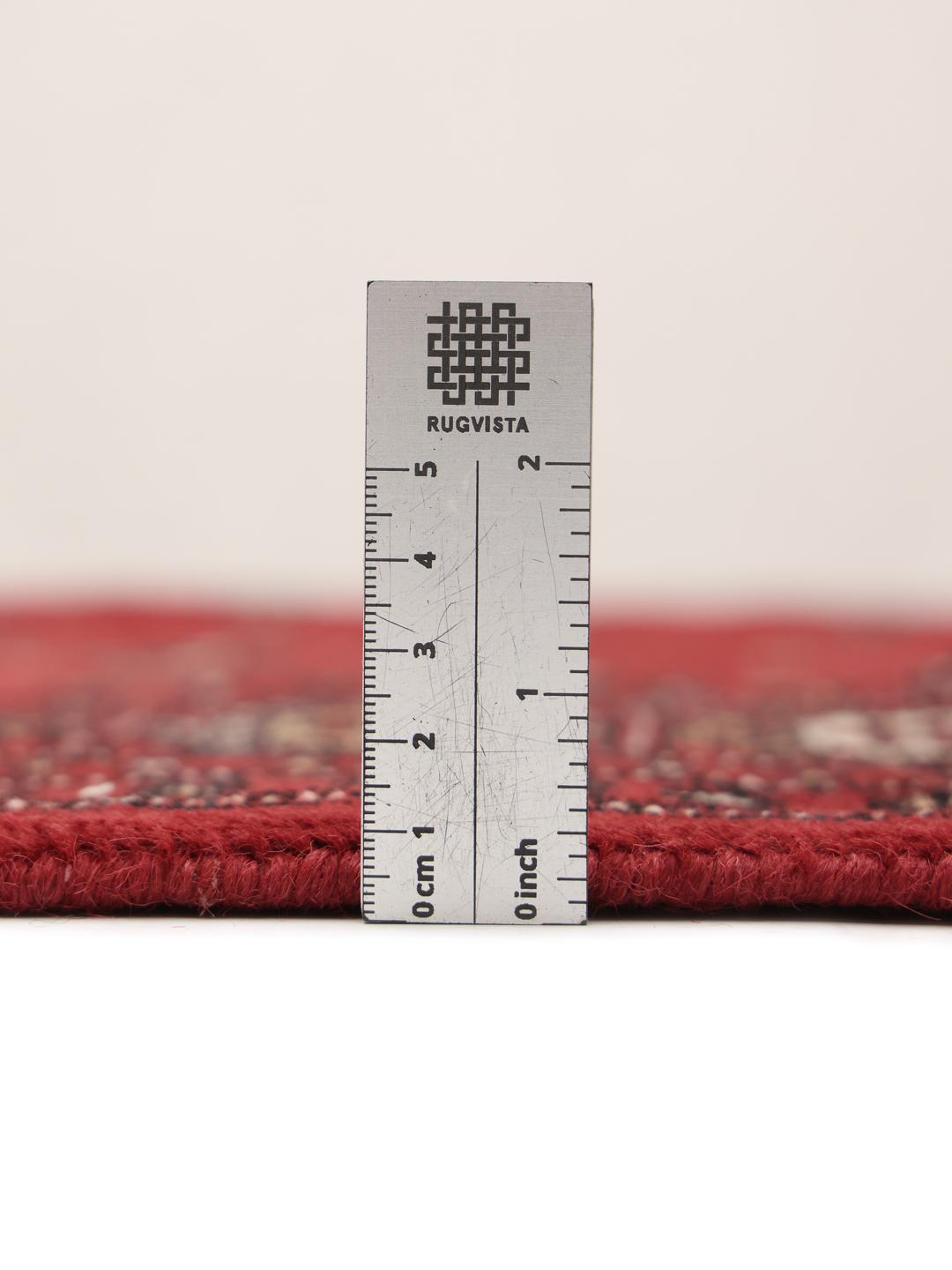
The term 2ply refers to the construction of the pile, where two strands of wool are twisted together before being knotted. This double-ply technique is essential for creating a denser, more lustrous, and longer-lasting pile compared to single-ply alternatives. It provides the rug with a superior feel and a natural ability to resist wear over time.
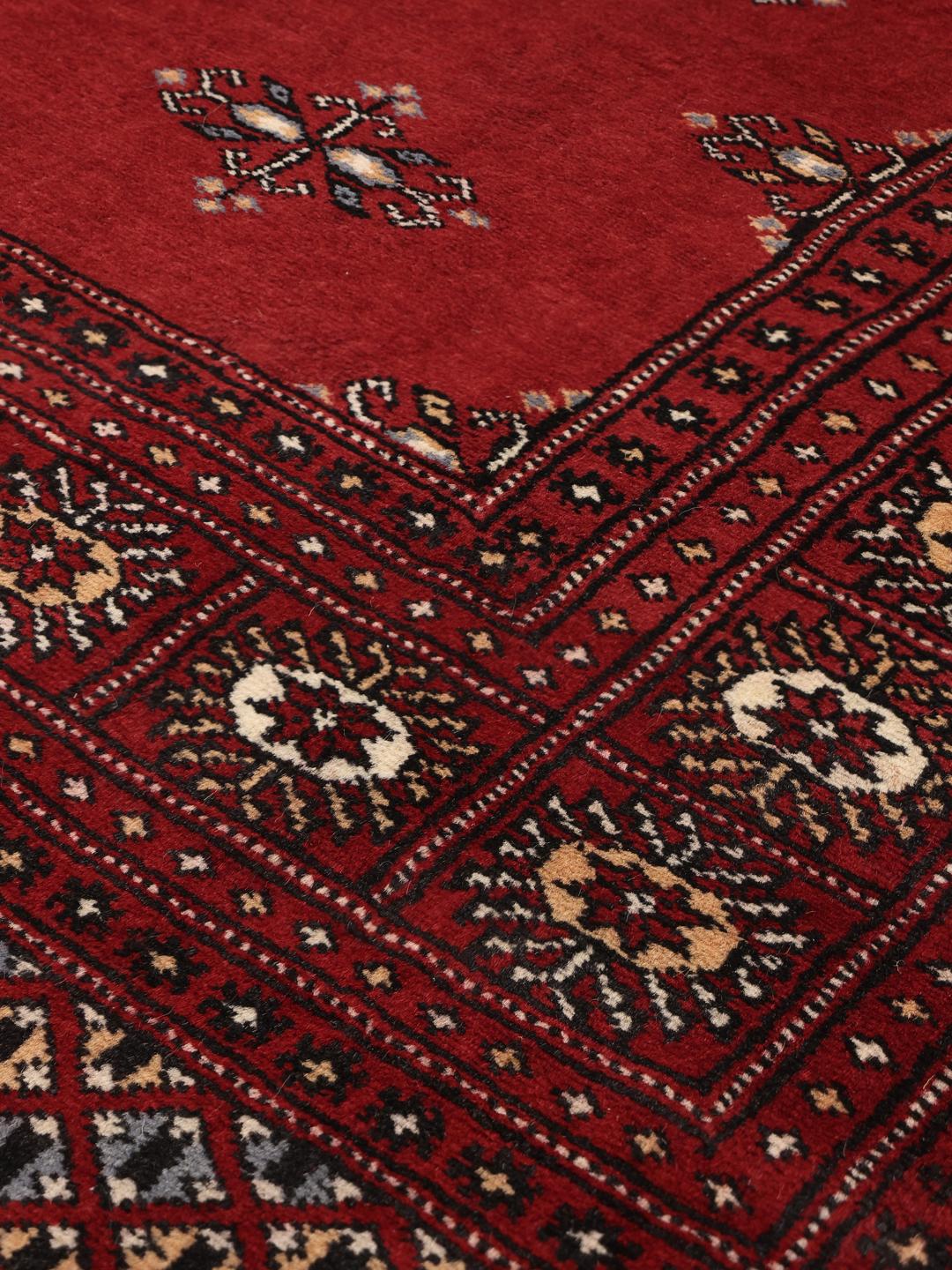
Signature design elements of the Bokhara tradition include the repeating gul motifs, which are stylised, octagonal medallions arranged in structured rows across the field. These are typically framed by elaborate, formal borders featuring geometric patterns. The deep red palette is iconic to this style, symbolising the historical significance and cultural warmth associated with these patterns.
These rugs are highly valued by collectors for their blend of historical artistry and technical precision. Owning a piece from this tradition is a commitment to heritage and skilled craftsmanship. It represents a connection to a centuries-old weaving culture, making it a meaningful addition for anyone who appreciates the lasting value of traditional, hand-made textiles.