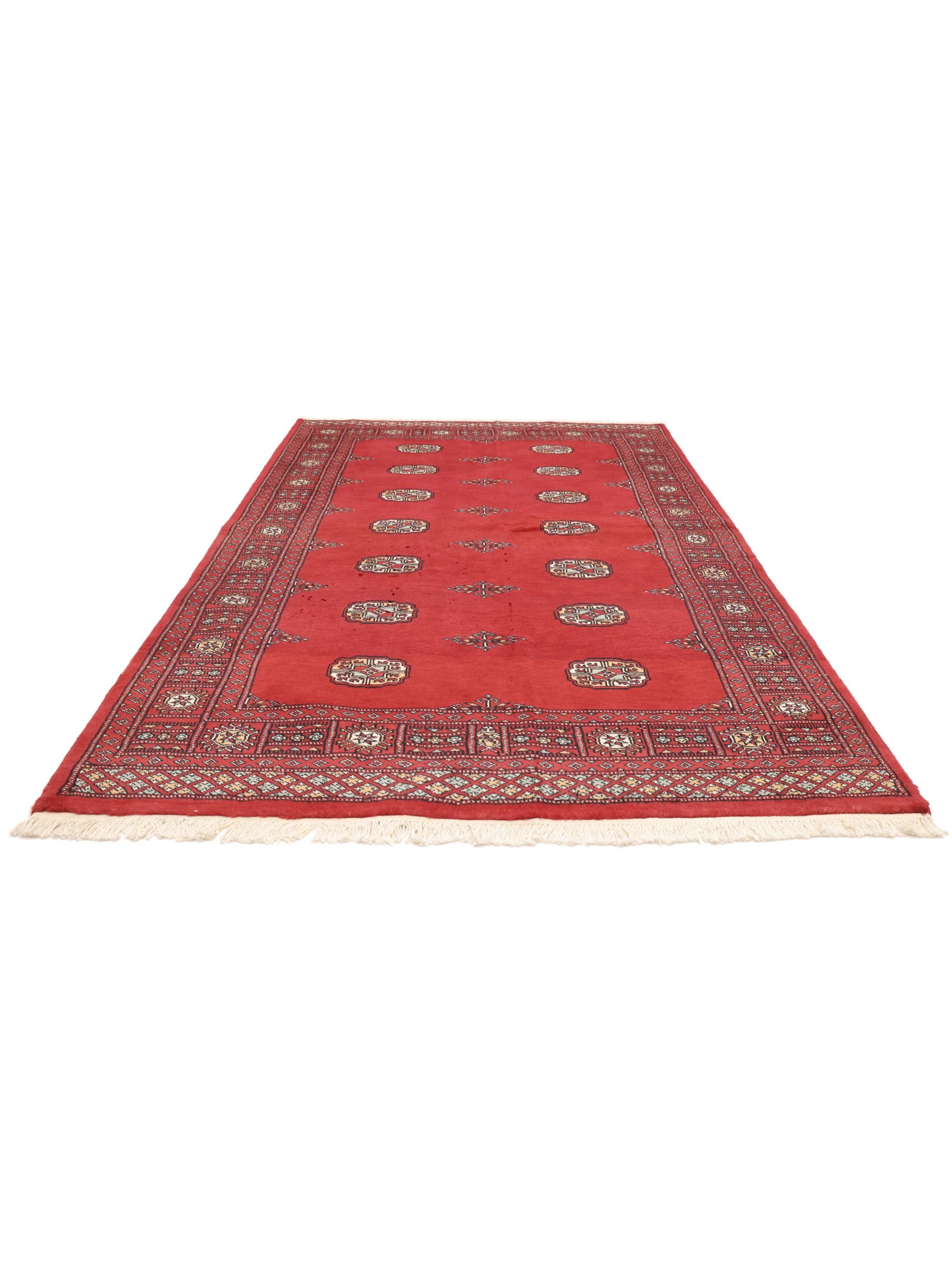
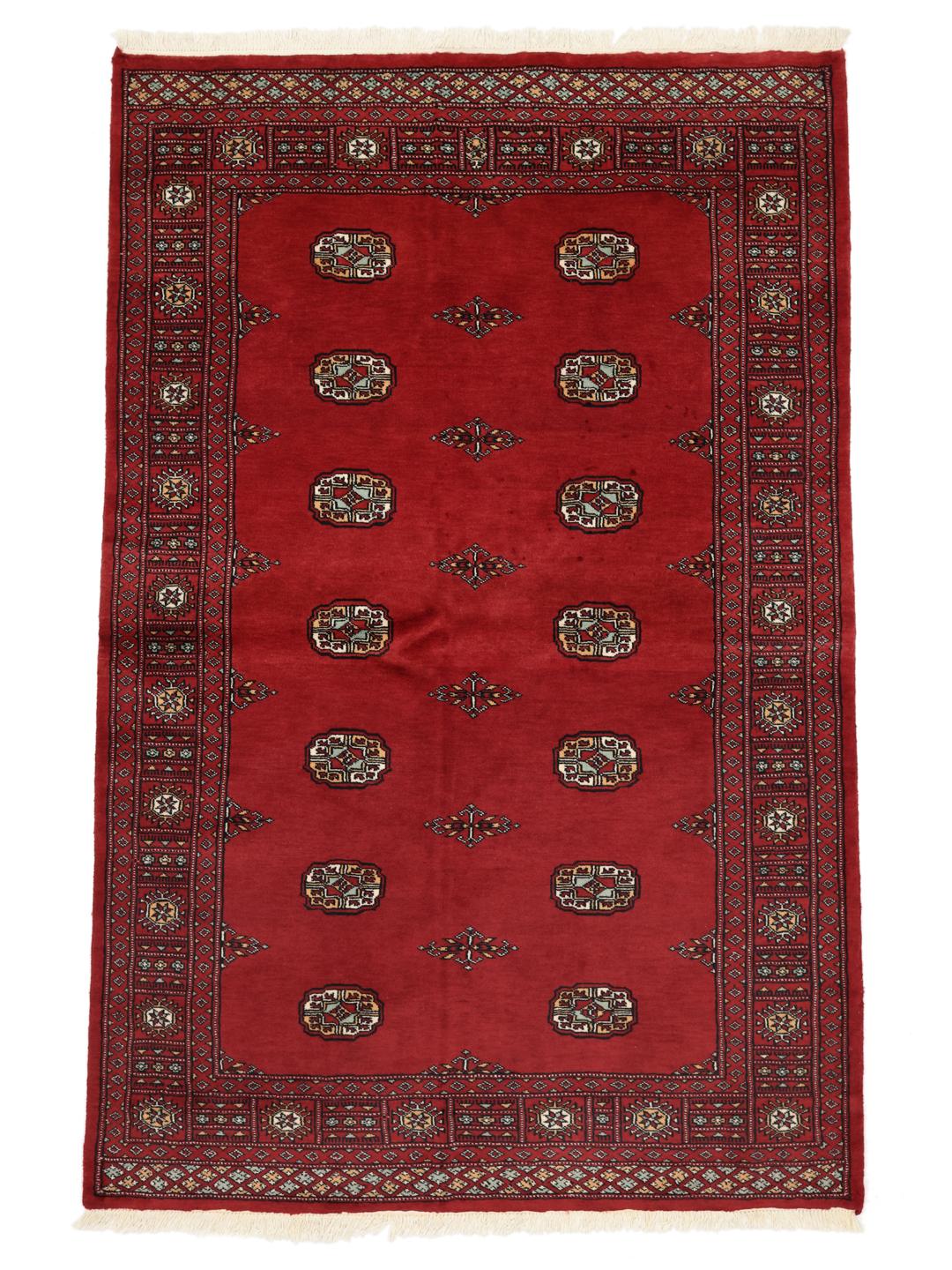
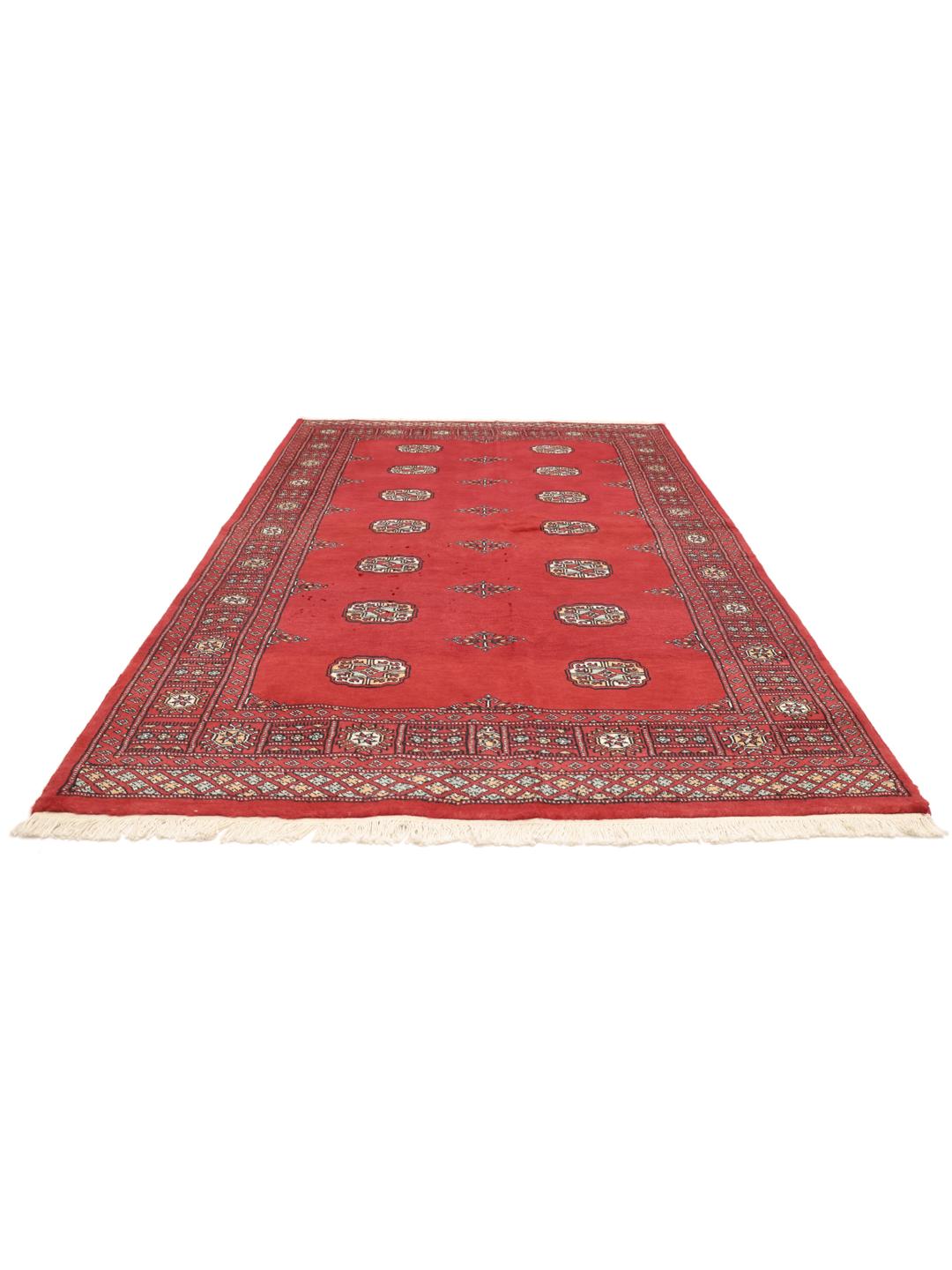
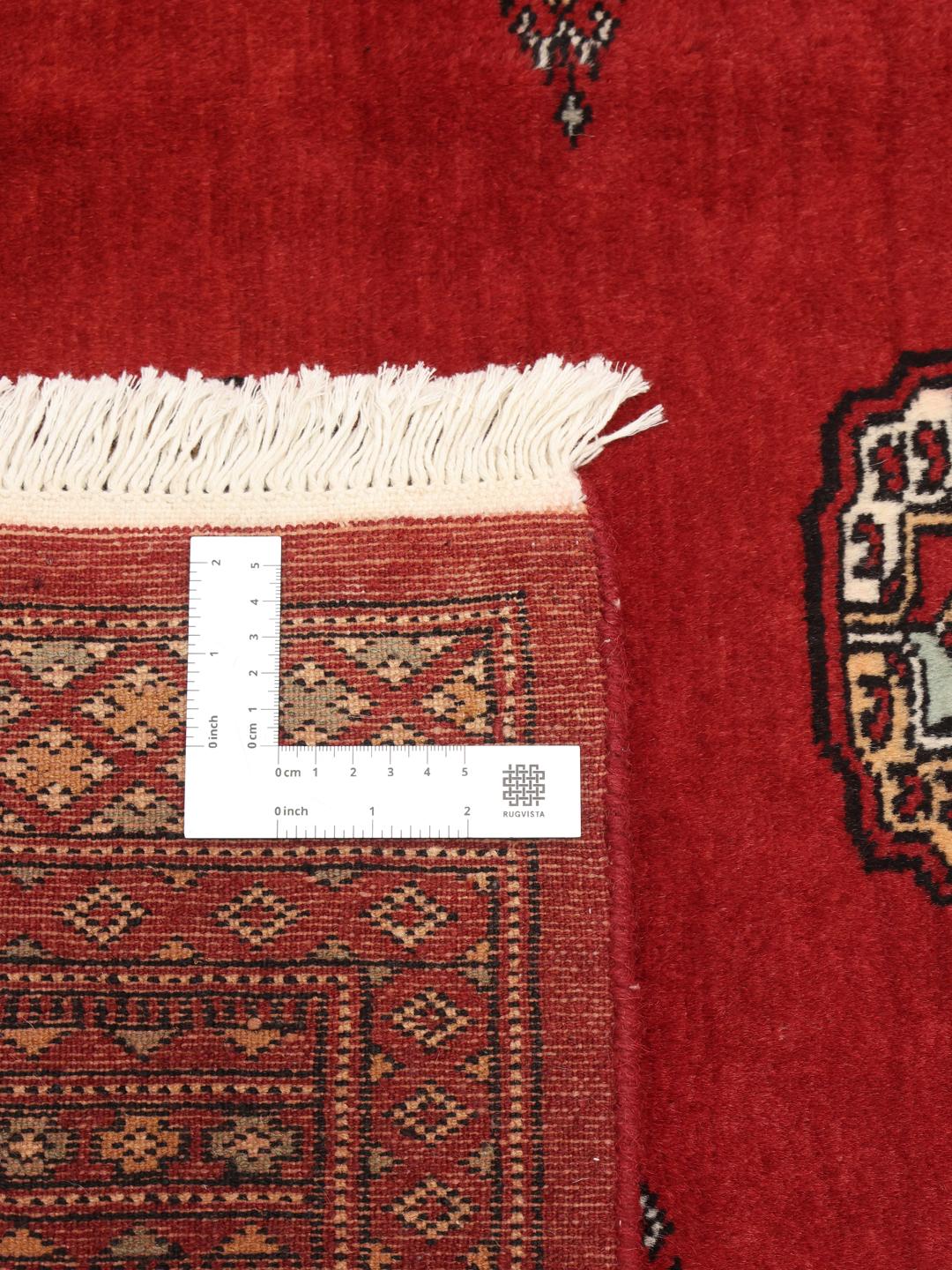
Bokhara rugs trace their design roots back to the ancient Silk Road city of Bukhara in Central Asia, where tribal weavers first developed the iconic geometric language.
Over generations, the tradition migrated southward, and today some of the finest examples are meticulously hand-knotted by skilled artisans in Pakistan.
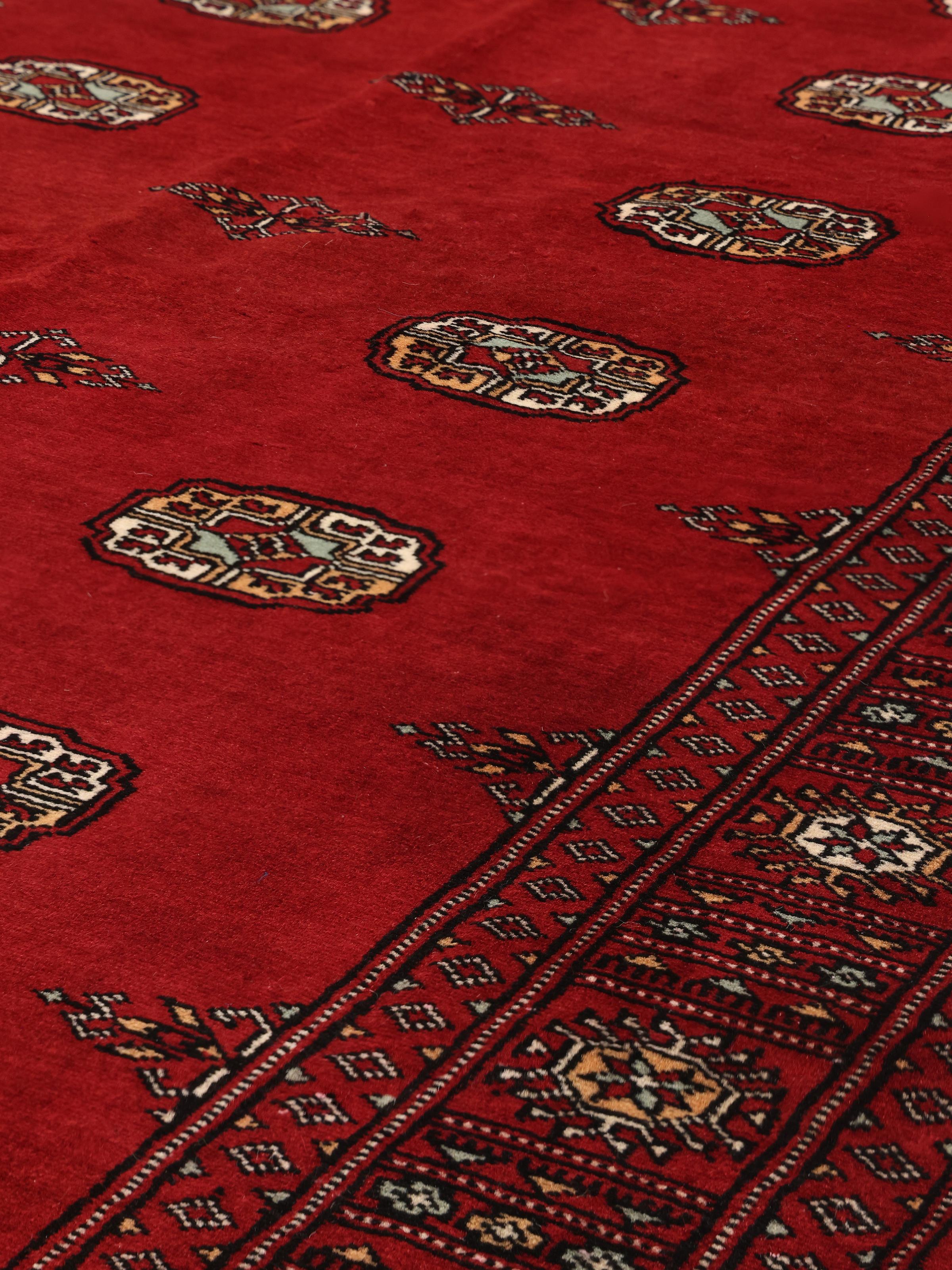
This rug is crafted using a 2ply construction method, meaning the pile yarn is spun from two individual strands twisted firmly together.
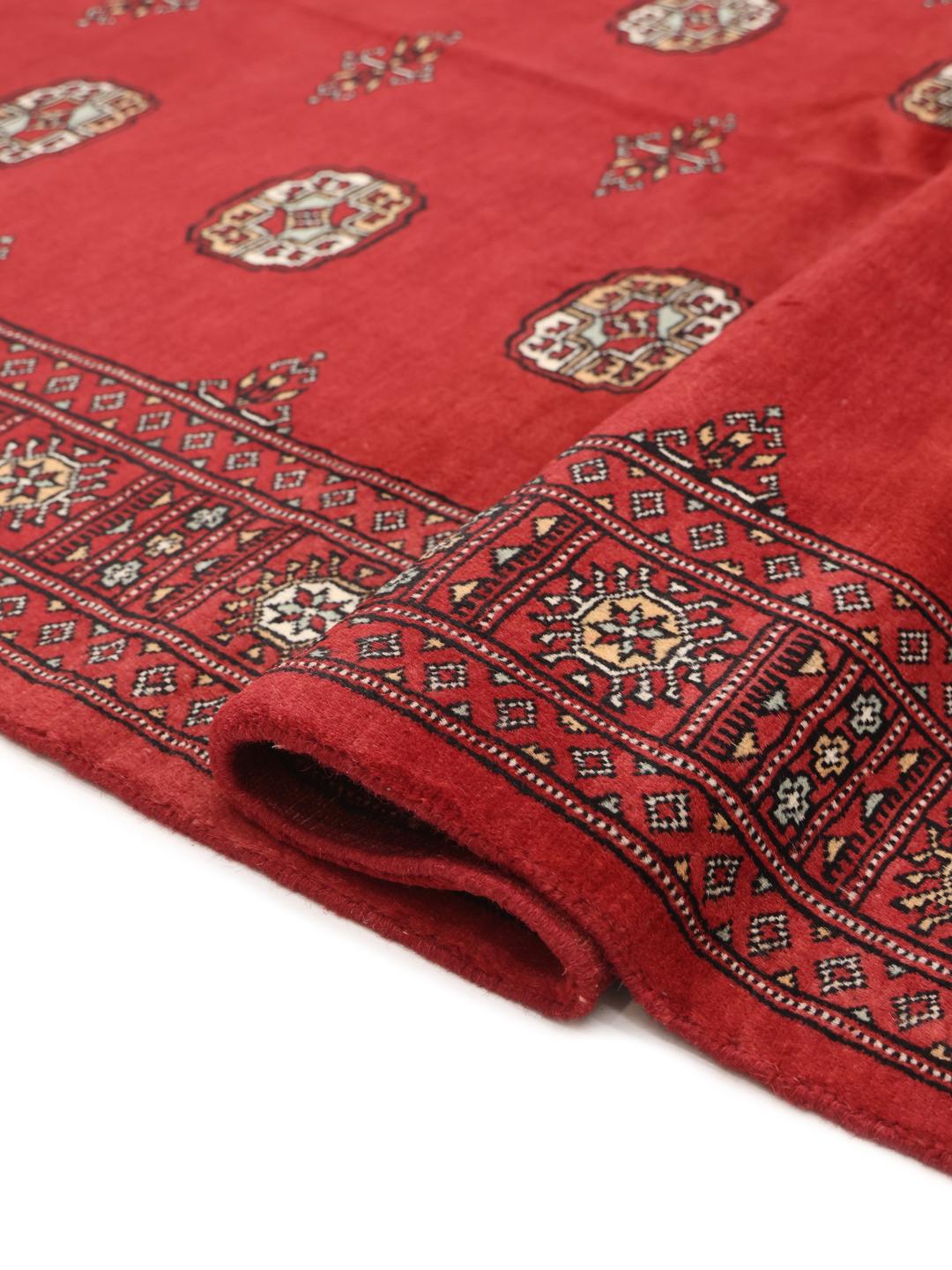
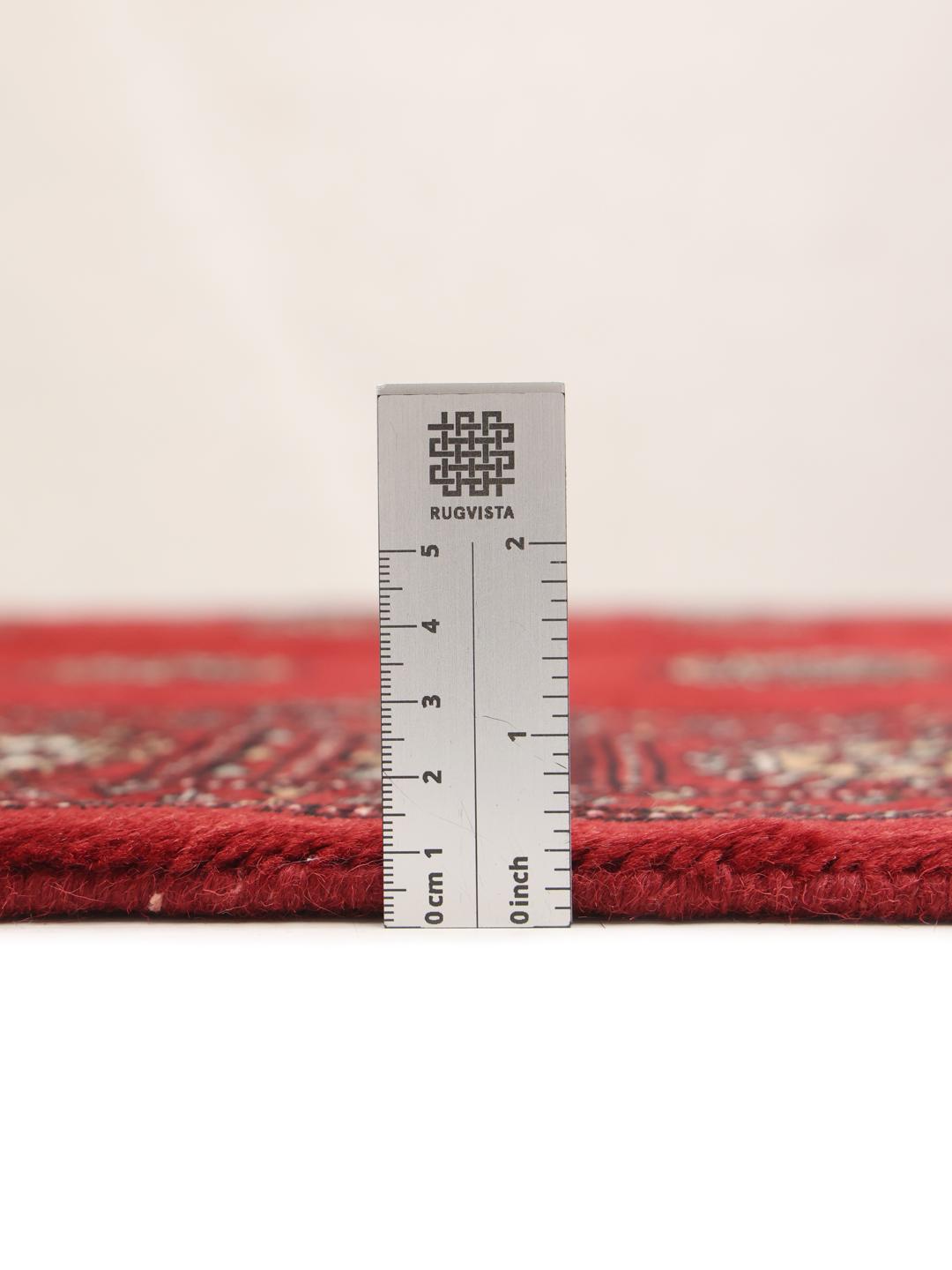
This technique produces a denser, more resilient, and naturally lustrous pile compared to single-ply alternatives, ensuring the rug handles everyday walking while maintaining its smooth feel.
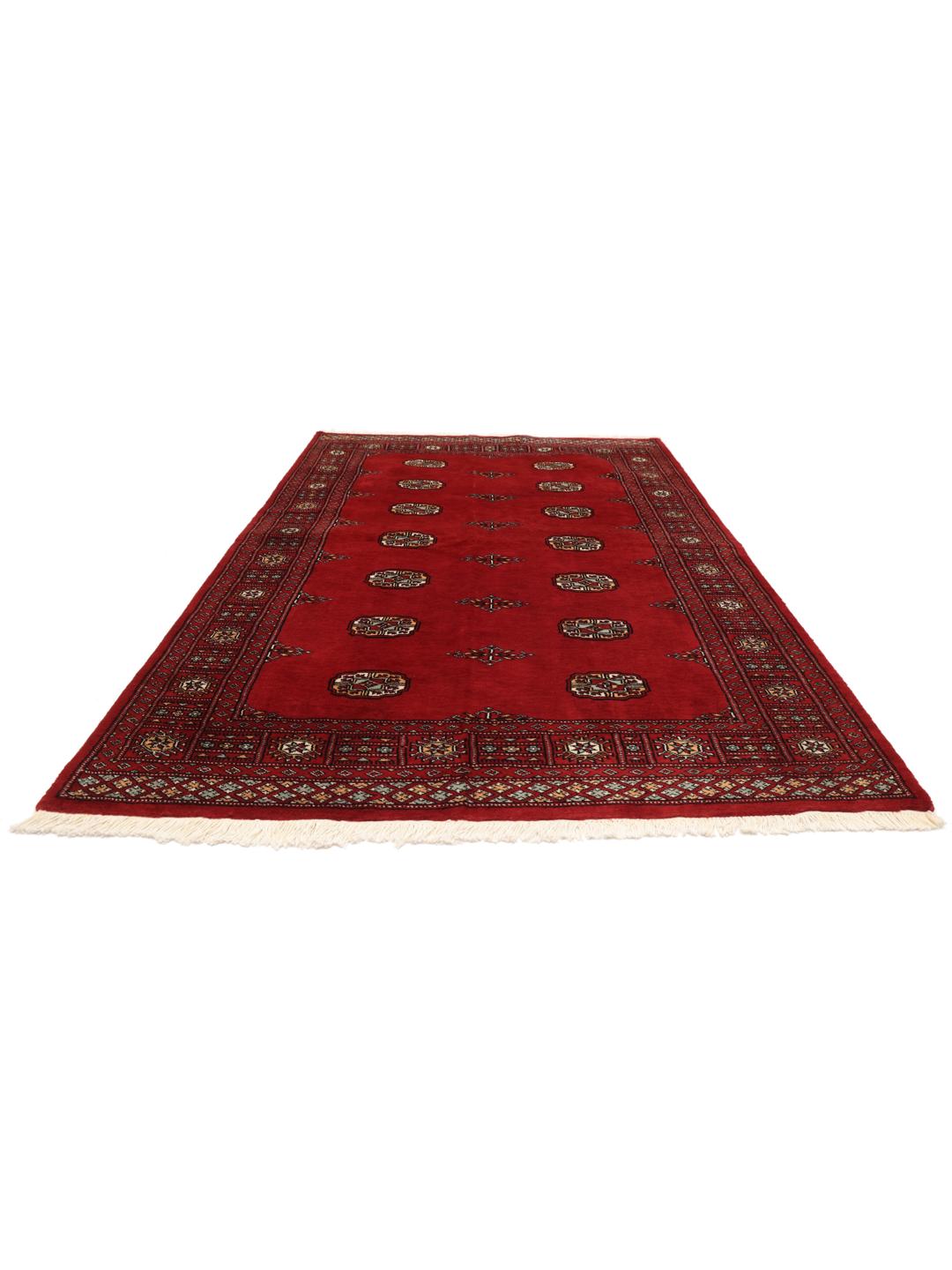
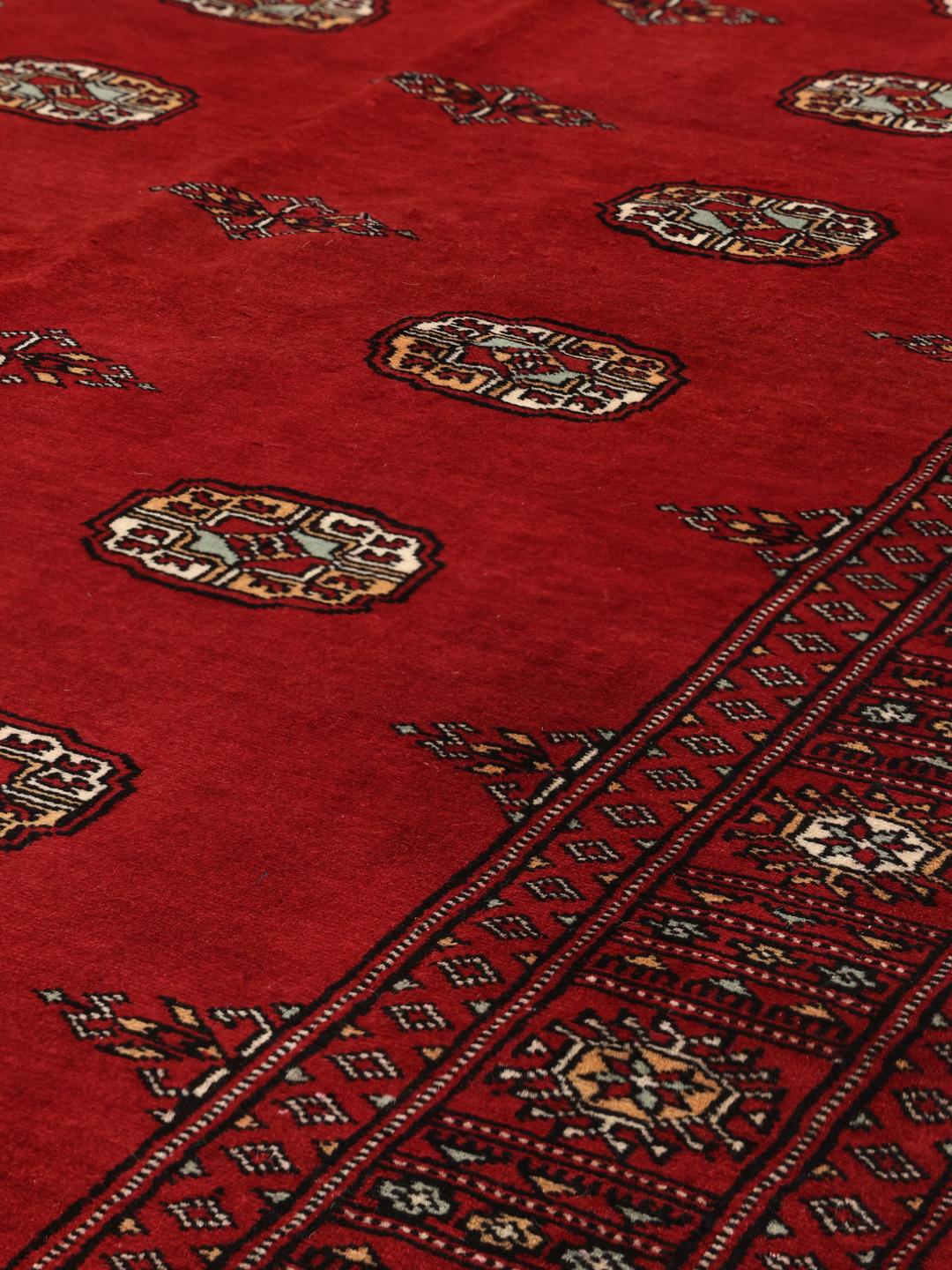
The visual identity of this tradition is defined by repeating gul motifs, which are octagonal medallions arranged in orderly rows across a deep red field.
A structured geometric border frames the central field, creating a balanced composition that has remained cherished across centuries of rug-making history.
Owning a hand-knotted piece from this tradition connects your home to a long lineage of textile artistry.
It represents an investment in genuine human skill, cultural heritage, and lasting quality that stands apart from mass-produced decor.