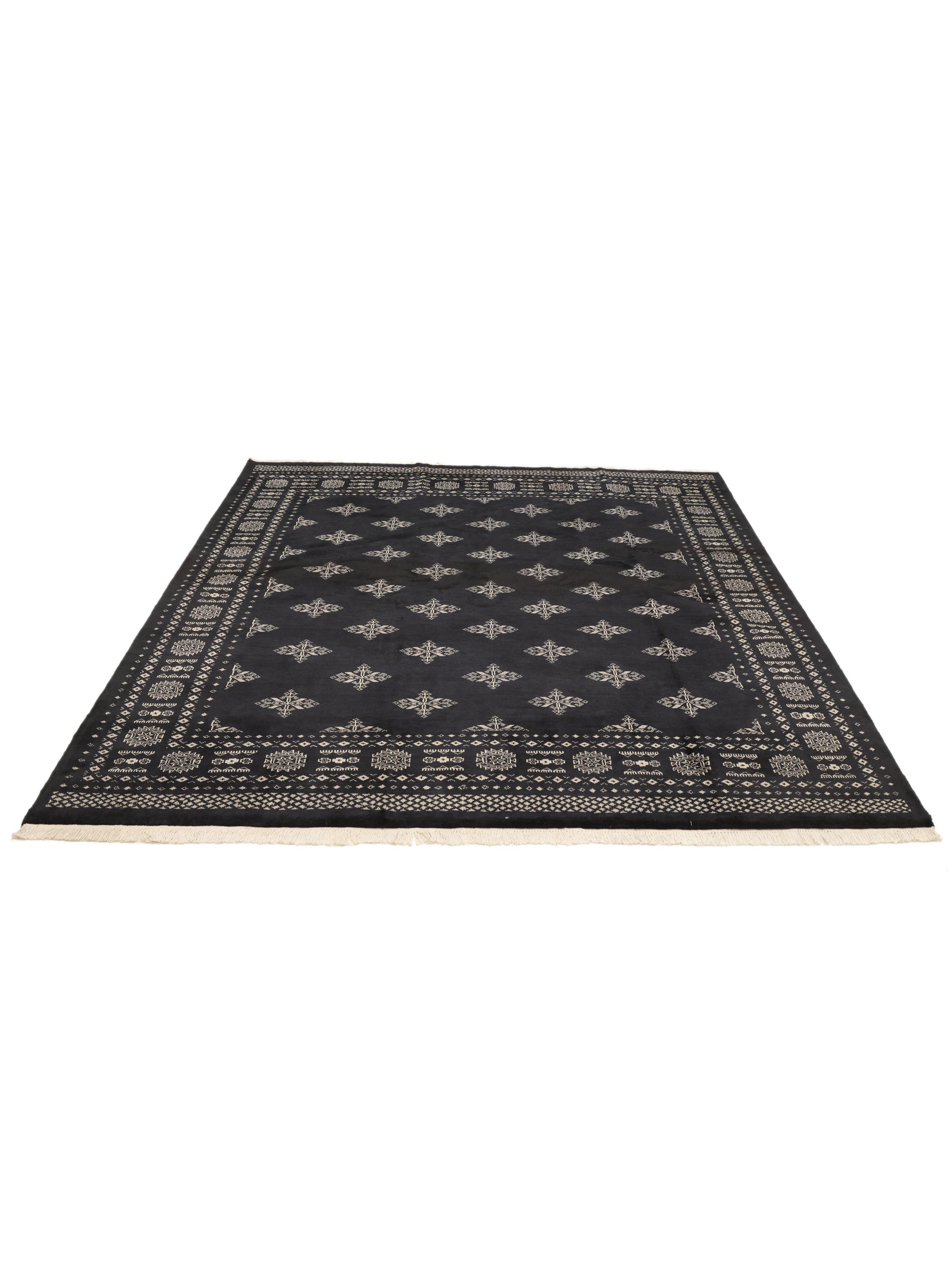
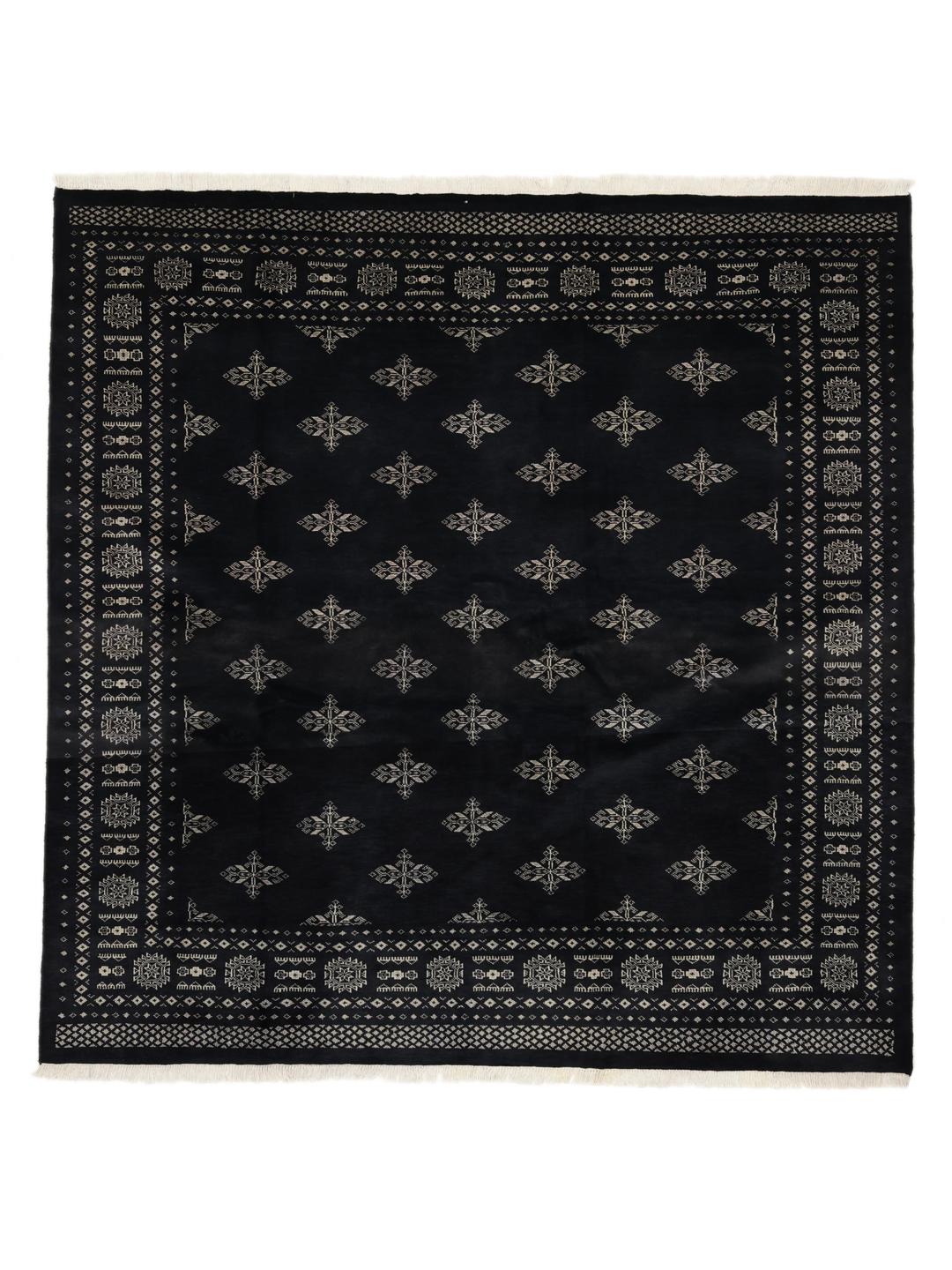
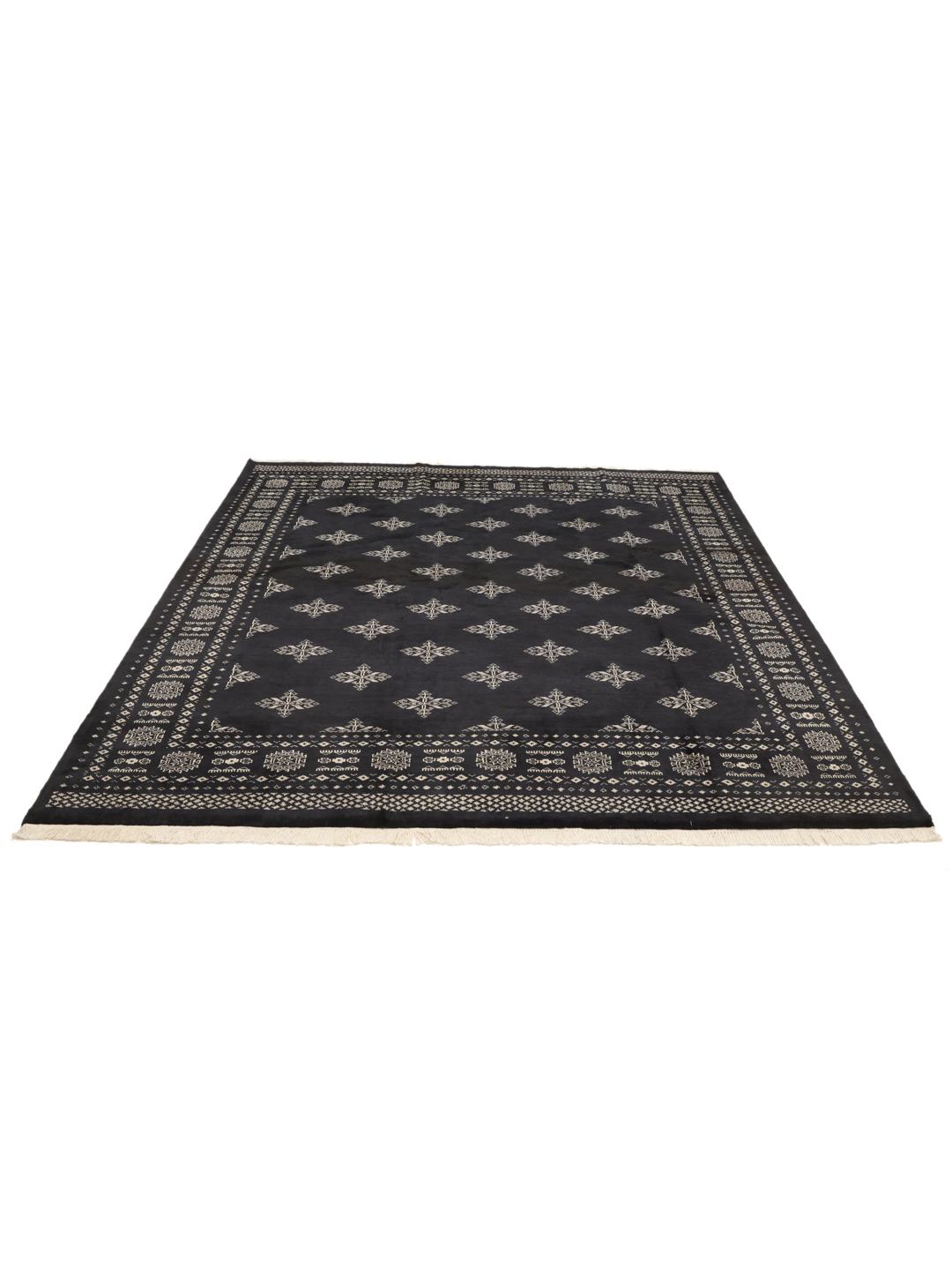
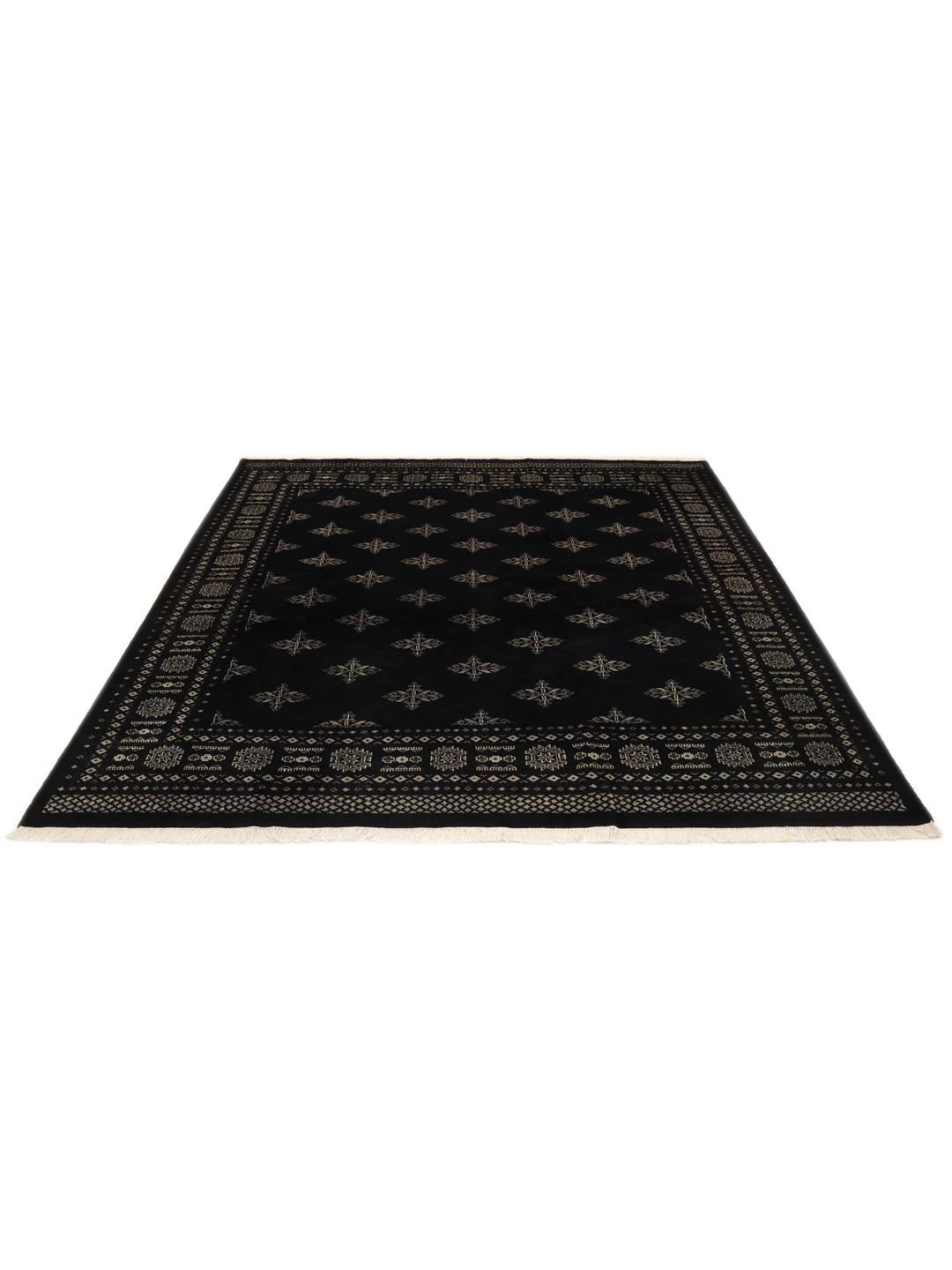
The Bokhara rug tradition is deeply rooted in the history of Middle Eastern weaving, drawing its name from the ancient Silk Road city of Bukhara. While these designs originated among nomadic tribes, they have evolved over centuries to become some of the most recognisable and highly regarded patterns in the world. Today, Pakistan is the primary hub for the creation of these rugs, where master weavers continue to honour the legacy of these classic geometric forms.
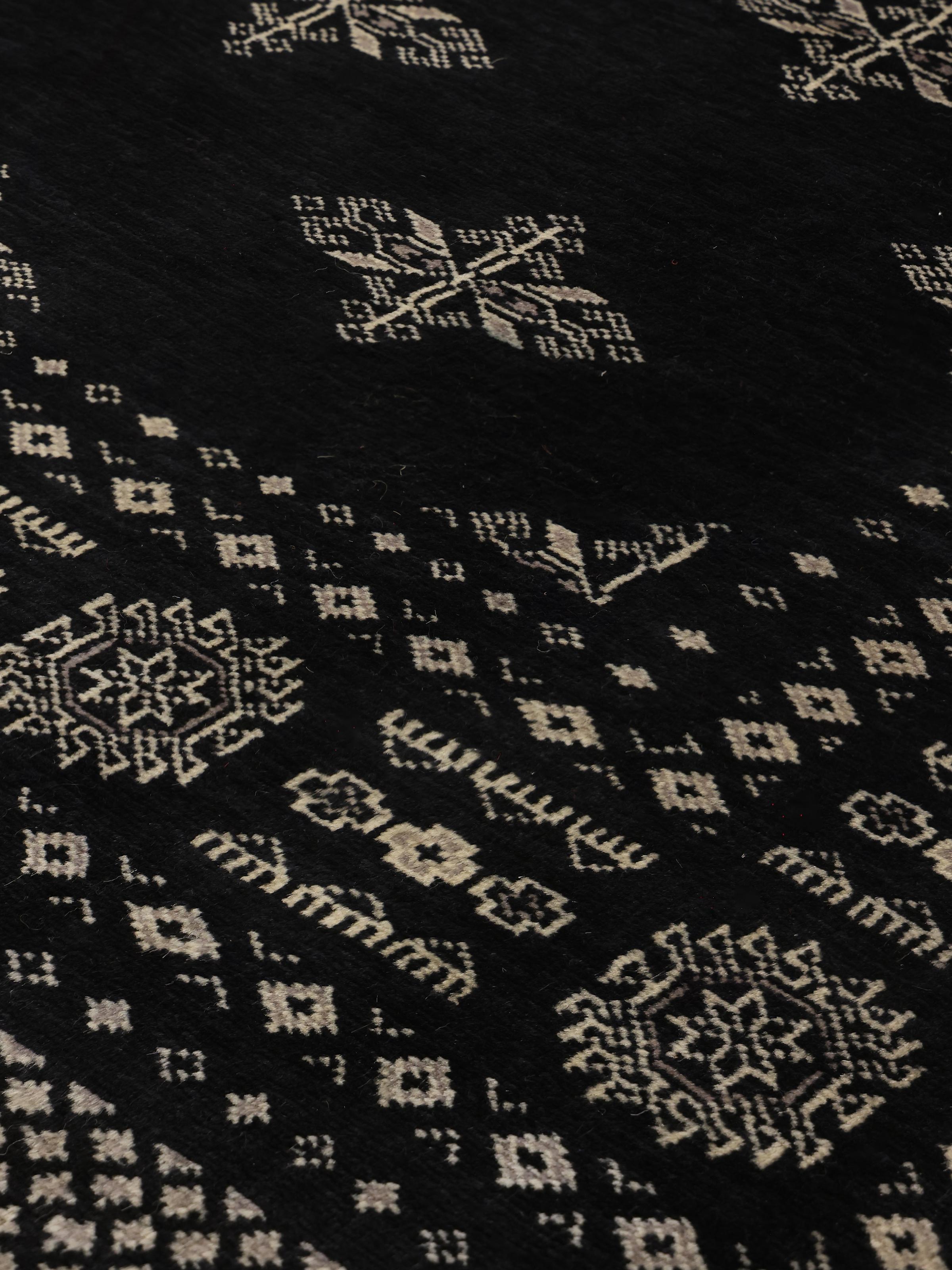
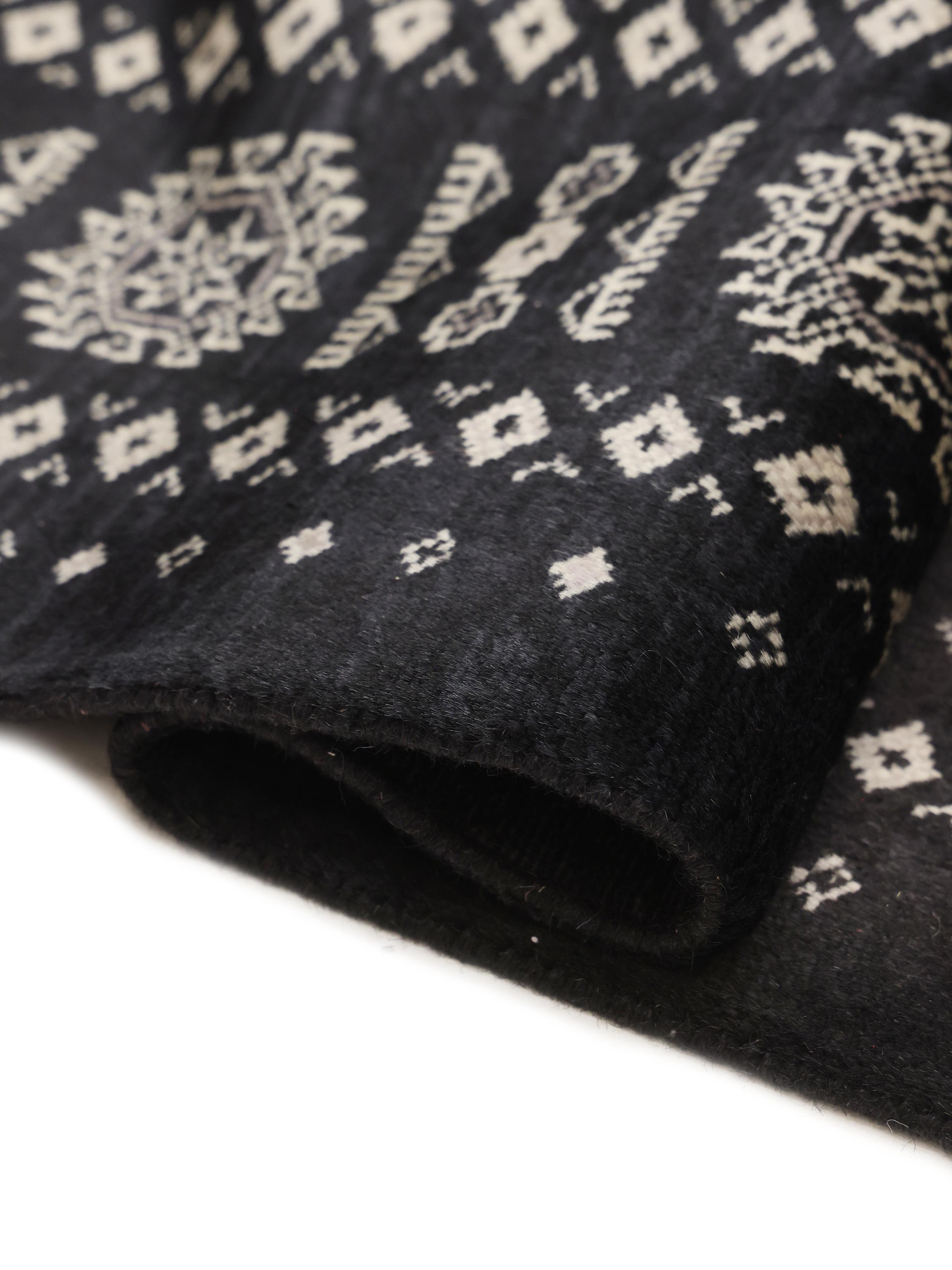
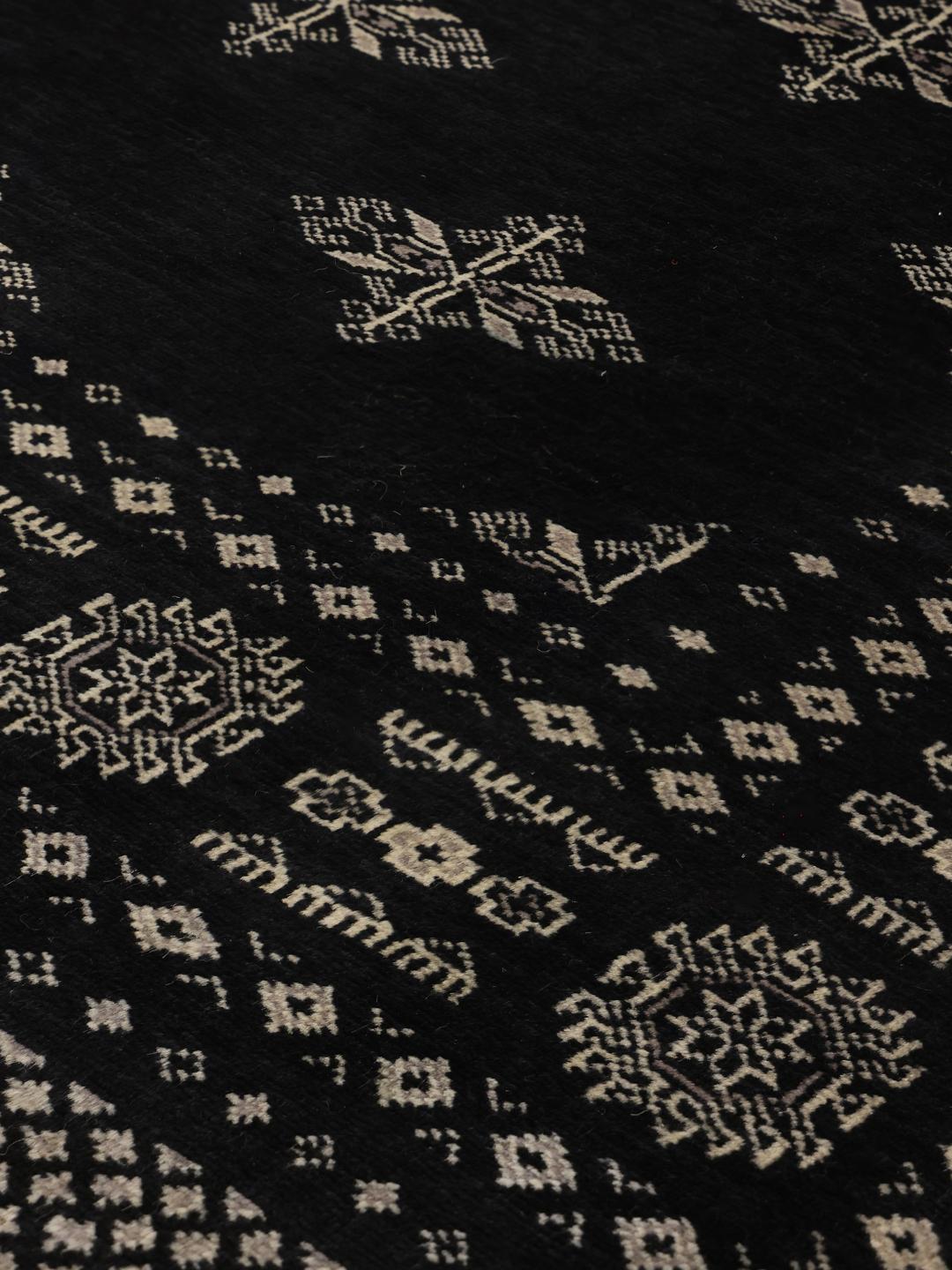
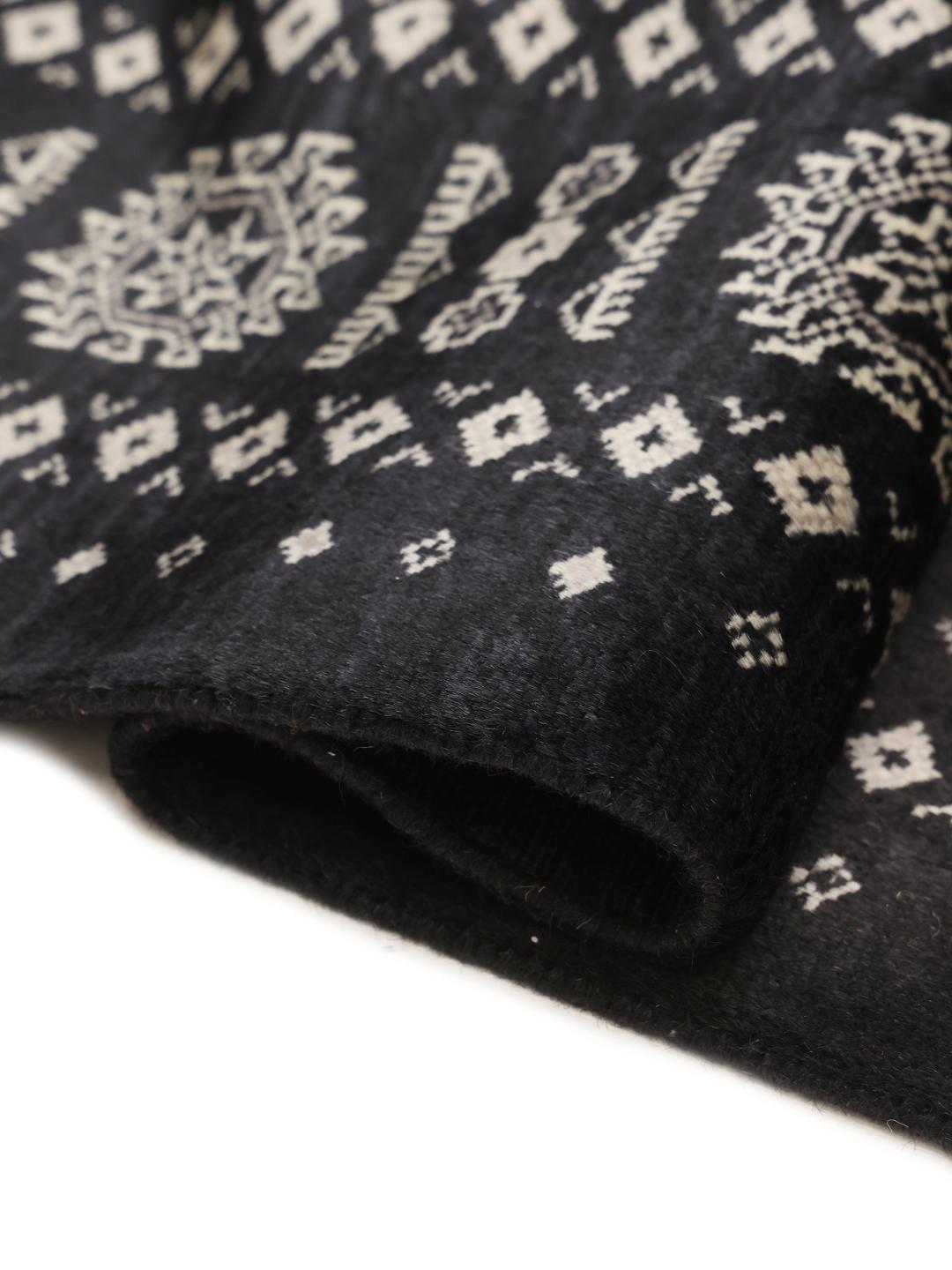
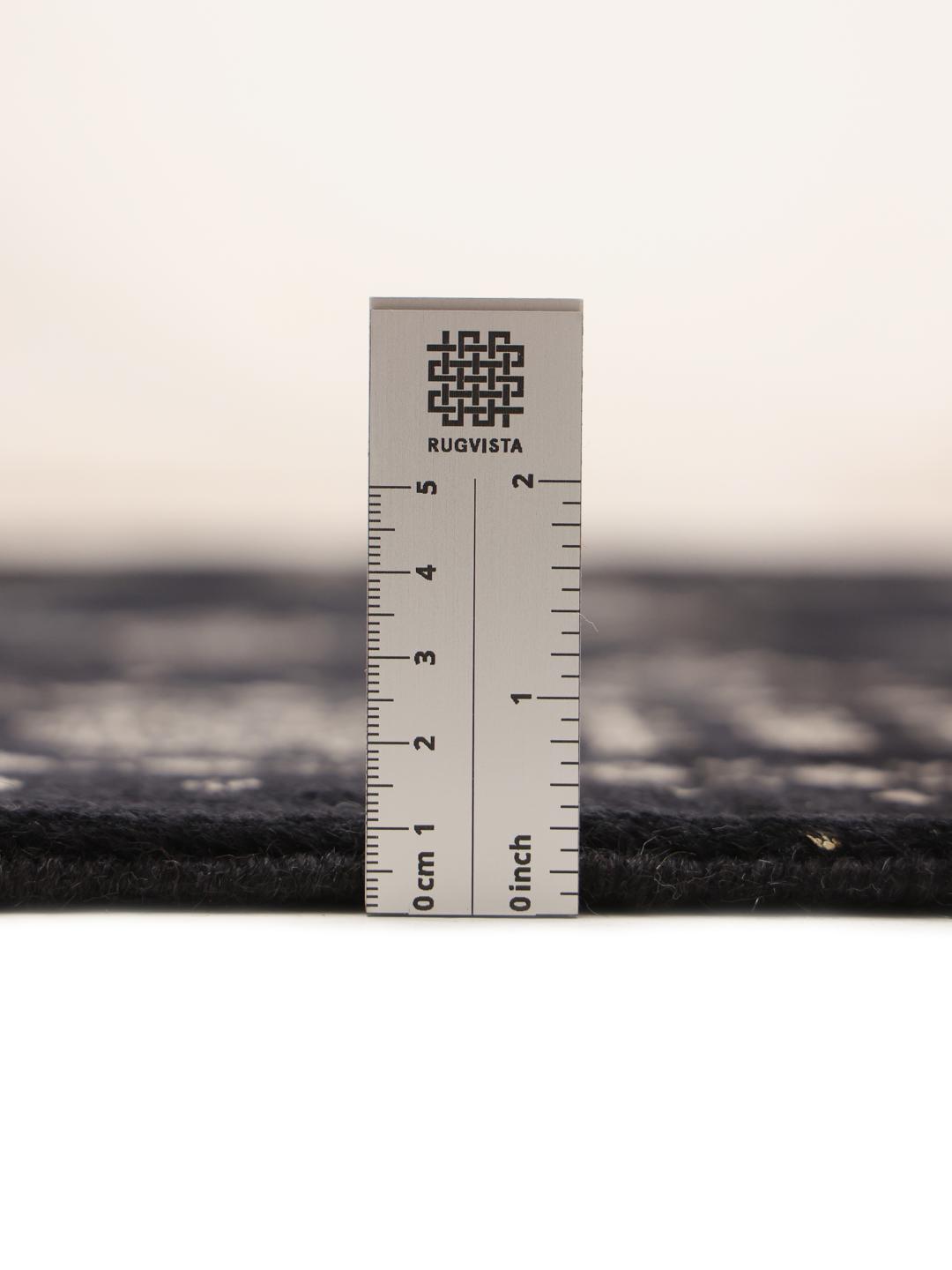
A defining feature of this rug is the '2ply' construction, which refers to the use of two strands of wool twisted together to create each individual knot. This technical choice is significant for the user, as the 2ply yarn provides a denser, more lustrous, and longer-lasting pile compared to single-ply alternatives. The result is a rug that feels more substantial underfoot and retains its depth of colour and shape over many years of use.
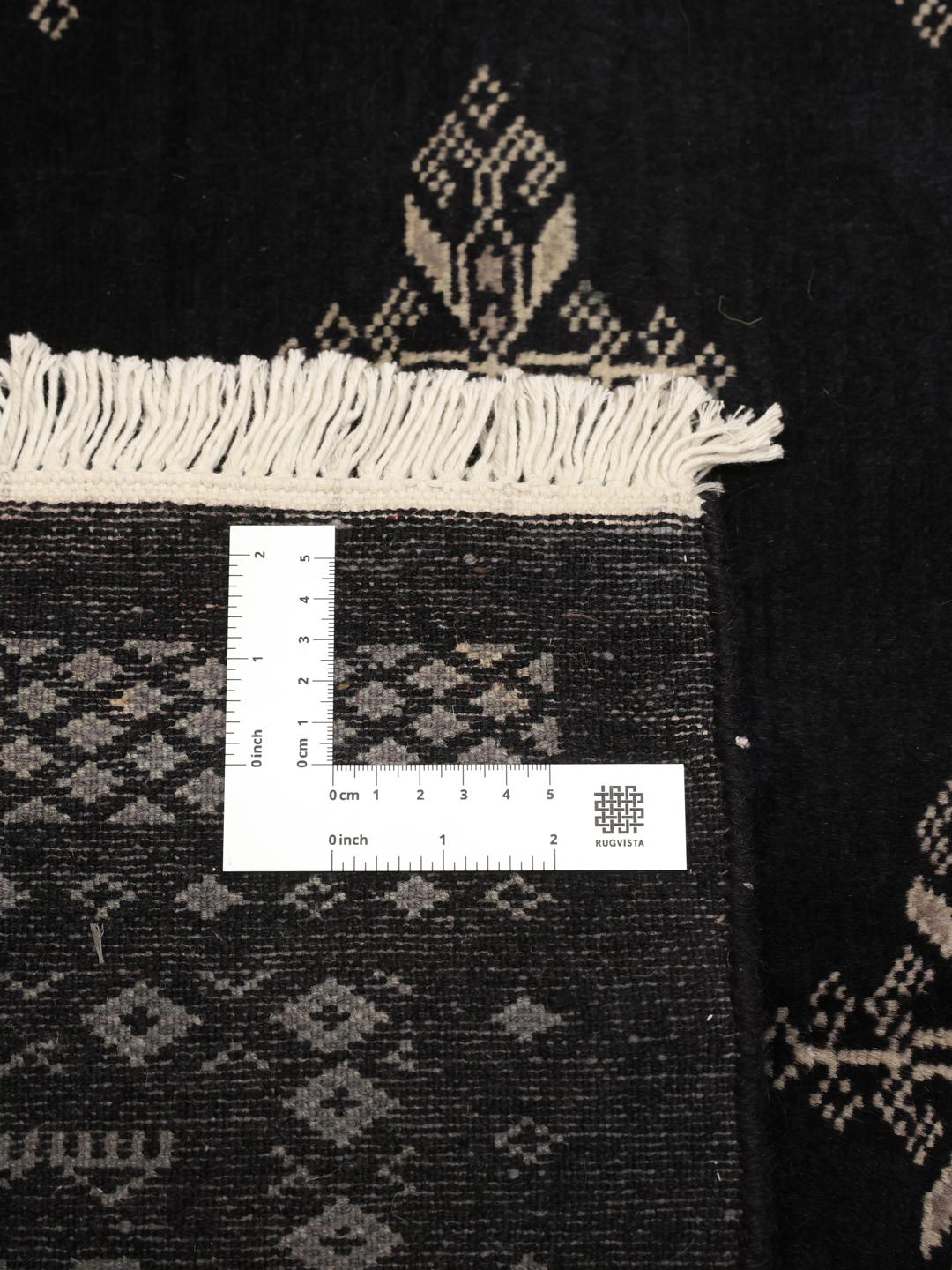
Visually, this tradition is characterised by the repeating 'gul' motif, which often takes the form of octagonal or elephant-foot medallions arranged in symmetrical rows. These motifs are traditionally enclosed by complex, decorative borders that frame the field. While the patterns are rooted in historical geometry, the use of a deep black field offers a modern, striking interpretation that makes the traditional motifs stand out with exceptional clarity.
Owning a hand-knotted piece from this tradition is more than just a decor choice; it is an investment in cultural heritage and human skill. Collectors value these rugs for their ability to bridge the gap between historical craft and contemporary living. By bringing such a piece into your home, you are preserving a centuries-old artistic practice and enjoying a level of quality that modern mass-production simply cannot replicate.