The Bokhara rug tradition is deeply tied to the history of the Silk Road, taking its name from the ancient city of Bukhara, which served as a vital trade hub in Central Asia. While the designs have their roots in tribal traditions of the region, the finest examples of these rugs are today expertly woven in Pakistan. This evolution reflects the migration of weaving techniques across borders, where artisans have refined and elevated the style over generations.
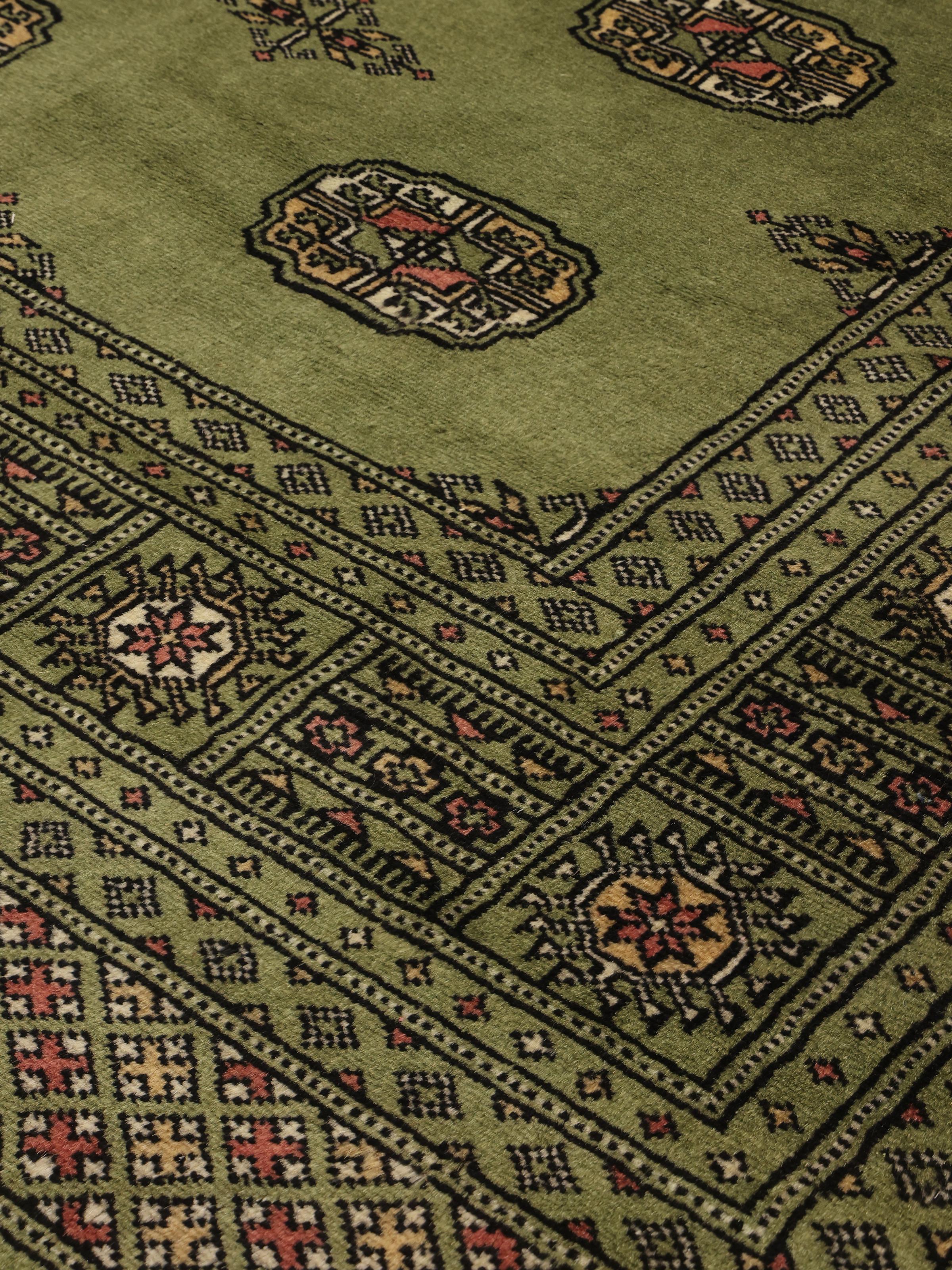
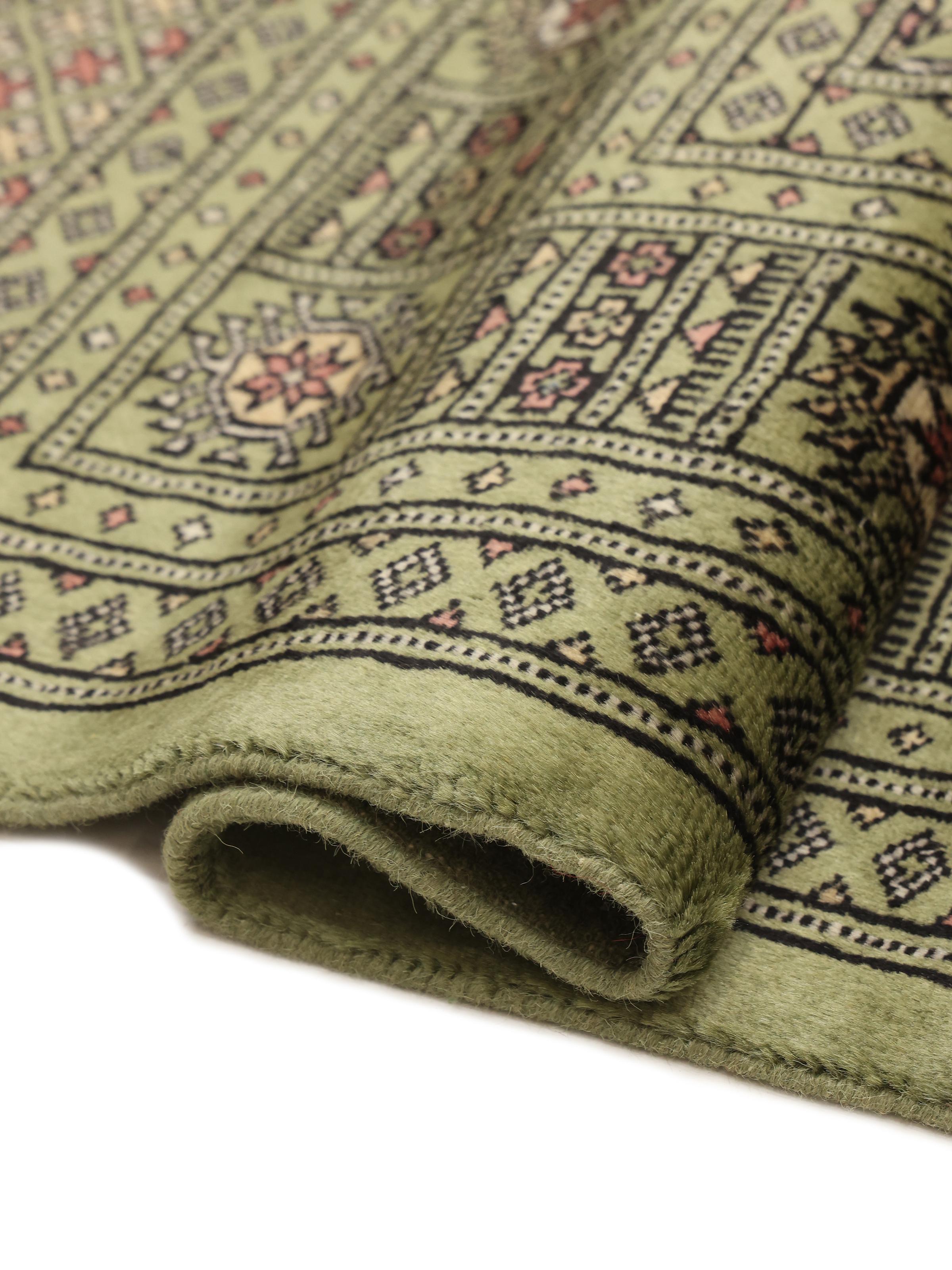
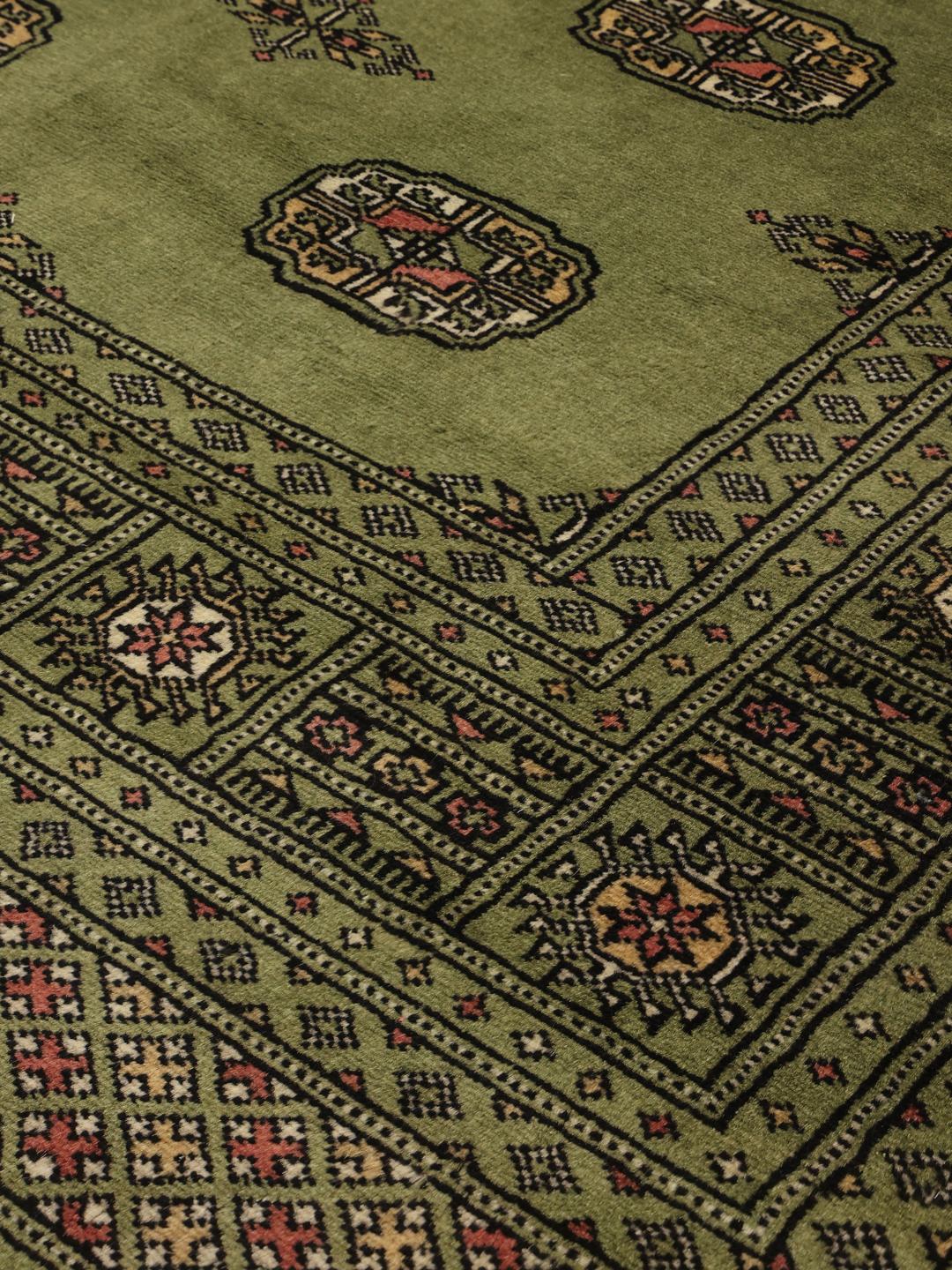
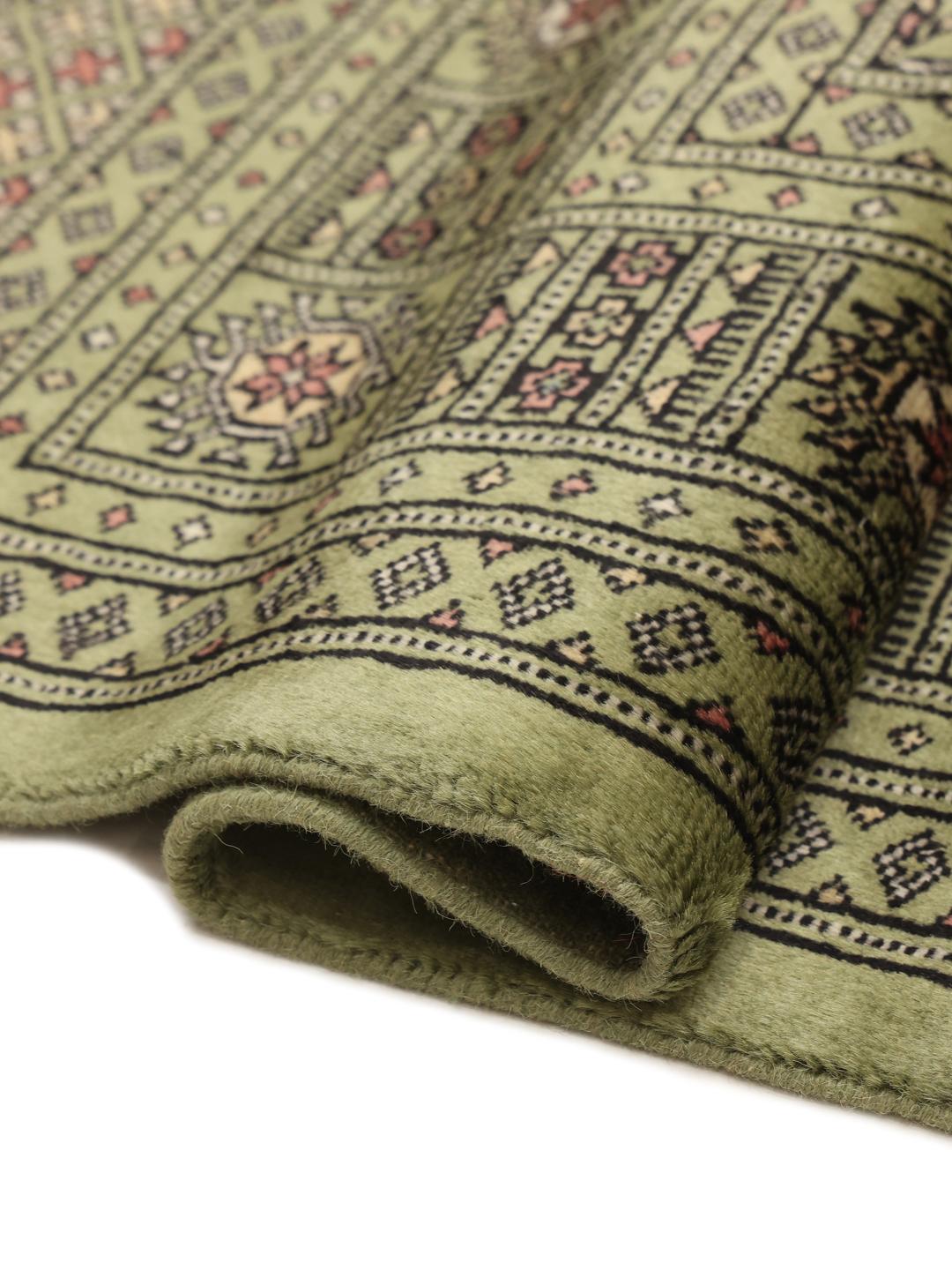
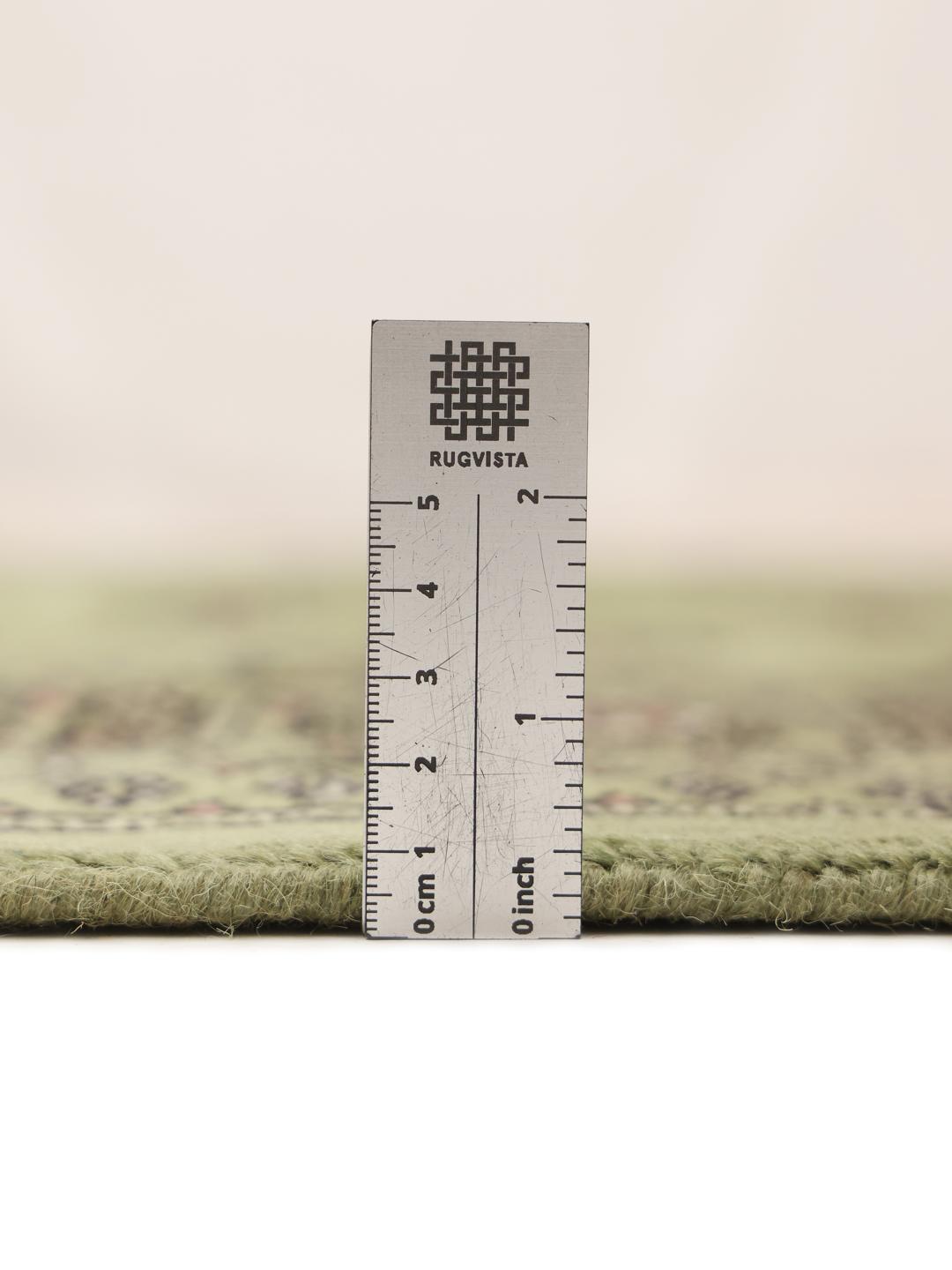
The term 2ply refers to the specific construction of the pile, where two strands of wool are twisted together before being knotted. This technique is significant because it creates a more substantial, lustrous, and durable pile compared to single-ply alternatives. For the owner, this means the rug is not only softer and more luxurious to the touch but also better equipped to withstand the wear of a busy household, ensuring its beauty remains intact.
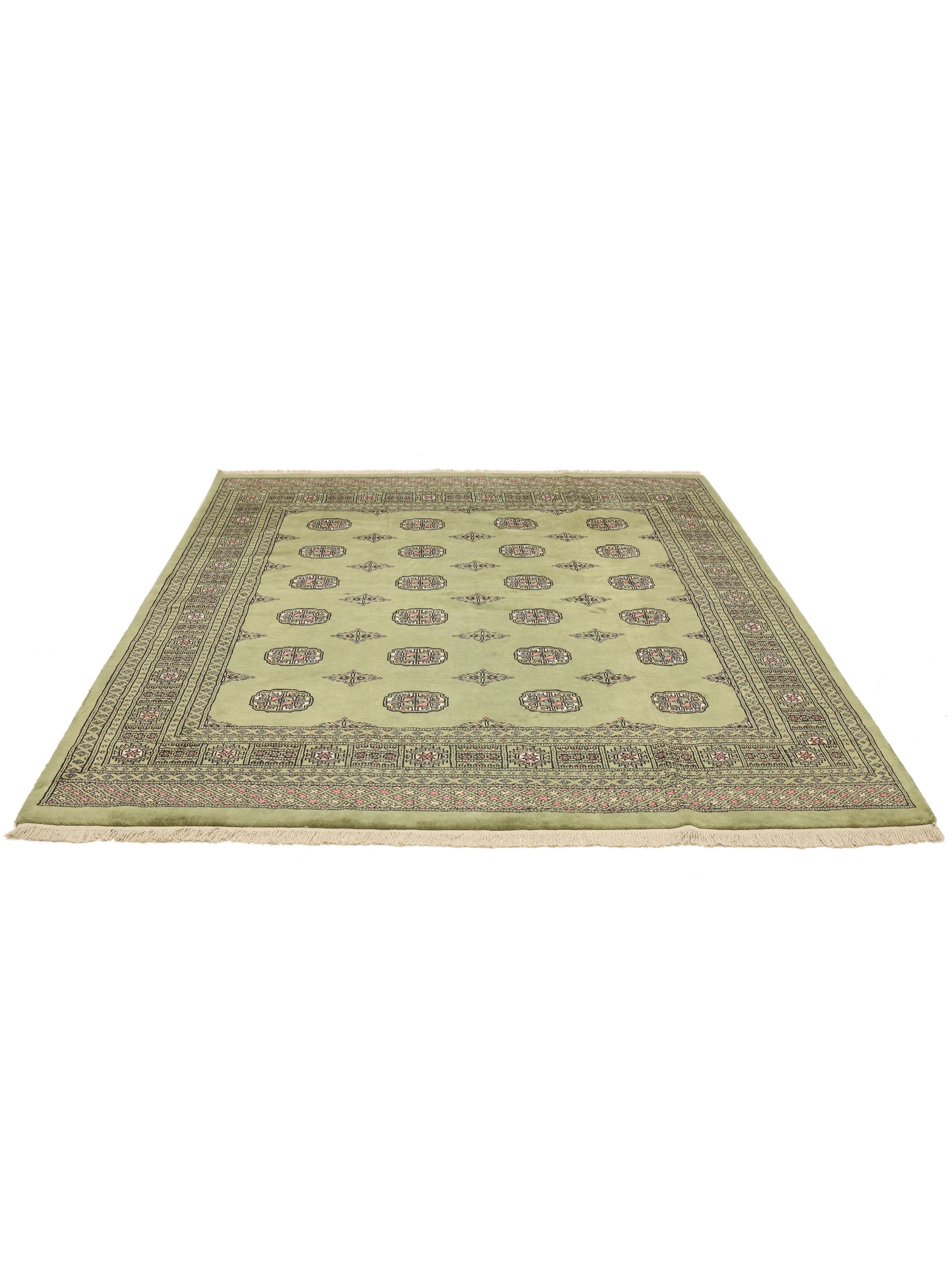
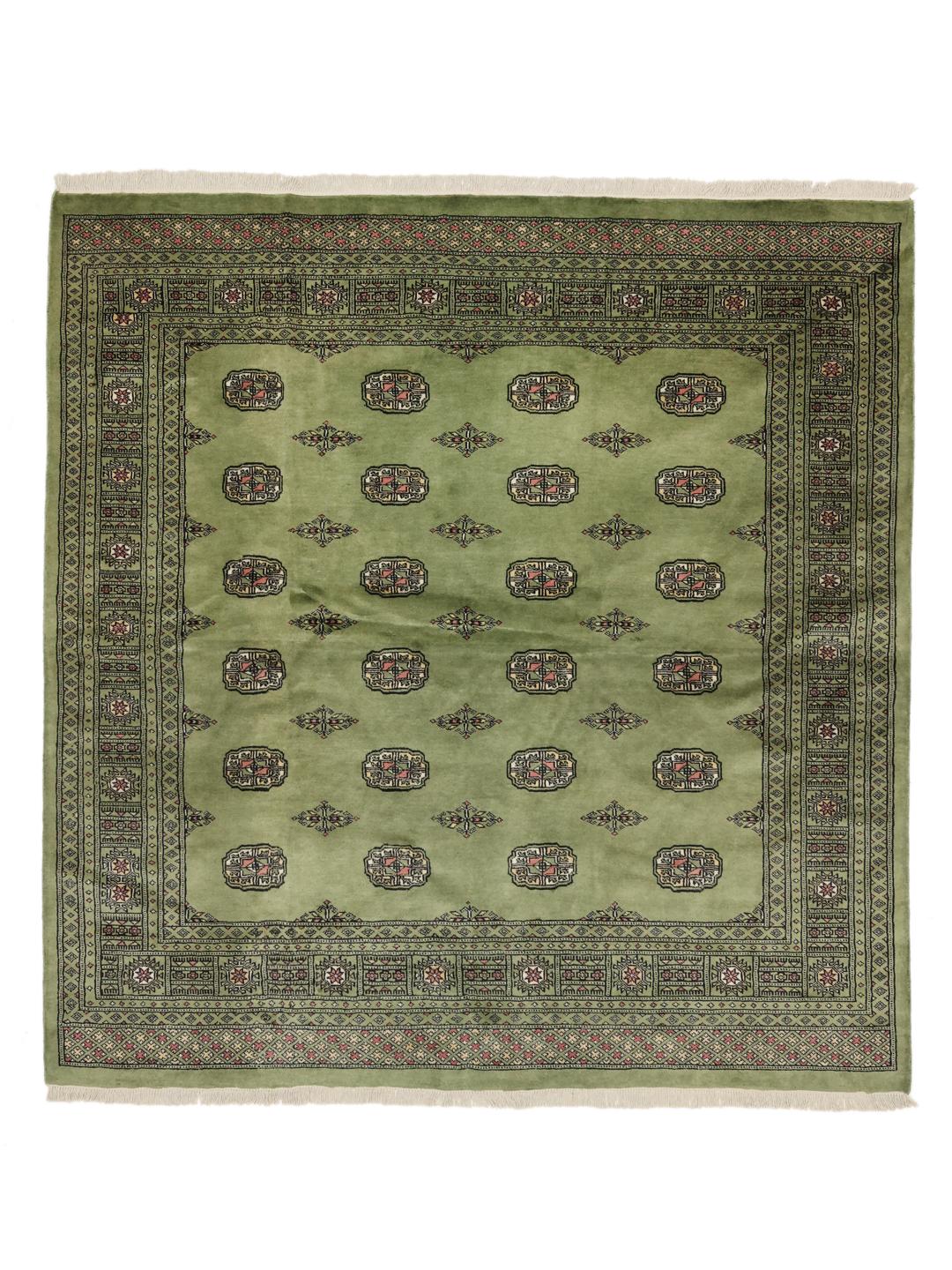
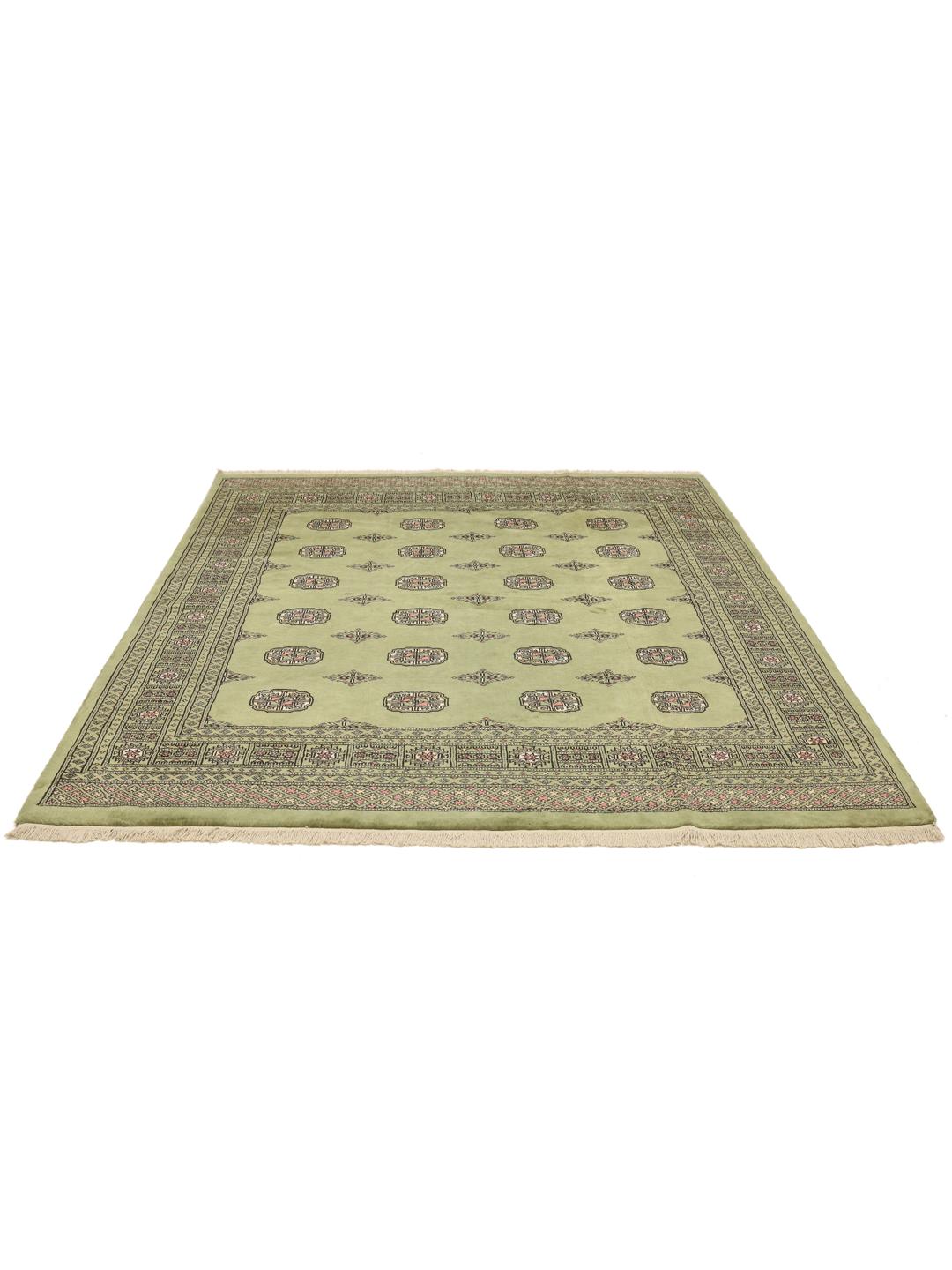
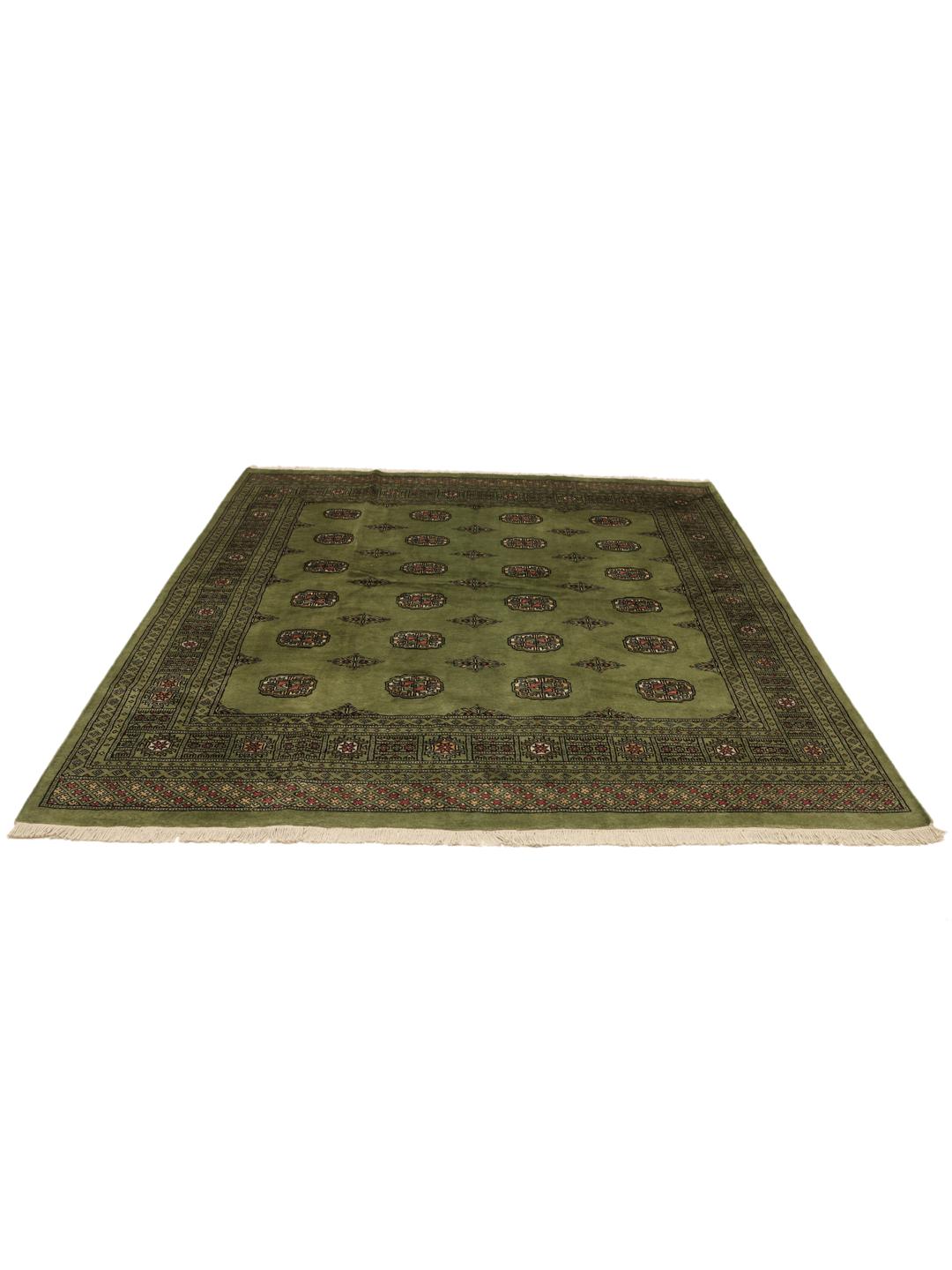
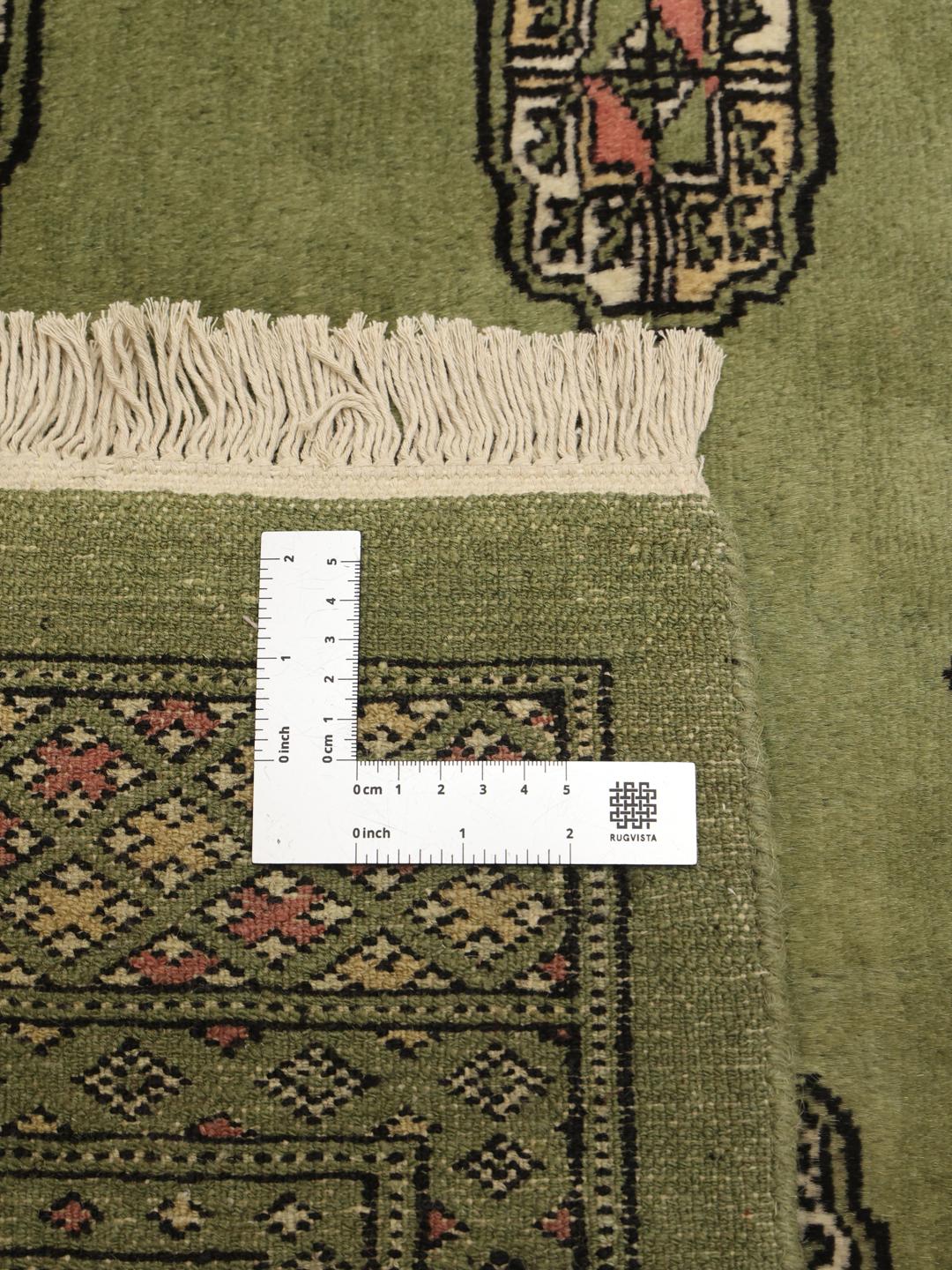
Bokhara rugs are instantly recognisable by their repeating gul motifs, which are stylized, octagonal medallions often described as elephant-foot prints. These are typically arranged in precise, rhythmic rows across the field. The formal, decorative borders that frame the field are equally iconic, drawing from centuries of geometric design language. While red is a classic choice, this green version offers a refreshing and sophisticated take on the traditional aesthetic, proving the versatility of the pattern.
Collecting a hand-knotted rug of this tradition is an act of preserving a craft that prioritises human skill over industrial speed. These rugs are valued not just for their decorative impact but for the cultural weight they carry, representing a bridge between ancient nomadic artistry and contemporary home design. Owning one is a commitment to quality, reflecting an appreciation for the patience and expertise required to turn raw wool into a lasting piece of heritage.