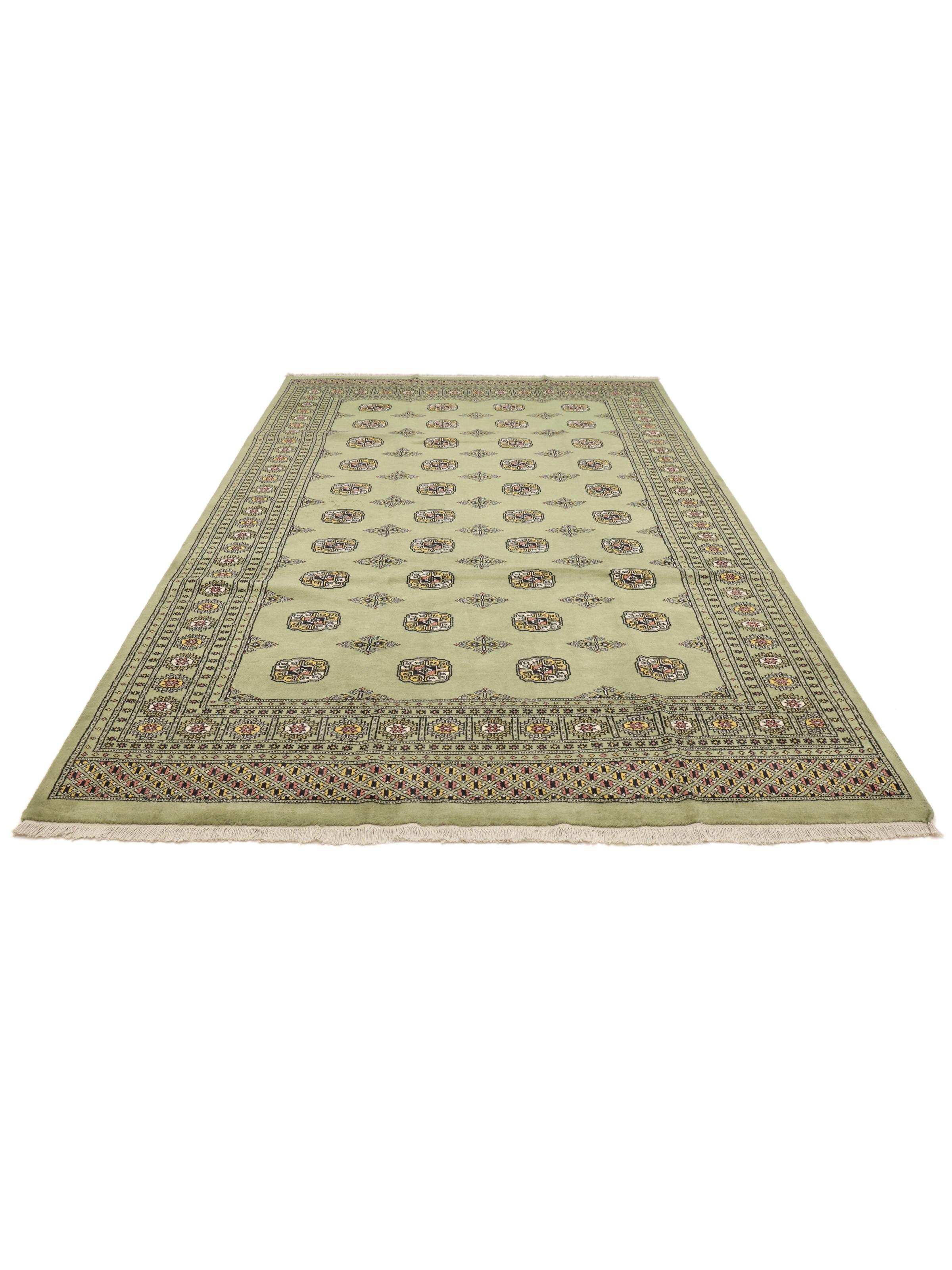
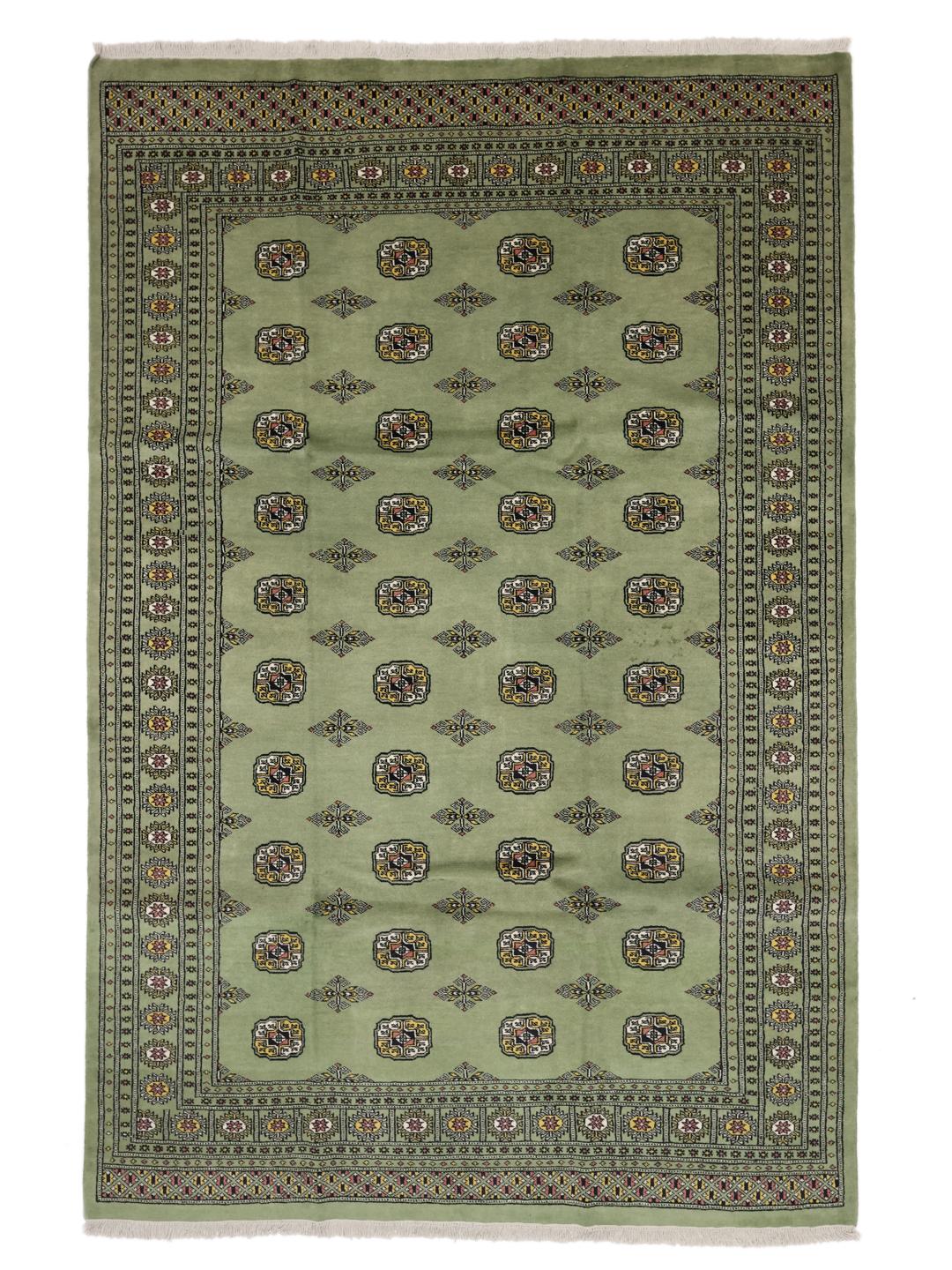
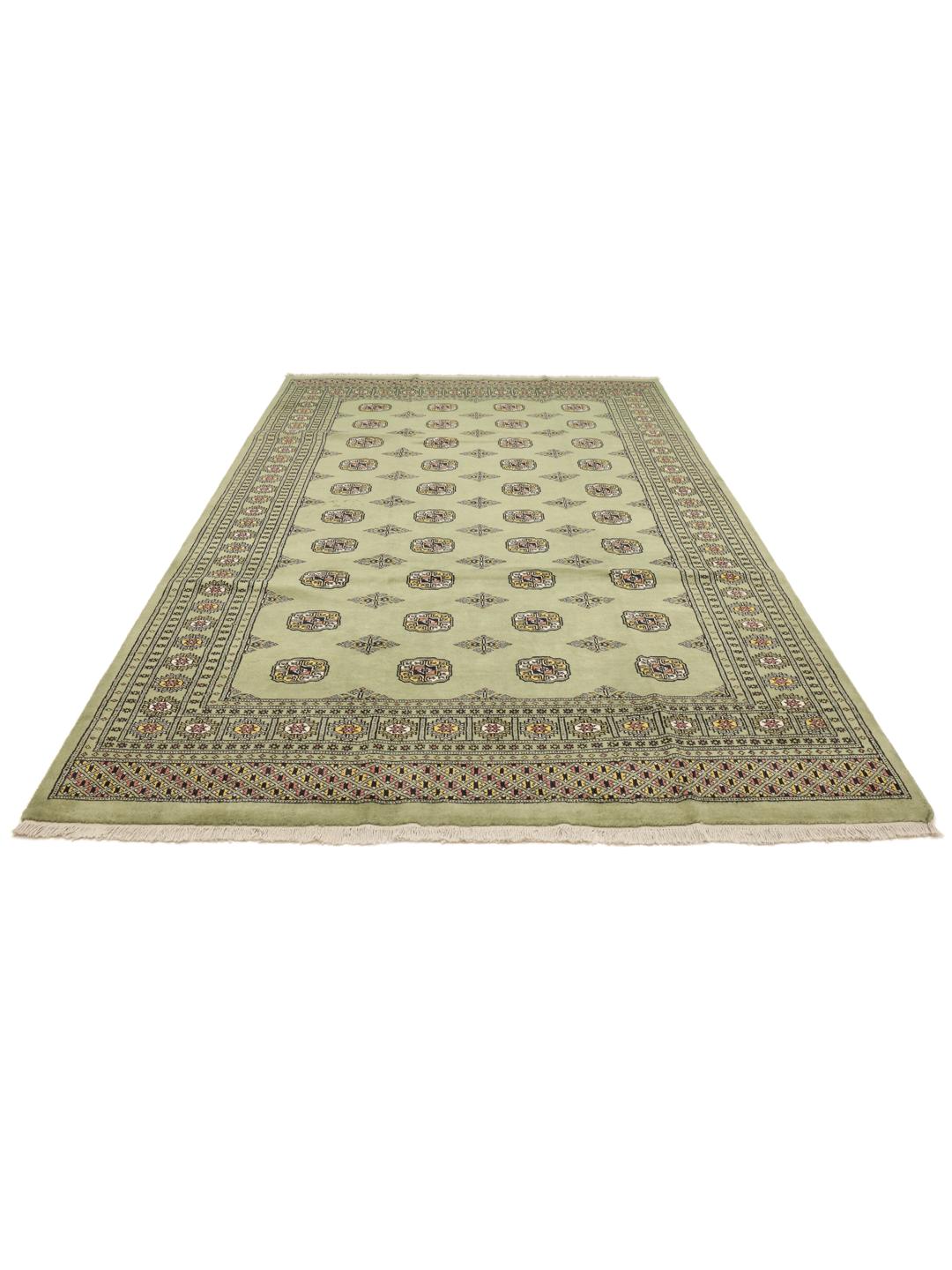
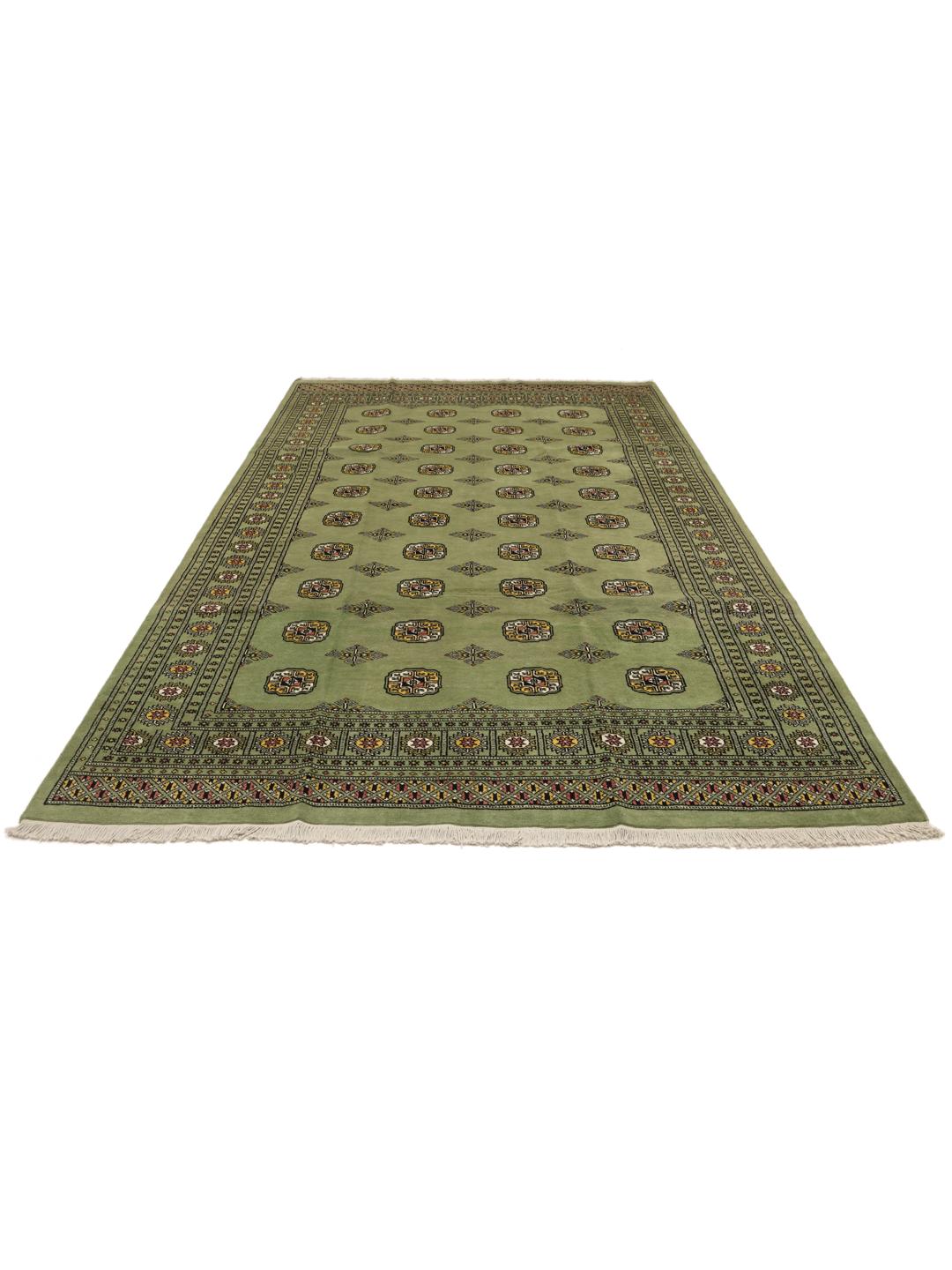
Bokhara rugs take their name from the ancient Silk Road city of Bukhara in Central Asia, a historic hub where nomadic weaving traditions met sedentary trade. Over generations, master weavers migrated southward into Pakistan, bringing their intricate techniques and traditional design vocabularies with them. Today, Pakistan is celebrated for preserving these ancient skills, producing some of the finest interpretations of the classic Bokhara style found anywhere in the world.
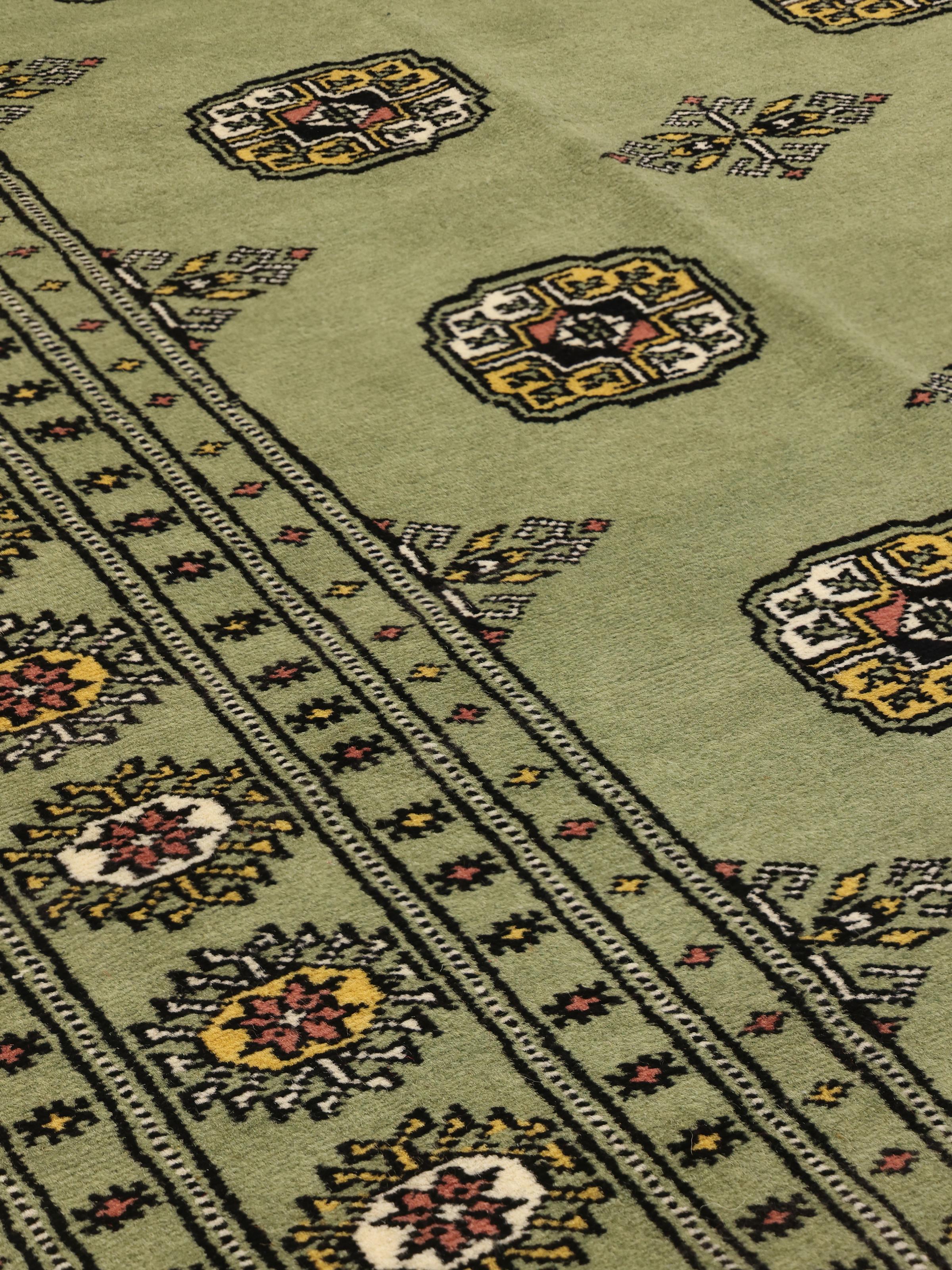
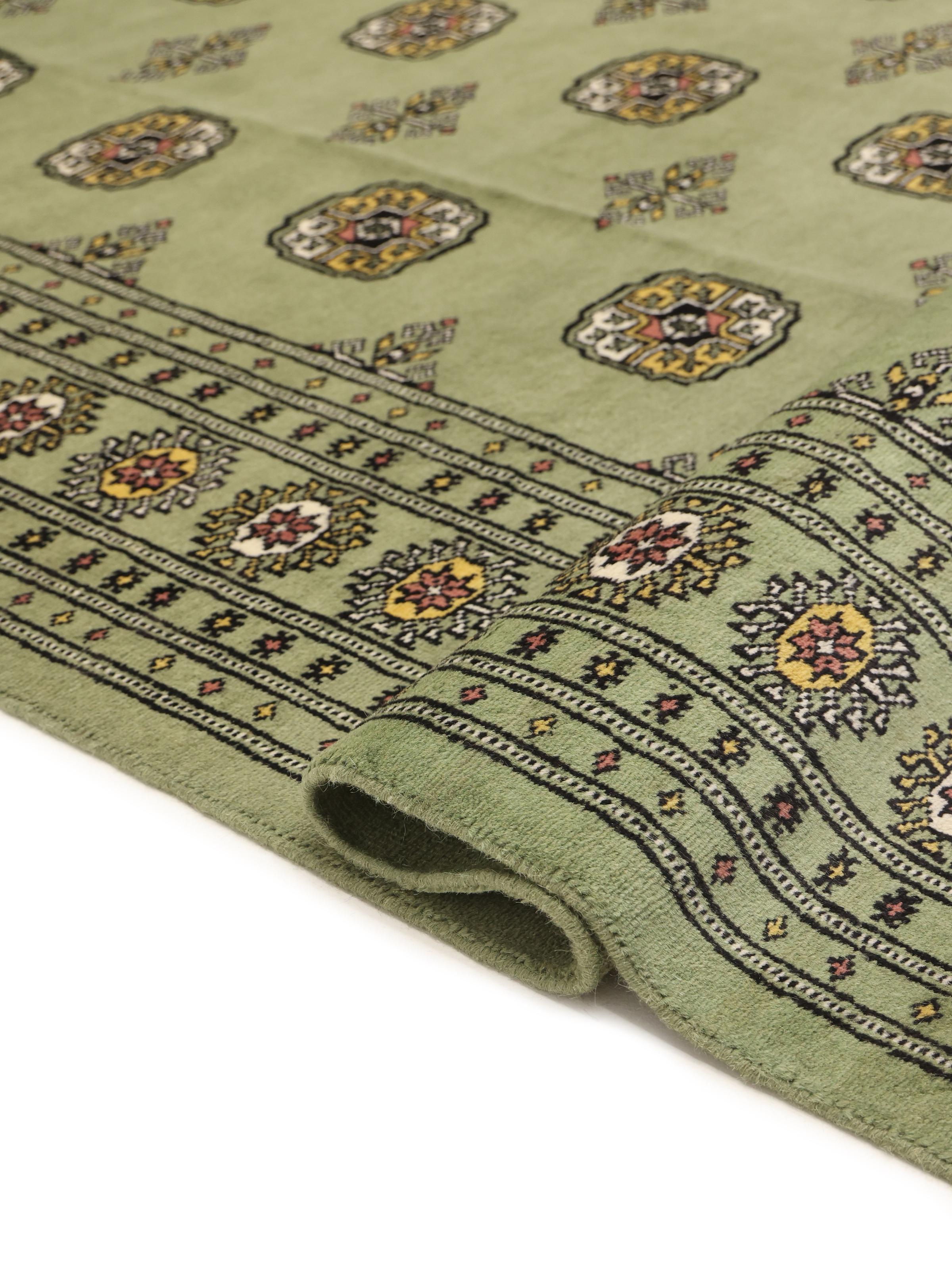
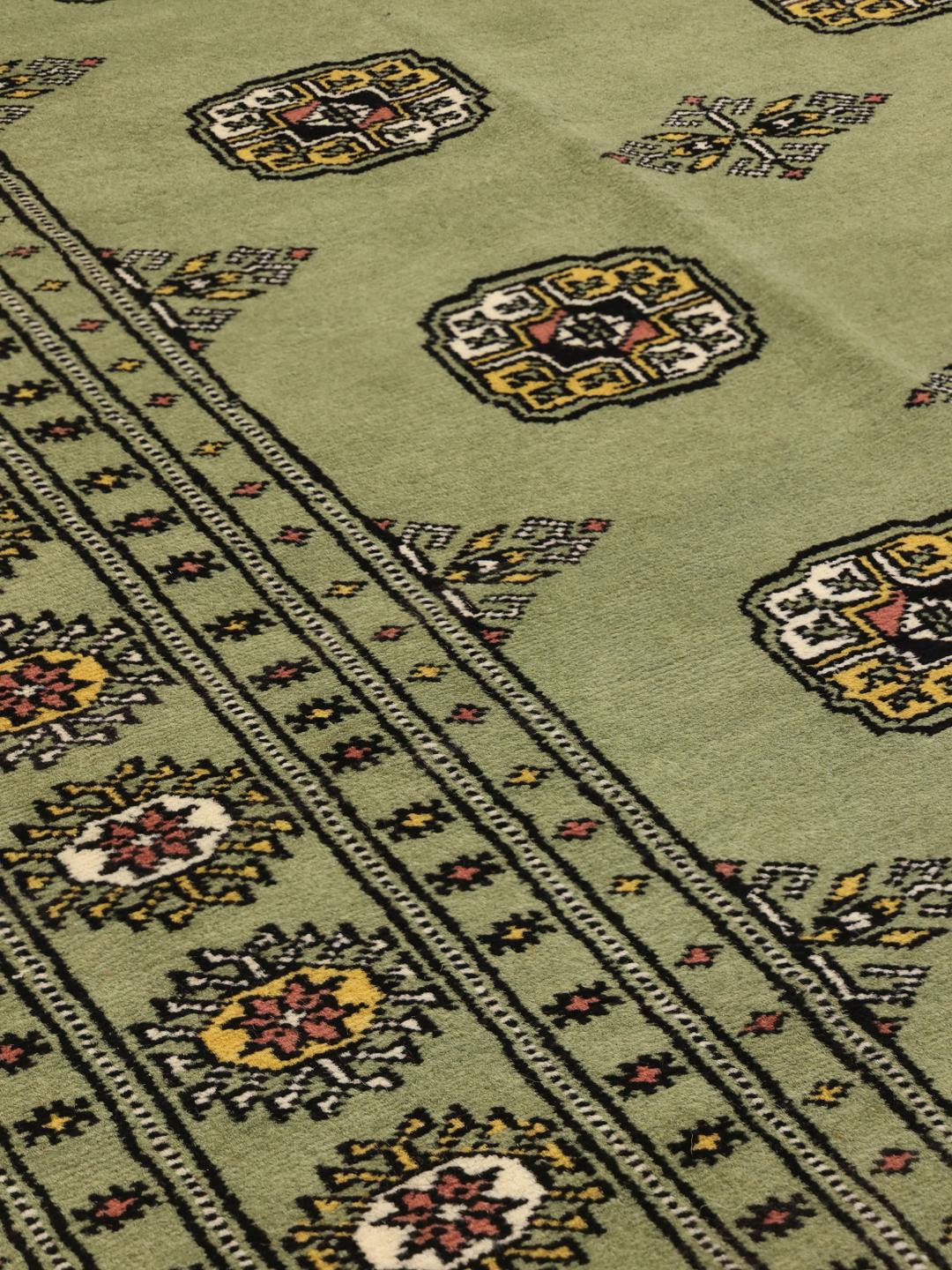
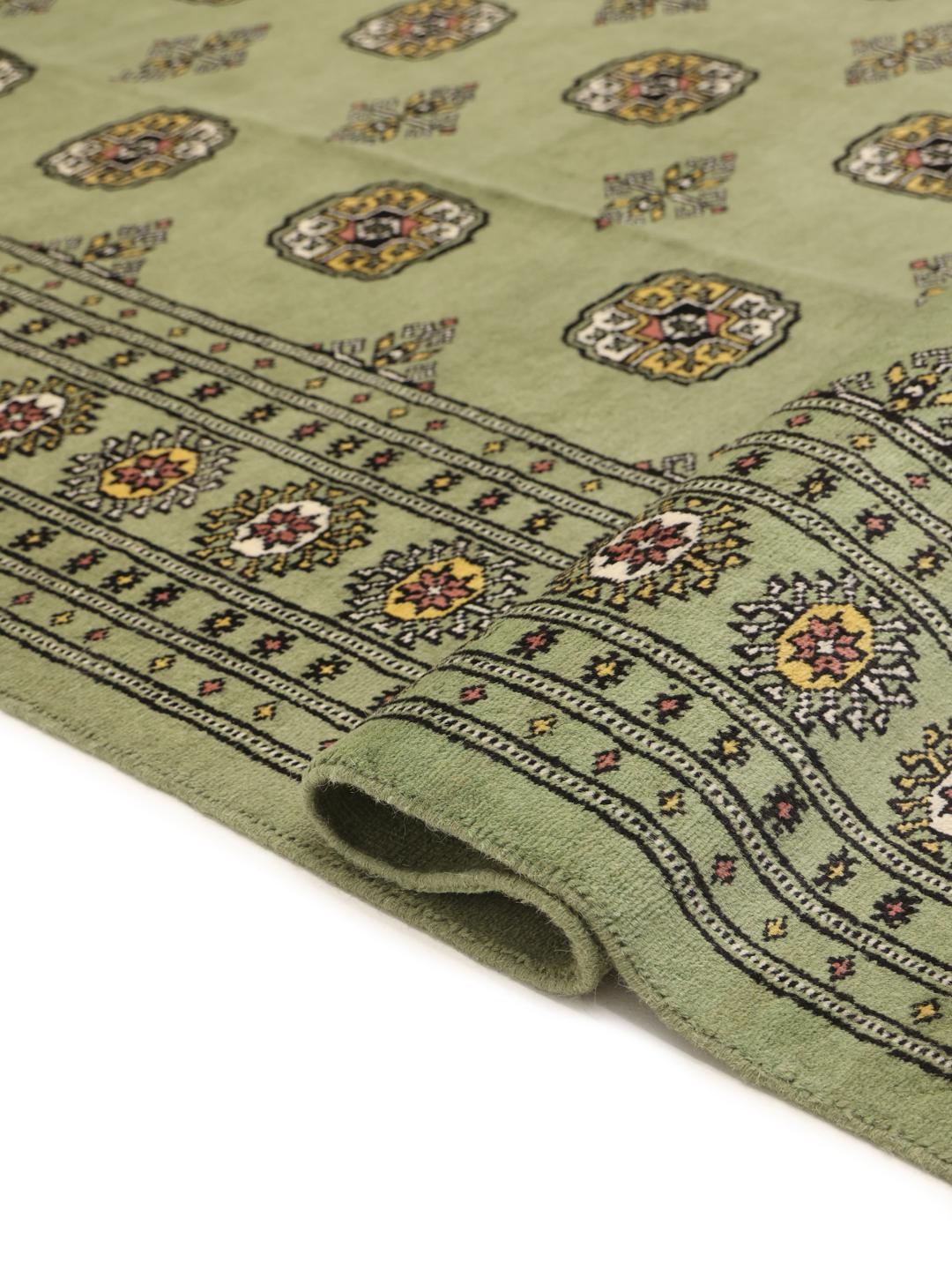
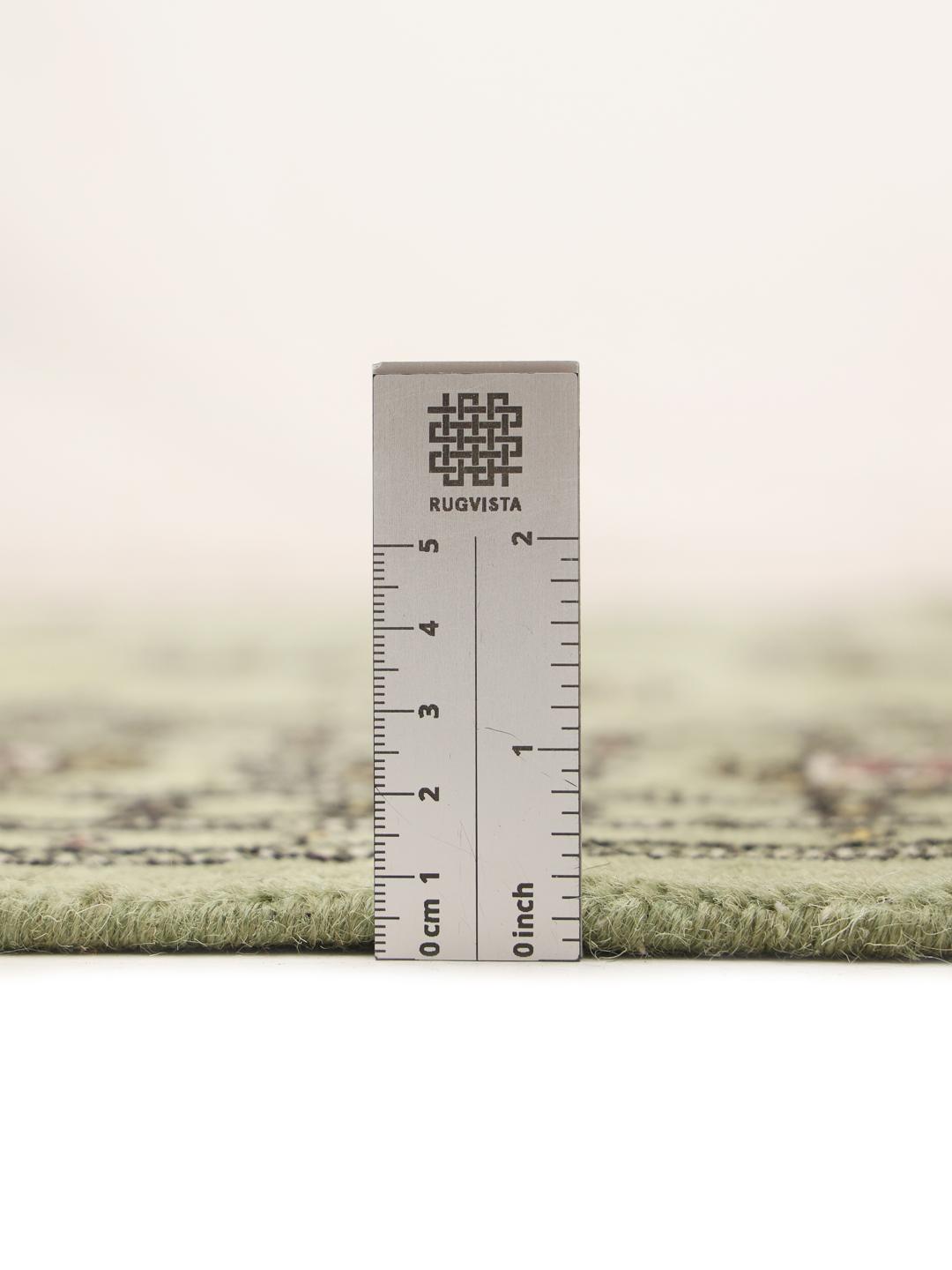
The 2ply designation in the construction refers to the specific way the wool is spun before knotting. The pile is woven using two individual strands of wool twisted firmly together, which produces a denser, heavier, and more lustrous surface compared to single-ply alternatives. This method strengthens each individual knot, resulting in a resilient pile that maintains its shape and appearance over decades of everyday walking.
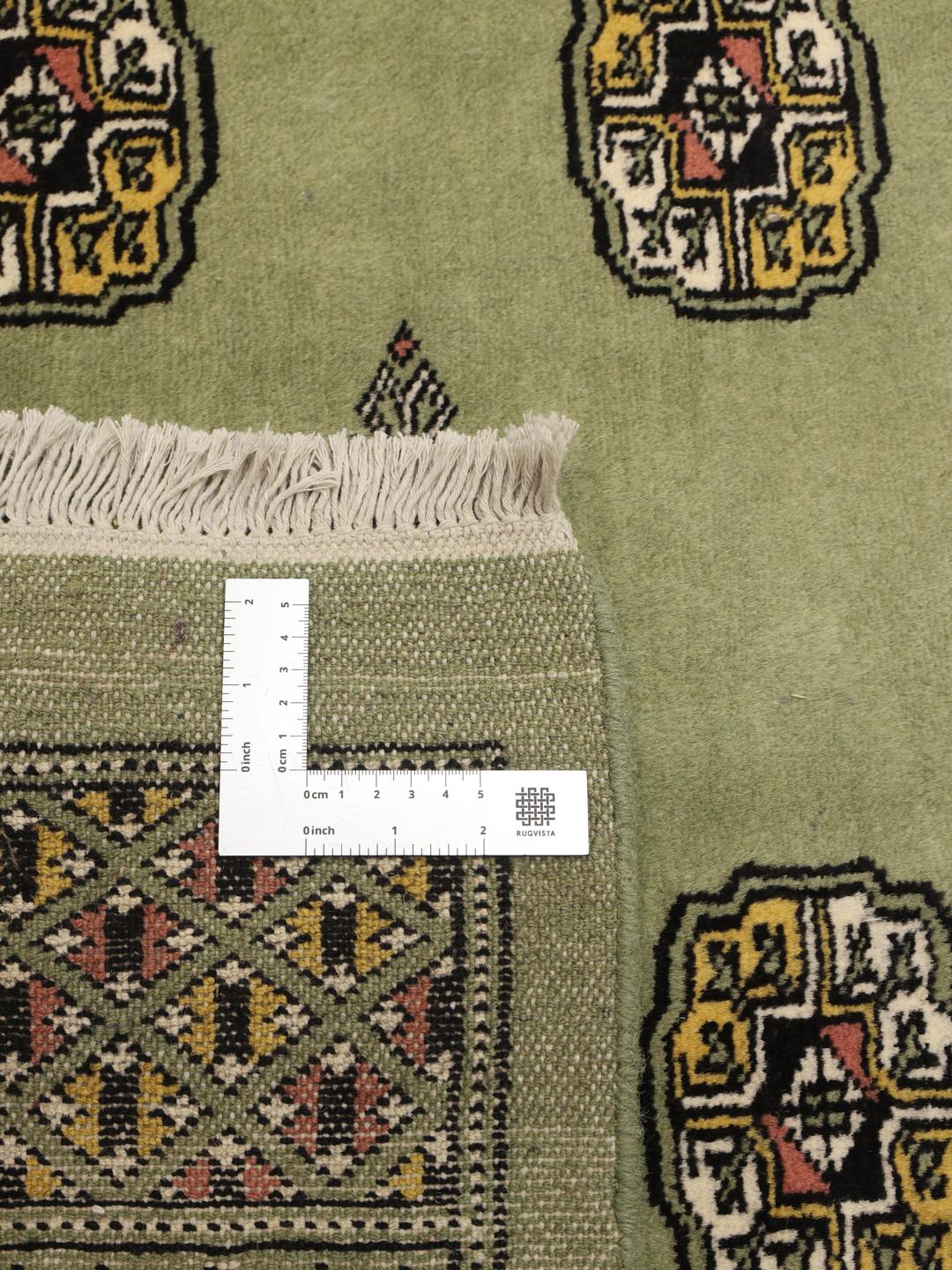
The visual signature of this tradition is the repeating gul motif, an octagonal or elephant-foot shaped medallion arranged in orderly rows across the field. Enclosed by formal geometric borders, these motifs draw from centuries of tribal heritage and symbolism. While traditional Bokhara rugs are most commonly found in deep reds, this distinctive light-green version offers a refreshing and unusual variation within the classic design family.
Collecting rugs from this tradition connects your interior to a long lineage of skilled handwork and cultural heritage. Owning a piece like this represents an appreciation for artisanal mastery, where traditional knowledge is passed down through generations to create items that bring lasting character and warmth to modern living spaces.