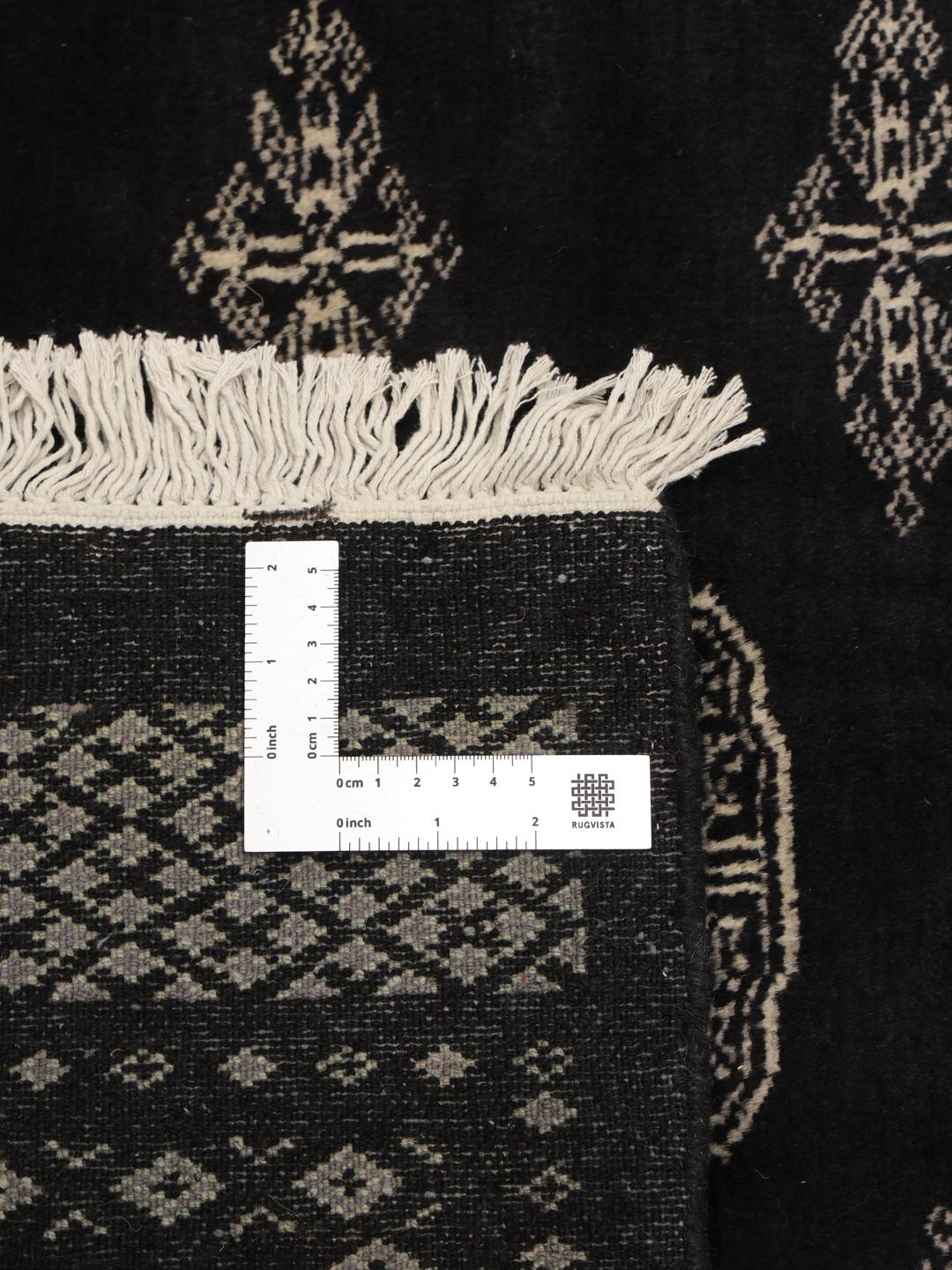
The Bokhara rug tradition is deeply rooted in the history of Central Asia, taking its name from the ancient Silk Road city of Bukhara, which served as a vital hub for trade and cultural exchange. While the designs originated among nomadic tribes, the finest examples of these rugs today are expertly woven in Pakistan, where artisans have refined the craft over generations to maintain the legacy of these iconic motifs.
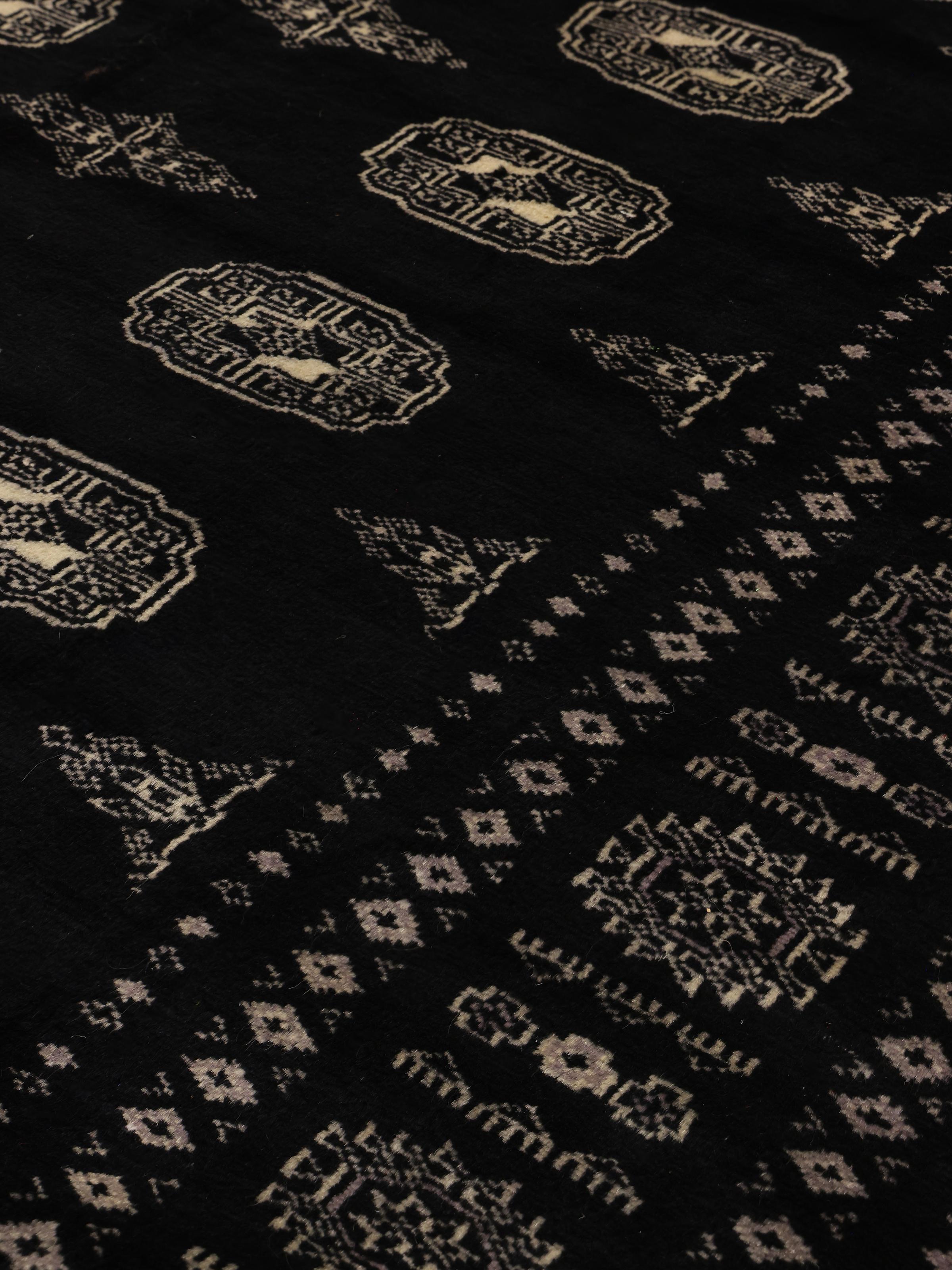
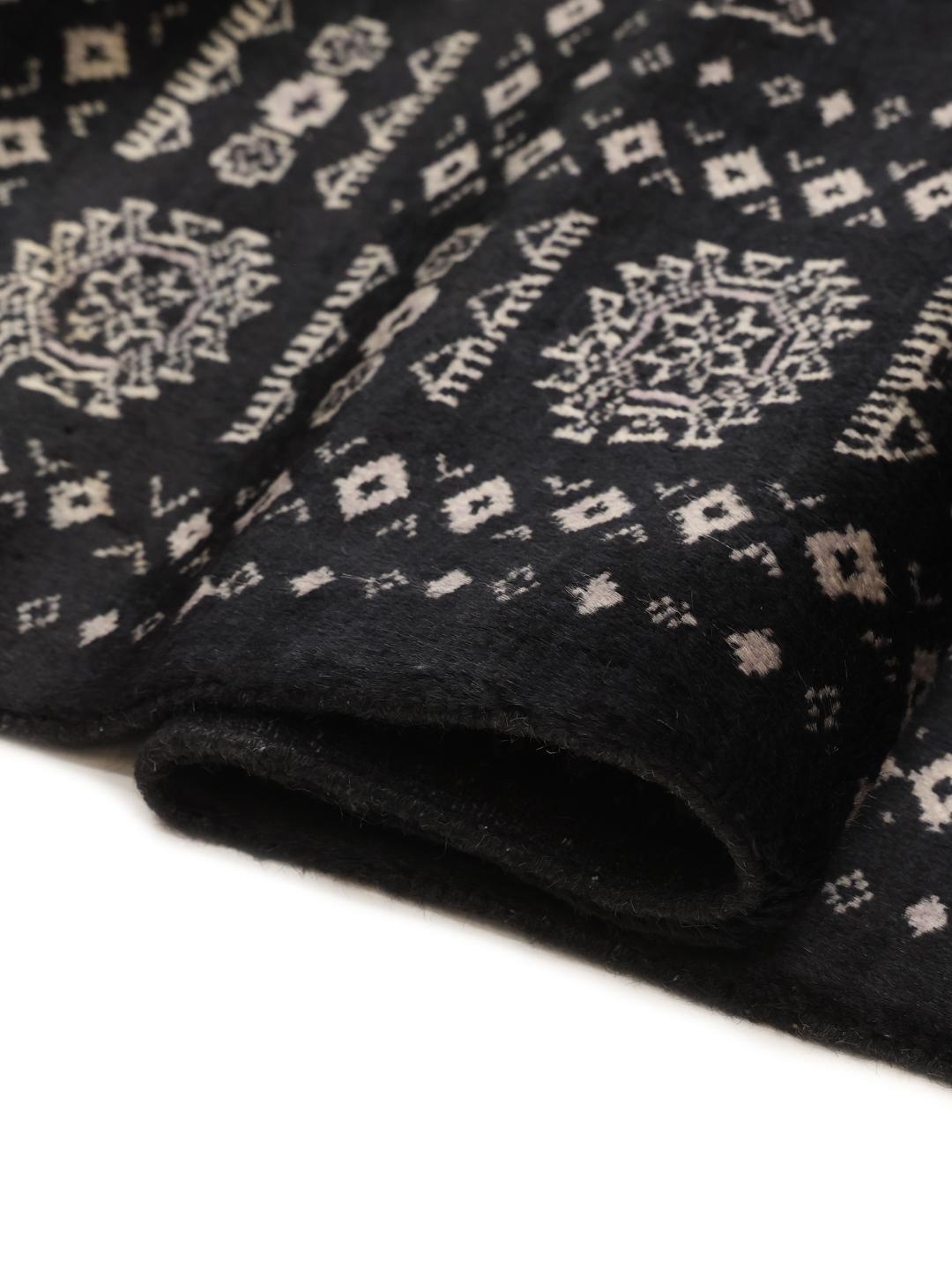
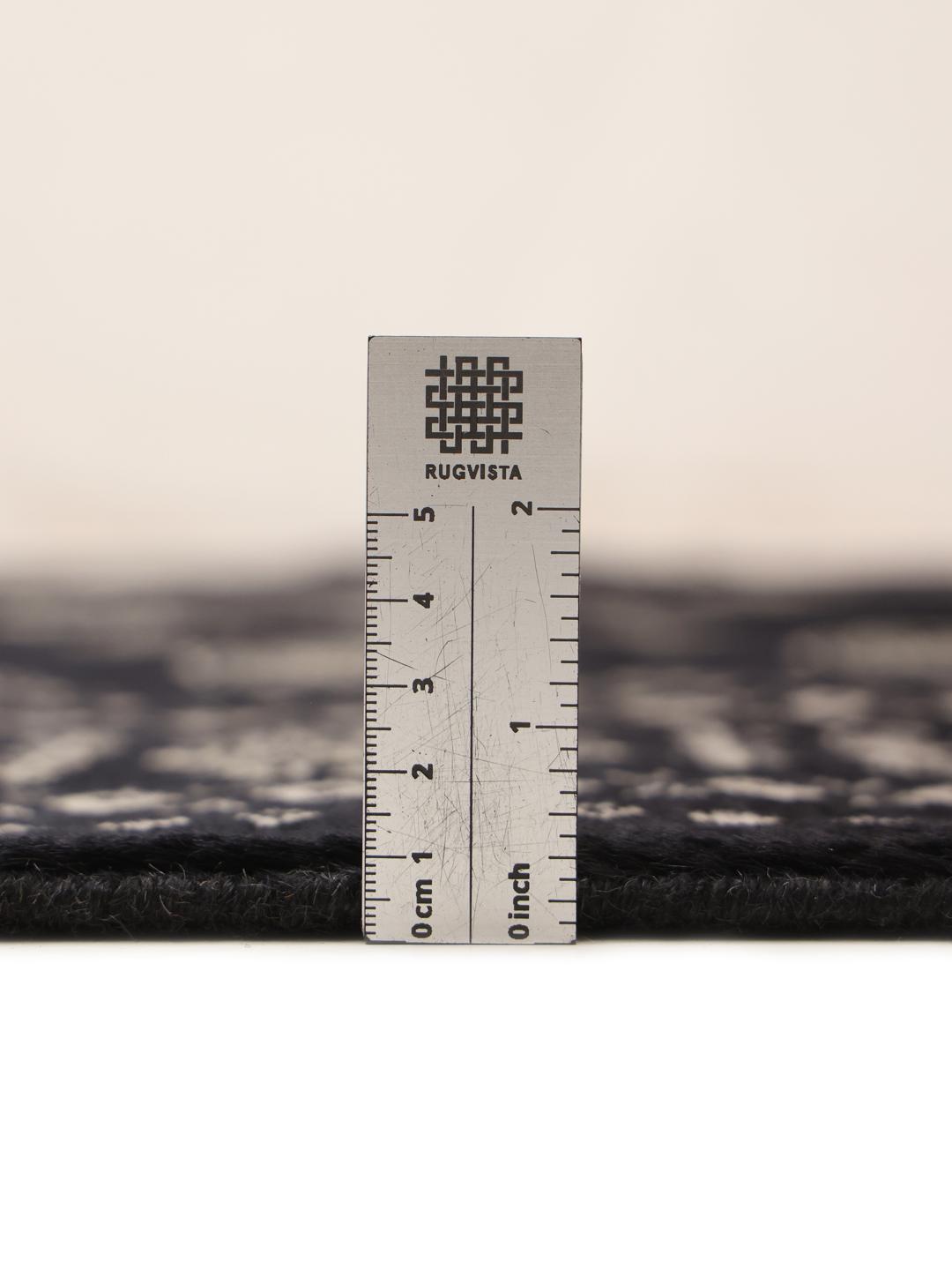
The term 2ply is a hallmark of superior craftsmanship, referring to the practice of twisting two strands of wool together for the pile. This technical choice is essential for creating a rug that is both denser and more lustrous than those made with single strands. It provides a more robust foundation that resists wear while enhancing the depth of the colours, ensuring the rug retains its beauty through years of use.
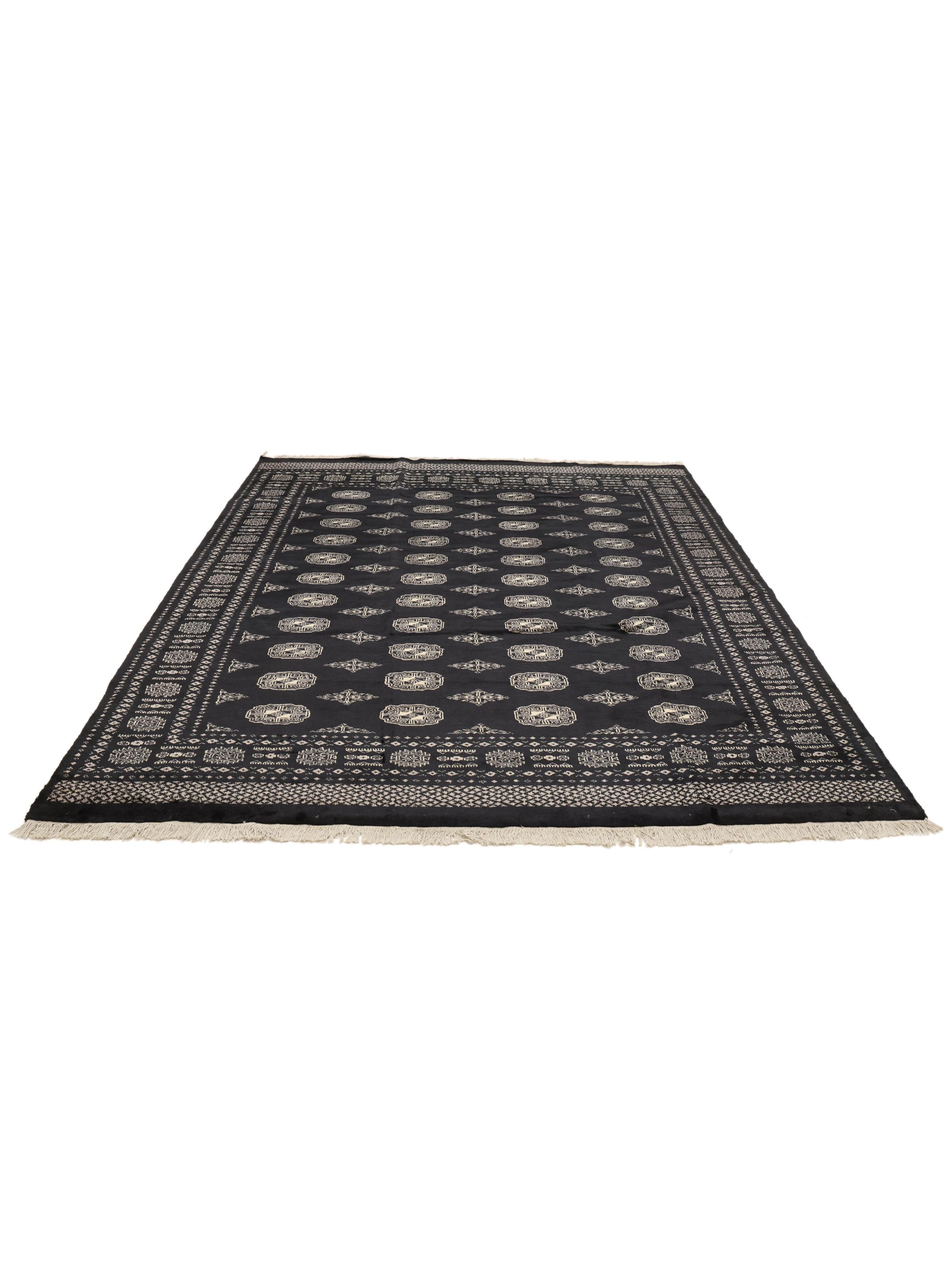
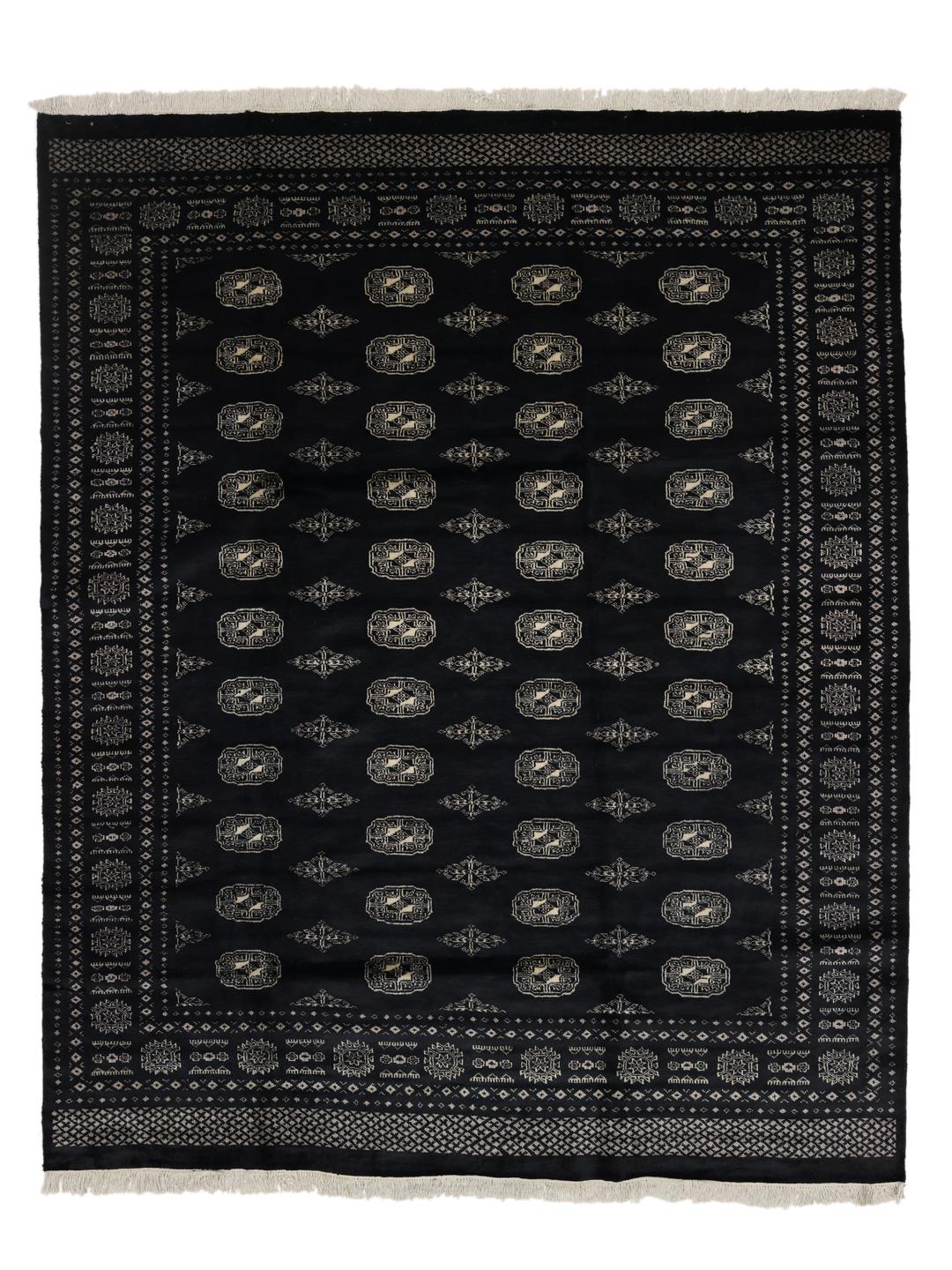
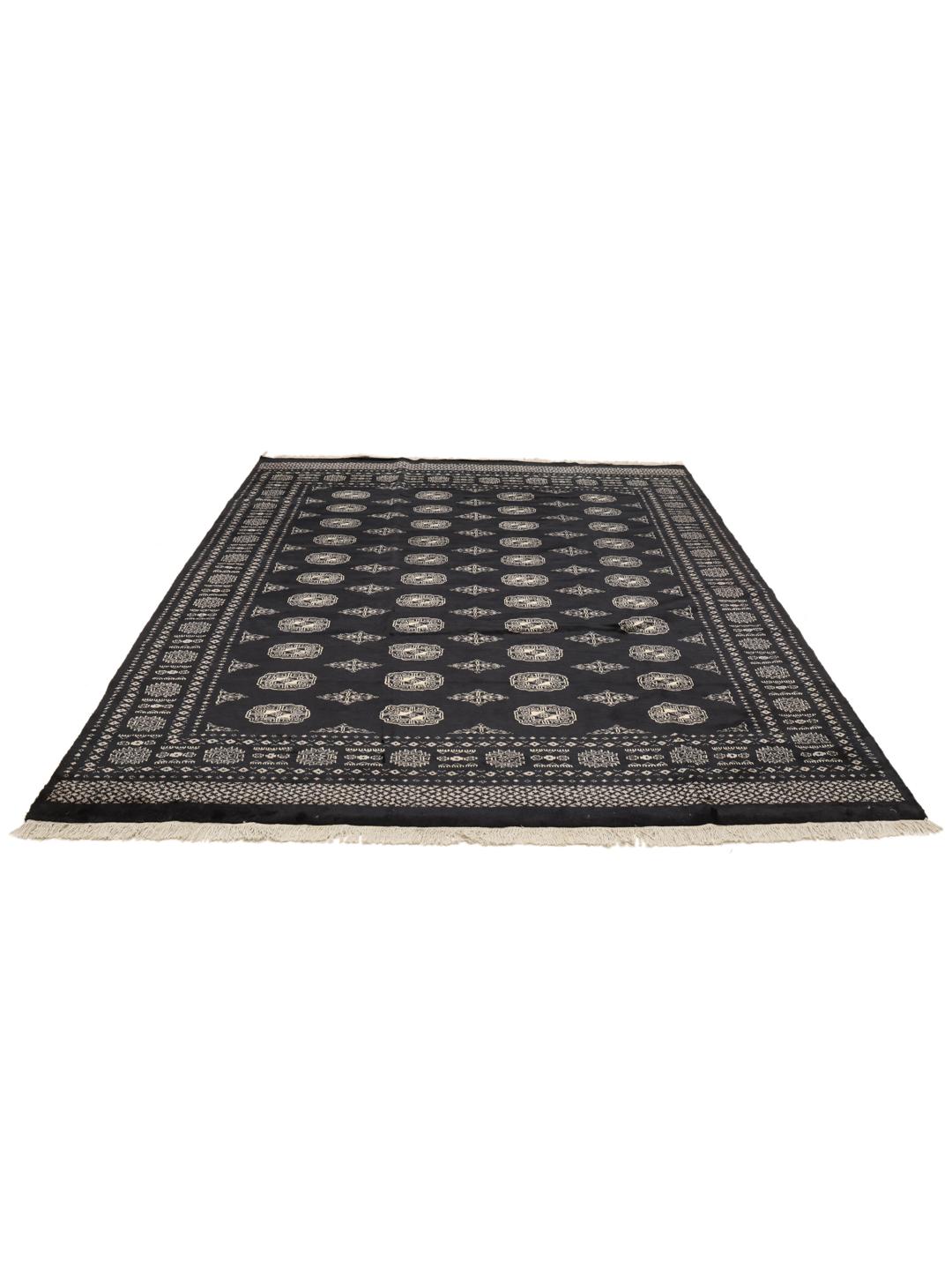
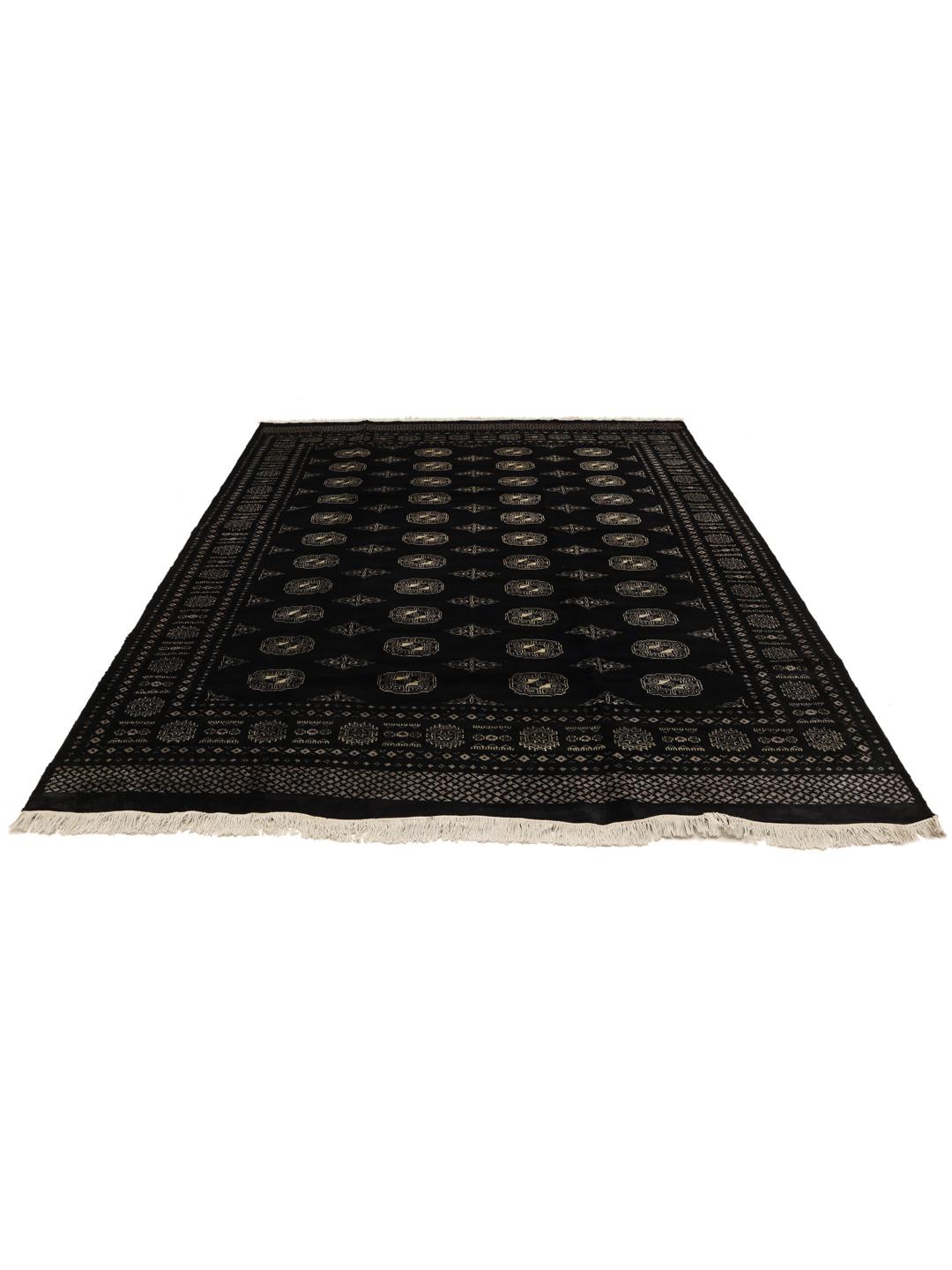
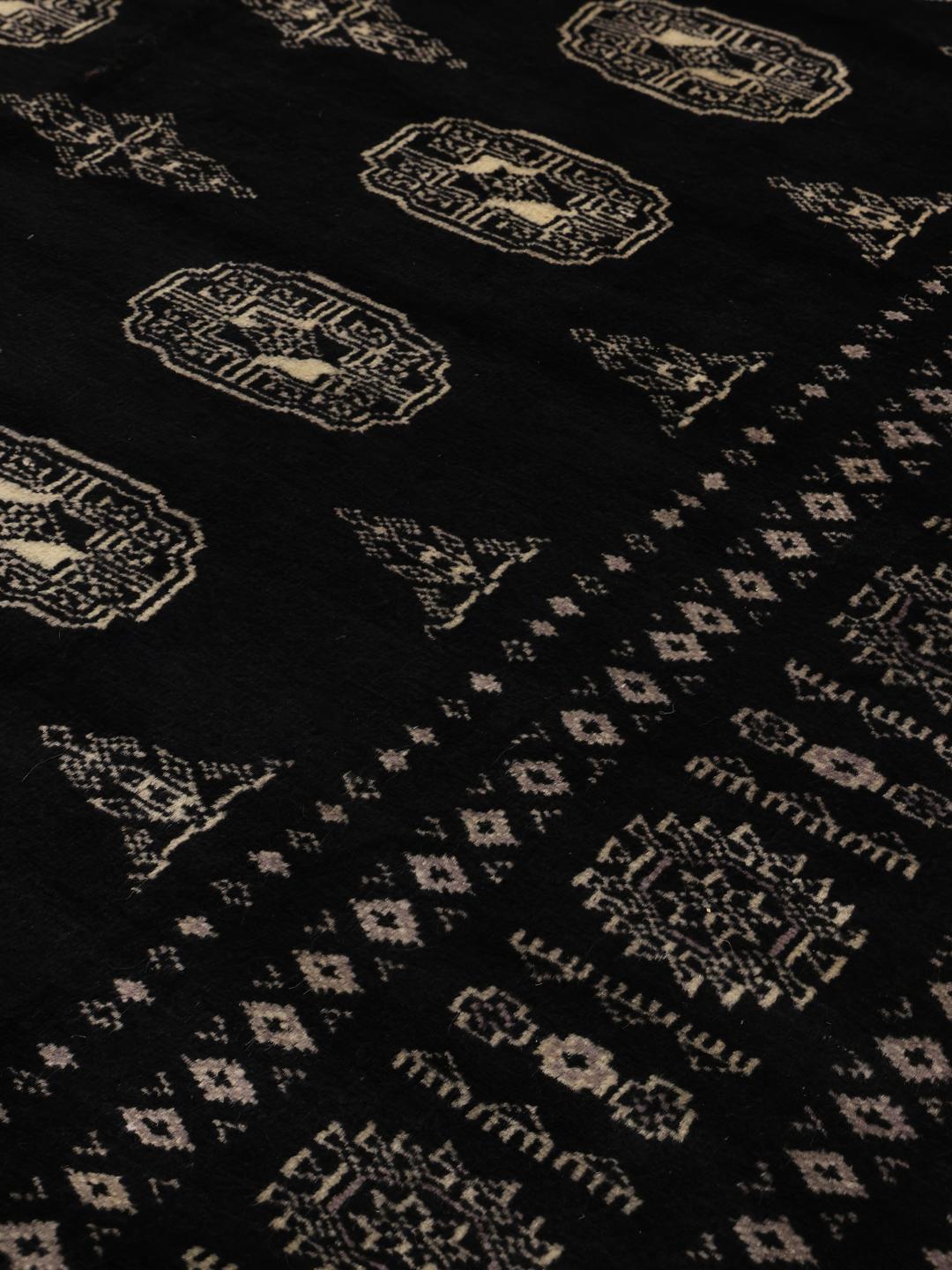
Visually, these rugs are defined by the repeating gul motif, an octagonal or elephant-foot shape that represents the tribal heritage of the original weavers. This rug features a sophisticated black field, a bold departure from the traditional red backgrounds often associated with the style. This choice highlights the intricate, fine-lined details of the medallions, making it a standout example of how traditional patterns can adapt to modern aesthetics.
Collecting a rug from this tradition is an investment in human skill and historical narrative. These pieces are valued for their structural integrity and the patience required to execute such complex, repeating geometry by hand. Owning one is a testament to an appreciation for heritage, as each rug serves as a lasting link to a storied past, crafted to be passed down through generations.