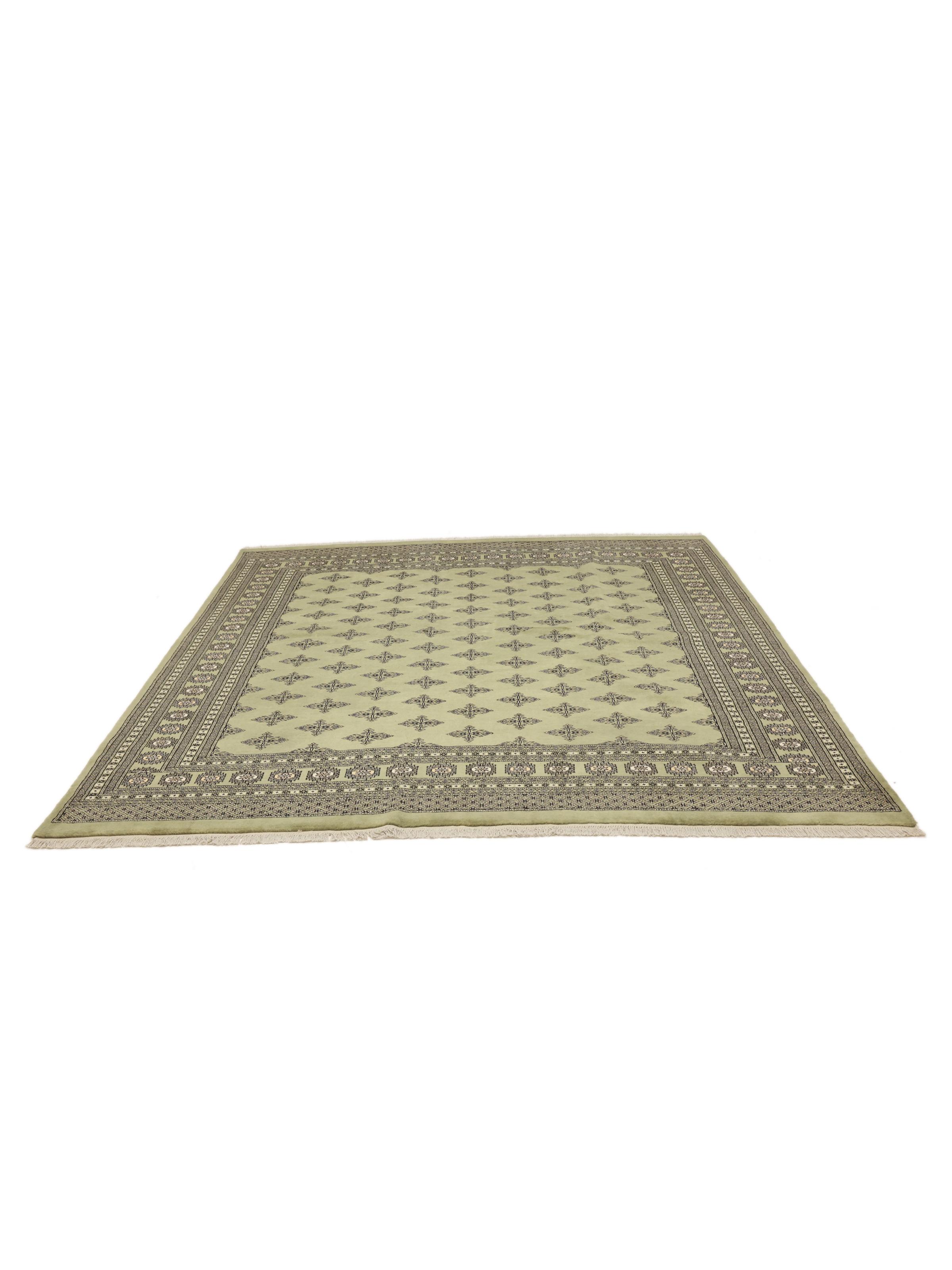
The tradition of Bokhara rugs is deeply rooted in the history of the Silk Road, taking its name from the ancient city of Bukhara. While these designs have historical origins in Central Asian nomadic tribes, the finest contemporary examples are woven in Pakistan. This evolution reflects the migration of master weavers who brought their traditional techniques to new regions, refining the craft over generations.
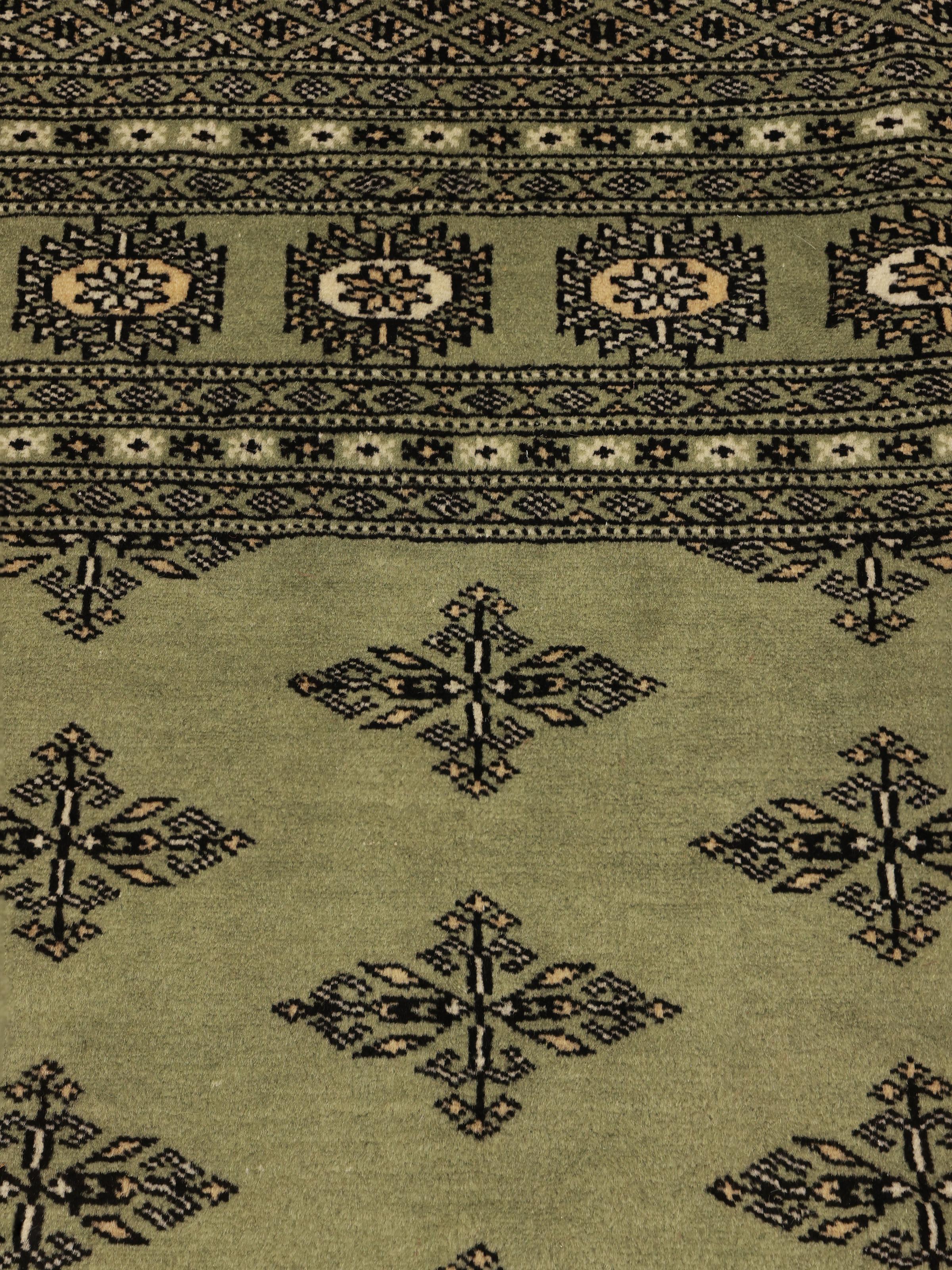
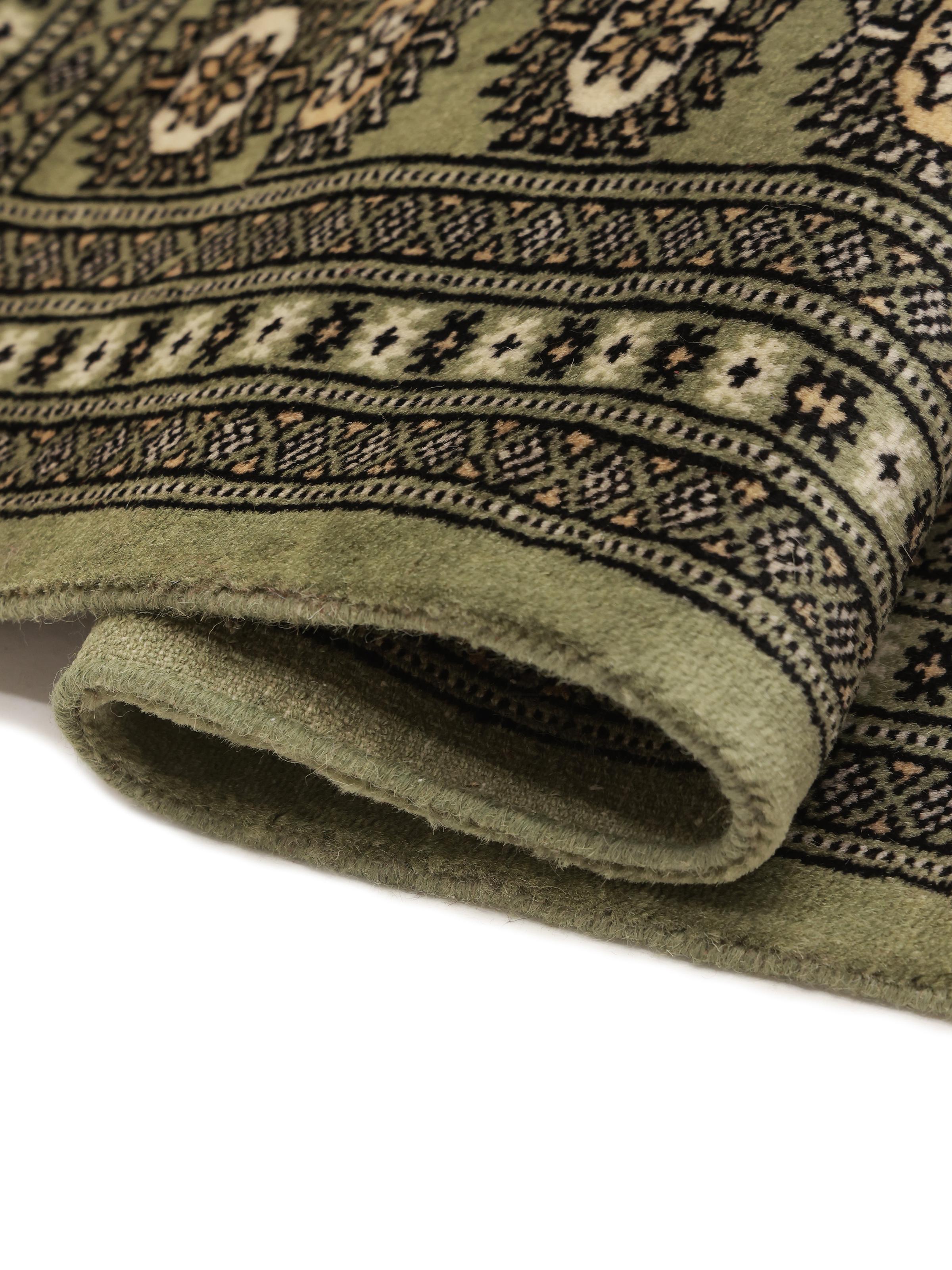
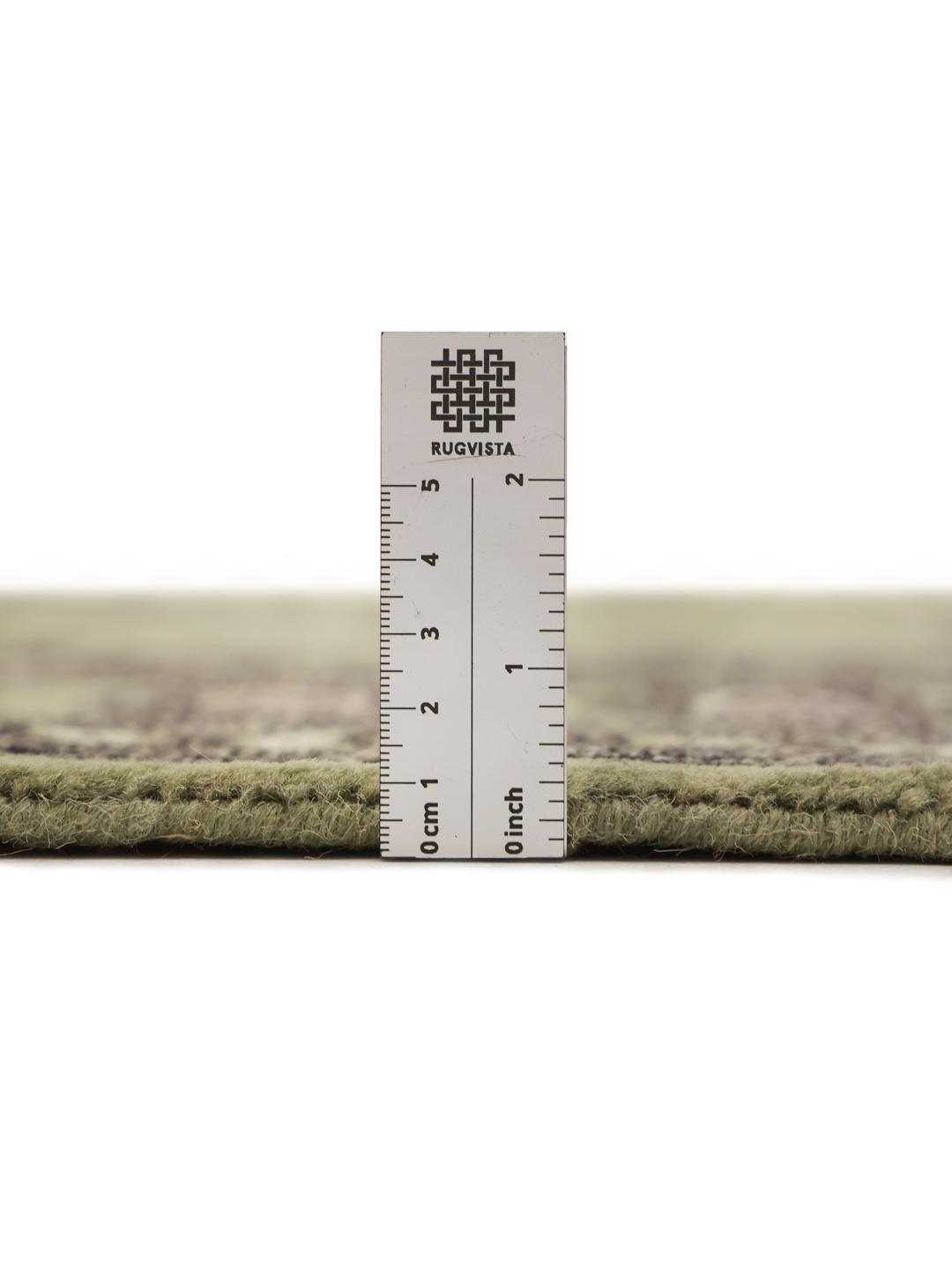
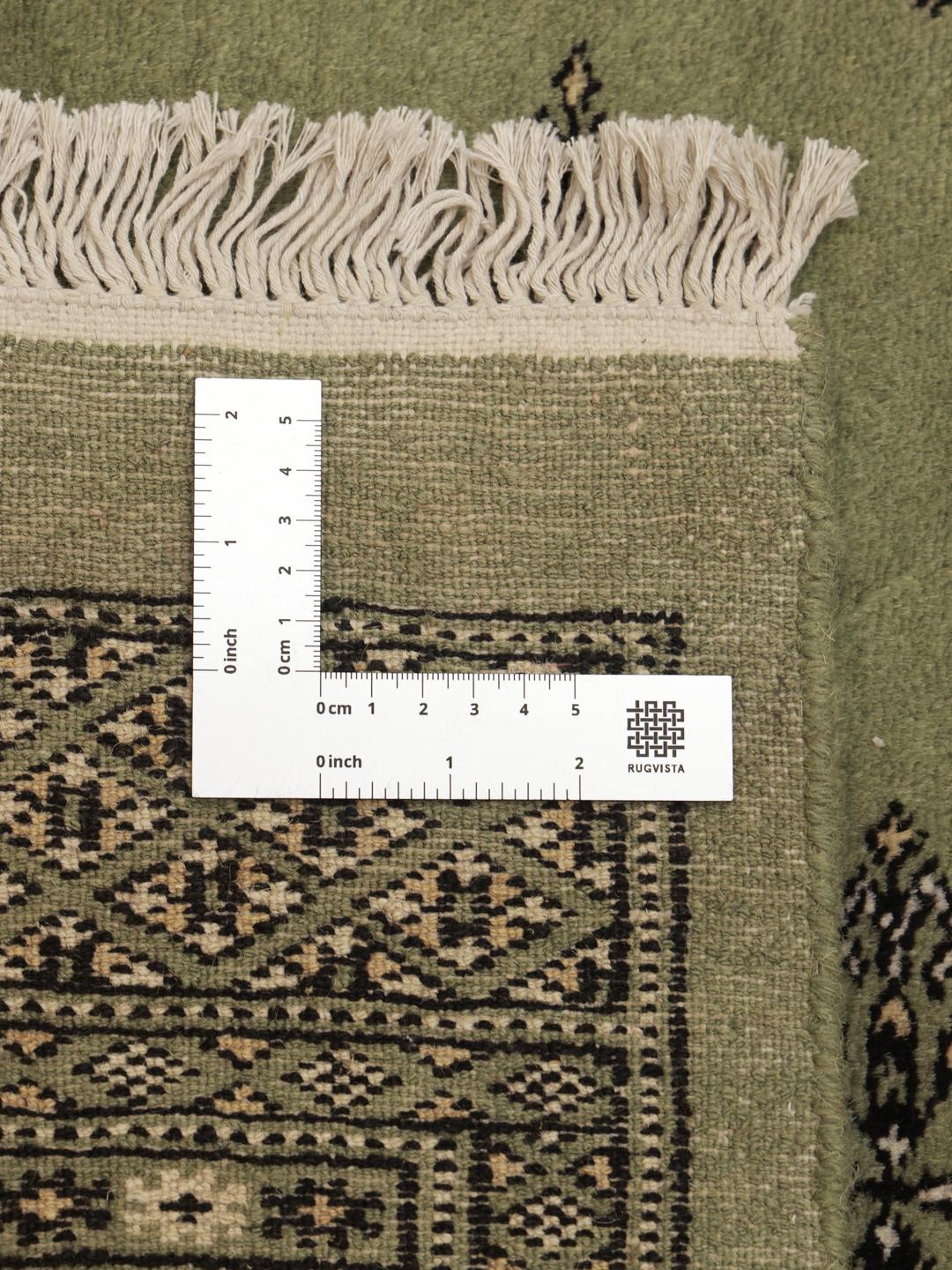
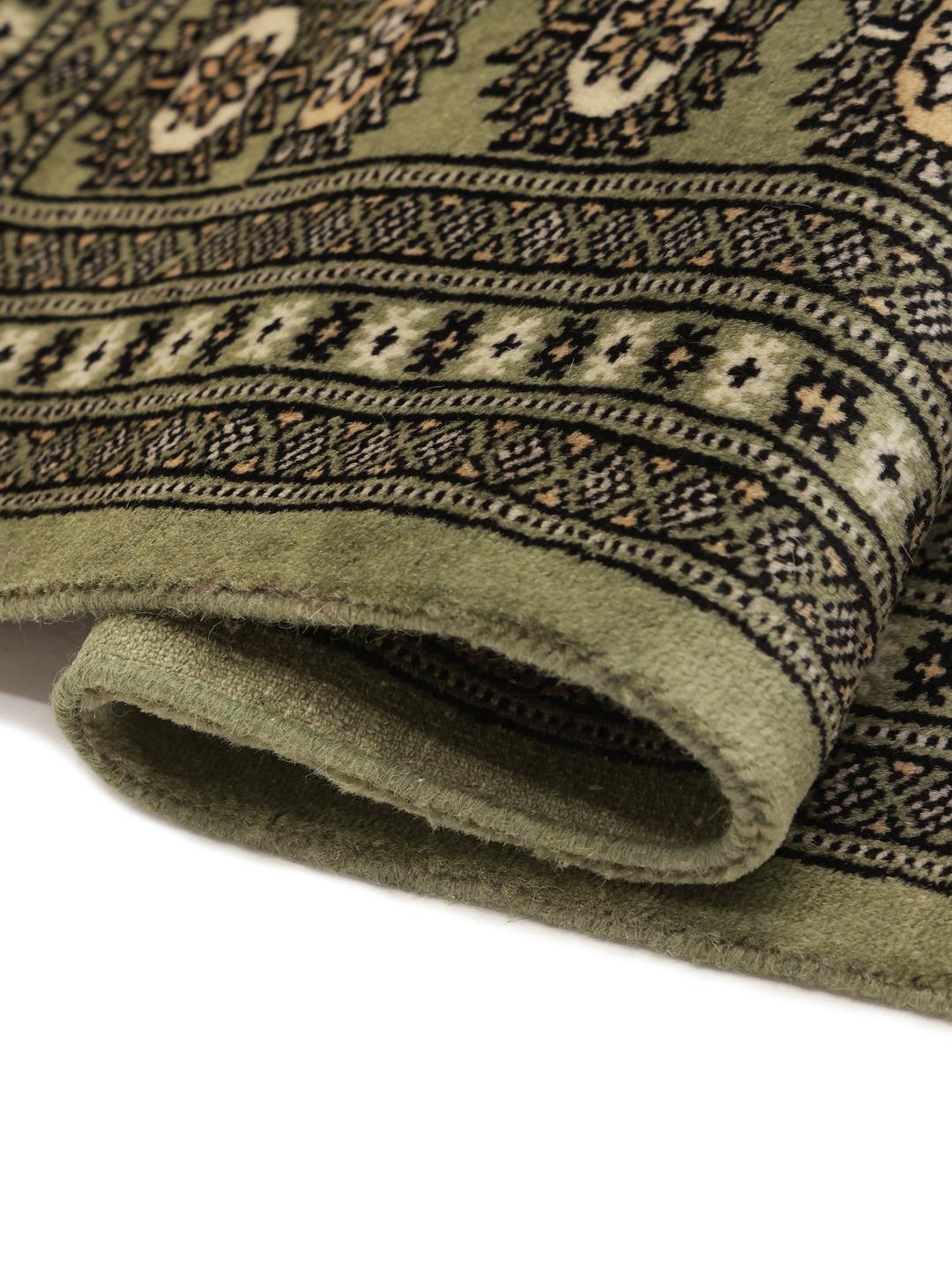
The 2ply designation refers to the specific way the wool is prepared before weaving. By twisting two strands of wool together, the artisan creates a yarn that is significantly more durable, lustrous, and resistant to wear than single-ply alternatives. This technical choice is essential for producing the dense, velvety pile that defines the Bokhara style and ensures the rug's longevity.
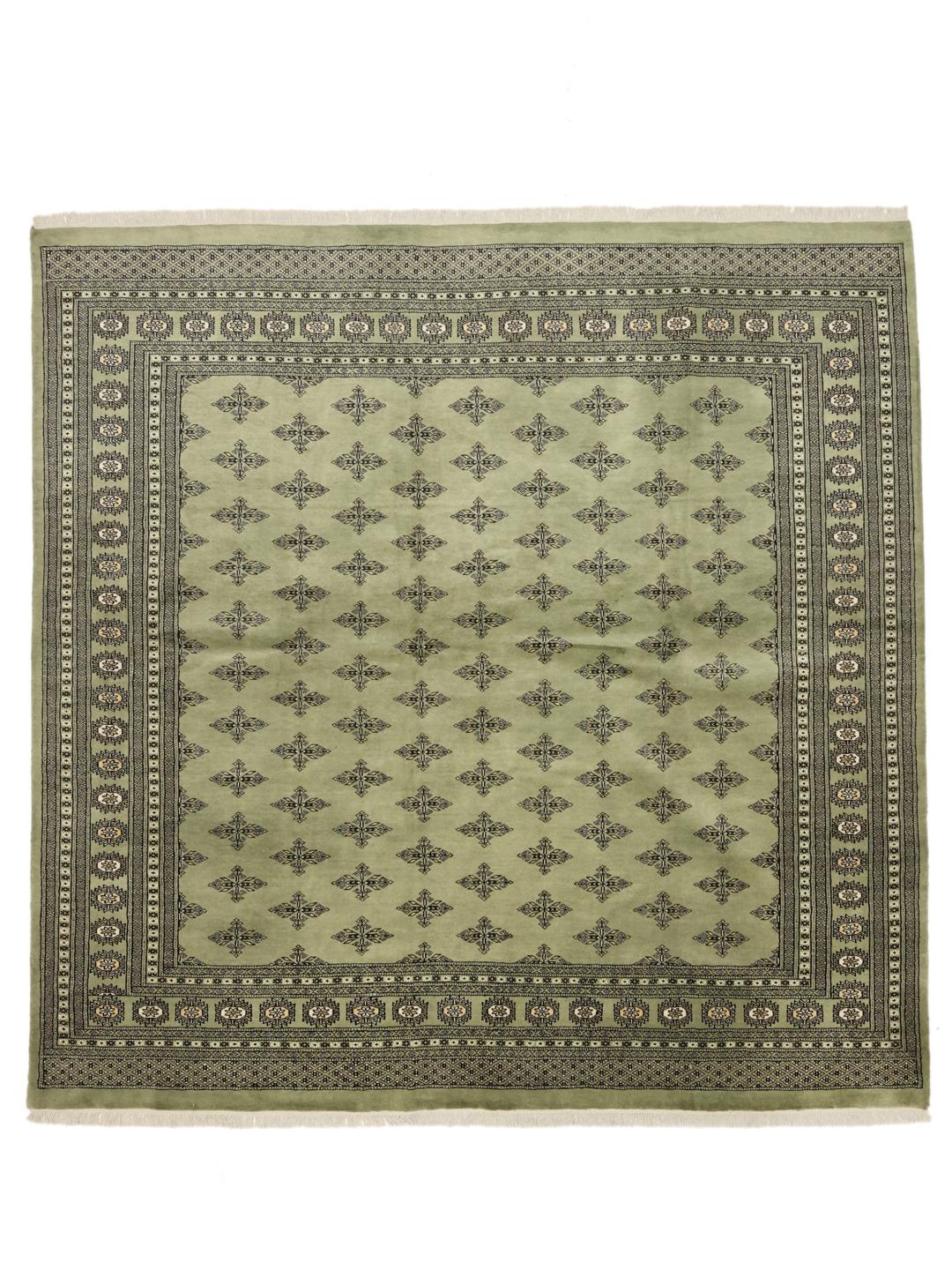
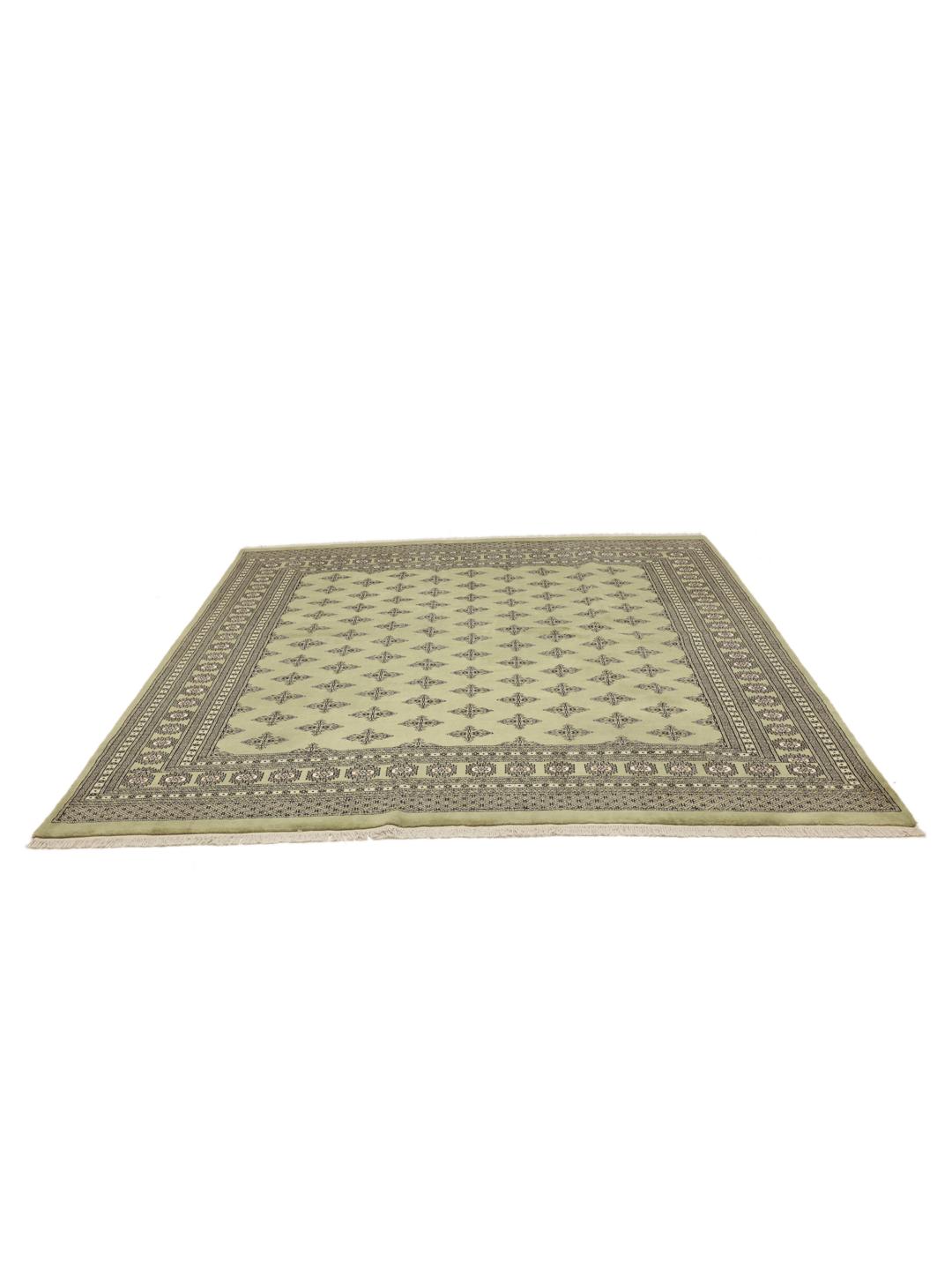
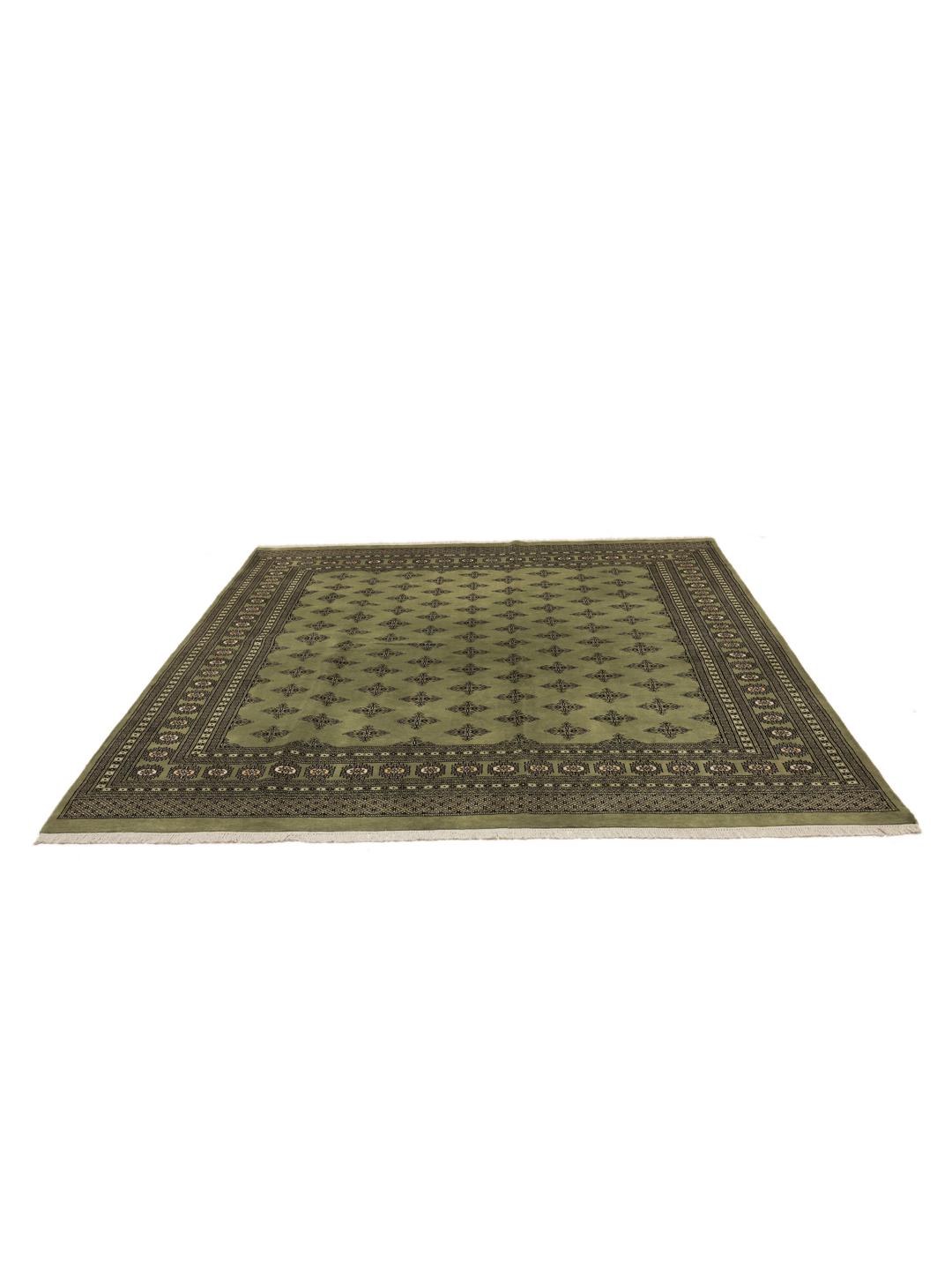
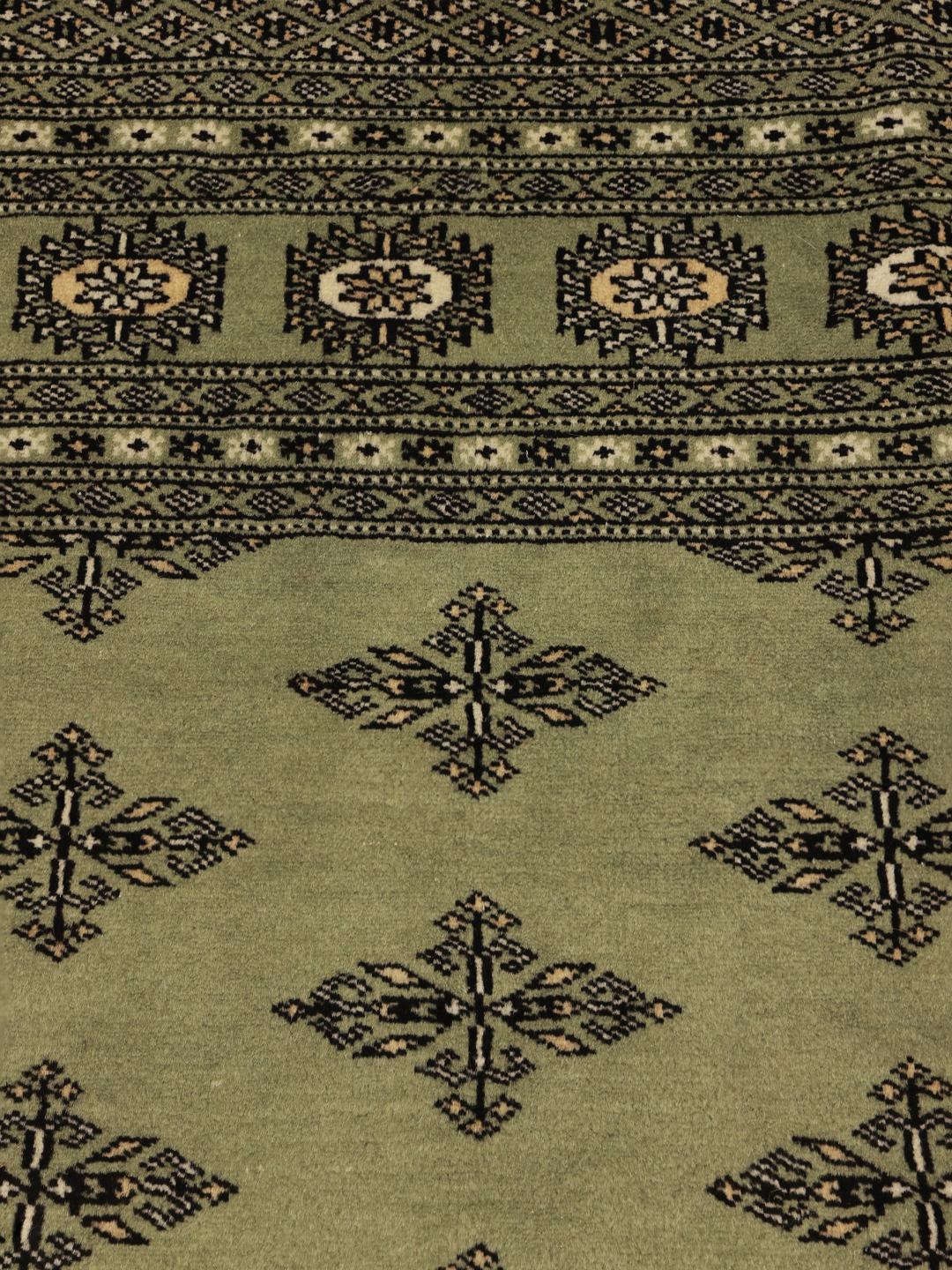
Visually, these rugs are defined by their repeating motifs, often referred to as guls. While traditional designs frequently feature deep red tones, this piece is notable for its serene green field. This variation highlights the artistic freedom of the weavers while maintaining the formal, symmetrical layout that makes these rugs so iconic and pleasing to the eye.
Owning a hand-knotted rug from this tradition is an investment in cultural heritage. Collectors value these pieces for their intricate detail, the skill required to maintain consistency across the entire field, and the deep connection to a centuries-old craft. By bringing this rug into your home, you are continuing a legacy of artistry and precision that transcends time.