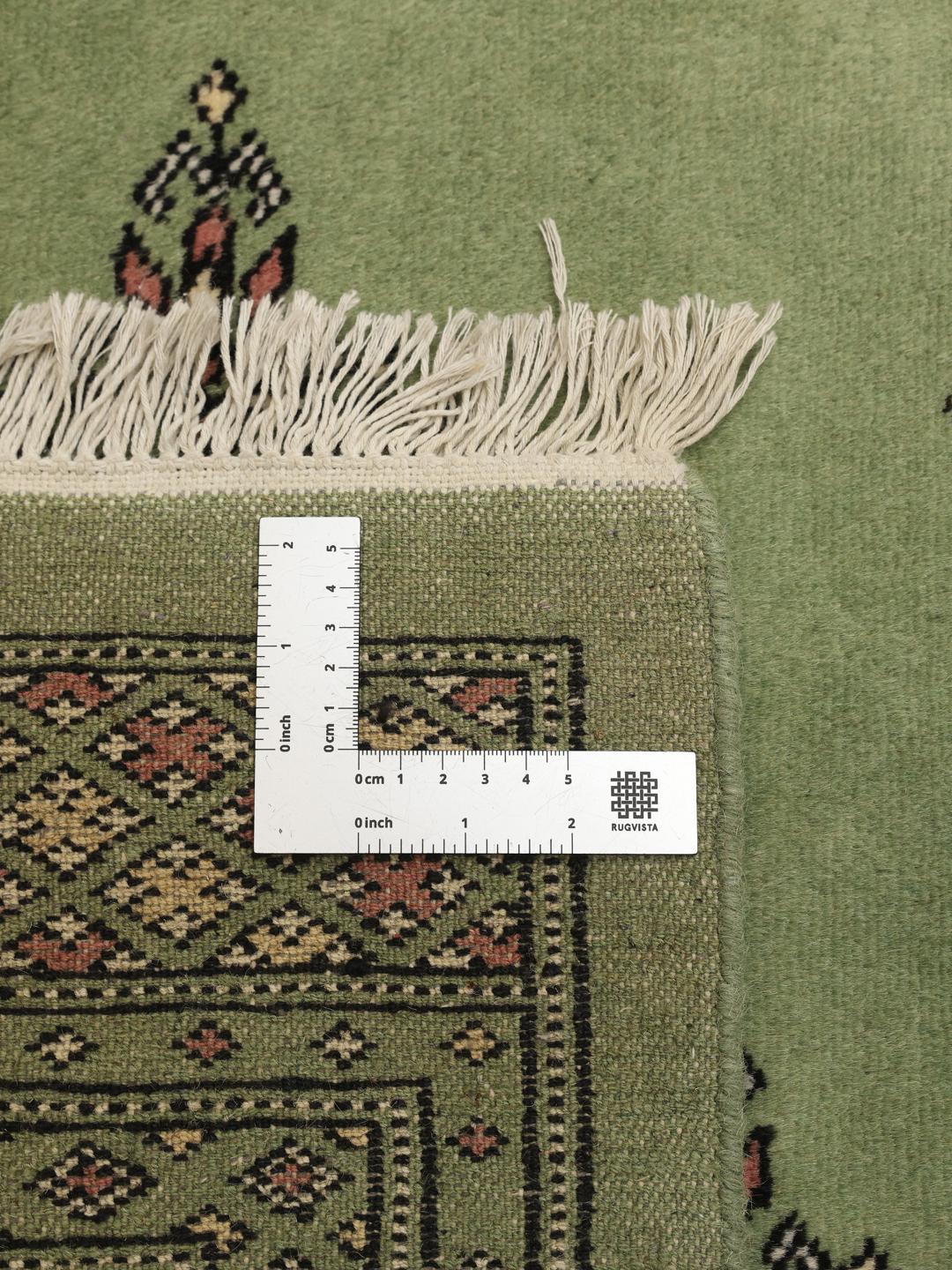
Bokhara rugs take their name from the ancient Silk Road city of Bukhara in Central Asia, a historical hub for trade and textile artistry. While the design lineage is deeply rooted in the traditions of nomadic tribes, the finest examples of these rugs today are expertly woven in Pakistan, where artisans have perfected the craft over many decades.
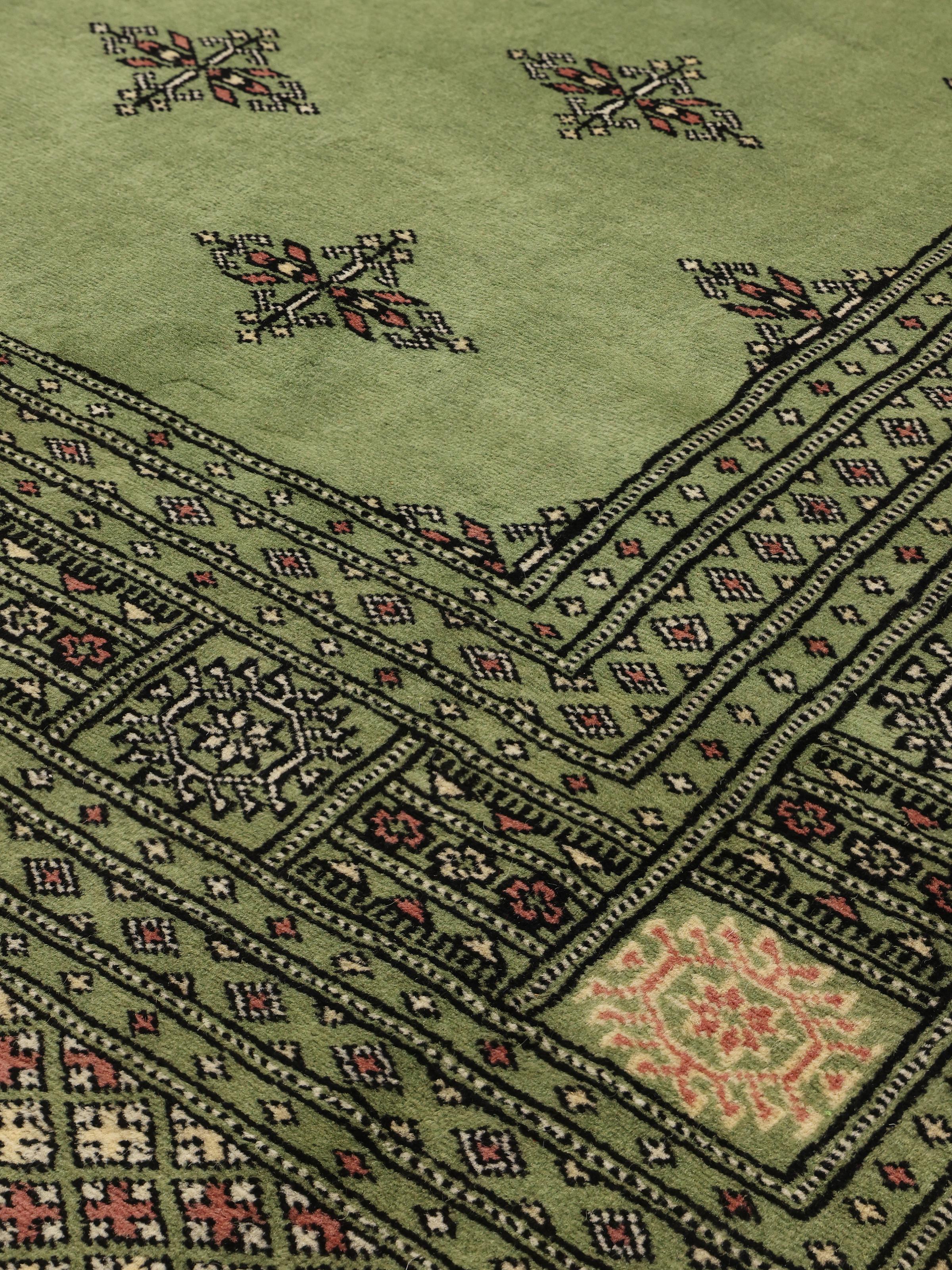
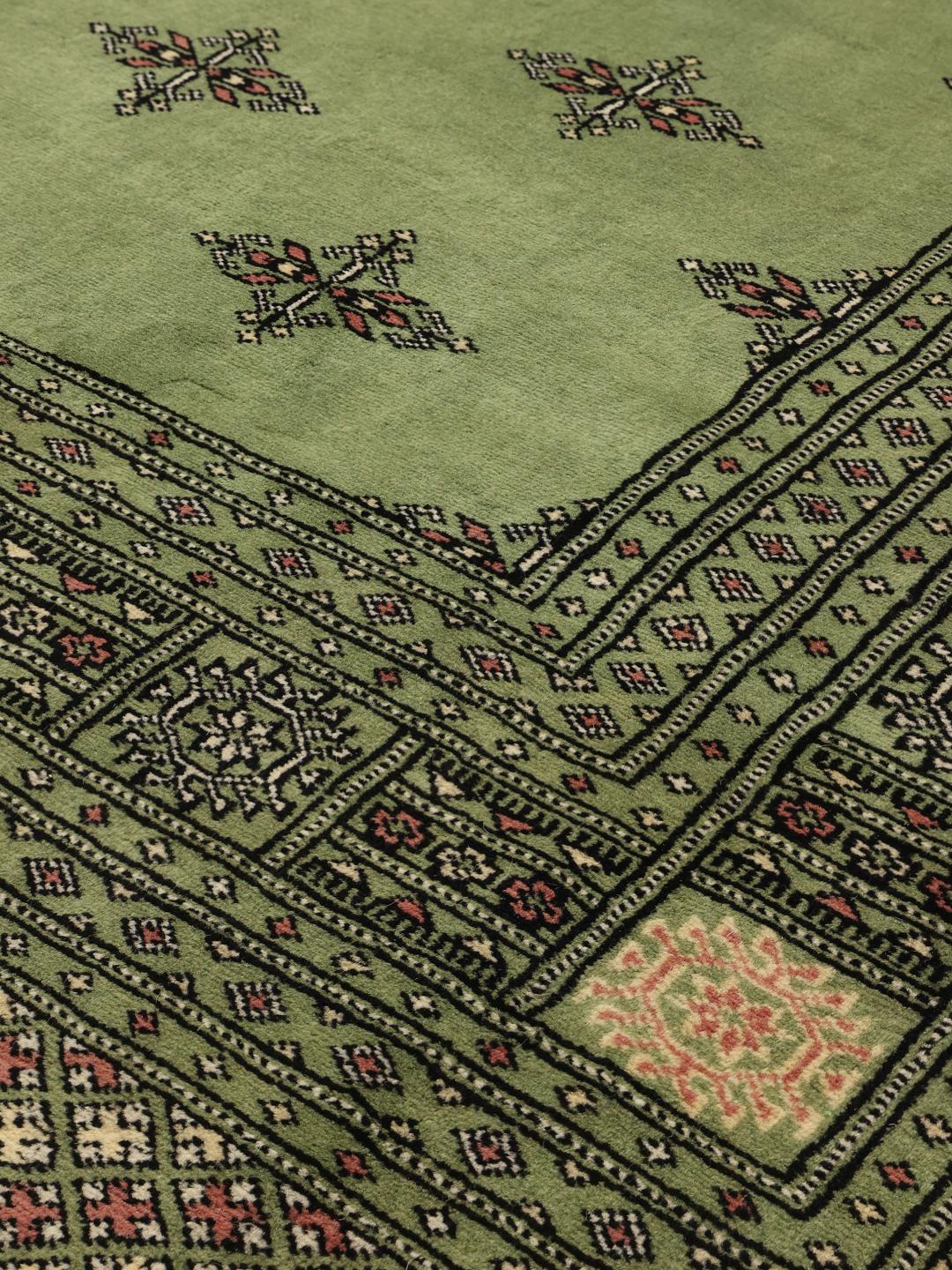
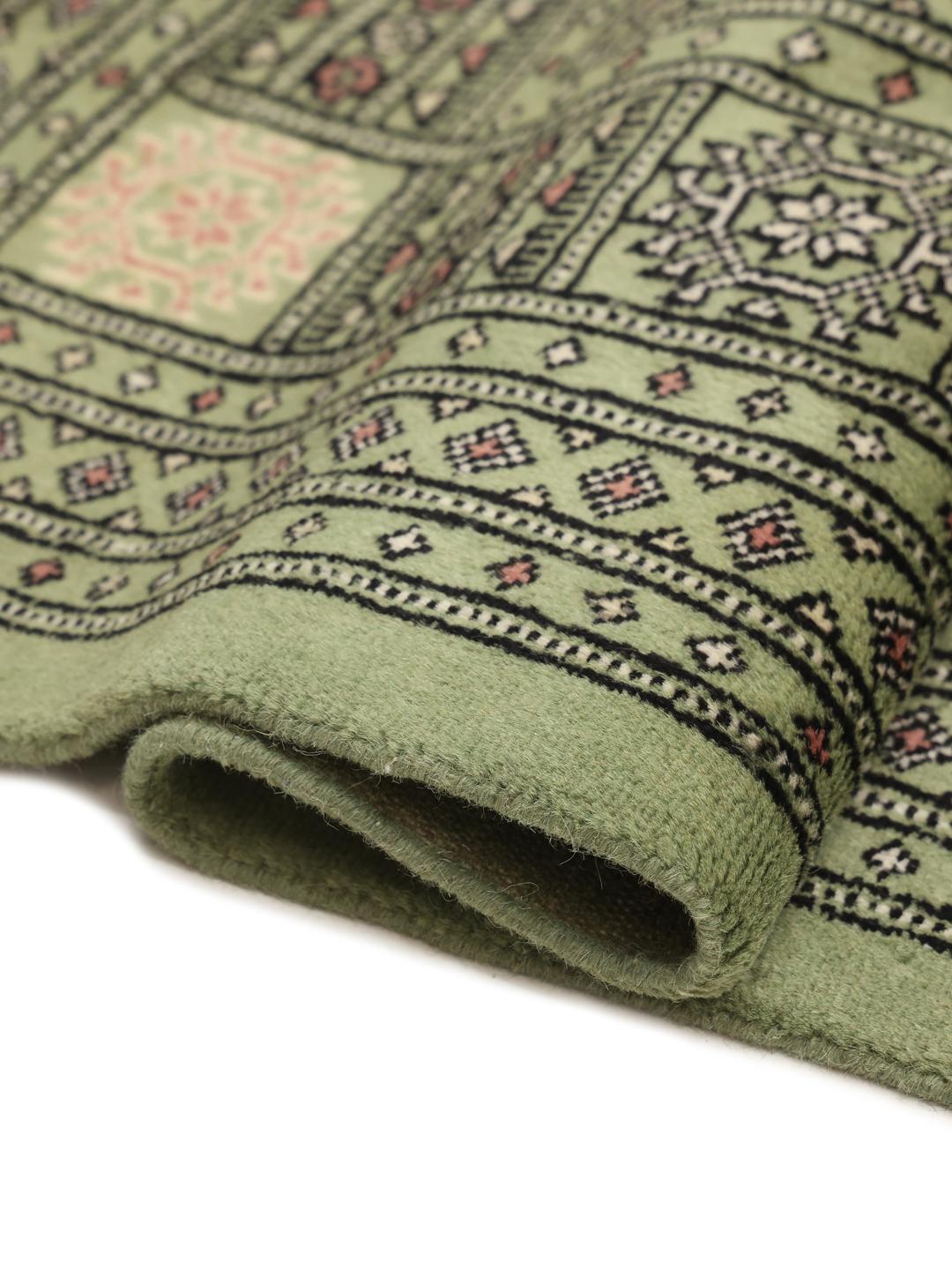
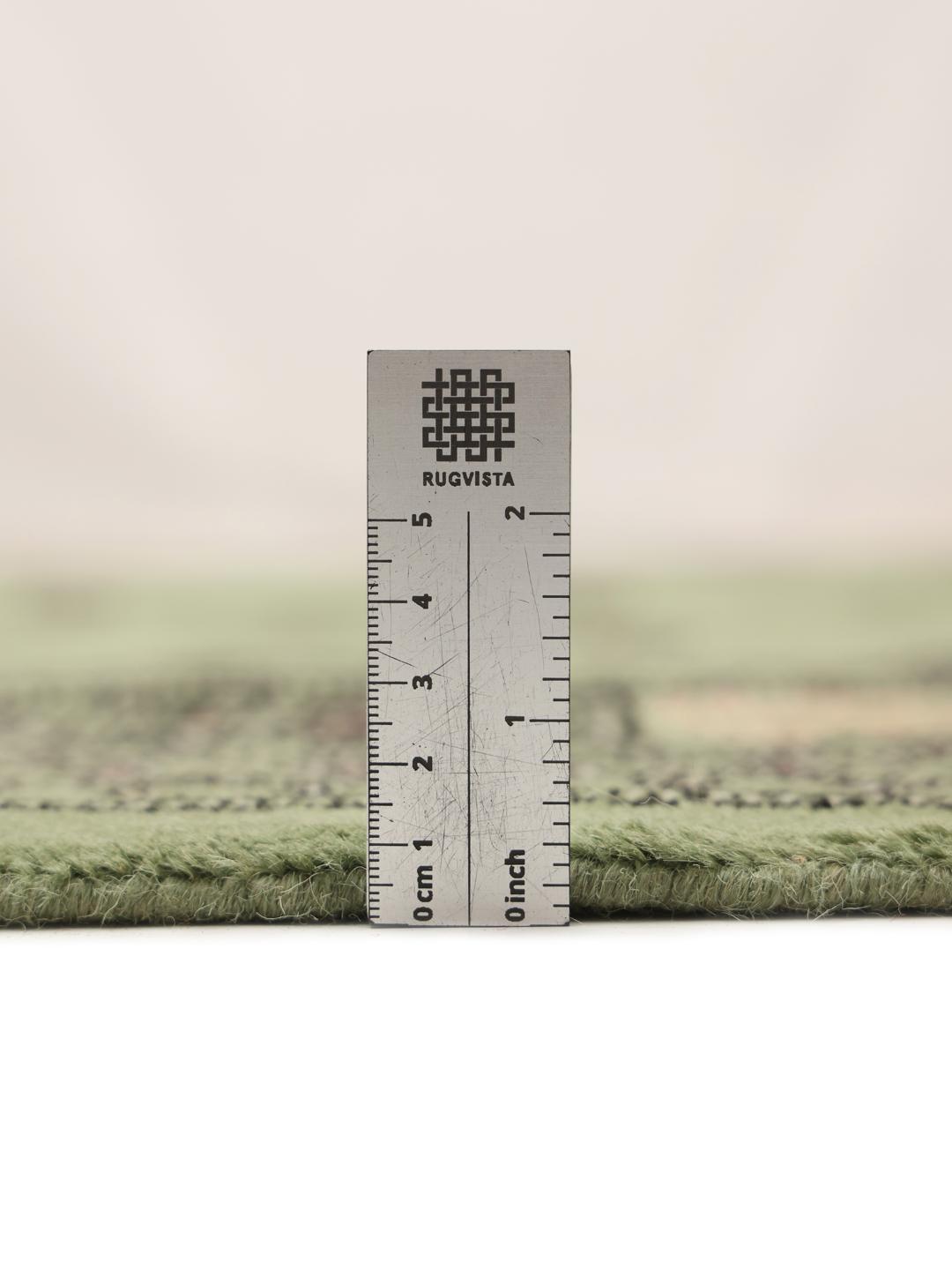
The term 2ply refers to the construction of the wool pile, where two strands of fibre are twisted together before being knotted into the foundation. This technique is essential for quality, as it creates a stronger, more lustrous, and thicker pile than a single-ply construction, allowing the rug to withstand years of movement while retaining its soft, inviting texture.
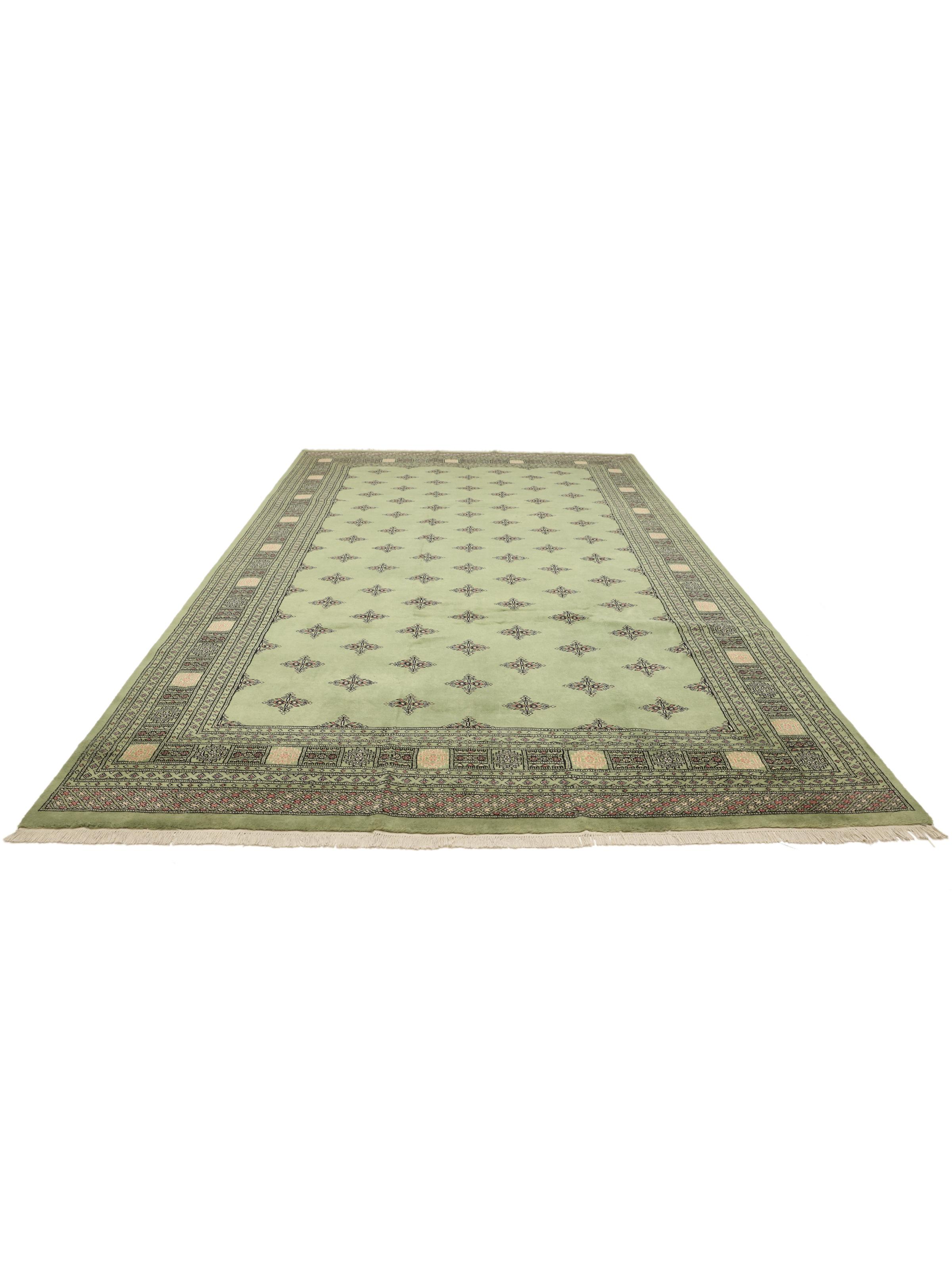
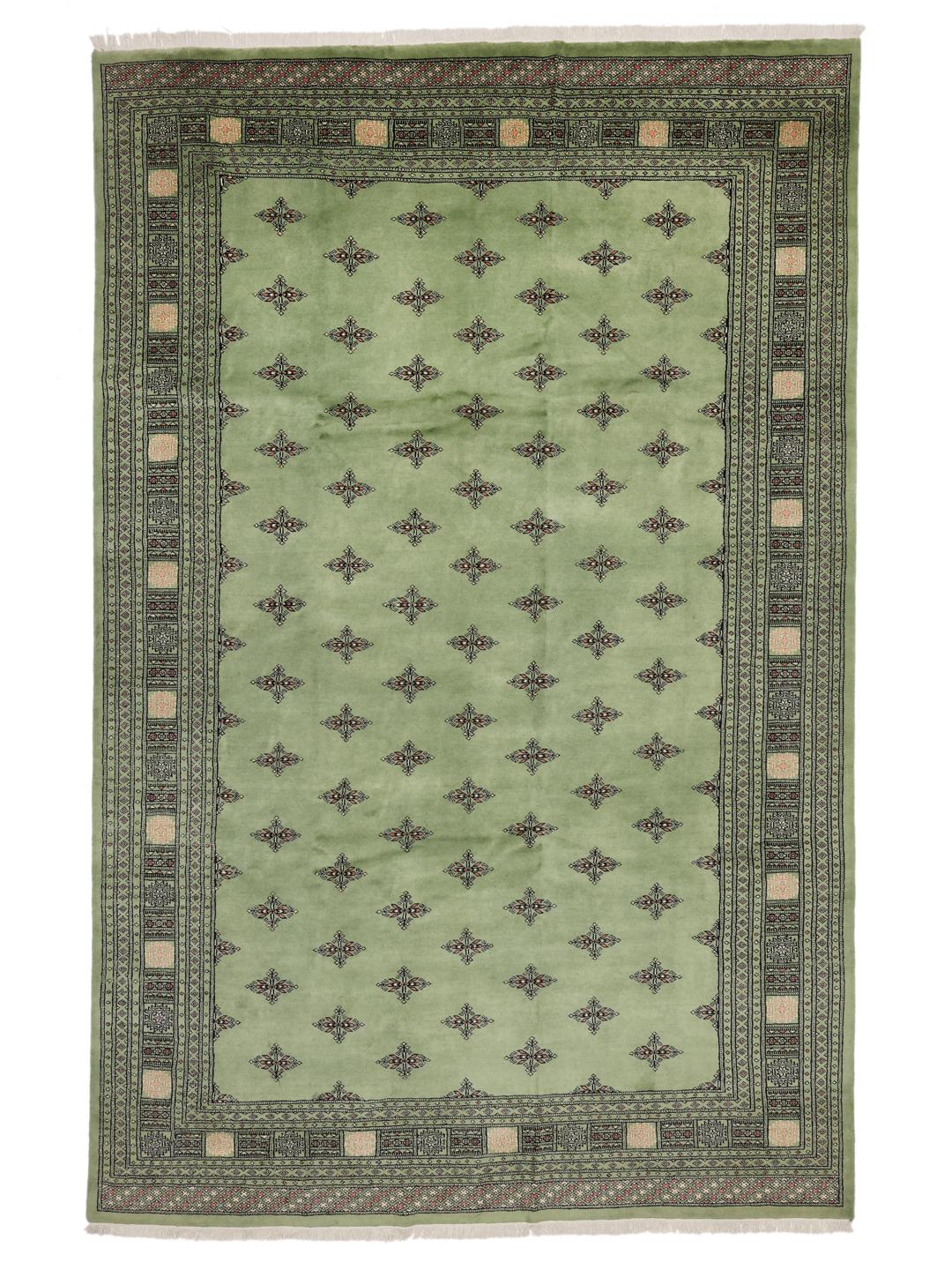
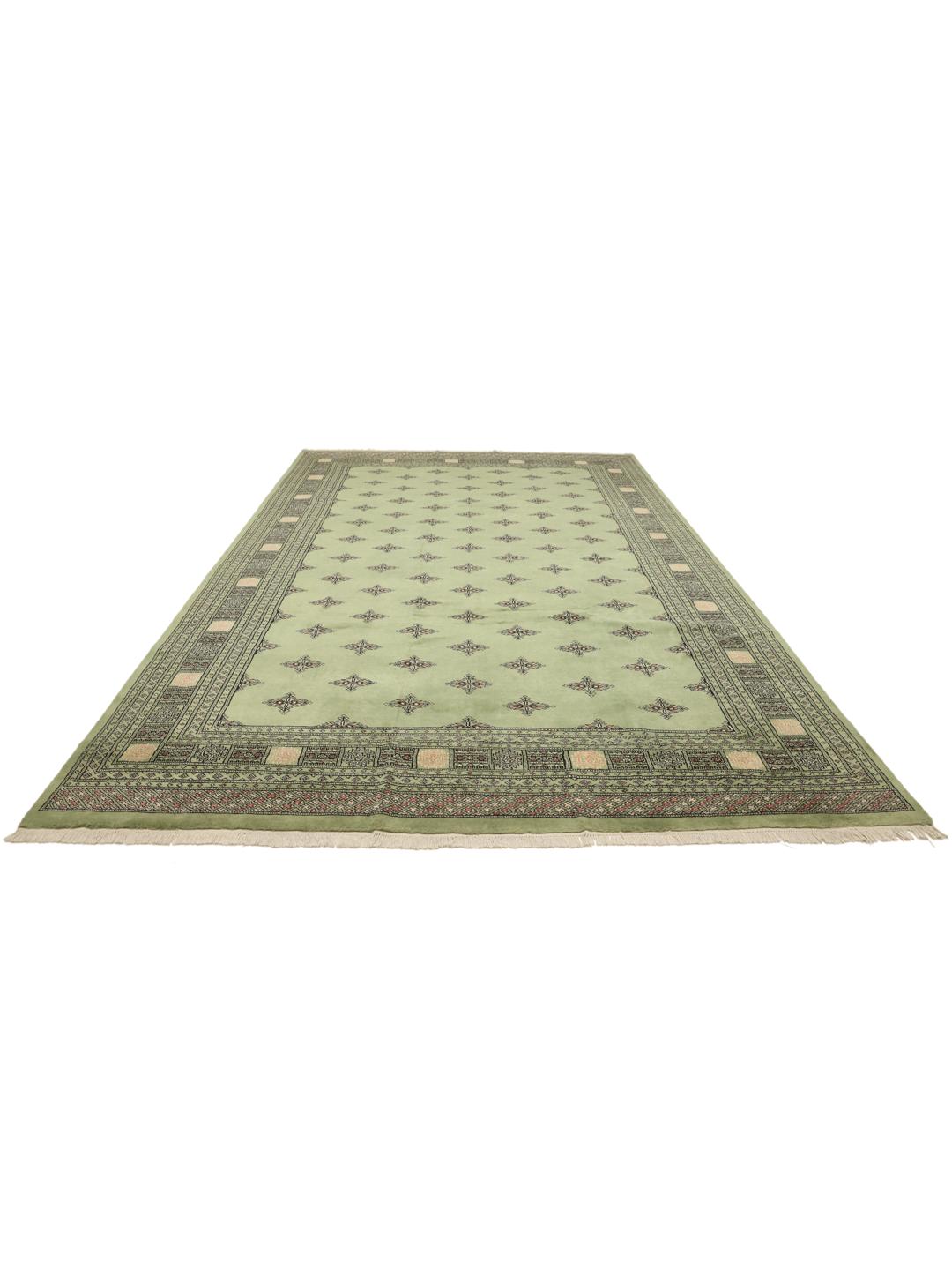
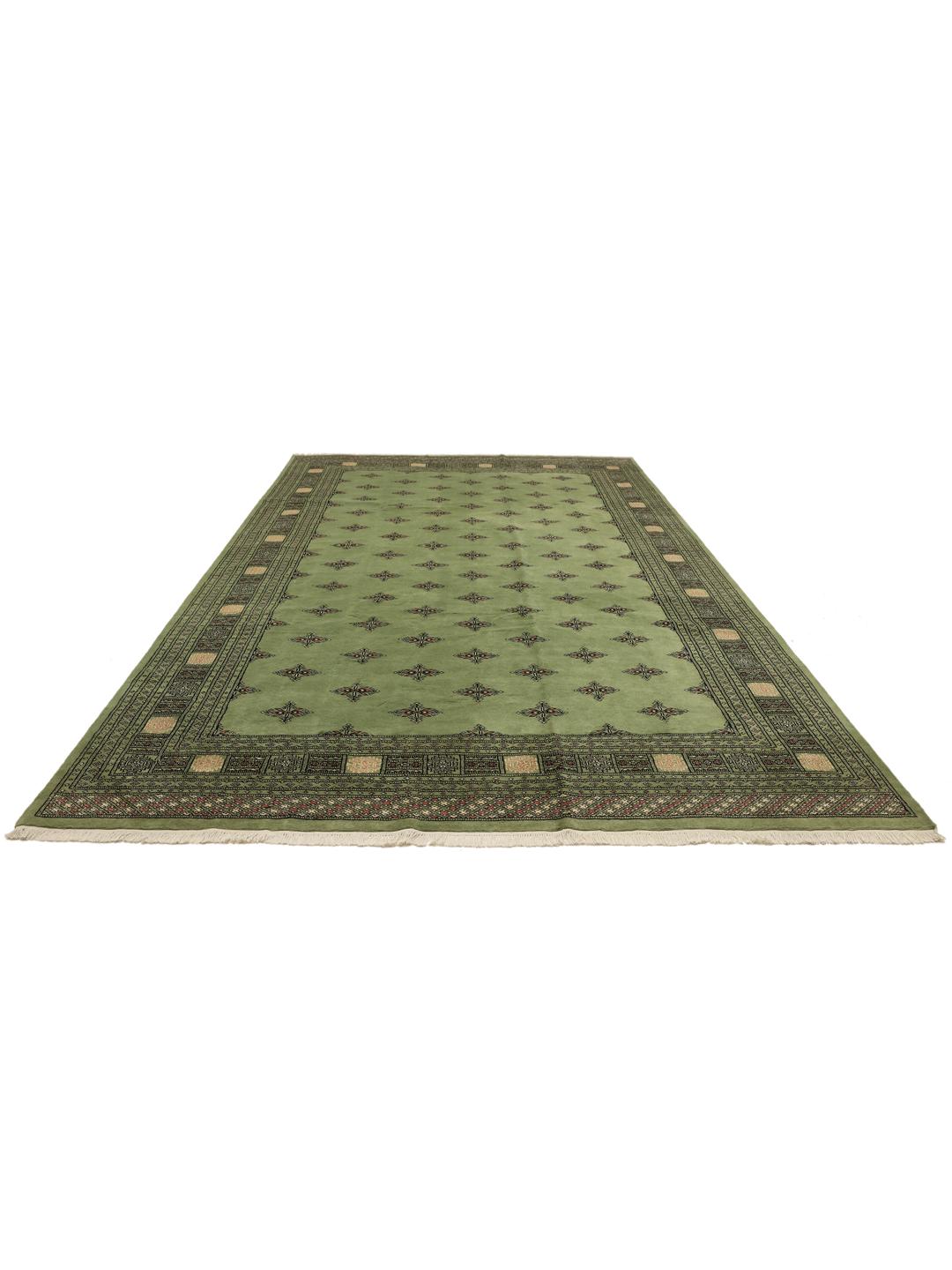
The visual language of the Bokhara is defined by its iconic gul motifs—repeating, octagonal medallions that represent traditional tribal symbols. Enclosed by a formal, decorative border, these patterns are usually arranged in precise rows. This specific rug is notable for its rare, serene green field, which offers a refreshing departure from the traditional deep reds often associated with this style.
Owning a Bokhara is a connection to a long-standing heritage of skill and precision. These rugs are highly valued by collectors not just for their aesthetic beauty, but for the human history woven into every centimetre. By bringing one into your home, you are preserving a craft tradition that prioritises longevity and intentional design over the fleeting trends of the modern world.