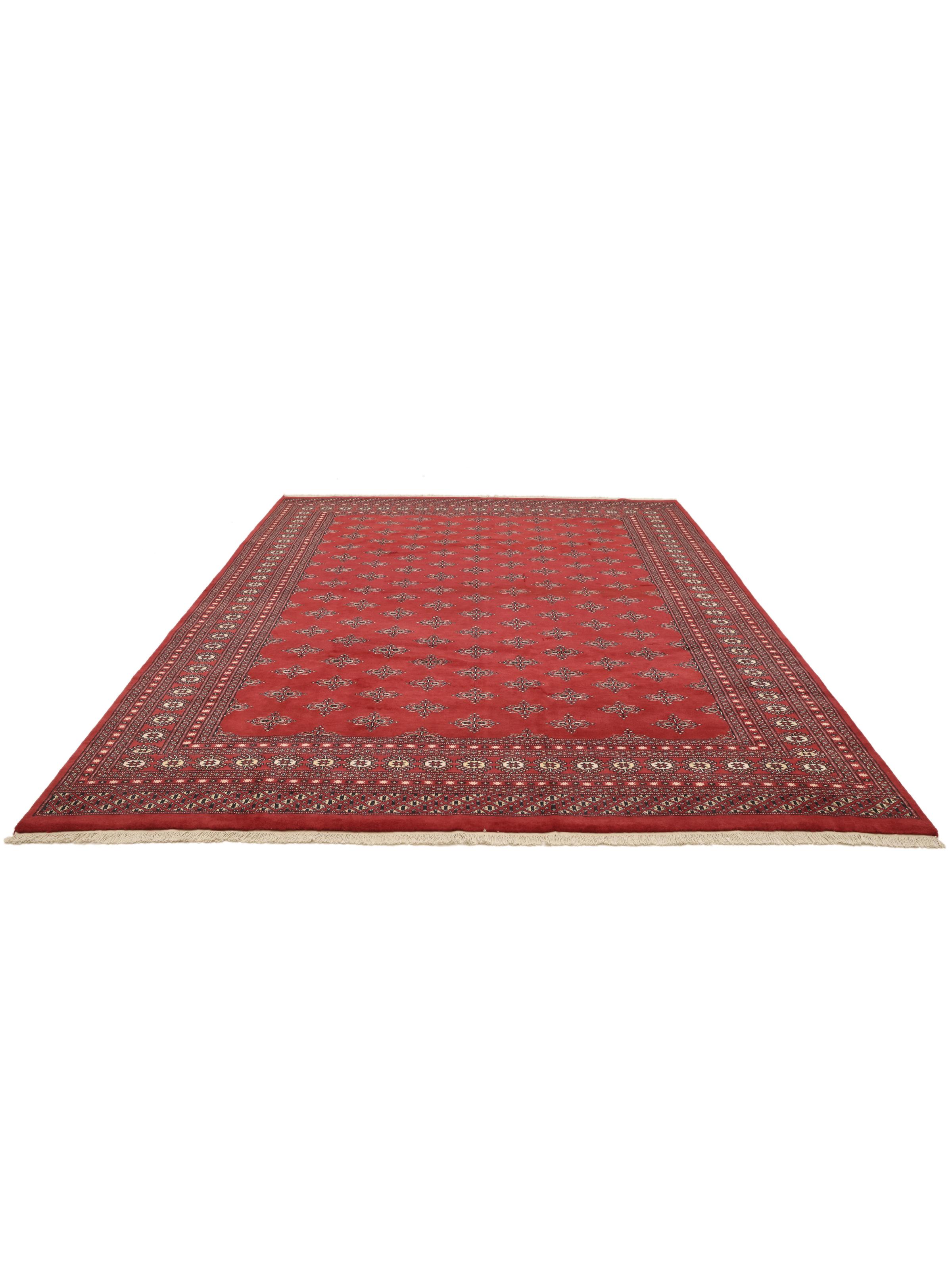
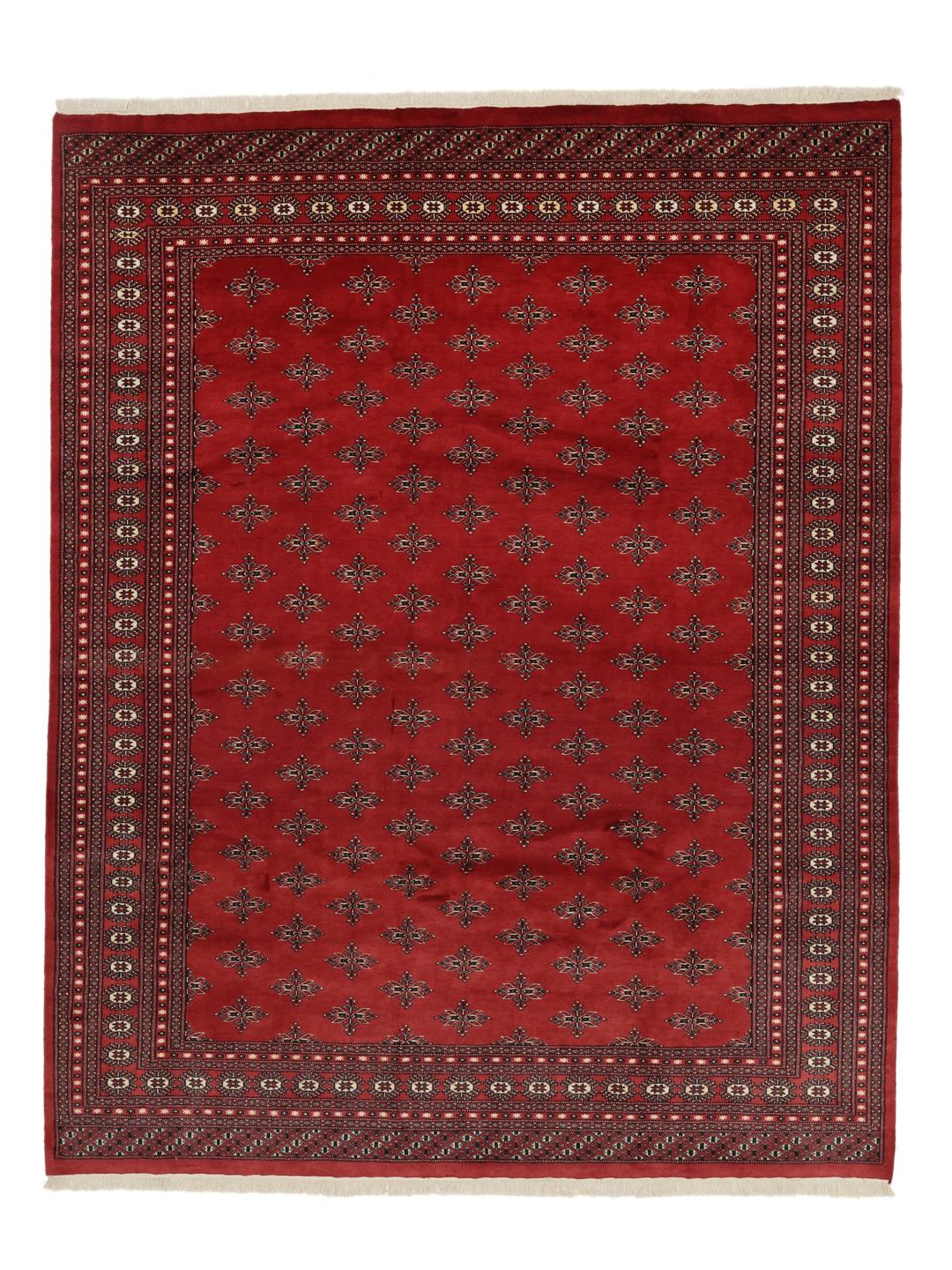
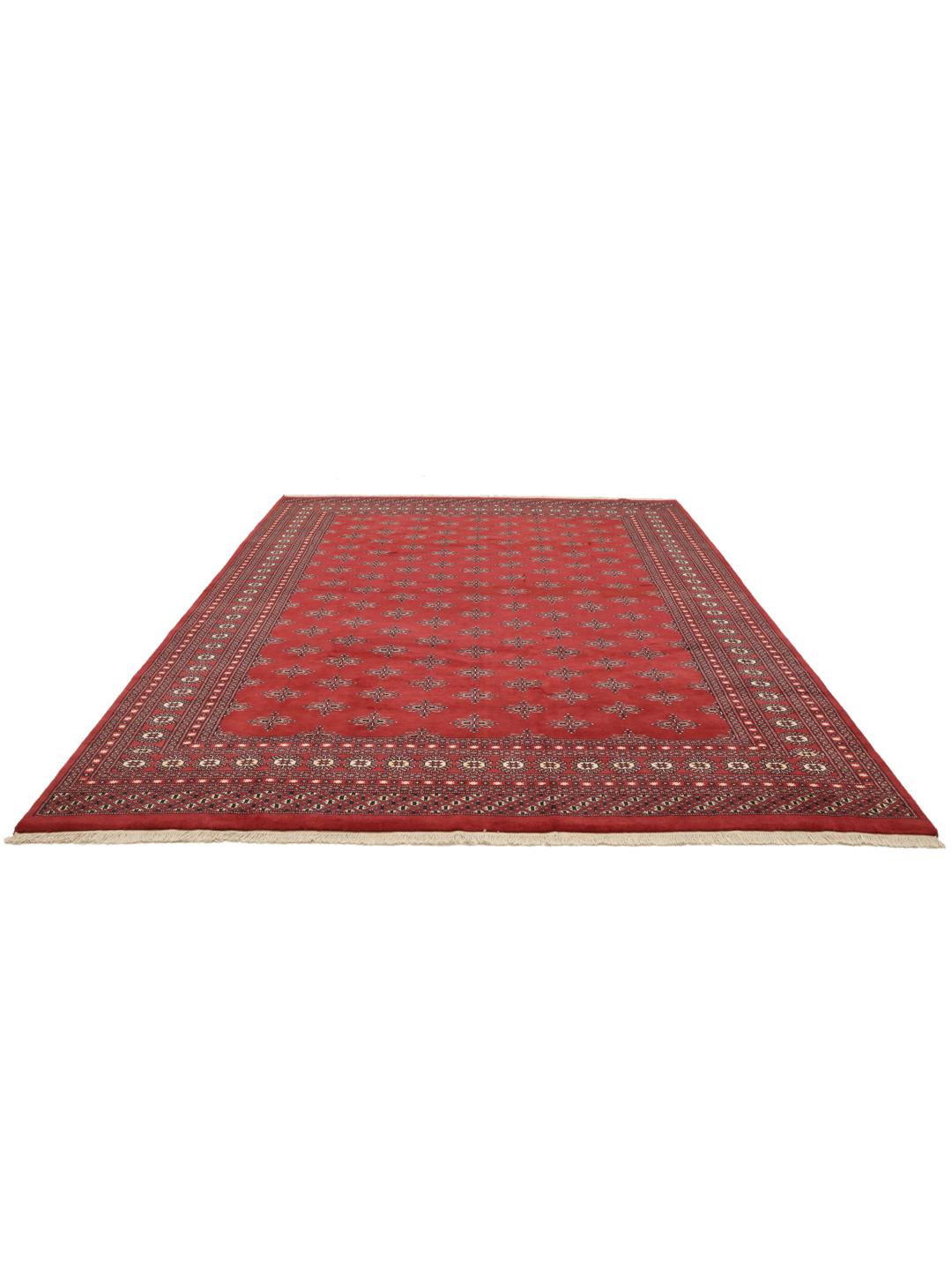
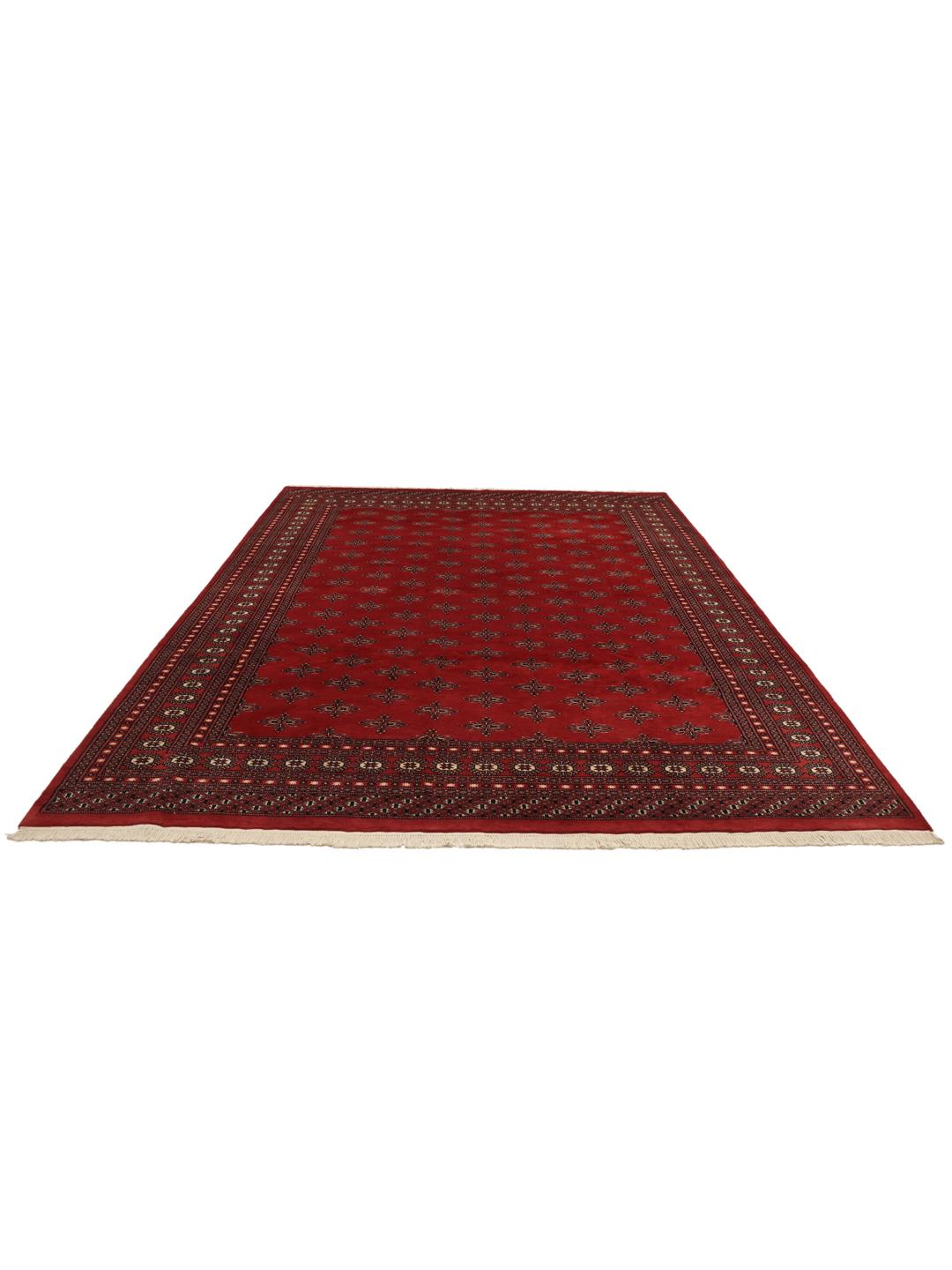
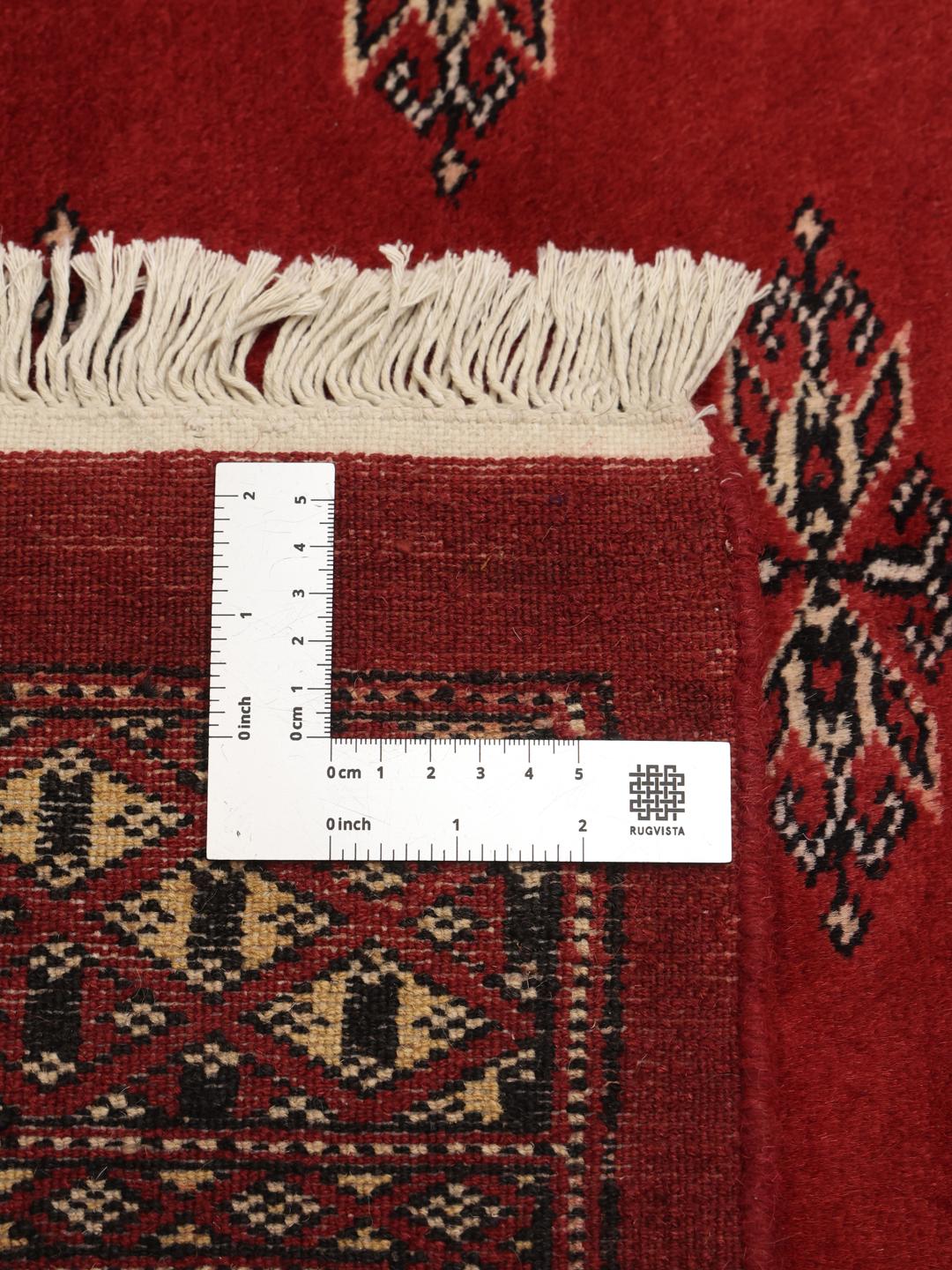
The Bokhara rug tradition is deeply rooted in the history of Central Asia, taking its name from the ancient Silk Road city of Bukhara. While these designs have their origins in nomadic tribal traditions, the finest contemporary examples are masterfully woven in Pakistan, where the craft has evolved to reach new heights of technical precision.
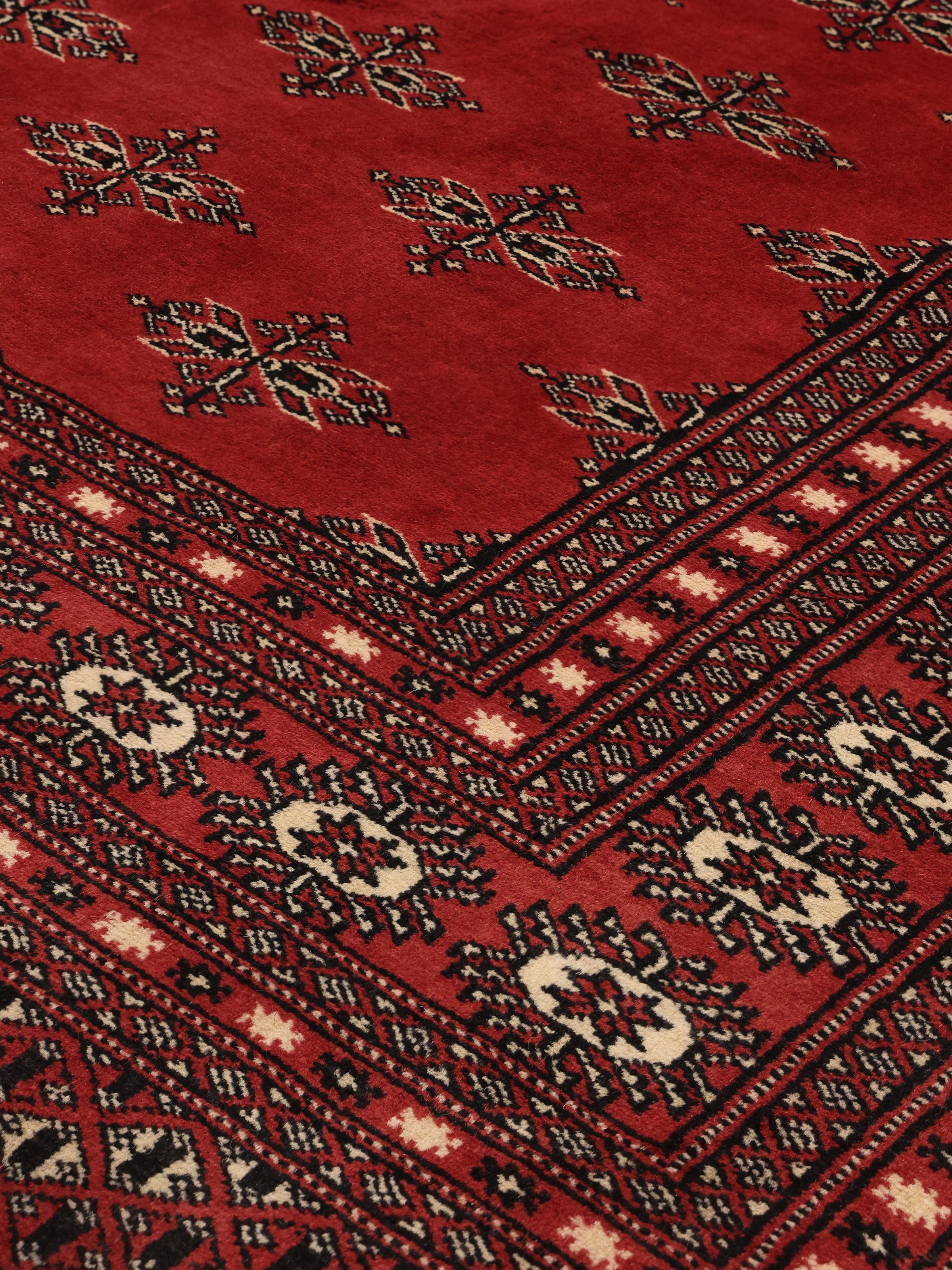
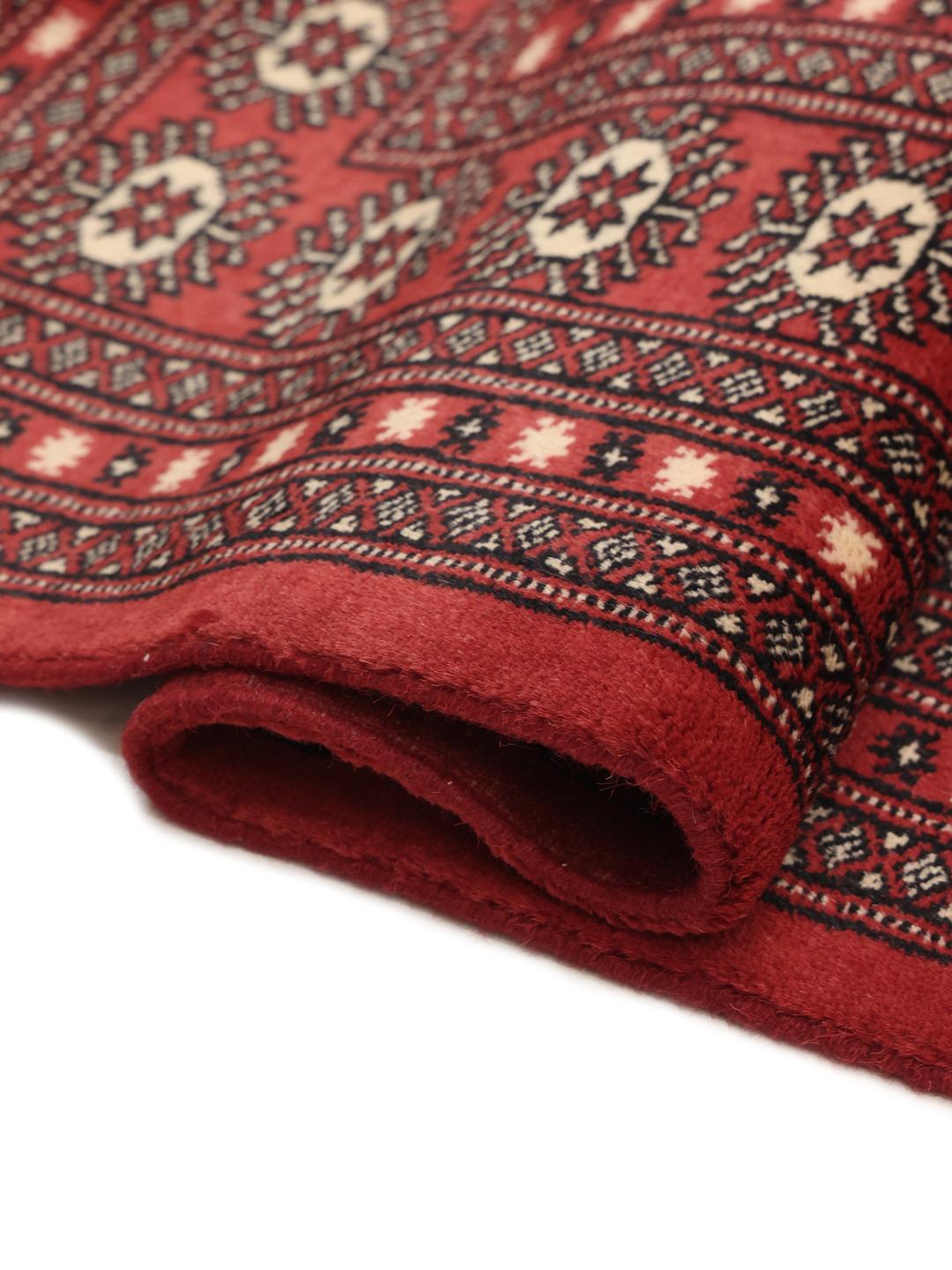
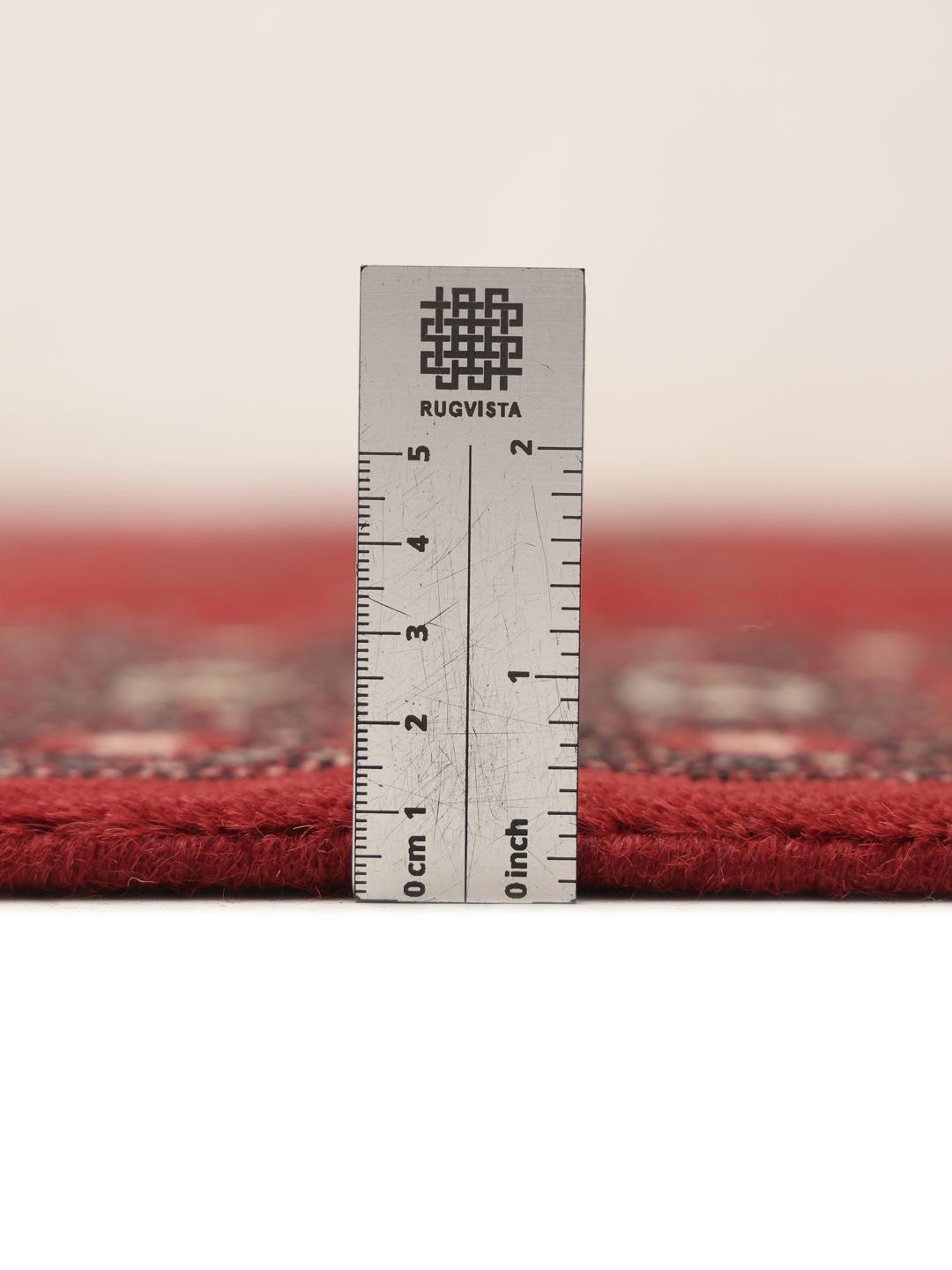
The term 2ply refers to the construction of the pile, where two strands of wool are twisted together before being knotted. This technique is significant because it creates a thicker, more lustrous, and remarkably resilient surface. The resulting pile is not only softer to the touch but also better able to withstand the test of time compared to single-ply alternatives.
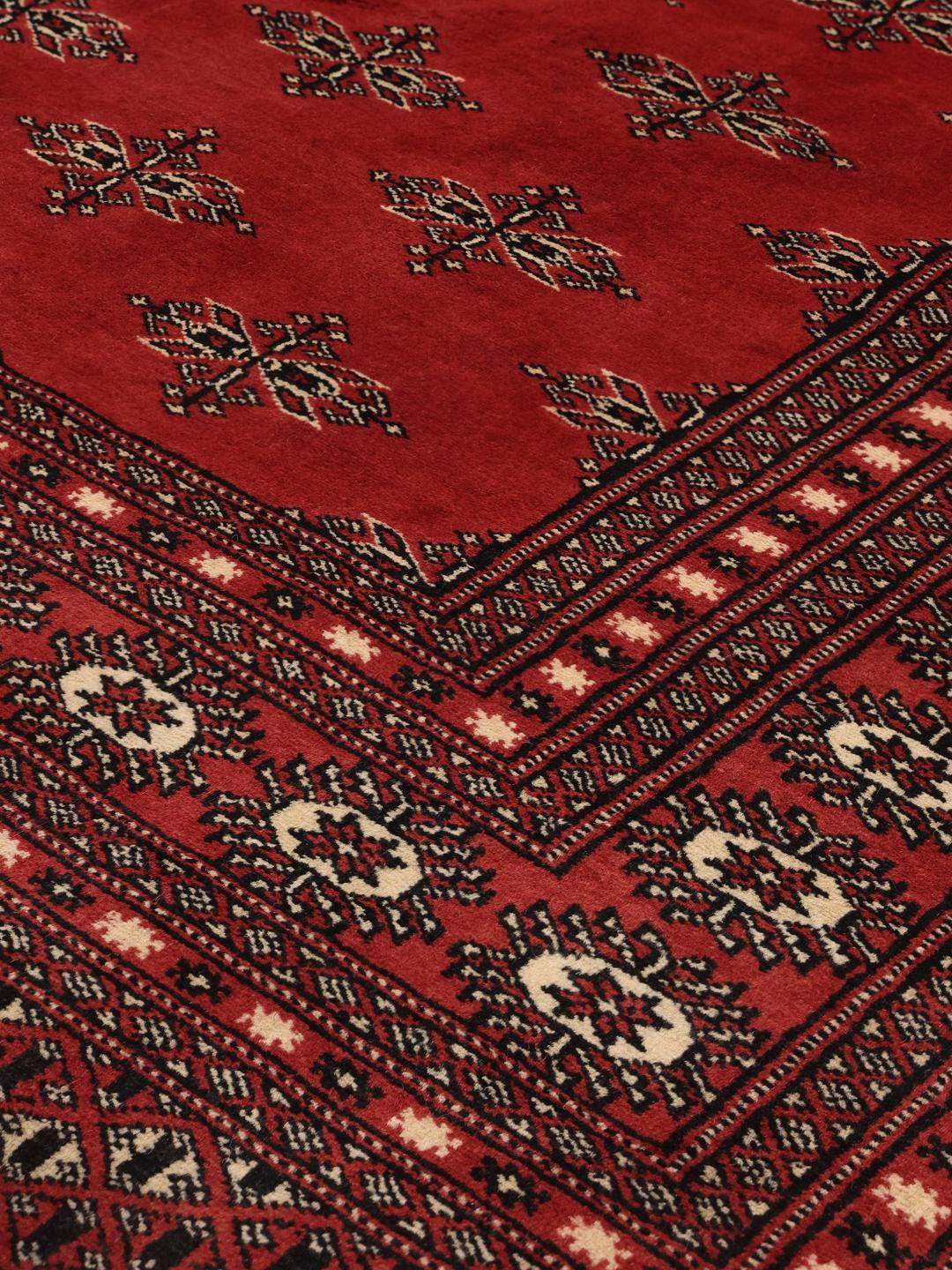
Visually, these rugs are defined by their repeating gul motifs—stylized medallions that often resemble elephant tracks—set against a rich, often red, field. This rug honours that tradition with its balanced, symmetrical layout, enclosed by a formal, intricate border that frames the central field with sophistication.
Owning a hand-knotted rug from this tradition is an act of preserving a cultural heritage that values patience, skill, and artistry. These pieces are highly sought after by collectors not just for their aesthetic appeal, but because they represent a tangible connection to a long-standing tradition of excellence in textile design.