Bokhara rugs take their name from the ancient Silk Road city of Bukhara, which served as a historic hub for trade and textile artistry in Central Asia. While the tradition has deep roots in nomadic culture, the finest contemporary examples are woven in Pakistan. This evolution reflects the migration of weaving skills across borders, where artisans have refined the style over generations to achieve a standard of perfection that is widely recognised today.
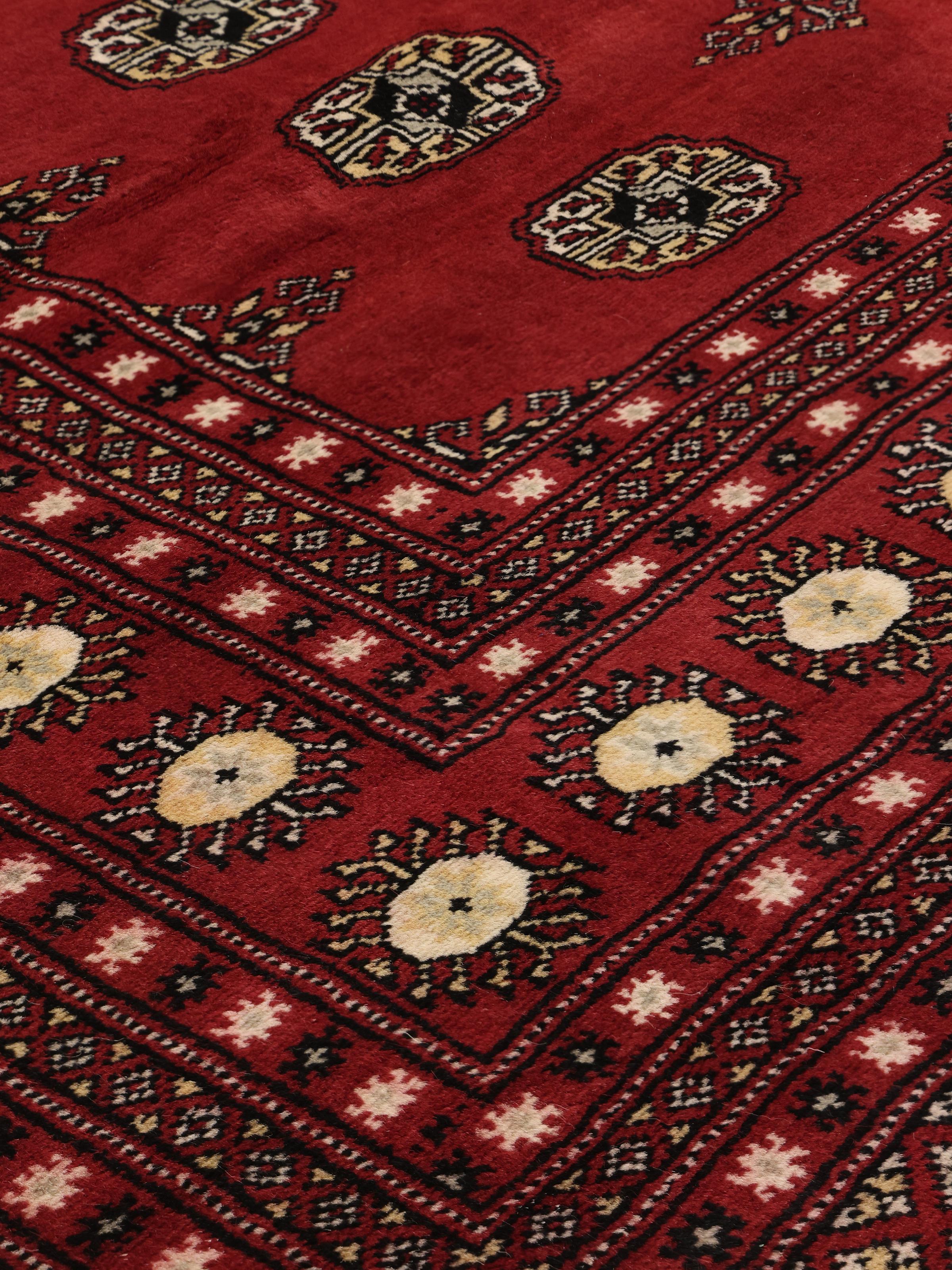
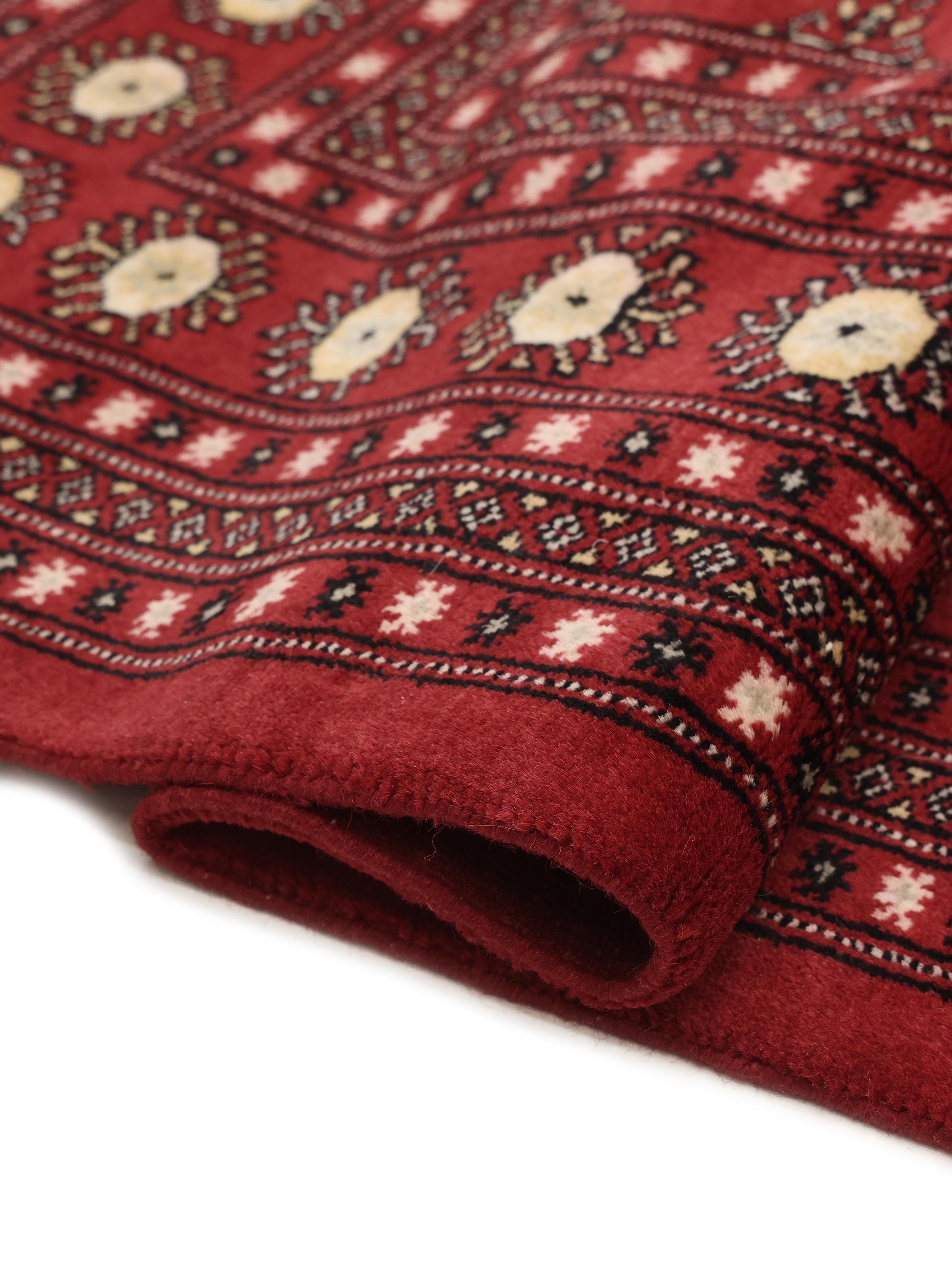
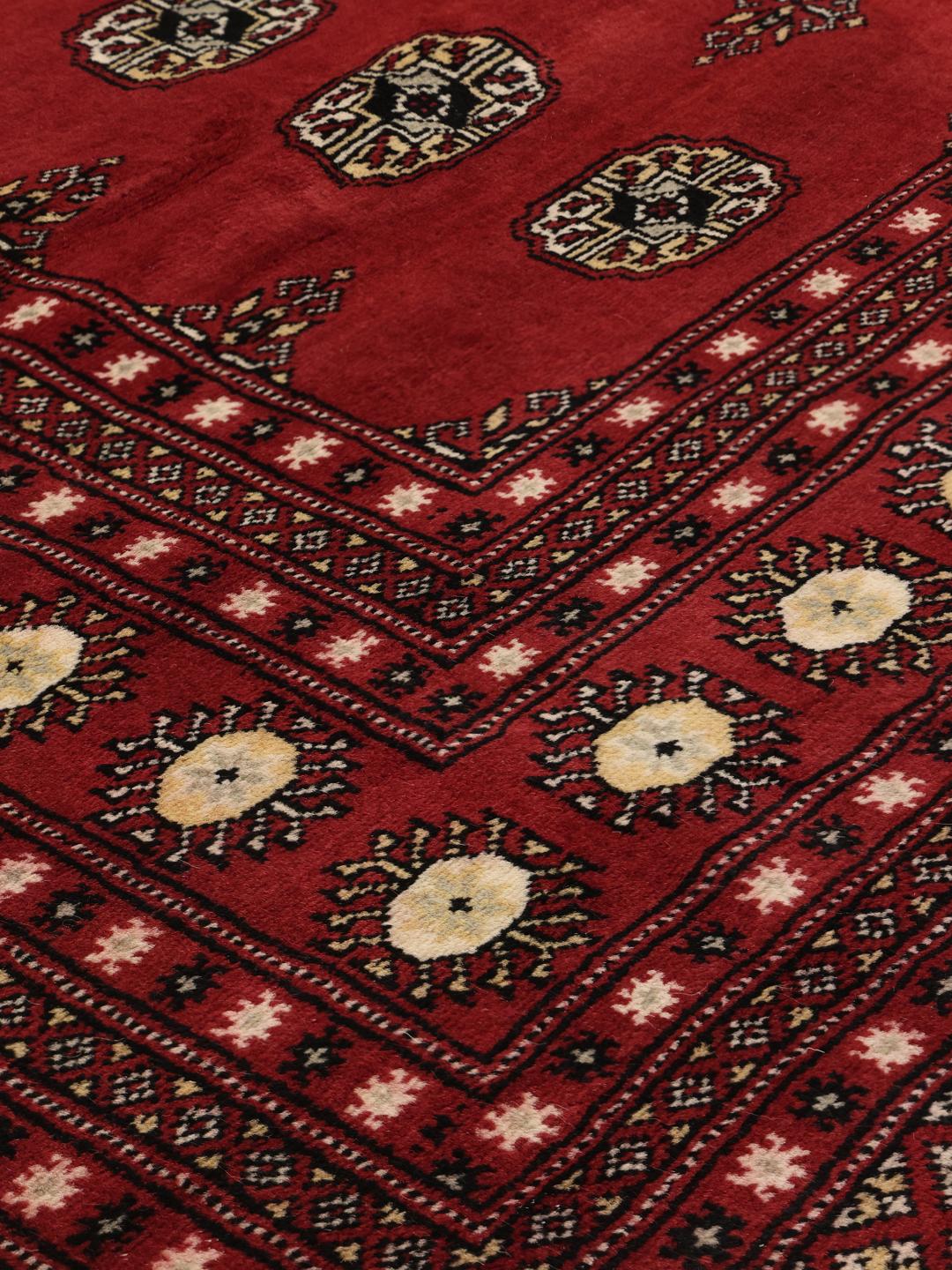
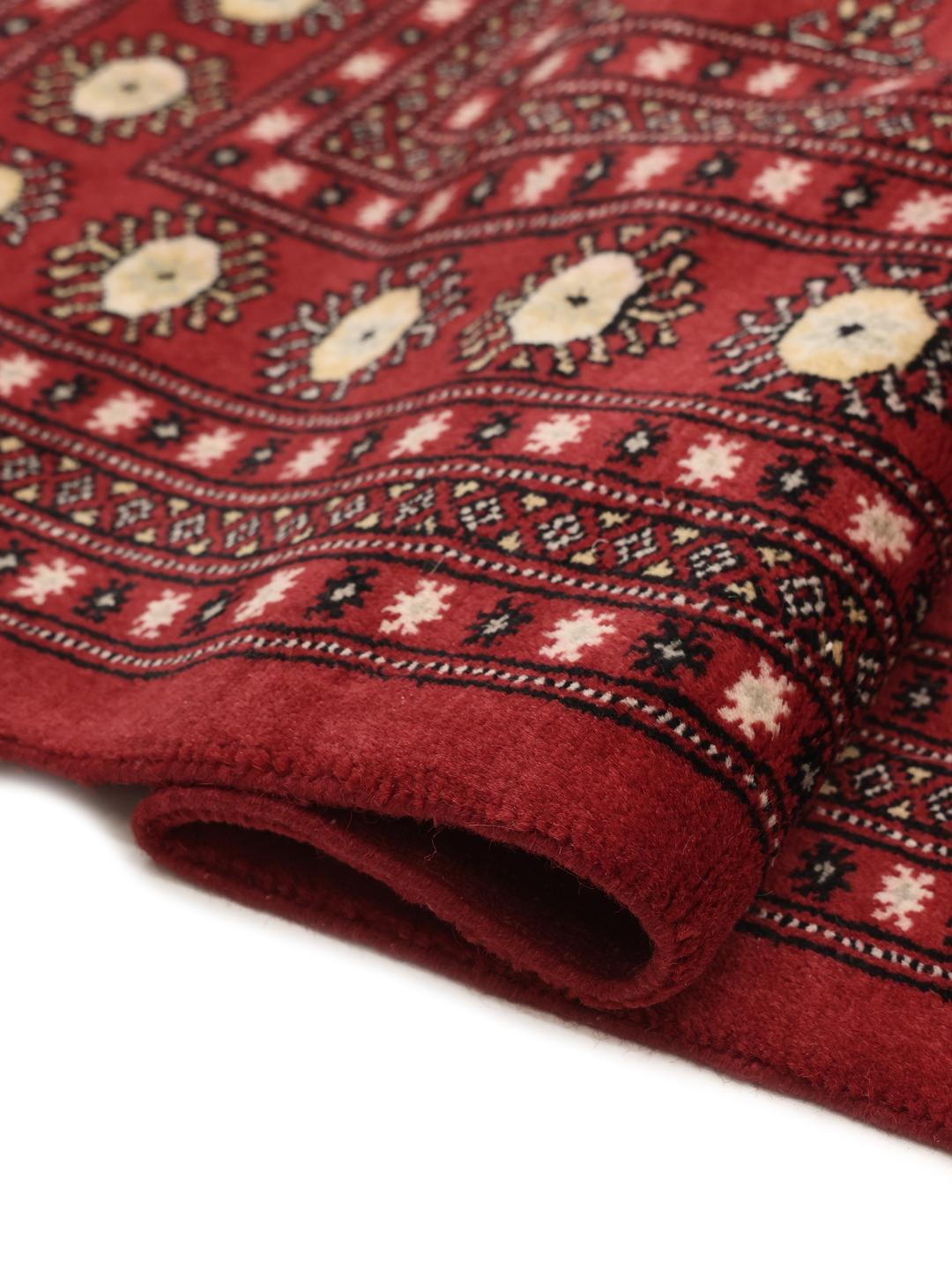
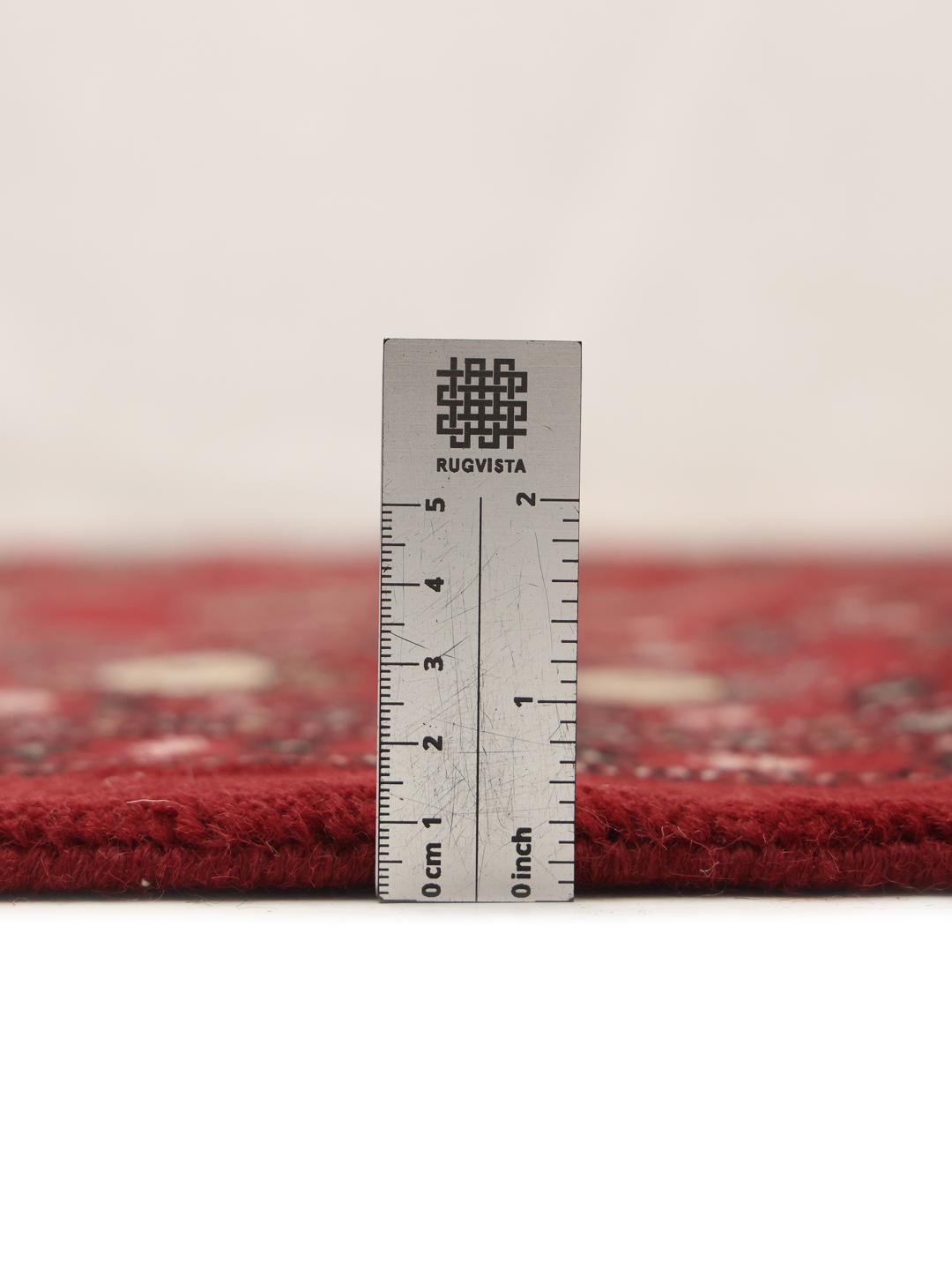
The '2ply' designation is a mark of technical excellence in this tradition. By using two strands of wool twisted together for the pile, weavers create a surface that is not only denser and more luxurious but also significantly more durable. This specific construction method ensures that the rug retains its colour depth and structural integrity, making it a reliable choice for areas of the home that see regular use.
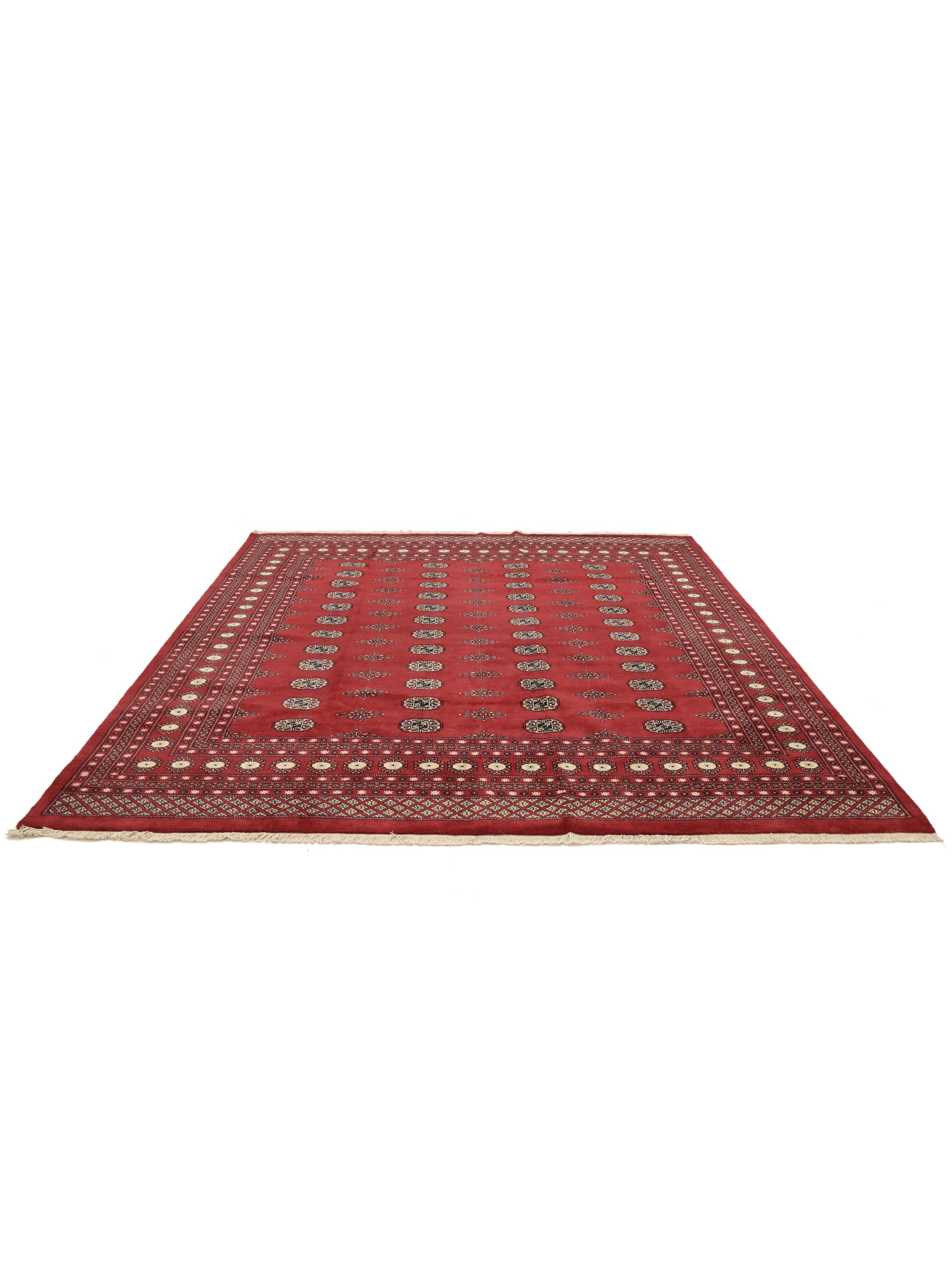
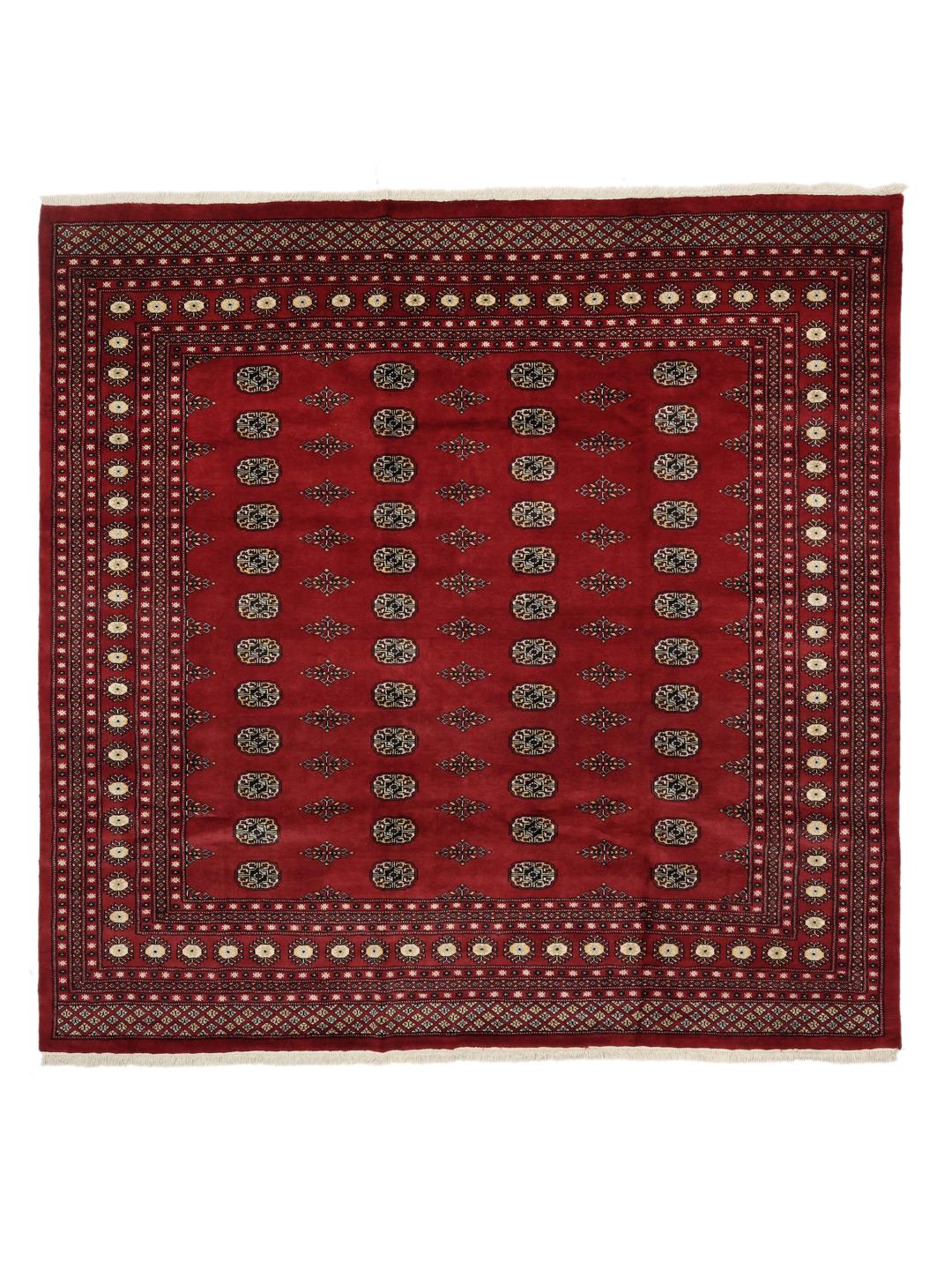
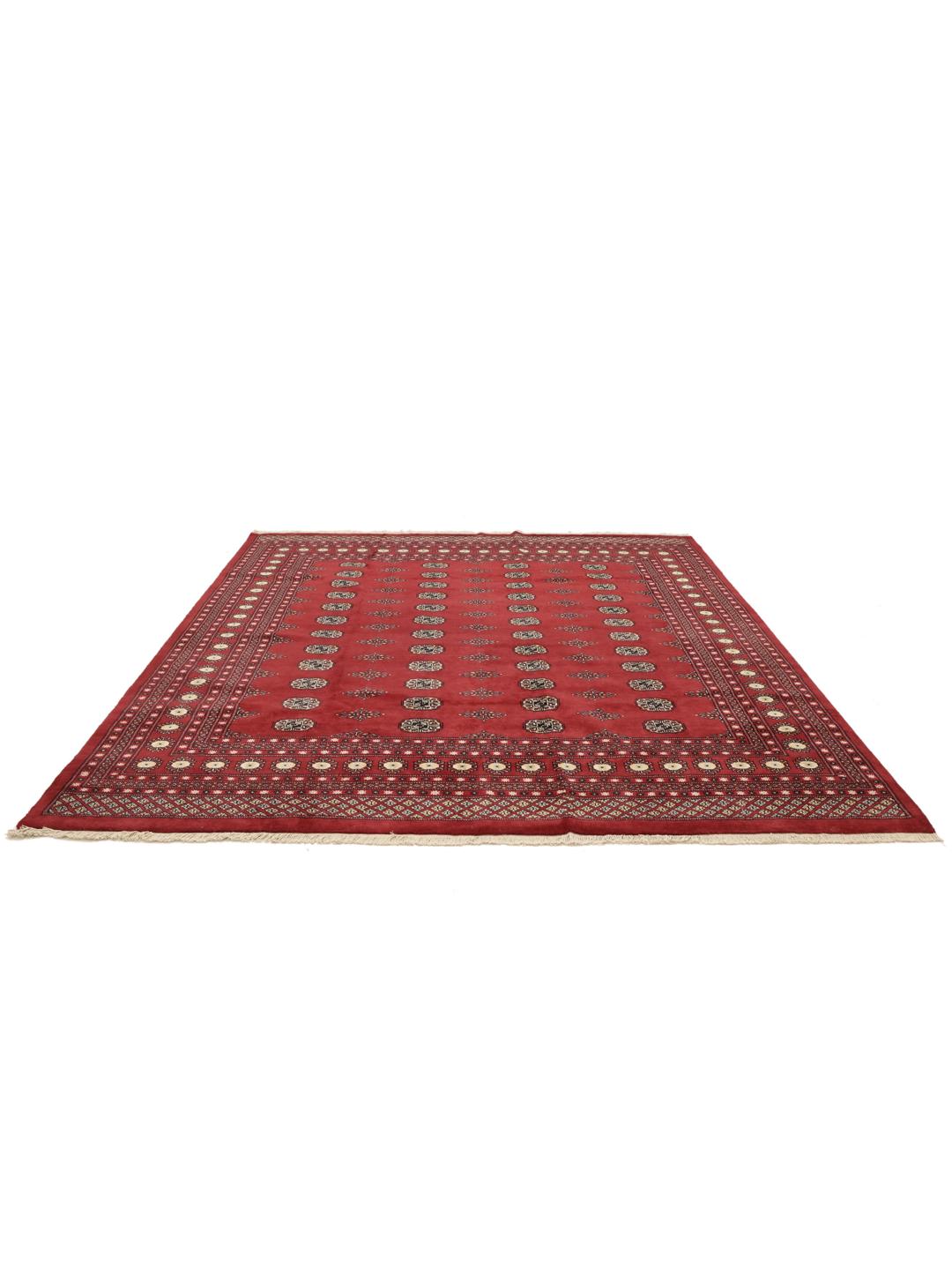
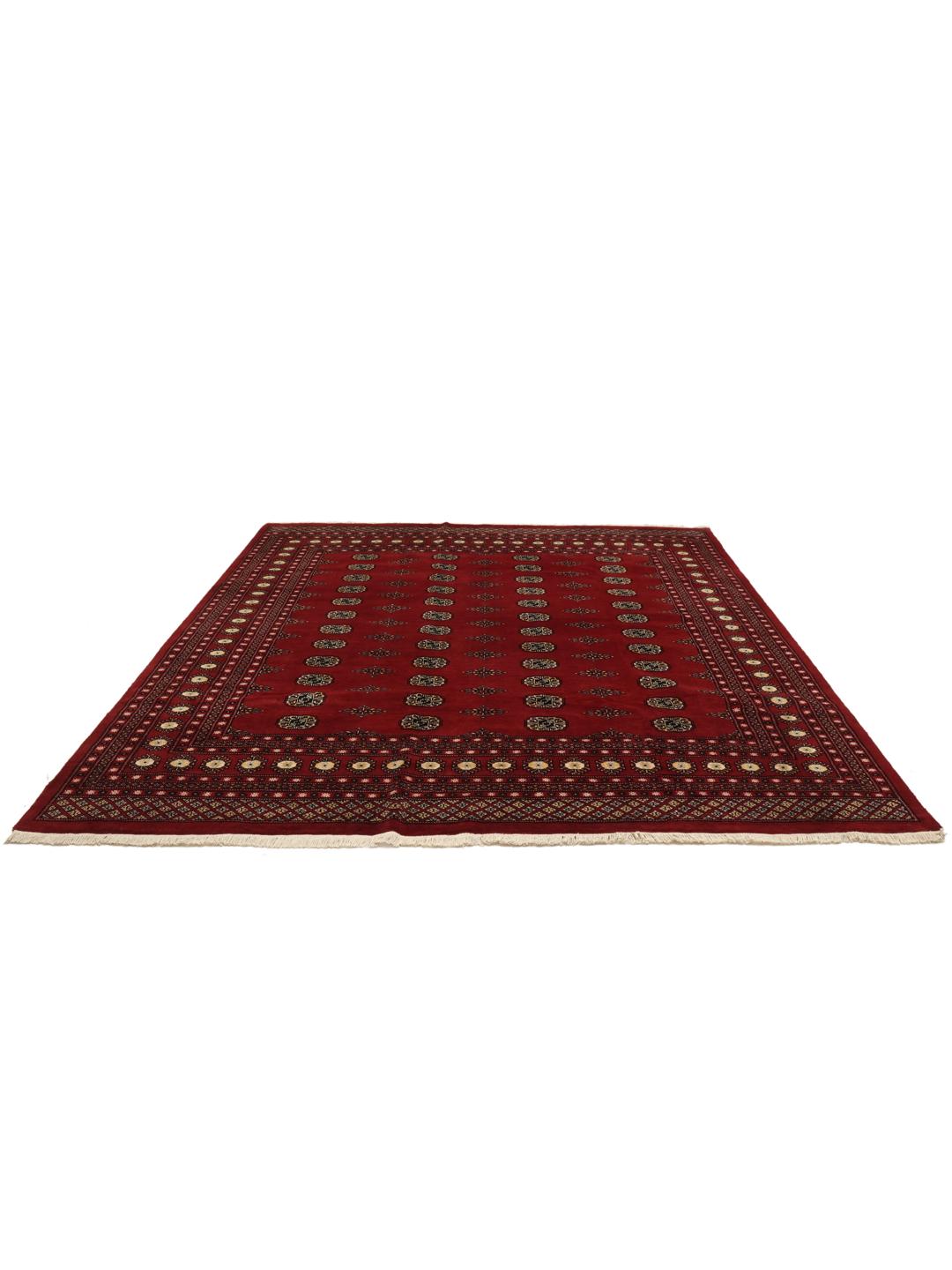
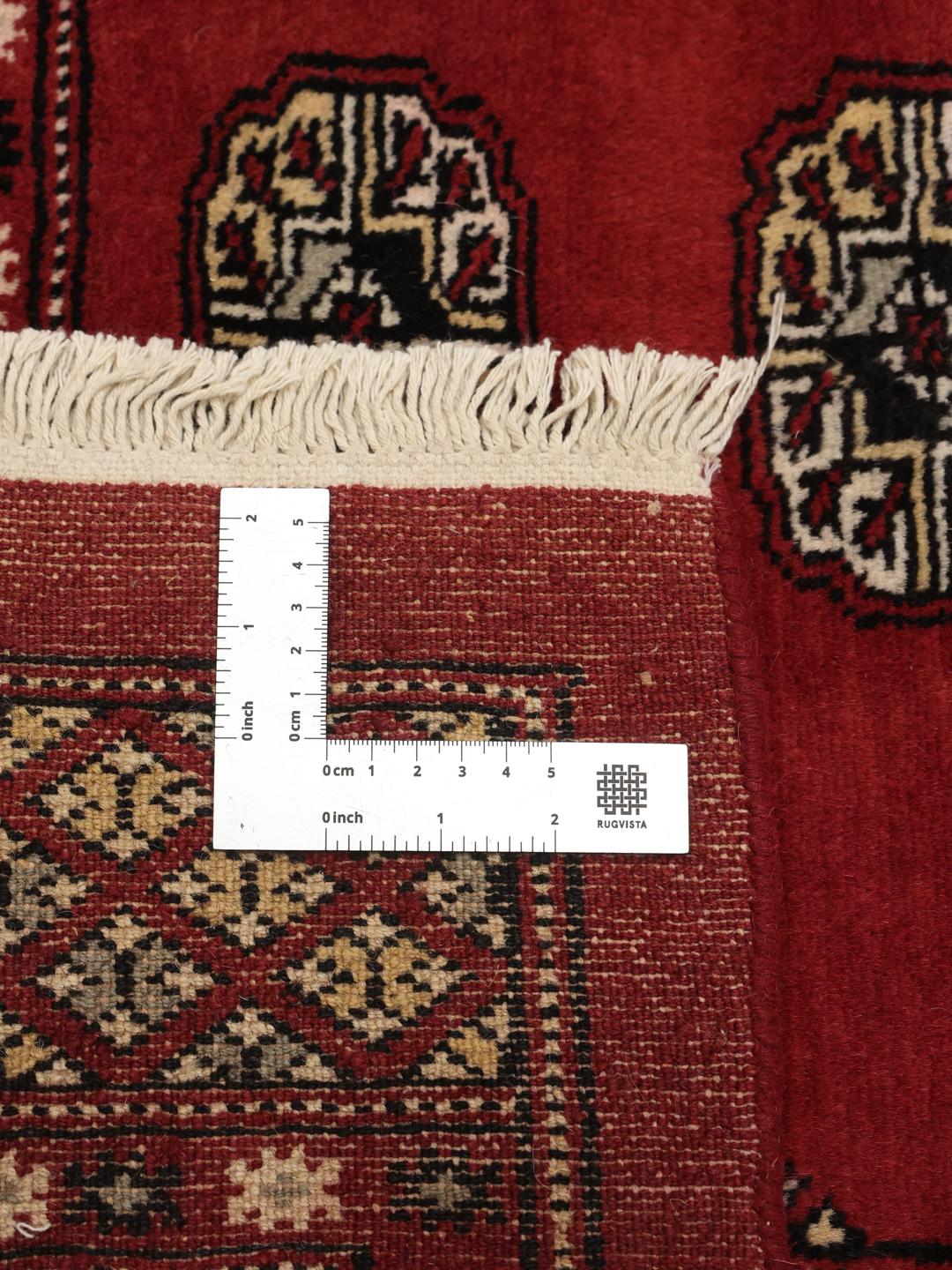
The visual language of the Bokhara is unmistakable, characterised by the repeating gul motif. These elephant-foot shaped medallions are arranged in precise rows across the field, framed by elaborate, formal borders. The symmetry and rhythm of these patterns are intended to create a sense of order and peace, while the deep red palette is a traditional hallmark, symbolising warmth and vitality in Middle Eastern textile design.
Owning a hand-knotted rug from this tradition is an investment in cultural heritage and human skill. Because each rug is created without the use of machines, it carries the unique signature of the weaver, making it a piece of art rather than a mass-produced item. Collectors value these rugs for their ability to bring a sense of history into a home, offering a connection to centuries of refined craft.