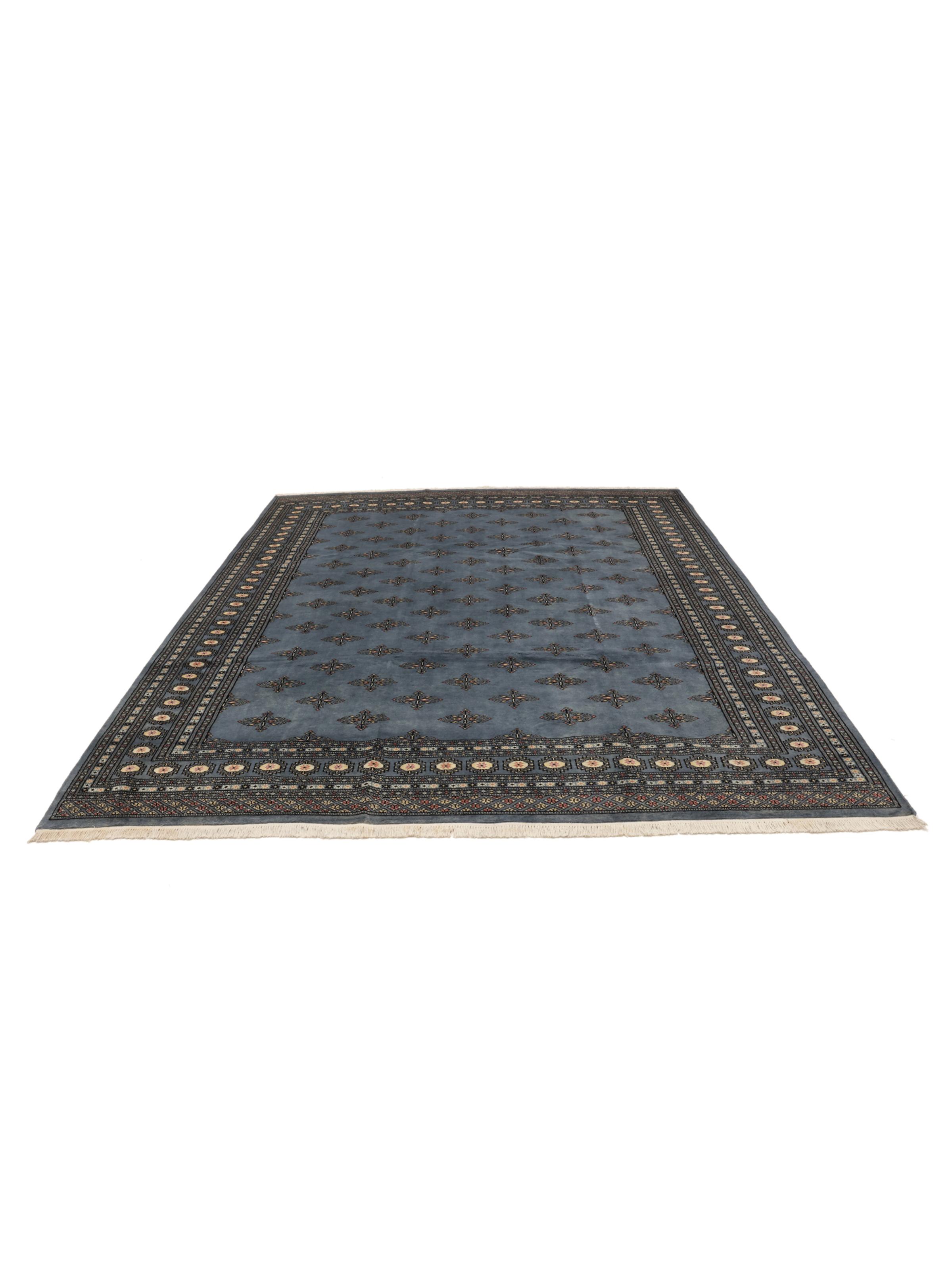
Bokhara rugs take their name from the ancient Silk Road city of Bukhara in Central Asia, a historical hub of textile trade and culture. While the style originated in the nomadic traditions of the region, the finest examples today are primarily woven in Pakistan. This evolution reflects a long history of craft migration, where traditional techniques were refined and adapted to meet the tastes of a global audience while maintaining their deep cultural roots.
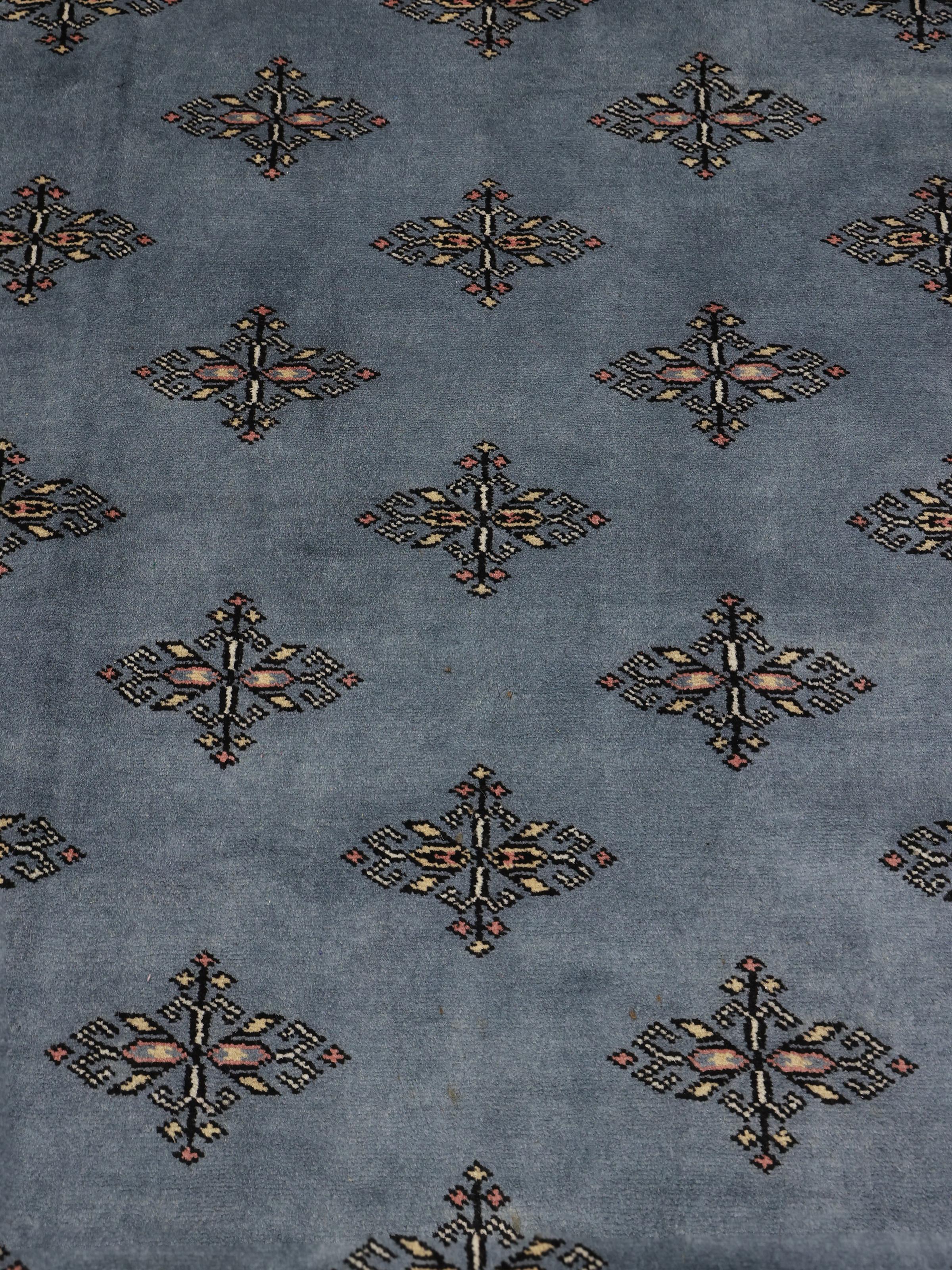
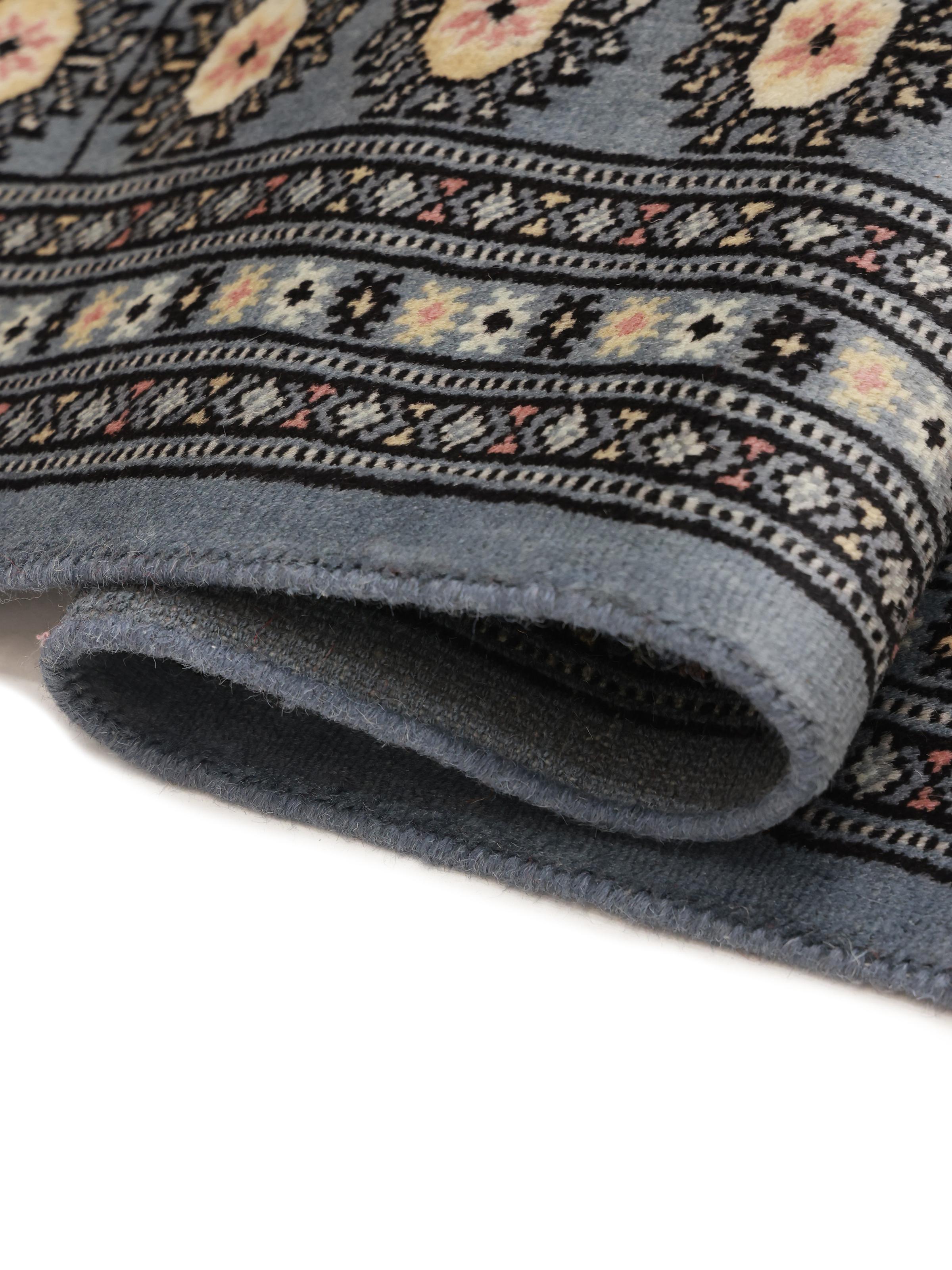
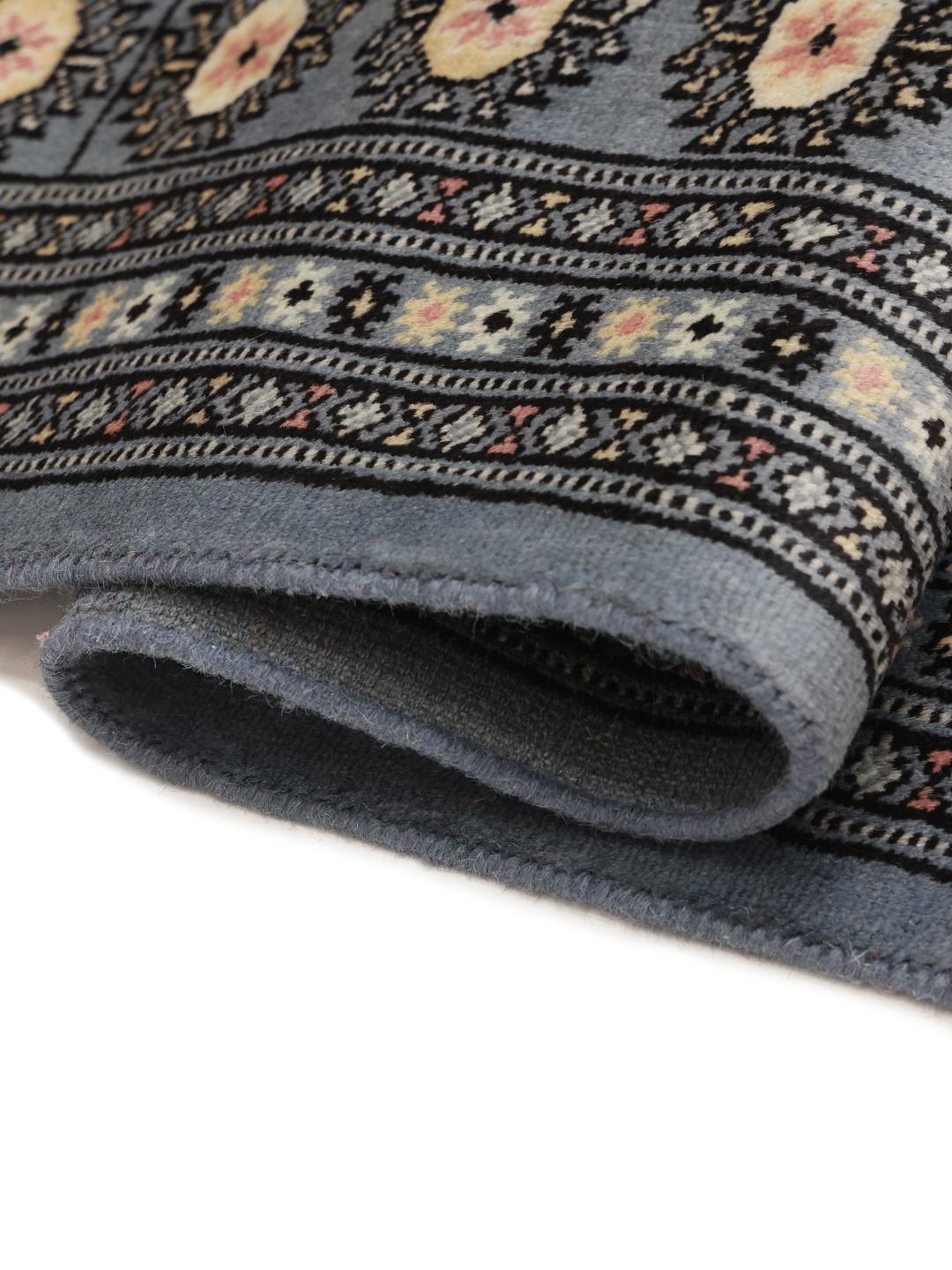
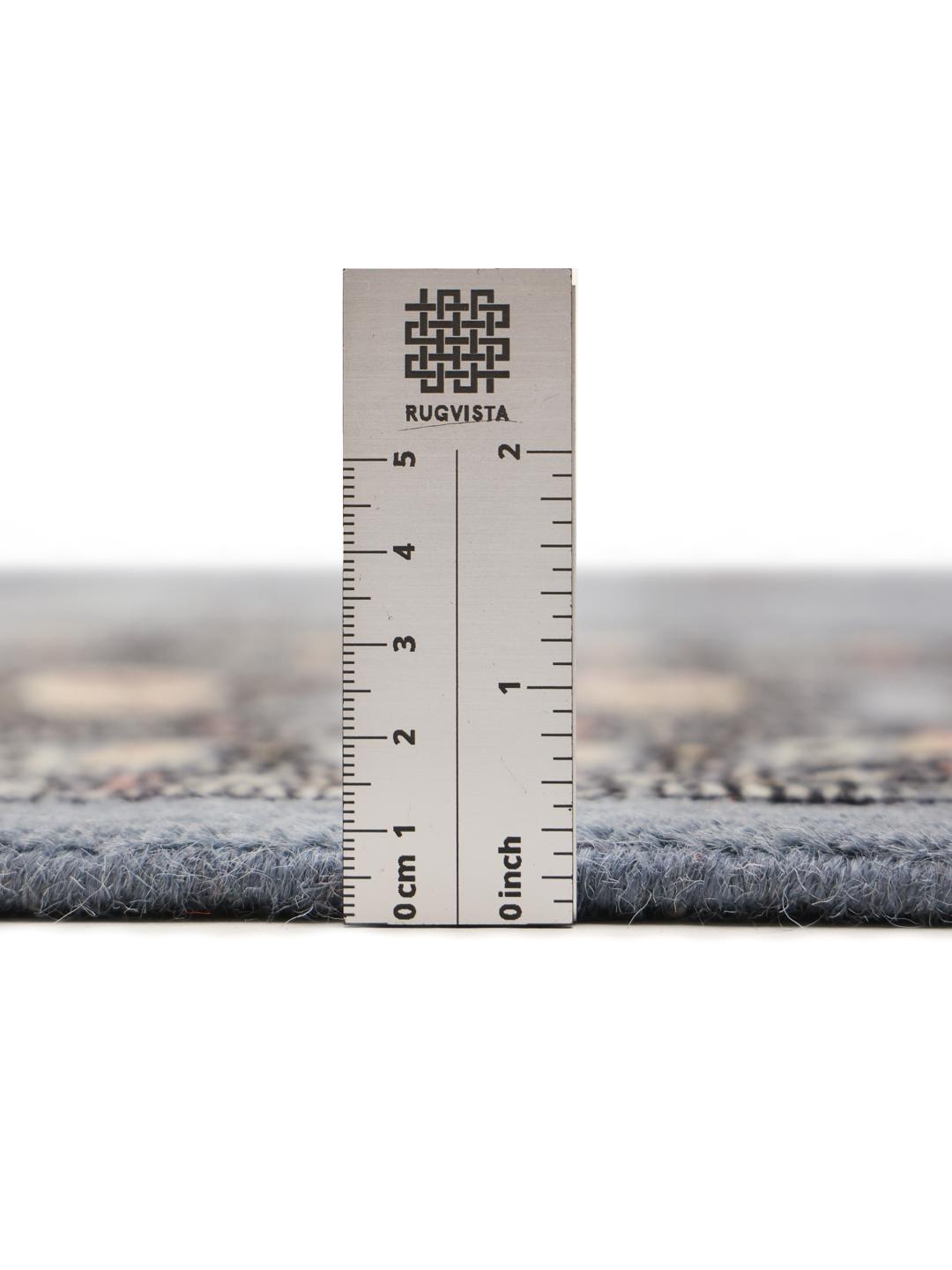
The '2ply' designation refers to the construction of the pile, where two strands of wool are twisted together before being knotted. This technical choice is significant because it produces a pile that is not only denser and more lustrous but also far more resilient than single-ply alternatives. For the owner, this means a softer feel and a surface that resists wear, ensuring the rug remains a beautiful fixture in the home for years to come.
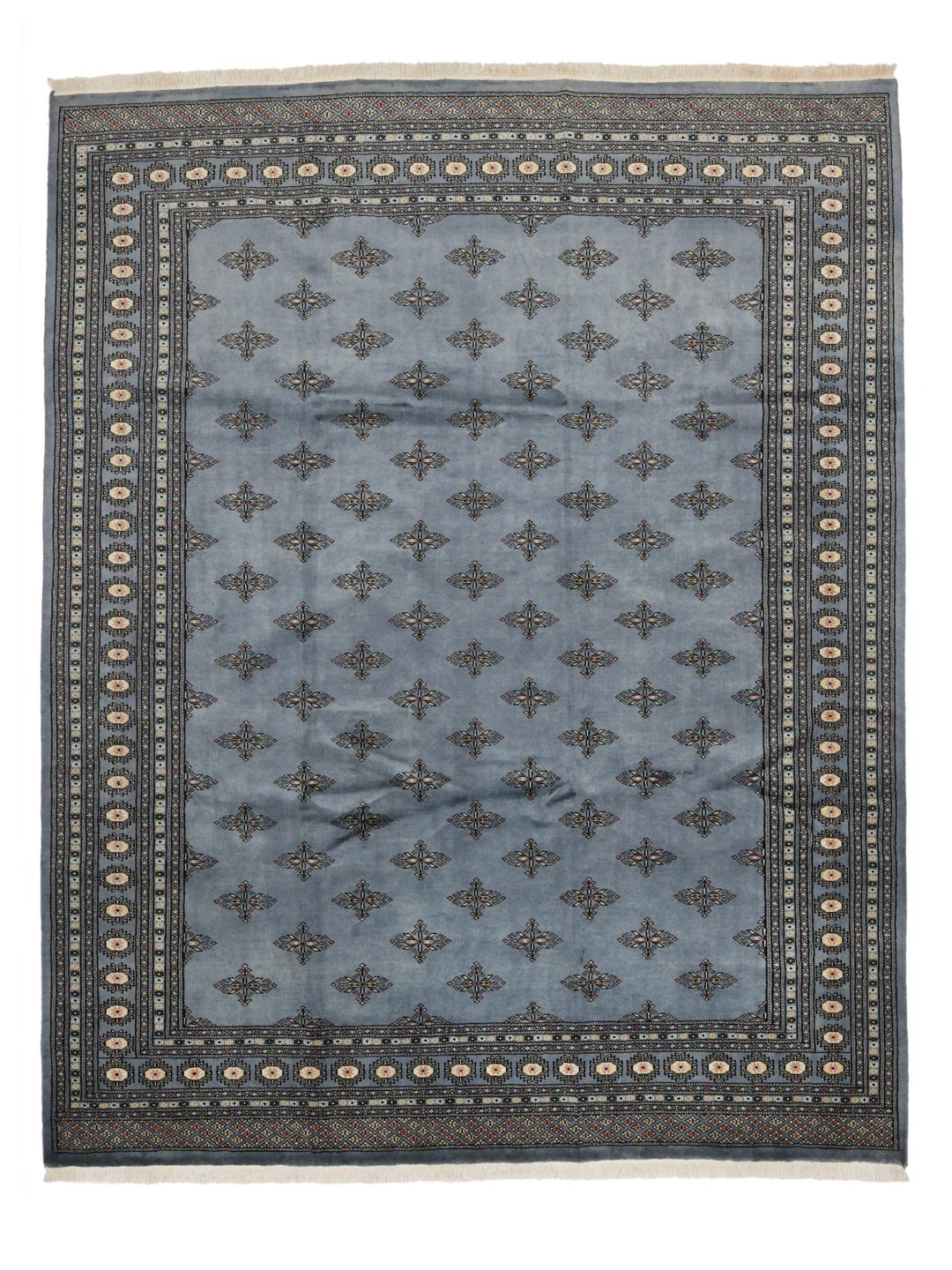
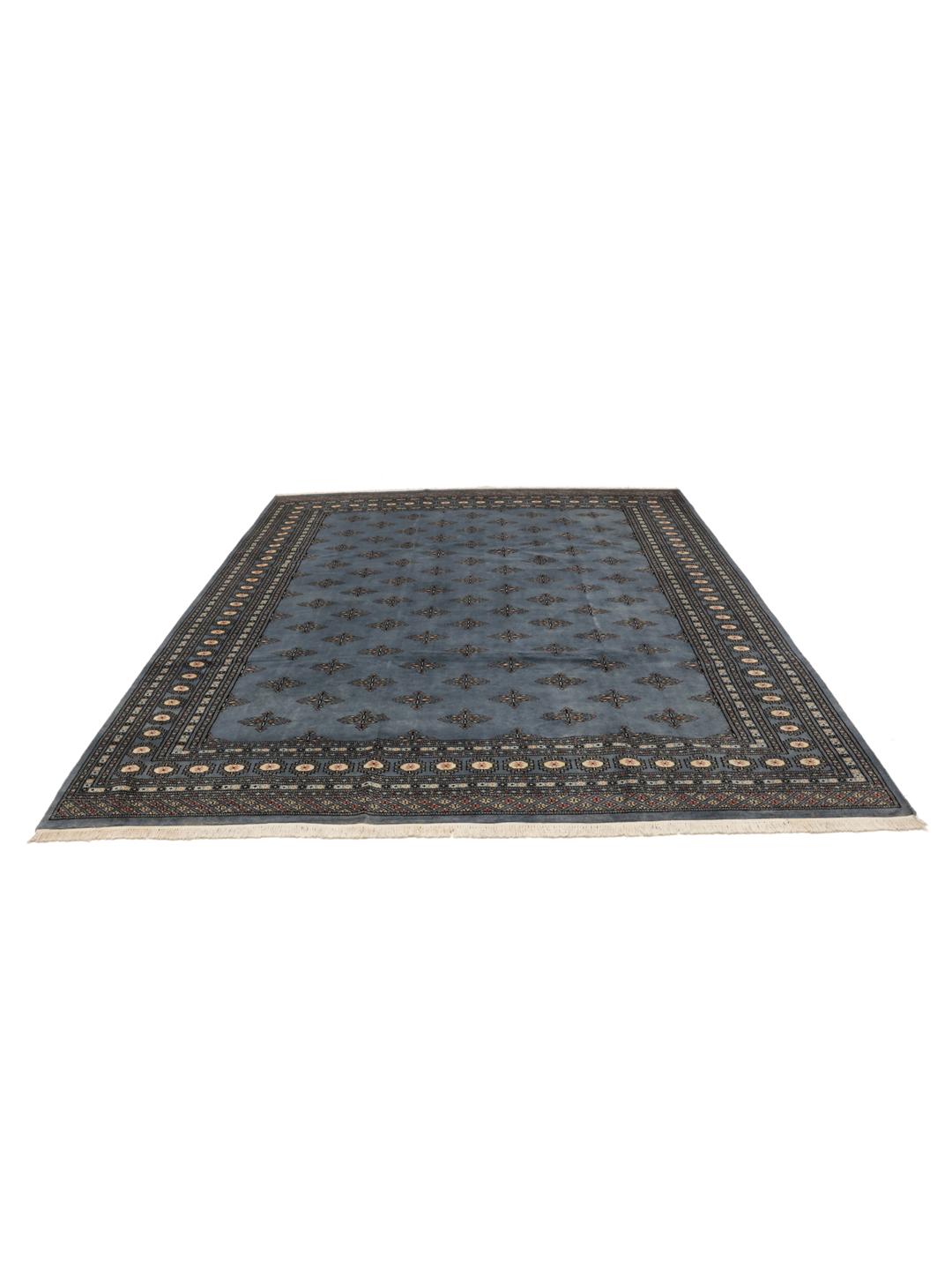
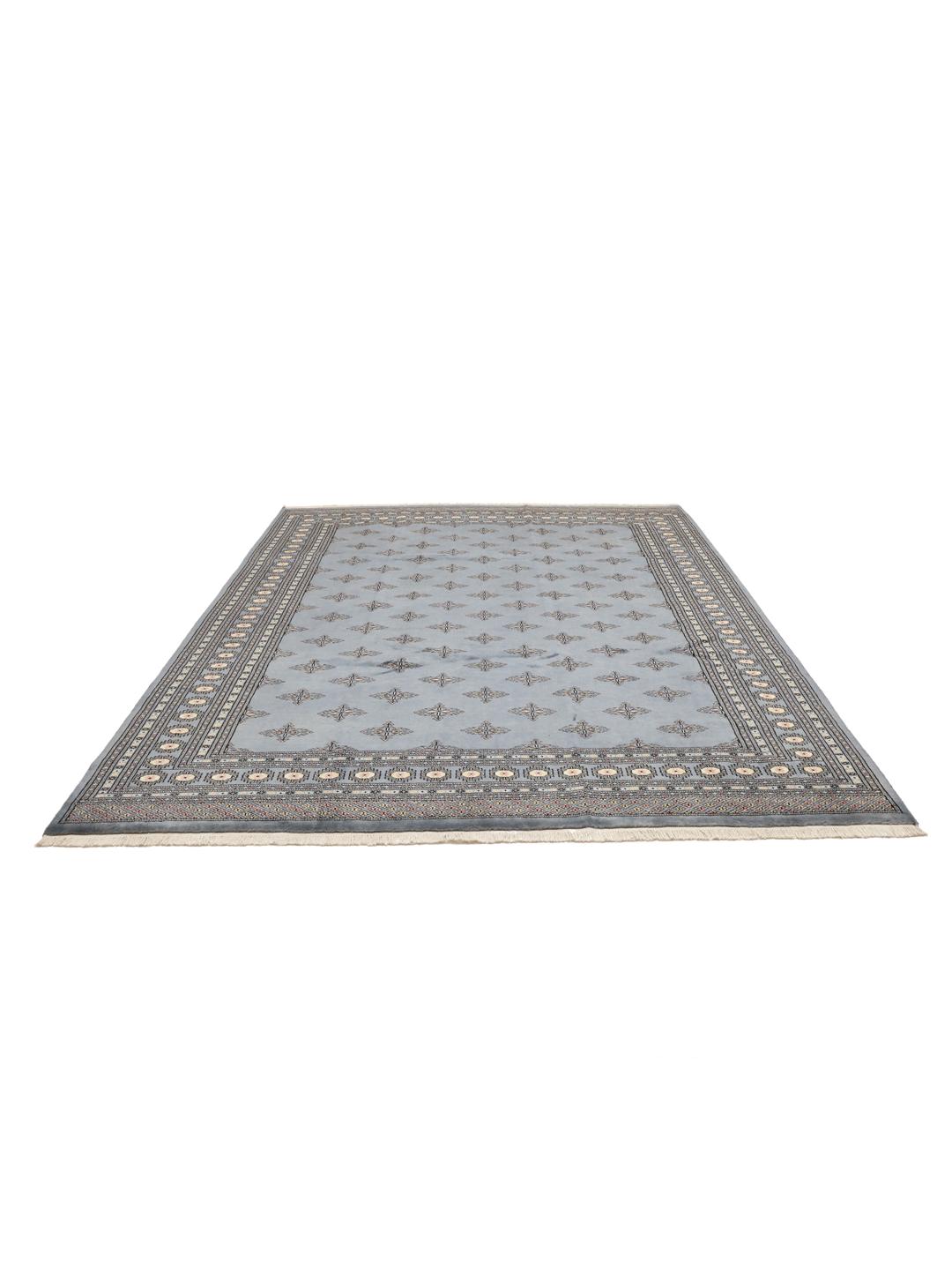
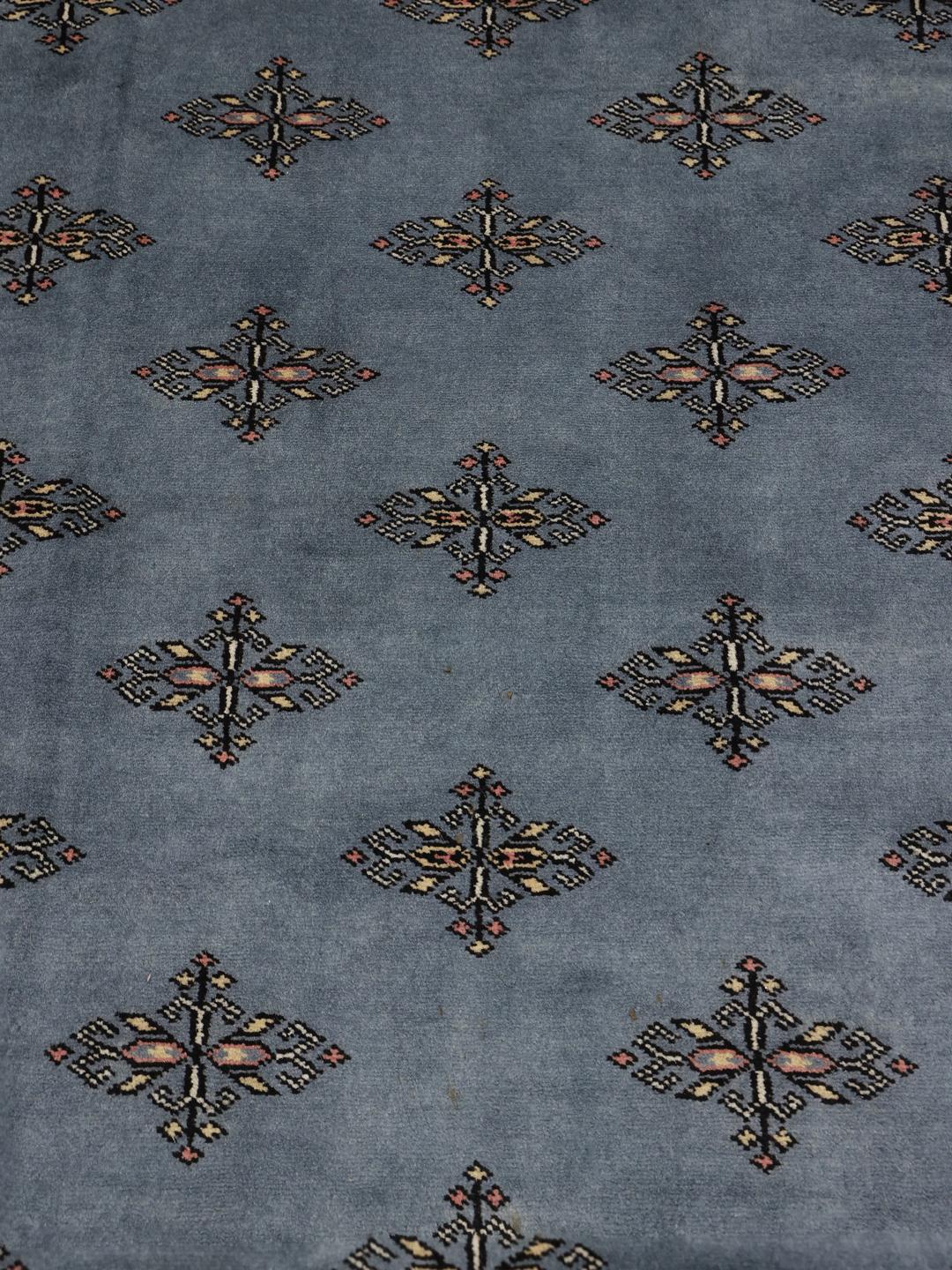
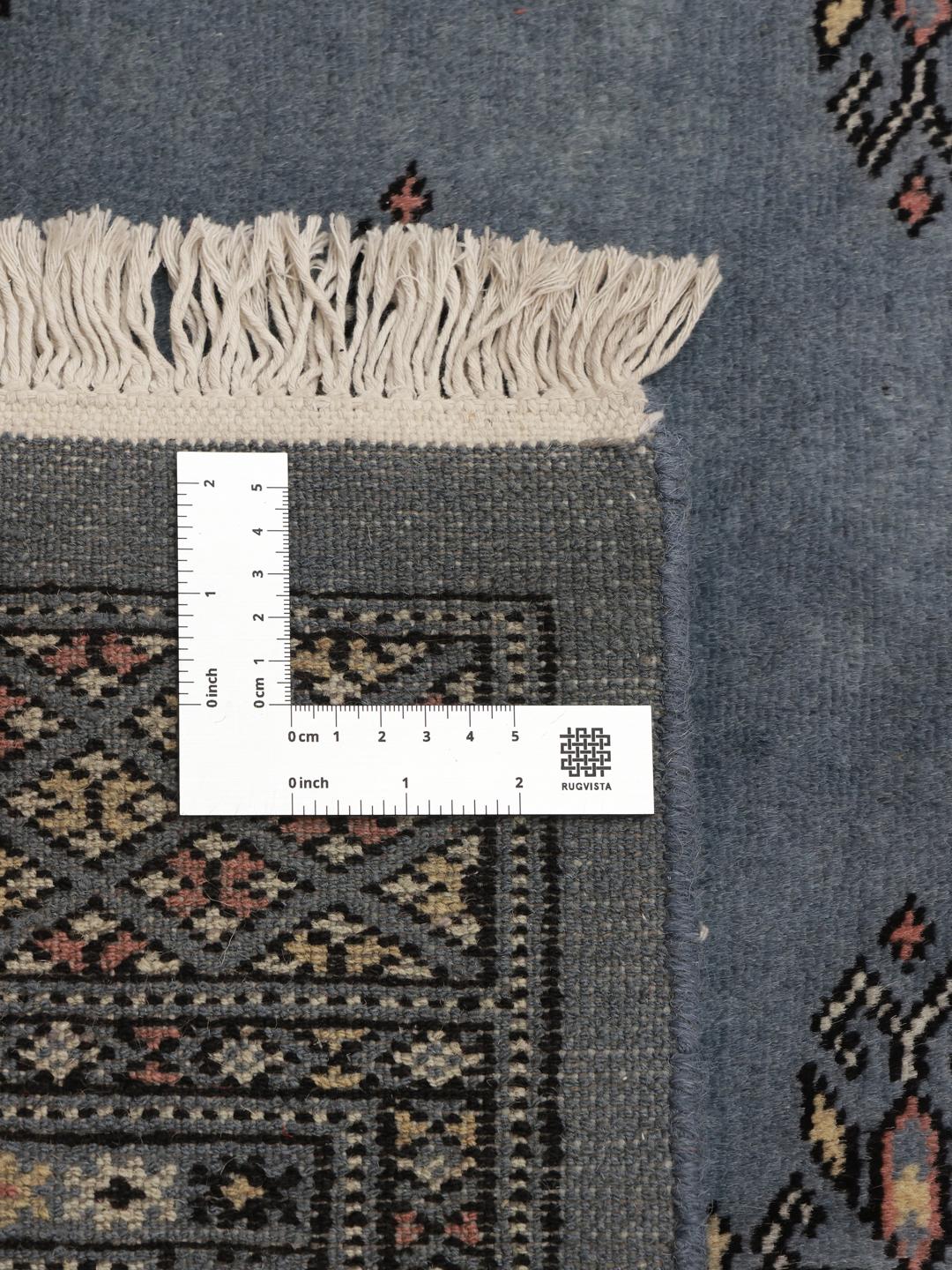
Signature design elements of the Bokhara style include the repeating 'gul' motif, which often takes the form of octagonal or elephant-foot shapes arranged in orderly rows across the field. These motifs are typically framed by elaborate, multi-layered borders that provide a sense of balance and structure. In this particular piece, the choice of a soft blue field offers a fresh, modern interpretation of these traditional patterns, making it a distinctive example within the genre.
Rugs from this tradition are highly valued by collectors for their consistency, precision, and the cultural narrative they carry. Owning a hand-knotted piece is an investment in human skill, representing a bridge between ancient techniques and contemporary living. It is a choice that prioritises lasting quality over fleeting trends, offering a sense of heritage and connection to the artisans who dedicated their time to perfecting every single knot.