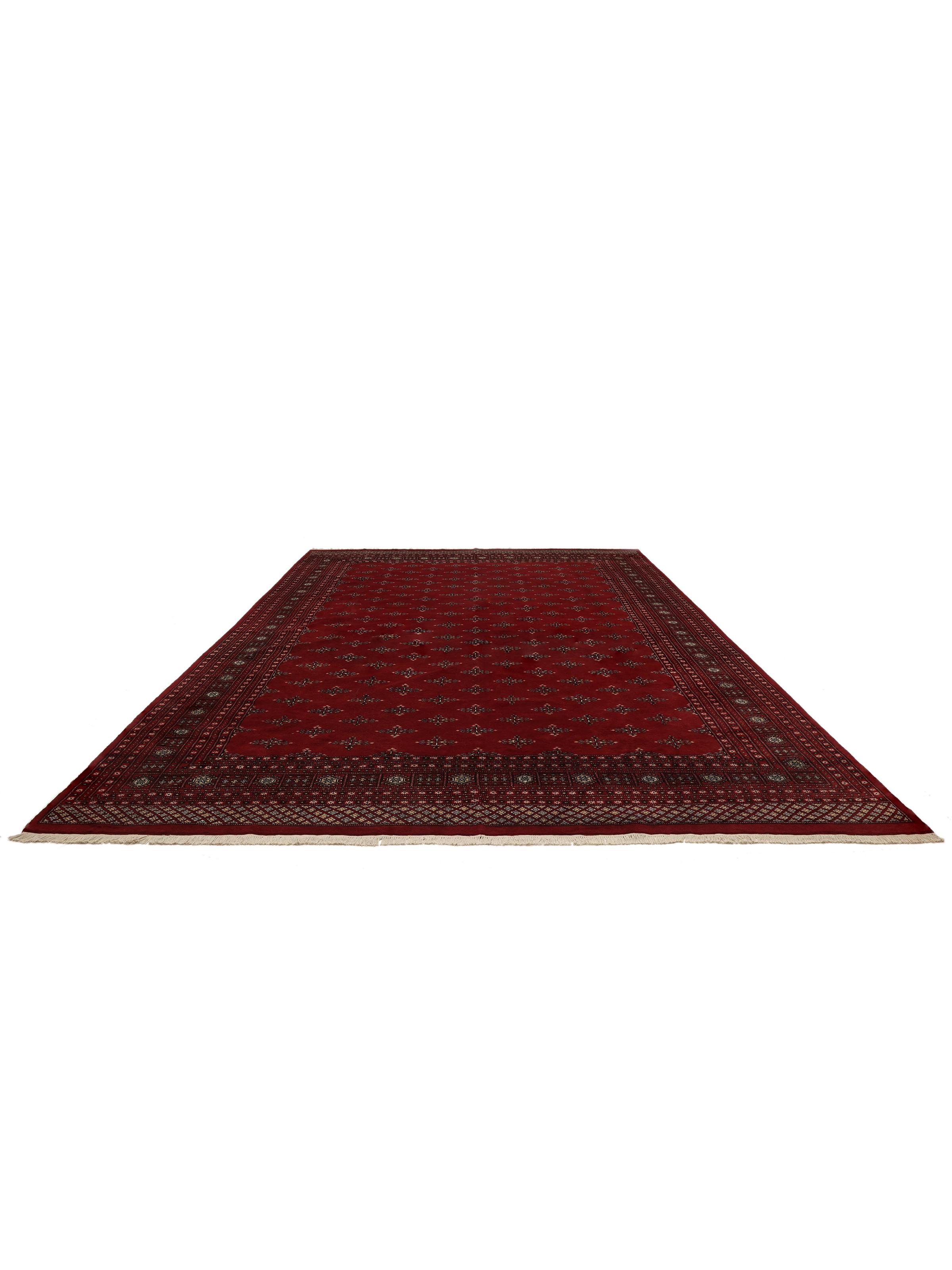
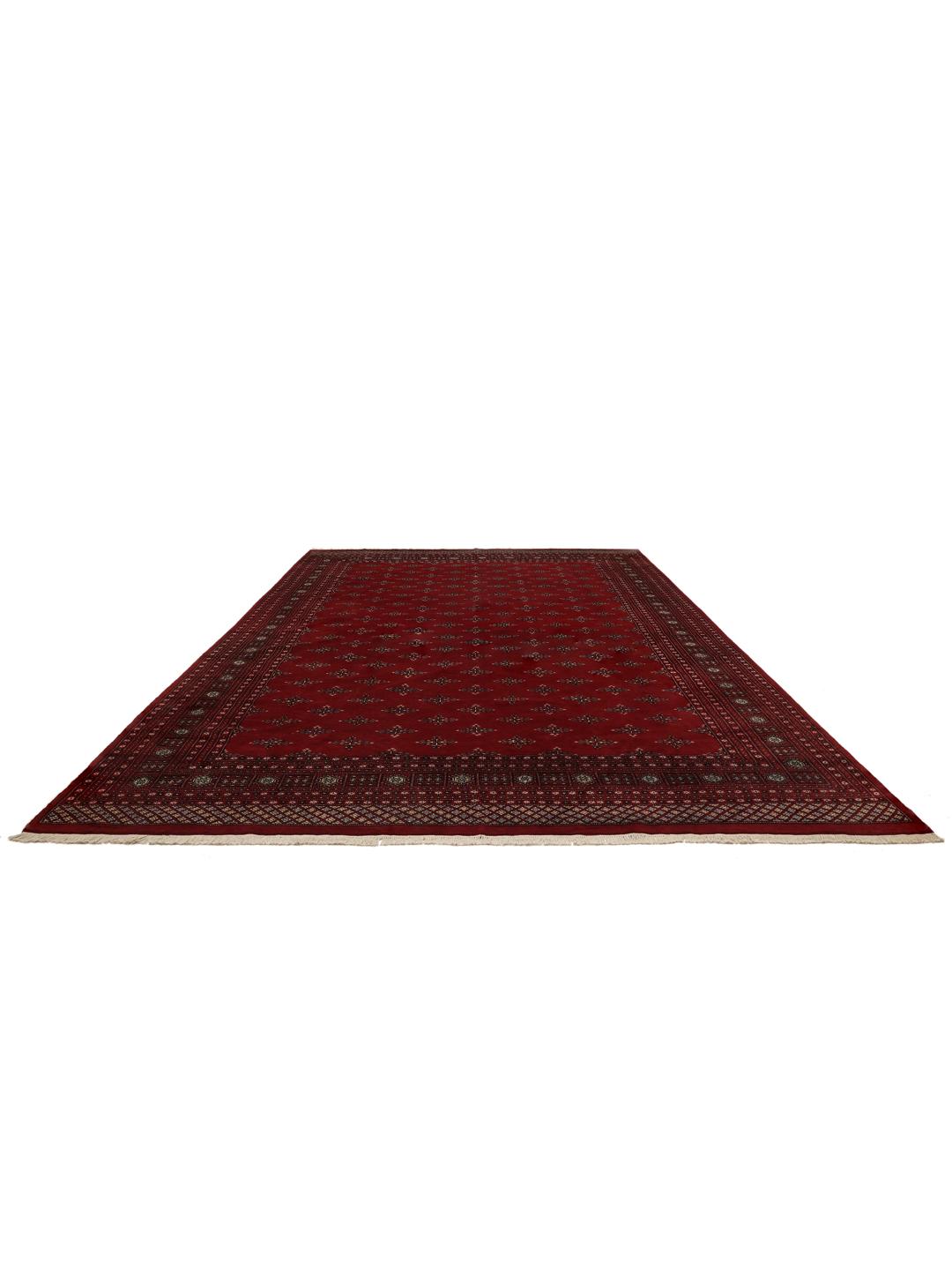
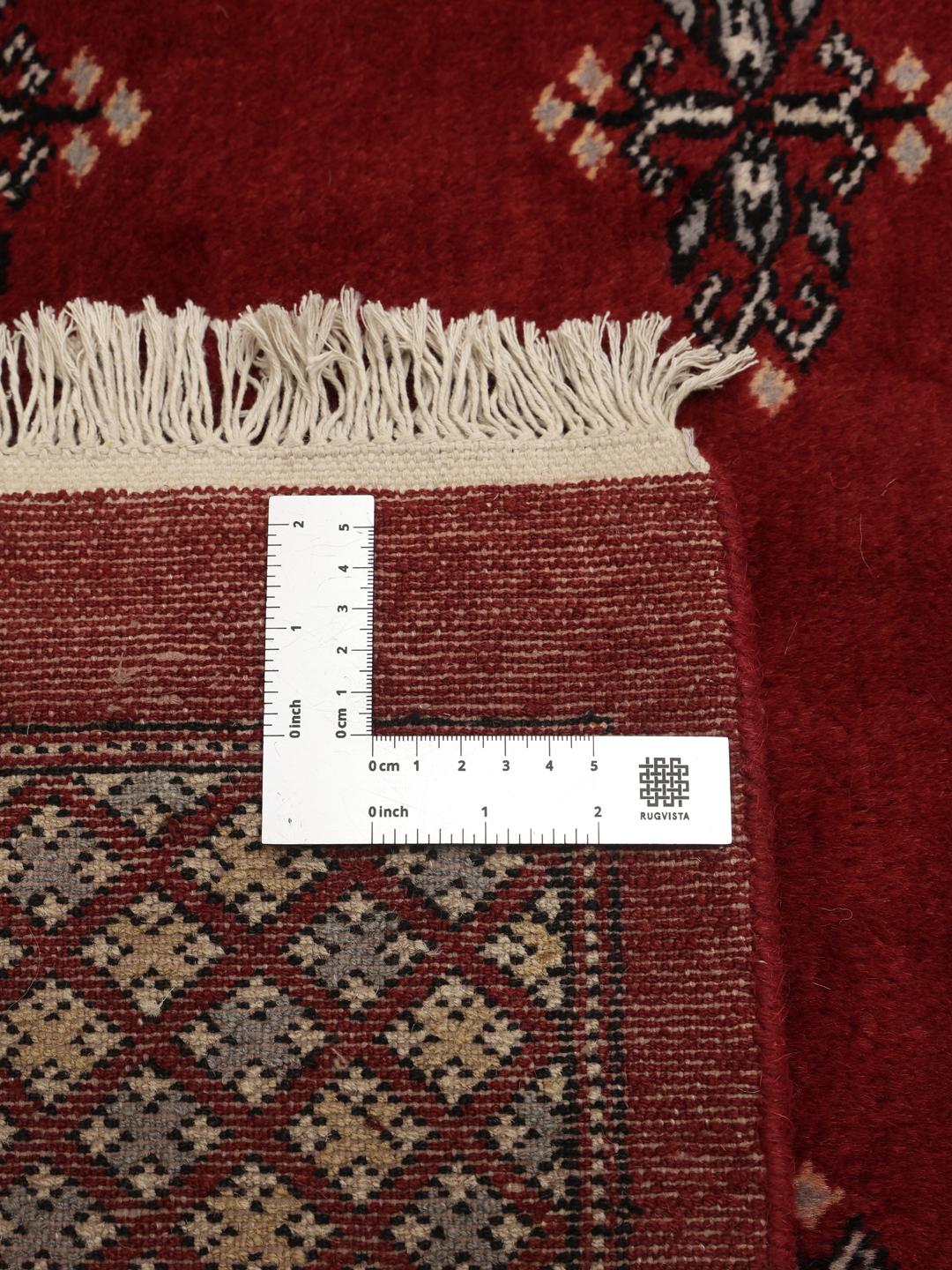
The Bokhara rug tradition is deeply rooted in the history of Central Asian nomadic tribes, though the finest examples today are expertly produced in Pakistan. These rugs take their name from the ancient Silk Road city of Bukhara, which served as a historic hub for trade, allowing these distinct designs to influence and evolve across borders for centuries.
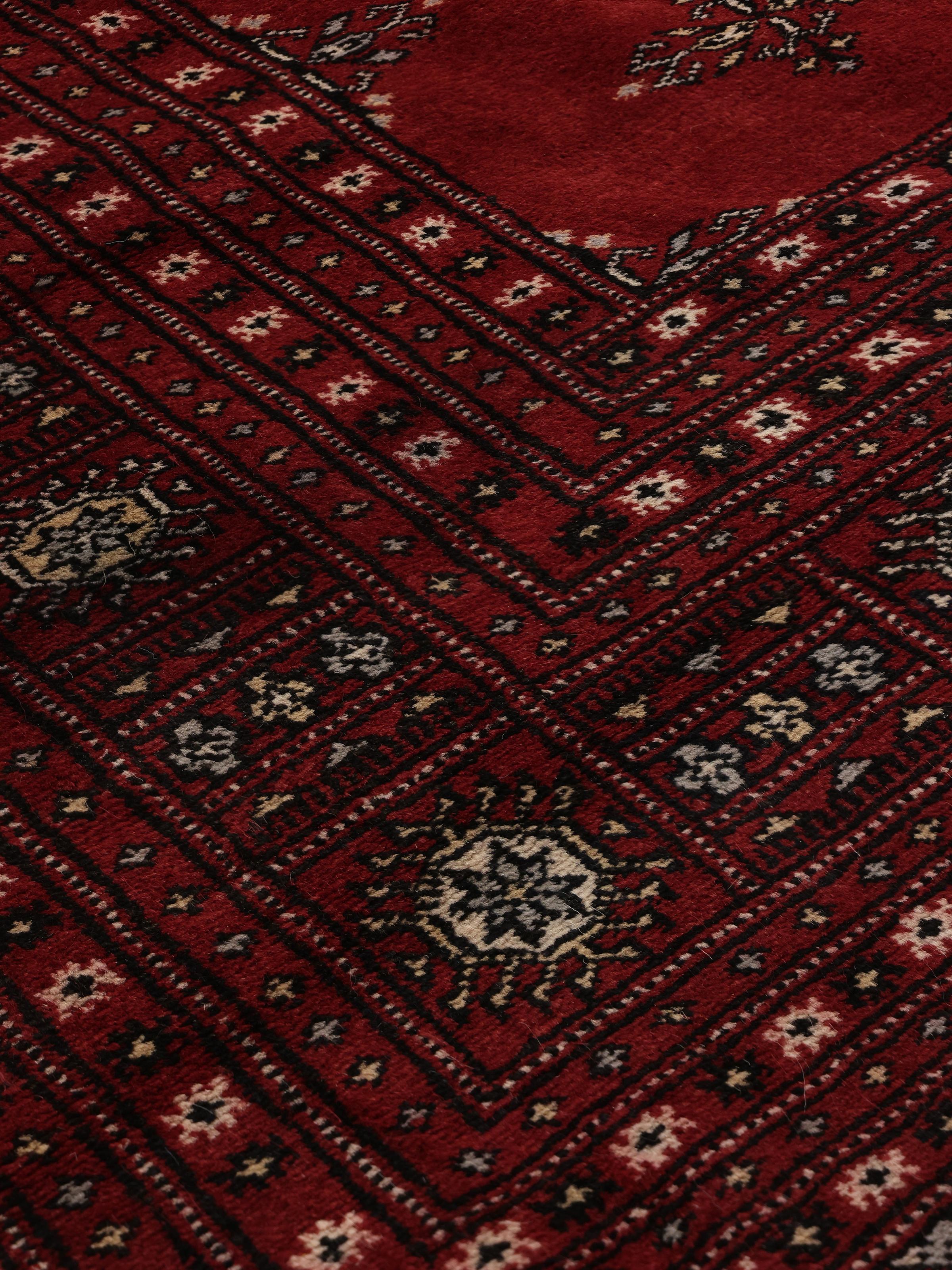
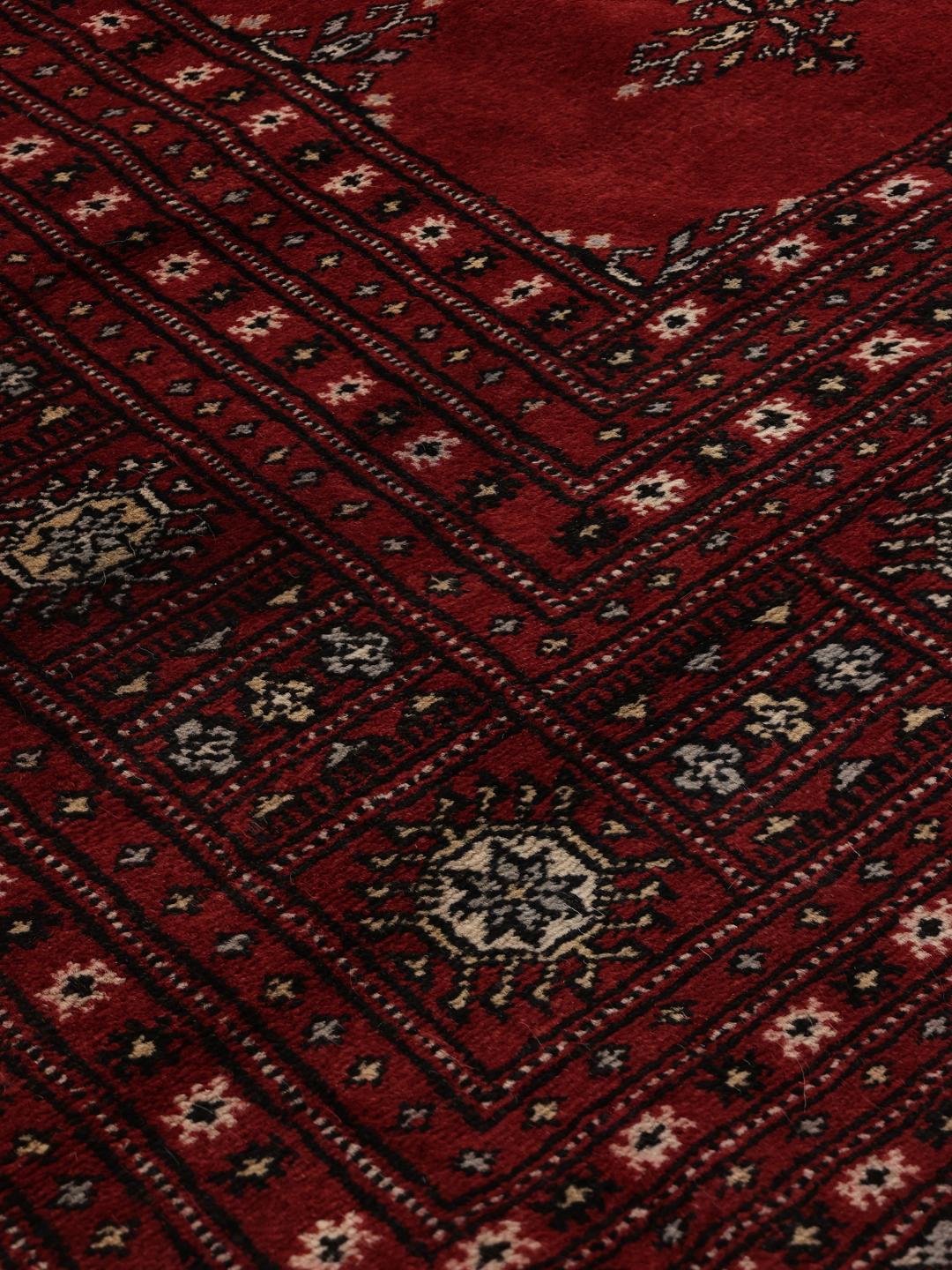
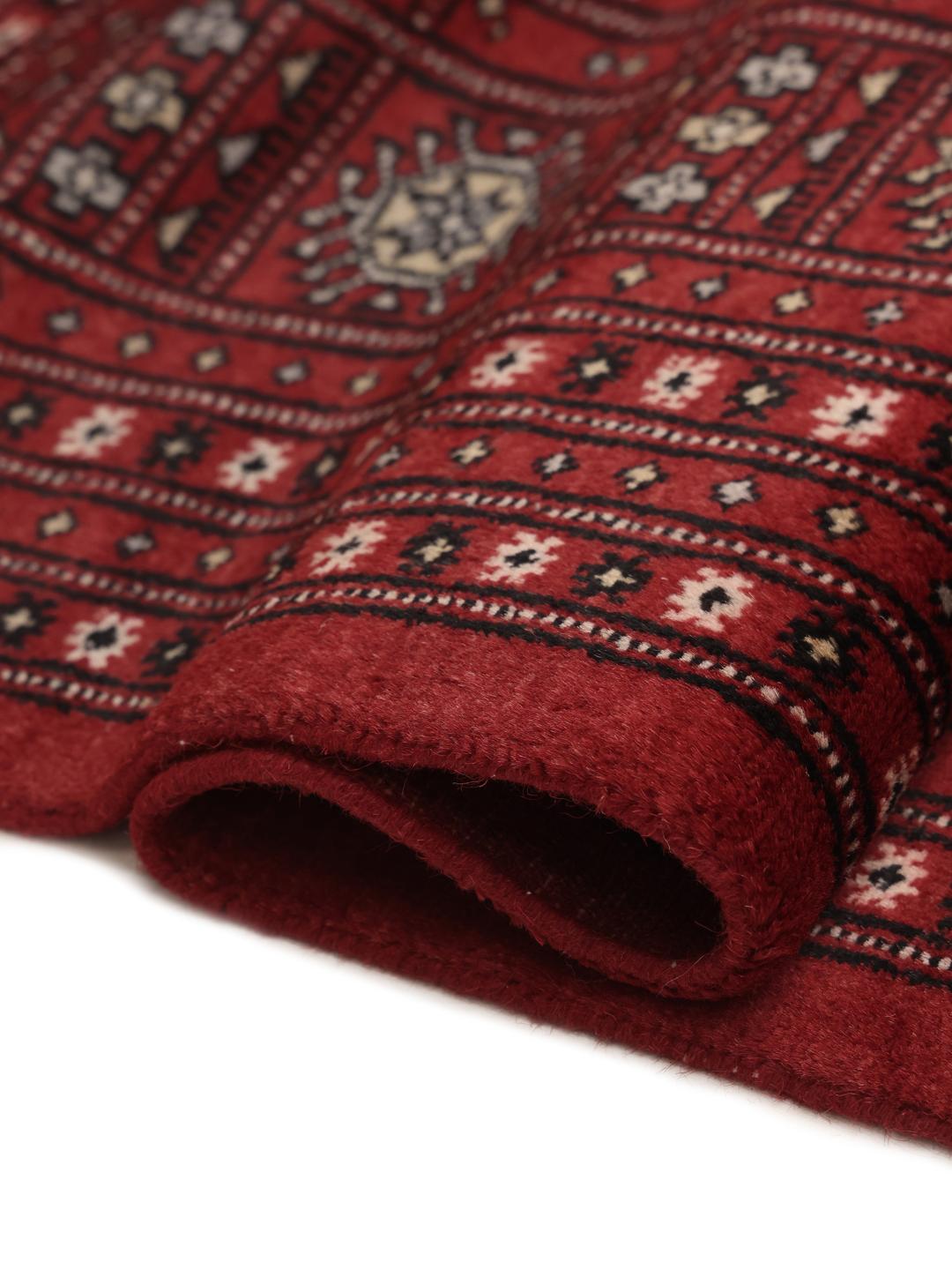
The term 2ply refers to the construction of the Wool pile, where two individual strands are twisted together before being knotted. This technical choice is significant because it produces a yarn that is more resilient and lustrous than single-ply alternatives, resulting in a pile that is both softer to the touch and significantly more durable over decades of use.
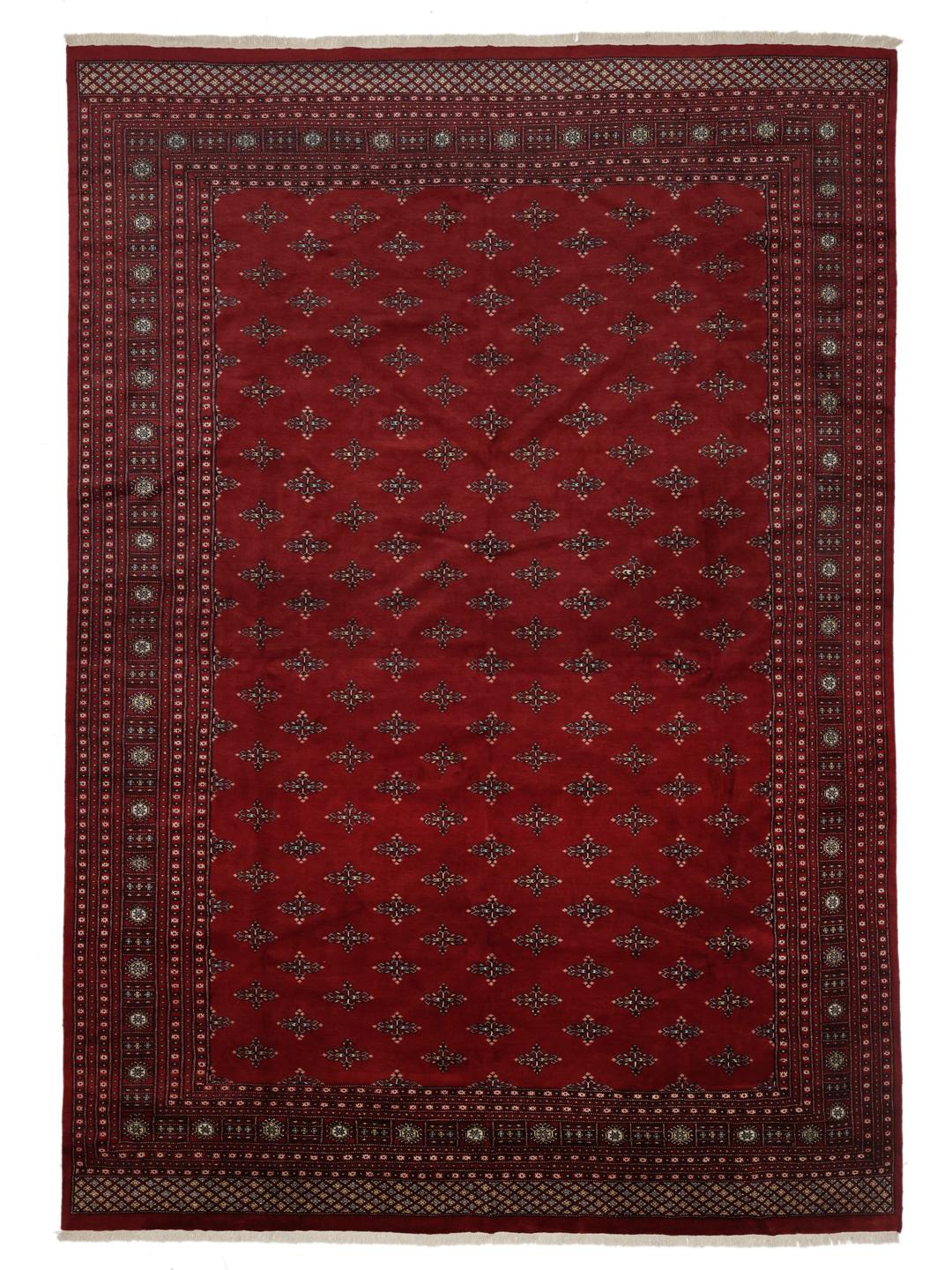
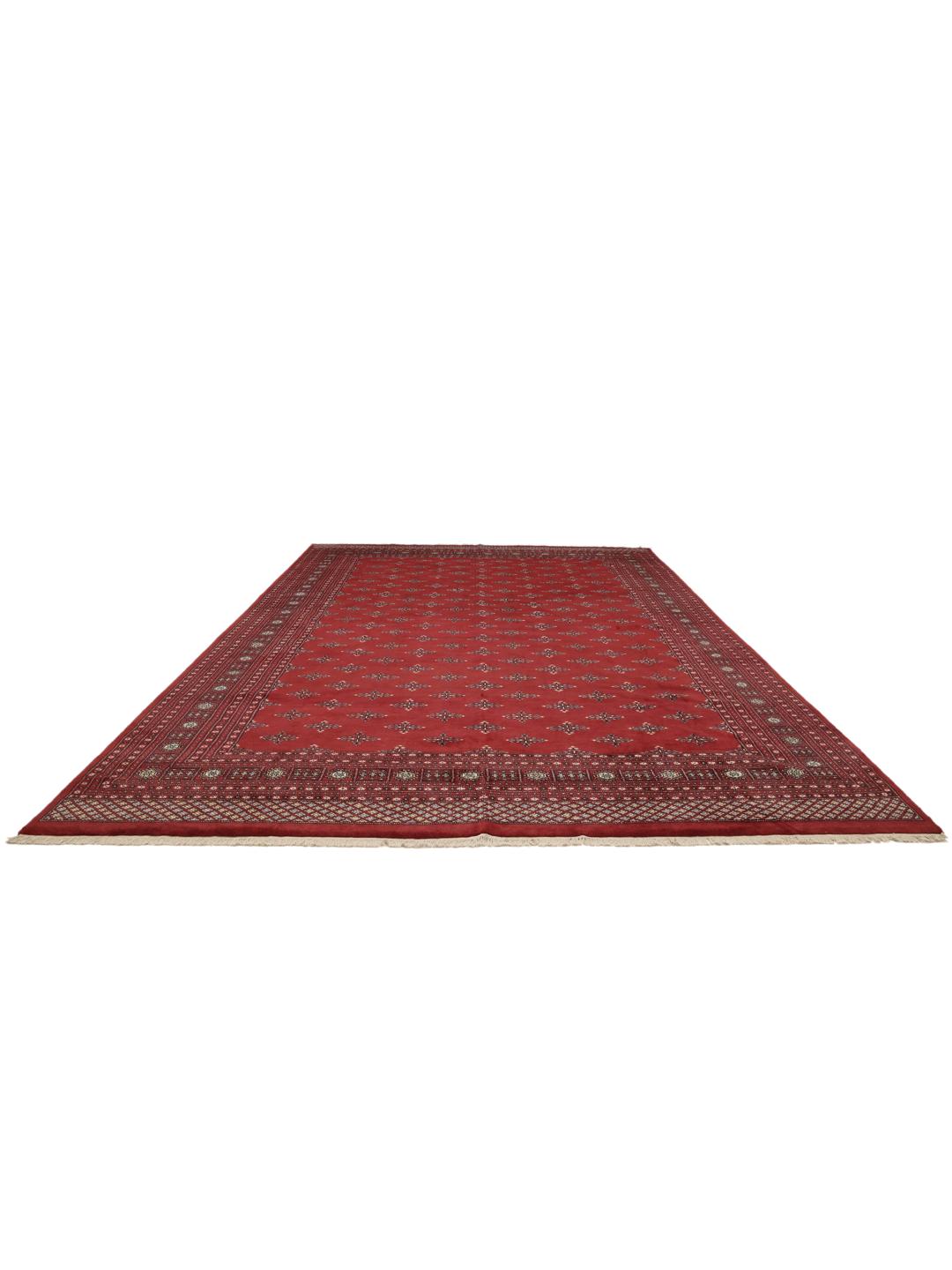
Visually, these rugs are defined by their signature gul motifs, which are repeating, elephant-foot shaped medallions arranged in precise rows. These are typically framed by elaborate, geometric borders that showcase the weaver's mastery of symmetry. While deep red is the traditional colour palette for these pieces, the presence of dark, contrasting details creates a sophisticated and timeless look.
Owning a hand-knotted Bokhara is an investment in cultural heritage and human skill. These rugs are highly valued by collectors not just for their aesthetic appeal, but for the tradition they represent, serving as a bridge between ancient techniques and the modern home, where they continue to provide warmth and character for generations.