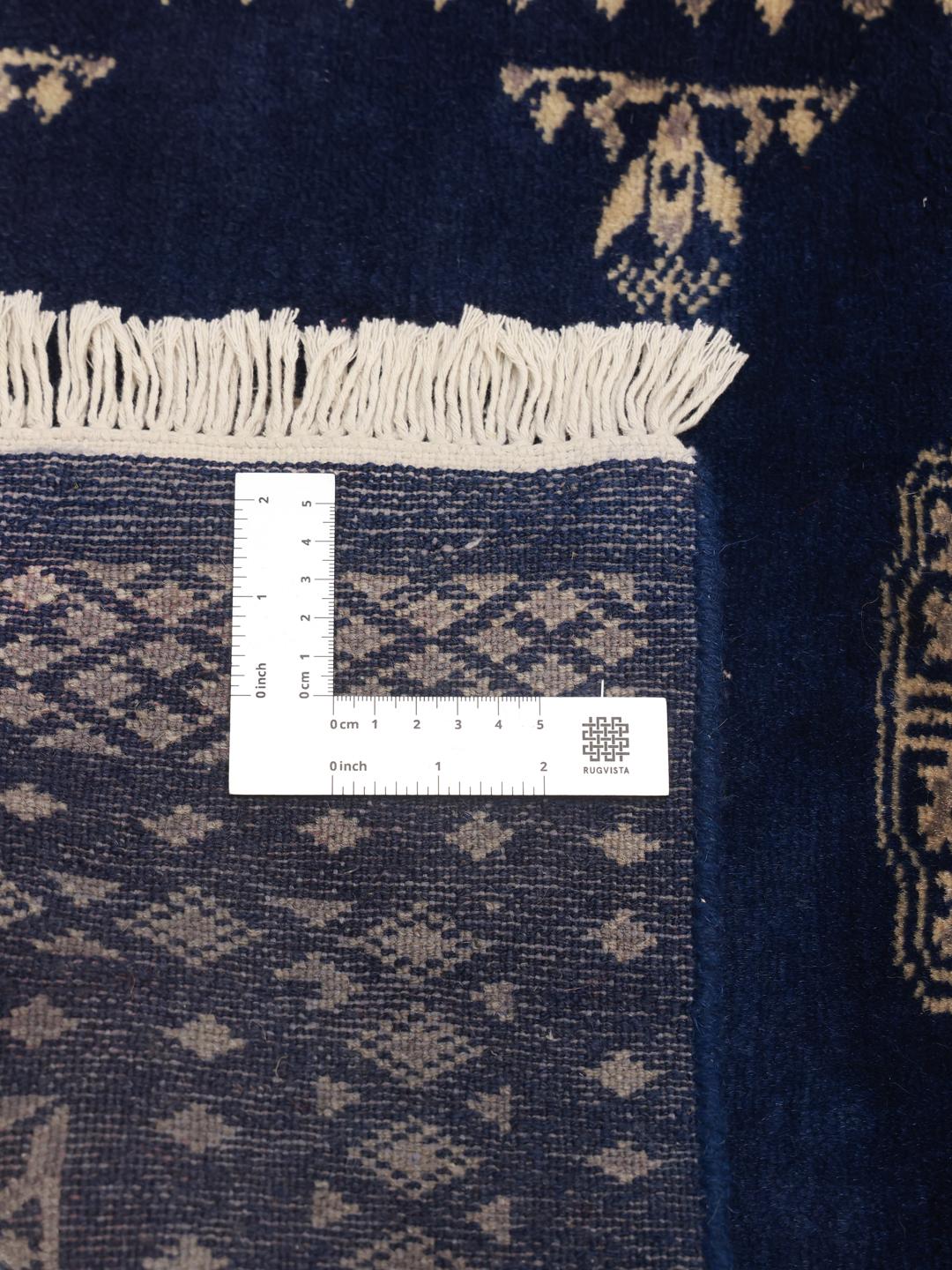
Bokhara rugs take their name from the ancient Silk Road city of Bukhara in Central Asia, a historic trading hub where fine textiles were bought and sold. While the design traditions originated among nomadic tribes in the region, the art of weaving these distinctive carpets eventually migrated and flourished in Pakistan, where master artisans continue the craft today.
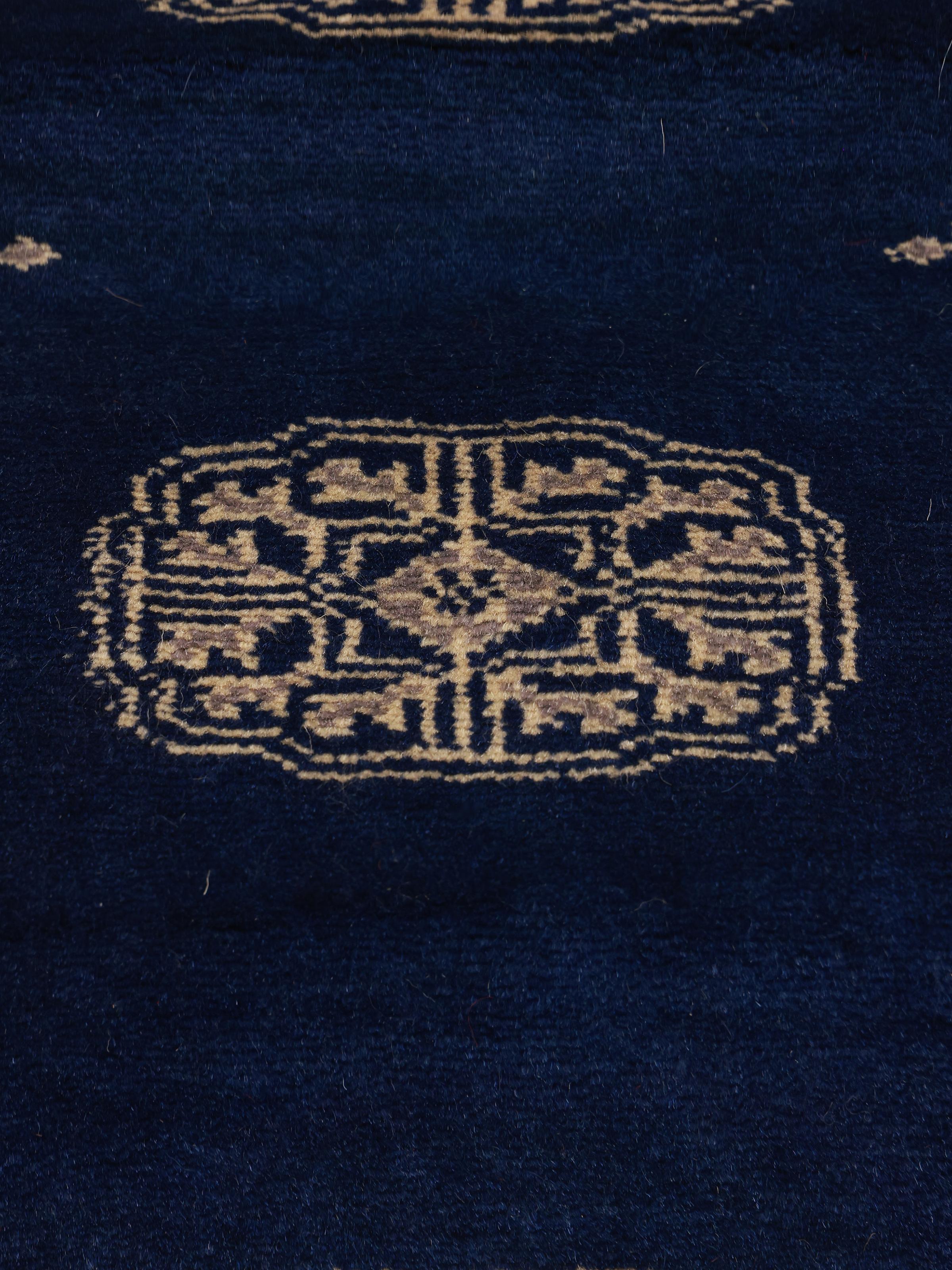
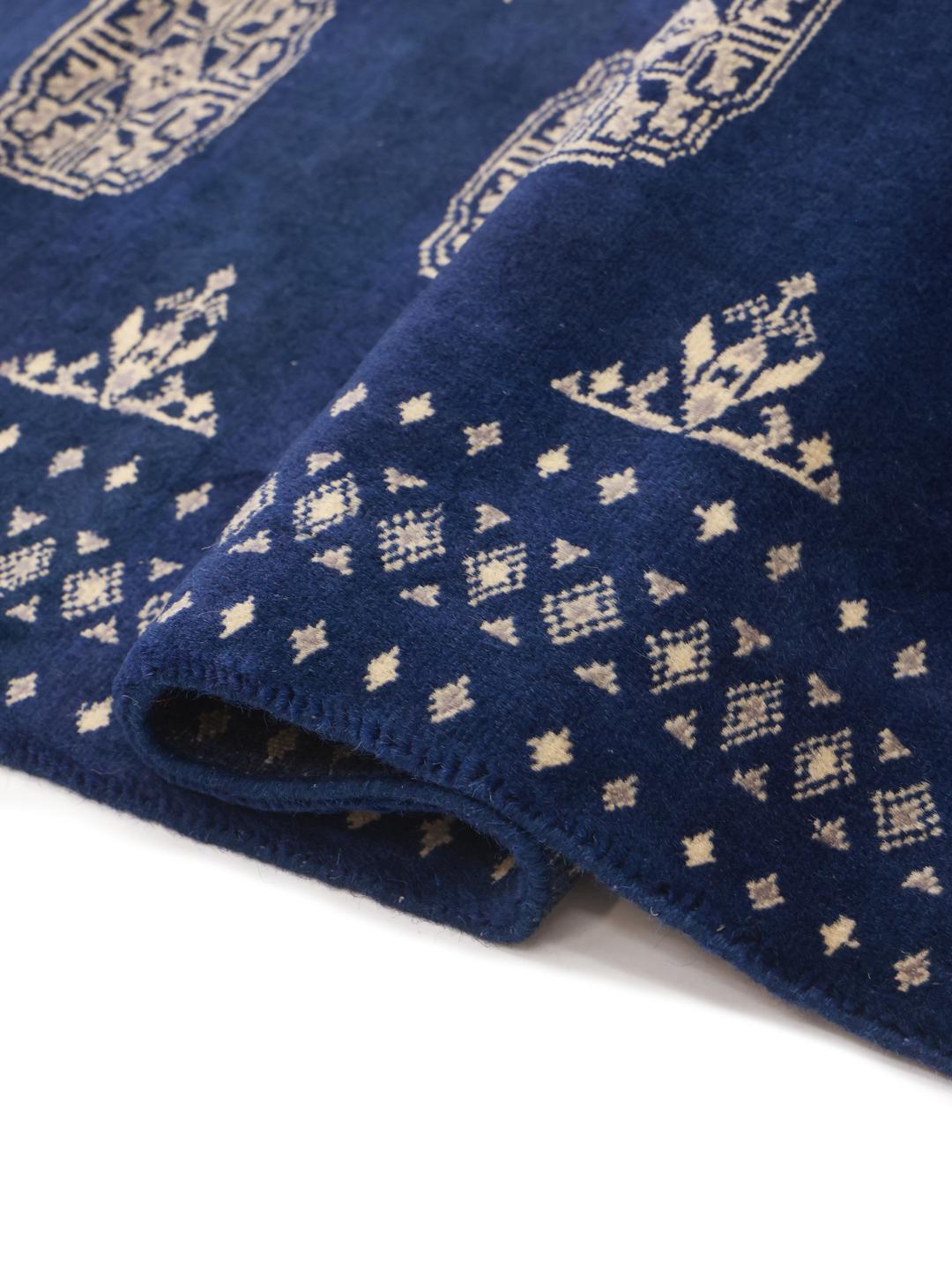
The term 2ply refers to the construction of the yarn, where two individual strands of wool are twisted together before being knotted. This twisting process produces a stronger, denser, and more lustrous pile than single-ply alternatives, giving the rug greater durability and a subtle sheen.
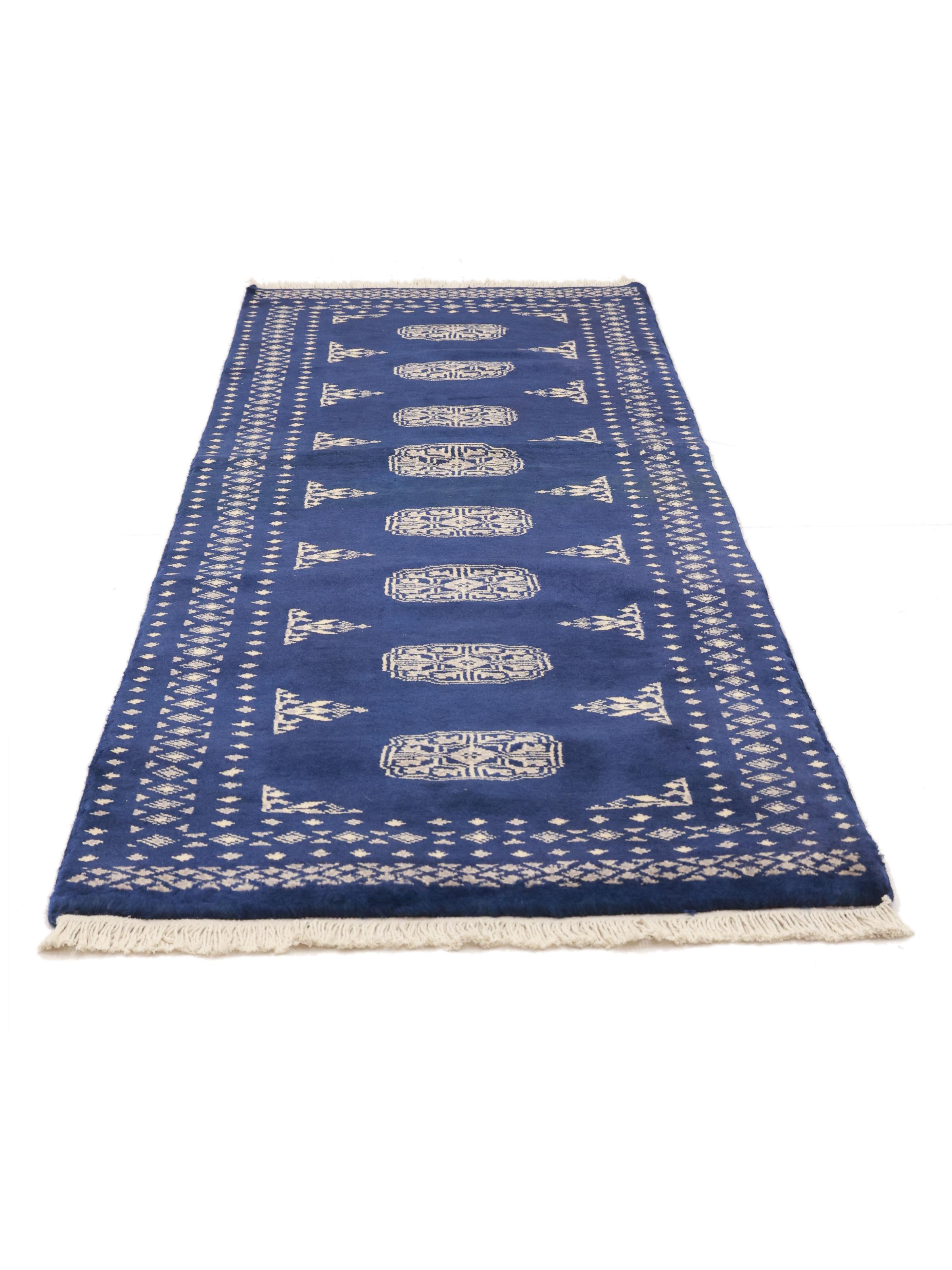
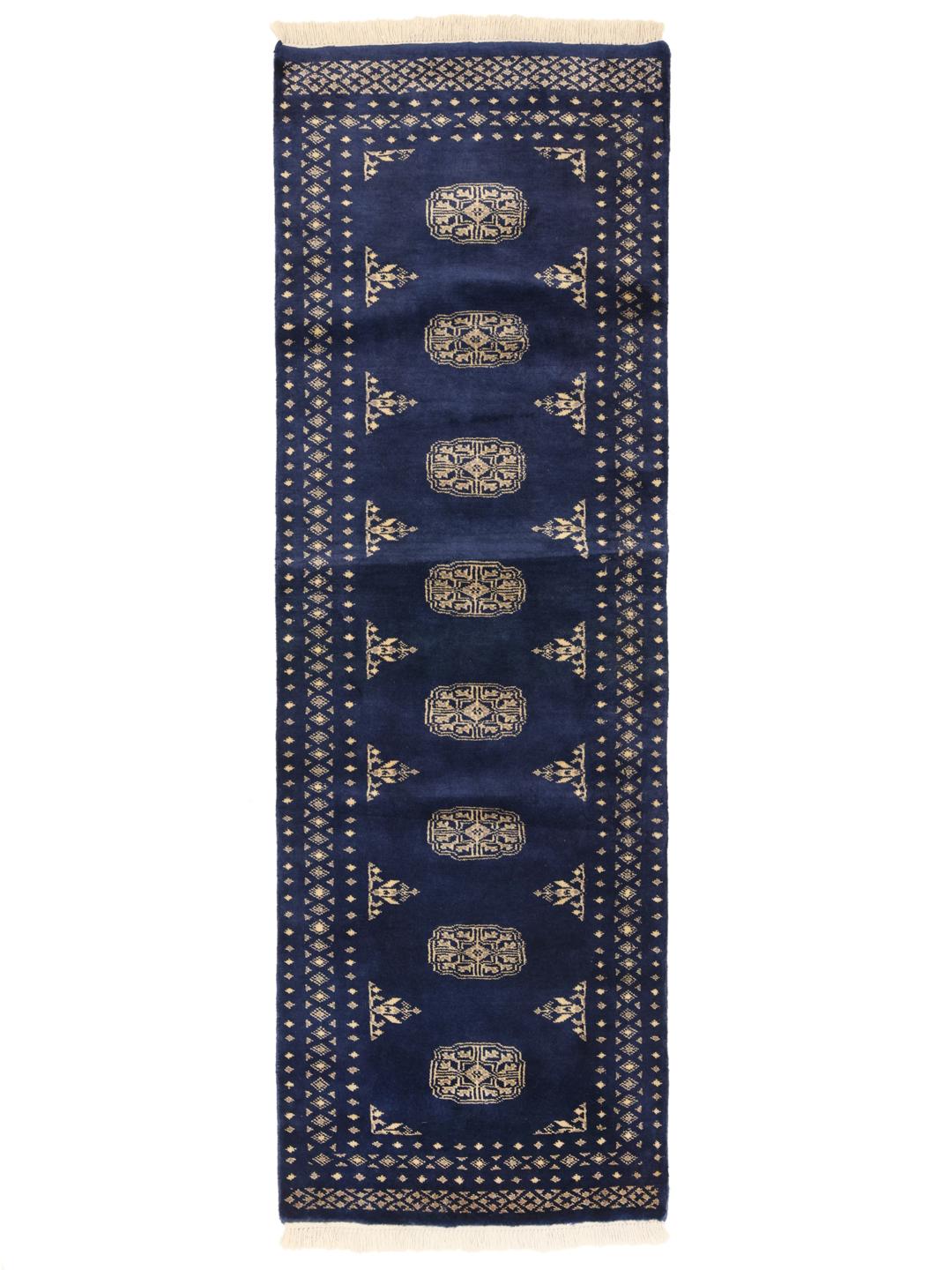
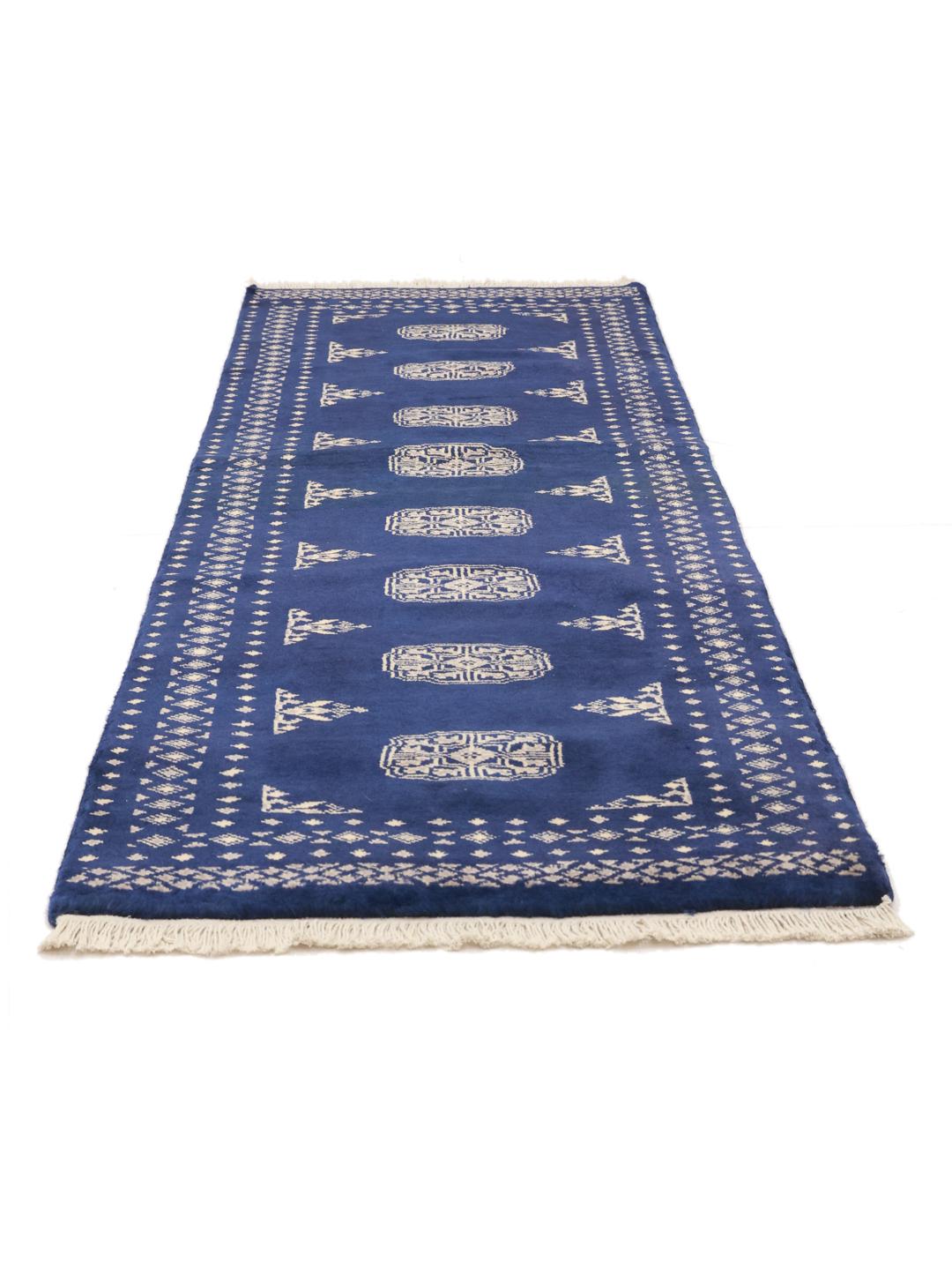
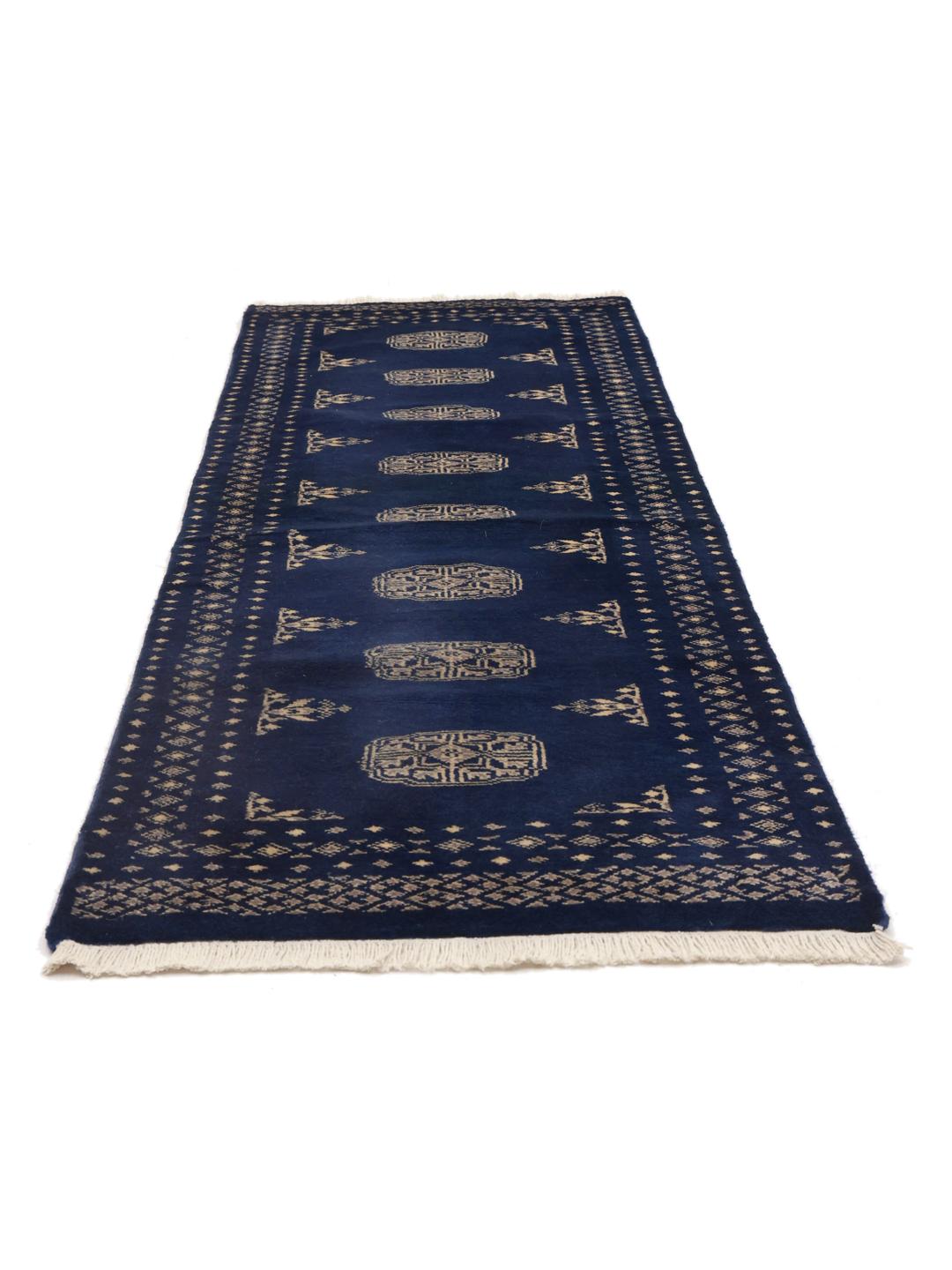
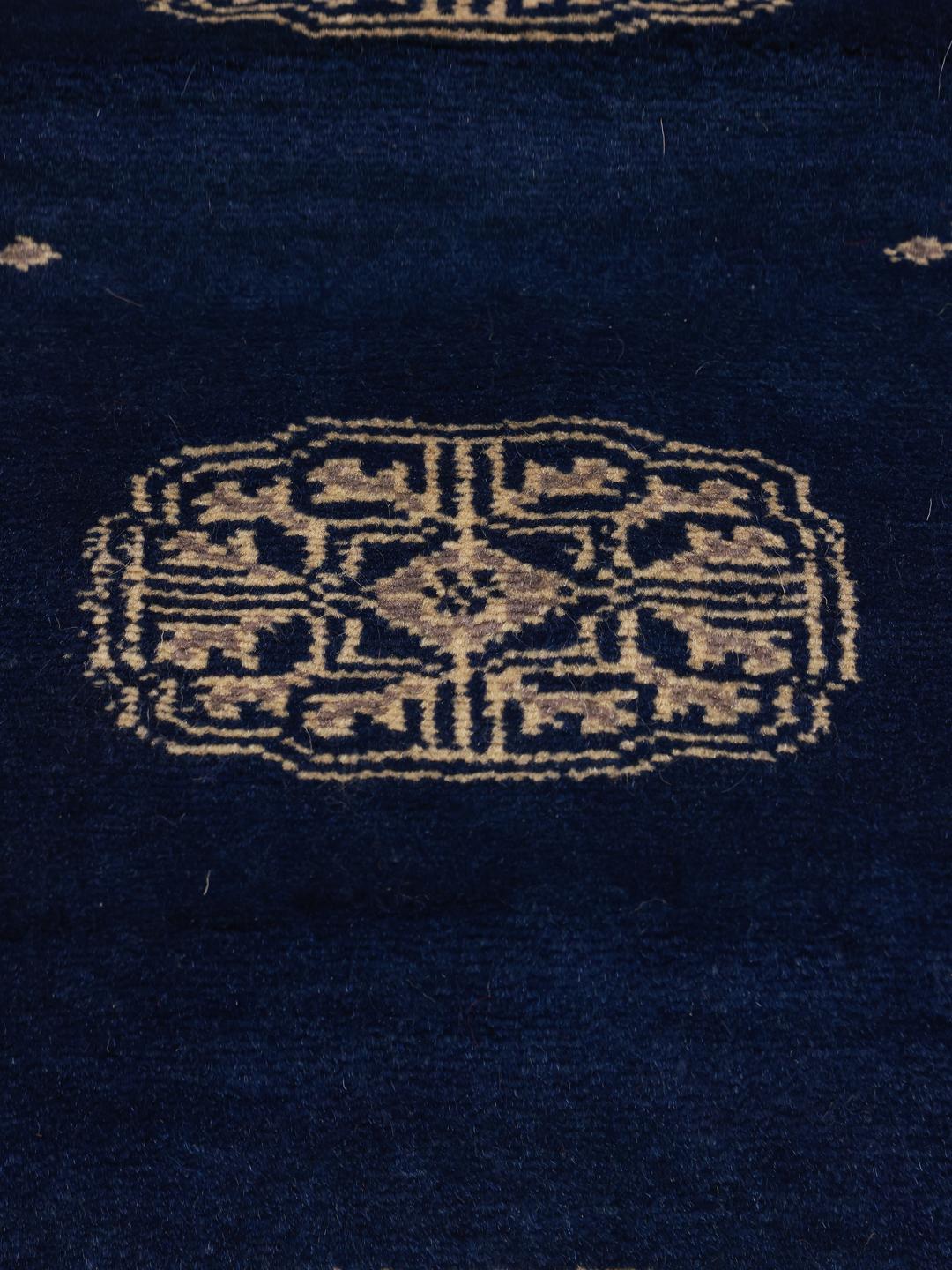
The visual language of this tradition is defined by repeating gul motifs, which are octagonal or elephant-foot medallions arranged in neat rows across the field. In this particular piece, the traditional motifs are set against an unconventional dark blue field, offering a fresh take on a classic regional style.
Owning a hand-knotted Bokhara runner means acquiring a piece of living textile history. The immense skill required to tie hundreds of thousands of knots by hand represents a cultural heritage that values longevity, patience, and enduring beauty over mass-produced alternatives.