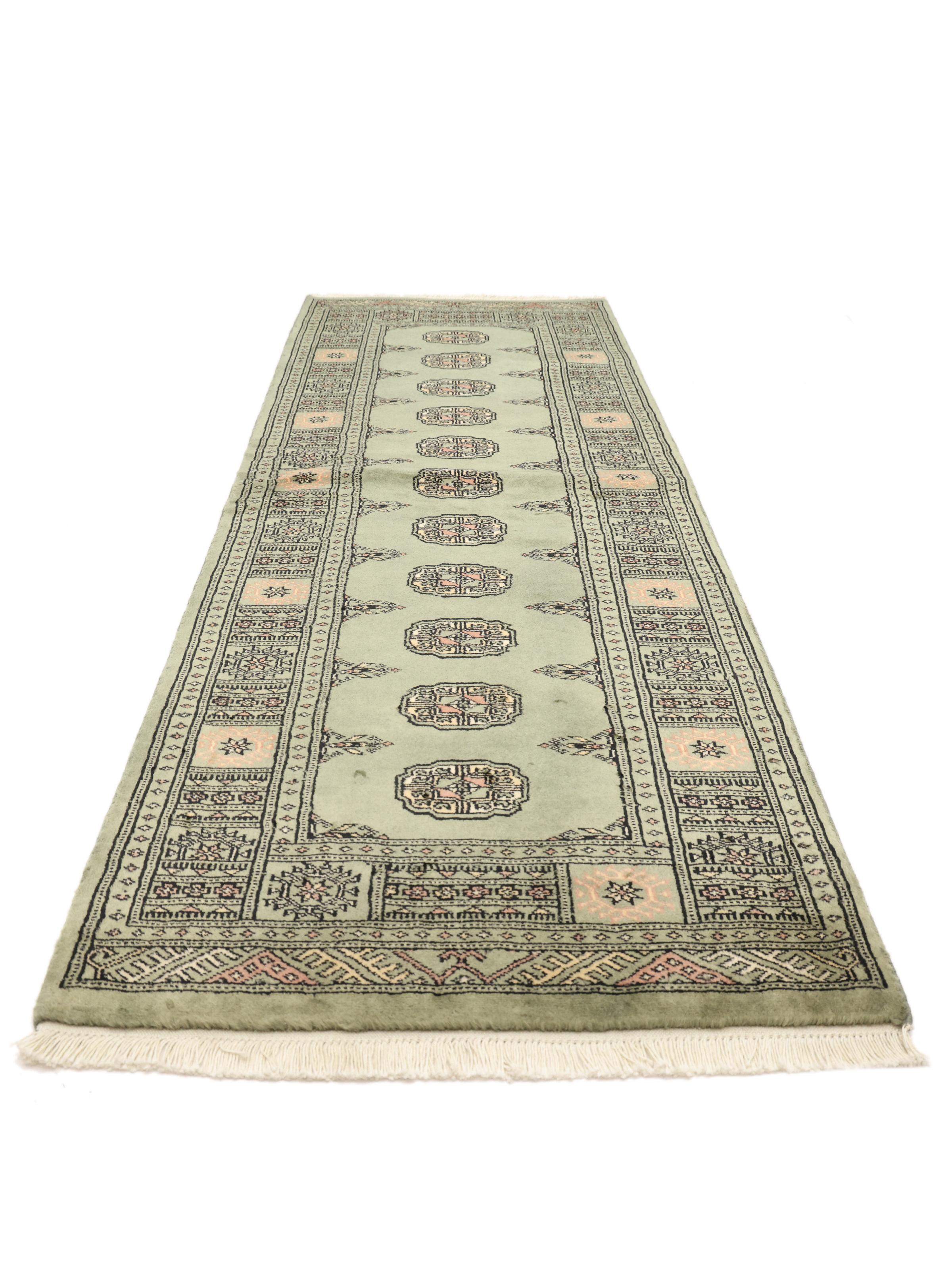
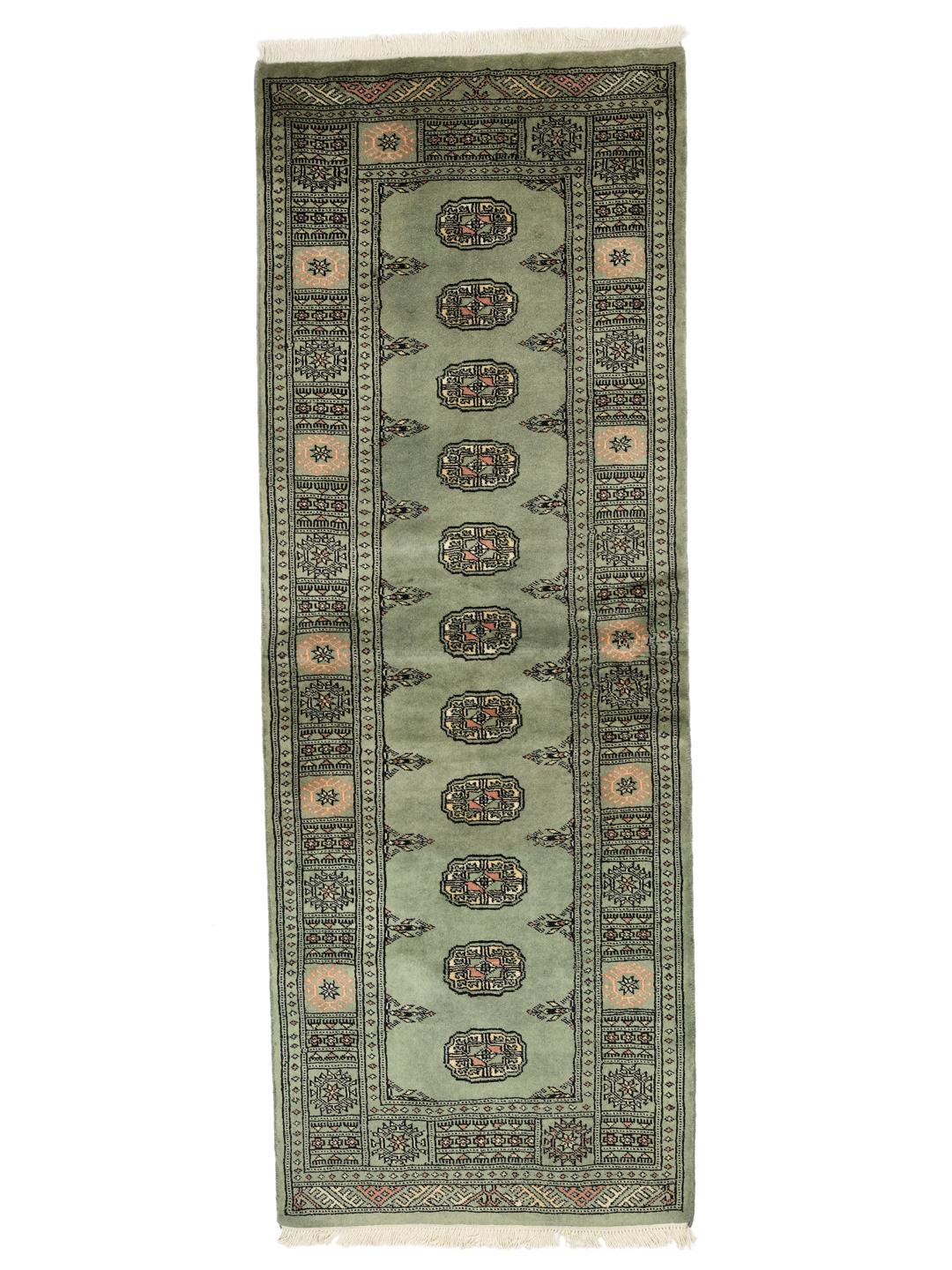
Bokhara rugs take their name from the ancient Silk Road city of Bukhara in Central Asia, a historic trading hub where fine pile rugs were bought and sold by merchants. Over generations, weaving families migrated across the region, bringing these cherished design traditions with them. Today, some of the finest examples of the Bokhara style are skillfully crafted in Pakistan, where artisans continue to honour these historic techniques.
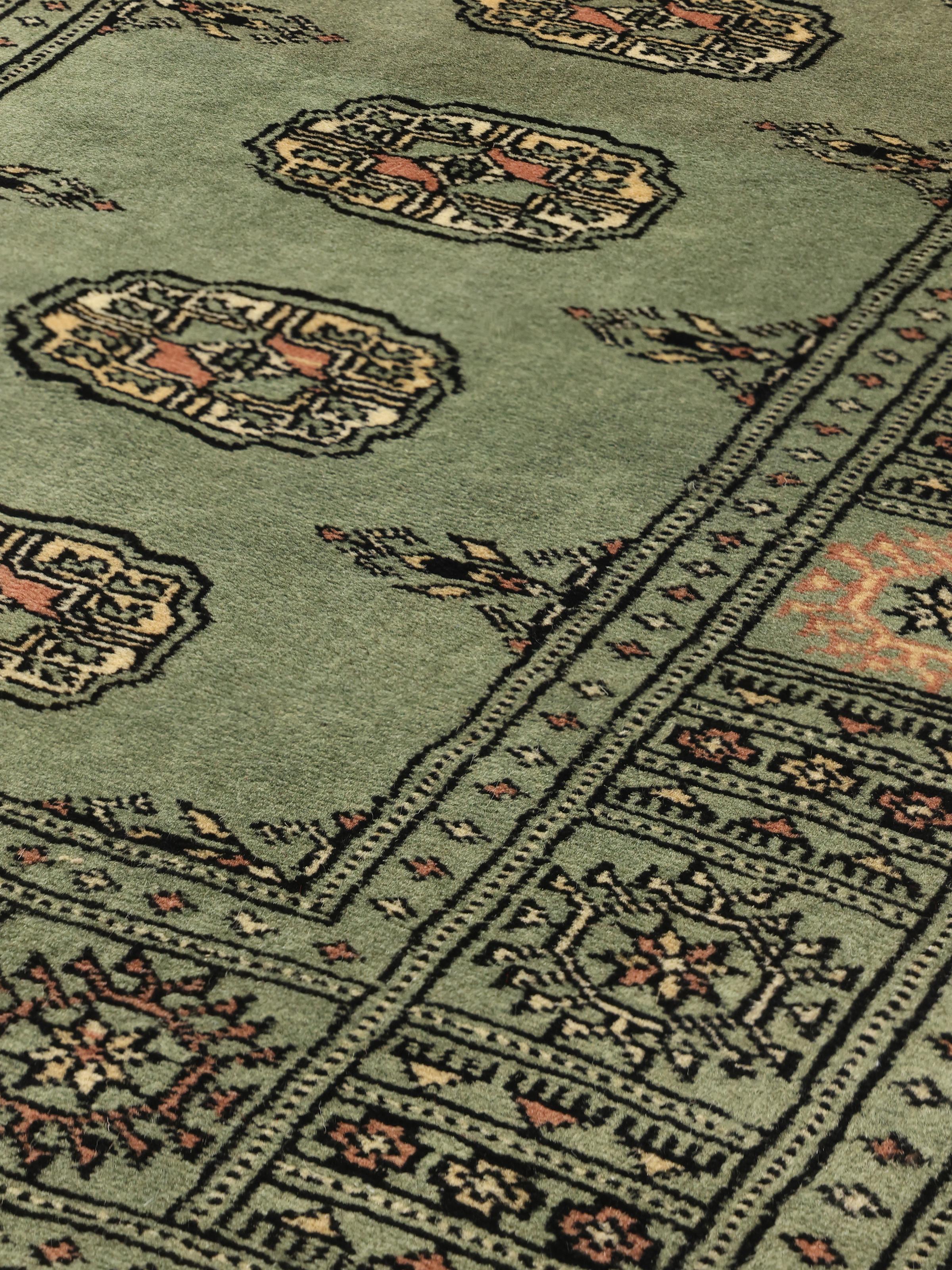
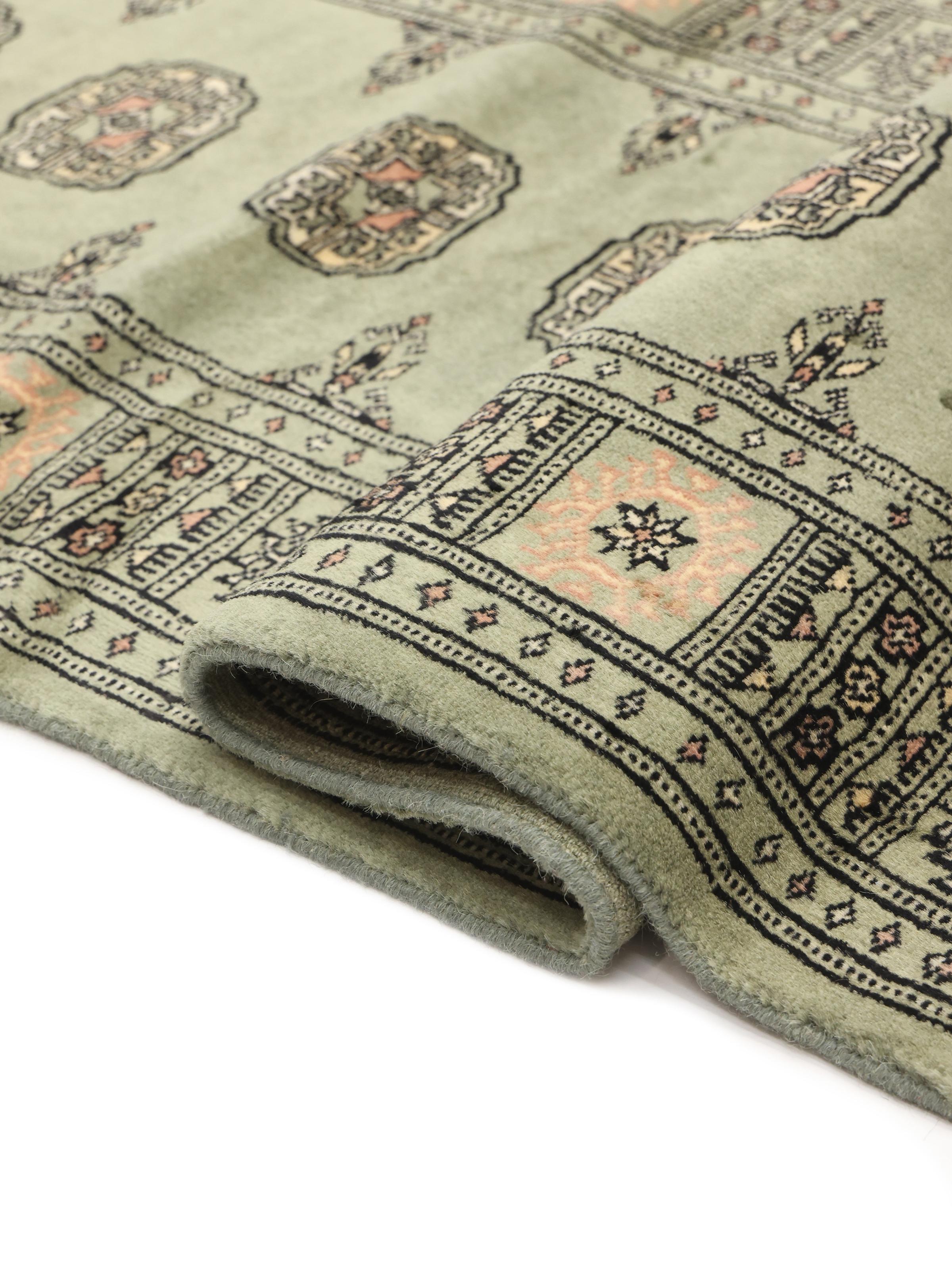
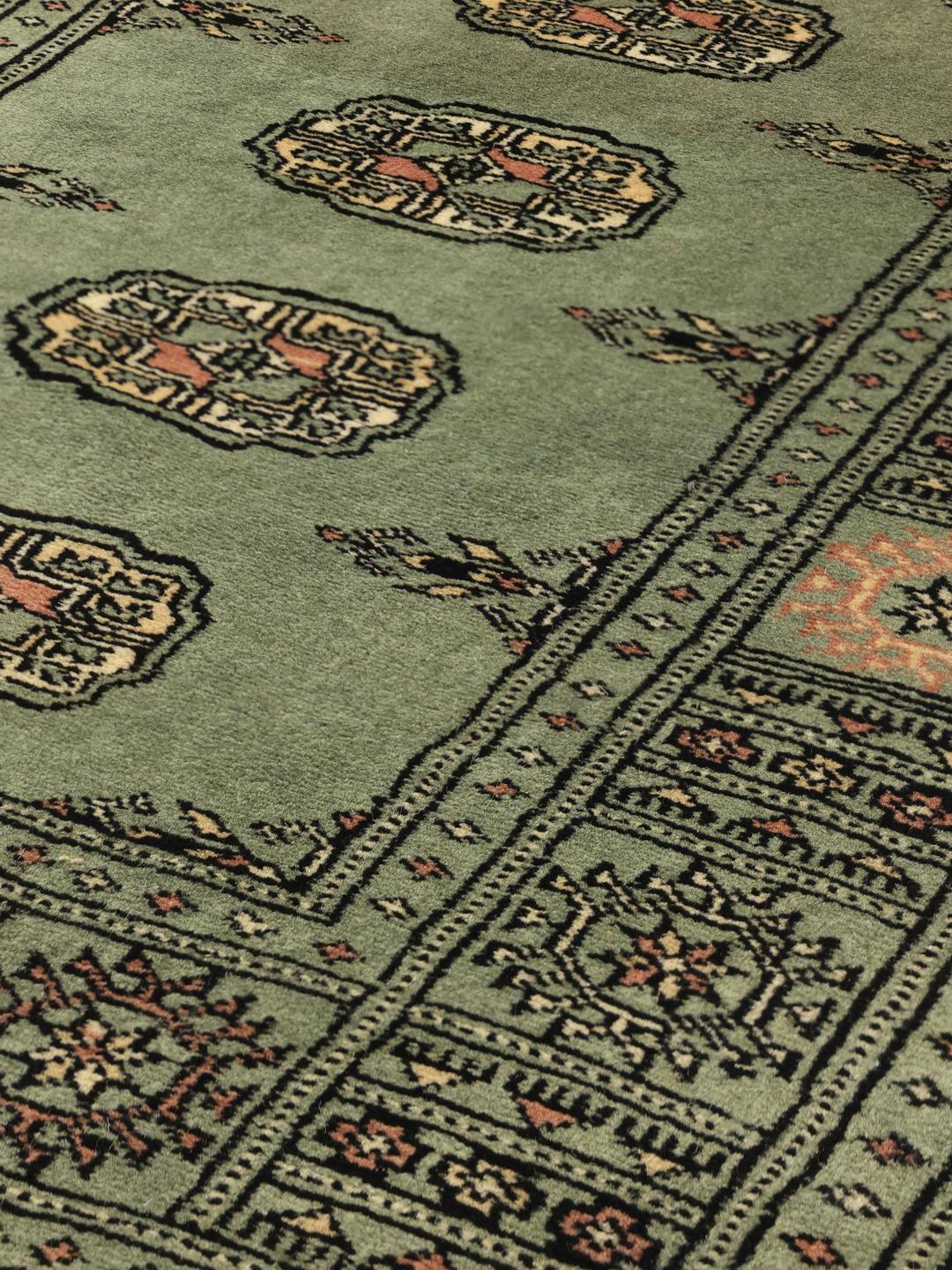
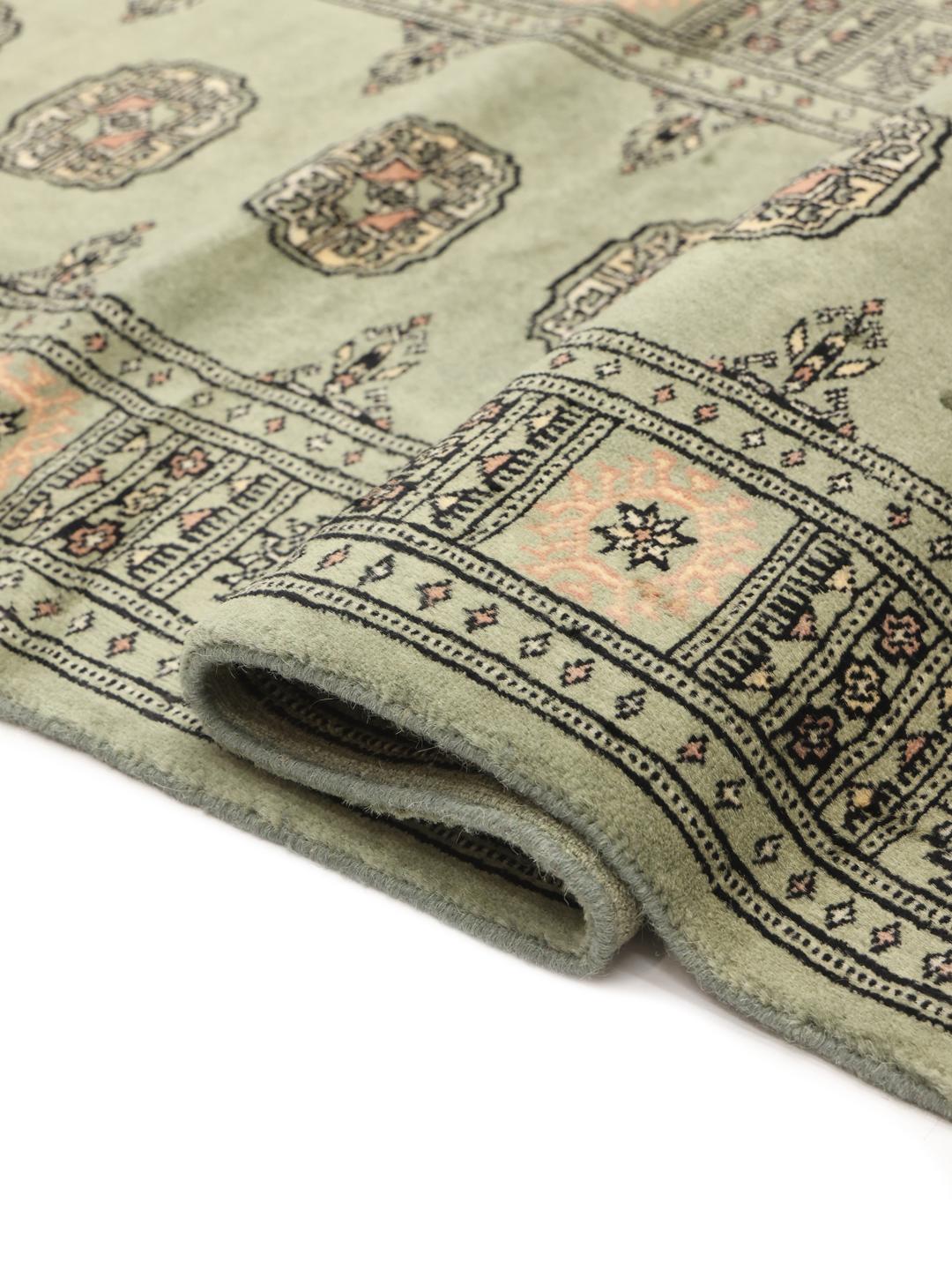
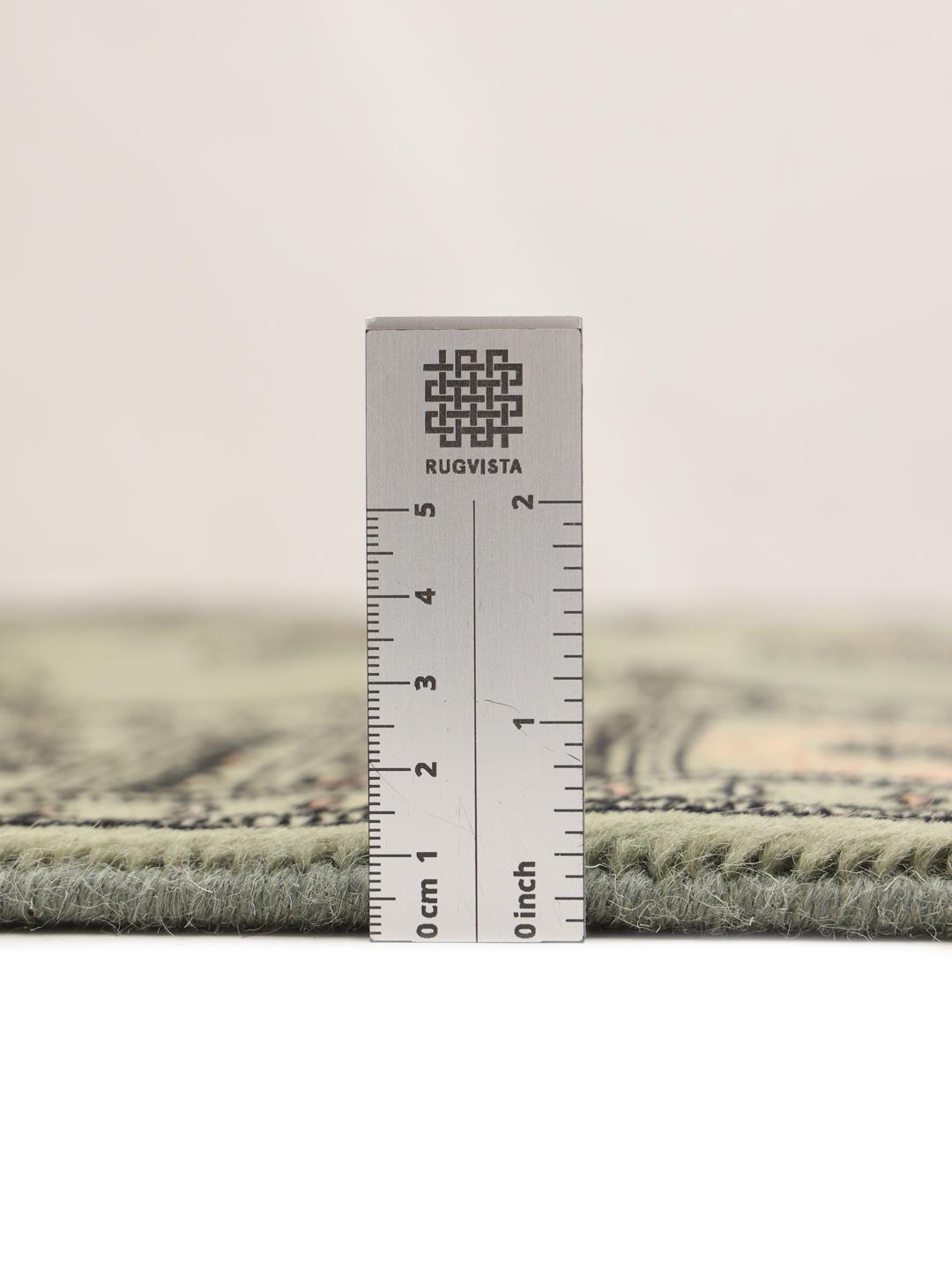
The 3ply designation in this rug means the pile is constructed using three strands of wool twisted together before knotting. This technique produces a significantly denser, more lustrous, and harder-wearing pile compared to single-ply or two-ply variations. It results in a resilient surface that stands up well to daily life while retaining a rich, tactile depth.
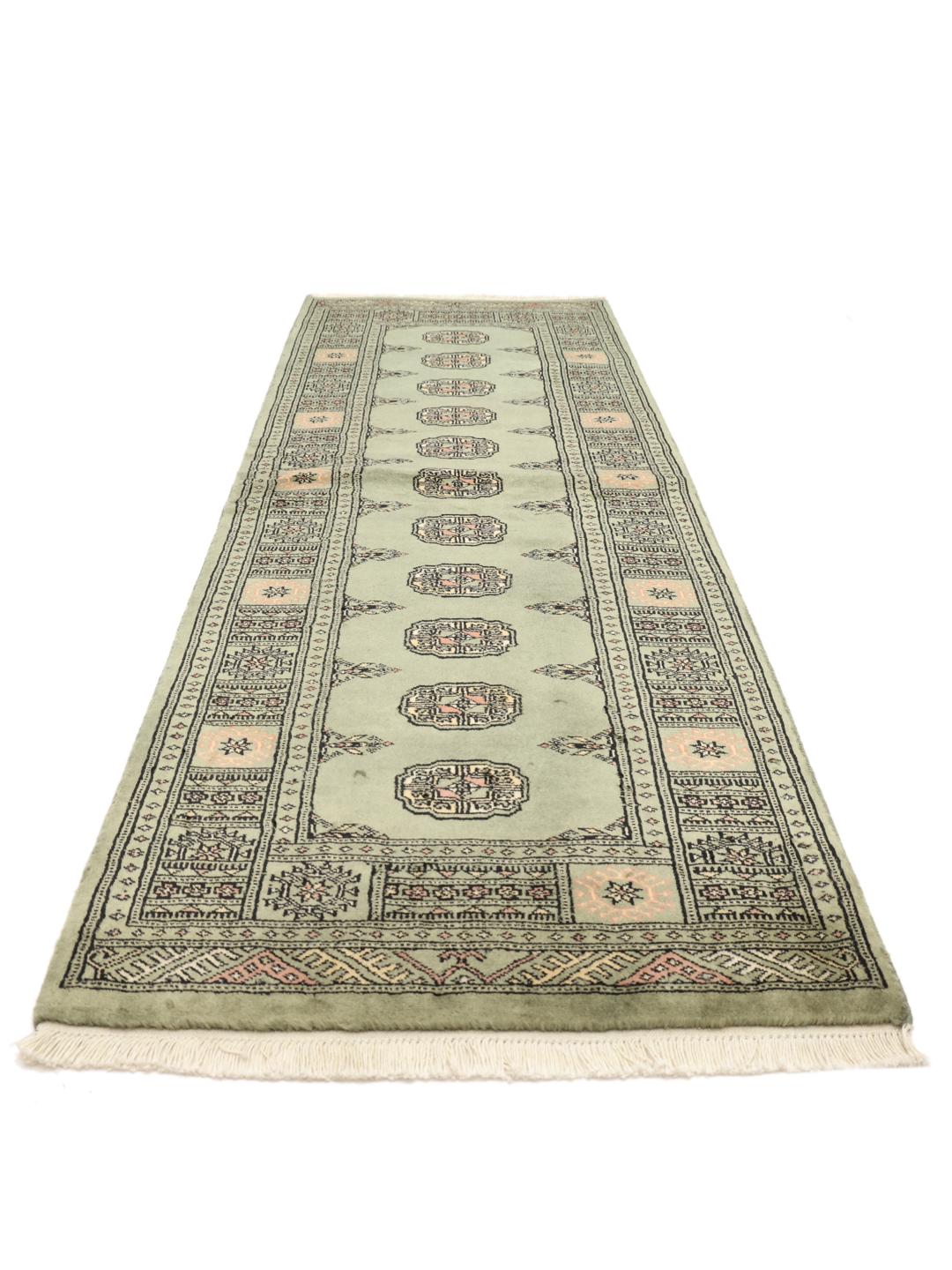
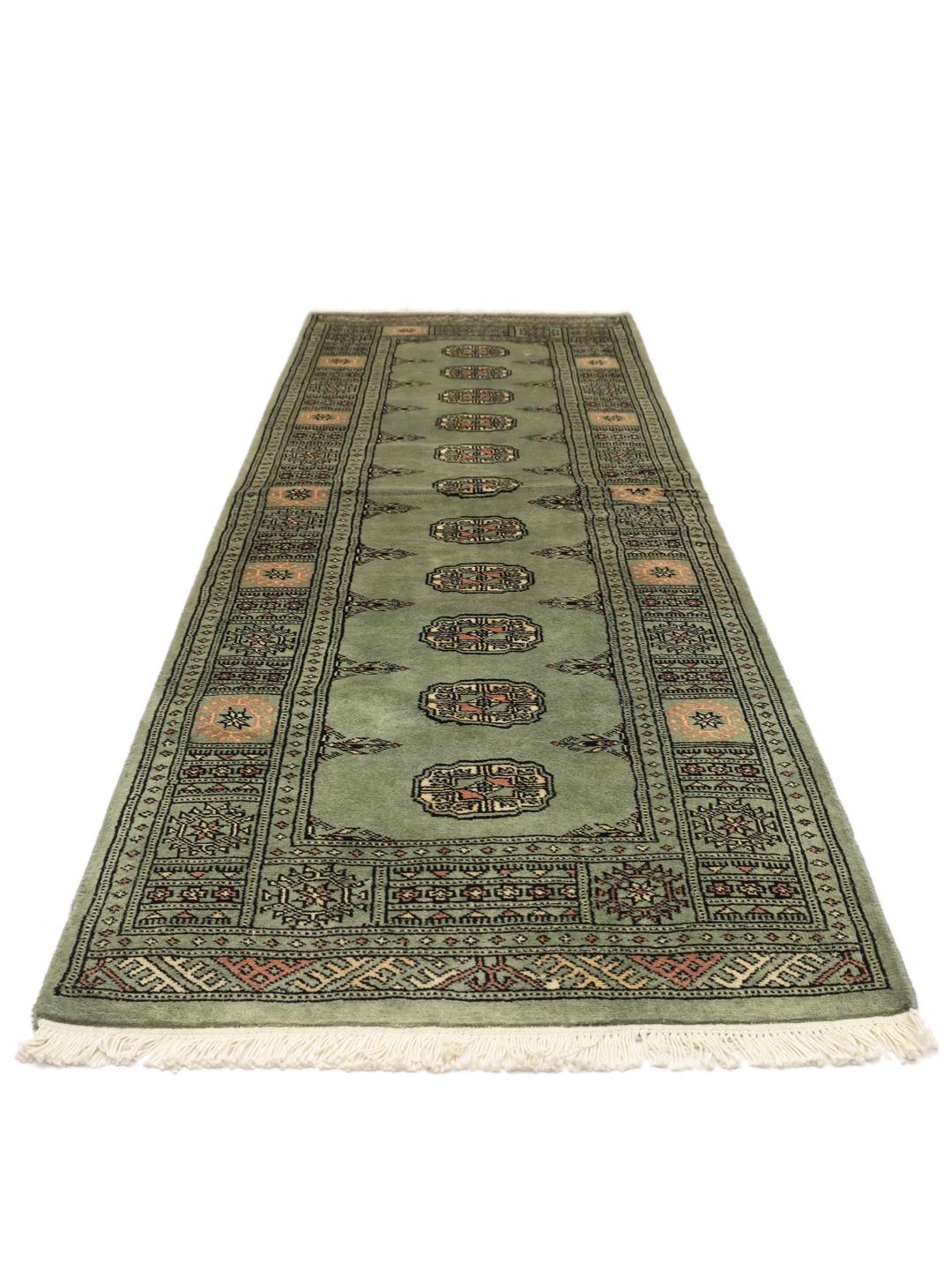
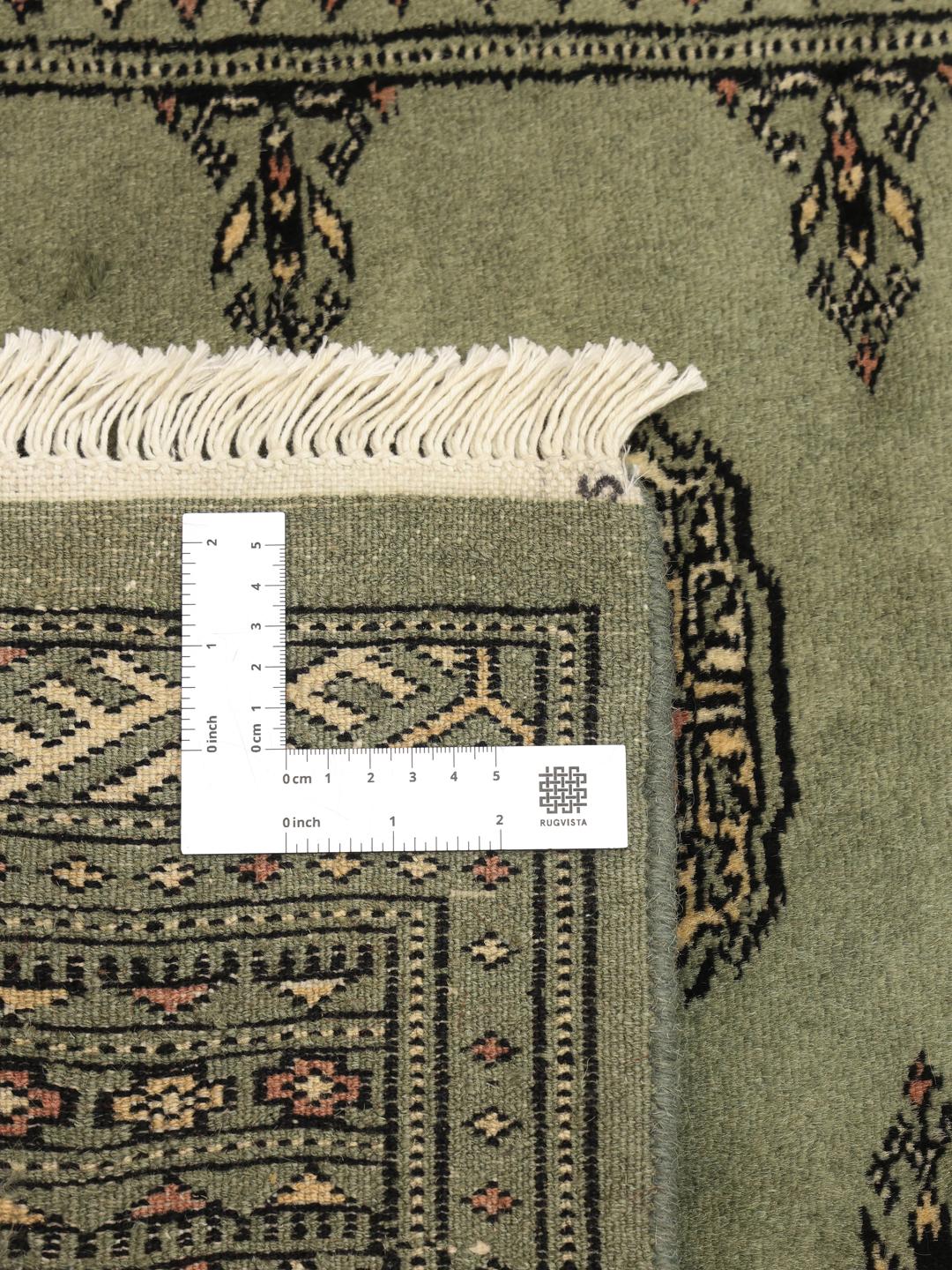
The visual language of the Bokhara tradition is defined by repeating gul motifs, which are octagonal or elephant-foot shaped medallions arranged in orderly rows across the field. These central motifs are typically enclosed by geometric borders featuring smaller secondary patterns and star elements. While traditional Bokhara rugs are most commonly found in deep reds, this distinctive piece features a calm green field that offers a fresh interpretation of a classic design.
Rugs from this storied tradition are valued and collected around the world for their balance of symmetry, durability, and cultural heritage. Owning a piece like this means participating in a living craft tradition, where skill is passed down through generations to create floor coverings designed to last a lifetime.