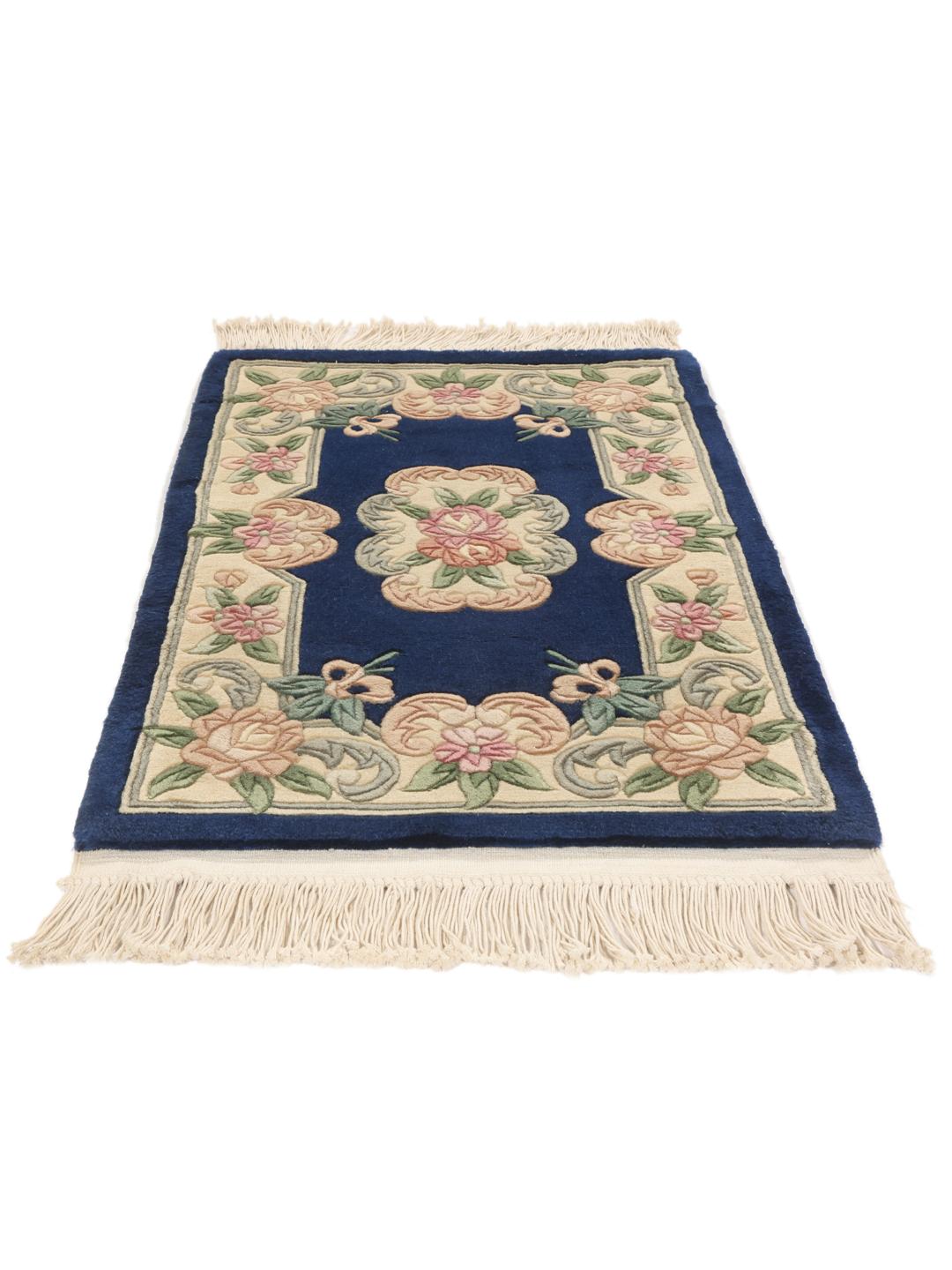
The history of Chinese rug-making is a storied tradition that dates back centuries, often drawing inspiration from the rich visual language of silk weaving, porcelain painting, and imperial art. Unlike some other traditions, Chinese rugs are celebrated for their open fields and distinct, often asymmetrical, floral and scenic designs that reflect a deep appreciation for nature and balance.
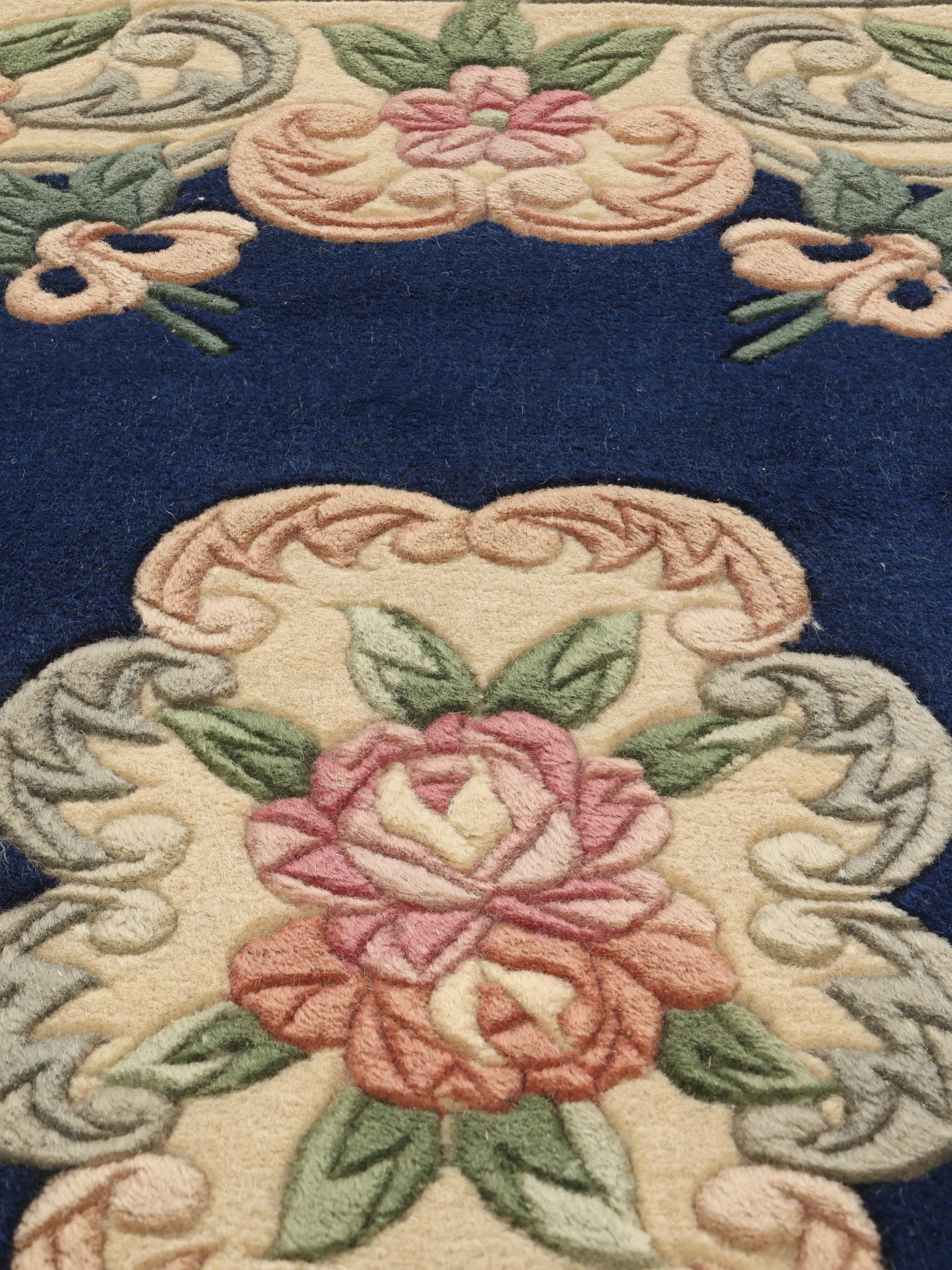
The term '90 line' refers to a specific technical standard in the Chinese rug-making tradition, denoting the number of knots per linear foot. This standard is a hallmark of the craft, dictating the clarity of the design and the density of the pile. Achieving this level of precision requires a deep understanding of weaving tension, which directly influences how the wool pile stands and how the rug wears over time.
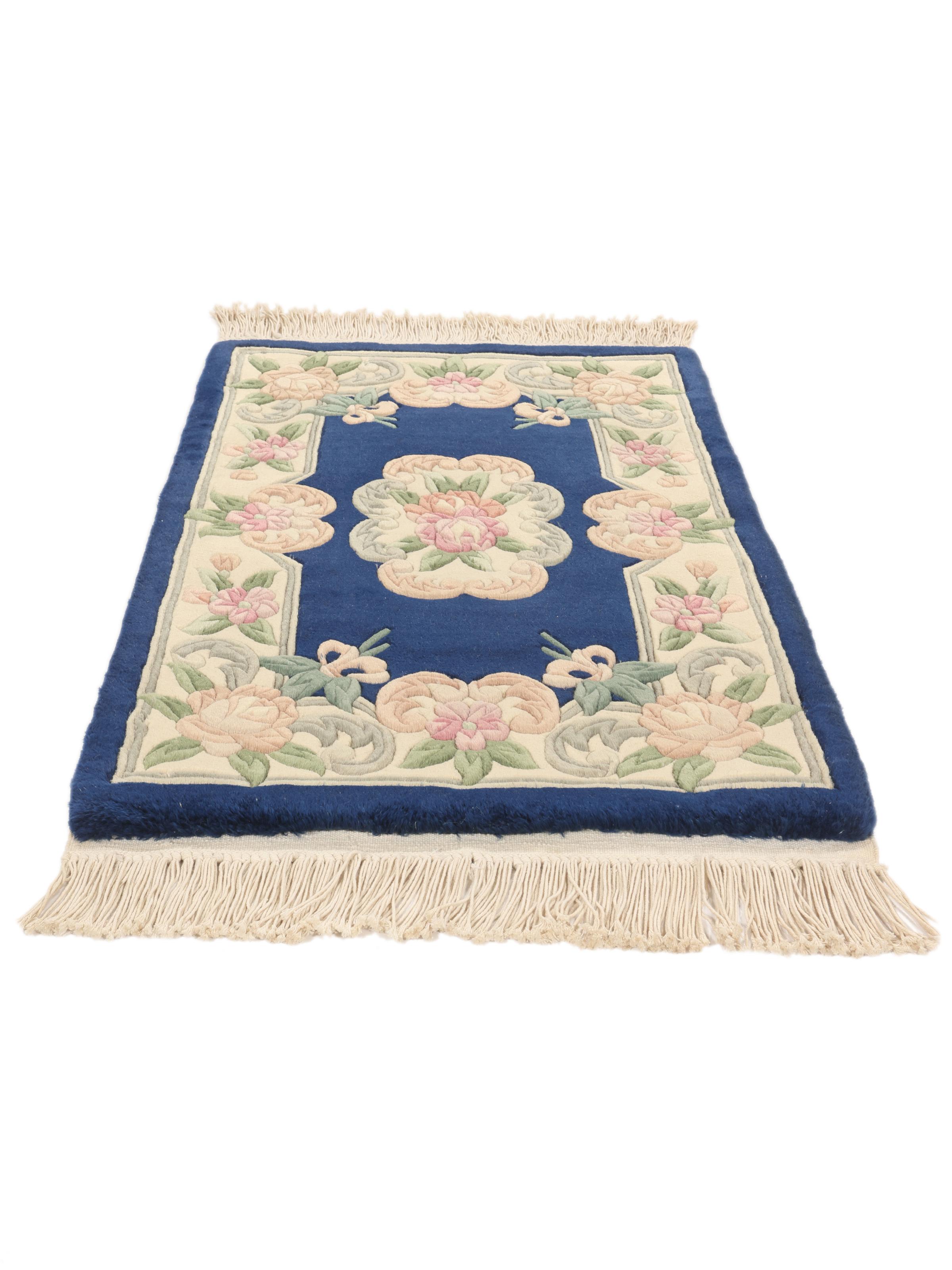
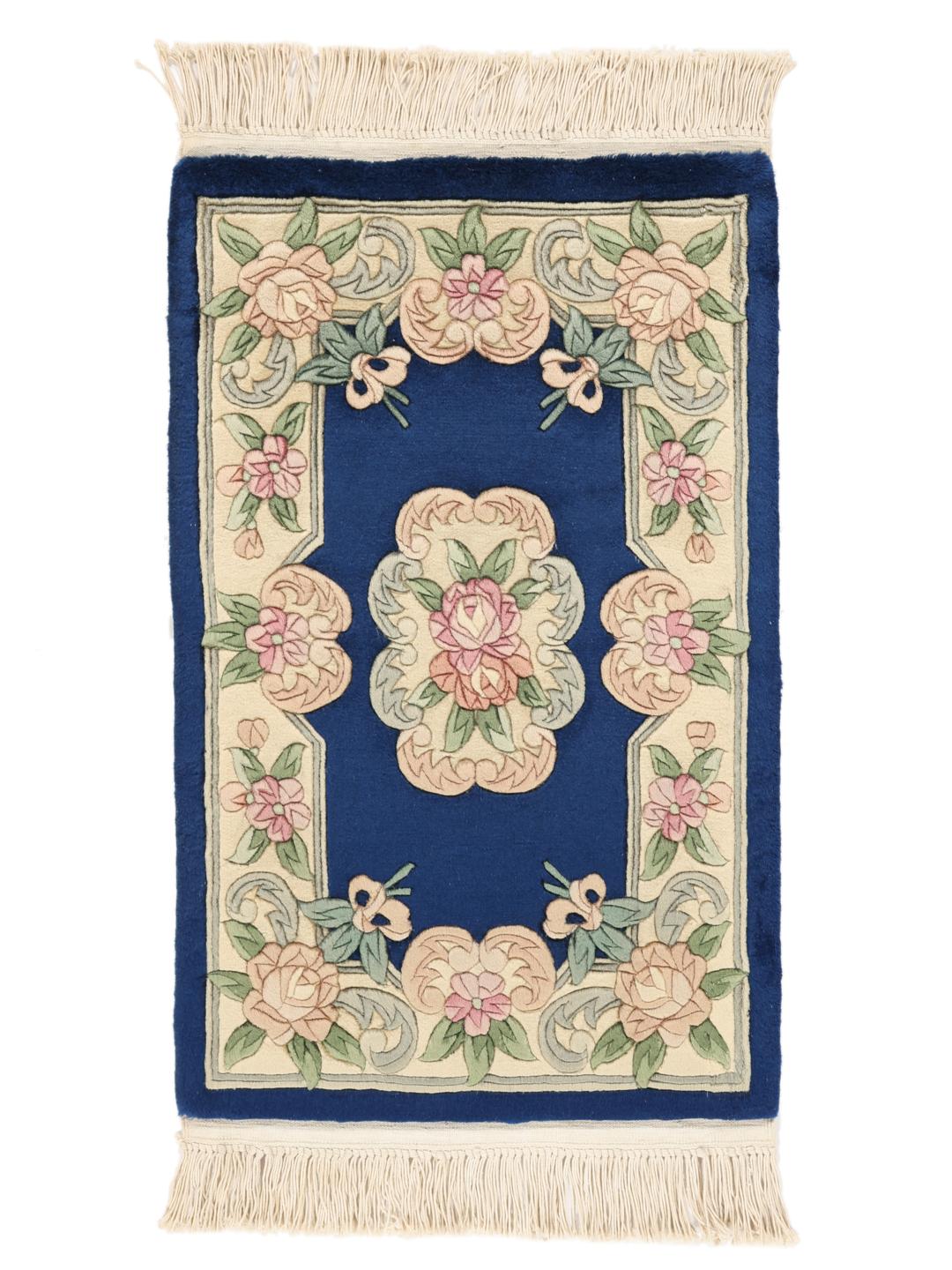
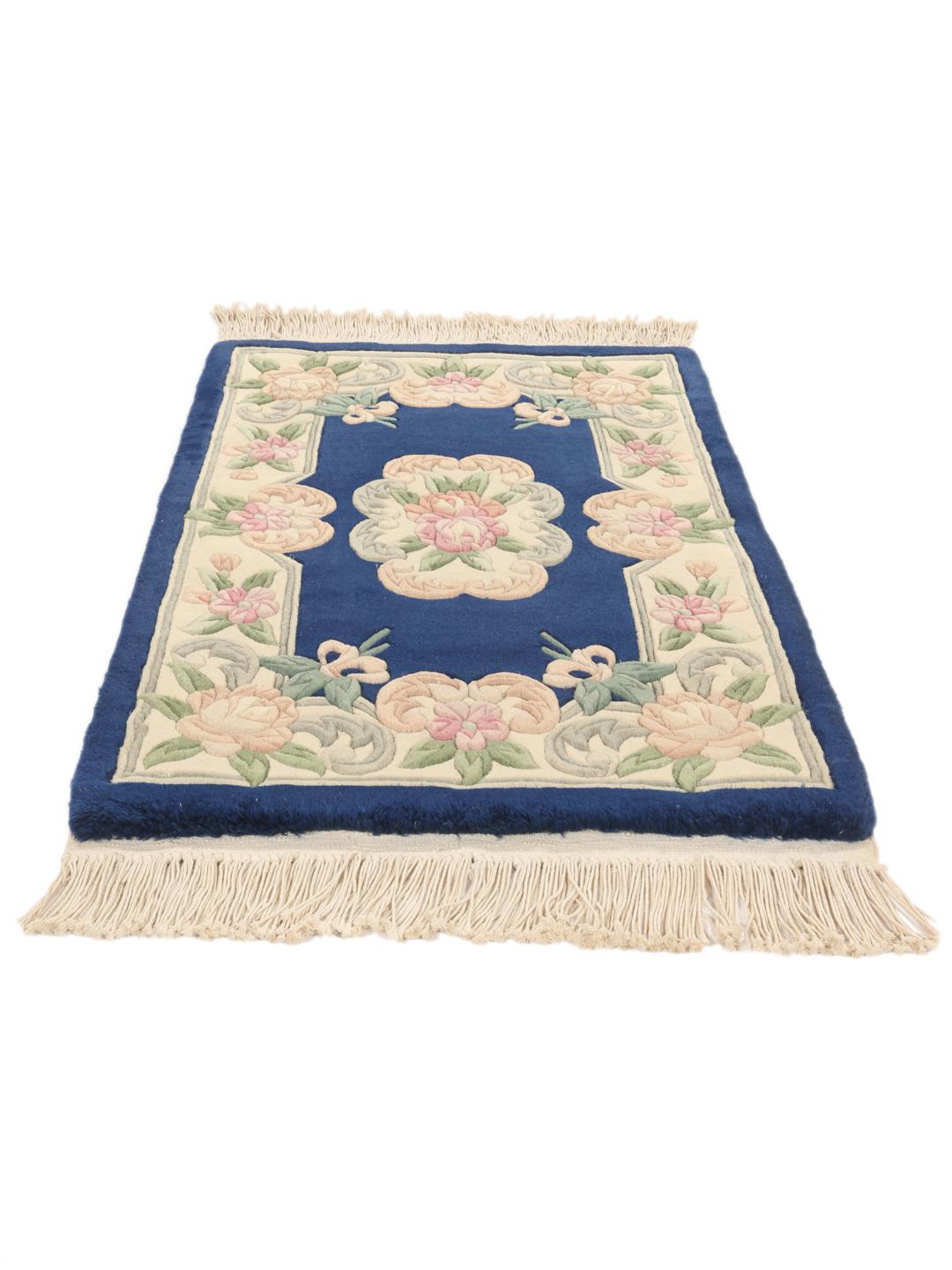
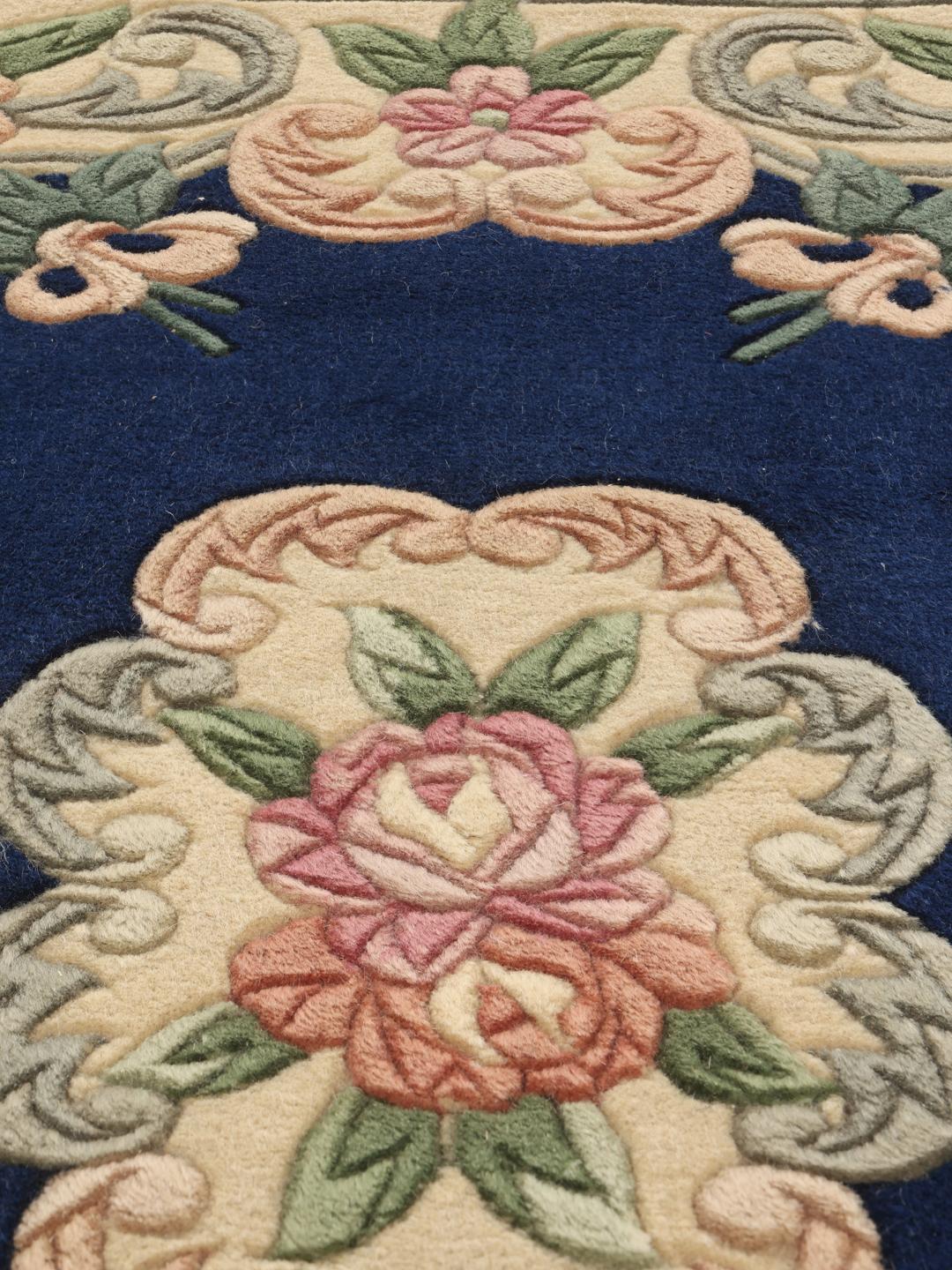
Visually, these rugs are defined by their use of carved-like floral motifs and a balanced use of negative space. The floral patterns, often rendered in muted, complementary tones, are designed to stand out against the rich, saturated field colours. This specific rug follows that legacy, using a deep blue background to frame the intricate, soft-toned blooms with grace.
Owning a piece from this tradition is an act of preserving a heritage of craft. These rugs are highly valued by collectors not only for their durability but for the way they integrate high-art motifs into a functional, everyday object. By bringing this rug into your home, you are acquiring a piece that carries the weight of a long-standing artistic lineage.