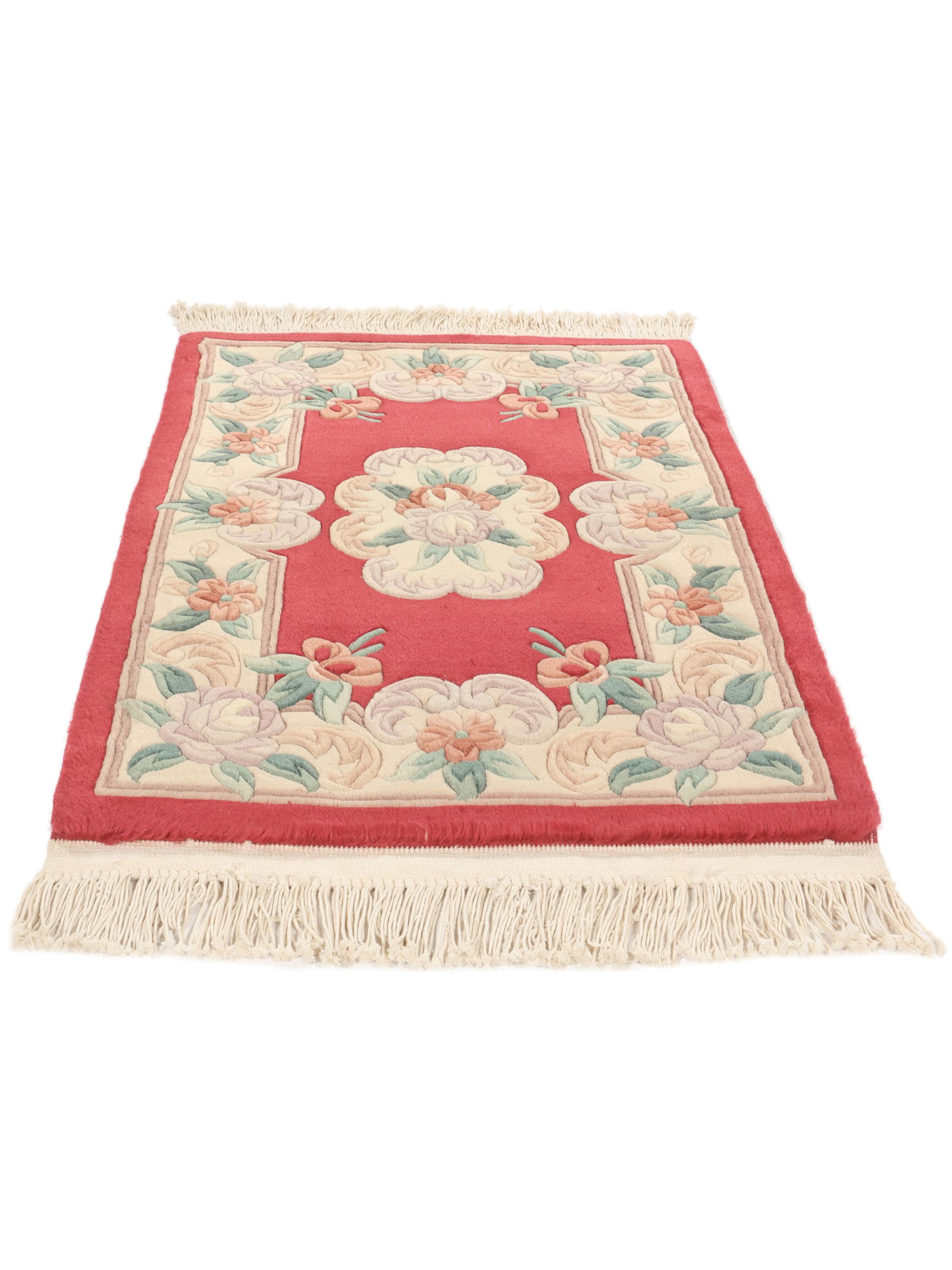
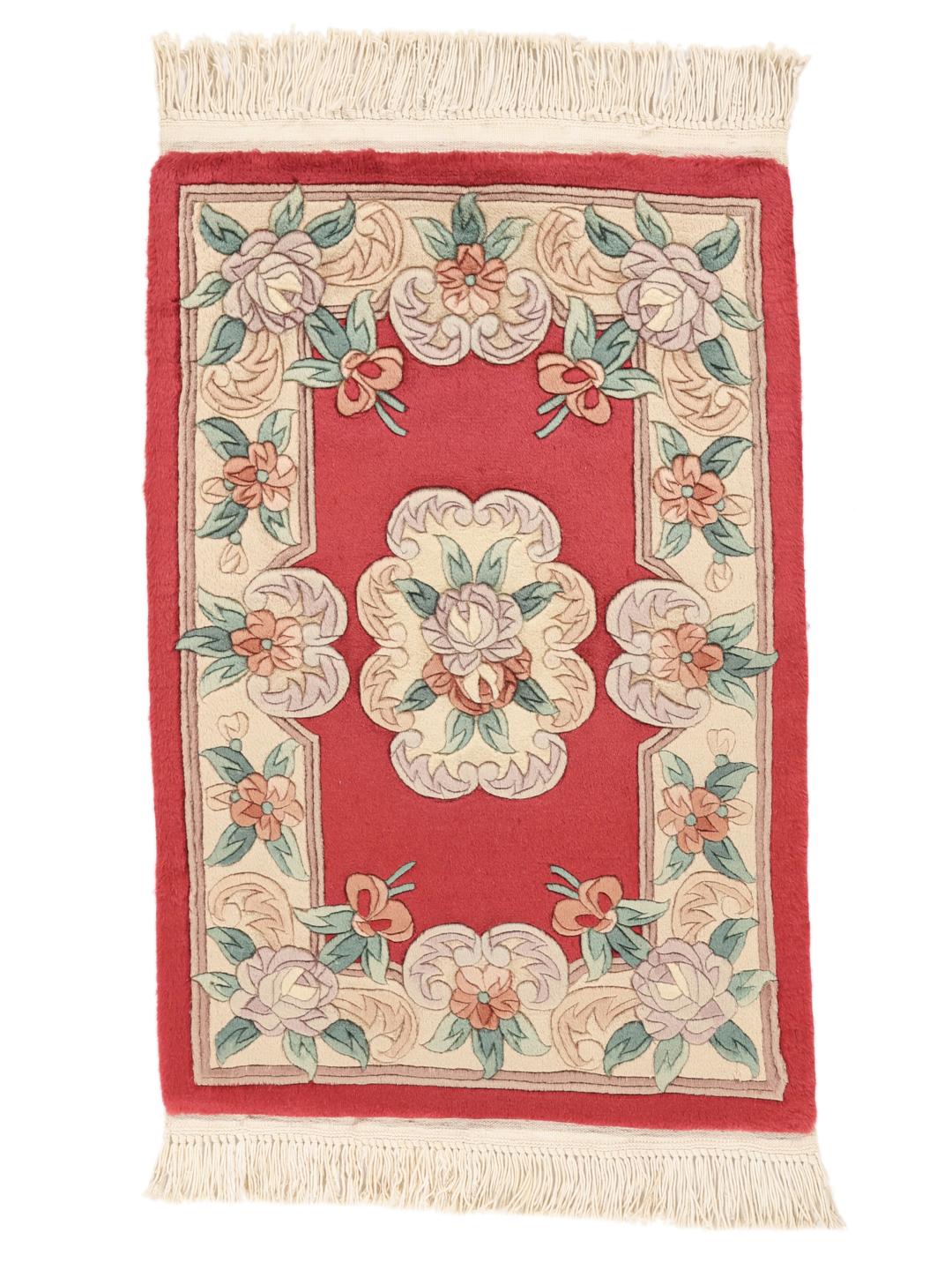
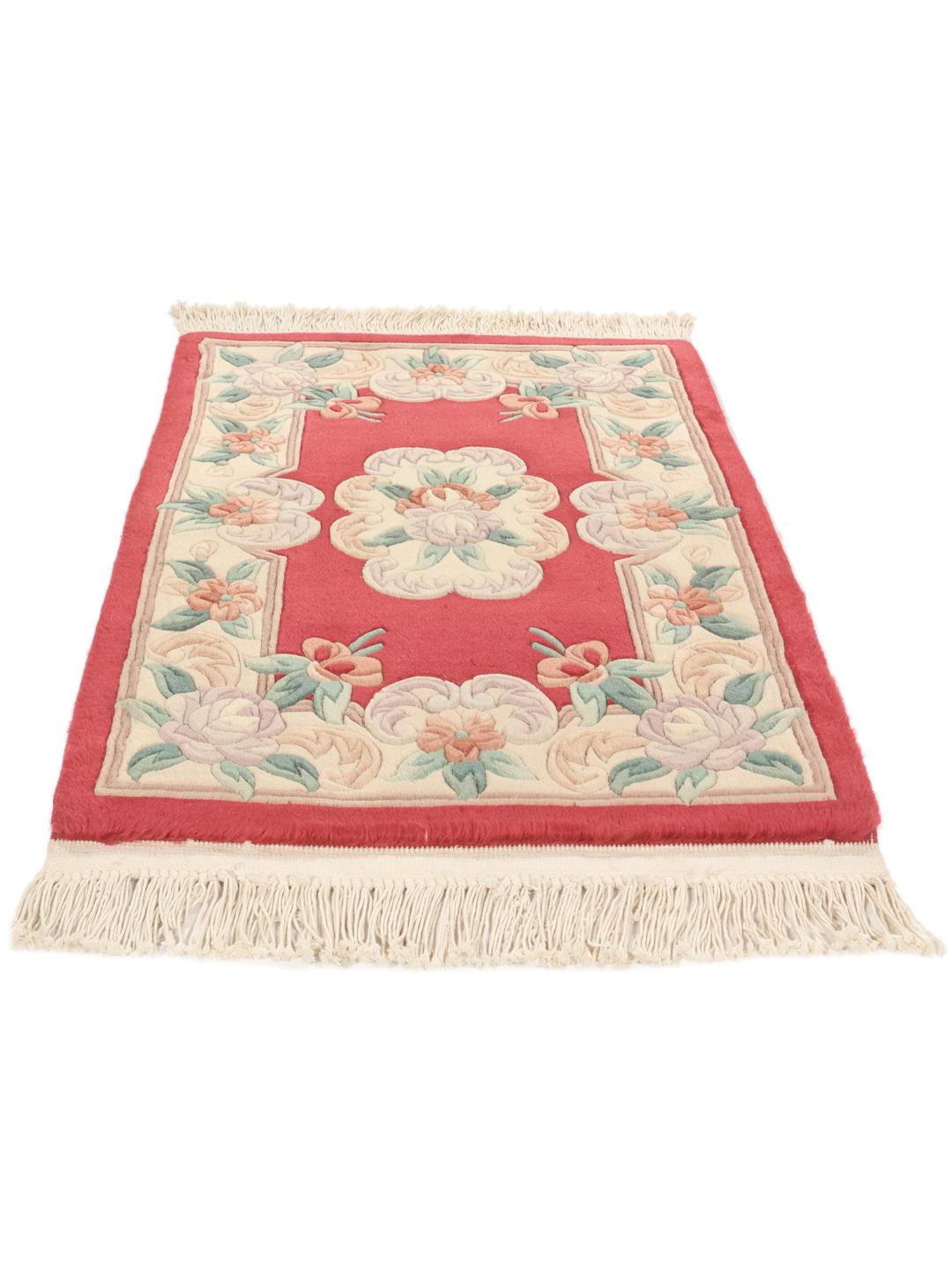
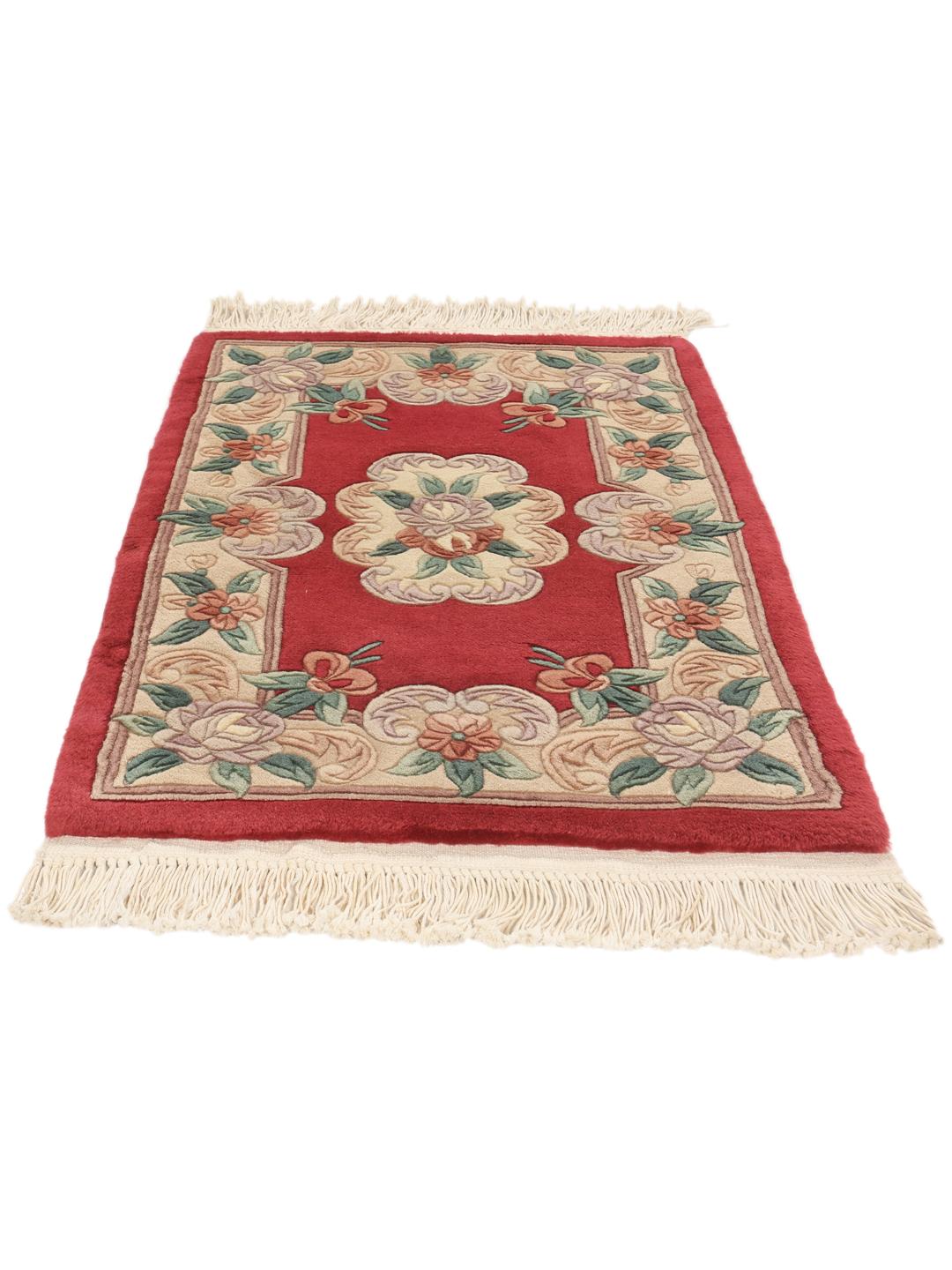
Chinese rug weaving is a storied craft that has evolved over centuries, blending local artistic sensibilities with technical mastery. Historically, these rugs were highly sought after for their sophisticated use of silk and wool, often featuring symbolic motifs that drew from nature, mythology, and Buddhist philosophy.
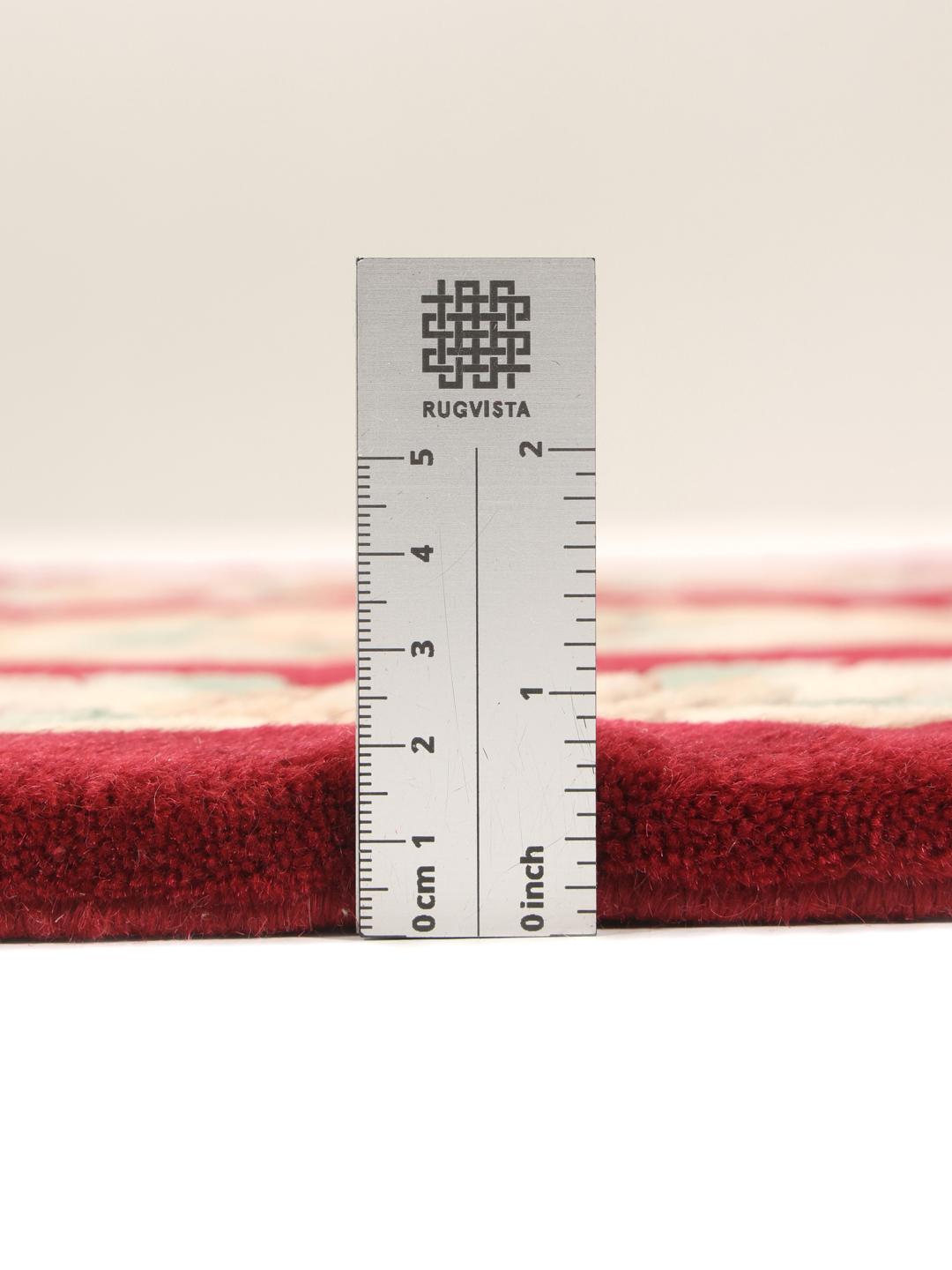
The term '90 line' refers to a traditional system of measuring the density of the knots in Chinese rugs. This measurement dictates the clarity of the design and the thickness of the pile, with higher counts allowing for more intricate, fluid curves in floral patterns and a more substantial, luxurious feel underfoot.
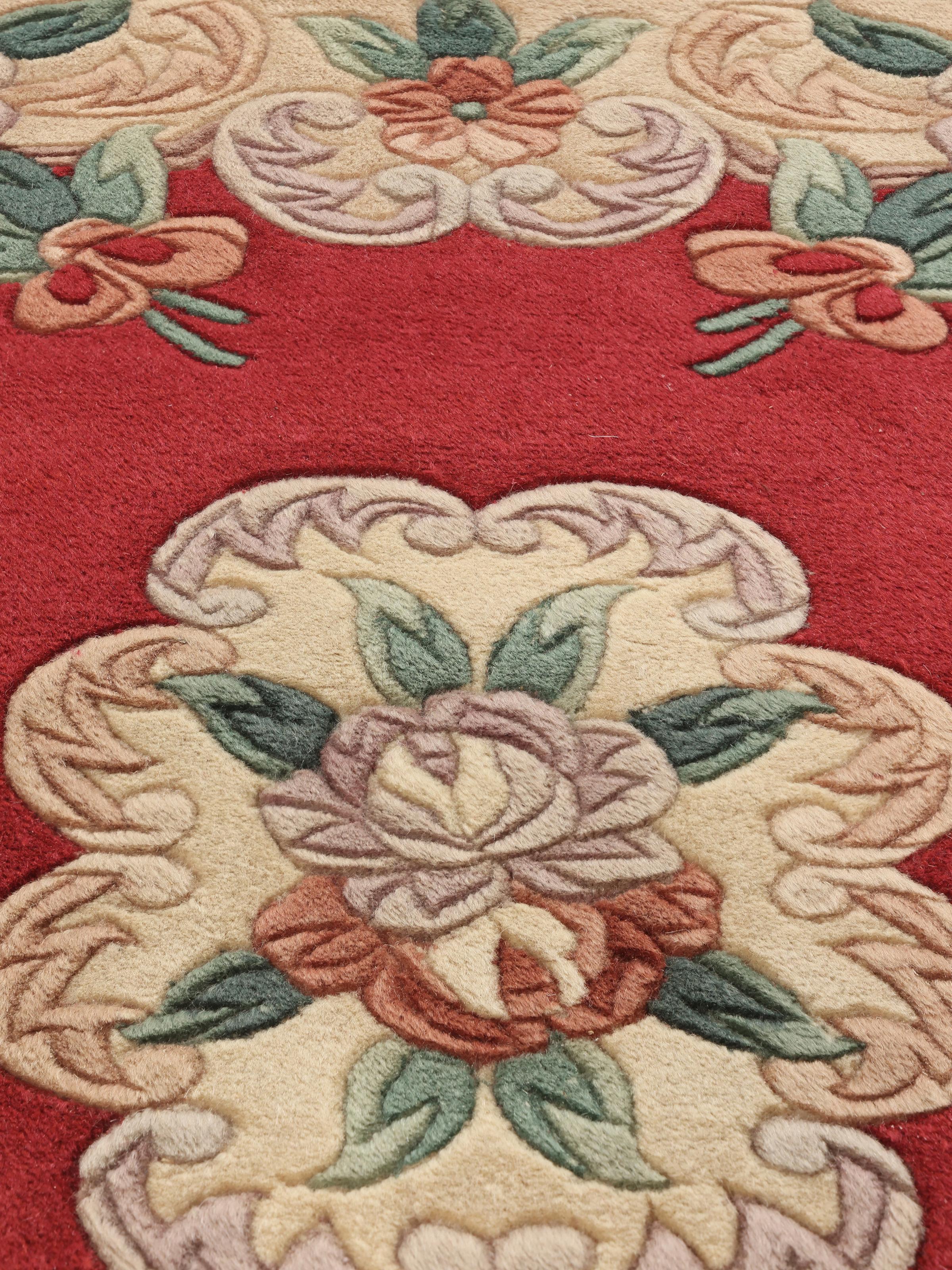
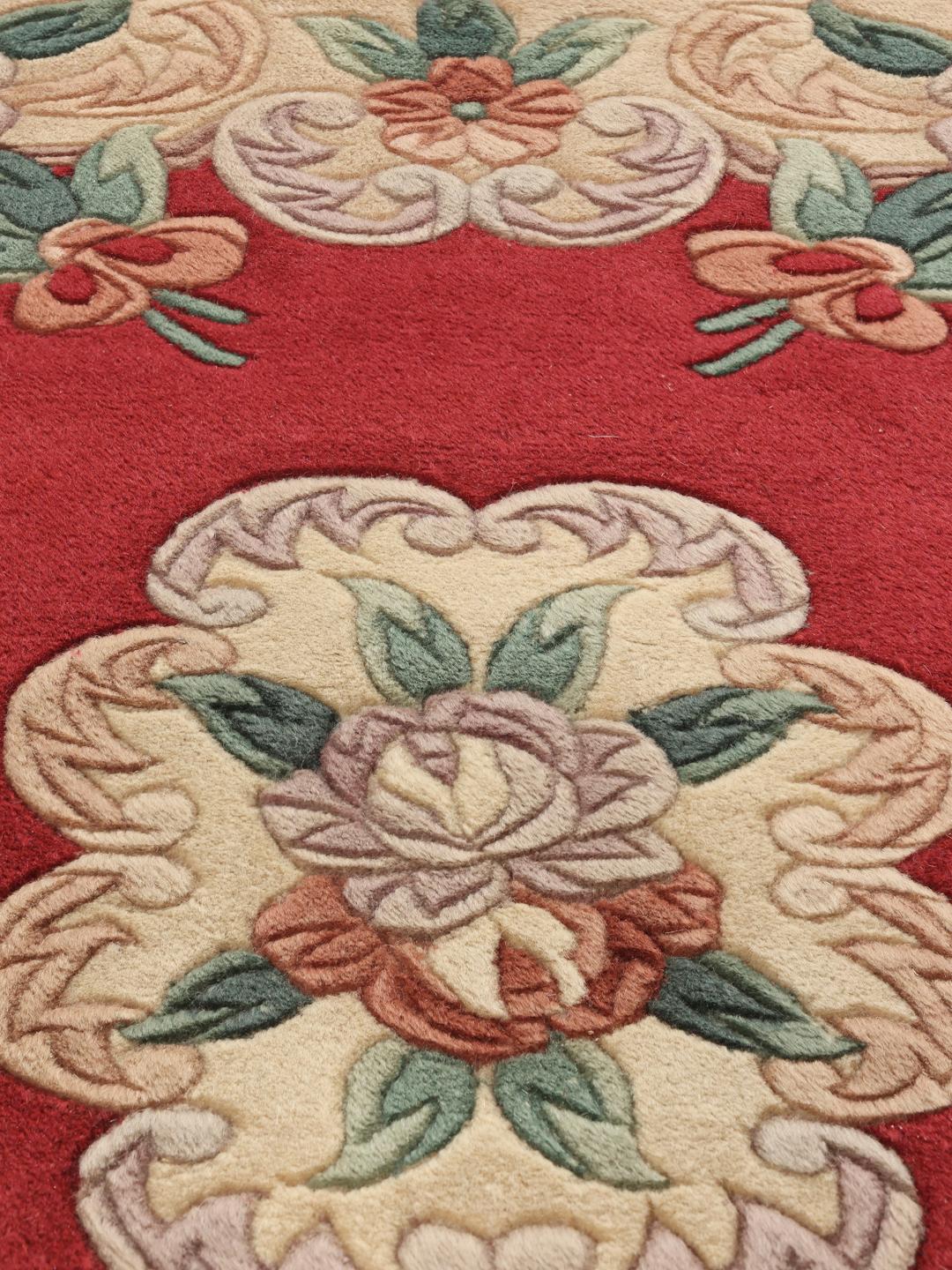
The floral language seen here is a hallmark of this tradition, where blossoms are often carved into the pile to create a relief effect. This technique, which gives the flowers a three-dimensional appearance, is a classic feature that elevates the rug from a simple floor covering to an expressive, textured piece of interior art.
Owning a hand-knotted rug from China is an investment in a cultural legacy that prioritises both aesthetic balance and functional durability. These pieces are collected for their ability to anchor a room, offering a sense of history and quiet refinement that brings a room together in a meaningful way.