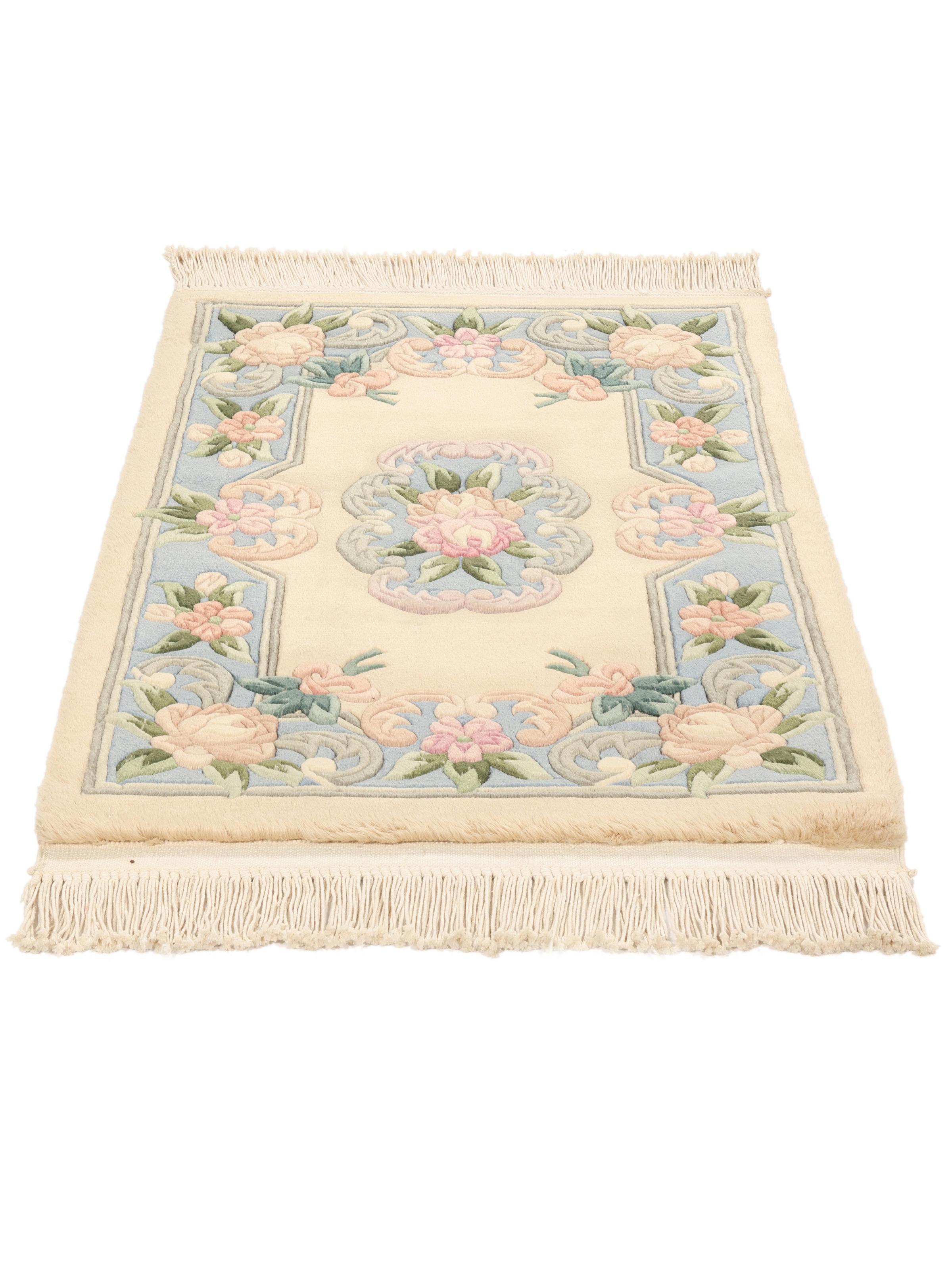
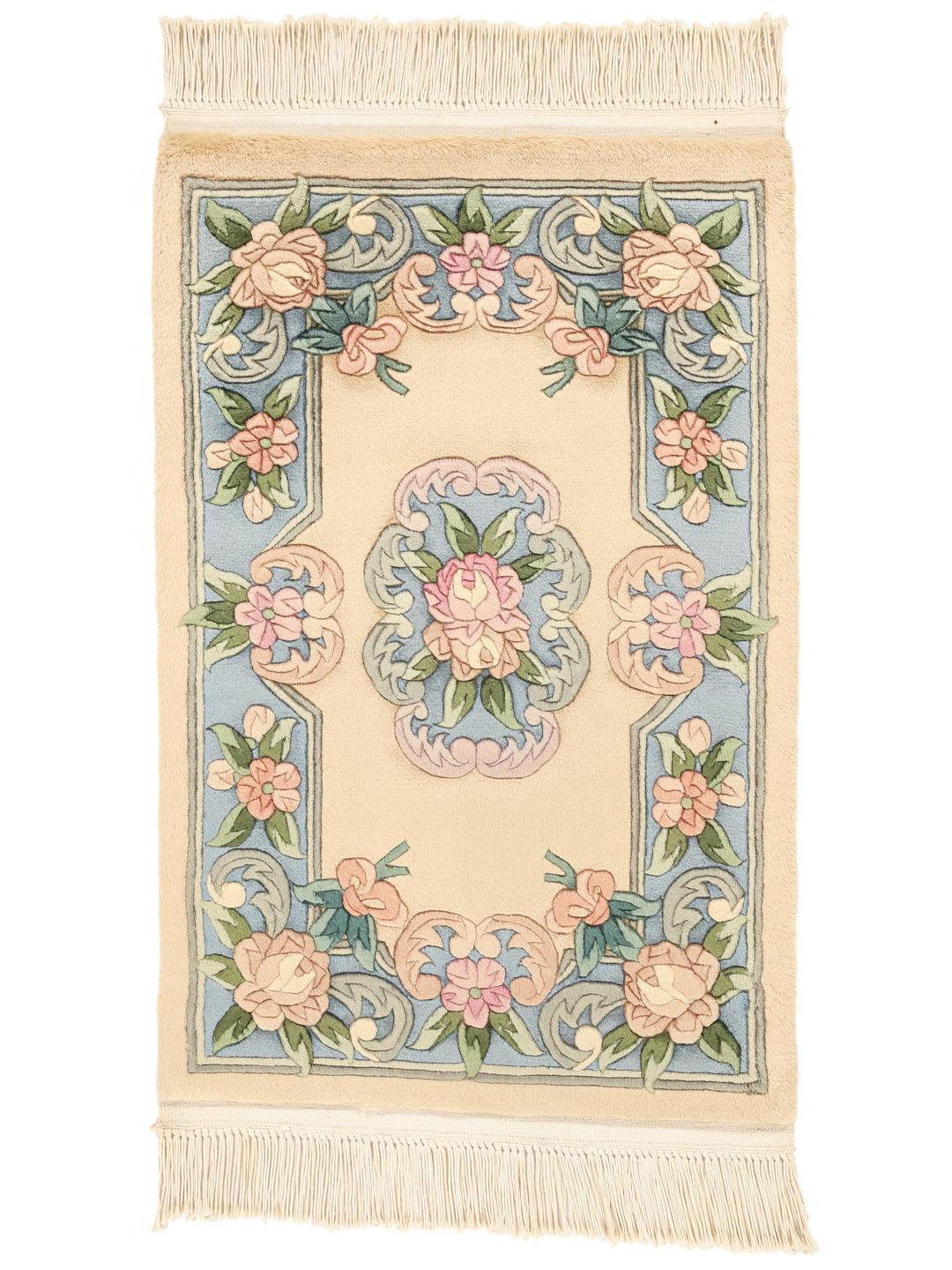
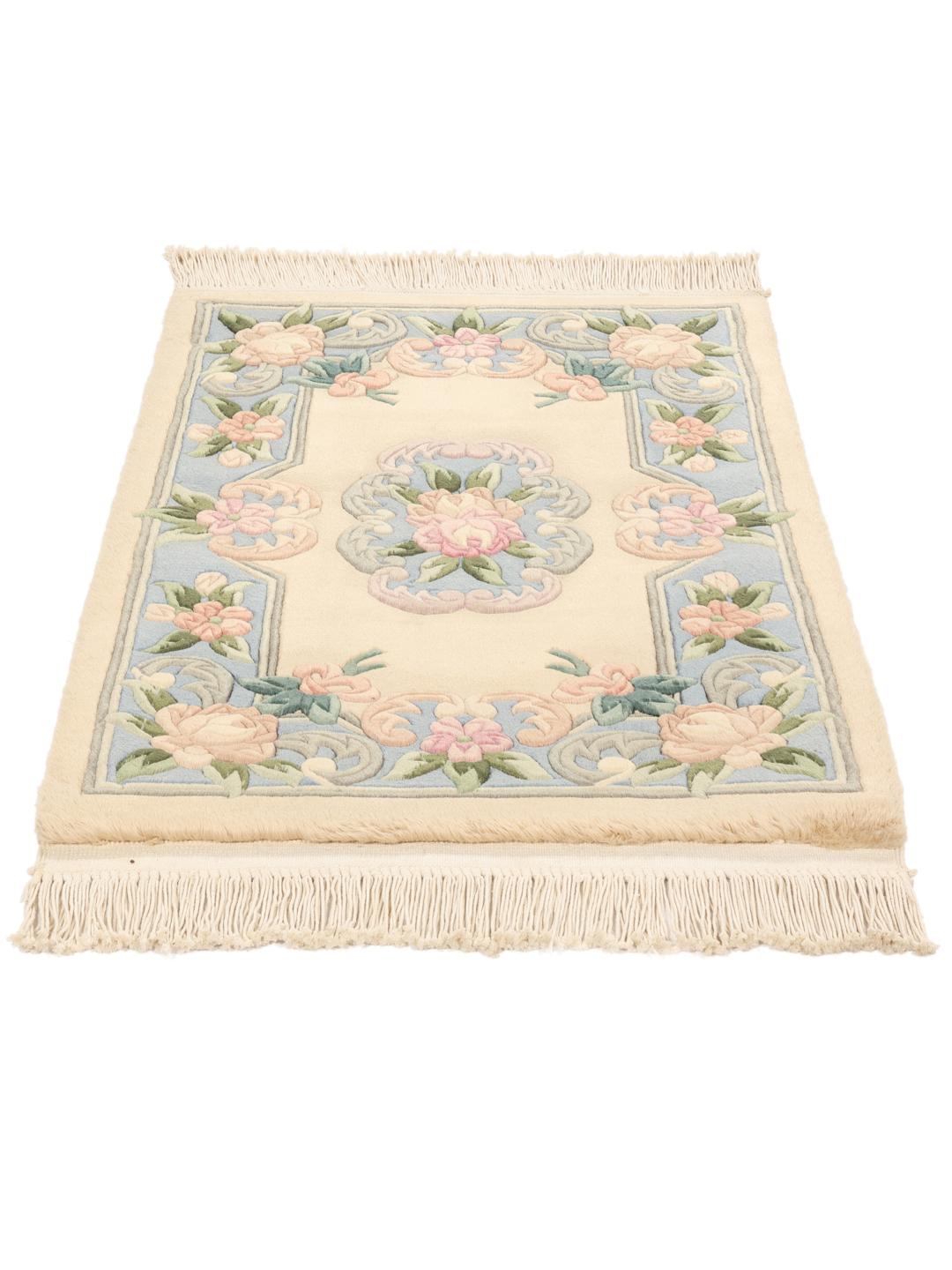
The tradition of Chinese rug weaving is an ancient craft that has evolved over centuries, heavily influenced by the aesthetic sensibilities of the imperial court. Historically, these rugs were often commissioned for temples or palaces, featuring symbolic motifs that represented prosperity, longevity, and natural beauty, themes that are still celebrated in contemporary designs today.
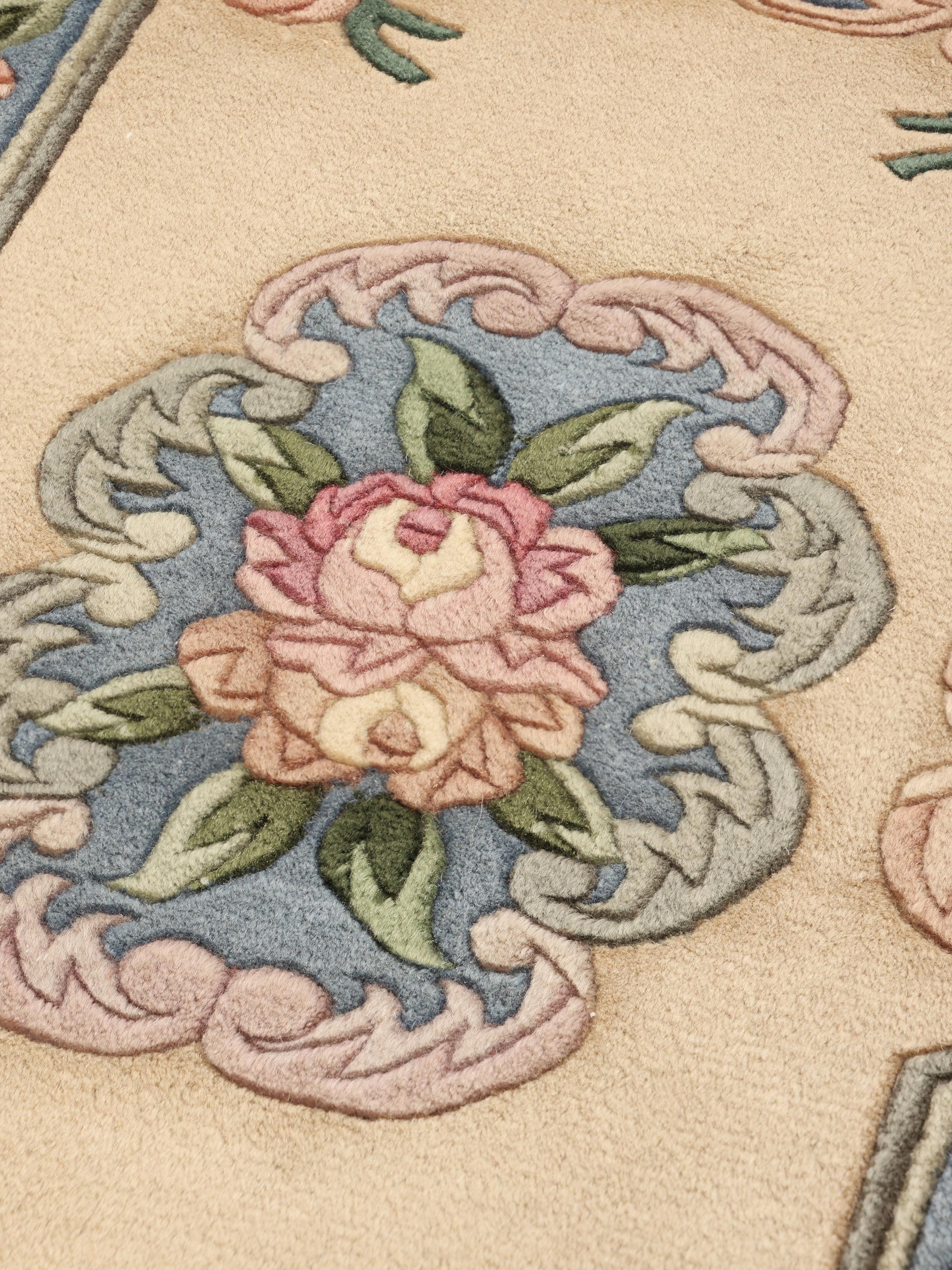
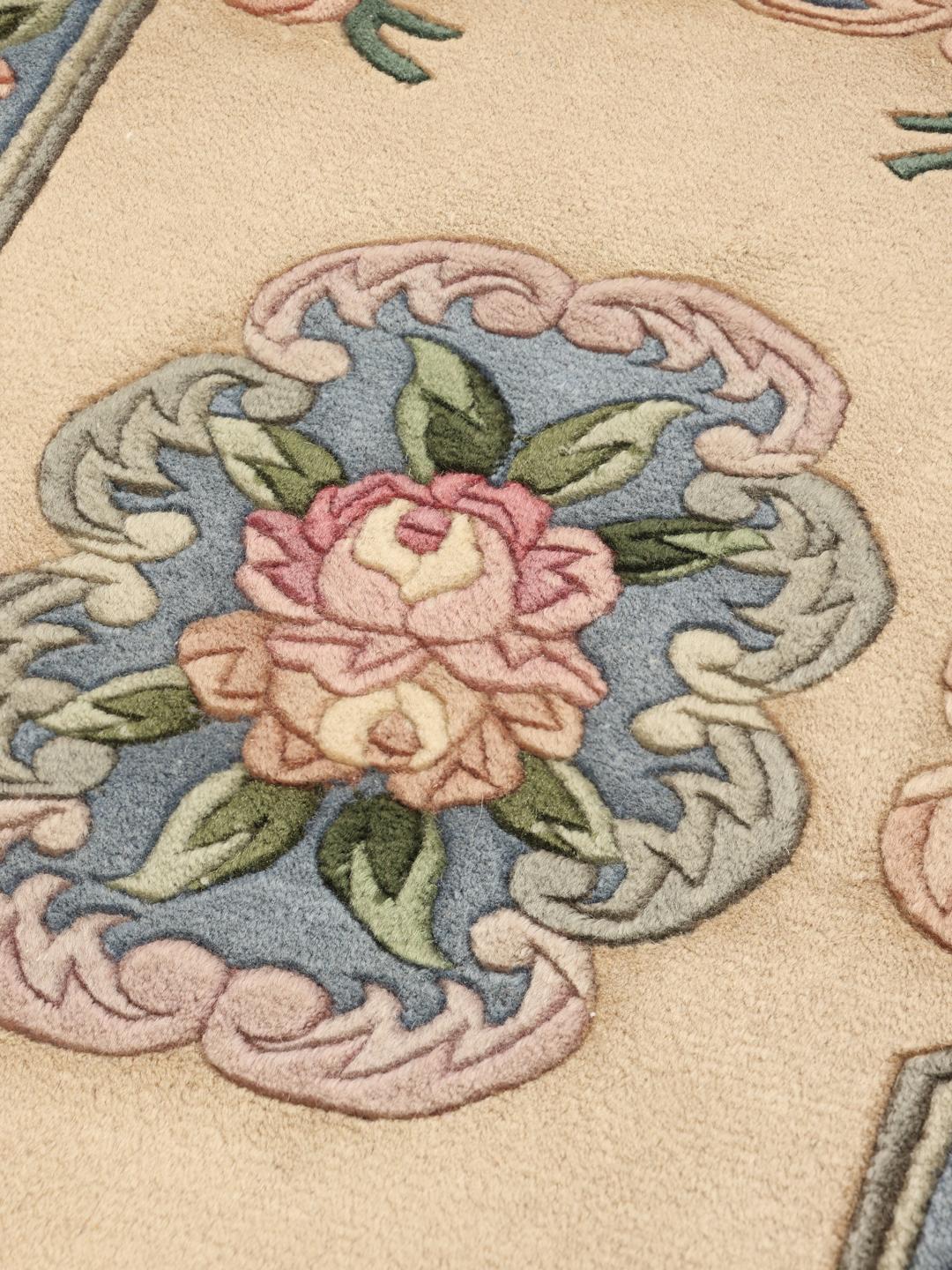
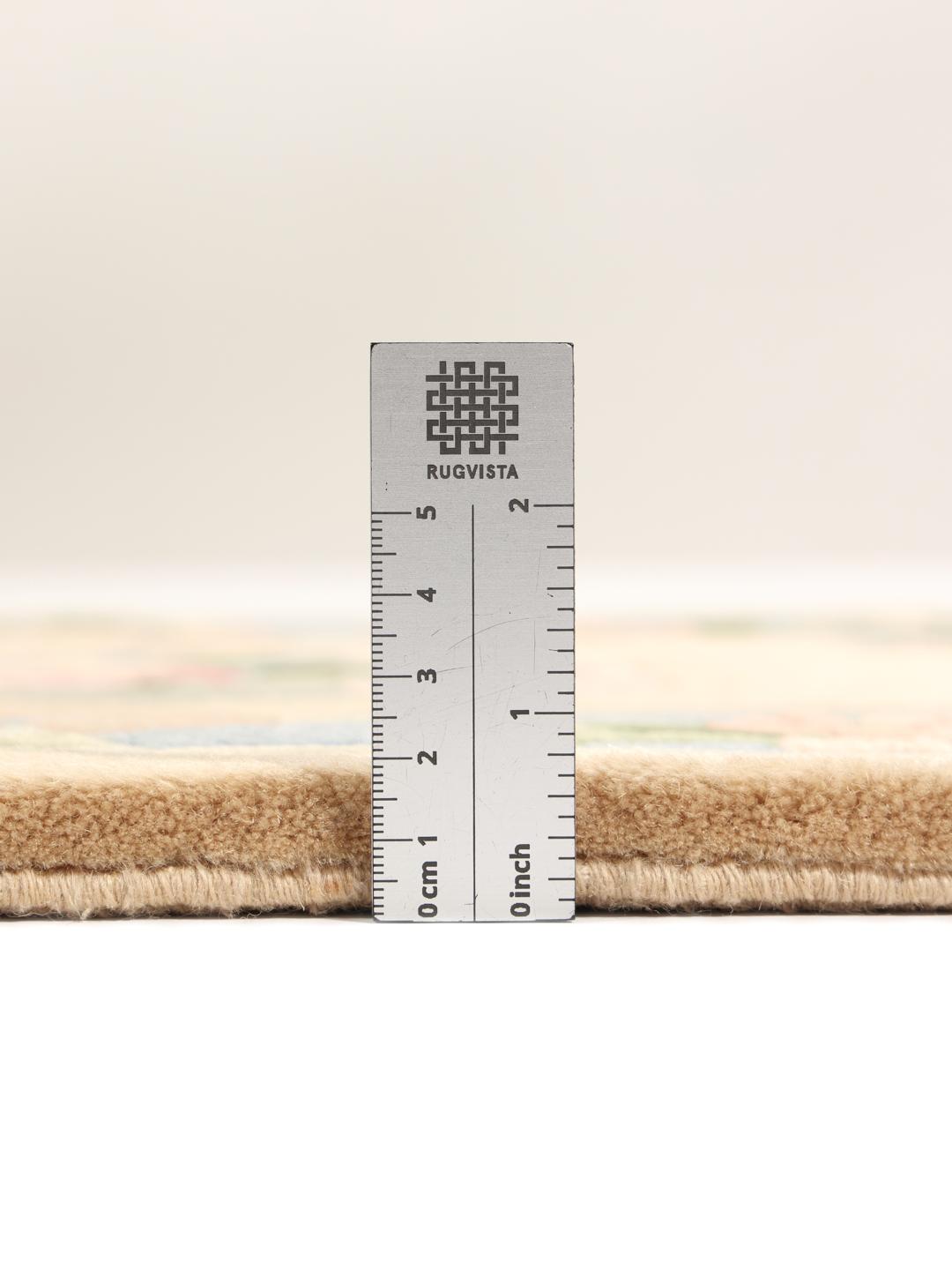
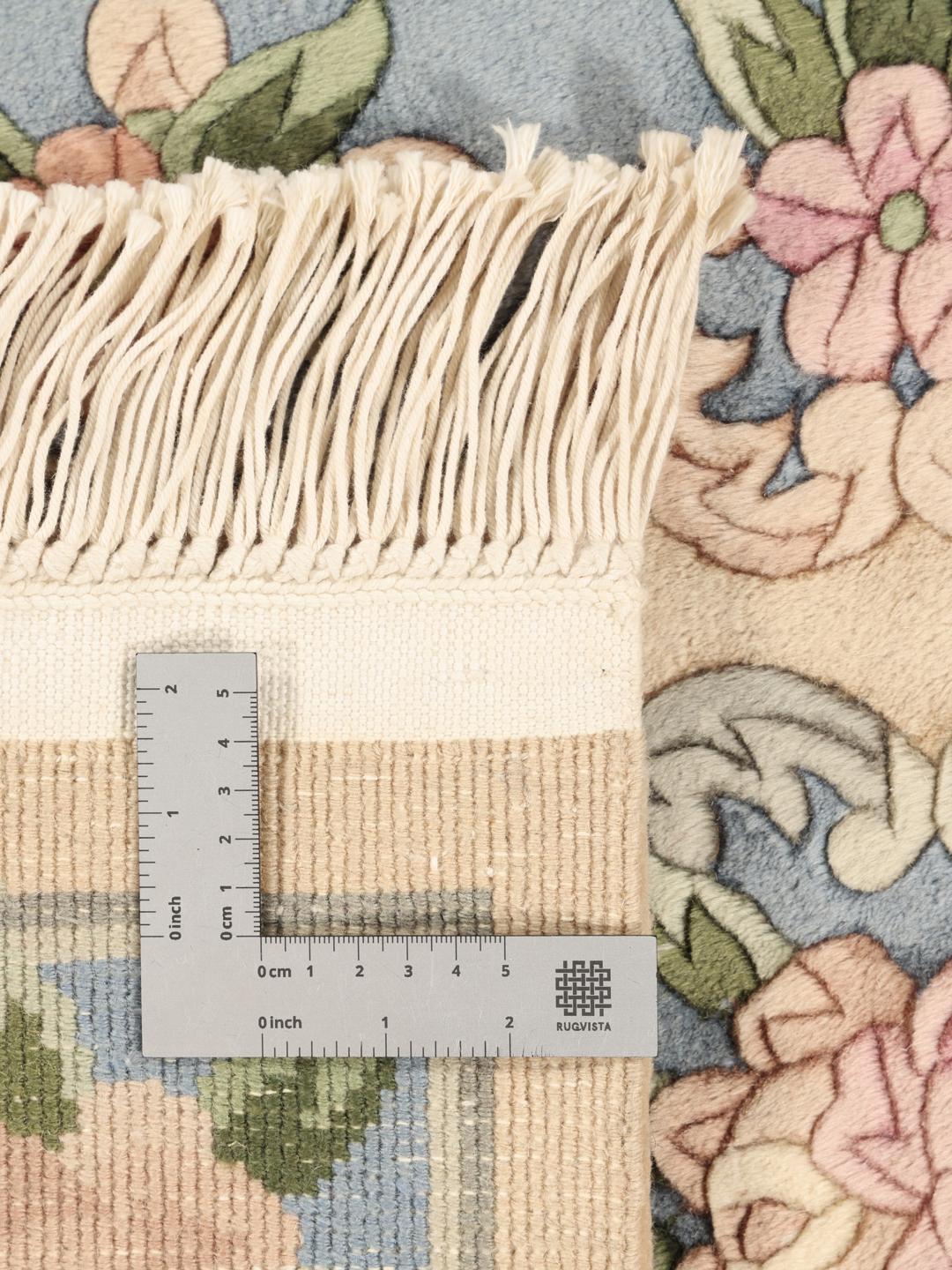
The '90 Line' refers to a traditional technical standard in Chinese rug production, indicating the number of knots per linear foot. This specific construction method is prized for its ability to create a smooth, dense pile that allows for intricate floral patterns and subtle colour transitions, ensuring both visual clarity and a soft, durable surface.
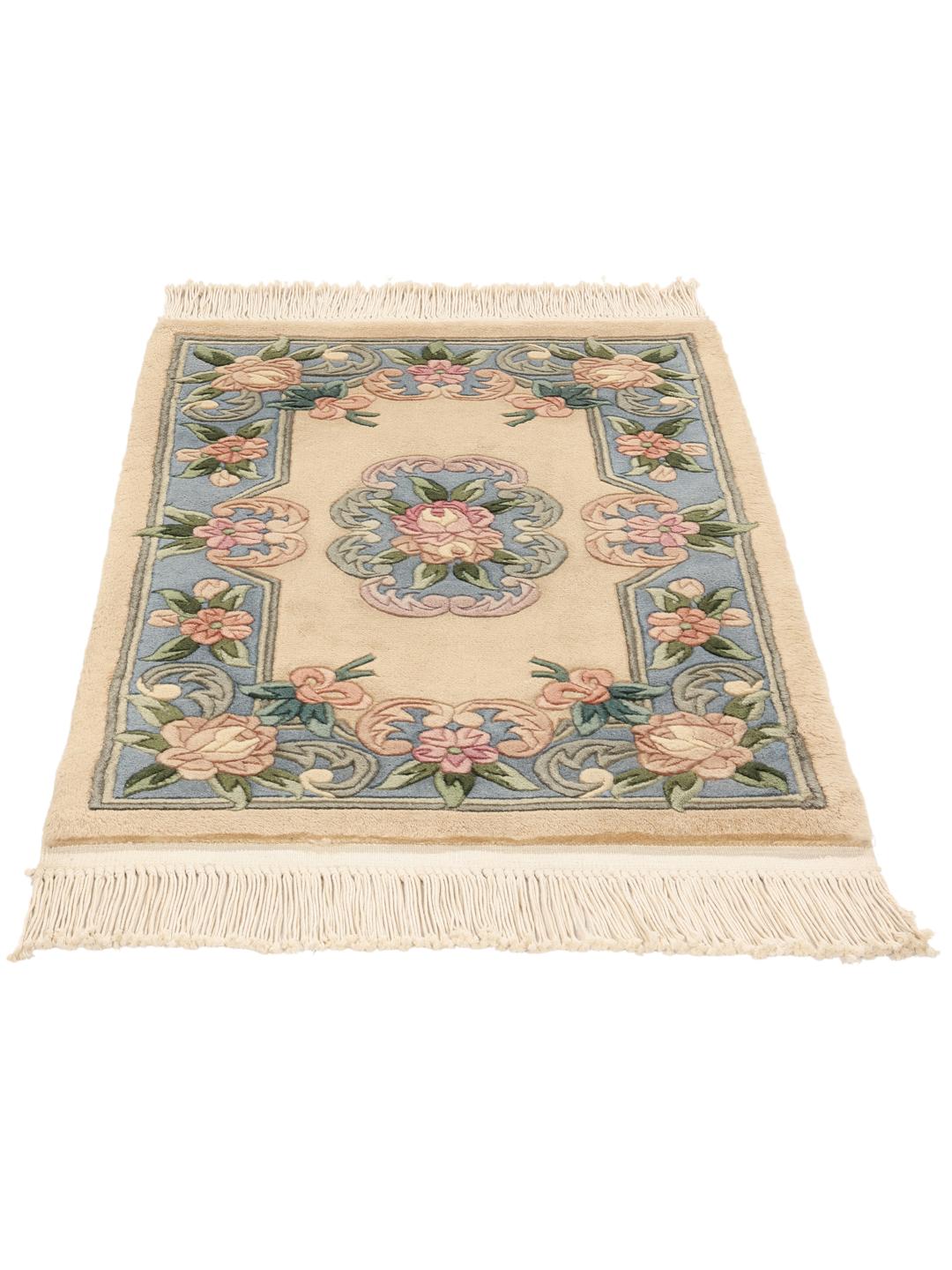
Design elements in this style frequently incorporate balanced, symmetrical floral arrangements. The use of soft, muted tones combined with delicate blossoms and flowing vines is a hallmark of this tradition, reflecting a desire to bring the harmony of nature into the domestic interior.
Owning a hand-knotted piece from this heritage is a testament to the skill of the artisans who preserve these age-old techniques. It represents an investment in cultural tradition, offering a sense of connection to a rich history of textile art that values patience, precision, and the artistic expression of the natural world.