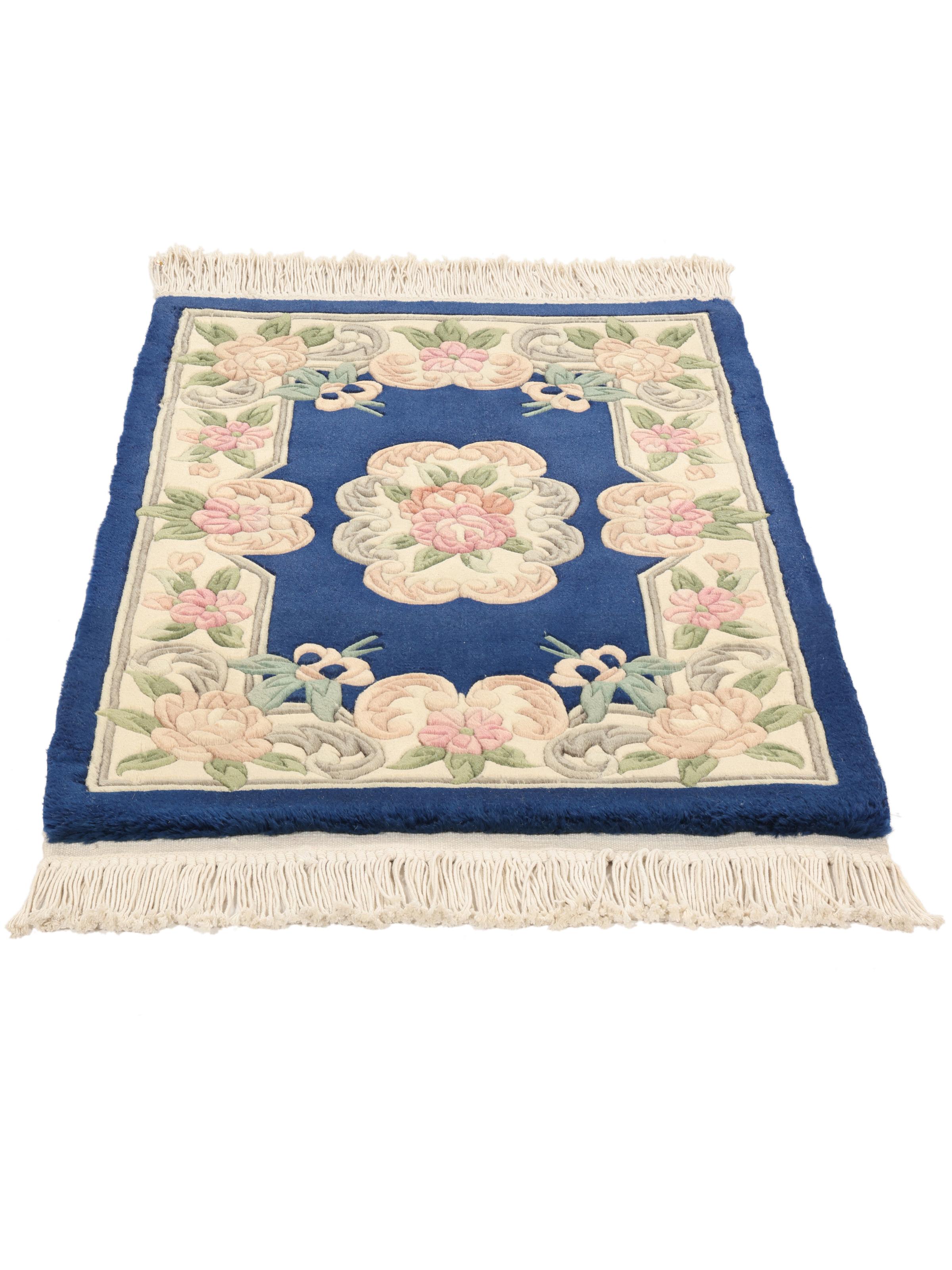
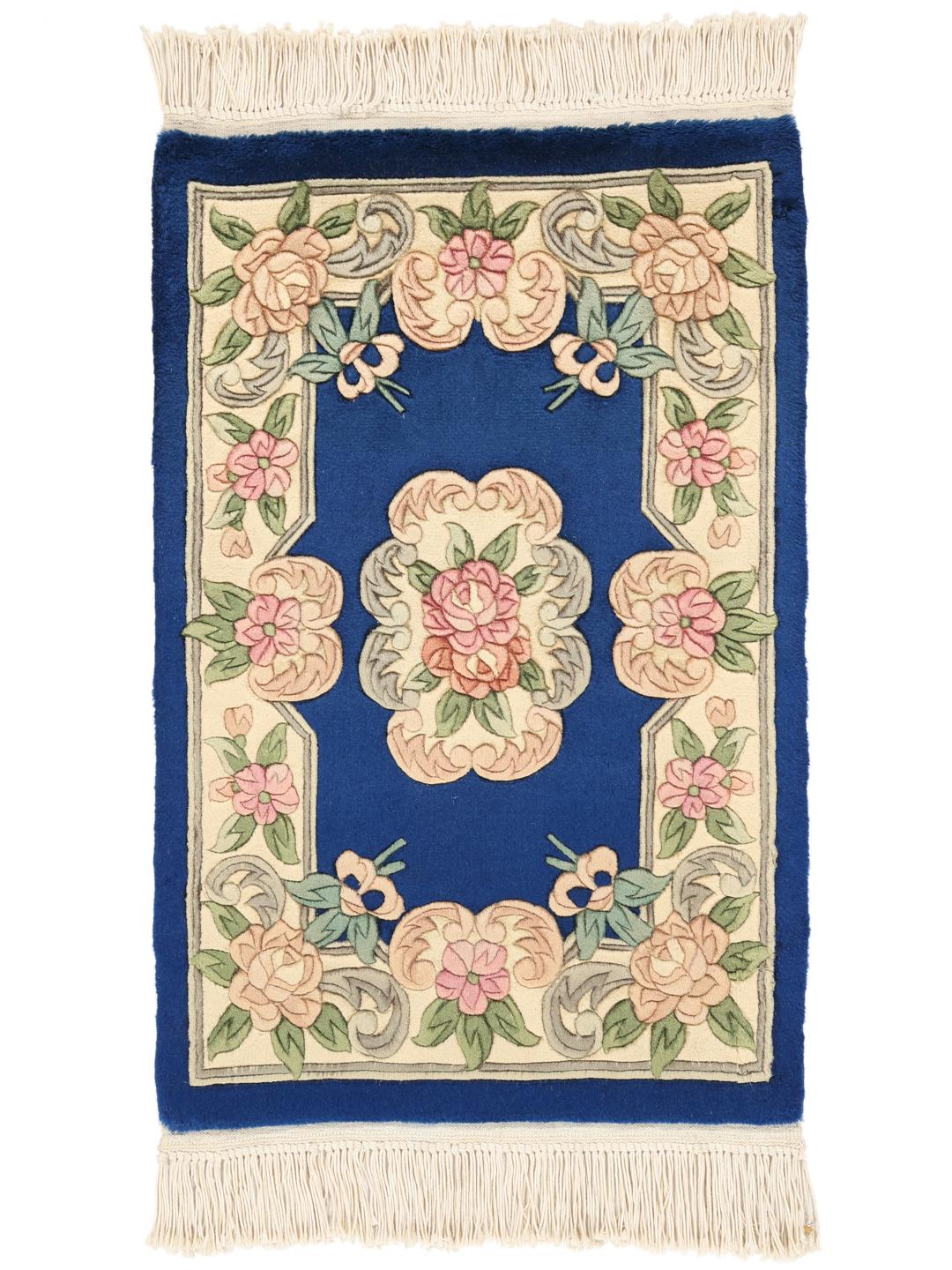
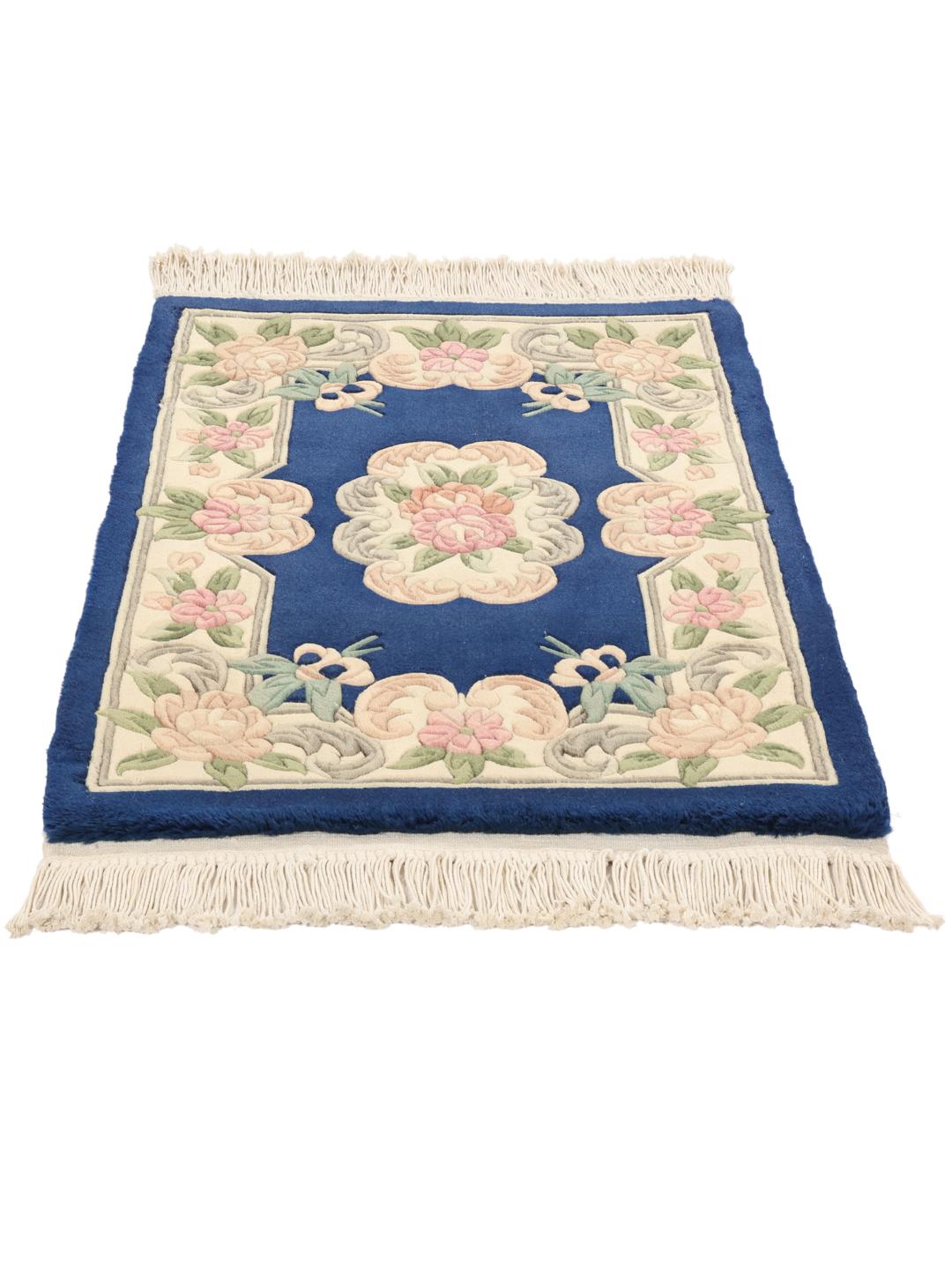
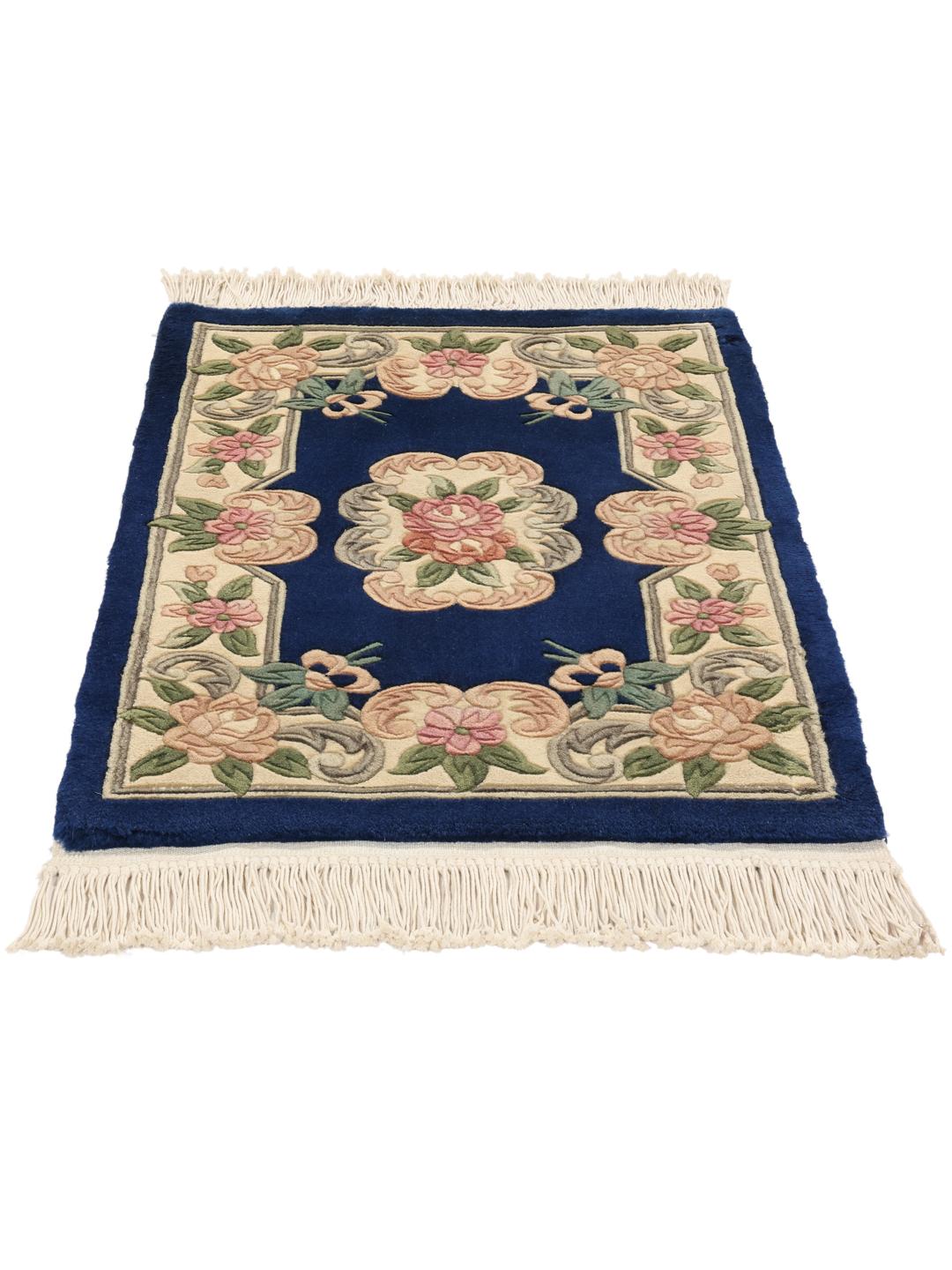
Chinese rug-making traditions are deeply rooted in centuries of artistic development, often drawing inspiration from silk weaving and imperial court designs. While early pieces were primarily functional, the evolution of Chinese rugs has seen them become highly sought-after decorative items, known for their unique sculptural pile and balanced compositions.
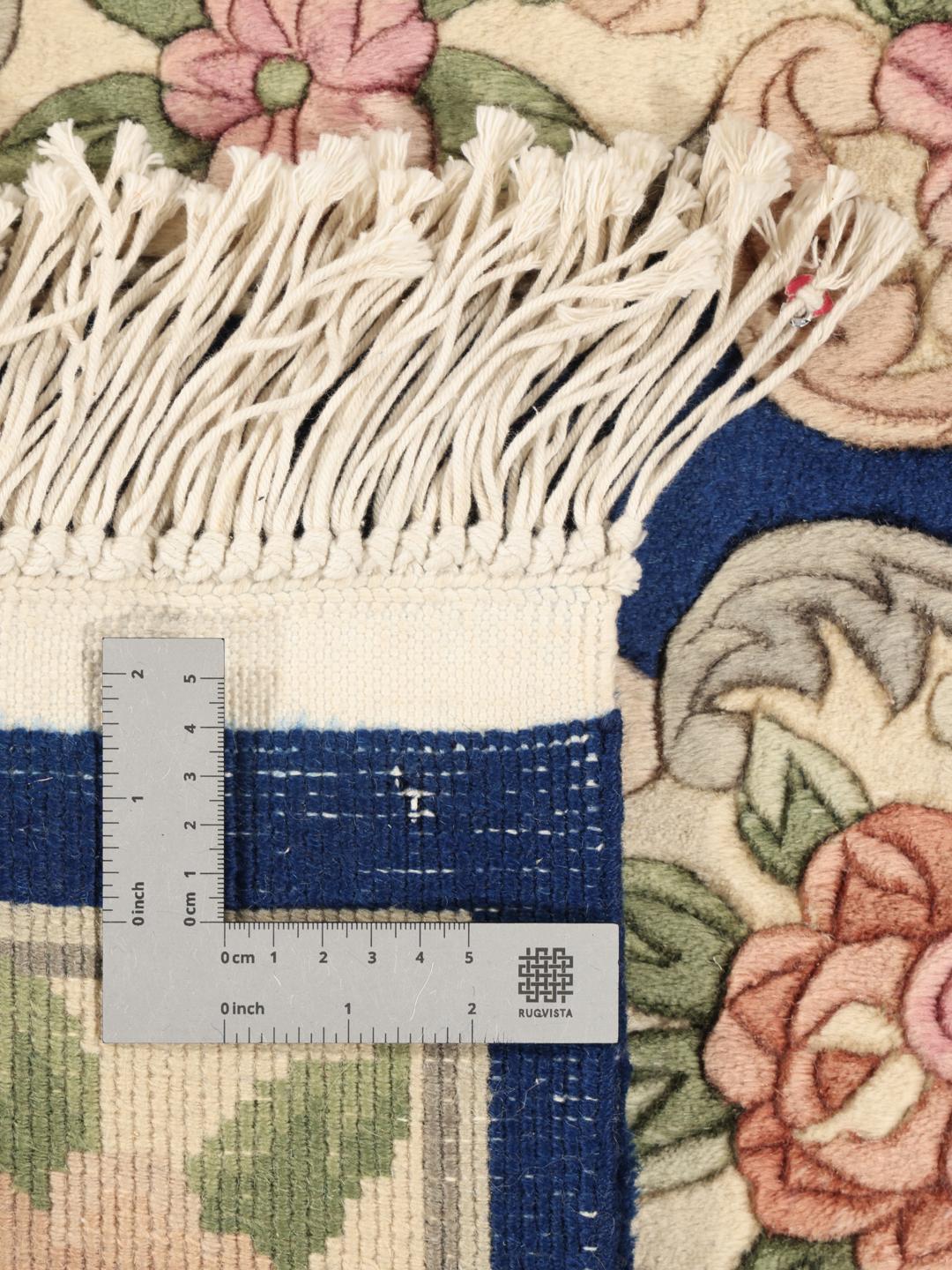
The term '90 Line' refers to a specific traditional grading system for Chinese rugs, indicating the number of knots along a standard width. This system is essential for maintaining the clarity of intricate designs, ensuring that curves and floral edges remain crisp and well-defined, which is a testament to the high standards of the craft.
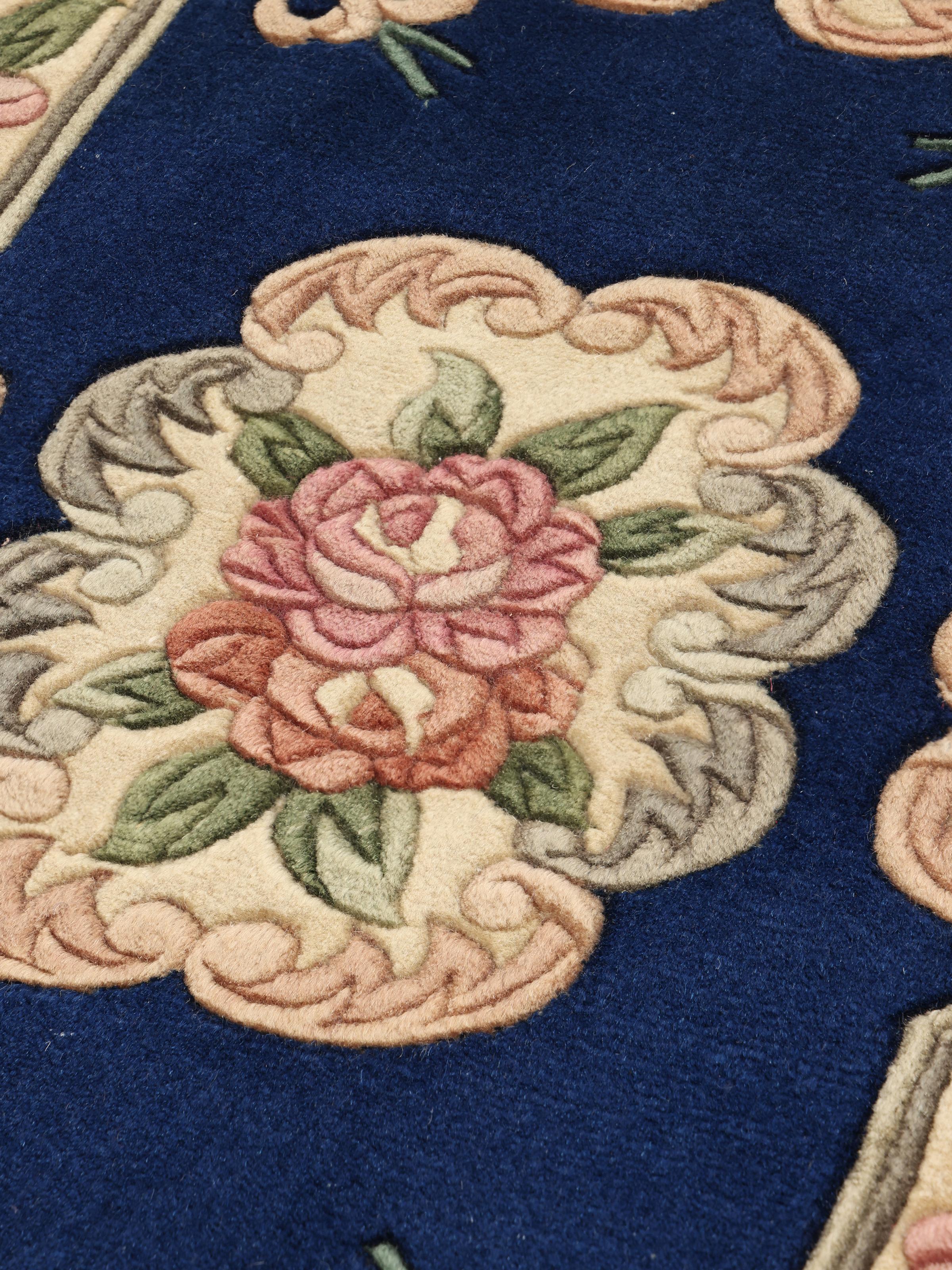
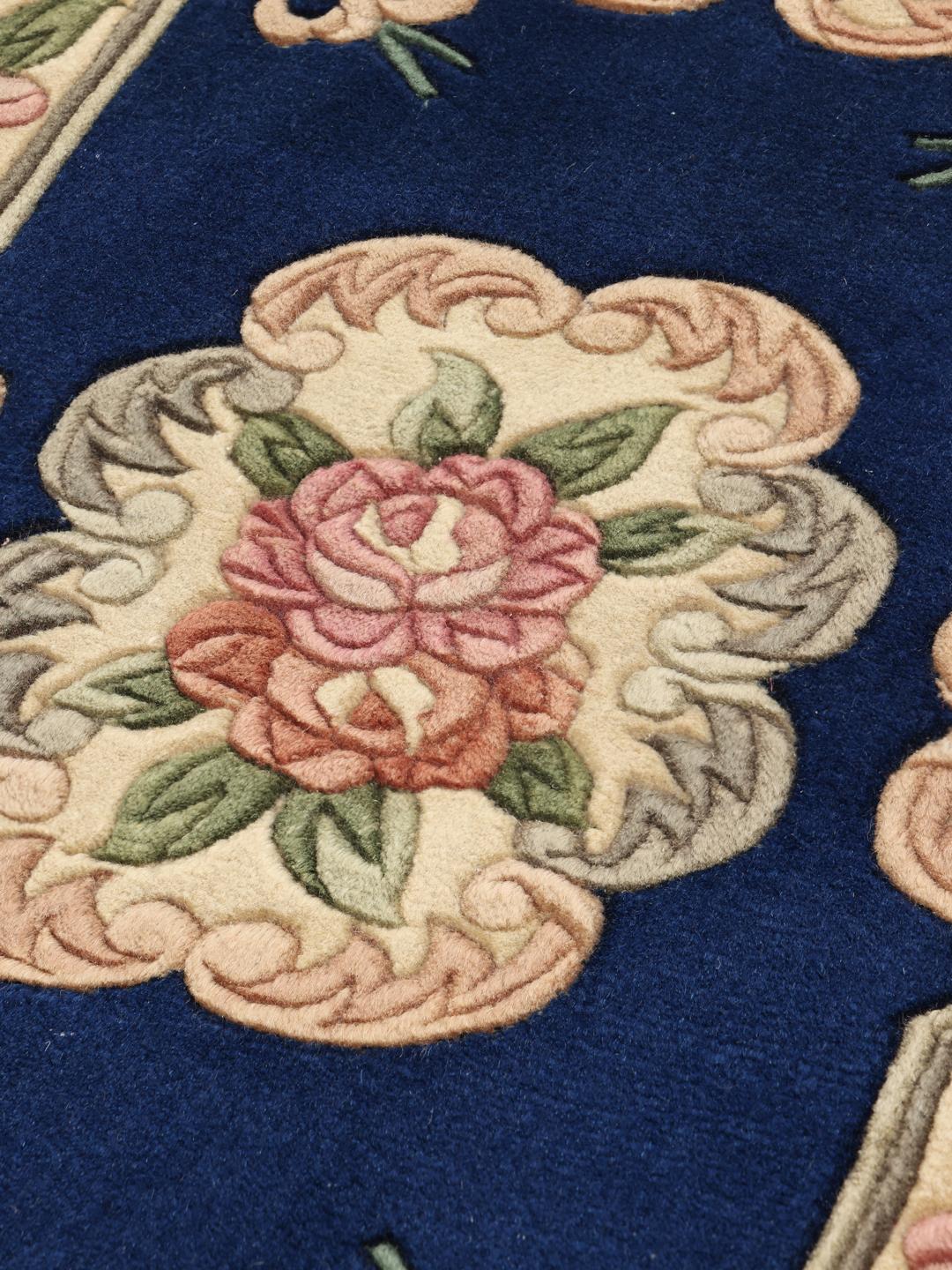
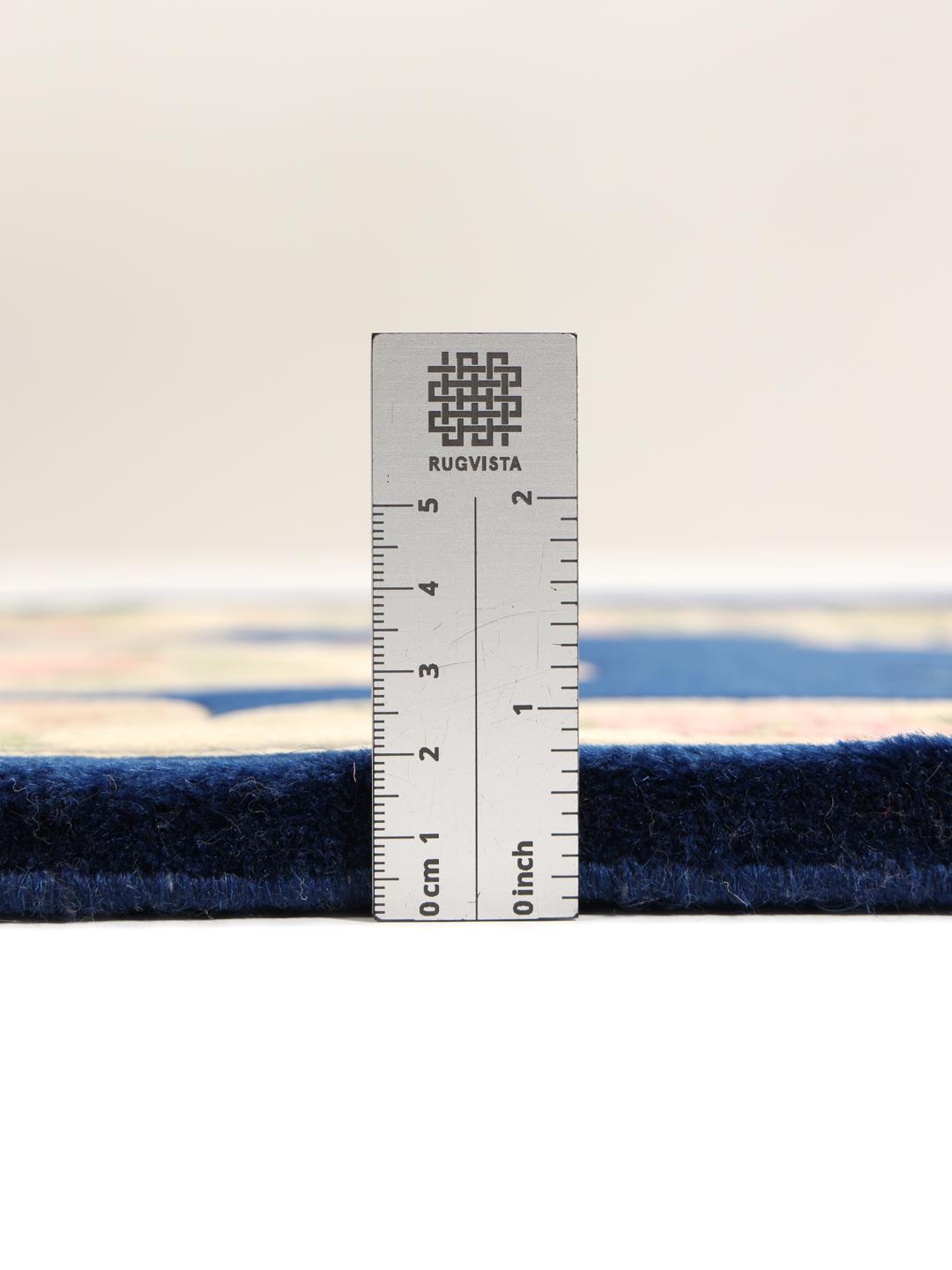
The signature design language of these rugs often centres on botanical themes, such as peonies or lotus flowers, which hold symbolic meanings of prosperity and purity. This particular piece highlights the tradition of carved-effect motifs, where the pile is trimmed to give the flowers a raised, three-dimensional appearance that adds depth to the surface.
Owning a hand-knotted rug from China is an investment in cultural heritage and refined skill. These pieces are valued for their ability to bridge the gap between traditional artistry and modern living, offering collectors and homeowners alike a sense of permanence and genuine human connection in an age of mass production.