Chinese rug weaving is a tradition that spans centuries, deeply rooted in the artistic and cultural heritage of the region. Historically, these rugs were highly prized for their unique aesthetic, often featuring motifs derived from nature, such as flowers, birds, and landscapes, which were believed to bring harmony and good fortune to the household.
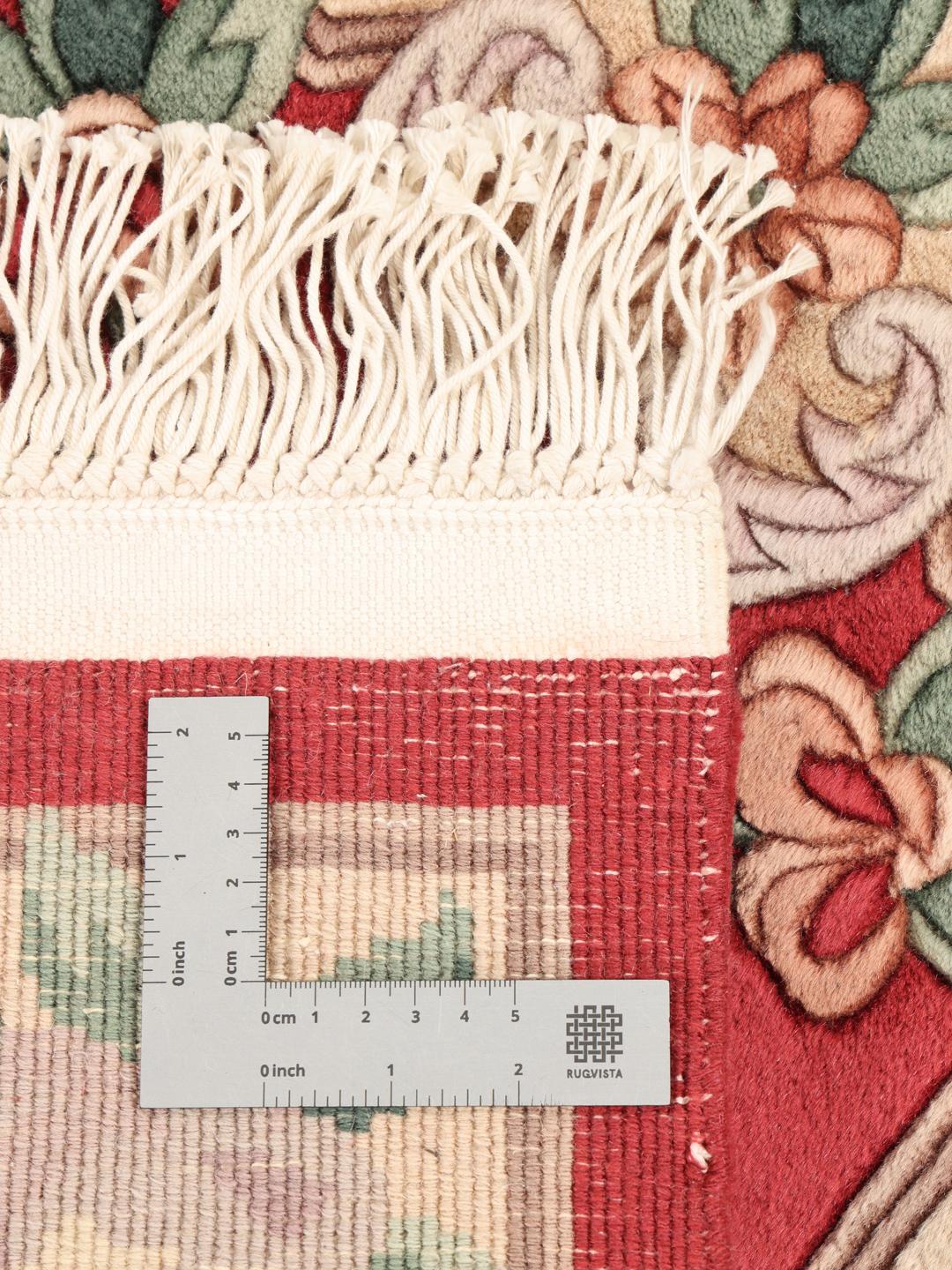
The term '90 Line' refers to a specific technical standard in the Chinese rug-making tradition, denoting the number of knots per linear foot. This specific density is a hallmark of the craft, balancing detail with the plush, thick pile that has become synonymous with Chinese rugs. It signifies a dedicated approach to construction where the quality of the wool is allowed to shine through.
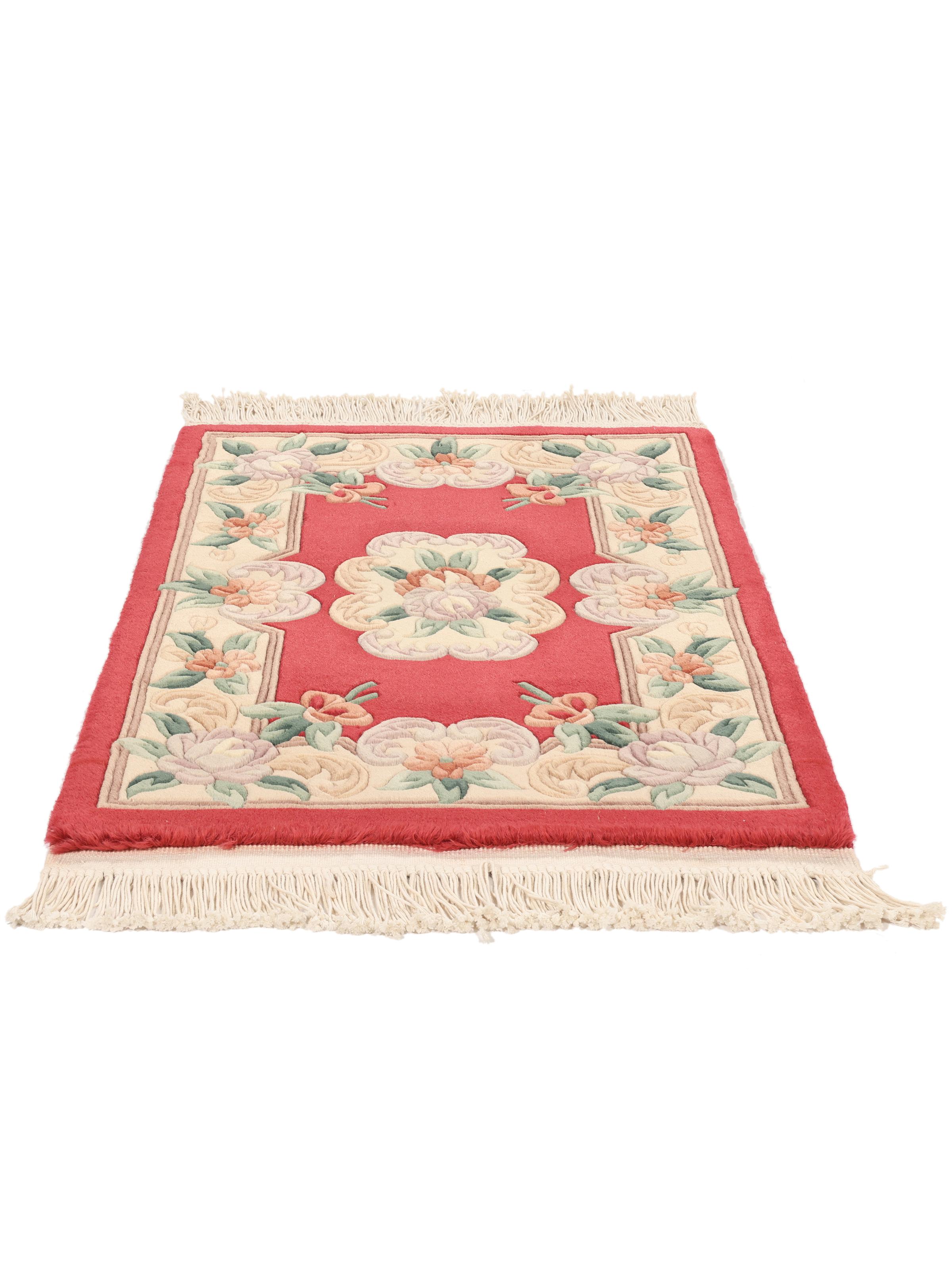
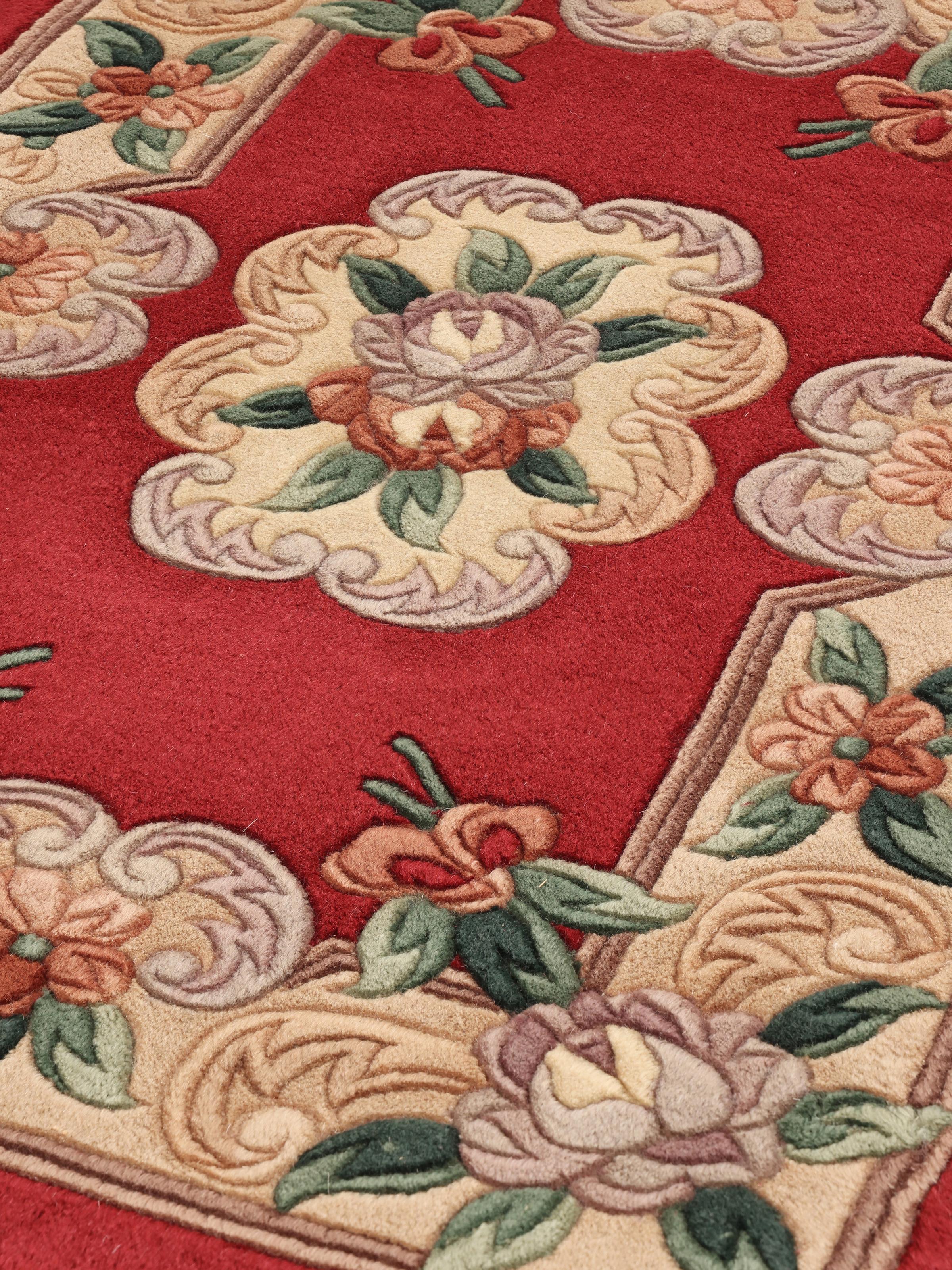
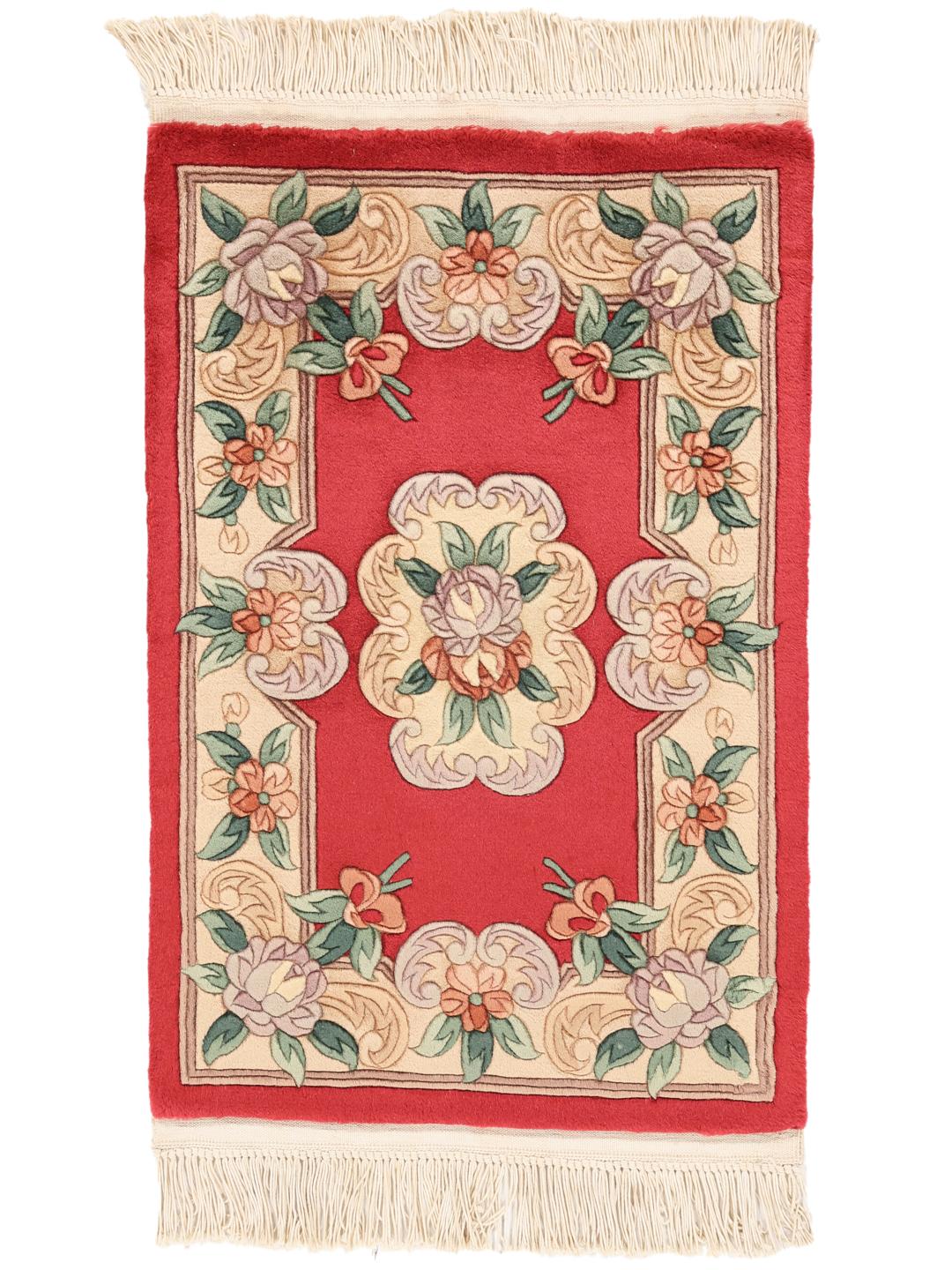
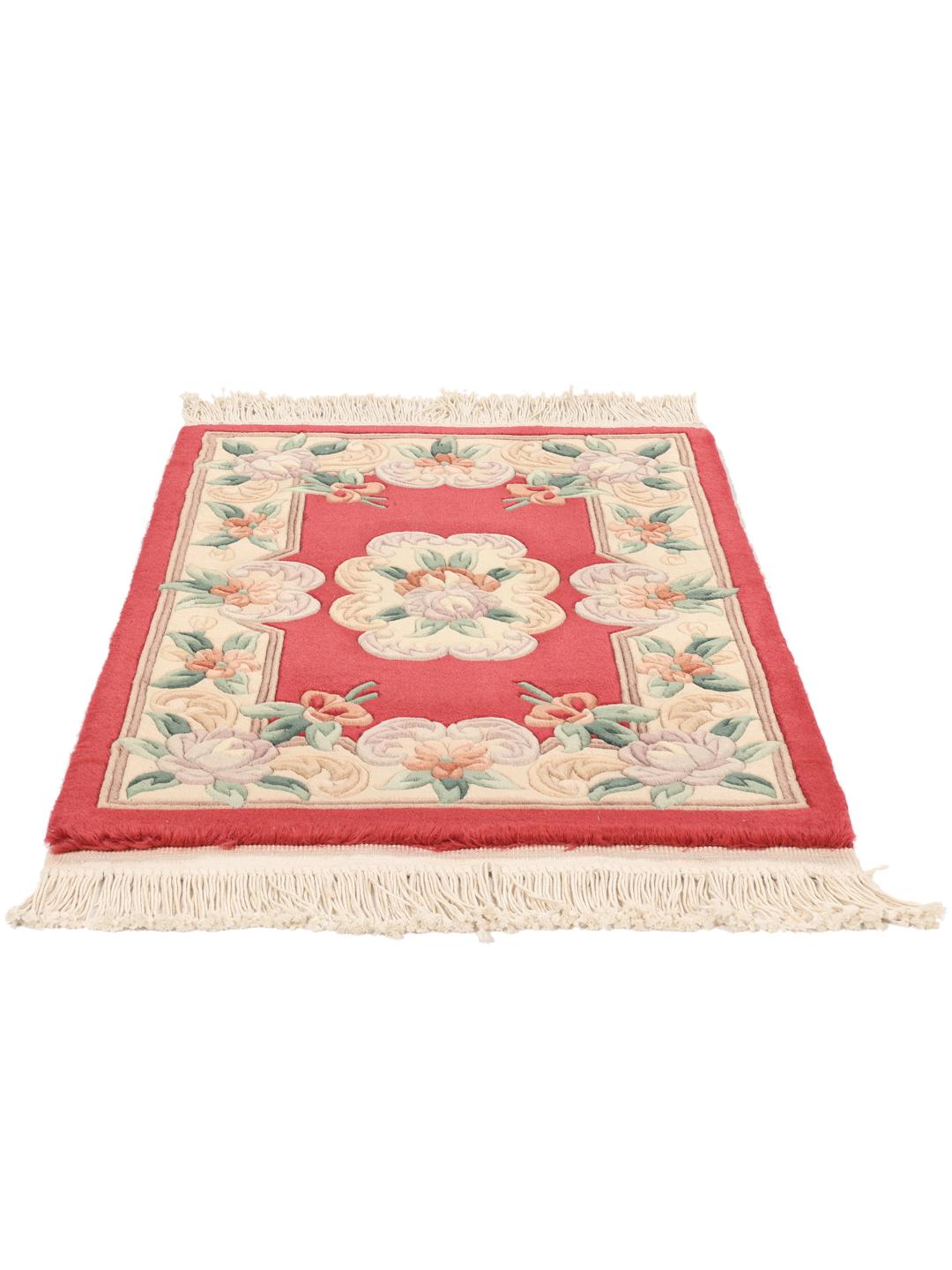
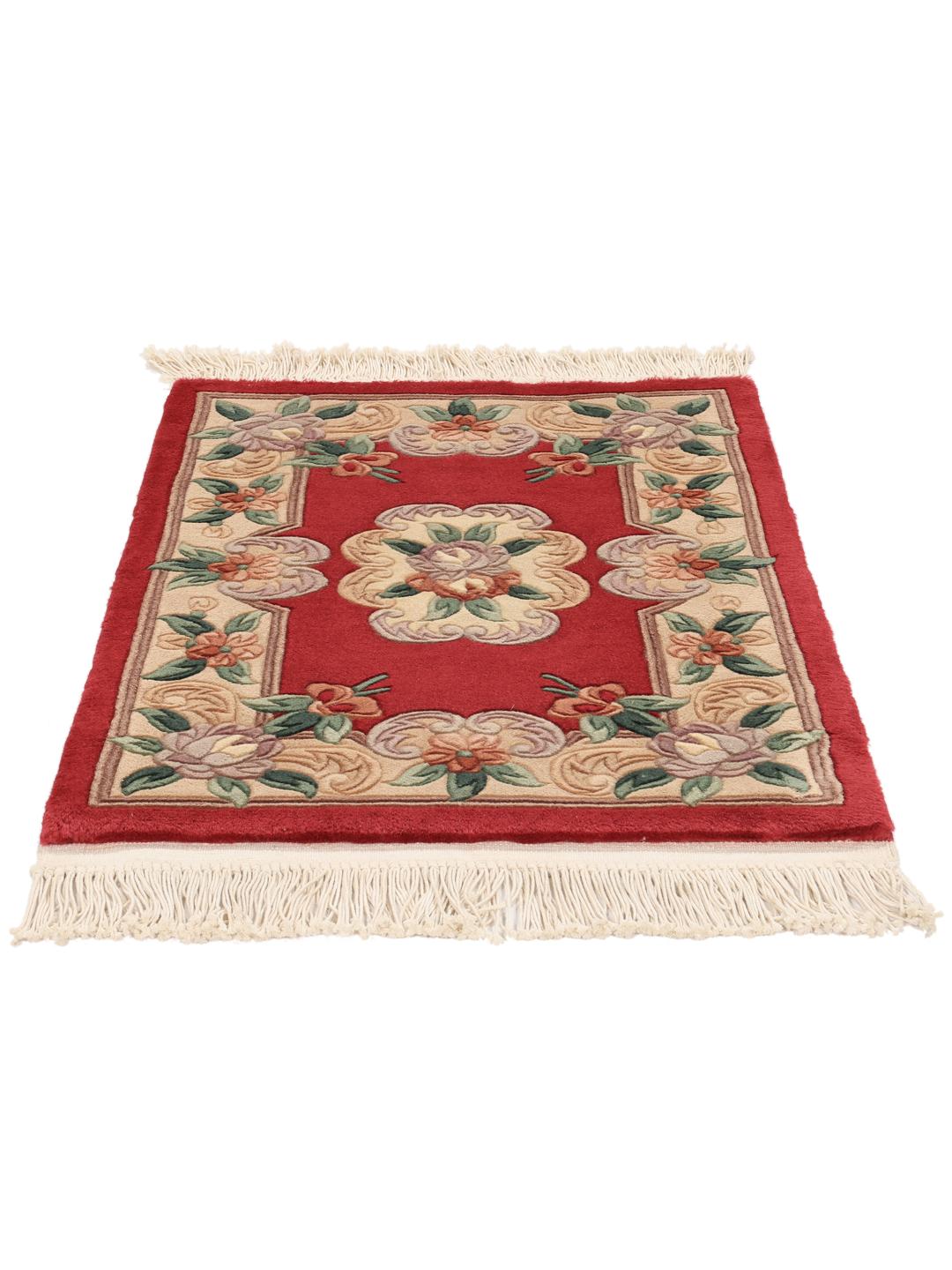
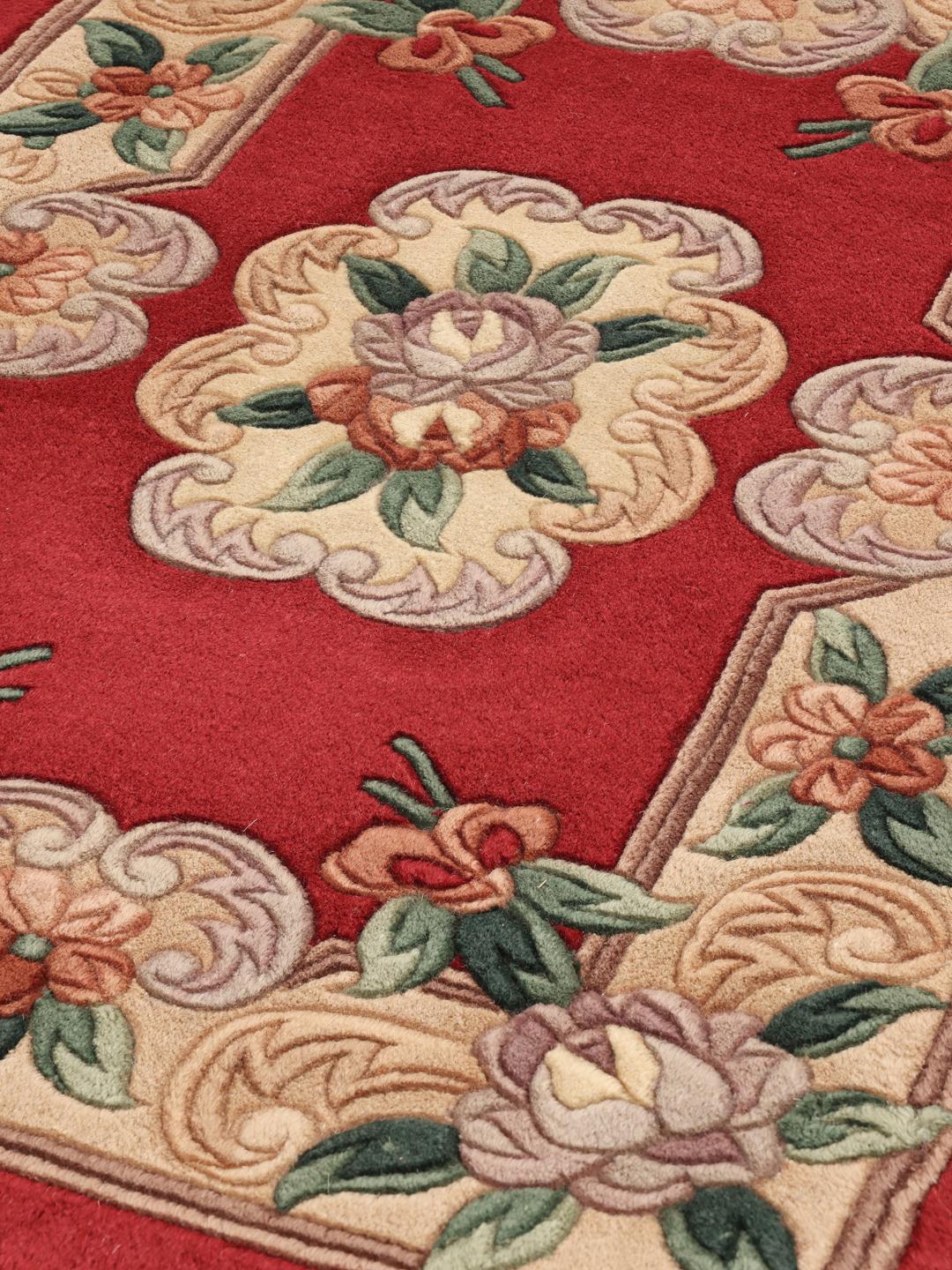
Visually, these rugs are defined by their use of open space and deliberate placement of motifs. The floral patterns seen here are typical of the tradition, often framed by decorative borders that guide the eye toward a central medallion or arrangement. The use of vibrant red against softer, neutral tones is a classic choice that highlights the intricate details of the carved-like floral designs.
Owning a hand-knotted rug from this tradition is an investment in cultural history. Collectors and enthusiasts value these pieces not only for their visual beauty but for the immense skill required to produce them. By bringing this rug into your home, you are preserving a craft legacy that emphasises patience, artistry, and the lasting quality of natural materials.